“My original inspiration was an old newspaper clipping of my grandmother spinning yarn at a linen mill,” Belfast fashion designer Amy Anderson tells me. “This is such a part of our history, yet I had no Irish linen. I couldn’t even buy Irish linen clothing.”
I’m inside Amy’s Kindred of Ireland store. Behind racks of flowing linen dresses and oversized tweed coats, Amy and her colleagues cut fabric at a table surrounded by bolts of cloth. She and her husband Joel, Kindred’s cofounder, sit down with me beside their newborn. “We don’t go outside of Ireland for anything,” Amy says. The brand began with linen, Belfast’s seminal cloth, before expanding into Ireland’s other great textile tradition: tweed.
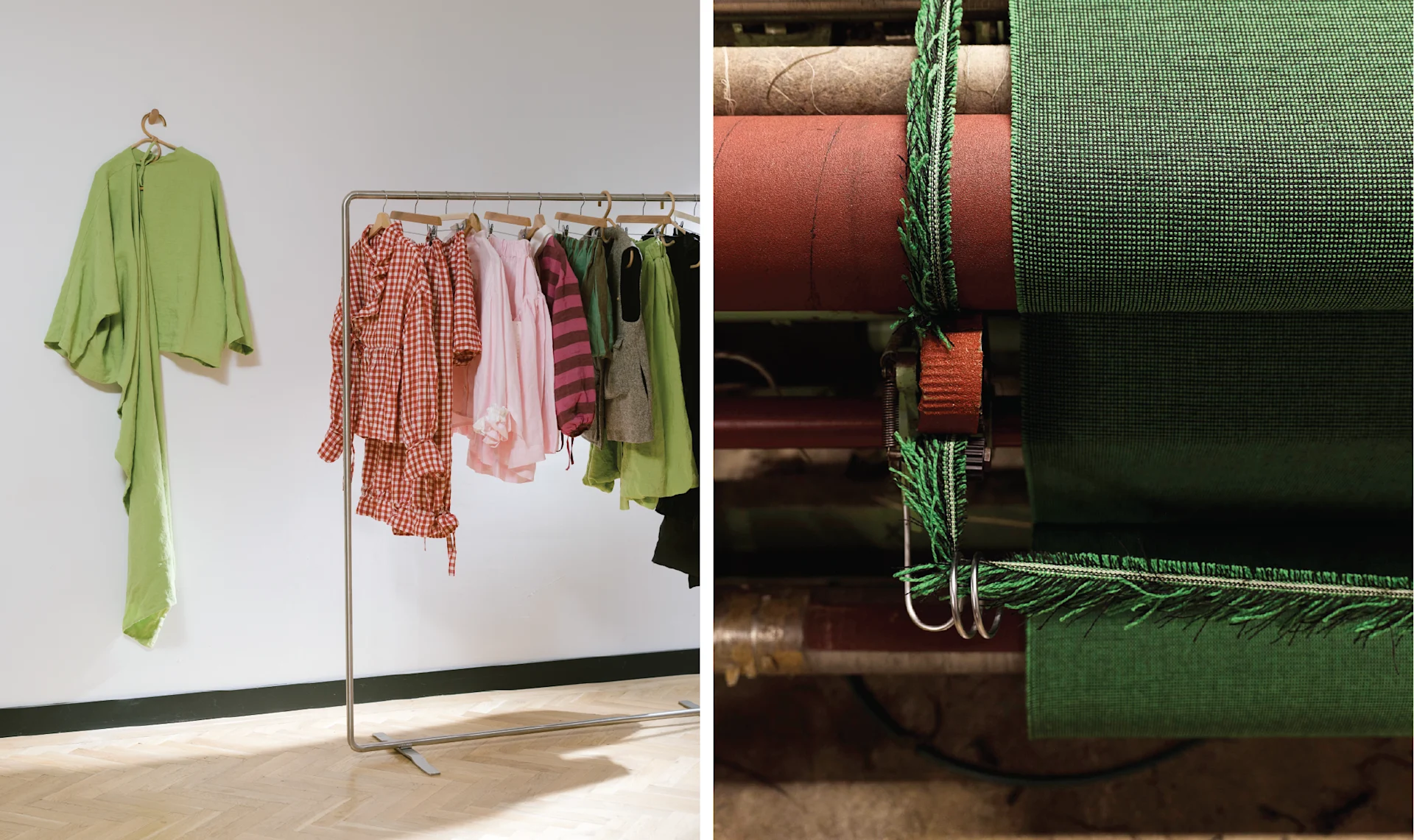
Courtesy Kindred of Ireland
Courtesy Kindred of Ireland
Courtesy Kindred of Ireland
Courtesy Kindred of Ireland
Kindred’s approach has resonated with a new cohort of buyers. Its loose-fitting, contemporary designs in traditional fabrics appeared alongside garments from Loewe, Chanel, and Alexander McQueen at a recent fashion exhibition in Belfast’s Ulster Museum. That interest has also reached the world’s biggest fashion houses. For his first Dior collection last year, creative director Jonathan Anderson—who grew up near Belfast—reimagined the house’s iconic Bar jacket in tweed. And on December 4, Dior will stage its first-ever show in Ireland, at Trinity College Dublin.
For centuries, linen powered the economy of Northern Ireland, while in the south, tweed mills employed thousands at a time when most other industries struggled. Both fabrics were widely embraced, used in attire ranging from workwear to haute couture. But those glory days are long gone. Mass-market demand has dwindled to almost nothing, and mills across the island have shuttered, often replaced by shopping malls or creative spaces that still bear their names.
As an Irish American who’s been back and forth to Ireland since childhood, I've always been surrounded by tweed. But until relatively recently, it struck me as an old man’s cloth—for farmers on Sunday or barristers at the pub—not something I’d ever wear. That changed when I discovered Donegal tweed from Molloy & Sons. Lighter and subtly brighter than the tweed I knew, it was evocative of tradition but different enough to seduce me. I bought a length and had a jacket made in Sicily. Wearing it, I began to understand why these fabrics were finding a new audience.
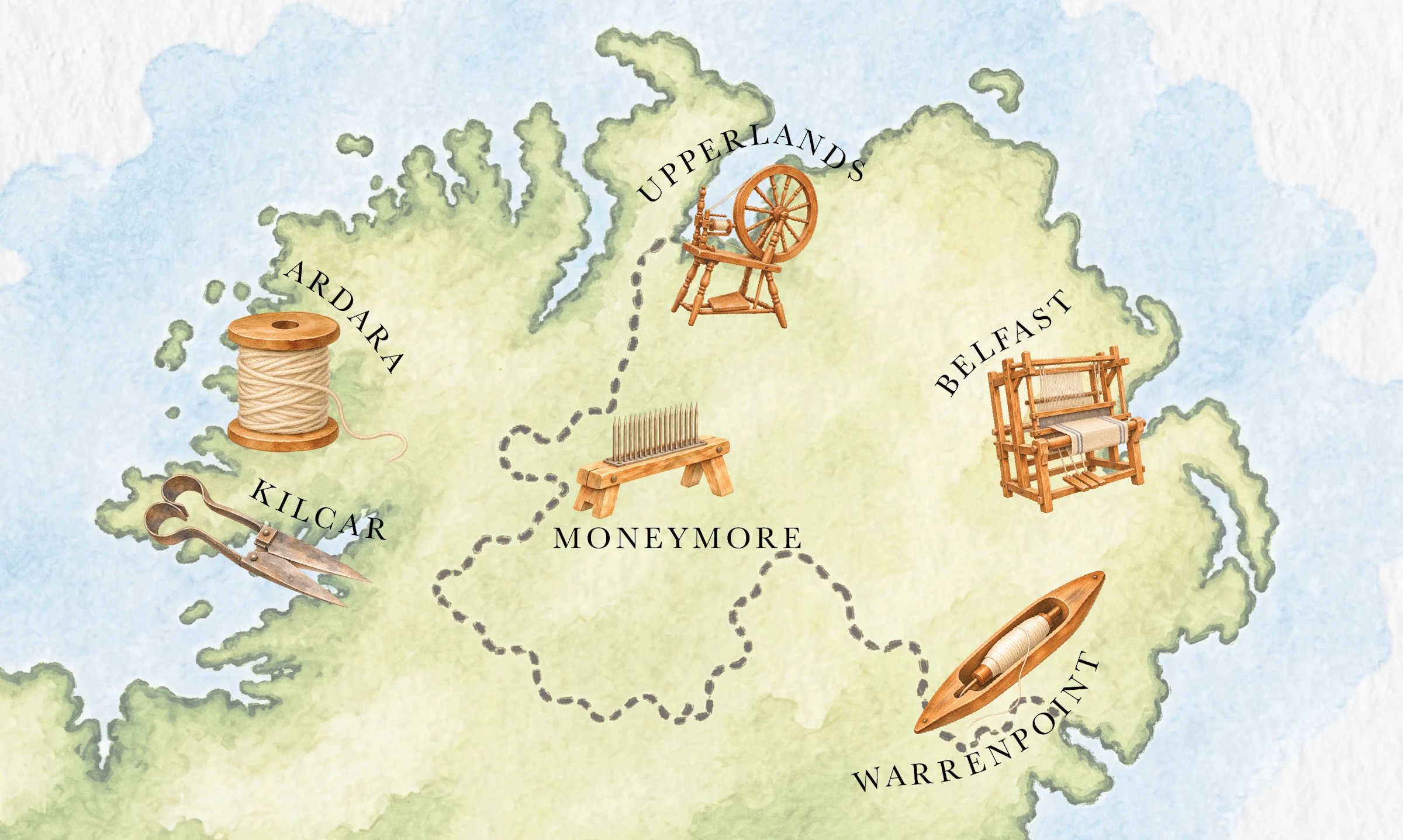
Molloy & Sons was hardly alone in its quest to revive Ireland's historical textiles. Against the odds, a handful of mills, flax growers, yarn spinners, and fabric designers were not only hanging on but ushering the industry into a new era. I wanted to meet them, to understand what had led to the trades’ decline and what the future might hold. My route would take me from Belfast, once known as Linenopolis, through County Down and Ulster’s old linen heartland, then west across the border to Donegal.
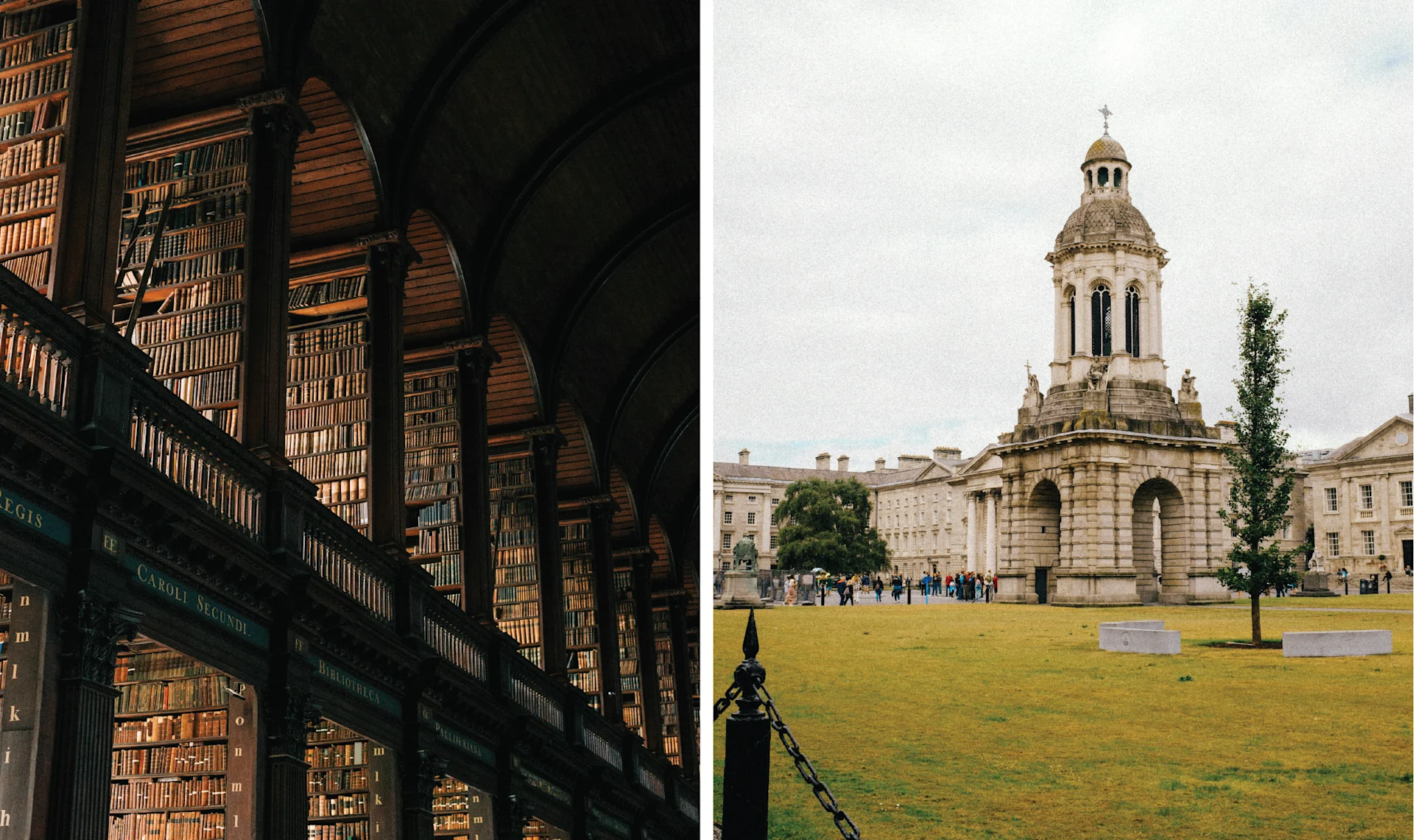
The Long Room at the Old Library at Trinity College Dublin
The Campanile at Trinity College Dublin
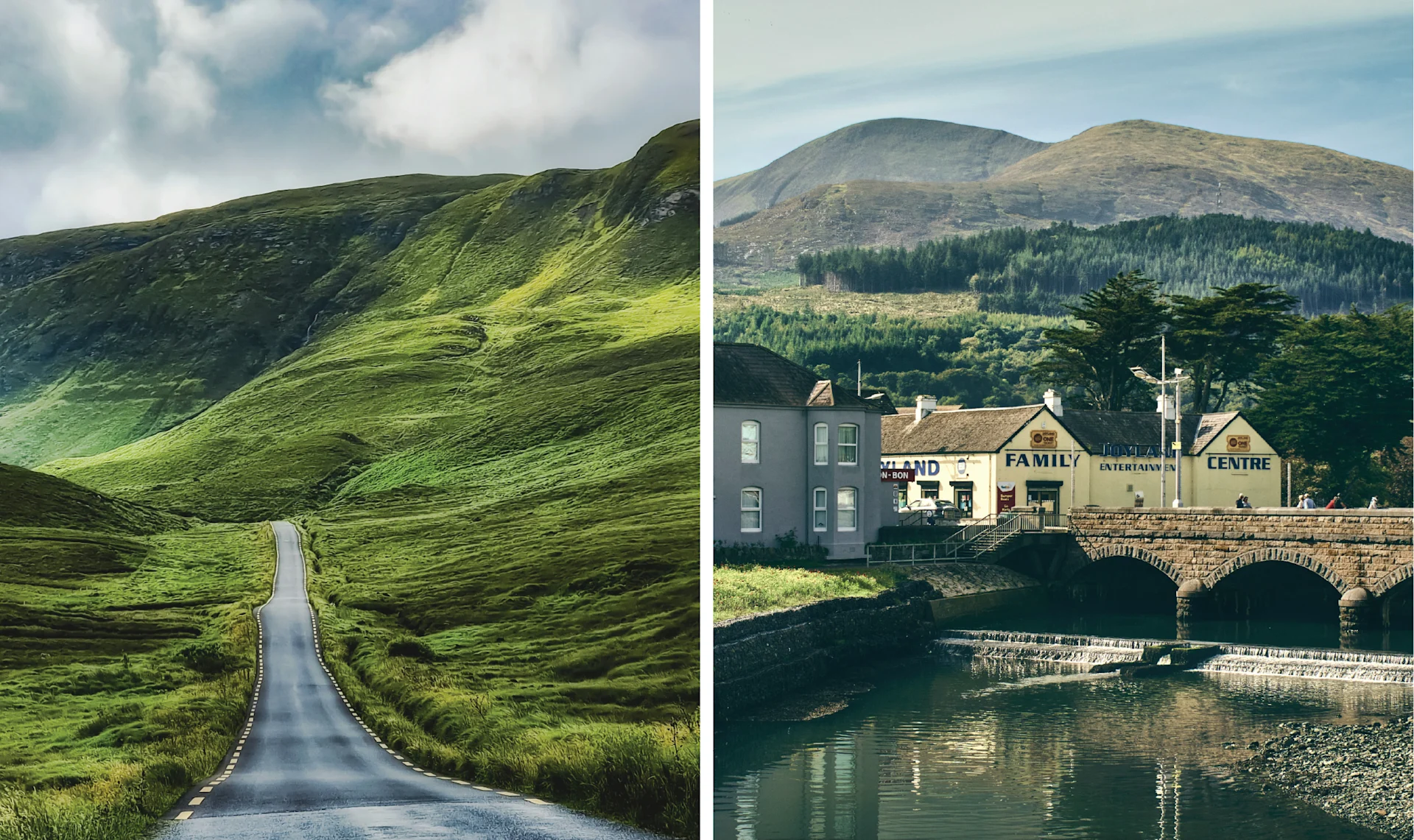
A country road in Donegal
The Shimna River in County Down, Northern Ireland
The Long Room at the Old Library at Trinity College Dublin
The Campanile at Trinity College Dublin
A country road in Donegal
The Shimna River in County Down, Northern Ireland