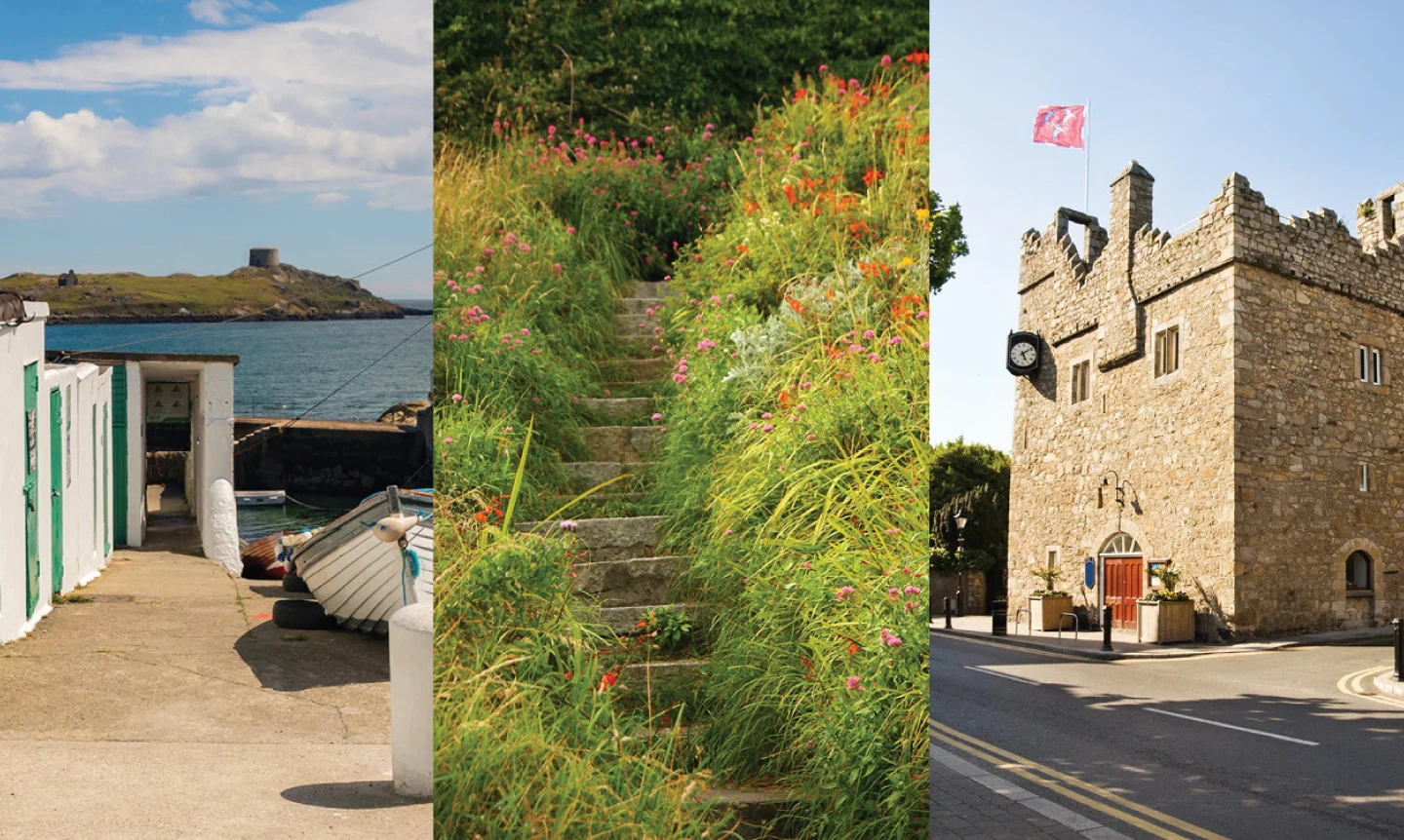
The early summer months tend to make me and my girlfriend restless — that, and the fact that we also have some visa issues. And so recently, we’ve found ourselves drifting across Europe, staying outside the Schengen zone and relying on the hospitality of dear friends.
One such friend, a literary scholar and philanthropist who lives in Lower Manhattan, offered us the opportunity to stay at her vacation home in the scenic seaside village of Dalkey, just outside of Dublin, on Ireland's east coast. Her property, however, isn’t one of the Italianate Victorian villas or modernist oceanfront mansions that are typical of the cocooned hideaway's affluent homeowners. (The most famous property in the area being Manderley Castle, the sprawling castellated estate owned by the reclusive Irish singer Enya, which is perched on a hill overlooking town.)
Rather, being the lover of letters and Joycean fanatic that she is, our friend had purchased a Martello tower, a type of small defensive fort famously described in Ulysses. Built by the English Empire during the heyday of anti-Napoleon hysteria in the early 19th century, the dozen or so towers still standing have signature design details like circular eight-foot-thick stone walls, tiny gun-slit windows, and a glass floor panel on the roof — a covering for the tower’s machicolation, a “murder hole” used to douse trespassers with scalding hot oil oil.
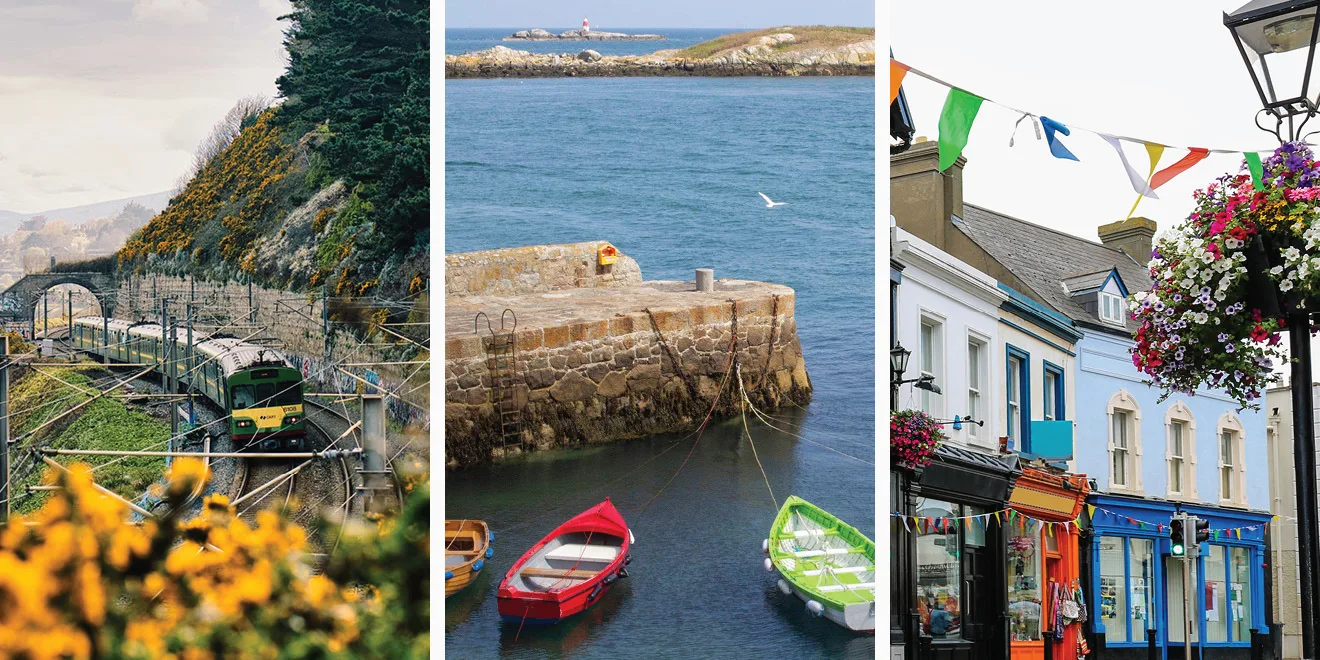
Though we had never been to the coasts of Ireland before, we jumped at the chance to be the tower’s temporary keeper. Roughly a 25-minute train ride from Dublin, Dalkey, a tiny hamlet with a population of around 8,000, has long enjoyed an outsized reputation in the public imagination. With its verdant cliffs overlooking the Irish Sea and blue-chip superstar locals —Enya’s neighbors include Bono and the director Jim Sheridan — the region is commonly referred to as the “Amalfi Coast of Ireland.” But unlike the “bunga bunga” glam of Italy’s southern coastline, Dalkey is a destination designed for discretion. Here, spritzes at the beach club are replaced by pints at redbrick pubs. In lieu of tourist-trap discos, there are highbrow literary festivals. This month’s Dalkey Book Festival, which runs from June 15 to 18, features top-shelf speakers like Tom Hanks and Masha Gessen.
Such star wattage barely holds a candle to the canon of celebrated Irish writers who have had a chapter here. Flann O’Brien’s 1964 novel, The Dalkey Archive, was published two years before his death. More recently, the pink house belonging to W.B. Yeats, whose family lived in the area for generations, was estimated to have sold for over $2 million at auction. But Dalkey is best known for one of its briefest Irish-writer-in-residence: James Joyce, who, in 1904, spent six days at a friend’s Martello before traveling to France. Decades later, a fictionalized version of that stay made its way into the pages of Ulysses. In one particularly memorable passage, Stephen Daedalus and his host, the plump Buck Mulligan, describe the icy “snotgreen sea” of the Dalkey Sound as “scrotum-tightening.”
The water is certainly cold, even during our recent visit under the bright May sun. Frigidity, one might guess, hardly deters the Irish. Just a few steps from the James Joyce Tower and Museum sits Forty Foot, a famed swimspot carved out of the rocky cliffs packed daily with Dubliners squeezing in a reviving dip in the icy Irish Sea. The hordes of stern-faced sixty-somethings in rubber caps and rowdy teenagers filming each other on their phones seem to generate their own form of communal warmth, which has turned the waterfront scene into a type of makeshift welcoming committee for visitors willing to take the Irish plunge.
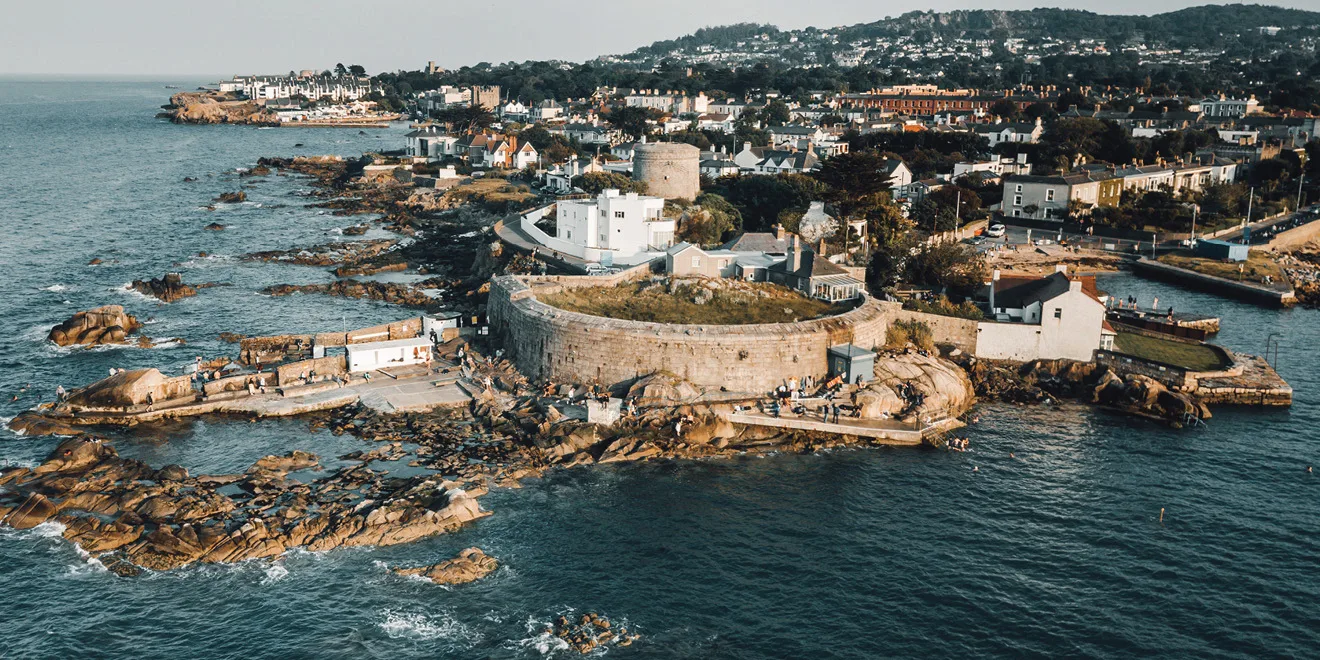
Toweling off after a quick swim one afternoon, our friend, Gary Coyle, a 58-year-old Dalkey native and artist (he ecently exhibited his work at Ireland’s National Cultural Institution for Modern and Contemporary Art), told us that he has been swimming on these rocks for twenty-five years. “I’m only in for a few minutes in winter,” he said, adding that he can easily last up to 20 minutes now that it is summer. His advice: “Watch out for the seals though, they like to headbutt you underwater.” Nearby, a sign offered a different type of warning: “Gentlemen-Only Swimspot” — a relic from when these waters were male bathers only. The law was in place until the summer of 1974, when a group of female swimmers stormed the sea in protest and shifted Ireland’s cultural tides.
Across the bay, the Dublin skyline was punctuated by a set of twin chimneys protruding from the Poolbeg Generating Station, known by locals as the Poolbeg Stacks. A pod of gray seals rested their fat blood-sausage bodies on some nearby rocks, catching the rays of sun filtered through the whipped clouds. Nearby, there was another regional way to warm up after the sea: Fad Saoil, a roaming wood-burning sauna in the shape of a huge whiskey barrel specializing in post-cold-exposure treatments. (On-the-go saunas are common on the coast, with most local coffee shops filled with flyers advertising routes and rates.)