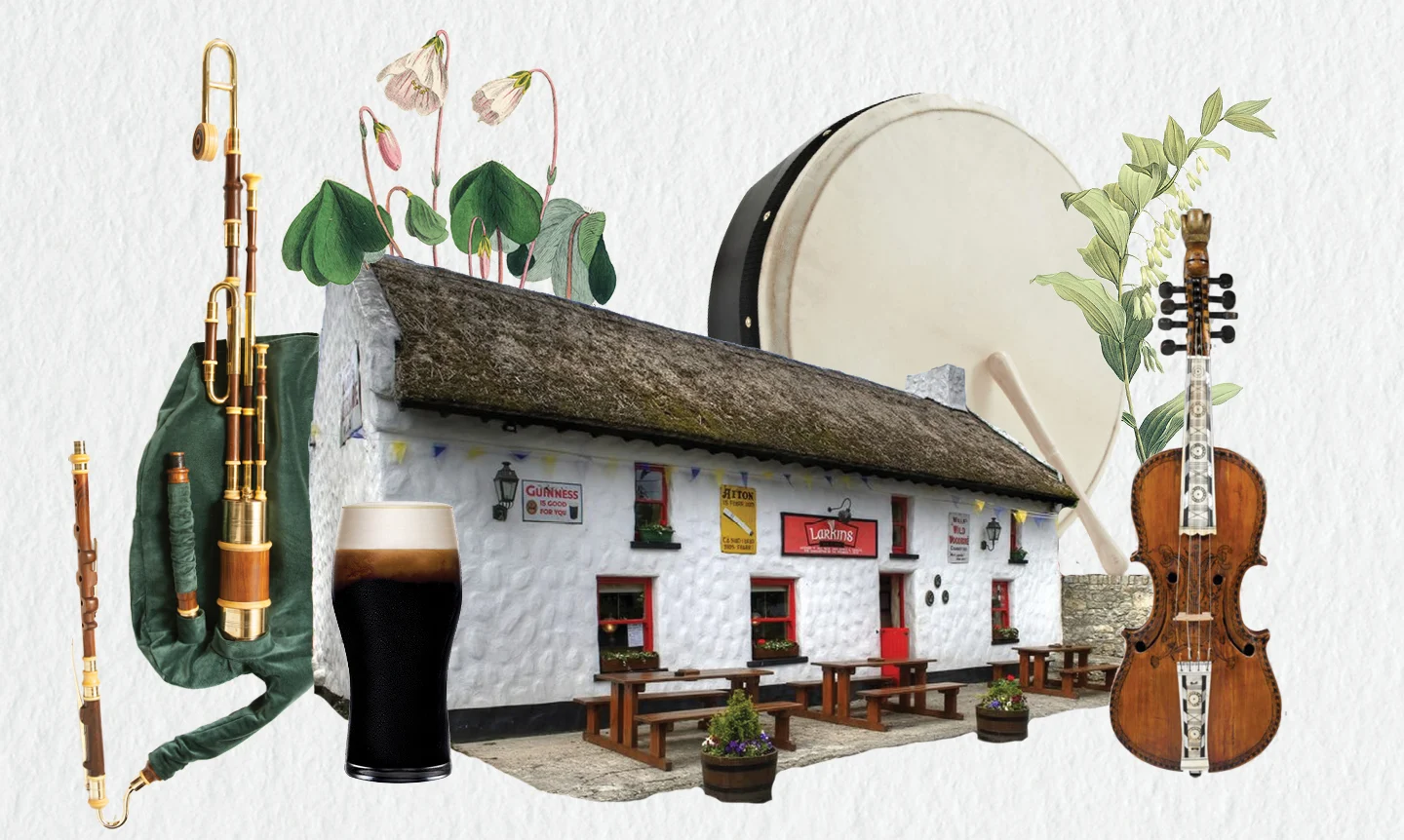
One of Ireland’s greatest living traditional musicians, Matt Molloy, has said the key to a great traditional Irish music session (or seisiún, as it’s known in Gaelic) is not to talk, but to listen. This might seem problematic considering the music can often be performed as if there’s no tomorrow, but he has a point. It’s a bit like the aural equivalent of reading between the lines, except when you’re at a seisiún the last thing you might want to do is keep quiet.
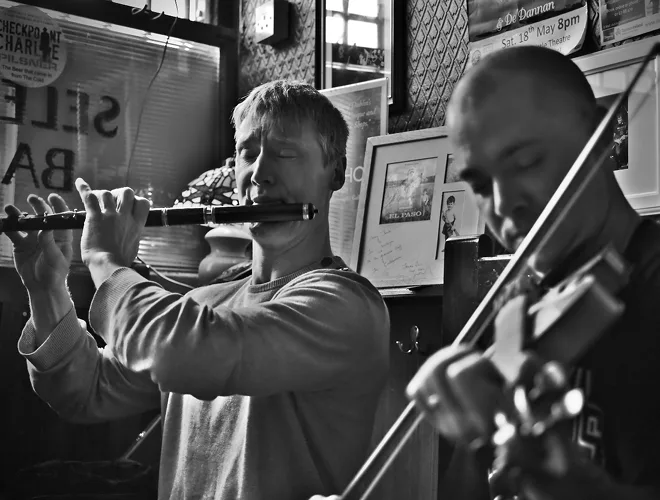
What was once a particularly rural Irish experience progressed during the Gaelic Revival of the late-19th and early-20th centuries when the first recordings of traditional music were made. As decades passed, emigration from numerous rural communities, villages, towns and cities played a significant part in its development, sometimes modifying it, sometimes leaving it intact. Either approach created resilient connections to the past, and whether through songs or instrumental passages it is this tender yearning, this spiritual ache, that gives the music such power (Ireland, as the poet Seamus Heaney noted, is as much a geographical entity as a “country of the mind”).
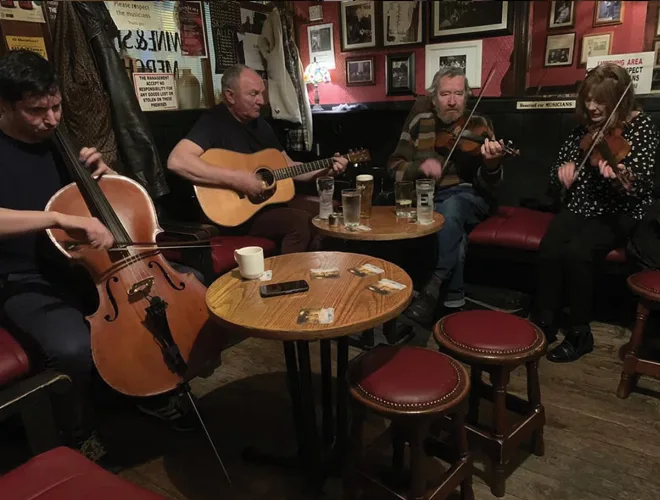
Come the 1960s, the influence of classically trained composer Seán Ó Ríada brought traditional music out of the cottages and into the concert halls, while a decade or three later groups such as The Chieftains, Planxty, The Bothy Band, Moving Hearts, Altan, Clannad, Kila, The Gloaming and Lankum stretched its creative reach. The result of such experimentation of the form is that traditional Irish music is as far from a museum piece as you can get – it continues to subtly transform, to flow, while firmly holding onto its roots. Here are several storied places to hear it now.
The Cobblestone, Dublin
When it comes to traditional Irish music in the heart of Dublin, it’s impossible to beat The Cobblestone. Resolutely outmoded (“an old man’s pub,” according to the youth) and with Irish culture almost visibly seeping from its walls, the best time to secure a seat is between 5pm-7pm – any time after that and it’s standing room only. What to expect? Trad music of every stripe, from stomping jigs to rollicking reels, from sublime uilleann pipe playing to pin-drop-quiet unaccompanied singing (known as sean-nós, Gaelic for ‘old style’).
The Corner House, Cork
Known with justification as “Cork’s House of Music,” the Corner House hosts regular sessions throughout the week. Many of the city’s best-known musicians gather at tables and deliver tunes at a no-nonsense, energetic pace. One of the many pleasures is the open welcome offered to visiting players – there are no egos on display, only instinctive, often otherworldly skills. Between the music and walls adorned with decades of memorabilia, you don’t soak up the atmosphere here, you breathe it in.

Matt Molloy’s, Westport, County Mayo
What is better than a genuine traditional Irish music pub? How about a genuine traditional Irish music pub owned by a member of The Chieftains, one of Ireland’s most prized groups? Flautist Matt Molloy has been at the vanguard of traditional music for decades (before joining The Chieftains in 1979, he was a member of The Bothy Band and Planxty), so his revered pub is viewed as the most indispensable if you want the very best of “the pure drop” hooked into your system.
Teach Hiúdaí Beag, Gweedore, County Donegal
Much loved by Altan’s Mairéad Ní Mhaonaigh (one of the most highly regarded musicians/singers in traditional music), Teach Hiúdaí Beag exudes an atmosphere that should be bottled and sold over the counter. Failing such a commercial tactic, to experience a seisiún filled with native and visiting musicians is to be transported to a different time and place. As befits the home village of Ní Mhaonaigh and Clannad, the pub is effortlessly Ireland’s best-known for unapologetic fun and games (otherwise known as the craic).
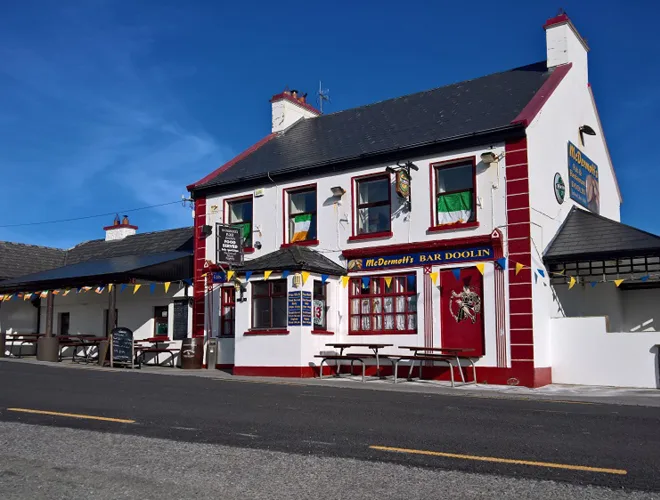
McDermott’s Pub, Toomullin, Doolin, County Clare
McDermott’s has an enviable reputation for nightly music sessions that feature some of the most gifted musicians in Ireland. One such is uilleann piper, Michael “Blackie” O’Connell, widely regarded as “king of the pipers.” The pub’s profile was boosted considerably in May 2021 when Irish actor Fiona Shaw selected it as one of her cultural highlights for The Guardian newspaper. The music, she said, was presented “with such a ferocious acceleration of excitement that you are sweating just listening to it.”