The Long Way to Uluru
Australia's newest trail approaches the country's great sandstone monolith over four days of desert walking, Anangu storytelling, and nights in tented camps beneath the Milky Way.
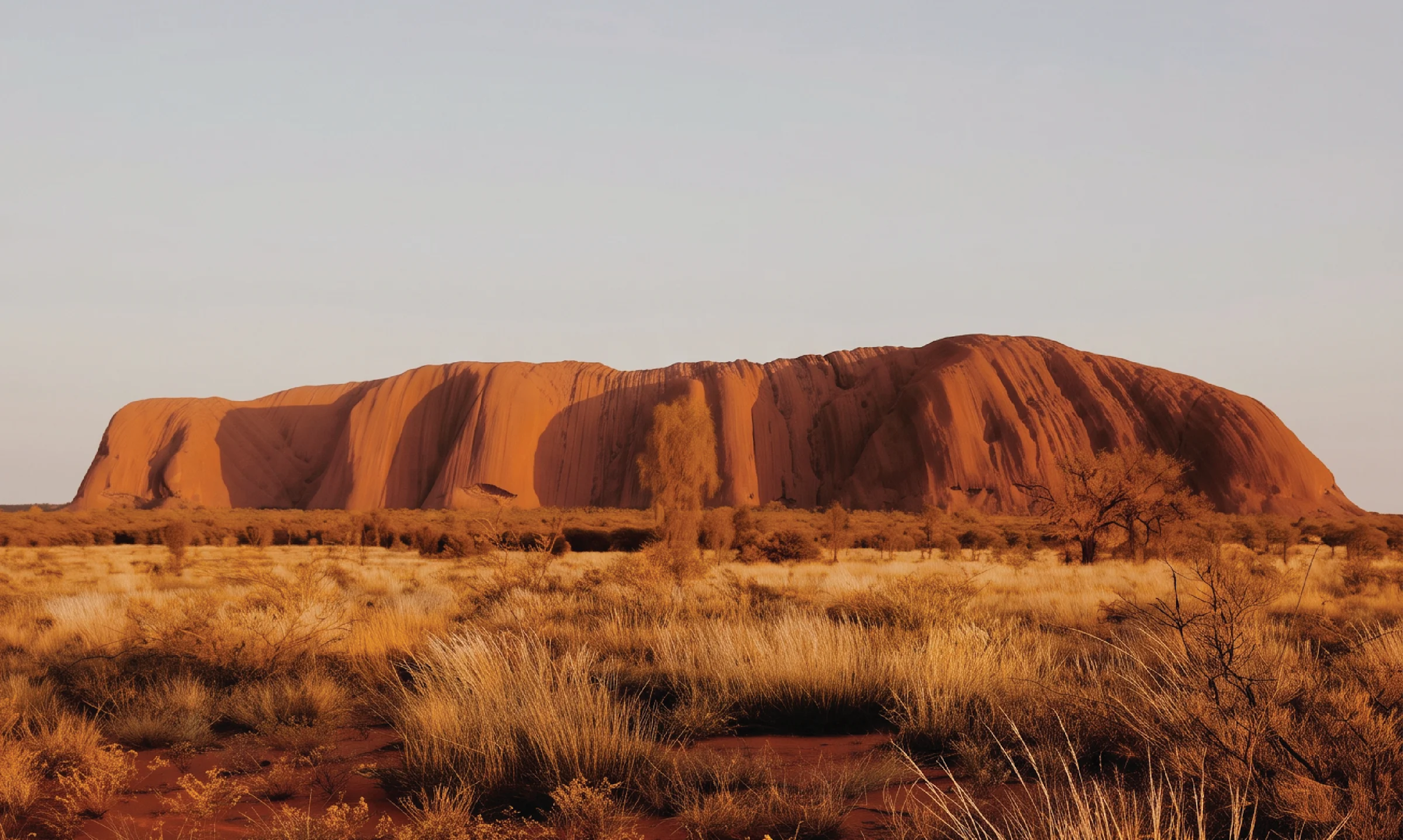
Indigenous guide Tjiangu “TJ” Thomas signals for quiet as a crested bellbird sings out across the desert. Our group of 15 walkers falls silent. Before us, Uluru rises 1,142 feet from the Central Australian desert, its ochre flanks burning beneath a cloudless sky. The rock dates back 500 to 600 million years—roughly twice as old as the earliest dinosaurs. TJ smiles at my expression.
“It kind of pulls you toward it, doesn’t it?” says the Anangu guide, who grew up in Uluru’s shadow.
Like many Australians, my first visit to Uluru, a decade ago, consisted of driving out from Ayers Rock Resort, standing at its base for an hour or two, then heading back for lunch. Back then, you could walk or cycle around the rock, but a brief stop at any famous landmark—be it Uluru, Victoria Falls, or the Statue of Liberty—rarely leaves an impression.
The new Uluru Kakararra Trail changes that. Stretching 33 miles over four-and-a-half days, it approaches Uluru gradually, linking it with neighboring Kata Tjuṯa through desert country few visitors ever experience. Instead of parking at the foot of the rock, you spend days walking toward it.
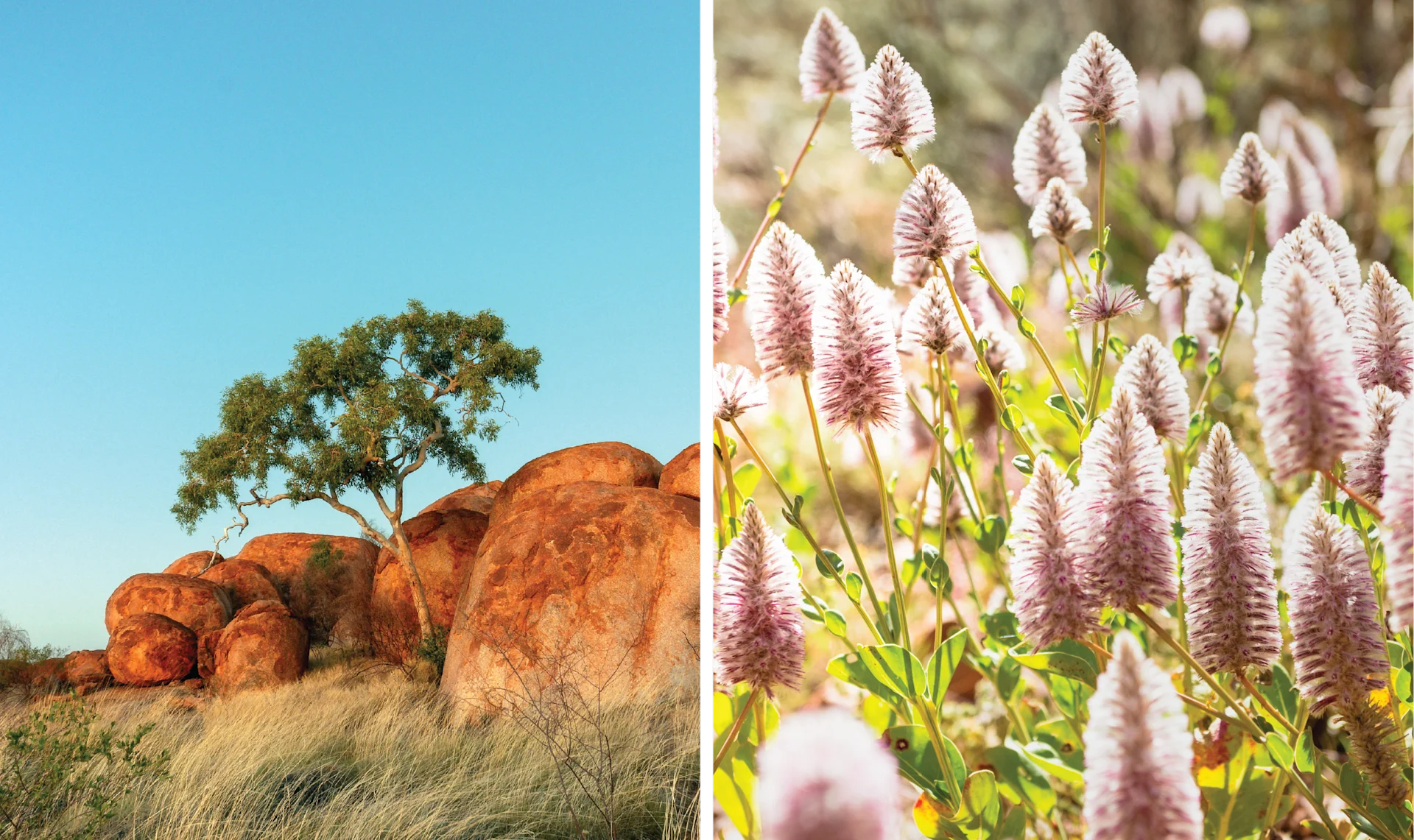
We begin in Kata Tjuṯa’s Valley of the Winds, weaving between the 36 weathered domes that give the formation its Pitjantjatjara (one of several languages spoken by the local Anangu) name: “many heads.” The steep, rocky track bears little resemblance to the sandy plains that follow. From May through September, temperatures are mild enough to walk comfortably, the infamous flies are manageable, and winter showers coax wildflowers from the desert.
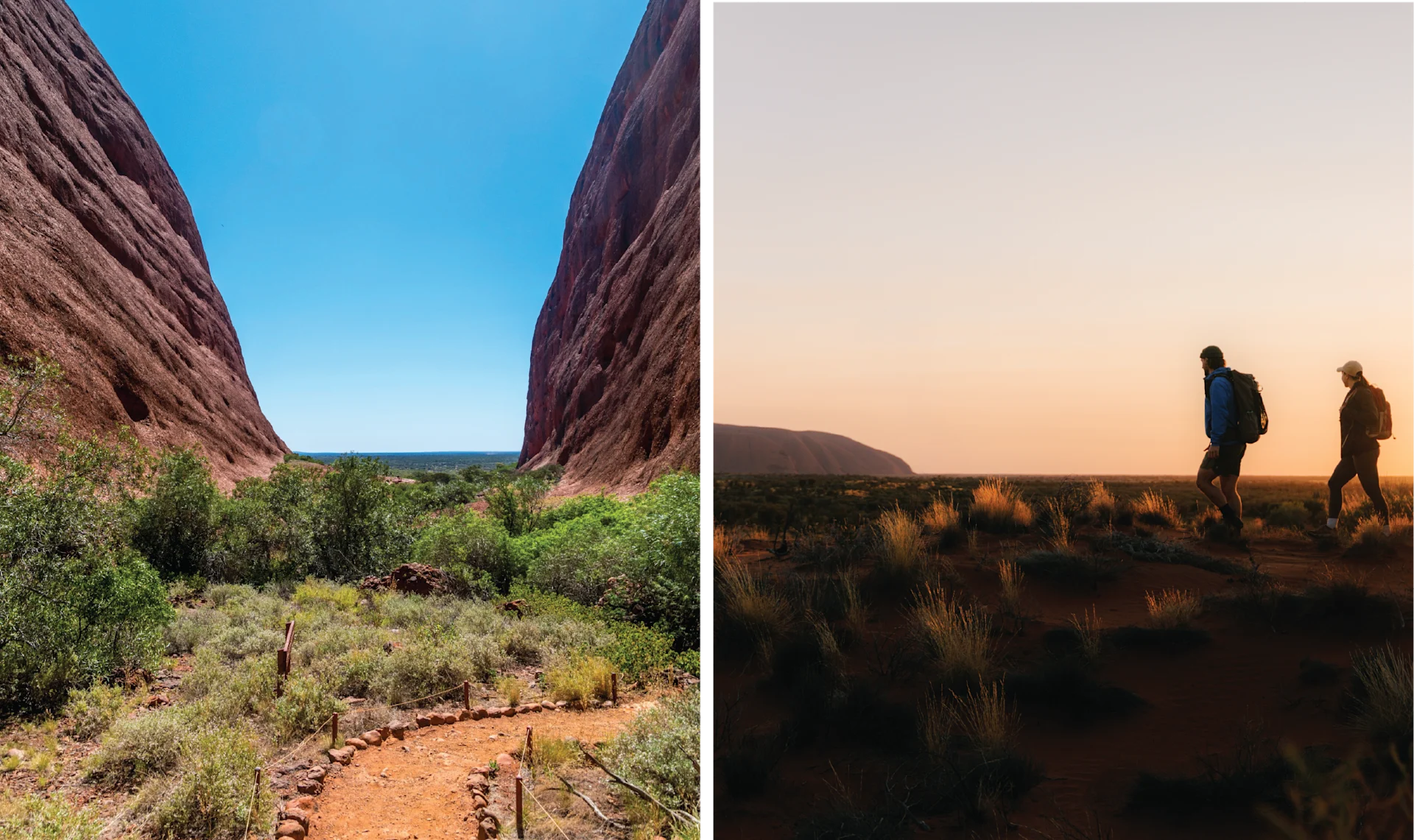
Valley of the Winds
Uluru Kakararra Trail (courtesy Michael Peters)
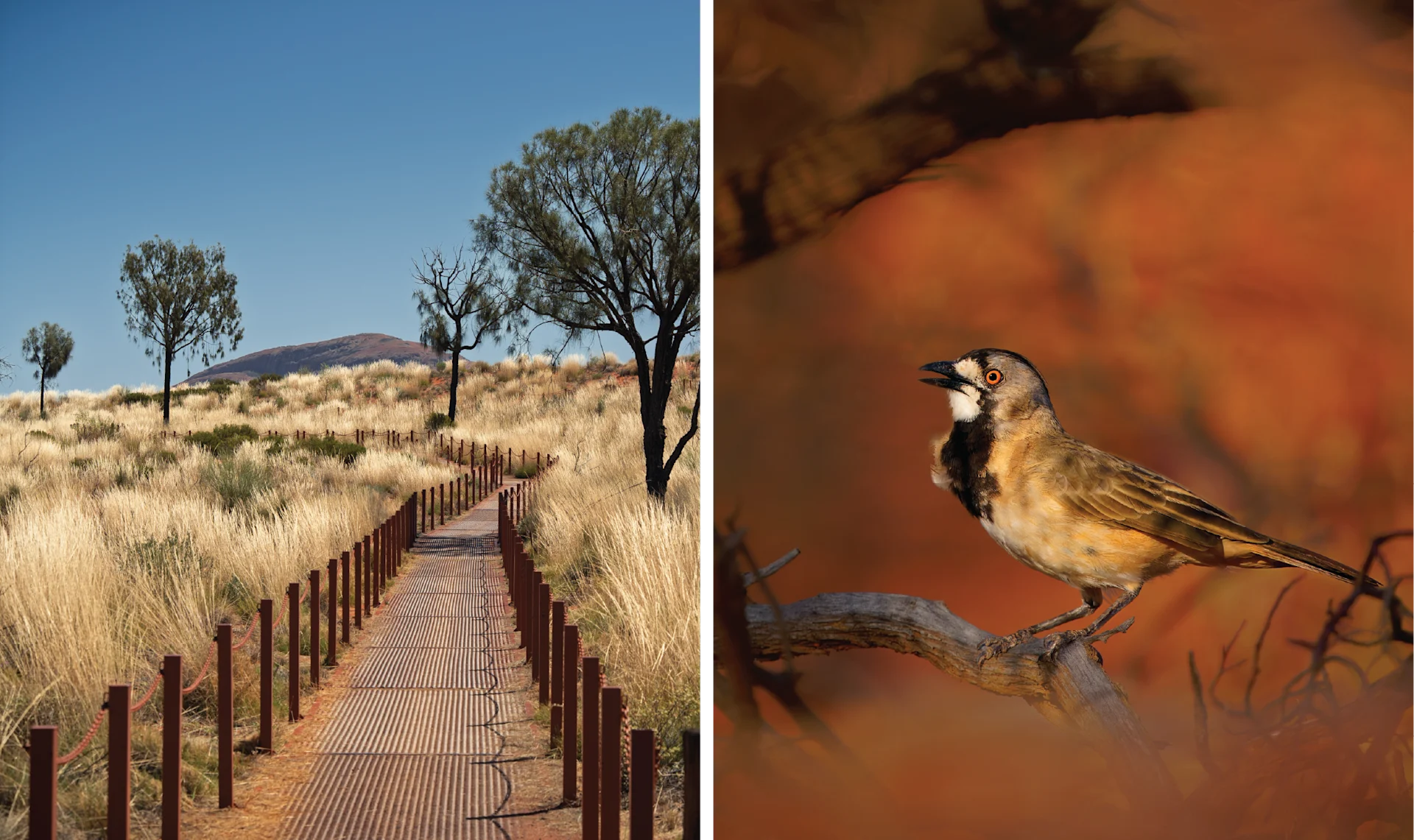
Crested bellbird
Valley of the Winds
Uluru Kakararra Trail (courtesy Michael Peters)
Crested bellbird
On the second day, life on the trail settles into an easy routine. We rise before dawn, set off around 6 a.m., stop for coffee and lunch on the track, and reach camp by midafternoon. By evening we’re eating barramundi curry with a glass of Tasmanian wine before crawling into canvas tents as the stars appear overhead.
As we leave Kata Tjuṯa behind, TJ begins what I can only describe as translating the landscape. He points out landmarks, waterholes, and medicinal plants that I would have breezed past. The trail’s name Kakararra means “going east” in Pitjantjatjara; the route follows terrain their ancestors have crossed for tens of thousands of years. Charting it took almost a decade. Brett Godfrey, the former airline executive behind the Tasmanian Walking Company, worked with Anangu Traditional Owners on everything from the alignment of the track to the design of the accommodation and financial structure. (Royalties from every booking return to the community.)
When the trail opened in April, Australia’s first Indigenous Director of National Parks, Ricky Archer, described it as another step toward tourism that benefits the Anangu through jobs and income. It also became the first opportunity for visitors to stay overnight inside Uluṟu–Kata Tjuṯa National Park since the land was returned to its Traditional Owners in 1985. “I came out here in 2015 to start discussions,” Godfrey tells me. “I left a changed person.”
The infrastructure is notably pared back. Each camp accommodates just 16 walkers in widely spaced safari tents with proper beds and solar-powered hot showers. The communal areas look out across red dunes dotted with spinifex and desert oaks, with few signs of human life in sight. As we continue toward Uluru, the guides identify thorny devils, spinifex hopping mice, camel tracks, and edible plants.
TJ, meanwhile, shares ancestral folklore. Uluru, Kata Tjuṯa and the surrounding terrain, he tells us, were created by Ancestral Beings during Tjukurpa, the Creation Period. The stories not only explain how the landscape came to be, but also pass down practical knowledge, from understanding the seasons to finding water.
He introduces us to some of Tjukurpa’s key figures: Kurpany, a giant devil dingo sent to attack the Mala, or hare-wallaby people, and Kuniya, a woman python figure whose story is tied to Muṯitjulu Waterhole. Songlines, TJ explains, are the paths these creator beings traveled across the land, water, and sky. We're walking one of them.
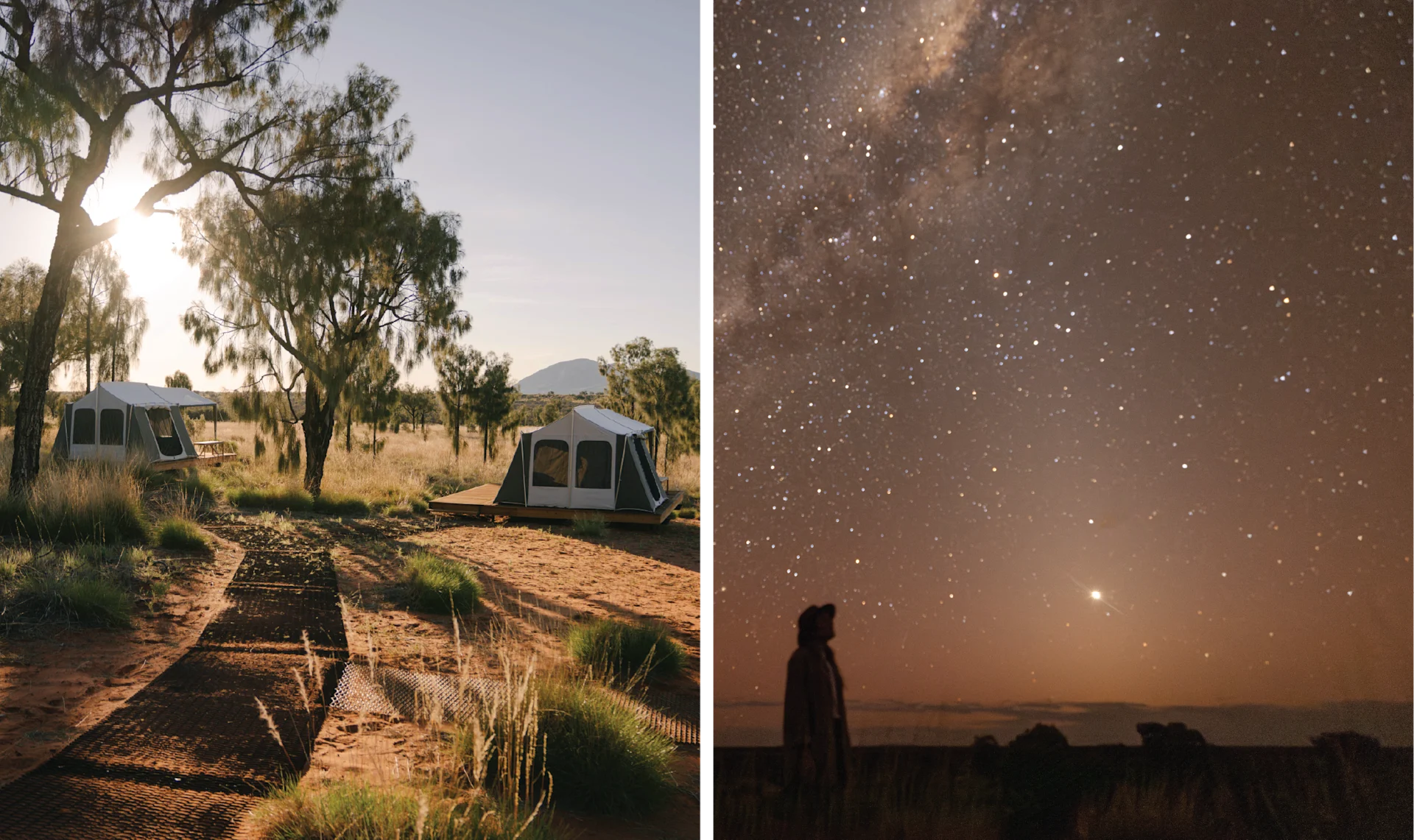
Tented camp (courtesy Tasmanian Walking Company)
Courtesy Michael Peters
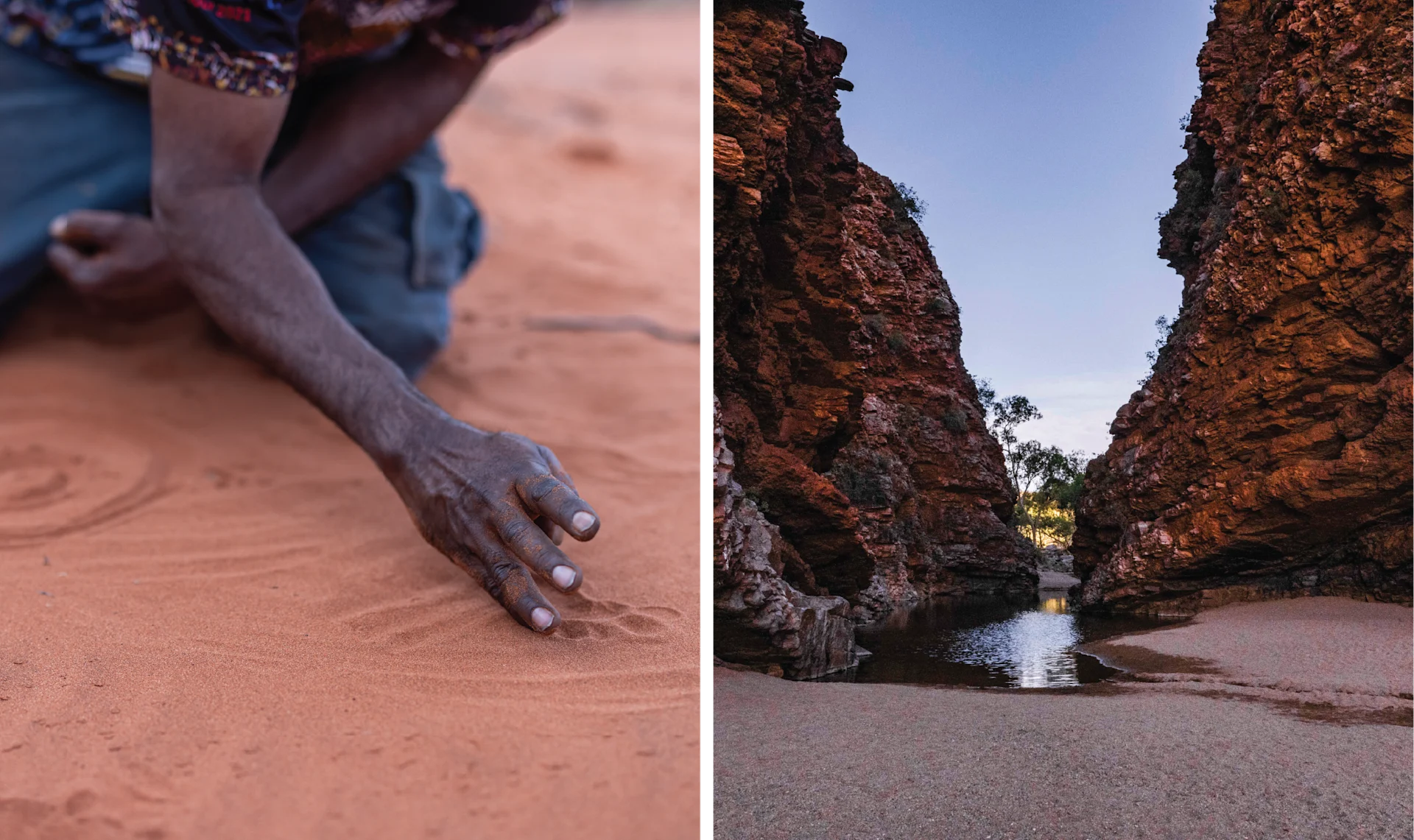
Anangu guide explaining the landscape (courtesy Tasmanian Walking Company)
A waterhole burbling up through the parched soil
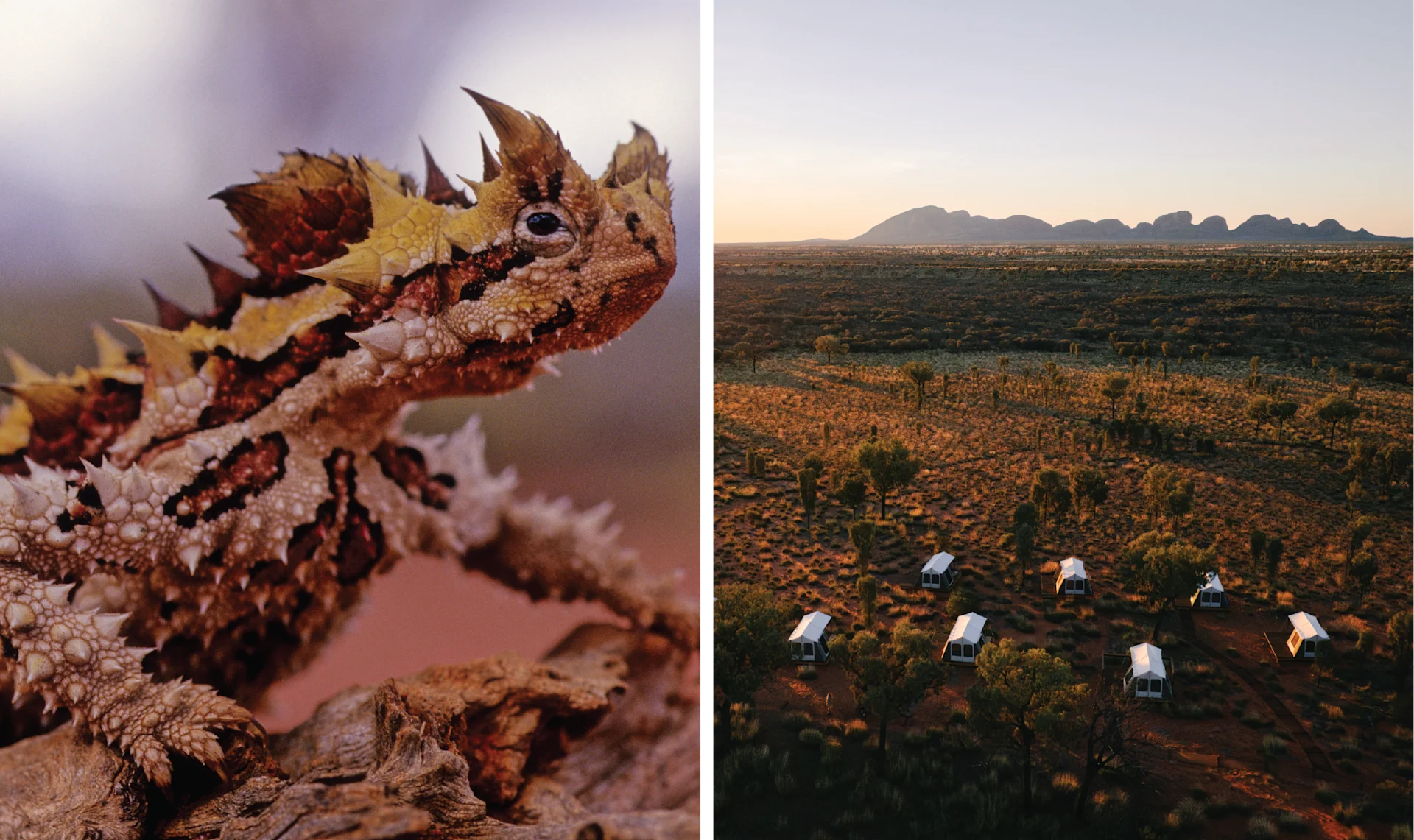
Thorny devil
Tented camp (courtesy Tasmanian Walking Company)
Tented camp (courtesy Tasmanian Walking Company)
Courtesy Michael Peters
Anangu guide explaining the landscape (courtesy Tasmanian Walking Company)
A waterhole burbling up through the parched soil
Thorny devil
Tented camp (courtesy Tasmanian Walking Company)
By the third day, conversation comes less easily. Hours spent crossing open desert have a way of emptying the mind. We set off before sunrise, headlamps beaming through the dark until the guides stop to brew coffee and pass around warm lemon myrtle muffins. As the first light spreads across the sand, desert warblers erupt into song.
The walk itself is rarely demanding. The challenge is more psychological due to the landscape’s vastness. Spinifex gives way to red dunes, dry creek beds to scattered desert oaks. With so little to distract the eye, you begin noticing tiny details: beetle tracks stitched across the sand, camel prints pressed into the earth overnight, the breeze lifting through the grasses.
By now, the walk has begun to change the way I look at the land. Earlier in the week, I saw open desert; now, every ridge and waterhole seems to hold some ancient human truth. I begin to understand why arriving at Uluru on foot feels so different from driving straight to its base: The approach gives the landscape time to accumulate meaning.
Our first glimpse of the brick-and-mortar Mala Lodge comes after nearly 30 miles on foot. The plunge pool, spa, and air-conditioned lounge feel improbably luxurious after two nights beneath canvas, yet the transition is bittersweet. I hadn’t expected to miss camp so quickly. The silence, the stars, and the simplicity of life on the trail prove harder to leave behind than the comforts waiting at the lodge.
The final morning brings us to Uluru itself. We visit Muṯitjulu Waterhole and the Cultural Center before setting out along sections of the base walk, meditatively tracing the folds and fissures of a rock I’d previously hurried past in an afternoon.
That evening, TJ points toward the dark spaces running through the Milky Way. The Anangu see the outline of an emu there, stretching across the night sky. Looking up, I think back to what he said on our first morning, when we stopped to listen to a single bellbird calling across the desert: Uluru has a pull. But now, I understand that the walk teaches people to listen before it teaches them to look.
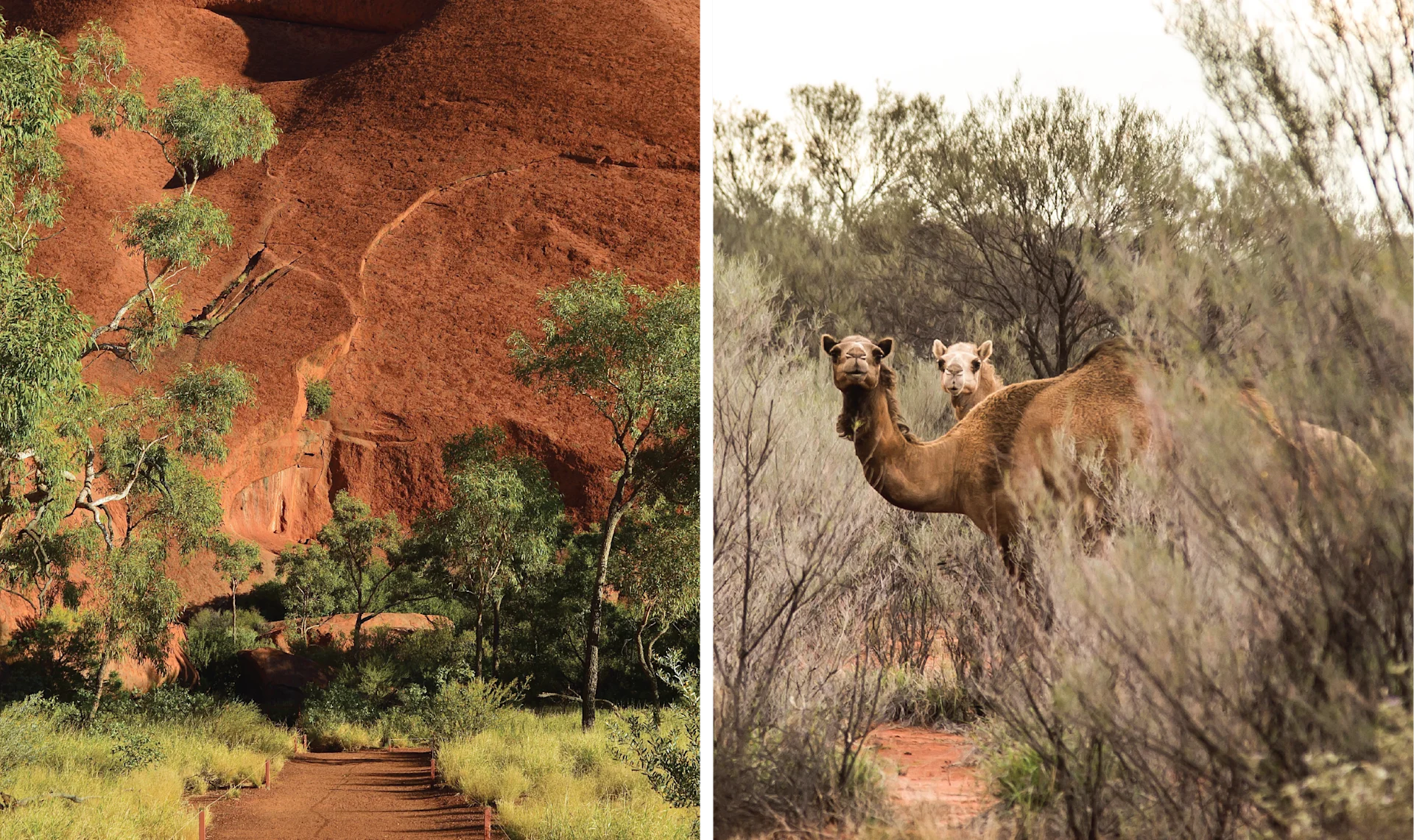
The approach to Uluru
A pair of Australian feral camels
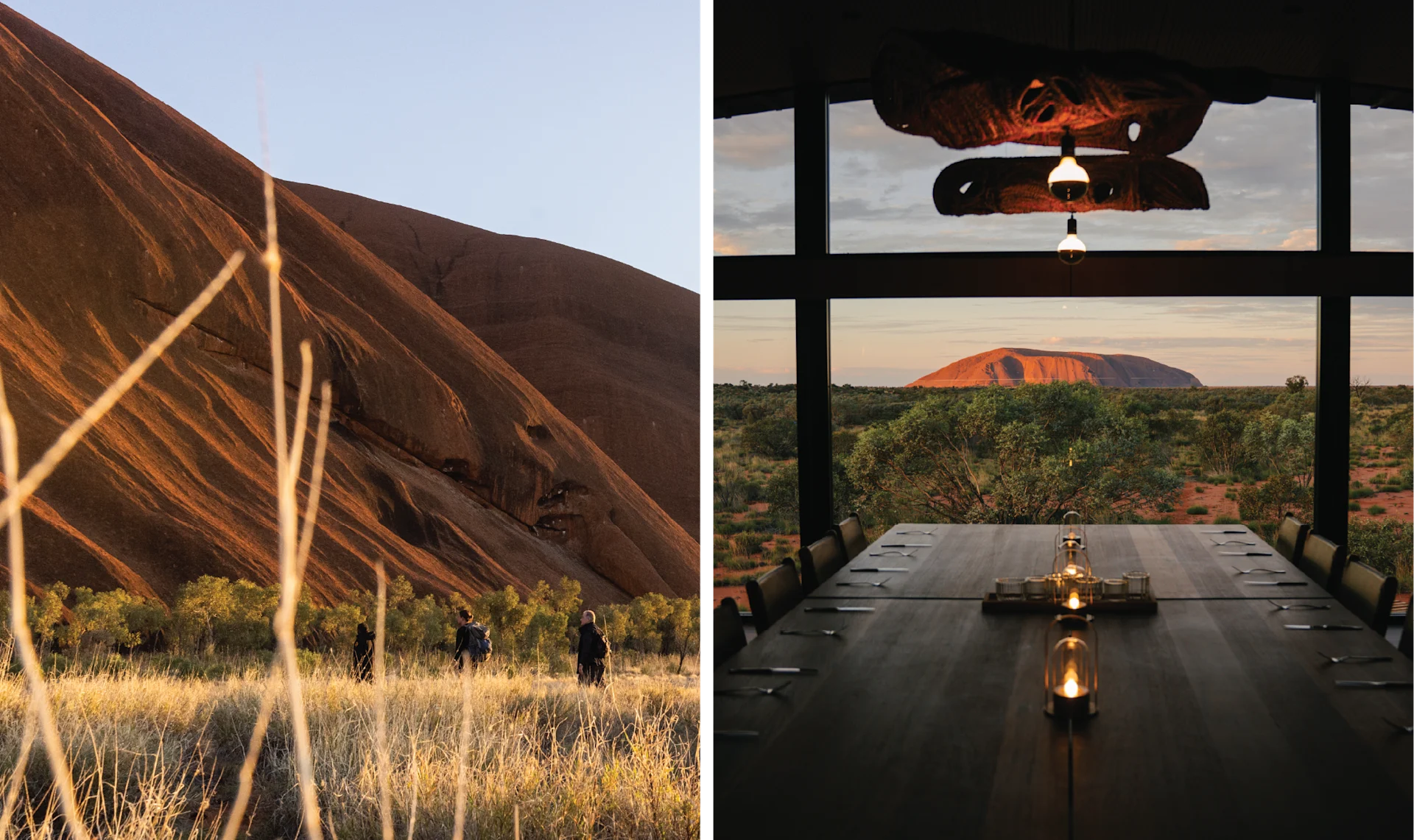
Courtesy Michael Peters
Mala Lodge (courtesy Michael Peters)
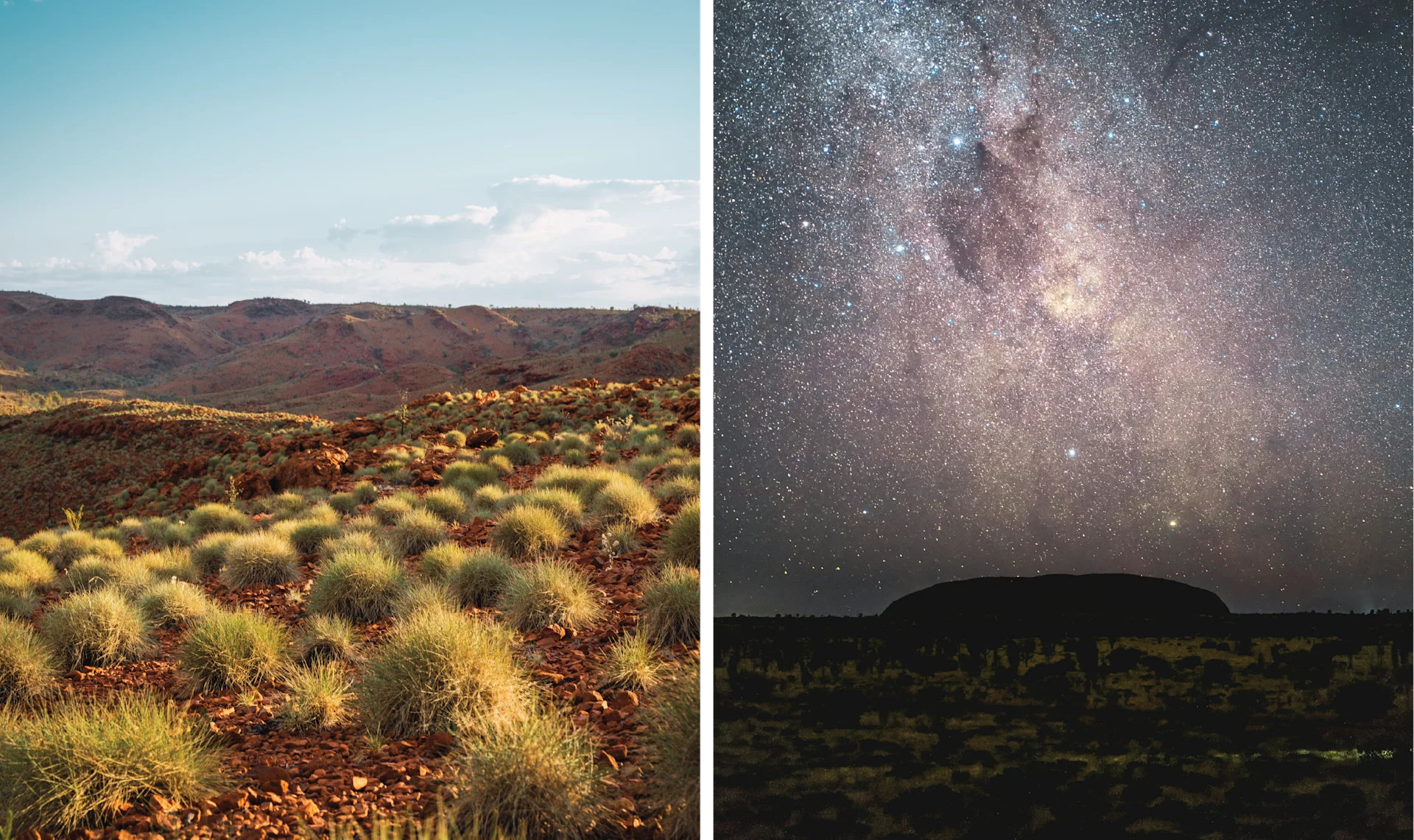
Spinifex scrubland in the shadow of Uluru
The Milky Way above Uluru
The approach to Uluru
A pair of Australian feral camels
Courtesy Michael Peters
Mala Lodge (courtesy Michael Peters)
Spinifex scrubland in the shadow of Uluru
The Milky Way above Uluru

Discover PRIOR Access and unlock the possibilities of immersive custom travel, with our dedicated Travel Designers crafting seamless, deeply personal journeys.
Discover PRIOR Access and unlock the possibilities of immersive custom travel, with our dedicated Travel Designers crafting seamless, deeply personal journeys.


Old-school Italian espresso culture fused with today’s obsessive roasters and baristas has made Melbourne a world coffee capital. These cafes are proving the point.
Read More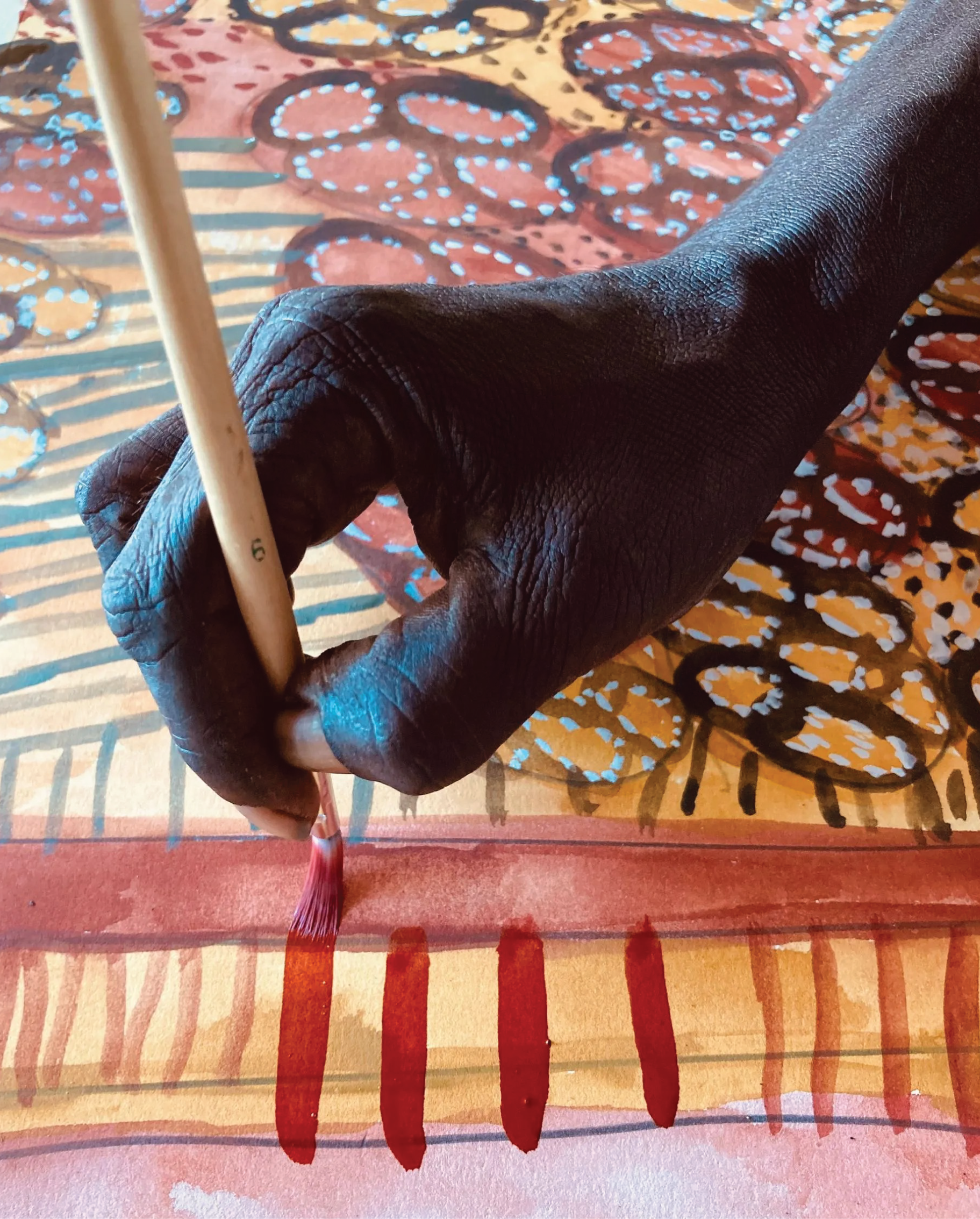
In Darwin, Arnhem Land, and the Tiwi Islands, an electrifying music and arts scene is rewarding travelers who make the journey north.
Read More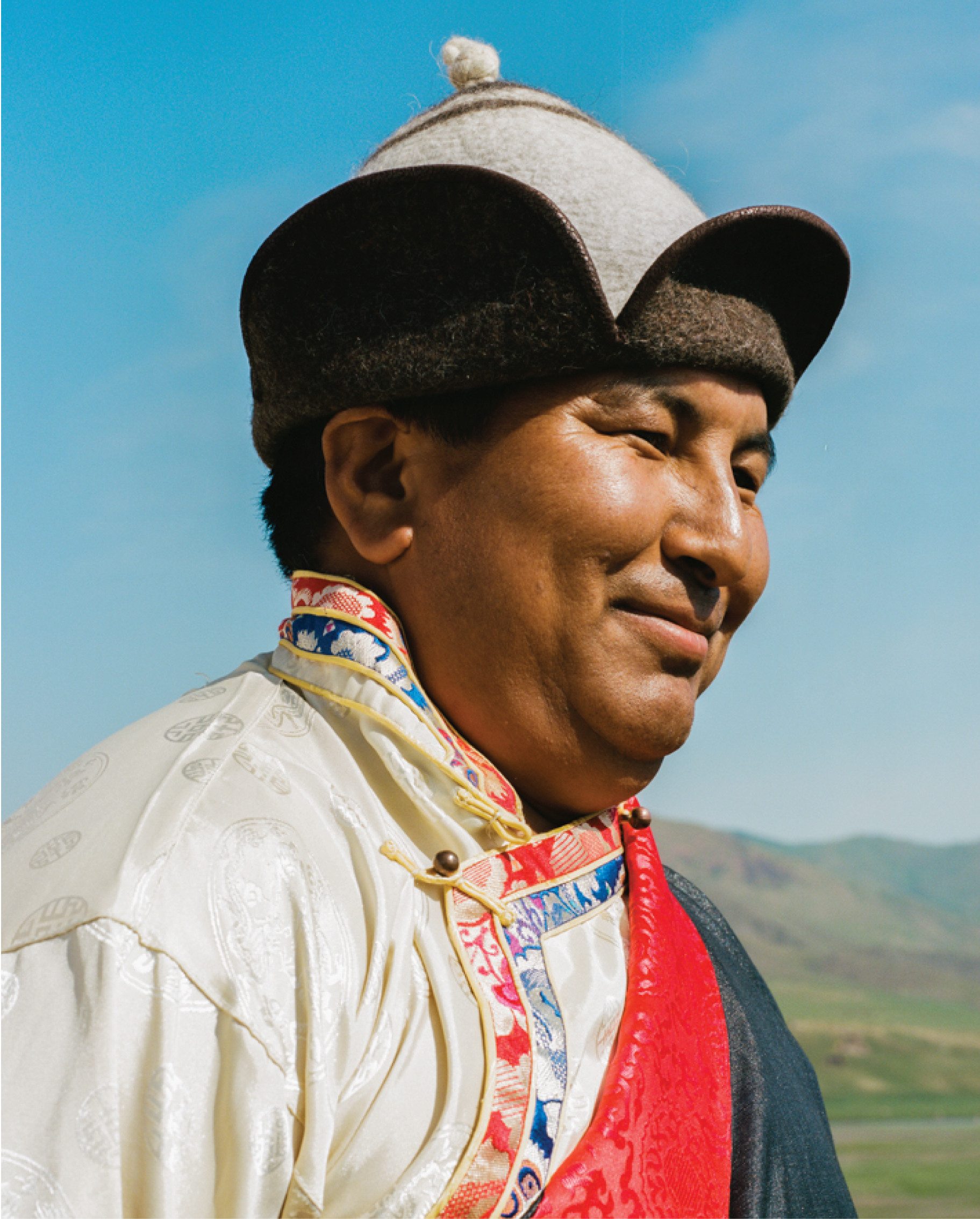
With thousands of miles of wide open horseback crossings, Mongolia’s horizons, horsemen, and vanishing camps reveal a nomadic world unchanged for centuries.
Read More