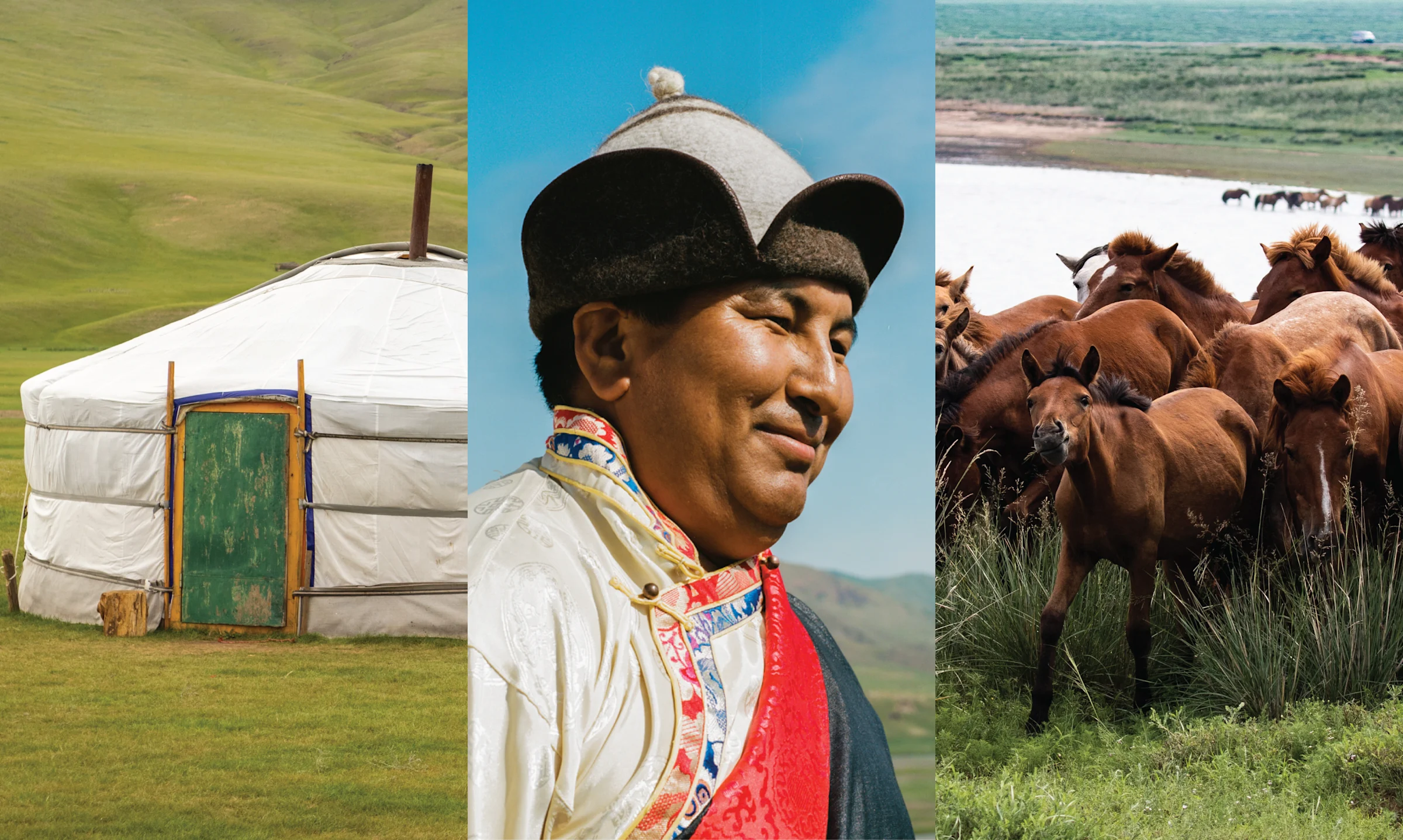
I first saw Mongolia from the windows of a train. I was crossing Asia on the Trans-Siberian Express, from Moscow to Beijing. On the fifth morning, I woke to Mongolia. After the claustrophobic forests of Siberia, the steppes were a revelation. The train seemed to ride like a ship on waves of grass. The horizons were boundless. The skies went on forever. In all that space, there was a sudden sense of possibilities.
At first, I saw no towns, no roads, no fields, no fences, no people. Mongolia was an immense open landscape, grown wild on the edge of the world. Then suddenly I glimpsed a distant cluster of tents, the round white tents of Central Asia, known in Mongolia as gers, which seemed to sprout in these grasslands as mysteriously as mushrooms. And then I saw the horsemen, the heirs of Genghis Khan, three of them silhouetted on a skyline as pure as a drawn line. They gazed down with disinterest at the train, then wheeled and galloped away across the steppe. This felt like another world, I thought, a vast terrain of nomads, slumbering in the heart of the continent, criss-crossed by winds and clouds and herds of horses. For me, Mongolia was love at first sight.
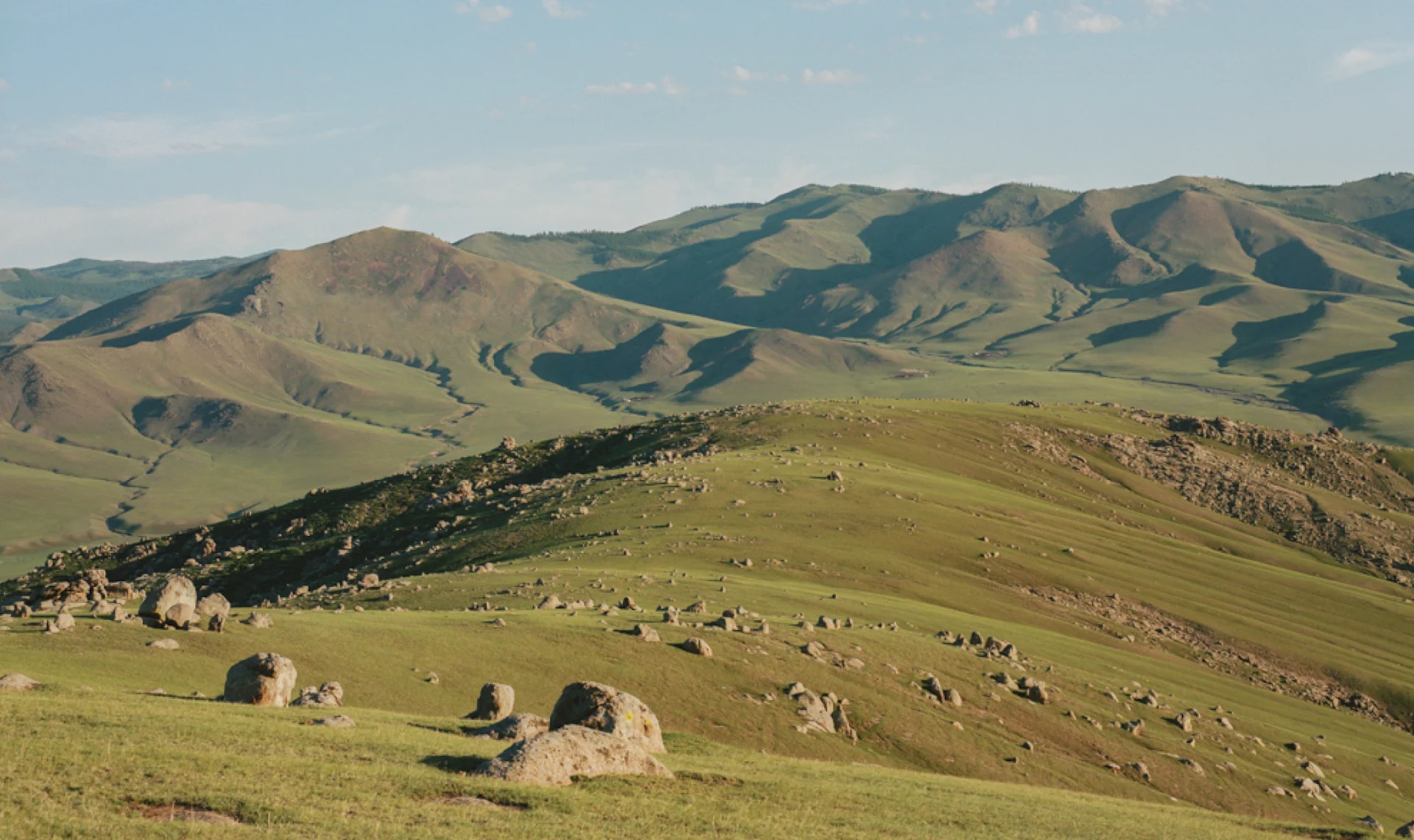
It is the size of western Europe with a population of 3.4 million people. While once it had ruled the world, now most of the world would find it difficult to find the country on a map with any degree of accuracy. For anyone with a passing interest in nomads, Mongolia represents the zenith of pastoral culture. Half the country may now live in the capital, Ulaanbaatar, where life is oppressively urban – traffic, high-rise ugliness, pollution, crowds. But the other half are scattered across thousands of miles of open steppe from Hovsgol in the north to the Gobi Desert in the south, still maintaining a traditional nomadic existence, moving with their animals for fresh grazing, keeping large herds of horses, living in the round felt gers. Other than the jeeps and mobile phones that have appeared among the Mongols in the last twenty years, the world they inhabit would be recognisable to Genghis Khan.
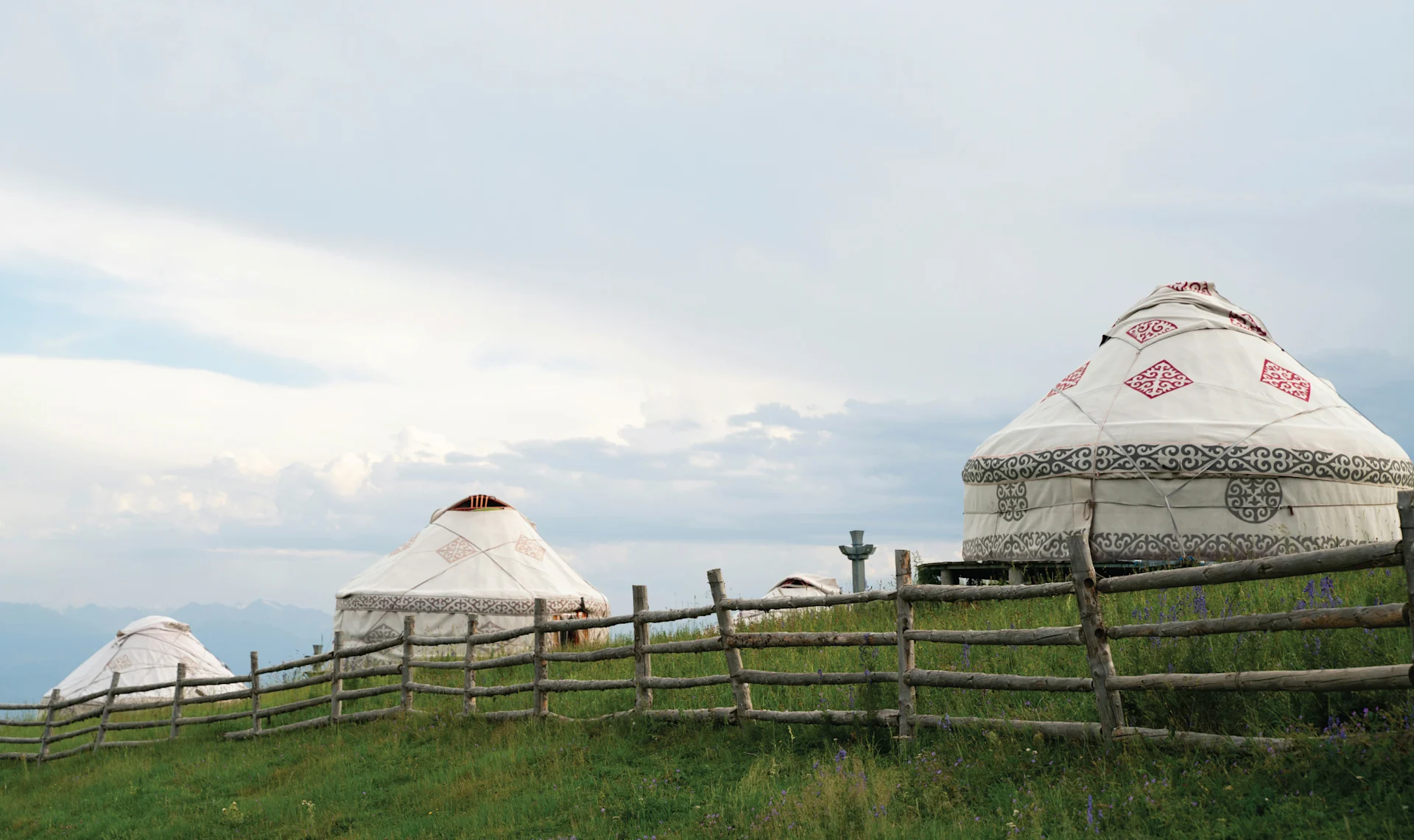
Some years after that train journey, I returned to Mongolia to cross it by horse, a thousand miles from west to east, from Bayan Oglii to Dadal. I began my journey in the pastures of Namarjin, a wide valley of encamped gers beneath the flanks of Tsaatan Uul. The valley might have been a tableau of the American plains before the arrival of Europeans: white tents, tethered horses, grazing flocks, pillars of camp smoke. The only sounds were those of nomadic domesticity -- children’s voices, dogs barking, the bleating of sheep, neighbours calling to one another across the pastures. As for the descendants of the Mongol armies, they proved to be shy, gentle, hospitable shepherds. Either the world’s most feared conquerors have mellowed or history, written by the people they vanquished, has treated them unfairly.
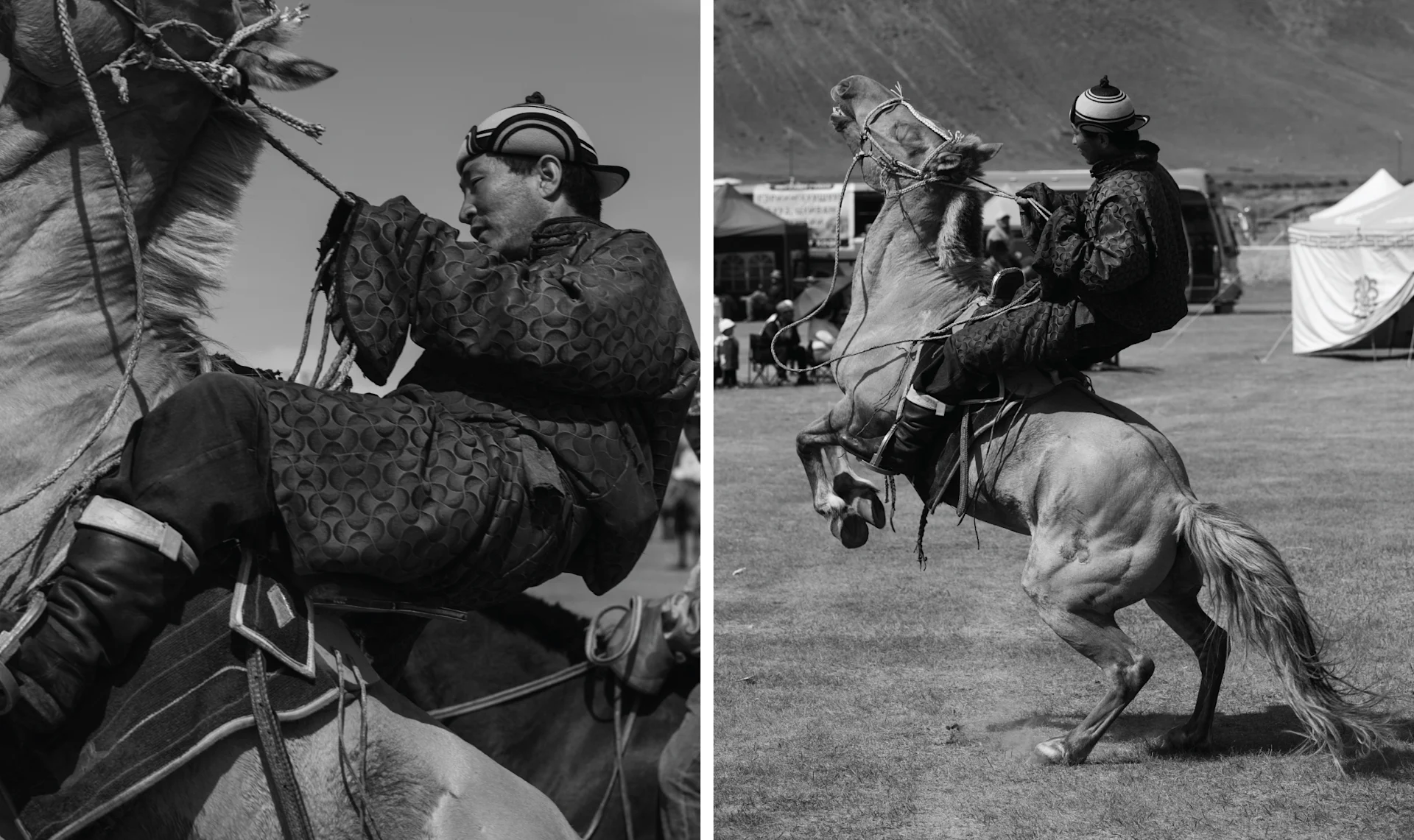
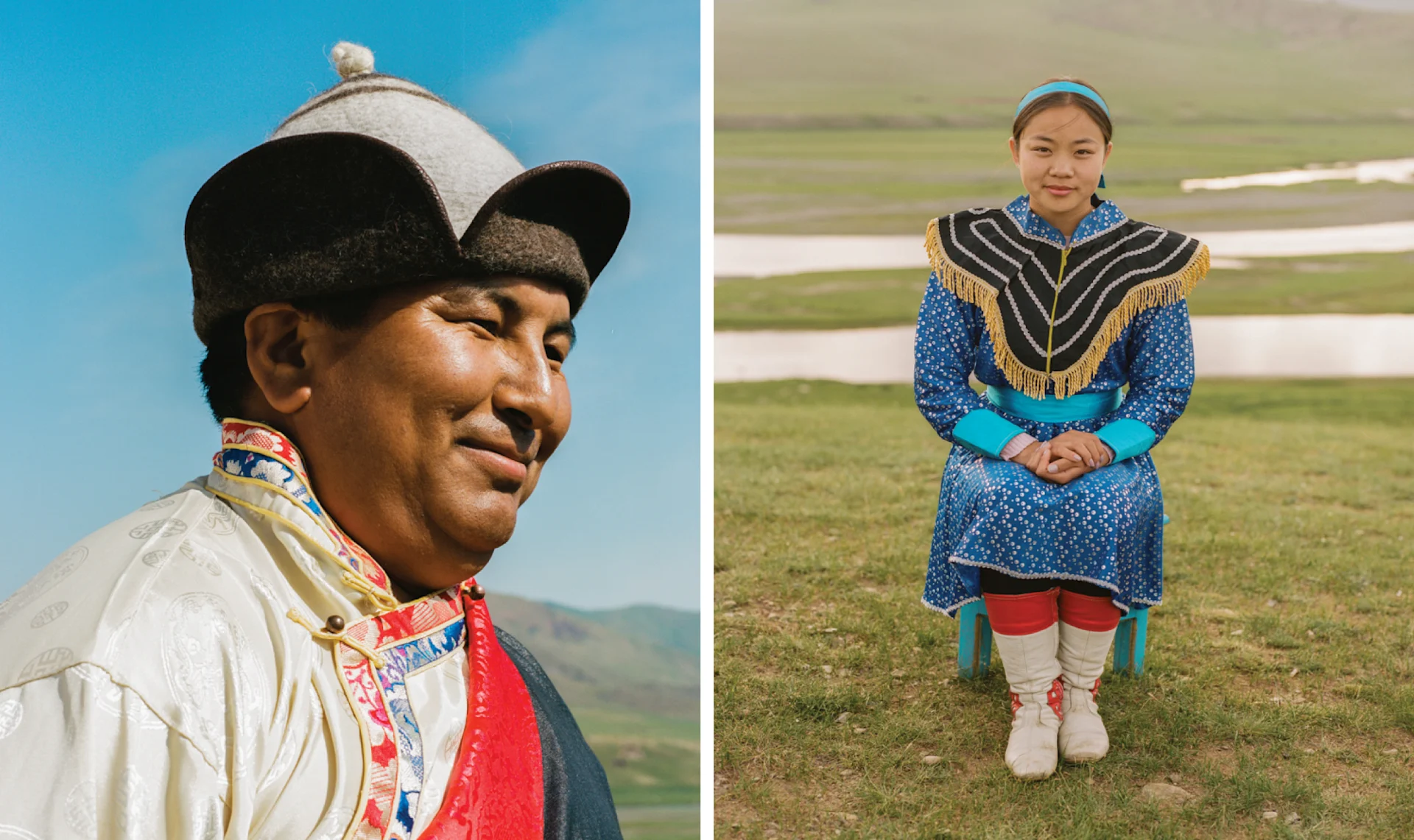
I was welcomed in Namarjin by Batur, an elderly patriarch with a walnut-coloured head and a wisp of beard beneath his lower lip. Inside his ger, formal introductions were made. The Mongolians had some difficulty with my name -- the ‘st’ was troublesome, and the ‘ley’ was unpronounceable -- but eventually it emerged as ‘Stalin’, a name I would have to accept for the next five months. Batur’s wife handed us bowls of steaming milk tea, and we slurped noisily. Both Batur and his wife were dressed in the way of all Mongolians -- tall riding boots and a del, the traditional quilted Mongolian robe. It was side-buttoned, bound at the waist with a brightly-coloured sash, and had an appropriately medieval character.
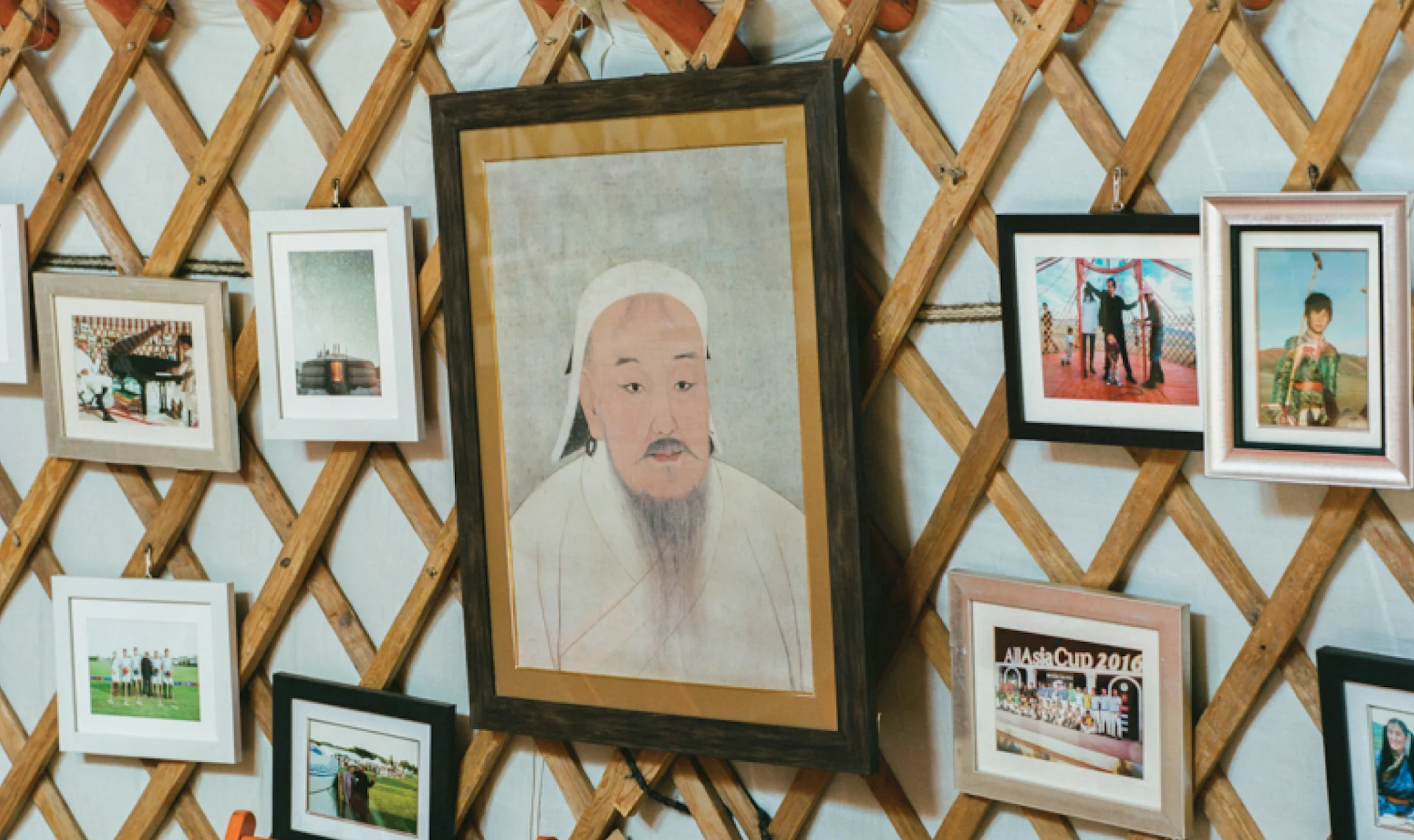
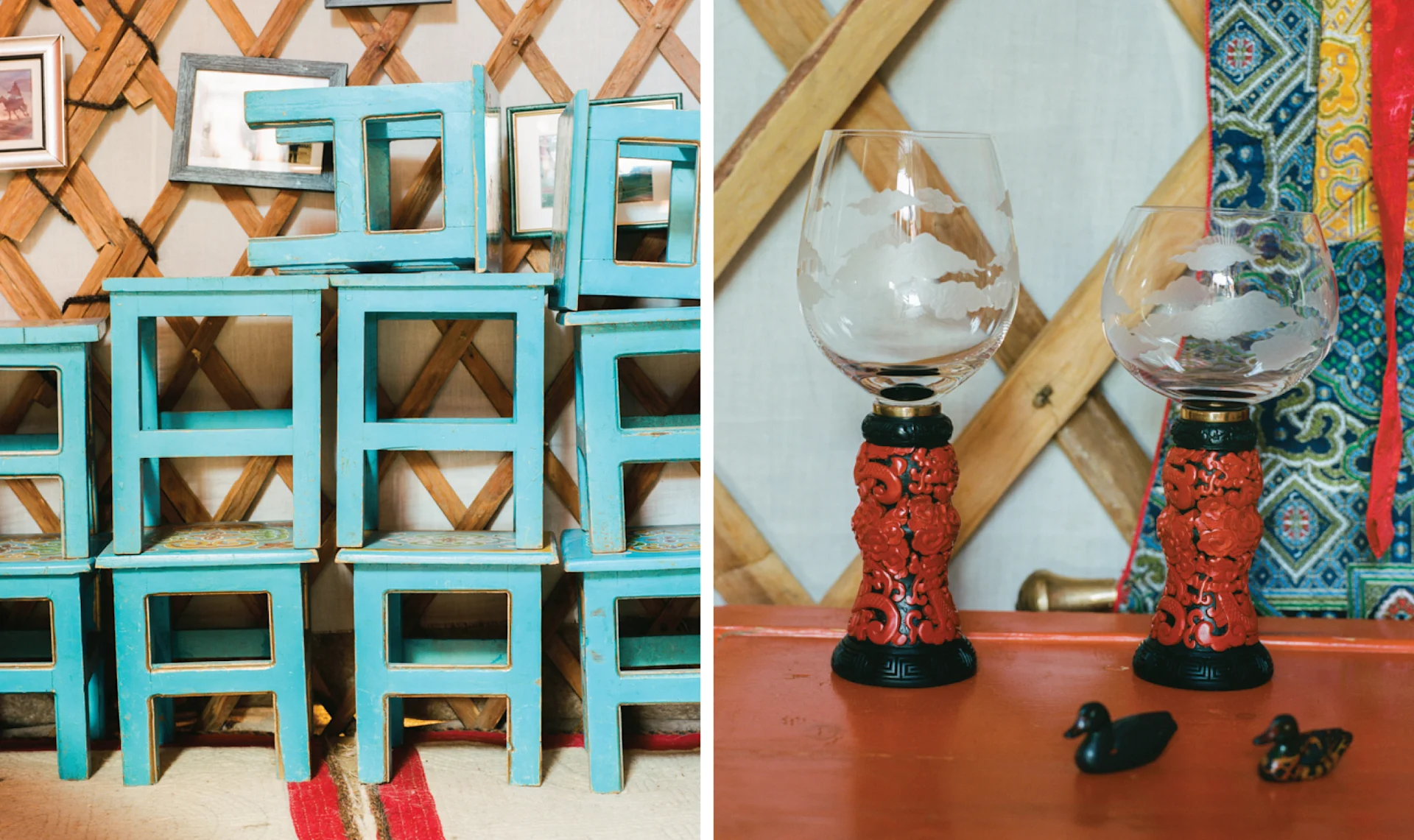
Inside a Mongolian ger, everything has its appointed place. Batur sat at the centre of the back wall, opposite the door, the traditional seat of honour for the man of the ger. As his guests, we sat on his right, on low stools or cross-legged on mats, in order of precedence according to age and status. For the next five months, in countless gers across Mongolia, I would always sit in exactly the same place. It had the odd effect of making strangers’ homes feel familiar. The stove, fuelled by animal dung, was at the centre of the ger; its chimney disappeared through a hole in the roof. Rounds of cheese hung from the rafters. On the women’s side of the ger were the cooking pots and the children’s cots. On the men’s side, the saddles, the guests, and the jugs of airag – a frothy beer made from fermented mare’s milk.
A young ram had been slaughtered in my honour, and when dinner was served, I discovered that, for Mongolians, offal was valued more than meat. There were no nicely grilled lamb chops. Instead, a large communal bowl of sheep parts was laid before us. Knives were handed round and we were invited to dip in and carve ourselves a few delicacies. Everything was in there, floating in a thick broth: lungs, stomach, bladder, brain, intestines, eyeballs. It was a lucky sheep dip; you were never sure what you were going to pull out. I fished carefully, not too keen on finding myself with the testicles. Fortunately, I caught hold of the intestines, which were surprisingly good, and once brought to the surface, went on for quite a while.
In the morning, Batur beckoned one of his sons to act as my guide for my departure eastwards. He bridled three horses for my small caravan – my translator, myself, and a baggage horse. Batur’s wife emerged from the ger to dab milk on the horses’ forelocks, a traditional Mongolian blessing. Dogs barked, children waved, sheep scattered, and the camp horses who weren’t going pulled at their tethers and whinnied piteously as we rode away down the valley, a trio of riders and a single pack horse setting sail into an enormous sweep of landscape. Ahead of me lay a thousand miles of Mongolia.