A craftsman wearing a fingerless glove holds his breath to steady his hand. Using a fine brush, he paints delicate, uniform flower petals onto a porcelain plate. At Hataman Touen, a workshop in the mountain village of Ōokawachi on Japan's southwestern island of Kyushu, artisans have been decorating tableware this way for centuries.
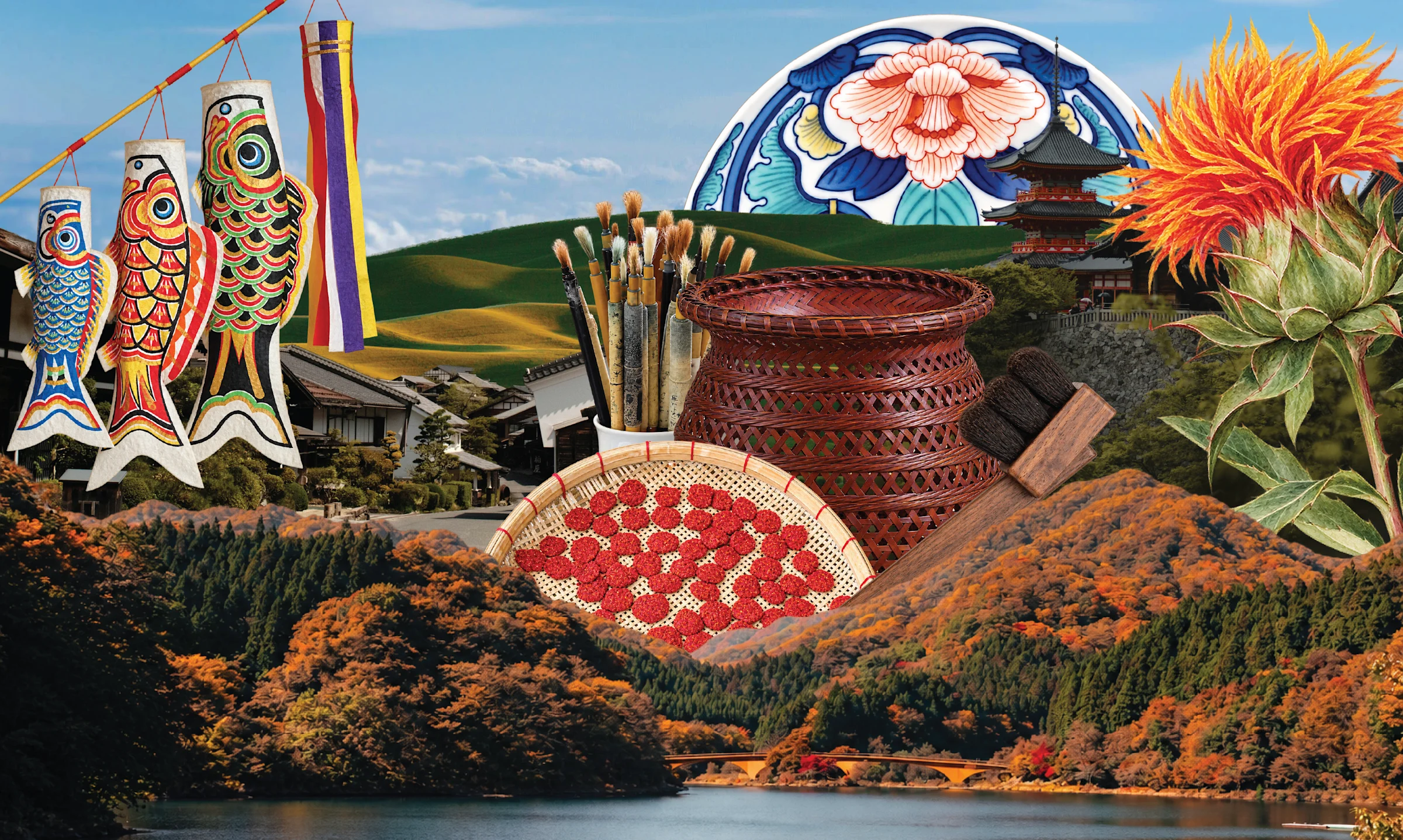
In Japan, some towns are so closely tied to a particular craft that their names are synonymous with what they produce. Say “Echizen,” and what comes to mind is washi, the handmade paper produced there for roughly 1,500 years. Beppu, meanwhile, is known for its bamboo weaving; Imbe for the bulbous, rust-colored Bizen ceramics its potters have been molding for more than a millennium. In each place, artisans elevate the raw materials of their surroundings, whether clay from a nearby riverbed or bamboo from the forest. In Azumino, where snowmelt from the Japanese Alps feeds the wasabi fields, farmers apply a craftsman-like level of precision to cultivating some of the world’s finest wasabi, a tradition explored on PRIOR’s upcoming Japan Through Craft journey.
Many of these crafts were refined and codified during the Edo period (1603–1868), when local lords helped establish them as bona fide industries, ensuring that skills and knowledge passed from one generation to the next. Today, workshops, kilns, and studios across Japan preserve these techniques, many of which are site-specific. In the eight towns and villages that follow, visitors can meet the makers keeping these practices, see their handiwork up close, and often participate in the process.
Kahoku, Yamagata: Benibana-Zome (Safflower Dyeing)
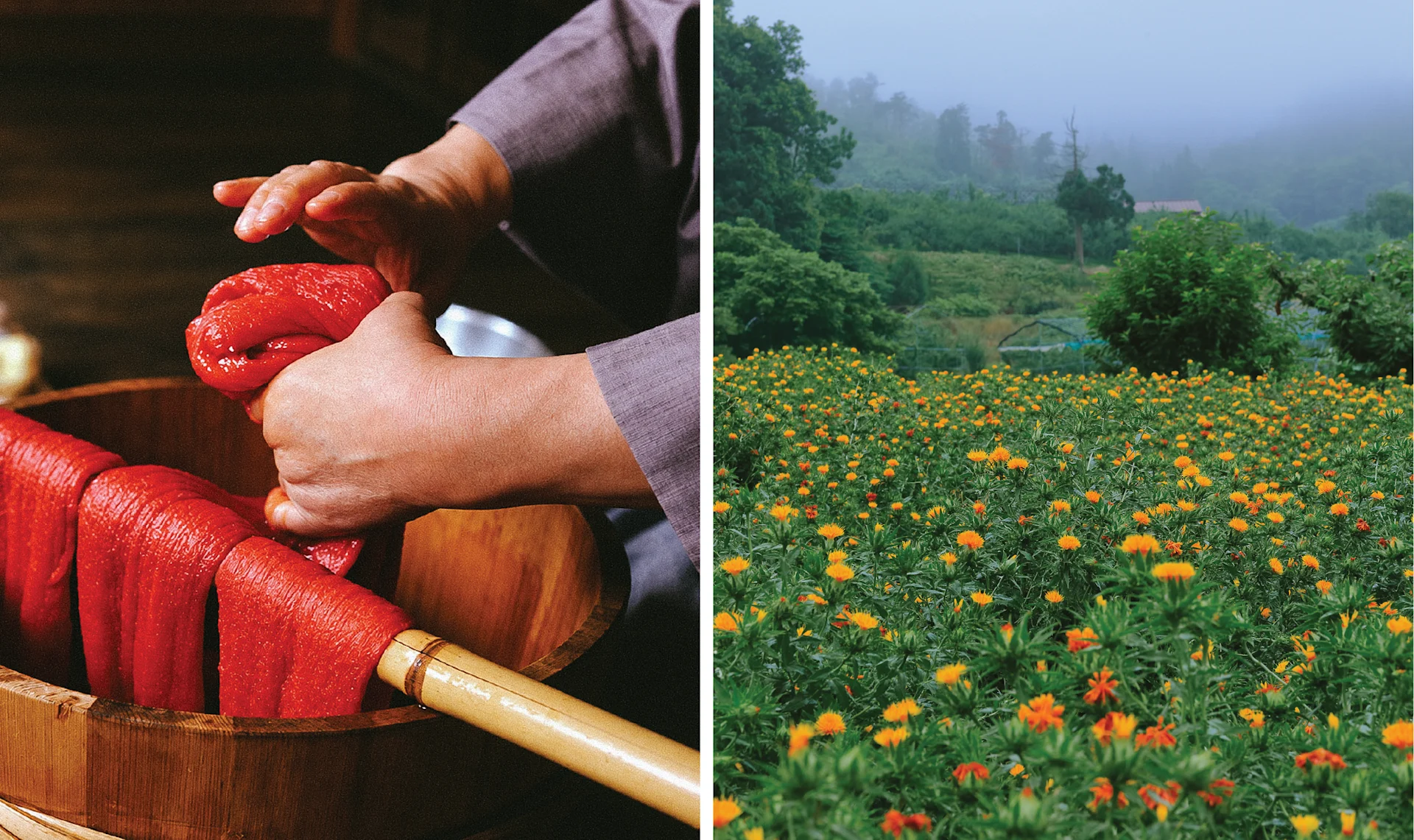
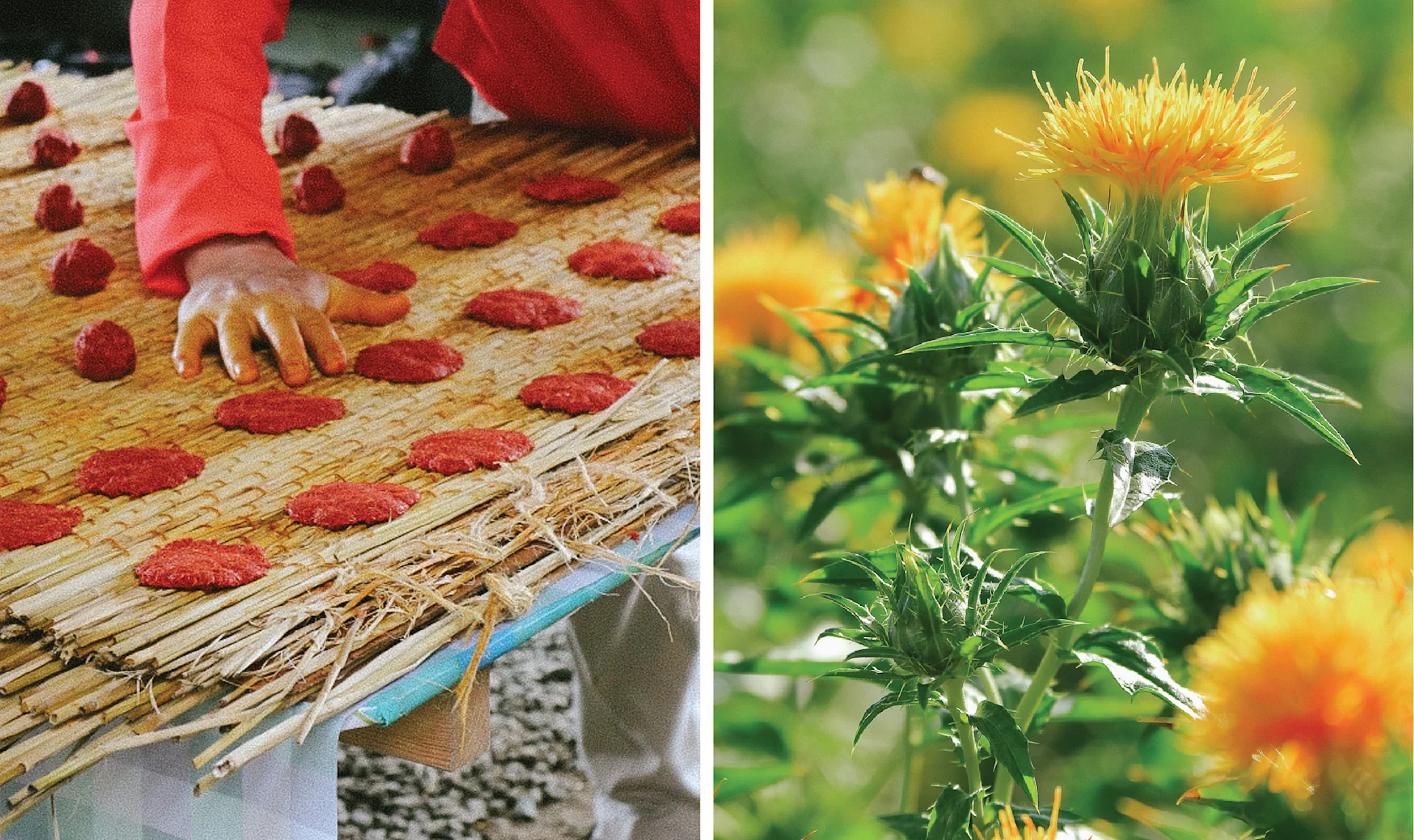
By 6 a.m., farmers in Kahoku, in northern Japan’s Yamagata Prefecture, are already in the fields harvesting July’s safflowers, their prickly blossoms softened by the overnight dew. (The flowers are a brilliant yellow despite their Japanese name, “beni,” meaning crimson.) For nearly half a millennium, the plants have been cultivated here to produce a pigment used in textiles and cosmetics.
Only the petals are harvested, a painstaking task that must be done by hand. To extract the red pigment, which makes up just one percent of each flower’s petals, farmers first wash away the water-soluble yellow color. The petals are then dried and fermented until they turn red before being pounded in a mortar and pressed into small discs called beni-mochi. “The technique and culture of processing the beni into beni-mochi—a form practical for preservation and distribution—is unique to Yamagata Prefecture,” says Kensuke Sasaki of the Safflower Promotion Organization.
With a bit of advance planning, visitors can join the early-morning harvest and pick petals alongside local farmers.
Courtesy Yamagata Prefecture
Courtesy Yamagata Prefecture
Courtesy Yamagata Prefecture
Courtesy Yamagata Prefecture
Courtesy Yamagata Prefecture
Courtesy Yamagata Prefecture
Courtesy Yamagata Prefecture
Courtesy Yamagata Prefecture