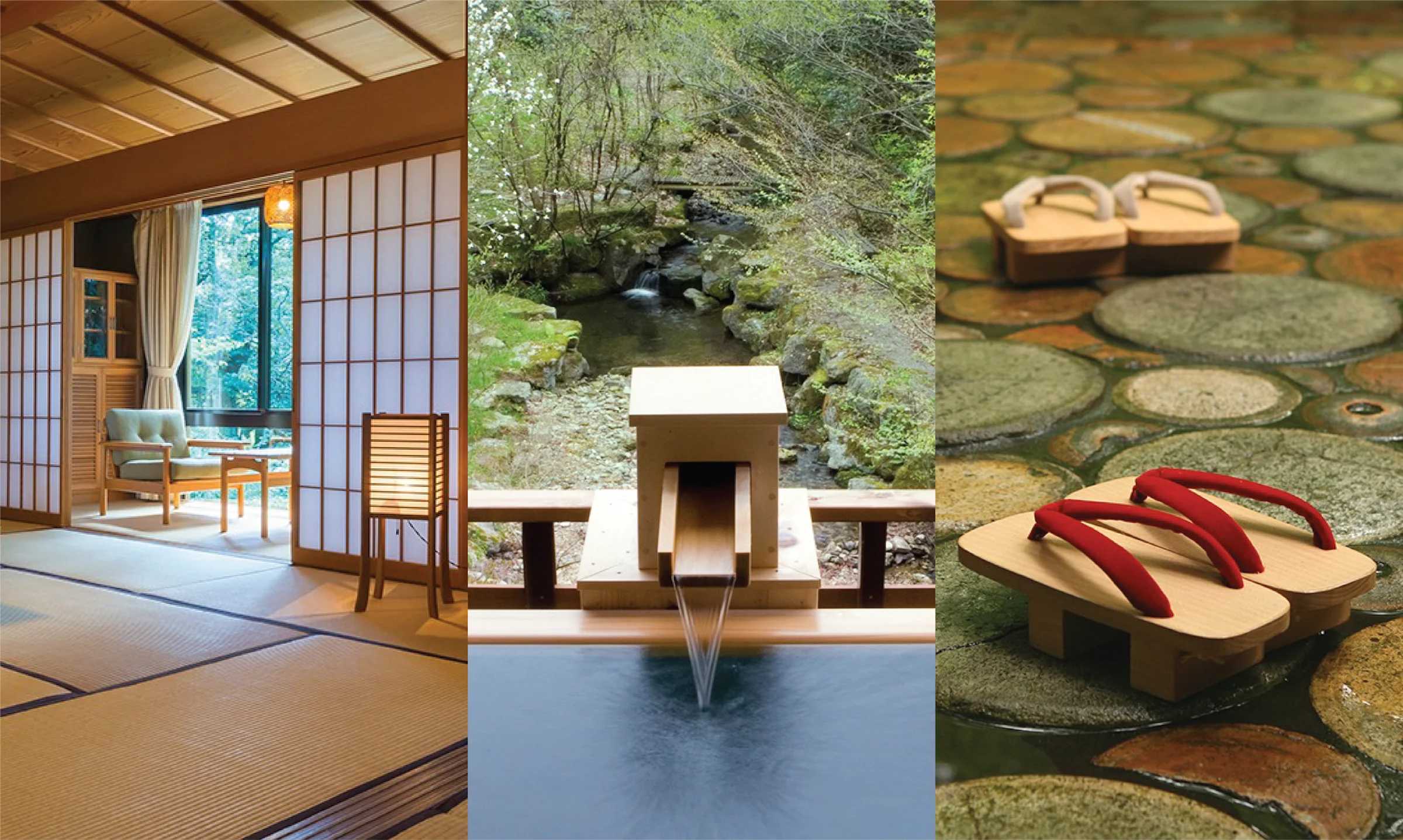
Kayotei is a sensory thrill of a ryokan, pairing classic omotenashi (Japanese hospitality) with deeply rooted traditional artisans—woodworkers, potters, papermakers, and sake brewers among them. In-room teapots are made by a local potter, fridges are stocked with Kanazawa craft beer, and breakfast features grilled local fish. The result is a palpable oneness with the surroundings that feels deliberate but not forced.
The experience unfolds in a forested corner of Yamanaka Onsen, a centuries-old hot spring town tucked into an amphitheater of mountains in Ishikawa Prefecture. The nearest rail stop, Kaga Onsen, which connects to Tokyo in three hours and Kyoto in two, is a 15-minute taxi ride to the property.
When to Go
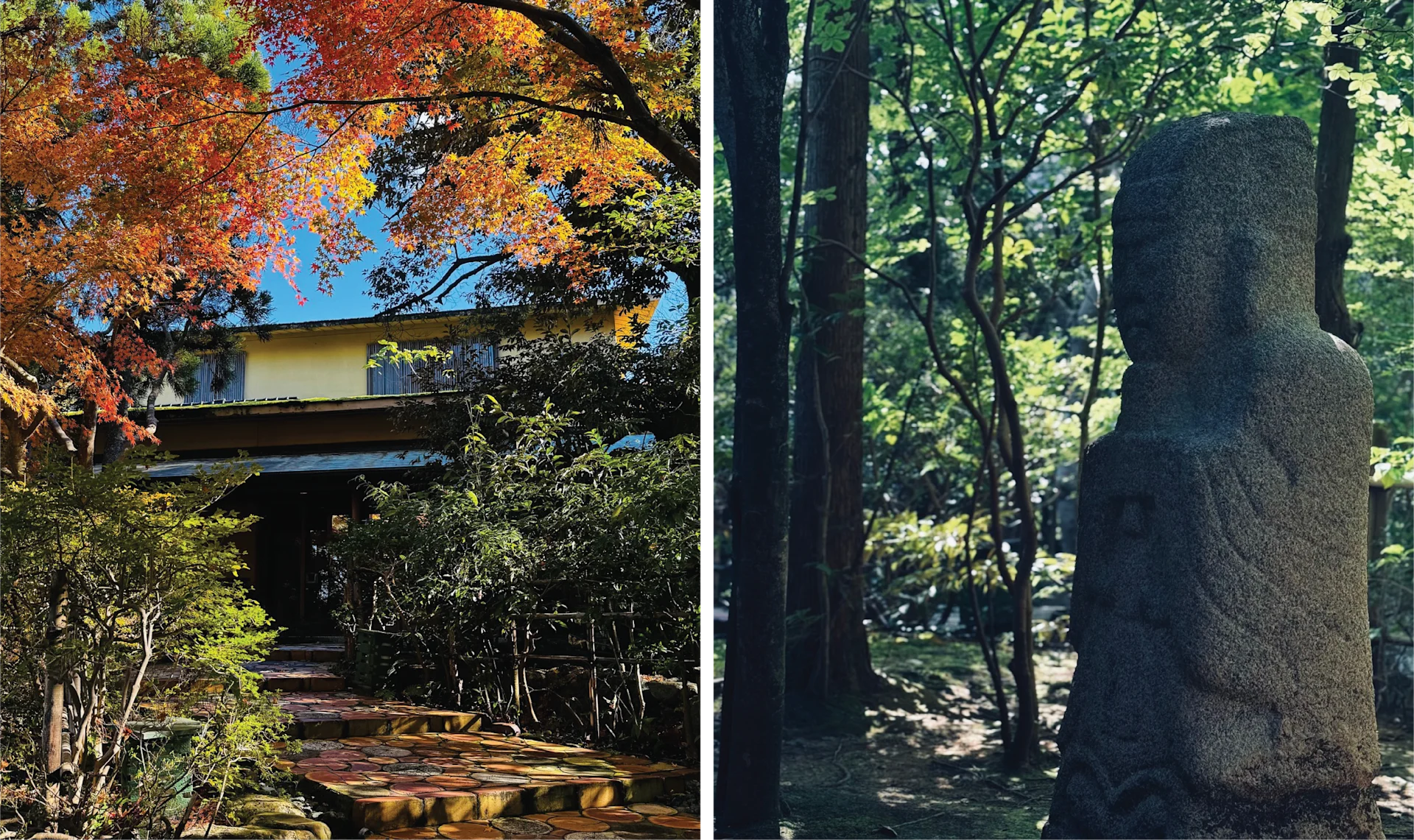
While late spring brings scattered, half-hidden cherry blossoms and onsen waters from the mountain tops, autumn is when Yamanaka Onsen reaches its fullest expression. The surrounding mountains radiate with rust- and persimmon-toned foliage, foiled by the deep green moss below.
Autumn also marks the high point of kaiseki cuisine, when menus are at their most abundant and exacting, built around revered hyper-seasonal ingredients like matsutake mushrooms, chestnuts, and river crab.
Backstory
More than 50 years ago, Masanori Kamiguchi closed his father’s large-scale hotel and began traveling Japan to study ryokan architecture. Kayotei, built in the 1970s as a 10-suite inn, is the result of that decades-long pursuit—a place designed to feel inseparable from its surroundings.
Design
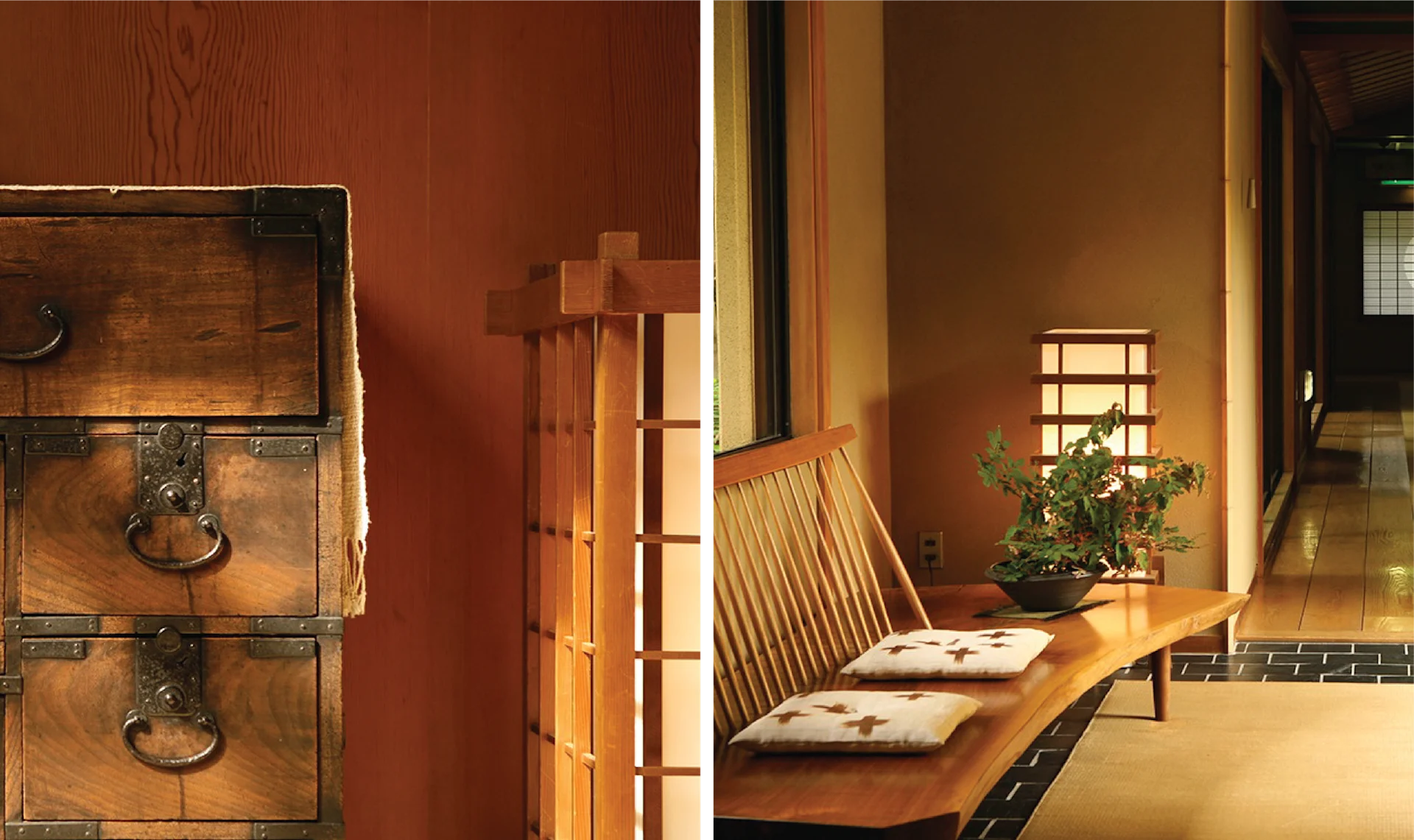
The structure adheres to traditional sukiya-zukuri architecture, a style rooted in the aesthetics, layout, and spatial harmony of teahouses. Natural materials such as wood and clay are paired with subdued earth tones and large windows that frame the season’s ever-changing landscape, creating a calm, meditative atmosphere.
Rooms
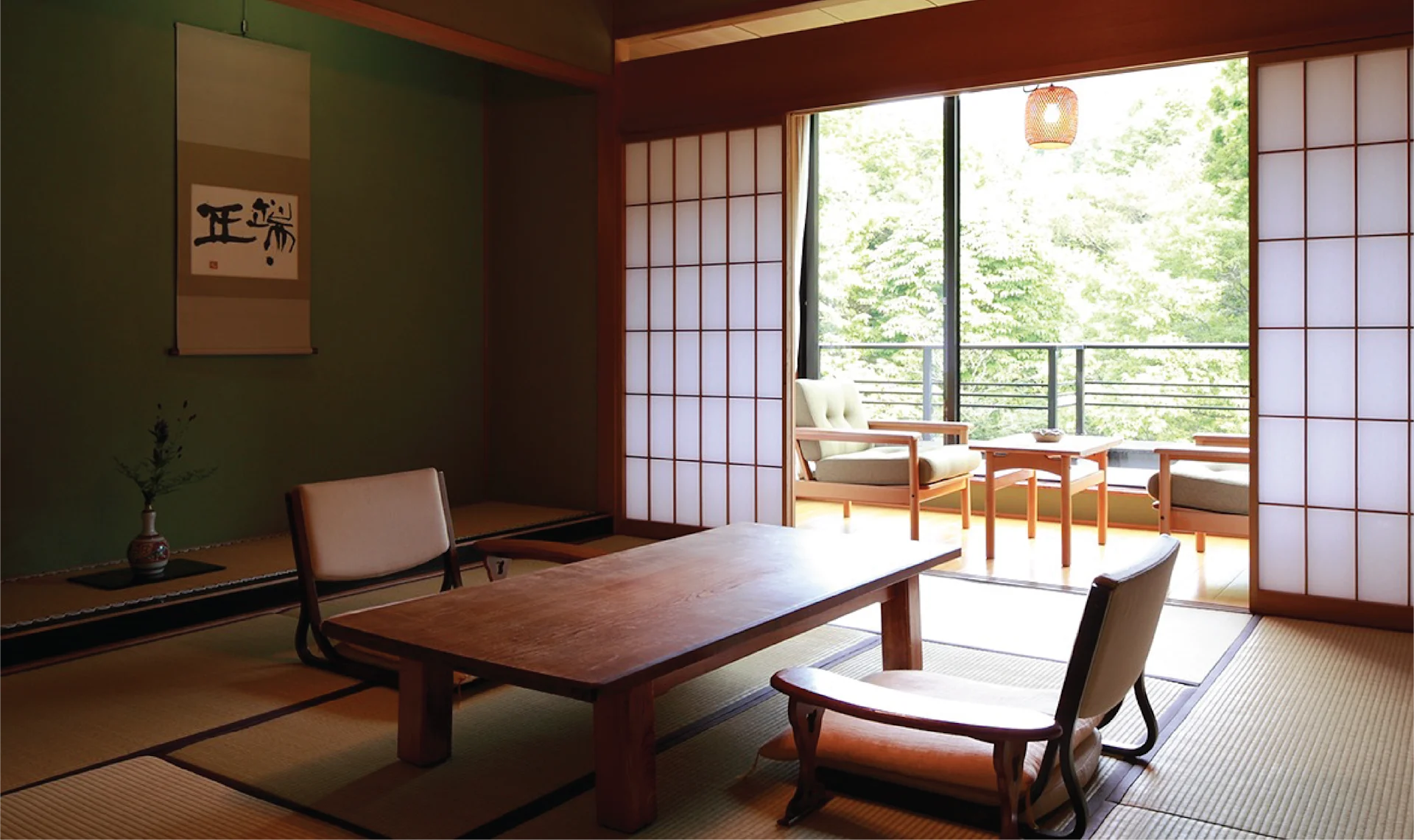
All 10 suites feature tatami flooring, shoji screens, and thoughtfully curated interiors full of handcrafted objects that reflect the principles of wabi-sabi. Rooms with private open-air baths—Higashiyama Family, Basho Family, and Kokutani—are especially worth seeking out.
Food & Drink
In true ryokan tradition, both breakfast and dinner are included in the stay. At Kayotei, kaiseki menus unfold as a sensorial progression of ever-changing dishes that mirror time and place. In late autumn, for example, dinner might bring sea bass sashimi, kobako-gani (female snow crab), and organic aigamo rice paired with local sake and craft beer from Kanazawa.
Wellness
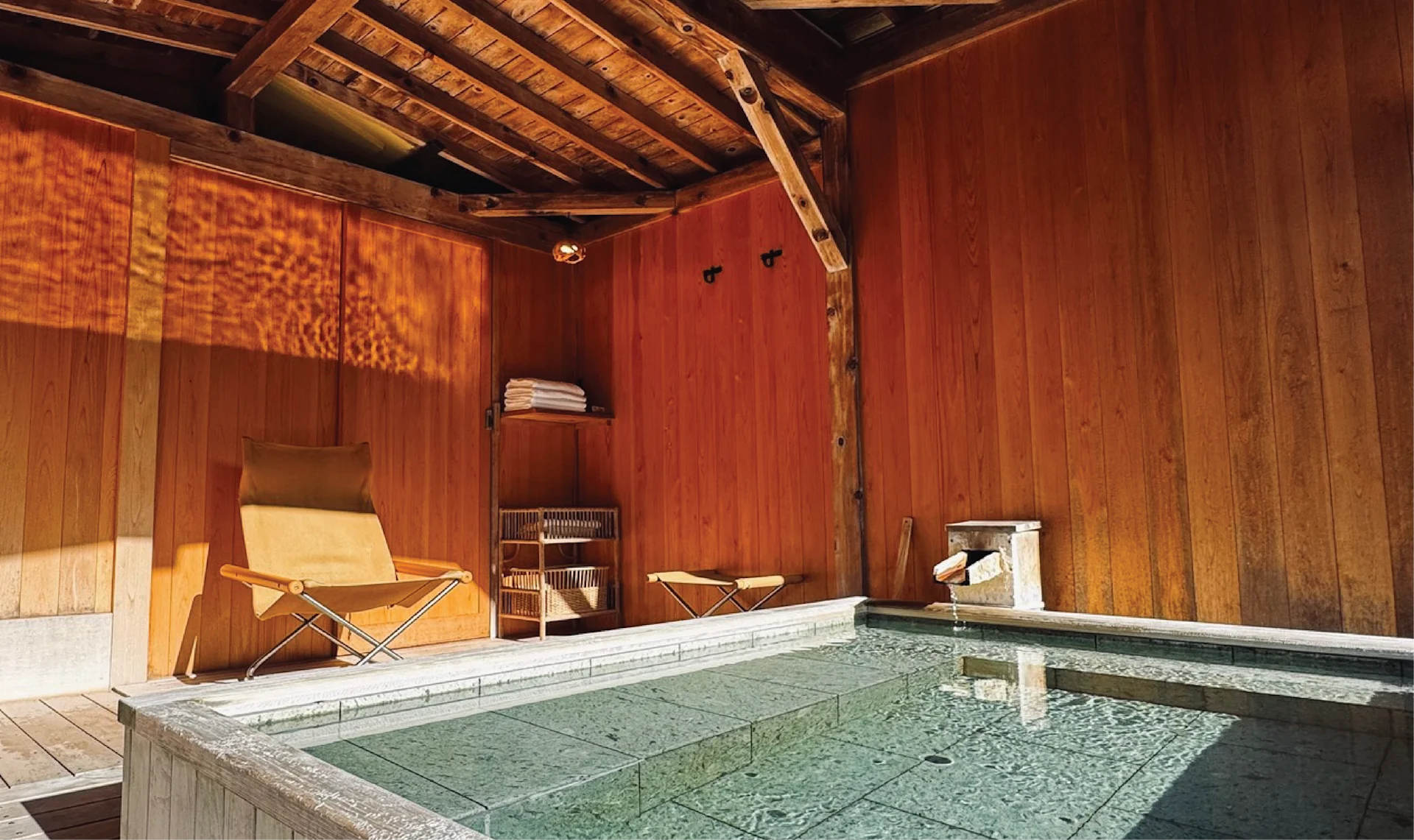
The hot spring town’s mineral-rich waters are gently therapeutic, known to support circulation, ease muscle tension, and encourage a meditative calm. Select rooms feature private tubs, but guests can soak in both indoor baths and open-air rotenburo, all fed by the springs. Beyond the ryokan, forest bathing and walks through the Kakusenkei Gorge deepen the restorative experience.
Beyond
A 15-minute walk leads to the town’s main square, where locals linger and catch up at the women’s public bath. The main road is lined with long-standing businesses, including Sankaido, a century-old sweet shop; Gato Mikio, a fourth-generation woodworking studio; and Matsuura, the town’s sole sake brewery, known for its seasonal bottlings and soft-serve ice cream made with sake lees—the nutty sediment left after brewing.
For guests drawn to craft, the ryokan can also arrange atelier visits with master artisans practicing traditional trades such as maki-e, kintsugi, and washi paper making.
Drawbacks
Traditional ryokans operate with a set of cultural conventions that guests are expected to follow: sleeping on futons laid over tatami mats; removing shoes and wearing tabi socks indoors; dining at set times with fixed menus; observing specific bathing protocols, particularly in shared baths; and wearing summer kimonos, or yukata, throughout the property. For travelers who prioritize flexibility or individualized hotel amenities, this structure may feel limiting, and a ryokan stay may not be the best fit.