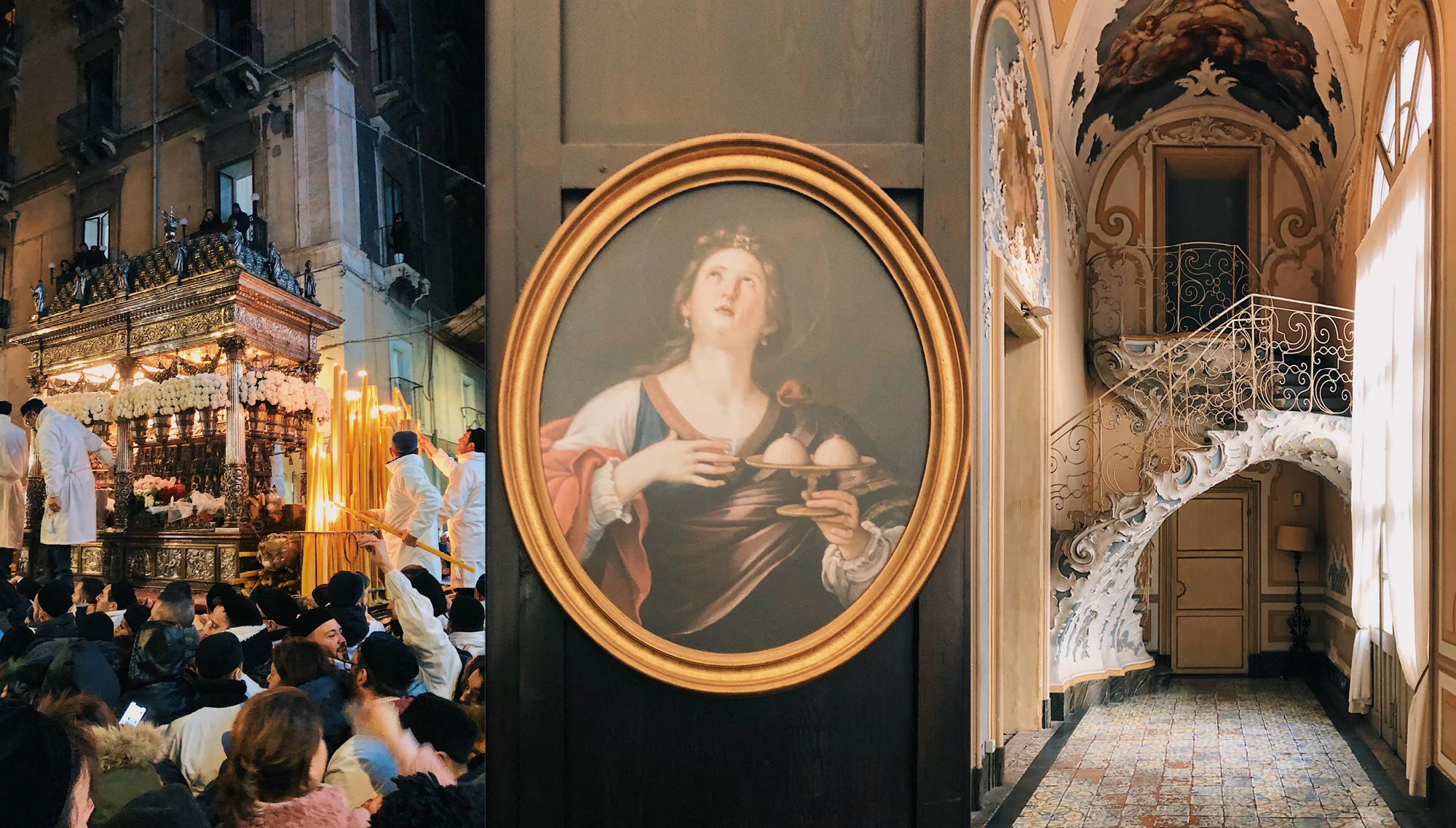
In Catania, the dark grit of the city casts a spell. At first it seems dirty, like a black veil has been laid over the euphoric Baroque architecture, with its voluptuous curves and gilded trappings. Like the inky sea swells are primed to devour anything that gets too close. Black is everywhere: black lava stone; basalt. It’s the literal foundation of this eastern Sicilian city and its craggy coastline, where Mt. Etna, the active volcano, looms large on the horizon and often sends down rain storms of black sand on the heels of her fiery flares. Optimism comes in measured doses. This is a place where the local language, Siciliano, has no future tense. It’s where making plans is rarely met with an affirmative yes, but instead a hopeful maybe. Magari. However, the Catanese are hospitable. They will feed you until you’re begging for an amaro to cut through the eggplant parmigiana, involtini, meatballs, and pastas topped with ricotta. Here, family is celebrated front and center, and even in this deeply patriarchal society, the women command that ship. For the Catanese, the three most important and influential women are—and will always be—mamma, Etna and Agata.
Sant’Agata, the city’s patron saint, endured the darkness. A devout (and illegal at the time) Christian, she vowed to dedicate her life to God. But Agata was as beautiful as the plumeria that perfumes the balconies around town. A Roman prefect named Quintianus became obsessed with her. When she rebuked him, he tortured her. She was put on trial for her faith and tortured even more. Eventually, in an attack on her femininity and religious chastity, he cut off her breasts, and she died February 5, 251 CE. At the moment of her death, an earthquake is said to have throttled the city. A year later, on the anniversary of her demise and martyrdom, Etna began erupting, but simply evoking Agata’s name caused the eruptions to subside.
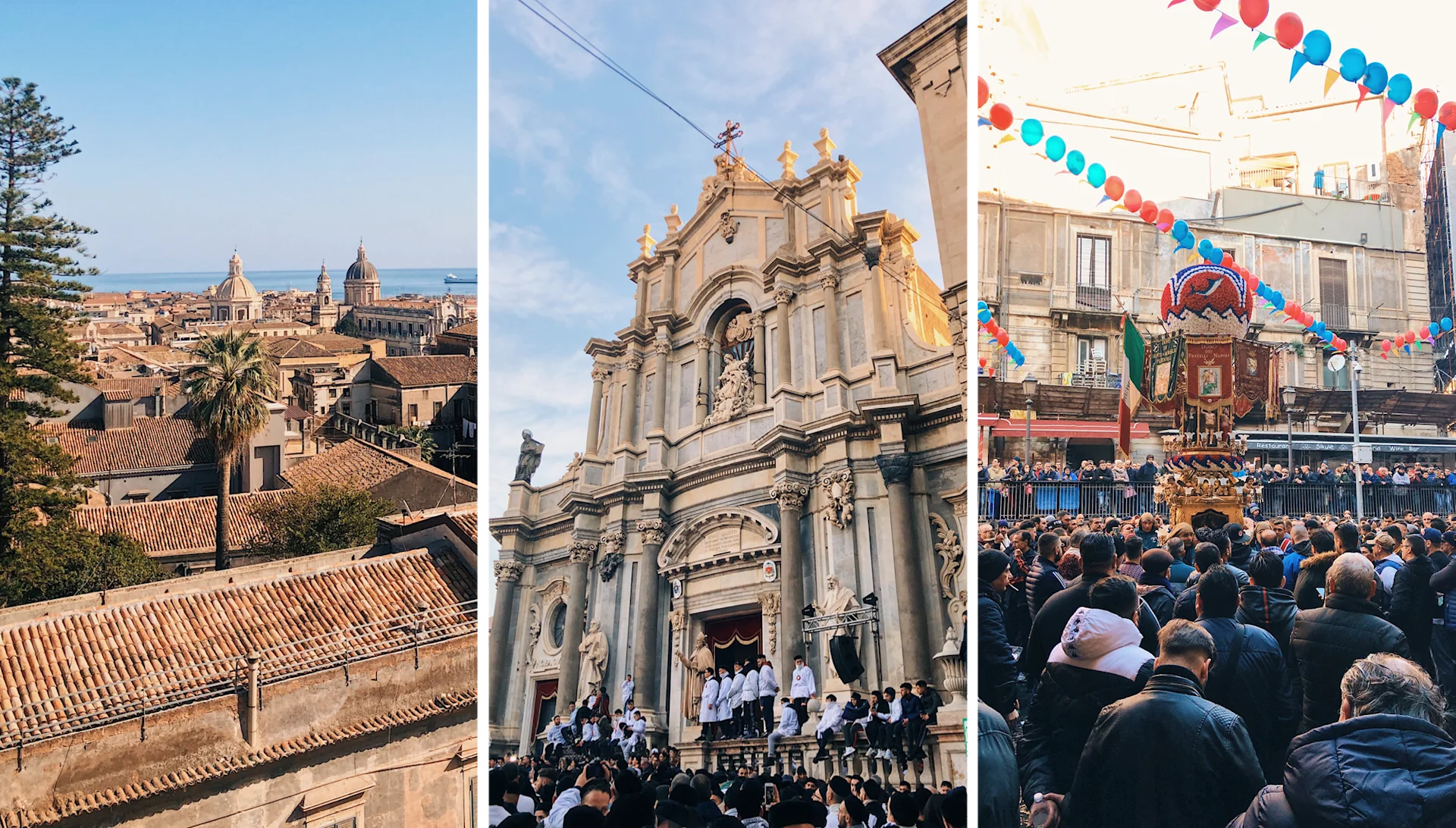
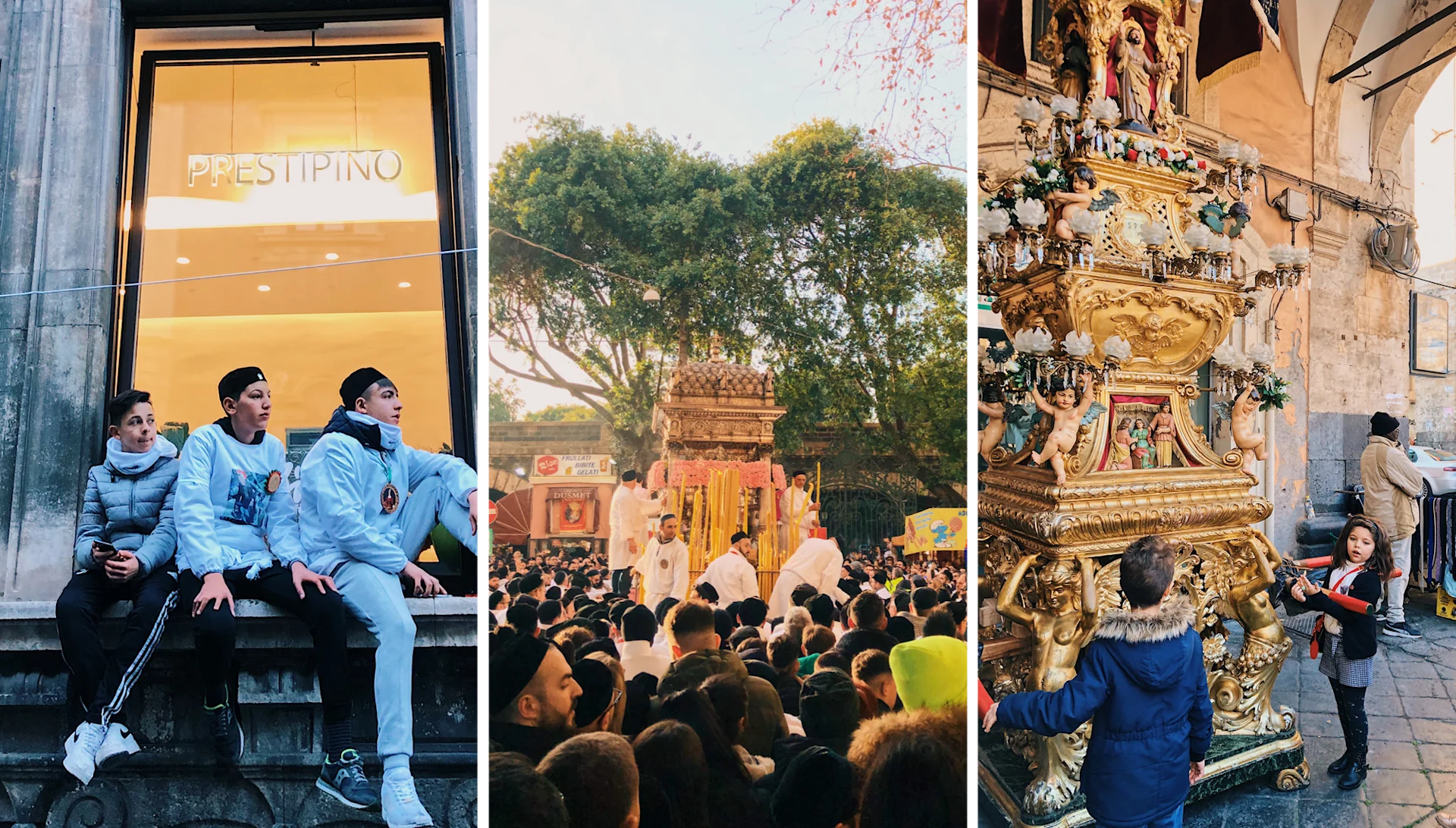
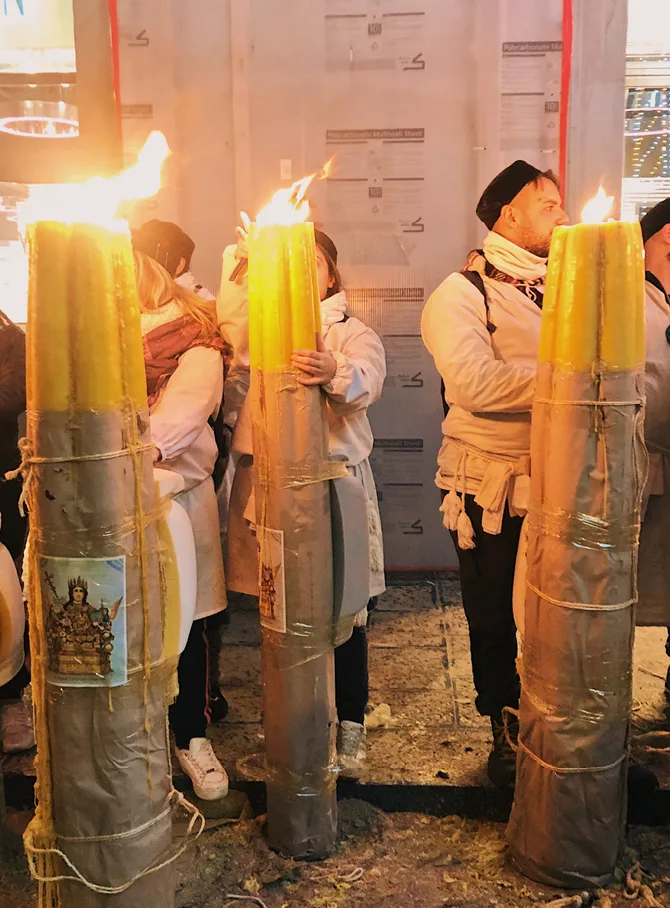
Nowadays, hundreds of thousands of devotees from all over the world descend on “the black pearl of the Ionian” for three days in February (3-5) to celebrate Agata’s strength and shine literal light on her path. As a twenty-ton carriage pulls her relics from the Duomo along Via Etnea and Via San Giuliano, crowds swarm the streets to settle in for an all-night affair as the city’s beloved saint slowly makes her way throughout town. Around sunrise, she will finally arrive back home to the cathedral. Among her escorts, young men dressed in sacco agatino (white long-sleeved tunics, a black chechia hat, and a handkerchief) hoist massive, hand-poured yellow candles weighing as much as 100 pounds. Evidence of their progress along the path is marked by pools of melted wax that congeal onto the lava pavers underfoot. Behind them, gold-ensconced carved wooden pillars called candelore ply through the streets, each carried by a small army of men. The largest requires a team of 12.
For a city of people who hardly ever show all their cards, the spikes in emotion can be practically cathartic. It’s the one time of the year where intense peaks of jubilation and adulation might be followed by silent weeping or even wailing. As any Catanese knows, the road behind Agata can be dark and arduous. But that doesn't mean it's doomed. They just have to bring the light.