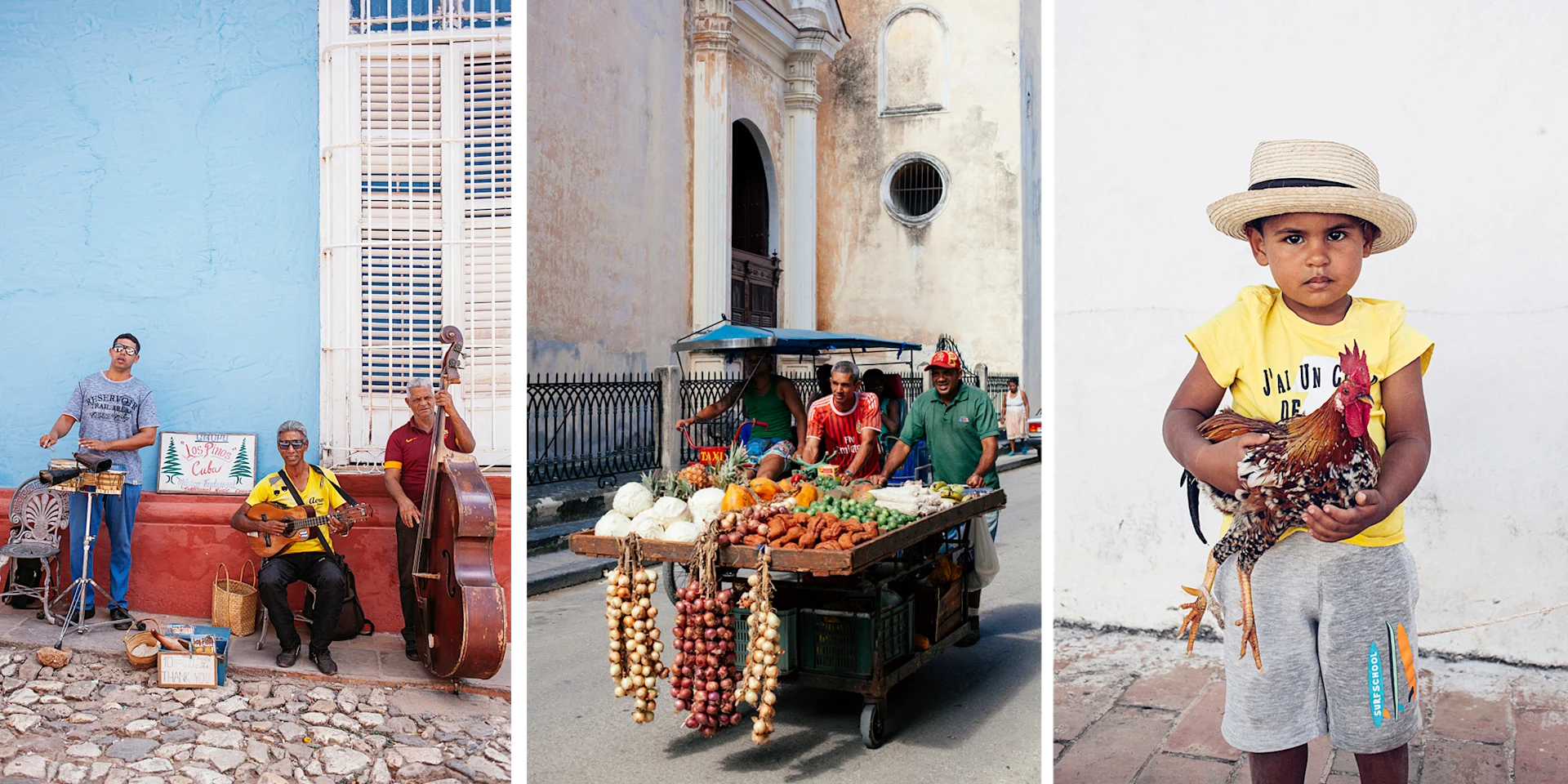
In Trinidad, Cuba, brightly lemon-curd and pistachio painted buildings spill down the wobbly cobblestone streets out toward the Caribbean ocean. Behind their heavy wooden doors and centuries-old facades, a new generation of local families set their spare bedrooms with crisp linens to welcome guests from all over the world. Amidst the growing number of homestays, artist studios rattle and buzz with the sounds of simple tools, the artists using traditional techniques to make uniquely contemporary treasures. It’s a place as equally frozen in time as it is one that is helping build and define Cuba as a place for a new age of visitors.
Founded by the Spanish in the 1500s, this petite port town in central Cuba is one of the most well-preserved colonial cities in all of the Caribbean. Where Havana has vintage cars, central Trinidad mainly has slow-striding men on horseback and pedestrian-only streets. And where much of Cuba has only faded, crumbling shells where former palaces may have once stood, in Trinidad these lofty buildings are still perfectly preserved, or in some cases newly restored, and being used for new businesses. Government reforms in the past ten years have allowed the number of private entrepreneurs to rise sharply since. Before 2010, Trinidad offered visitors just three private paladares or home restaurants. Today, there are more than 100.
The intimate city—with around one percent of the population of Havana—is only five kilometers away from Cuba’s once-thriving Valle de los Ingenios (Valley of the Sugar Mills), the former epicenter of the country’s sugar cane industry. Trinidad’s small entrepôt, Casilda, was for decades buzzing with tradesmen, fortune seekers, and thousands of West African slaves at the time brought in to work plantations in the neighboring lush mountain valleys. In their heyday, the vainglorious plantation owners who ran the industry funneled their profits into tremendous buildings with whimsical architecture in the nearby city, and filled them with European furnishings and fashions and endless soirées.
That kind of money has long since left the area (the sugar industry collapsed in the 1860s), but residents of Trinidad have taken care to preserve what time—and their contentious history—once built. The result is a city that looks like it has largely been trapped in time, with parts are still almost exactly aesthetically the same as they were during the 19th century. The streets are lined with clock towers facing into the valley, mansions with Mudéjar ceilings, and colorful dwellings with red terra cotta roofs, and most are still stuffed with relics and treasures from the sugar-producing era. But the residents today focus—instead of on the tumultuous past—on creating burgeoning contemporary businesses, from nightlife venues, to ceramic shops, to warm and eclectic bed and breakfasts.
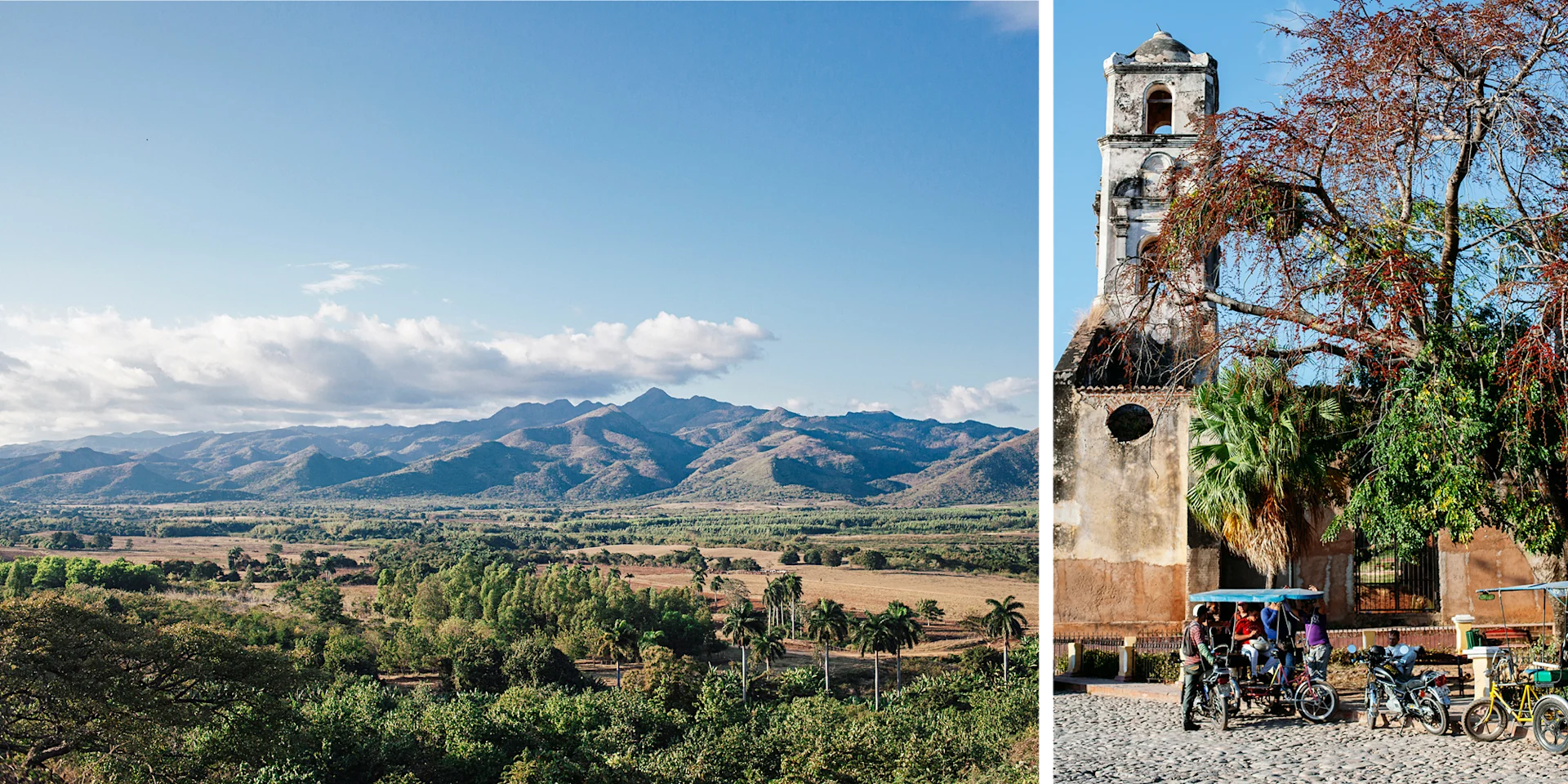
As it sits between the turquoise Caribbean and the cool air of the Escambray Mountains, a few days excursion to Trinidad from Havana also allows for visits to the beach and mountains—for sun and sea one day, and the birdlife, coffee, orchids and waterfalls another. Stay in one of the town’s mansion-turned-homestays with jasmine-perfumed courtyards, dividing archways, and tiled floors, and spend time peeking into wilds of the past and the Cuba of the future in this vibrant cultural enclave.