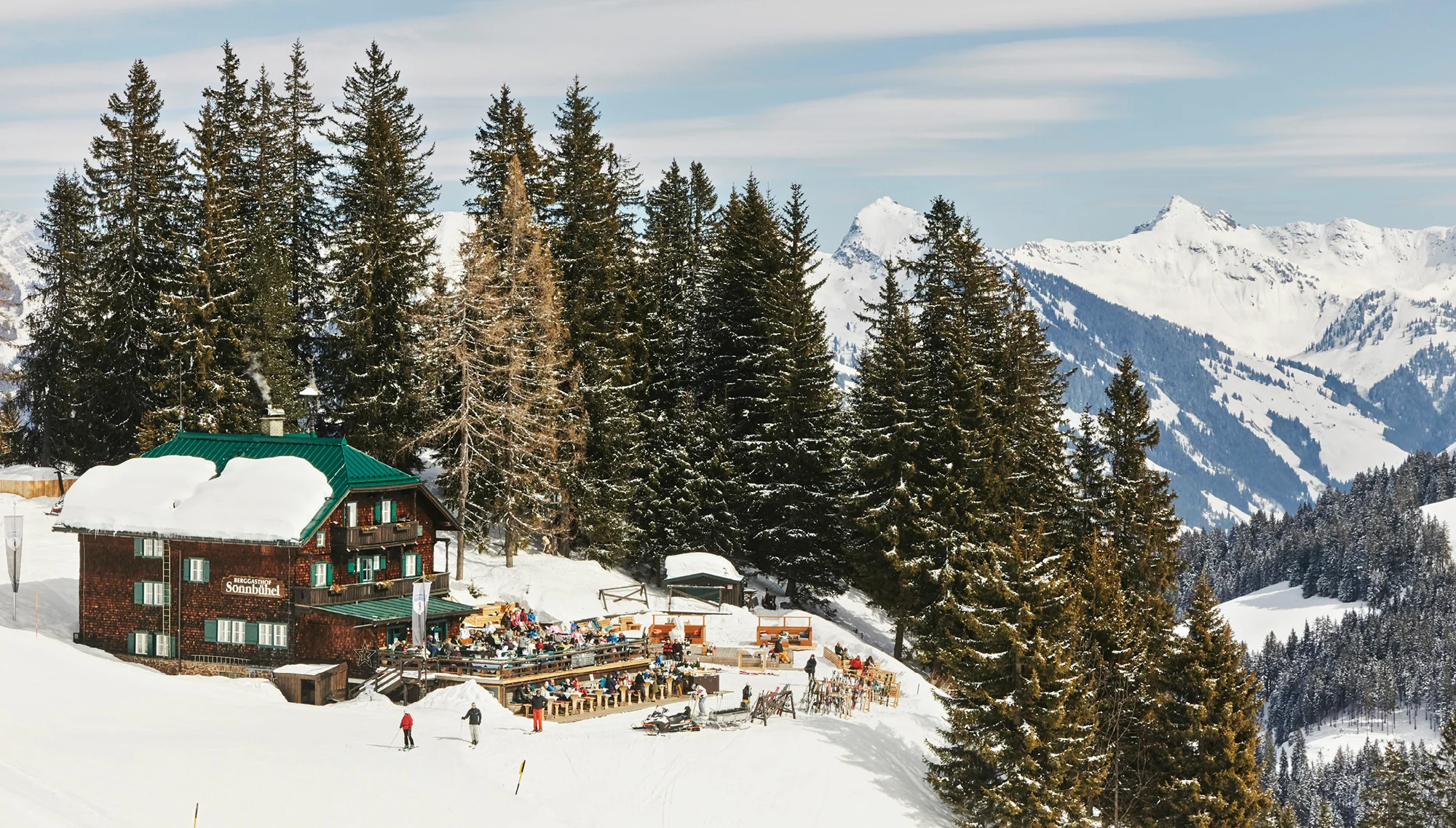
The way Meredith Erickson tells it, “the mountains are for early risers.” We’re chatting after she’s just touched down in Valle d’Aosta (“My ears are popping,” she says), a region in Northwestern Italy which houses Mont Blanc, Matterhorn, and Gran Paradiso mountains and makes up the first chapter in her new book Alpine Cooking: Recipes and Stories from Europe’s Grand Mountaintops.
In the book, Erickson cites some convincing reasons the a.m. hours in the Alps have won her heart: “Fresh snow to be skied, cows to be milked, butter to churn, the summer sun rising from behind the hilltops… all of this happens before 8 a.m,” she writes. Although she is a city dweller—splitting time between Montreal and Milan—lately, Erickson’s been in the Alps about two weekends a month, and for the last six years she’s been tirelessly researching every valley and piste (Alpine peak) across Italy, France, Austria, and Switzerland for her new book.
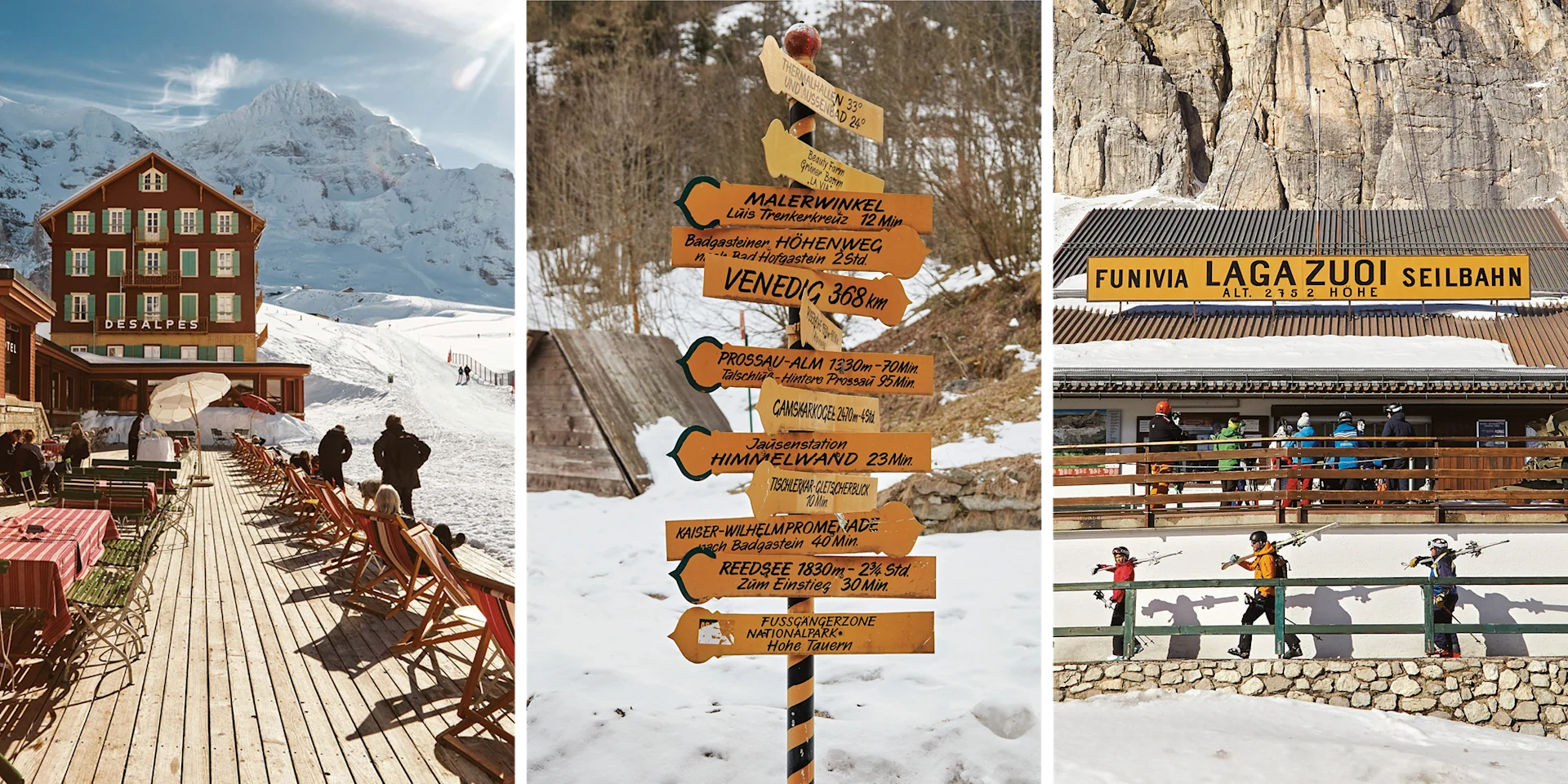
From Alpine Cooking, one can easily spot the features she thinks are indispensable on any Alpine trip. They include four-wheel drive and eating a schnitzel at almost every stop. In talking to her, you’ll quickly learn what parts she thinks are overrated, too. Strong among them: aprés ski, which Erickson thinks is just too big a focus of the day for visitors. In the wrong places, she says, “It can just be a lot of people doing Jager bombs. Nothing good happens in these places after 3p.m.”
Of course, Erickson is talking about a specific kind of drinker, doing a specific kind of drinking. (We’re all for warming up, winding down, and meeting people from all over the world after the slopes at cozy, authentic Alpine bars.) But just as drinking is a minor footnote in her book—she mostly focuses on a few regional drinks and the best wine cellars to get snowed in at—proper drinks are just a small part of her ideal day on the Alps. To her, the perfect way to travel there is “traditional, not trendy”, including visits to family-owned huts, chalets, and stubes that give a real taste of what it means to be Alpine.
You’ll need to get up a little early, but her genius itinerary has us convinced that hers is a day worth waking up for. When you hear about the mountaintop steam rooms and the long, cheese-filled lunches that awaits you, you’ll want to try things Erickson’s way, too.
Forgo 5 Stars and Stay at Family Hotels
To experience the real Alps, Erickson says, consider avoiding the resorts, especially in villages known for them, like Verbier in Switzerland or France’s Courchevel. “If that’s the way you like to roll, that’s the way you like to roll. But it’s not for me,” Erickson says. “I’ve had really lonely nights in some of the most expensive hotels in the world, and I’m sure you have too.” While it may take a little more time to find a great 1-star than a 5-star or chain, her recommendations in the book focus on family-owned and independent hotels. “You get the personal touch of real mountain families that have been living in isolation and elevation for years and work tirelessly seven days a week in both the winter and summer season. It’s private, it’s completely personal. Theres nothing generic about it.”
Be sure to explore the gems that make these boutique visits worthwhile, like meeting the gracious hosts, asking about the purveyors behind the food, or spending a night dining in the wine cellar instead of the dining room. Because of their remoteness, too, “It’s not uncommon for grand Alpine hotels to have workshops on premise where the hotel furniture is custom-made and repaired,” she writes. “These inner workings are the marrow of the Alpine hotel’s bones of the past: best to dig in and savor every little bit.”
Don’t Miss the Glorious Mornings
“Waking up, opening the shutters to the first light, and seeing the Alps is a morning ritual of which I will never tire,” she writes in Alpine Cooking. In our talk, she added, “It’s what you’re going to the Alps for: Fresh mountain air, lots of space, and skiing or hiking.” But breakfast is a huge sell, too. “Breakfast on the mountains is plentiful and an expression of the local products. Similar to breakfast on a farm, we win [in the Alps] because of the proximity to local dairy and livestock.” You might find fresh eggs of yogurts from Alpine producers, hyperlocal and rare mountain cheeses, or quark—“the Alpine answer to sour cream.” Don’t forget about charcuterie plates, smoked fish, muesli, brown breads and other local pastries, strong coffee, or fresh apple juice from high-altitude orchards. After breakfast, Erickson says, “Be the first person on the chairlift, ski from 8:00a.m. till 1p.m., have a delicious lunch with a great Alpine wine from 1:00-3:00, chill or spa for an hour, then eat an early, light dinner.”