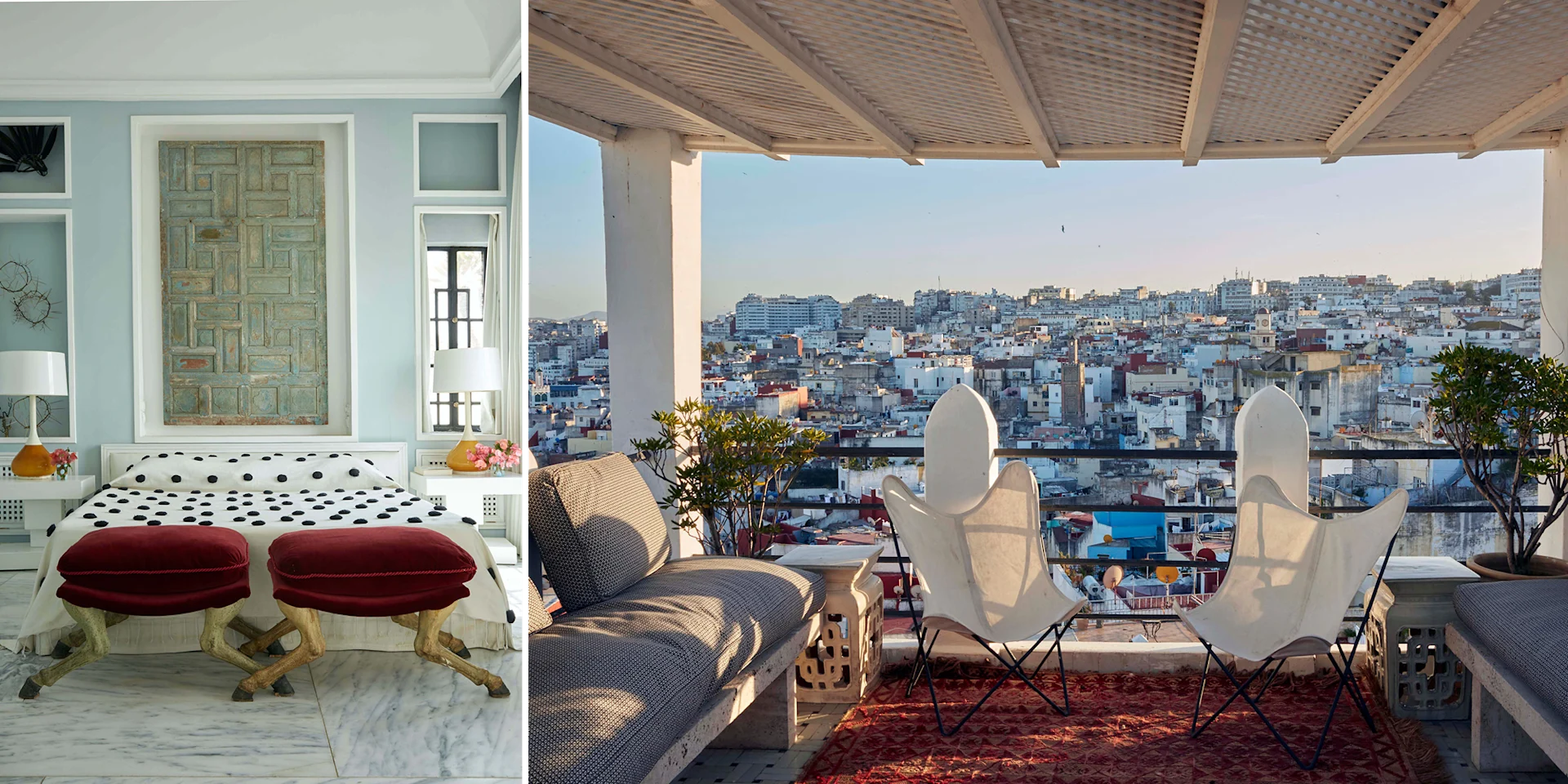
When a new expat arrives, the rest of us Tangerines (as anyone who has lived here for more than thirty years calls themselves) now realize that there is little point asking what she or he does. They will all be interior designers. Why have so many fans of Regency, guéridons, opaline glass and Napoleon III chosen to rendezvous in this new, not particularly beautiful city, similar to so many other port metropolises around the Mediterranean? For its light, perhaps, so cherished by Matisse? For the muezzins’ chant? For the supermarkets and their car parks? For the new seafront boulevard that resembles a freeway exit ramp? For the plans to build a cable car from the tourist port to the “regenerated” Casbah?
In some mysterious way, the new Tangier continues to be the same place we have known and loved: the Firbankian operetta setting of David Herbert, who welcomed his guests wearing a tarboosh over his wig and a parrot on his shoulder; the antiquarian and erudite city of Christopher Gibbs and Richard Timewell; Joe Orton’s brothel; Paul Bowles’s literary circle; the sit-in of the Beat Generation; Barbara Hutton’s salon; the bird’s-eye engravings of James McBey, Marguerite McBey’s watercolors, or Tessa Codrington’s photos.
Strange as it may seem, the heart of that happy Tangier still beats in the cosmopolitan interiors of the expats who continue to settle here. If these foreigners choose to come here instead of going to Marrakech or Phuket, it’s because the whole city is under the spell of this spirit of decoration, creating an aura—a huge silk lampshade, you might even say—that attracts decorators to these shores like a lighthouse in a storm. But what do I mean by “spirit of decoration”? And why, of all places, should it be typical of this grubby north African city with a bad climate, no monuments, and a few antique dealers, rather than of one of the hubs of contemporary bric-à-brac, like the Îsle-sur-la-Sorgue?
Why Tangier instead of Parma or Gatwick, the Rive Gauche or Khan el-Khalili? I shall risk an anthropological explanation: the Jbala, the Berber people who have lived in this corner of Morocco since time immemorial, love their homes with a passion that is unmatched in other parts of the country. A walk through the old Medina will confirm it: pastel-painted walls, pot plants on every windowsill, plastic flower garlands framing mirrors that look like those from Murano, and heavenly symmetries in the humblest of dwellings.
Tangier is a city in love with objects. And even this grey contemporary Tangier, a victim of globalization, still shelters and envelops its ancient core, without completely shutting out its light. Rather than a lampshade it’s a nightlight, a naked flame, a will-o’-the-wisp, a firefly, a faint light, but it provides a consoling glimmer and attracts foreign designers like moths. This ancient, wind- swept city, enamored of beautiful objects, has lost so much of the beauty that destiny conferred upon it, but it remains cool and witty, and is still able to speak all the languages of these newcomers.
A complete version of Umberto Pasti’s introduction appears in Inside Tangier: Houses & Gardens by Nicolò Castellini Baldissera & Guido Taroni (Vendome Press)
DAR BABA
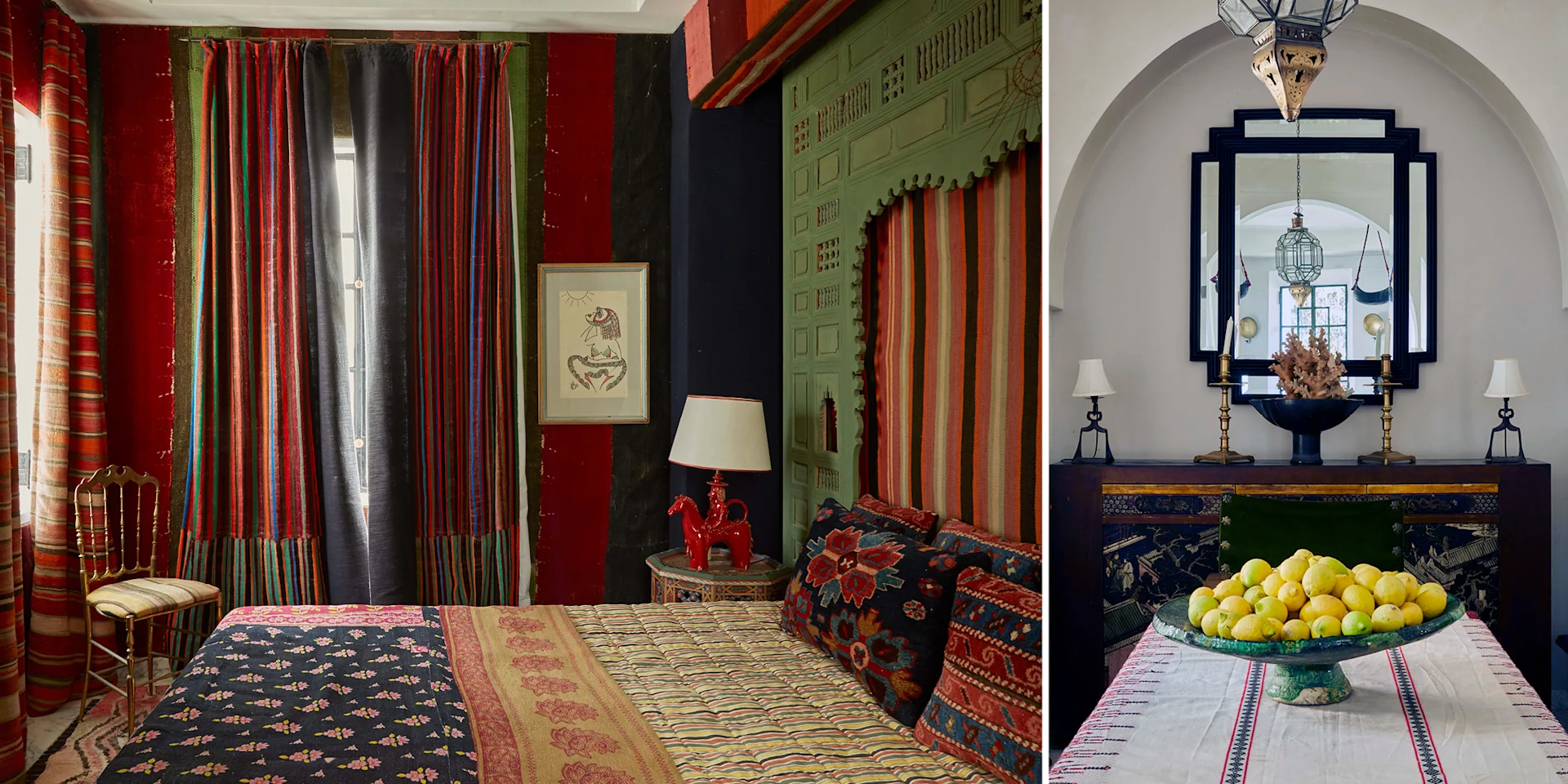
When shoe designer Bruno Frisoni and furniture designer Hervé Van Der Straeten first visited Tangier in 1997, they were not immediately taken with it, but as they spent more time with long-time residents, they were slowly drawn to its charms. They began to appreciate that life here revolves around entertaining at home, and in 2002, when a friend recommended they view a house for sale near Barbara Hutton’s Sidi Hosni, they bought it.