A Stretch of Southwest England Where the Farm Is the Hotel
A new crop of food-led retreats invites guests to gather freshly laid eggs before breakfast, wander acres of rolling pasture, and settle into a slower pace.
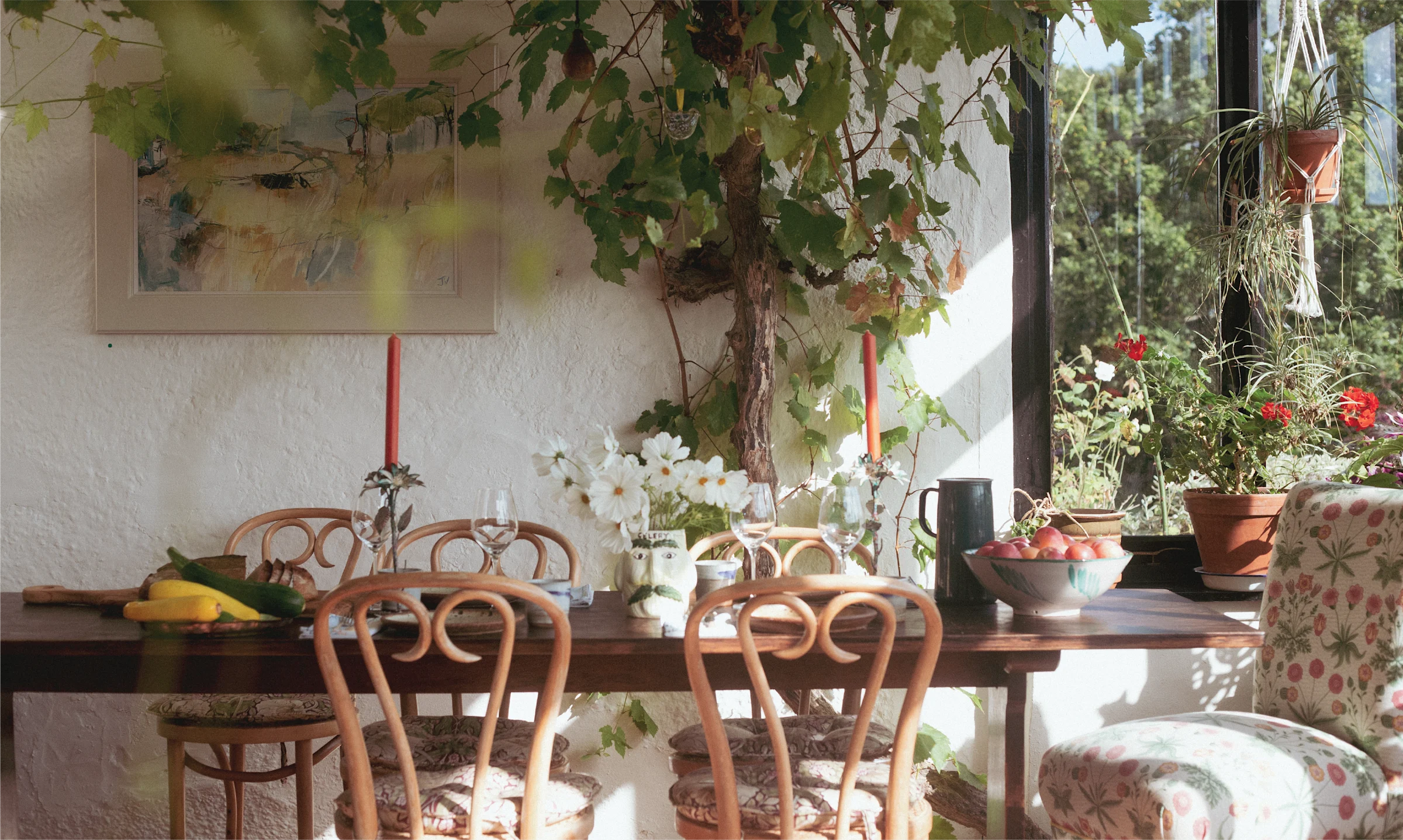
There’s a broad sweep of southwest England where careening coastlines, wild moors, and rich farmland have inspired the likes of Thomas Hardy, Jane Austen, and David Attenborough. The Dorset-Devon corridor has long been prized for its scenic hills and seaside villages, but its bounty of exquisite oysters, dairy, cider, and produce rarely drew broader culinary attention. Now, that's changing. A crop of farm stays has turned the region into a magnet for travelers eager to experience the English countryside as participants rather than spectators.
These aren’t the rural accommodations of old. The West Country’s most memorable stays today may entail a trip to the henhouse before breakfast, a tortellini-making workshop, or a dinner that revolves around vegetables pulled from on-site gardens. In one, an English manor has been recast as an Italian-inspired agriturismo; in another, a 100-acre retreat and winery pairs its proudly British bottles with wellness.
Trains here from London typically take under two hours, but for my own farm-hopping tour, I rented a car (advisable if you want to explore your surroundings). While all share a certain culinary language—the same tasty Westcombe cheese appeared at each of the hotels—they differ in style and substance: There’s a maximalist farm stay, a design-led regenerative estate, a cookery-school institution, and a wellness haven.
As I set out from London on a late-spring day, much of Europe was already sweltering, making the West Country's cool, green landscape feel all the more appealing.
Fowlescombe Farm – Ugborough, Ivybridge
Fowlescombe is a regenerative farm spread across 450 rolling acres. The estate dates to 1537, and its ivy-cloaked manor house is widely believed to have inspired The Hound of the Baskervilles. Here, guests are encouraged to collect colorful eggs from the chickens each morning for breakfast and snip lemon verbena destined for that evening’s broth.
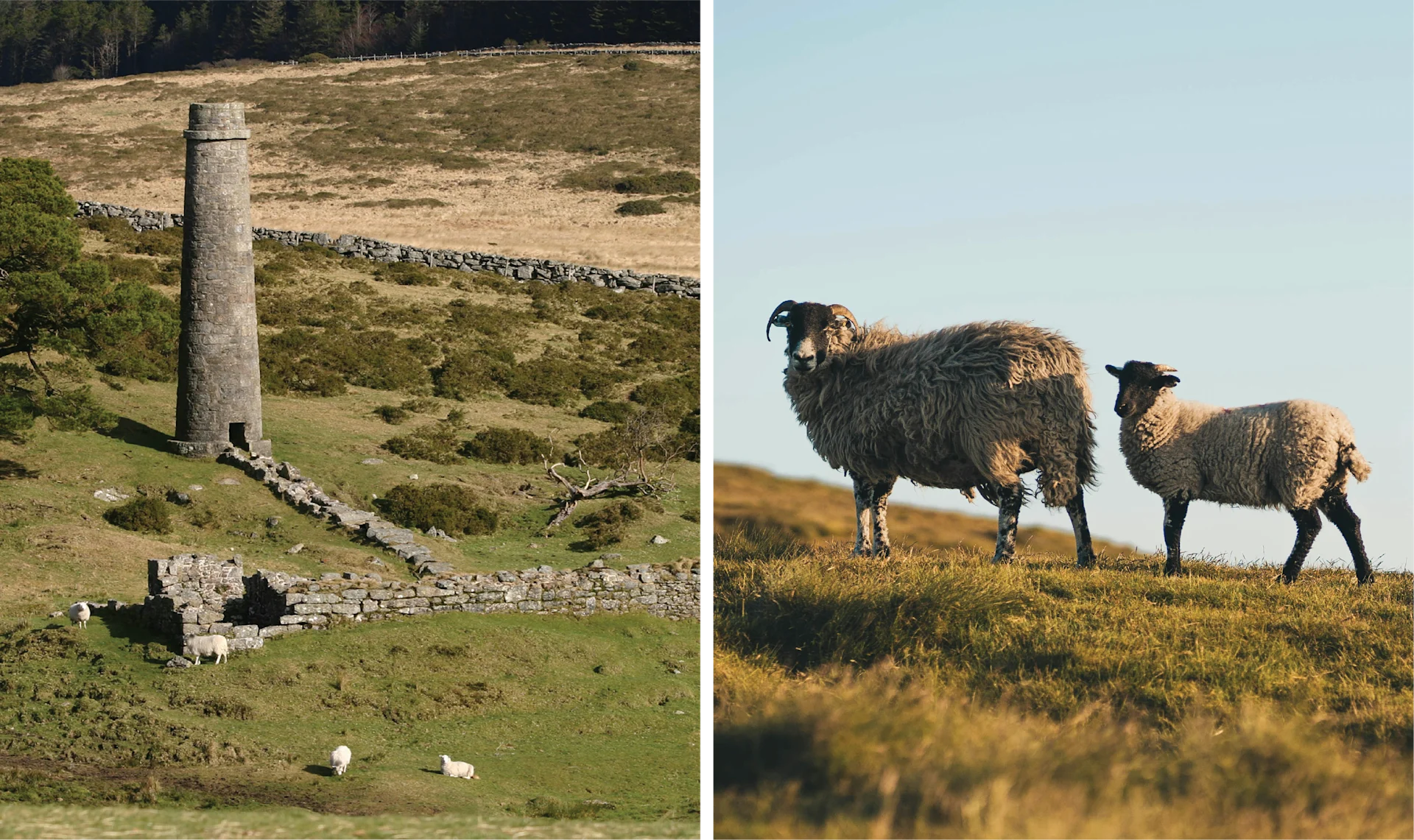
Upon arrival, I was greeted by a flock of grazing Manx Loaghtan sheep—once at risk and now the country’s largest breed—and doe-eyed English Longhorn cattle. As I checked in, a pile of blushing end-of-season rhubarb sat on the kitchen counter while the chef debated whether it belonged in an afternoon snacking cake or that evening’s dessert.
My moss-green Pond Suite occupied the soaring farmhouse, with a shared sitting room and kitchen downstairs. A barside recipe book invited me to mix myself a smoky paloma cocktail, and I obliged. The bedroom—fitted with a super-king bed on a Naturalmat mattress handstuffed with Fowlescombe wool—smelled faintly of the cookies that were baking downstairs. Over the next two days I met Tamworth pigs on morning walks, watched a new wild swimming pond take shape, and toured the grounds with the head gardener, who proudly presented her kiwi vines and 16 beehives.
Each morning, the chef, farm manager, and head gardener convene to decide what’s on the dinner menu. Executive chef Elly Wentworth (a MasterChef: The Professionals finalist and one-time competitor on Great British Menu) offers four courses; one evening opened with smoky beef agnolotti threaded with cucumber and black garlic, which was followed by woodsy monkfish in buttermilk and a finale of vanilla cheesecake shot through with the pink rhubarb from earlier. The next day’s Salcombe Smokie—hot-smoked trout with poached eggs—made use of the farm’s produce and nearby fisheries. Meals are all taken around one long table—the kind of scene where a trendy if slightly frazzled young couple from London can find kinship with an elderly duo obsessed with botanical gardens. (At least, that was my experience.)
Founder and managing director Caitlin Owens told me that in the year or so Fowlescombe has been open, she’s realized that guests don’t come for the property’s beauty alone but to feel like part of a working farm. “There’s always someone digging in the garden or baking bread,” she said. “It’s about showcasing the real Britain and its cultural grit in a modern way.”
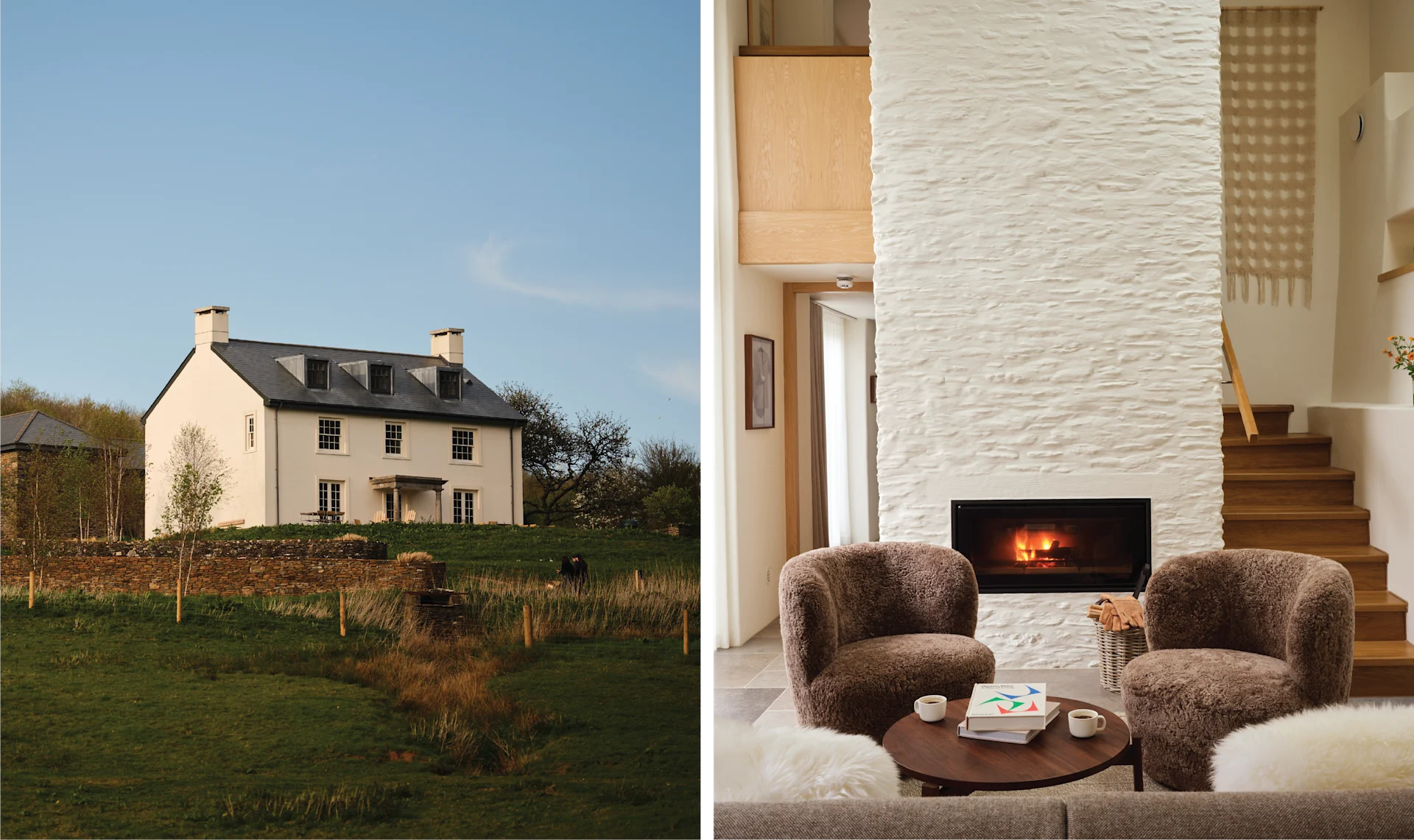
Photo: Jon Tonks (courtesy Fowlescombe Farm)
Photo: Jon Tonks (courtesy Fowlescombe Farm)
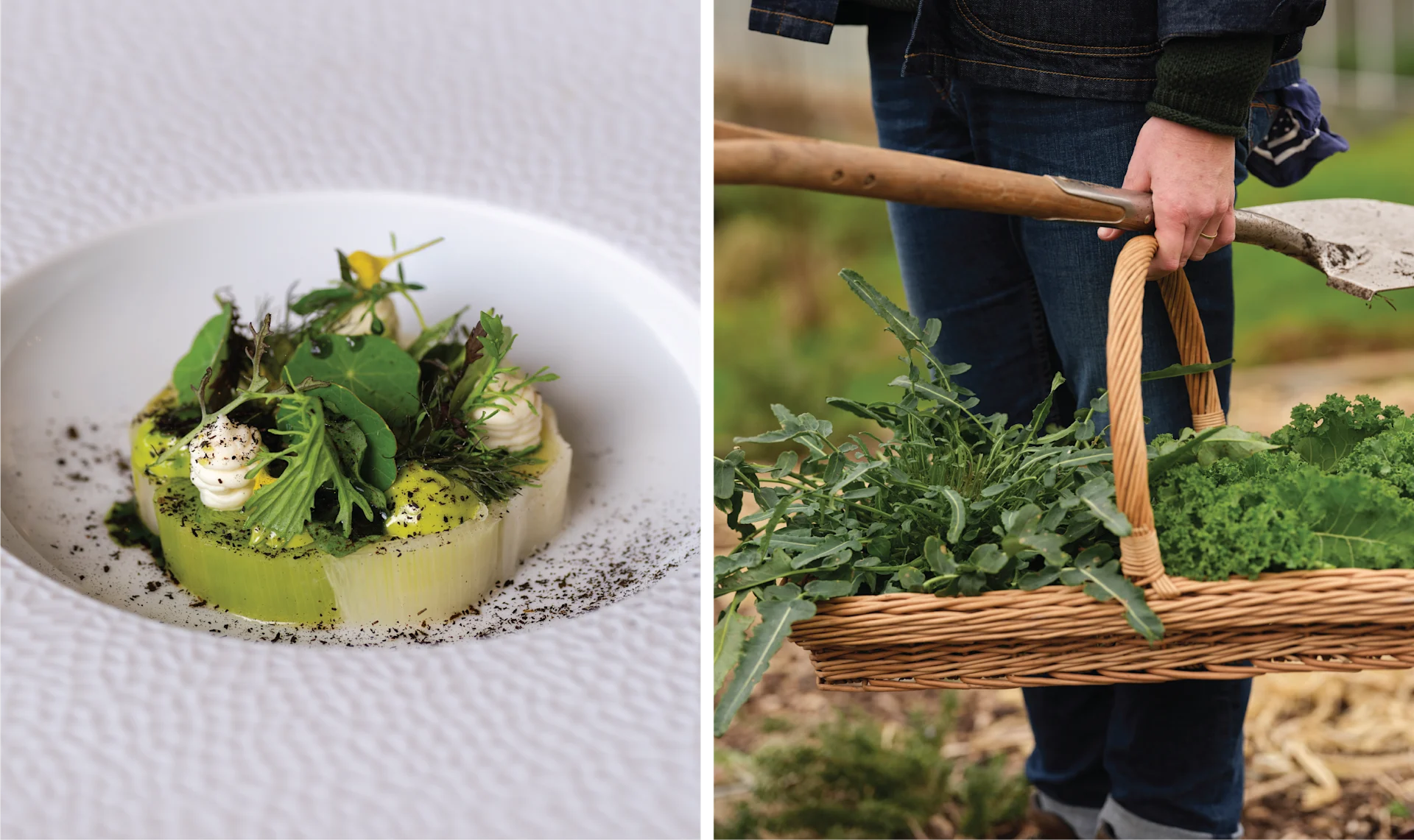
Salad of estate-grown leeks (photo: Jon Tonks; courtesy Fowlescombe Farm)
Photo: Jon Tonks (courtesy Fowlescombe Farm)
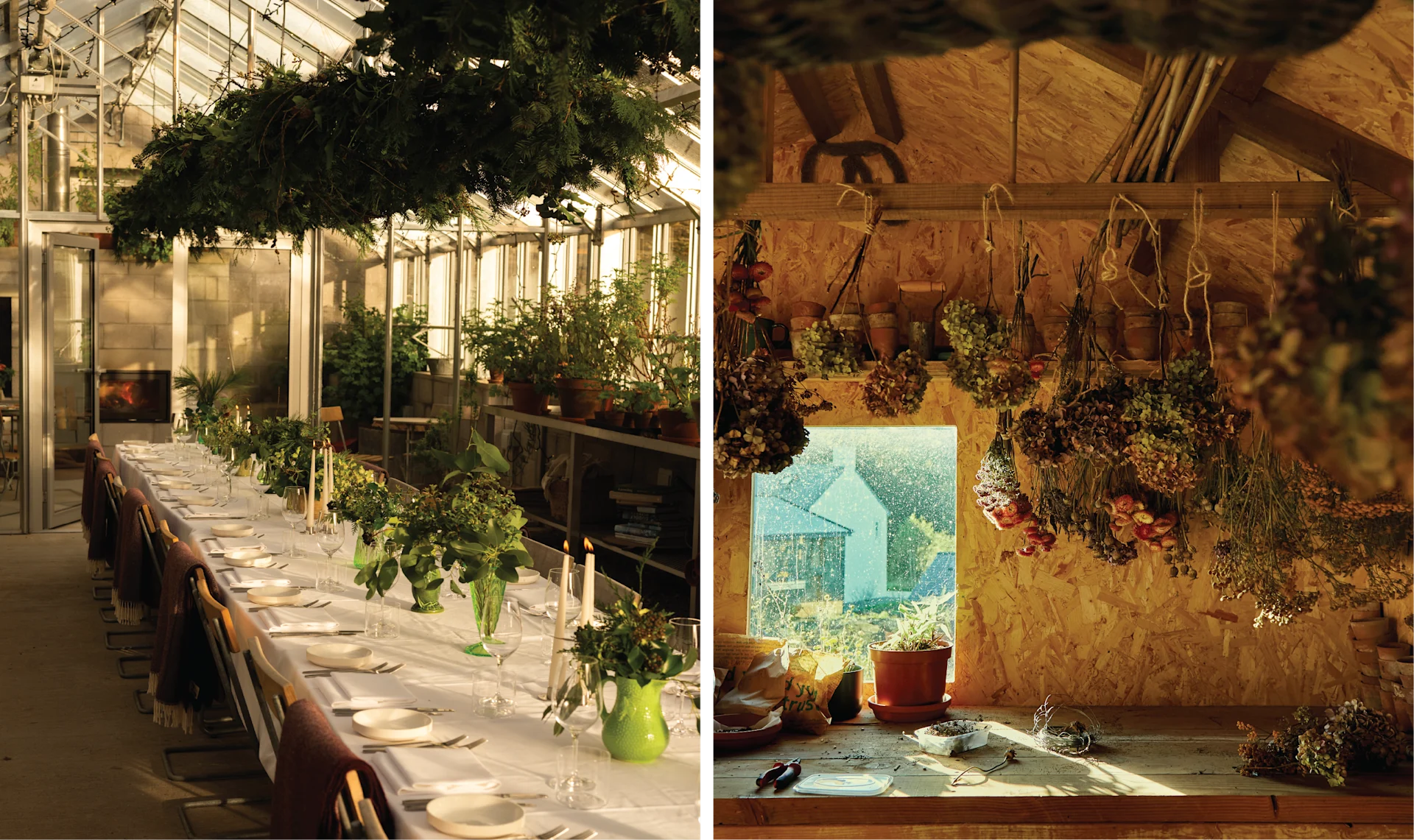
Photo: Jon Tonks (courtesy Fowlescombe Farm)
Photo: Jon Tonks (courtesy Fowlescombe Farm)
Photo: Jon Tonks (courtesy Fowlescombe Farm)
Photo: Jon Tonks (courtesy Fowlescombe Farm)
Salad of estate-grown leeks (photo: Jon Tonks; courtesy Fowlescombe Farm)
Photo: Jon Tonks (courtesy Fowlescombe Farm)
Photo: Jon Tonks (courtesy Fowlescombe Farm)
Photo: Jon Tonks (courtesy Fowlescombe Farm)
Glebe House – Southleigh, Colyton, Devon
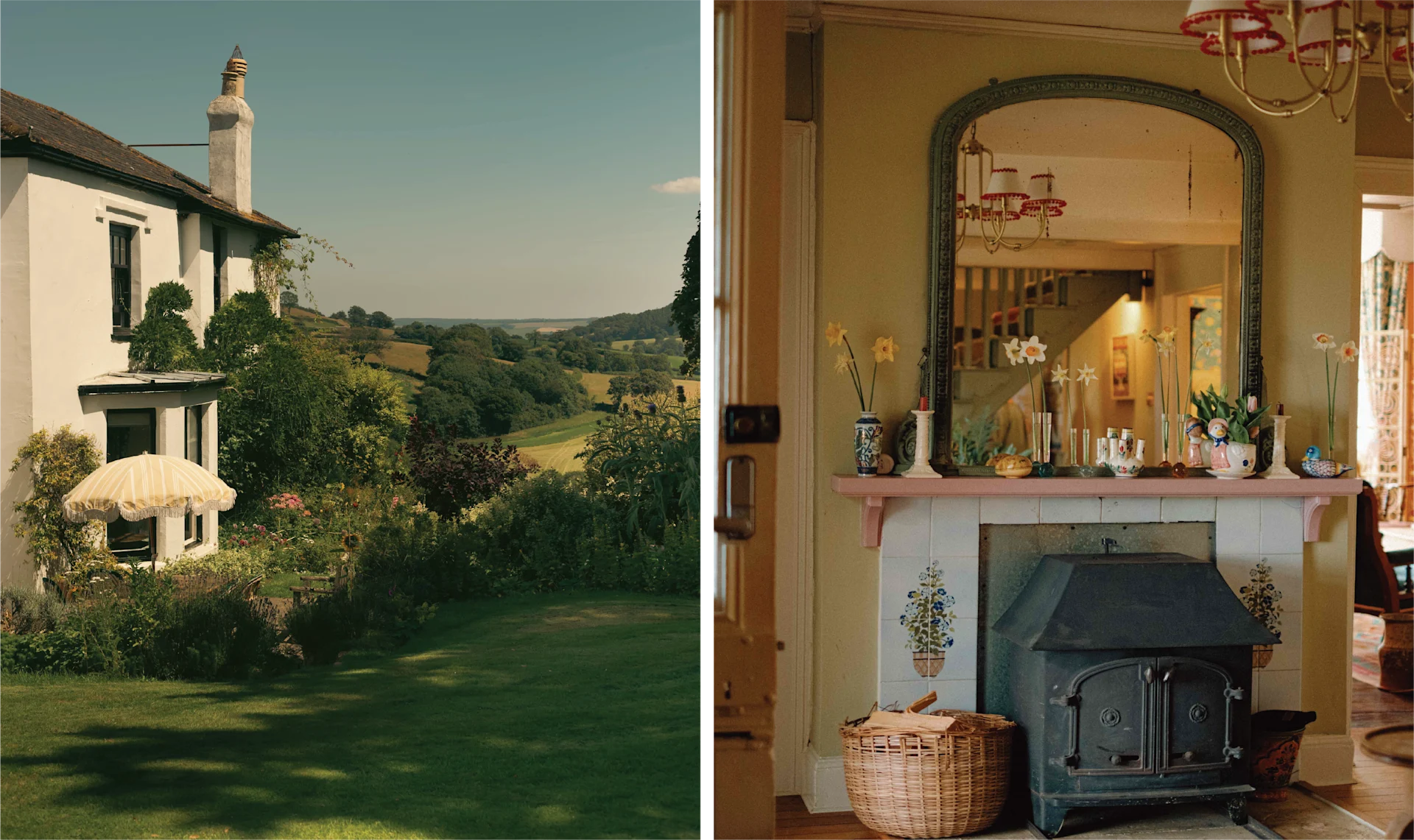
A former Georgian vicarage overlooking East Devon’s Coly Valley, Glebe House is a 15-minute drive from the Jurassic Coast. Chef Hugo Guest and his wife, artist Olive Guest, left London to transform the family home into an English take on an Italian agriturismo, inspired by time spent in Le Marche, where Olive’s parents live. They found the agriturismo concept—rural accommodation centered around the rhythms of a working farm—a natural fit for Devon, with its communal meals, homegrown produce, and hands-on workshops.
Despite Glebe House’s sensibilità Italiana, the design is brilliantly, boldly, Britishly eclectic. Within the Georgian house, Studio Alexandra pairs Olive’s jewel-toned oil paintings of patchworked coastlines and summer scenes with patterned William Morris and Ottoline de Vries wallpapers. Raspberry sofas sit against ochre walls alongside frilly-skirted sinks, copper baths, and colorful cushions—a maximalist delight. I stayed in the cozy Tulip Room, with a mint-green bathroom, mustard headboard, and unbroken views of the undulating green hills. I took my tea—made with herbs from the garden below—in the library just outside my door. Beyond the main house are three self-contained cabins with private terraces and sunken baths.
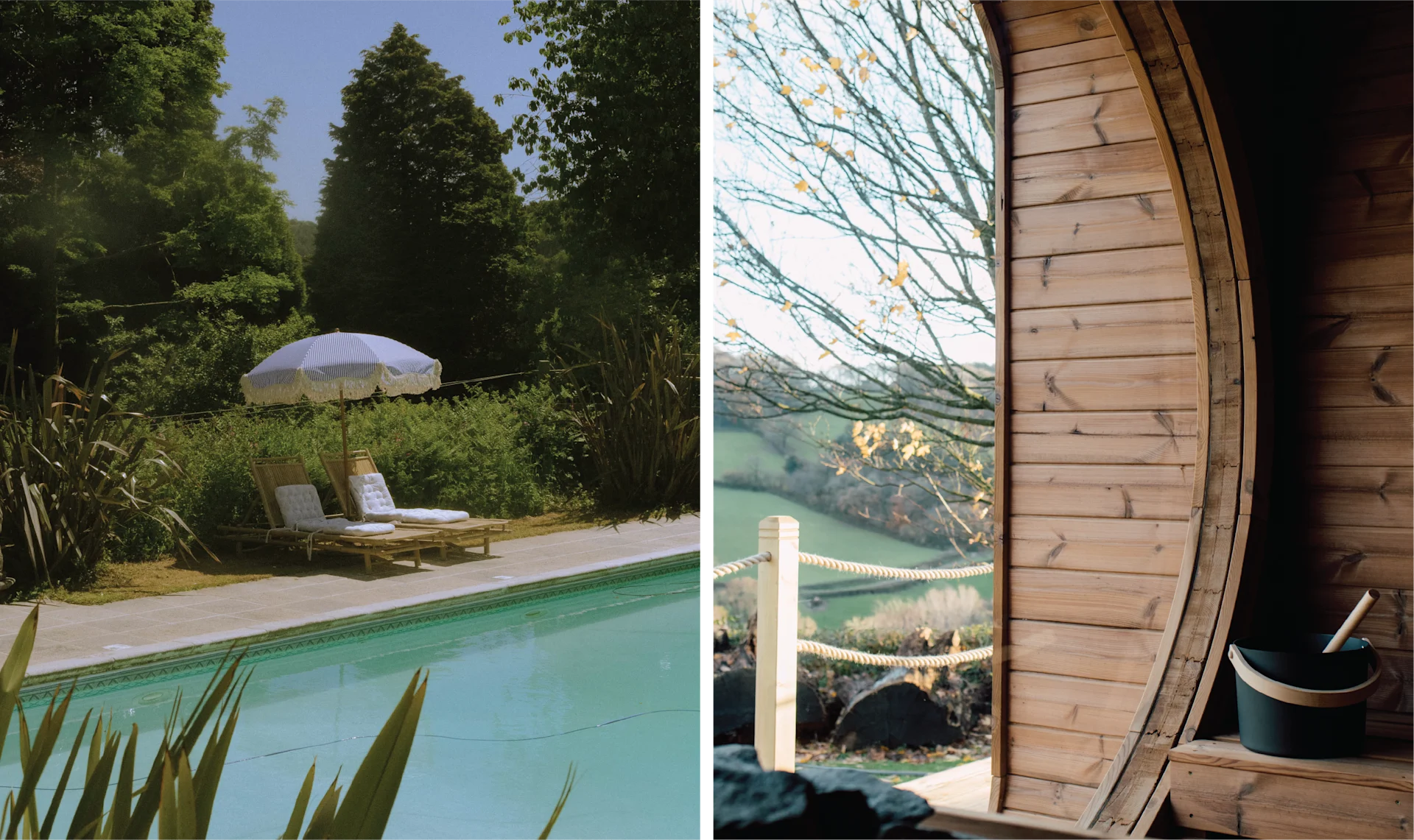
I spent my day content to simply drift between the new wood-fired sauna and plunge pool (bookable even if you aren’t staying), crafted by the British eco-spa specialists Kernow Springs, leaving the property only for a walk to nearby Beer Beach. Those looking for something more active can take the Glebe guidebook—illustrated by Olive’s mother—on a meandering walk through the grounds, or (weather permitting) enjoy the tennis court and pool. Workshops in everything from pasta- and bread-making to cider, salami, pickling, and mackerel fishing are also available.
When you want to be cooked for, chef David Knapman’s daily-changing menus (which have been awarded a Michelin Green Star) weave together British produce, nose-to-tail butchery, and Italian and French techniques. On weekdays there’s a three-course kitchen supper of shareable pies and puddings (£45 per person, also open to non-guests), or a five-course tasting menu featuring dishes like beetroot cannoli with whipped curds, Cornish lobster with confit Jersey Royals, and barbecued hogget with mint salsa.
Sitting down to breakfast in the vine-dappled sunroom, I found myself rhapsodizing to the next table about the house’s treacle-dark brown sauce while spooning it over eggs and thick slices of ham. (When I checked out, a staff member gave me the handwritten recipe.)
Every January, the team travels abroad to cook, eat, and learn together, and this year’s trip to Bologna surfaced in smoked potato tortellini in brodo. During my late-spring visit, the menu featured venison and juniper salami, crab tagliarini with asparagus, and strawberry trifle scented with elderflower and pistachio. Each evening, cookies awaited me on my bedside table—capping off each day’s West Country culinary odyssey.
Courtesy Glebe House
Courtesy Glebe House
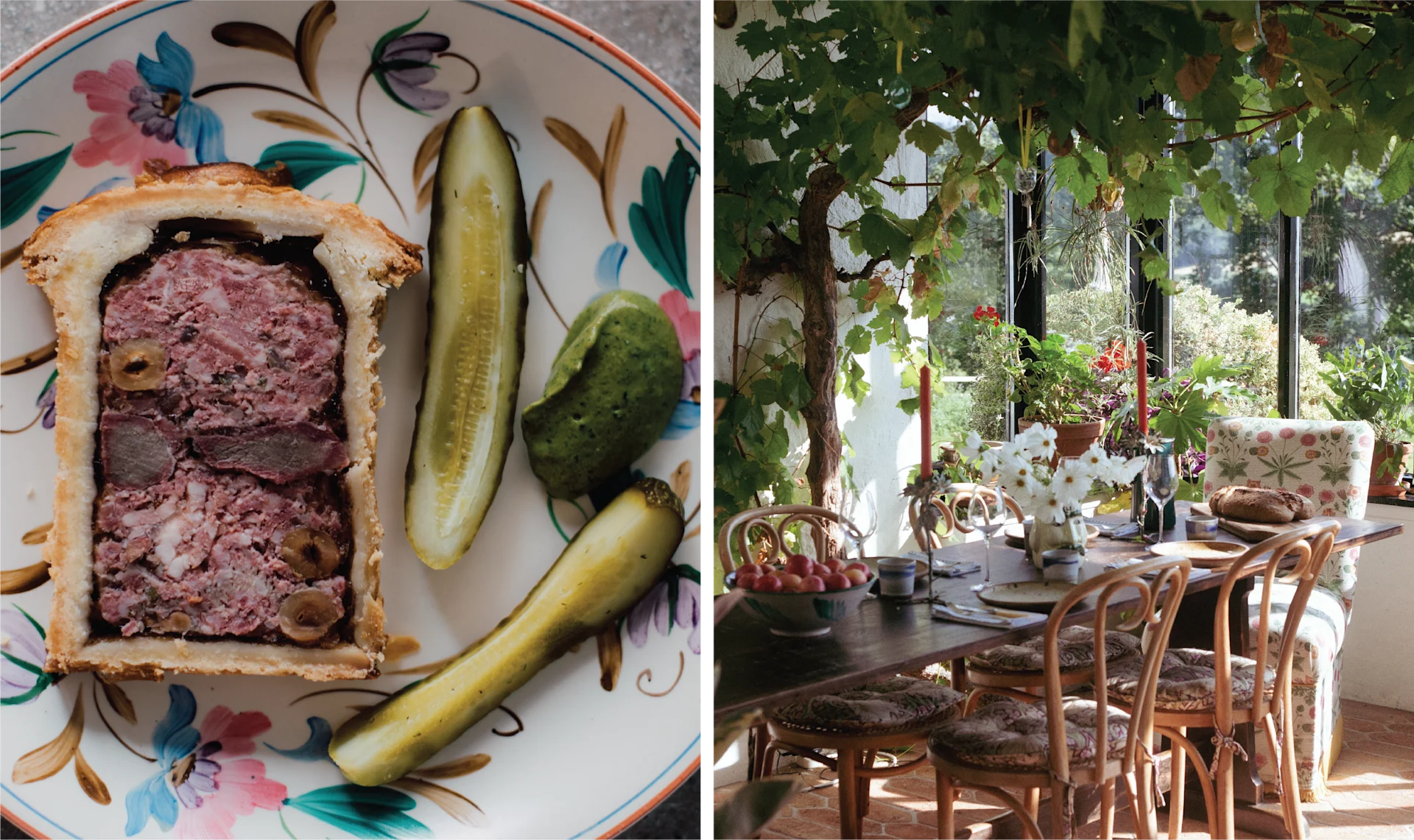
Pork and hazelnut pâté en croûte with nasturtium mustard (courtesy Glebe House)
Courtesy Glebe House
Courtesy Glebe House
Courtesy Glebe House
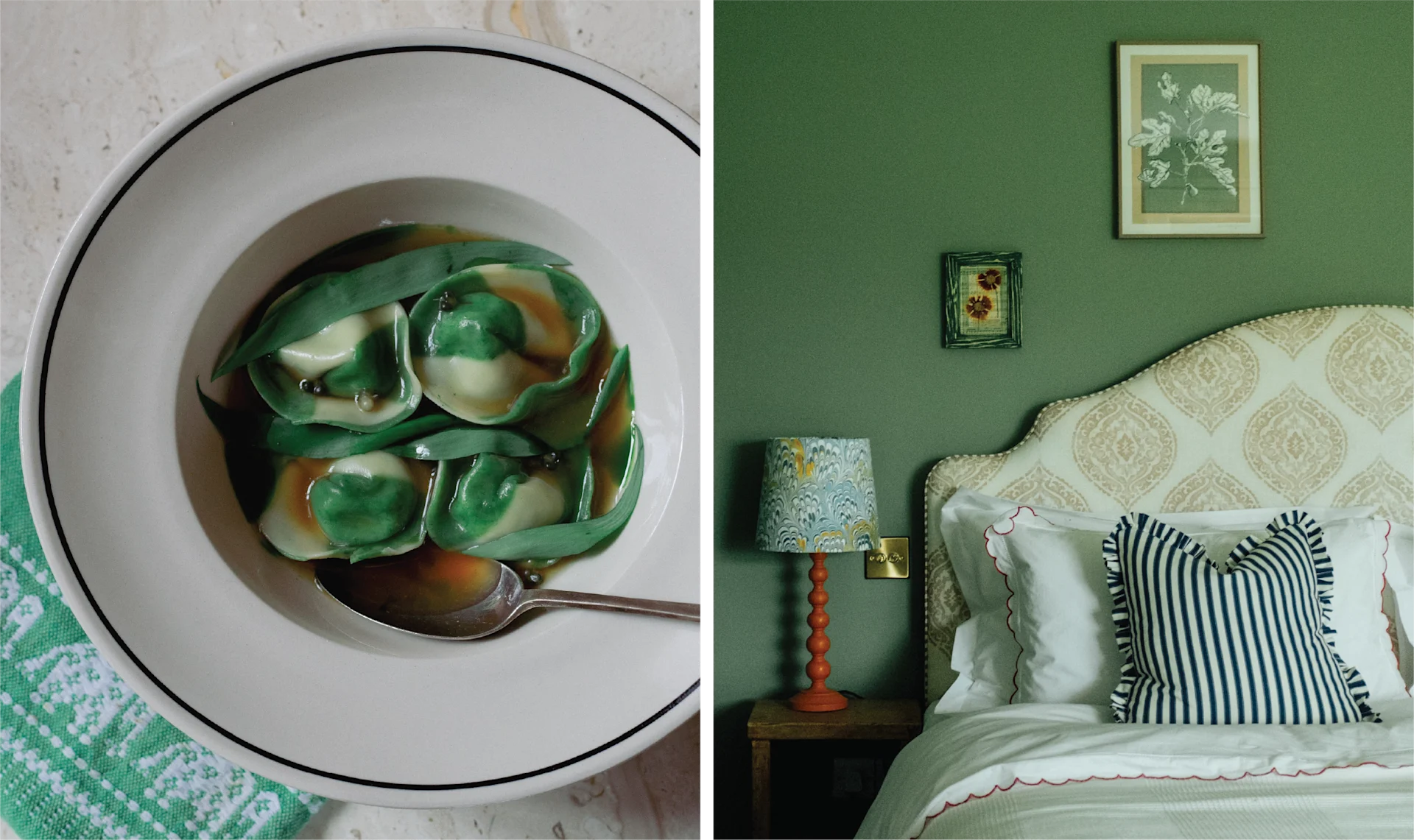
Wild garlic tortellini (courtesy Glebe House)
Courtesy Glebe House
Courtesy Glebe House
Courtesy Glebe House
Pork and hazelnut pâté en croûte with nasturtium mustard (courtesy Glebe House)
Courtesy Glebe House
Courtesy Glebe House
Courtesy Glebe House
Wild garlic tortellini (courtesy Glebe House)
Courtesy Glebe House
River Cottage – Axminster
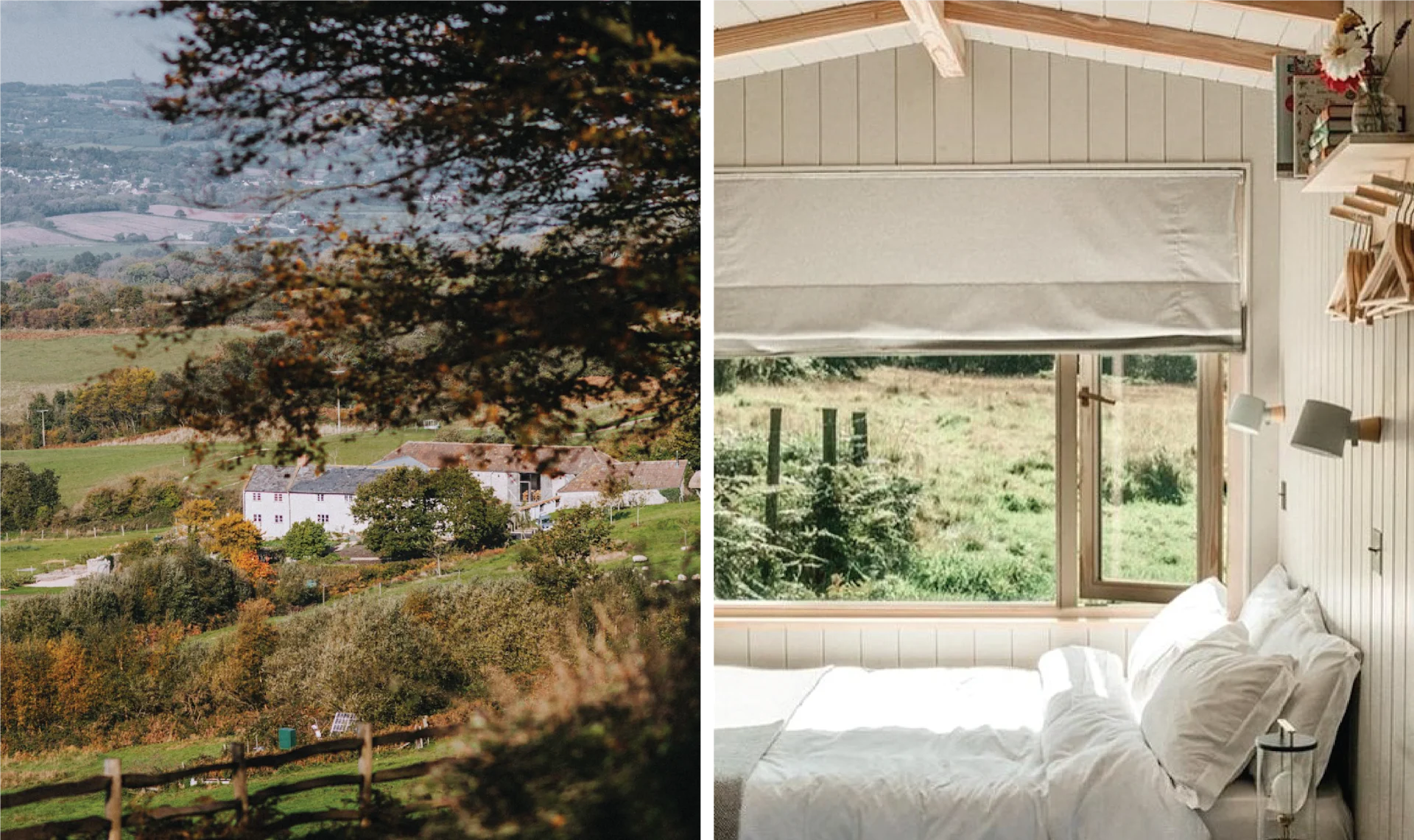
River Cottage is Hugh Fearnley-Whittingstall’s original project: the place that helped propel Britain’s modern era of food-led rural tourism. Situated amid the forests of the Axe Valley on the Devon-Dorset border, the 100-acre River Cottage small holding is home to the famous cookery school, events space, cafe, and self-catering accommodation in the 17th-century longhouse. Sustainability is built in: A wind turbine generates River Cottage’s electricity, and an artesian well supplies its drinking water. Nosy Dexter cows and South Devon cattle clomp along the rolling hills, while a fat ginger cat obviously lives a very good life here.
I arrived just as a fermentation class was getting underway—they graciously let me sample their apple cider vinegar and kraut before I ventured out for dinner. The accommodation had a cozy, lived-in familiarity, not least because the shared kitchen was where Fearnley-Whittingstall filmed much of his River Cottage cookery series. Fresh sourdough and preserves sat on the counter, while well-thumbed cookbooks, spices, and pantry staples lined the shelves. It’s the sort of place for travelers happy to get their hands dirty—or simply use River Cottage as a base for traversing the Jurassic Coast.
Long-table lunches and vibrant seasonal feasts are hallmarks of the summer calendar. Fearnley-Whittingstall hosts guests in the threshing barn, while chefs including Doug McMaster, Andy Tyrrell, and foraging expert John Wright lead workshops in everything from wild game and seasonal vegetables to pastry.
Those who don’t feel like cooking can head to nearby The Pig-at Combe for its “25-mile” menu. I began with whipped lardo on focaccia and smoked cod’s roe before moving on to South Coast mussels in white wine and cream and a hulking barbecued turbot.
After a long soak in the roll-top bath, breakfast was a deep bowl of homemade granola, estate honey, and thick yogurt—simple and nourishing. River Cottage possesses a quiet assuredness that only comes with age, yet it feels as relevant as ever.
Courtesy River Cottage
Courtesy River Cottage
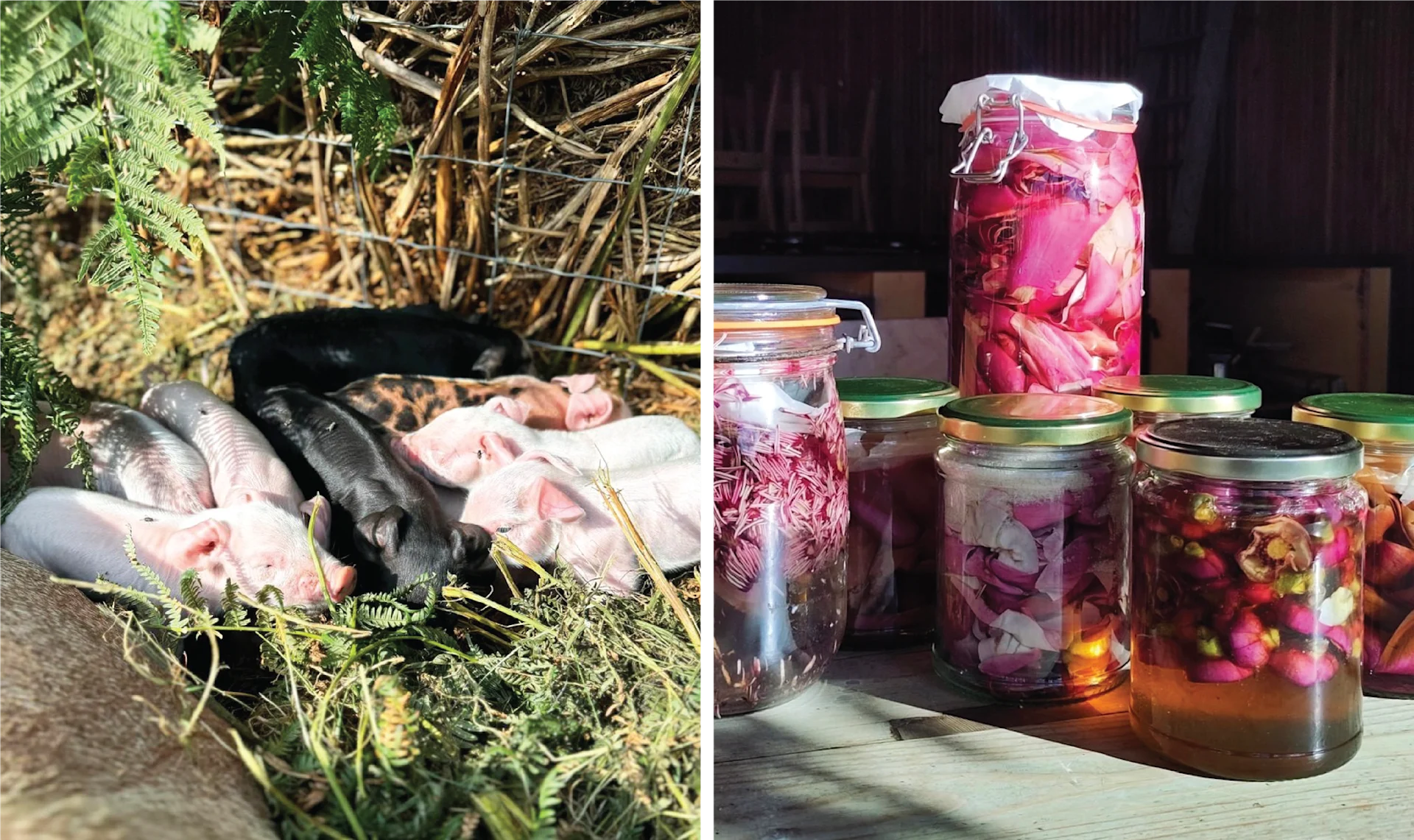
Courtesy River Cottage
Lacto-fermented magnolia stamens, pickled magnolia petals, and other jarred delights (courtesy River Cottage)
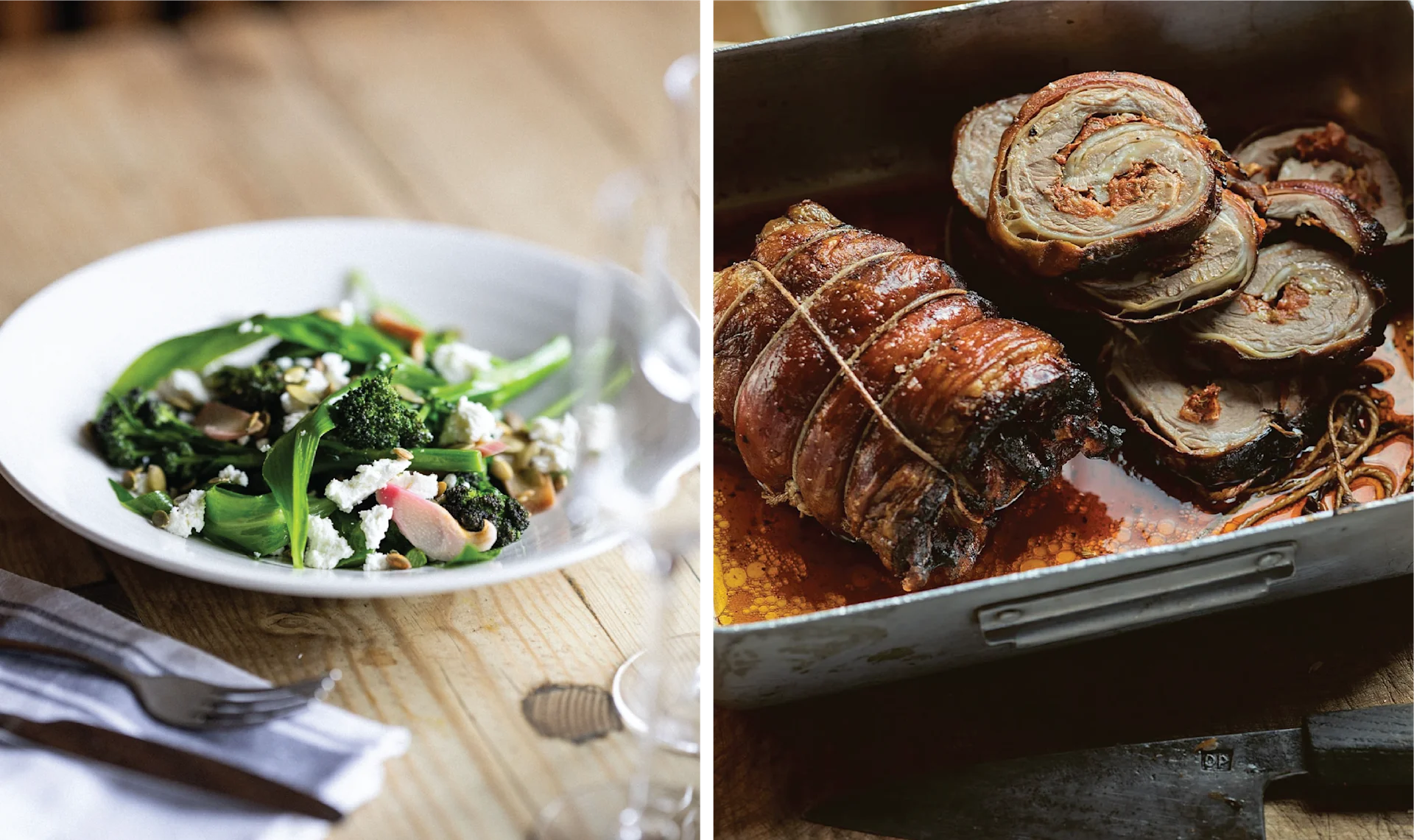
Pickled rhubarb and broccoli salad (courtesy River Cottage)
Roast lamb breast with lemon and tomatoes (courtesy River Cottage)
Courtesy River Cottage
Courtesy River Cottage
Courtesy River Cottage
Lacto-fermented magnolia stamens, pickled magnolia petals, and other jarred delights (courtesy River Cottage)
Pickled rhubarb and broccoli salad (courtesy River Cottage)
Roast lamb breast with lemon and tomatoes (courtesy River Cottage)
Louma Country Hotel – Champernhayes
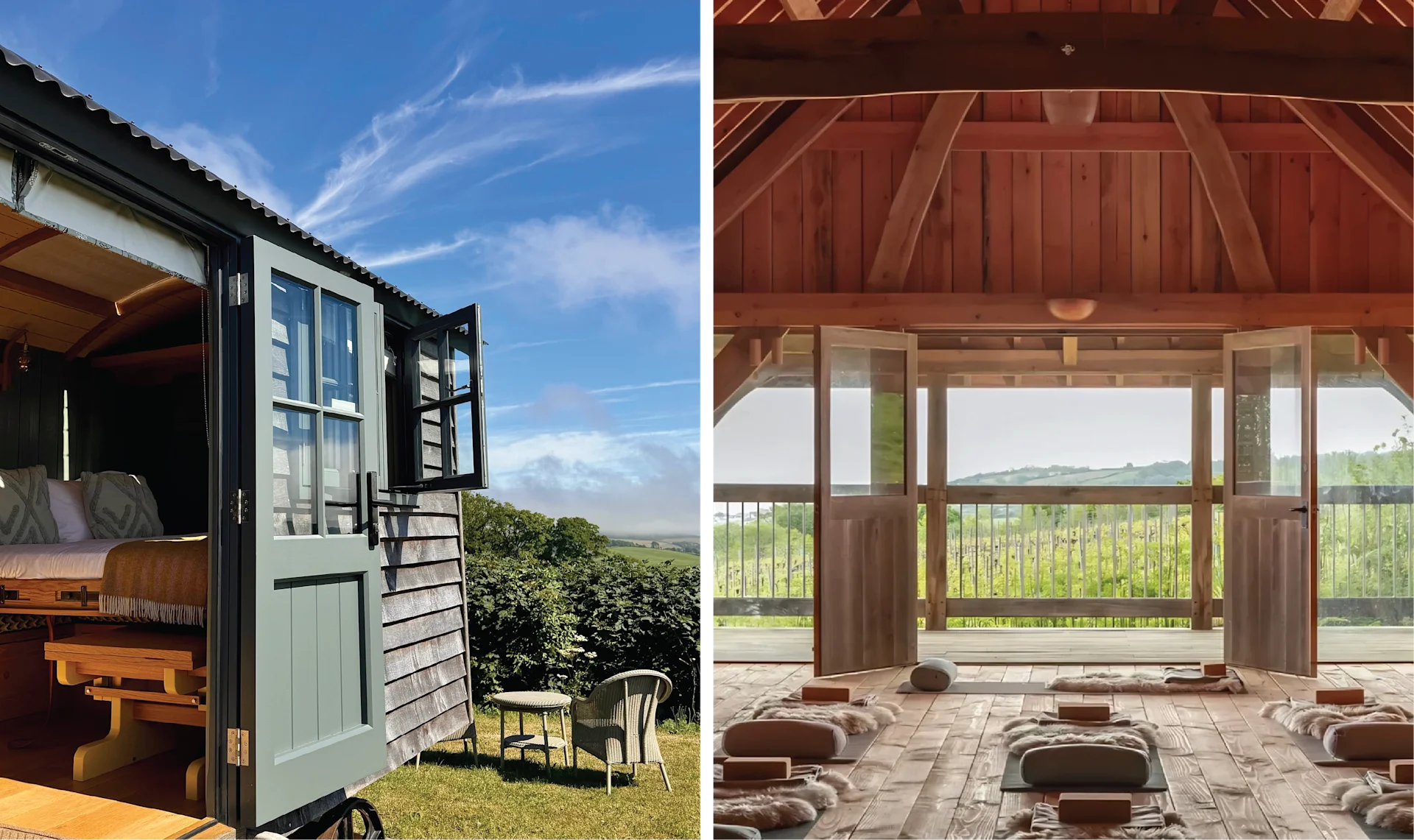
In the bowl-shaped Marshwood Vale on Dorset’s western edge, surrounded by vineyards, orchards, and Red Ruby Devon cattle, Louma Country Hotel is a farmstead where wellness is front and center. This is the stay for those looking for polish and anticipatory service—pre-set tables for families, a welcome signature cocktail—without losing the spirit of the rural surroundings. The property underwent a four-year transformation before reopening last year with 16 rooms and suites. (There’s a minimum two-night stay rule, and only guests can use the spa and dining facilities, which compounds the cut-off-from-society feel.)
Breakfast sets the tone early with homemade English muffins, freshly jarred jams, and Louma’s excellent sausages, while dinner sees chef-guided platings of vegetables from the polytunnels, Louma lamb, cider-braised pig cheek, and an excellent cheese course. In summer, South African–inspired braai nights—a nod to the owners’ roots—bring everyone together around the glowing coals. (Breakfast, lunch, and dinner are included for overnight guests.)
Wine is taken just as seriously. Chardonnay, pinot meunier, and pinot gris vines surround the property, and pairings with the estate wines are a delight. (Thanks to Devon’s mild maritime climate, English fizz and crisp, apple-led whites have never tasted better. Leave what you thought you knew about English wine on the A30.)
Between meals, guests retreat to the spa, with indoor and outdoor pools, saunas, and treatment huts looking onto the surrounding countryside. Yet even here, indulgence wins out: Return from a massage to find a slice of lemon loaf waiting, or gather around the fire for s’mores after an evening woodland walk.
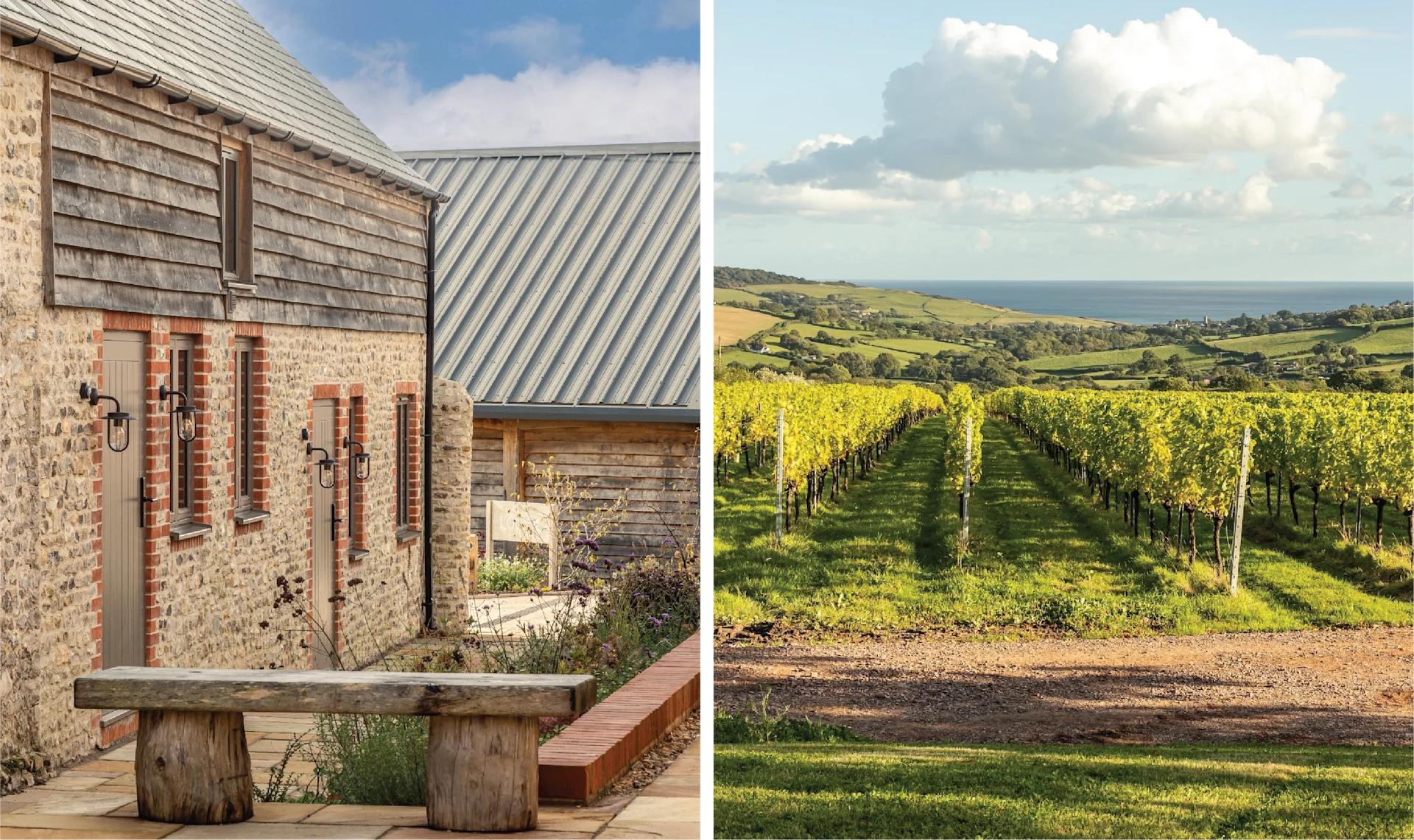
Courtesy Louma
Courtesy Louma
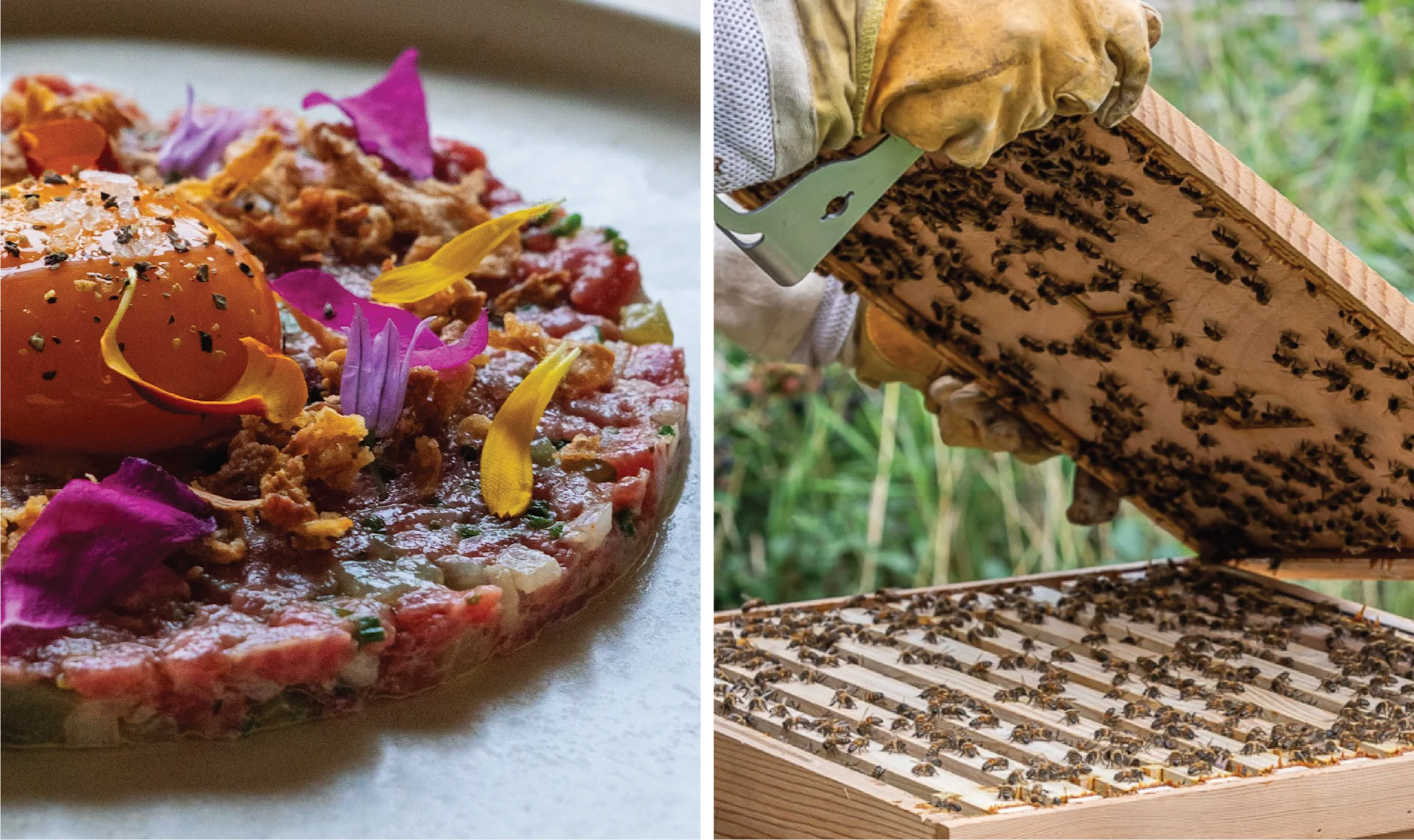
Beef tartare with brown butter croûtes (courtesy Louma)
Courtesy Louma
Courtesy Louma
Courtesy Louma
Courtesy Louma
Courtesy Louma
Beef tartare with brown butter croûtes (courtesy Louma)
Courtesy Louma
Courtesy Louma
Courtesy Louma

The Culinary Heritage of Japan
The Culinary Heritage of Japan