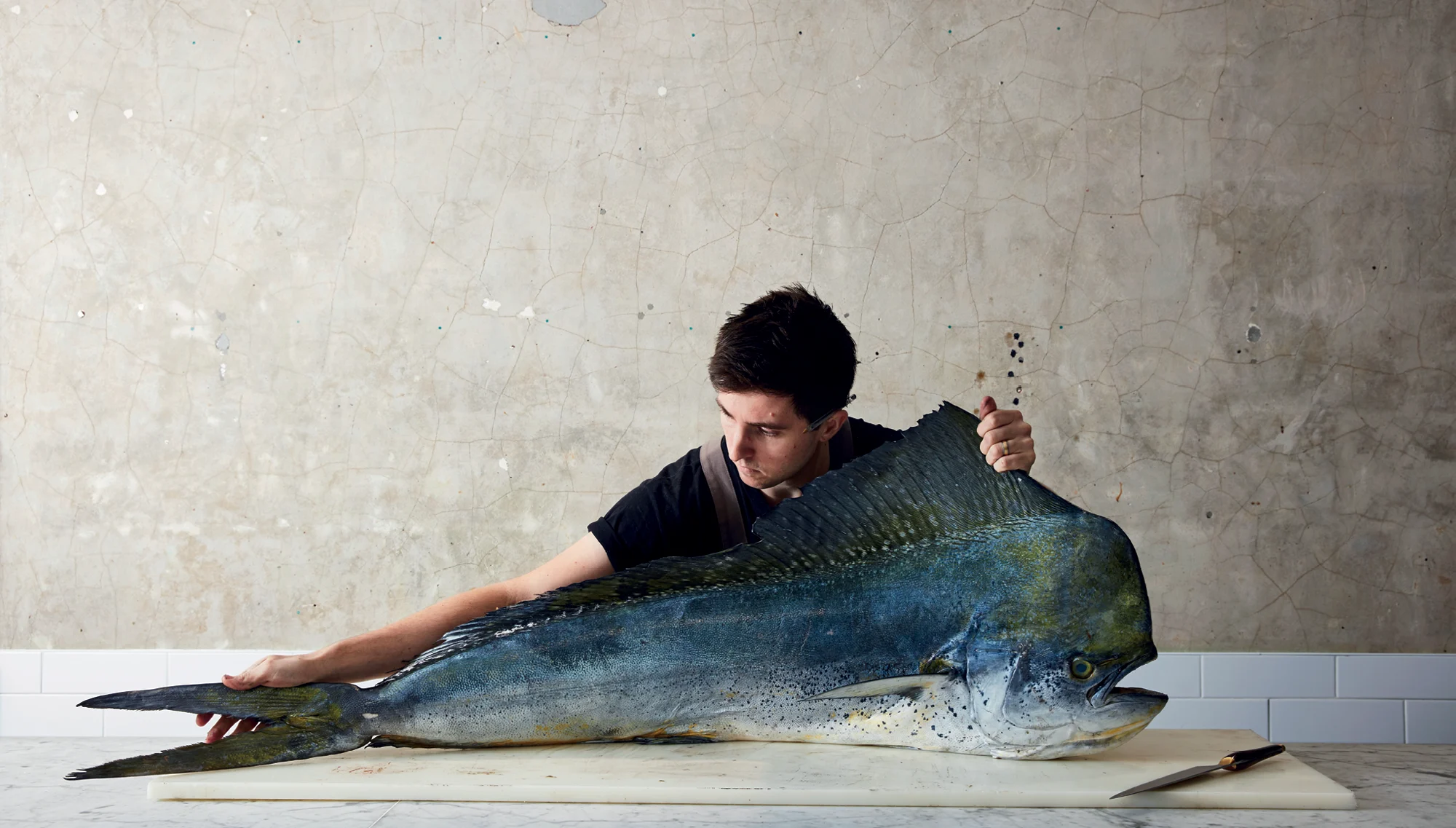
Small fish, big pond. That would be a fair assessment of the prospects for 27-year-old chef Josh Niland and his wife, Julie, when they opened their self-proclaimed “Australian fish eatery,” Saint Peter, in Sydney in 2016. Yet from his tiny converted shopfront, the chef (“fish butcher”) startled the food world with his unique approach to the sea’s diverse riches. It wasn’t just because of his dishes, and definitely not owing to a chef-y swagger. On Instagram, Niland diligently documented the daily inner workings of a little fish restaurant and, more precisely, the innards of various fish. Laying out the pieces of each animal in stark formation—the eyes, the lungs, the liver, the tail—the filets almost seemed an afterthought. He combined his reverence toward each species, along with a clinical precision and humility in front of the beauty of nature, to create images and then dishes that are both deeply alluring yet curiously educative.
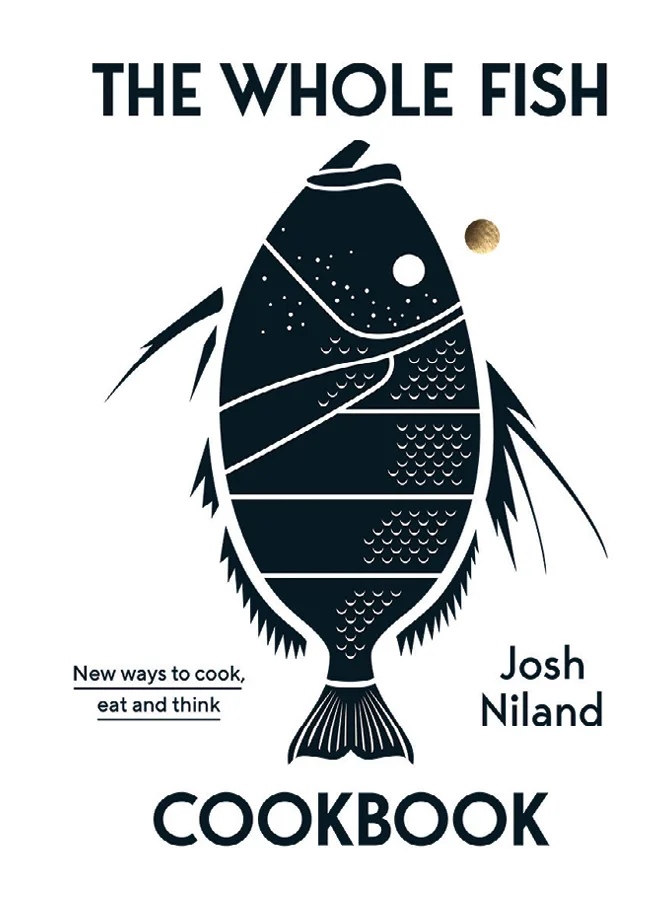
Like schools of fish, diners rarely diverge from what they know and what they are comfortable with when it comes to seafood, so to see, say, a fish liver paté en croute or some obscure, normally inedible fish on the menu, had the effect of challenging diners. But not in a “chef recommends” way, or the kind of chef’s dish that conjures his days of running through the fields as a child or some such nonsense. Instead, in his gentle way, Niland teaches a master class in classic cooking and contemporary technique, sustainable fisheries and perhaps even philosophy, with each dish or fish photo. It’s no wonder he went from a tiny restaurant and humble Instagram following to a James Beard Award-winning author with The Whole Fish, with the eyes of the world on his collection of 37 knives. Mostly he lets the fish do the talking. But he stepped away from his kitchen to speak with us.
David Prior: So, let's start with the simple question. Why seafood?
Josh Niland: I think my affinity with seafood goes back to the very beginning when I was a third-year apprentice, and I got the job that I've wanted since I was sixteen. Once I got into that kitchen, they'd always put what seemed like the most ambitious, skilled, talented person onto [the seafood] station. I’d watch from afar, the way they went about it. Everything was a little bit more systematic. I just liked the control and precision. It’s a similar thing that you see in pastry, whereas elsewhere in the kitchen it is a bit more of a testosterone charge: "Let's just get in there and shake some pans." Instead, there was a certain sense of elegance.
How did it evolve from there?
I said that I was really interested in learning to cook fish a little bit more specifically. Ultimately, I thought there was so much in it that I wasn't learning. Peter Doyle, whose Sydney-based restaurant I was working at at the time, sent me to work for Steve Hodges at Fish Face, which was a thirty-four seat restaurant based entirely—as the name suggests—on fish. He was the kind of chef who was there every single day. He was a genius of technical precision, and his accuracy in cooking fish was just unseen. I had never seen anybody able to get the volume of fish in the door, like a diverse species, and know a method of cookery to apply to it like that. He invested so much time and training in me that I thought it would be a bit of a middle finger to him for me not to do something with seafood.
Can you describe your restaurant Saint Peter and its offshoot, the Fish Butchery?
Saint Peter is labeled an “Australian fish eatery.” Julia (my wife) and I came to each other on the same day, about a month before we opened, and said: "Well, I've got the name for the restaurant." And we both said it at the same time. And she said, "Saint Peter." And I said, "Well, that was what I was going to say to you.” Saint Peter is of course from the Bible, the miraculous catch of fish. It’s based on the idea that he was the patron saint of fishermen, but it’s also the other name for John Dory. So that’s why we put the black spot [from the John Dory] on each plate for the mark of Saint Peter on our dinner plates.