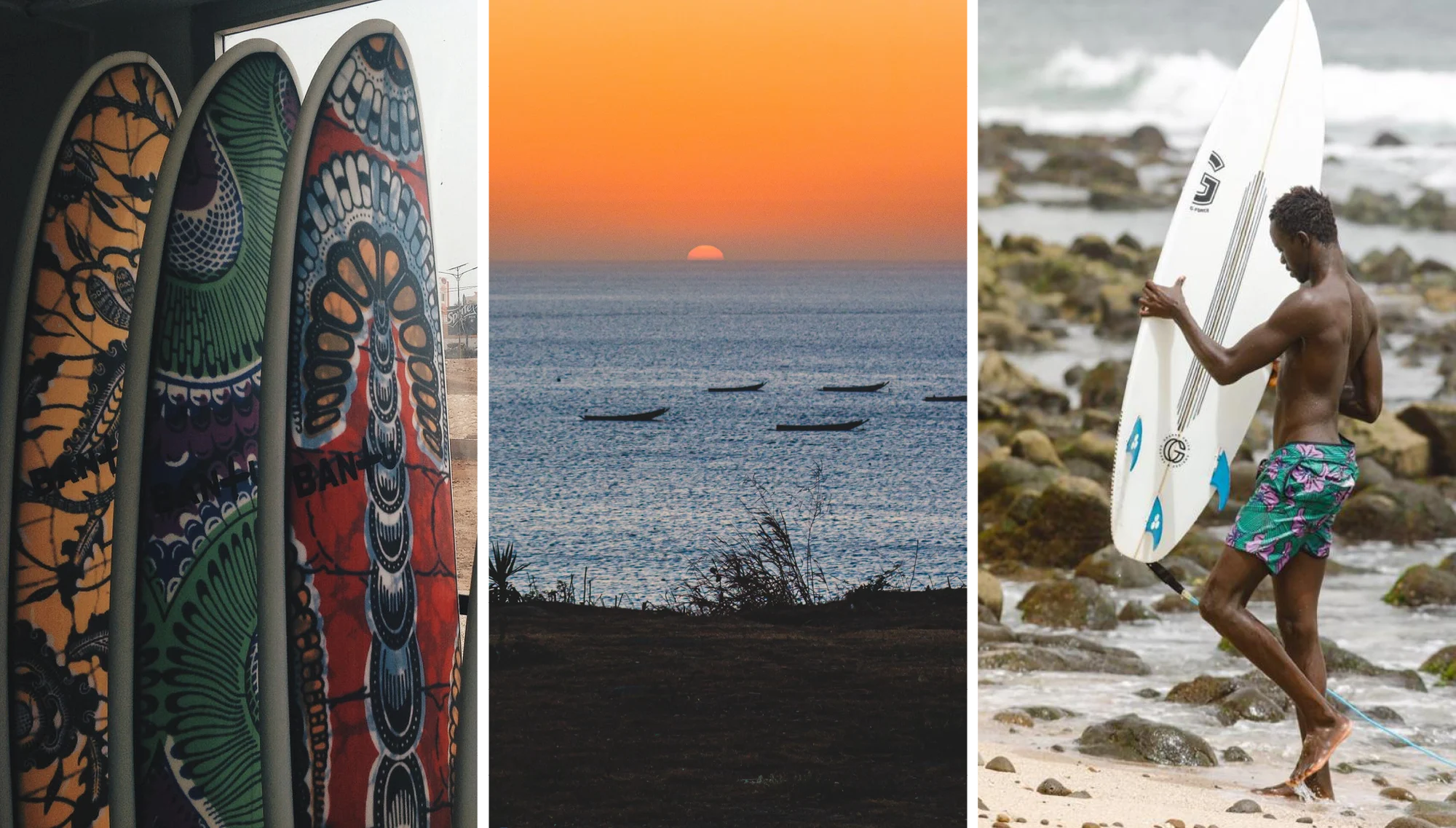
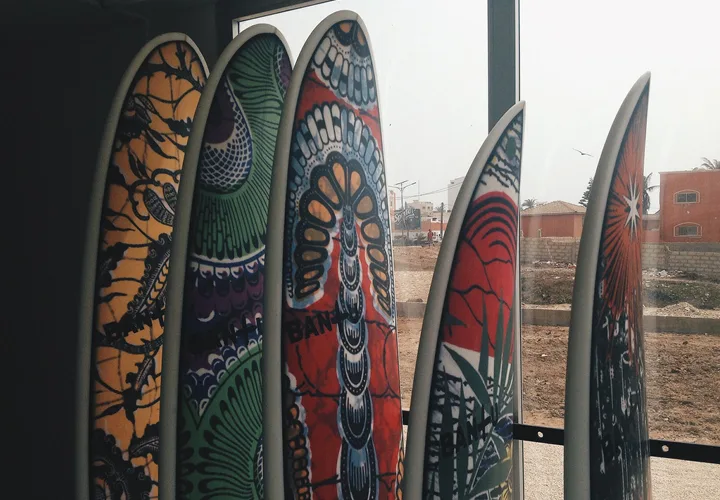
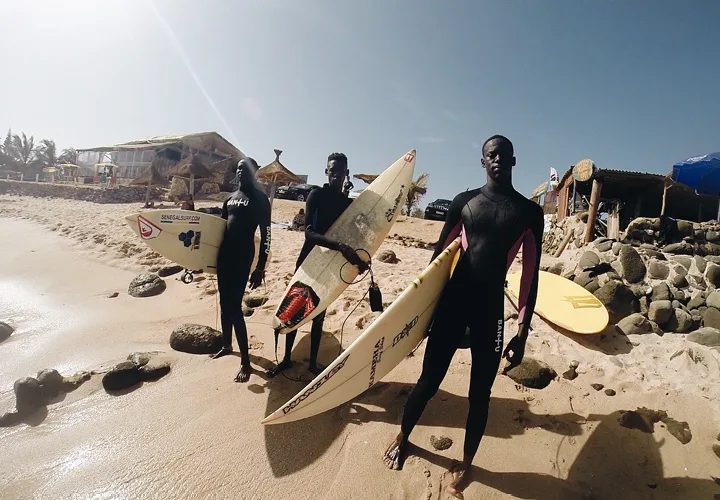
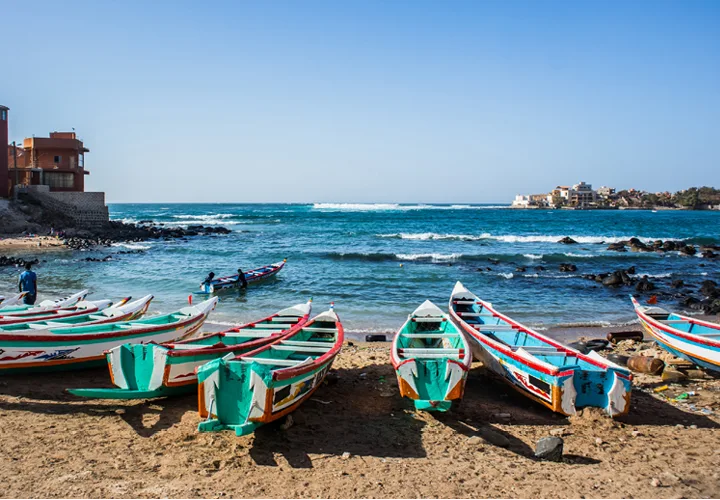
Out on Secret Spot beach along Dakar’s Petite Corniche, Senegalese children splash in the water, vendors grill fish in painted wooden shacks, women in dresses comb rocks for urchins and surfers bob on their boards before catching a party wave—all against a backdrop of Dakar’s rambling skyline. “Dakar is a proper city by the ocean, like parts of LA or Honolulu,” says Yodit Eklund, the founder of surf brand Bantu Wax, based out of a small, vividly colorful boutique in a converted shipping container just off the beach. “But it’s got twenty surf spots within twenty minutes of each other, plus the vibrant energy of Dakar, the art capital of West Africa.”
Eklund, born to an Ethiopian mother and American diplomat father, grew up moving between Ghana, Sudan, Kenya, Egypt and Côte d’Ivoire before studying science and economics at the University of California at Berkeley. “It made me start to question how undervalued Africa's beaches were, and how little people know about them compared to, say, safari,” she says. She was also a surfer, and when she launched Bantu Wax in 2010 with a tiny capsule collection of board shorts and T-shirts that were snapped up at Barneys and Opening Ceremony, she did so, Eklund says, “to shine a light on Africa's amazing beaches in hopes that it would draw interest to travel and grow the economies” in a continent of more than 1 billion people, more than half under age twenty. She eventually opened a small shop at Secret Spot, as well as one in the laid-back Moroccan surf town of Taghazout and on Muizenberg Beach near Cape Town—part of her goal to “make people understand just how important it is to protect our continent’s coastline.”
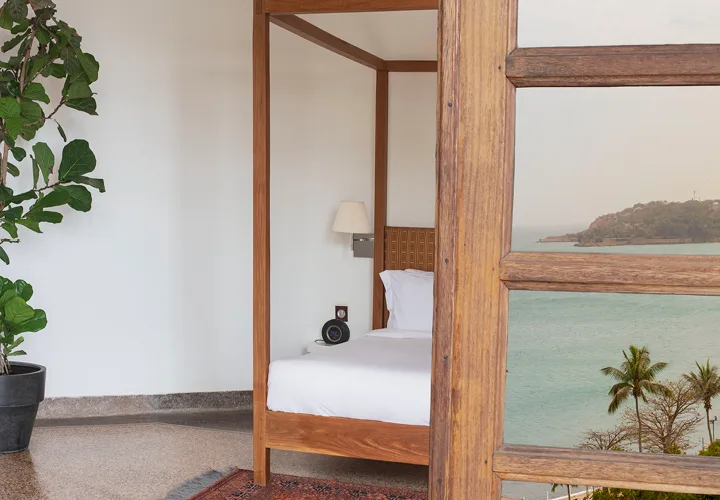
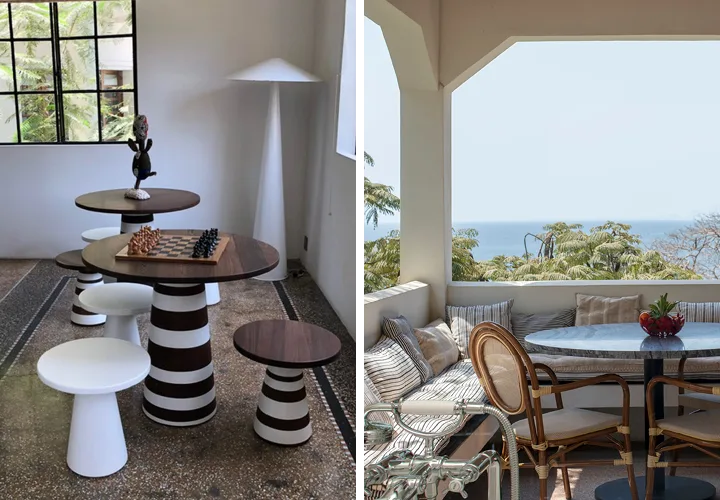
Now her vision of a true pan-African brand, “made in Africa, by Africans, sustainably and fairly,” is getting a boost. Last year Eklund opened a seven-room boutique hotel, Seku-Bi, just off the beach near Dakar’s busy Independence Square, renovating two colonial villas. She filled them with art and furniture she commissioned from friends like Aissa Dione, a local textile maker who has woven collections for brands like Hermès and Christian Liaigre, Peter Mabeo, who makes hand-carved wooden stools and decorative pieces in Botswana, and colorful rugs and furniture made from upcycled iron by Senegalese craftsman Ousmane M’baye. Before Covid limited international travel, Seku-bi was drawing the kind of creative crowd that drops into Dakar for the city’s renowned Biennale de L’Art Africain and its crackling music scene, including hometown hero Youssou N’Dour and global phenoms Orchestra Baobab.
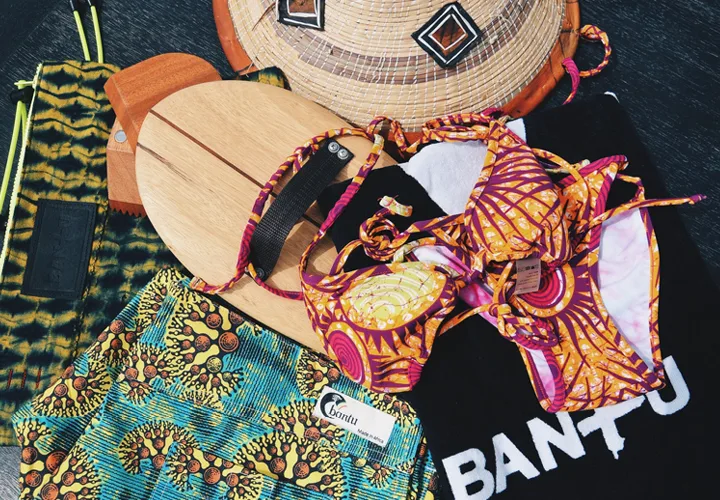
And this month, Ekland is relaunching Bantu Wax with a new online shop to reach a global audience and project a broader vision of what an African surf brand might encompass. “When I was doing the hotel, I had the chance to work with a lot of artists and craftsmen from the continent; I wanted to incorporate some of that into Bantu Wax so it could feel more like what a real African beach culture feels like,” she says. To a base of wet suits and African-print shorts she is adding a collection of visors and hats made of handwoven fabric from Burkina Faso, beach blankets by traditional flag makers on Ghana’s Gold Coast, silkscreened bandanas made in Kenya by refugees from around the continent, and monogrammed wallets and passport holders made in a workshop in Morocco “that produces for some of the top luxury houses in Paris.”
Although hers is hardly the first surf brand to bring a luxe lens to a once scruffy, bohemian sport, there is a natural segue here along Africa’s 26,000 miles of coastline. “Surfers are travelers,” Eklund says, “and the ultimate luxury for surfers is a beach with no one, because you don't want to share your wave, you know? So when it comes to surfing, Africa actually provides the highest luxury.”
Eklund's Dakar Picks
Top surf spots
A quick boat ride from Dakar will take you to Ngor Island, home to one of Senegal’s best surf spots. “There's the right [break], but there's also a left break that people often overlook,” says Eklund. “Behind the King Fahd Palace Hotel, there are a couple of breaks. You can actually paddle to and from Ngor Island from there.” Seasoned surfers also like Secret Beach, known for its strong currents. “Secret Beach is great, but don't forget your booties—there are lots of sea urchins.”
Where to eat
“Le Lagon is a classic in Dakar. It’s essentially our version of Café de Flore—everyone goes. The decor is quite kitsch and one of a kind, as it feels like you're on a boat. They also have a small little beach attached, which is great.” For Cape Verde cuisine, Eklund likes Chez Loutcha, where “the décor feels like you're on the set of a Malick Sidibé shoot. They have great local Senegalese dishes like tchiep ou djienne (fish and rice in a tomato broth) and poulet yassa (chicken simmered with lemon and onions).” Eklund often dines at the Italian-inspired Il Papagallo, located in her own Seku-Bi Hotel. “All the vegetables are grown on our roof or in our garden, so we have the freshest salads and pestos. The fish is delivered daily from local fishermen and the mother of one of our team makes the best bissap (traditional Senegalese hibiscus iced tea).” The restaurant, according to Eklund, has become an Italian hangout in Dakar: “It's funny, when you walk into our kitchen, you'll hear Italian being spoken even though our staff is 100 percent African—our team is composed of chefs and sous chefs who spent many years in Italy before deciding to return home to Senegal.”
Where to shop
For textiles and art, Eklund recommends Galerie Atiss, Senegalese designer Aissa Dione’s gallery and showroom. “Aissa has made handwoven textiles for many of the common areas of the [Seku-Bi] hotel as well as for our beds. She has done work for everyone from Hermès to Loewe to Dior. Her work is incredible.” Not far from Seku-Bi, a new gallery called Selebe Yoon is “actually a residency/galerie, and we are all excited to see what's next.” On Gorée Island, a short boat ride from the city, Marie Jose Crespin “was a supreme court judge who retired into her passion of jewelry making. She works with antique beads and artifacts. She’s a total legend and her jewelry feels like it should be part of the styling of a Gauguin painting.”