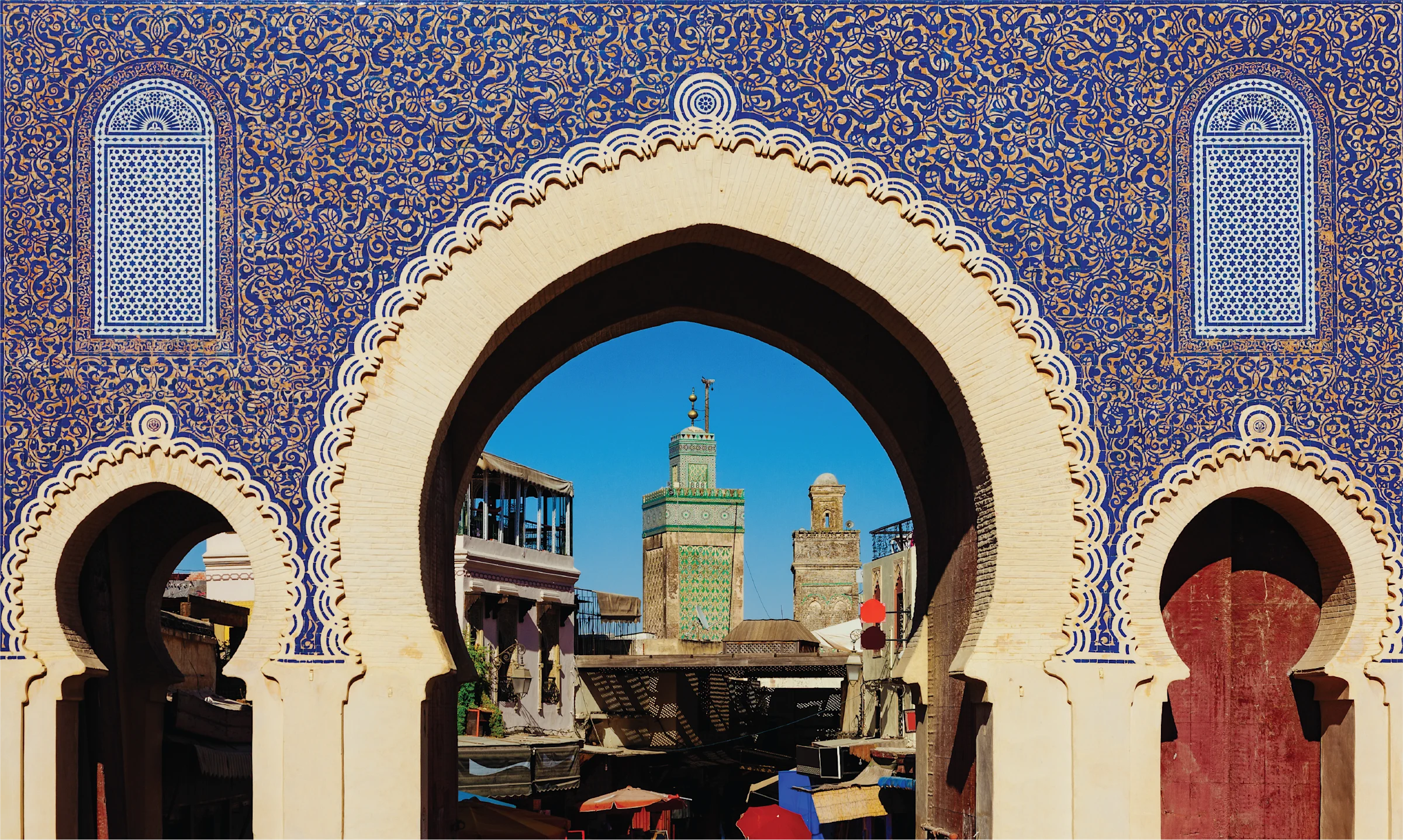
Fez is one of the great survivors. Within its stout walls and imposing gates lies the most complete Islamic medieval city in the world, with winding alleys and palaces turned inward to exquisite courtyards. Amid its fountains, tilework, and intricate architectural detail, public life and private interiors exist in striking contrast. A millennium ago, Baghdad looked a lot like this. So did Cairo and Isfahan. Today the medina offers one of the clearest glimpses we have of that earlier world.
Founded in the ninth century, the old city still bears the monuments of its past as an imperial capital, even if economic gravity has shifted toward Casablanca, Rabat, and Tangier. Marrakech may be charming and cosmopolitan, but Fez is something perhaps more precious: a traditional Moroccan city where the medieval medina remains a working urban center rather than just a preserved quarter.
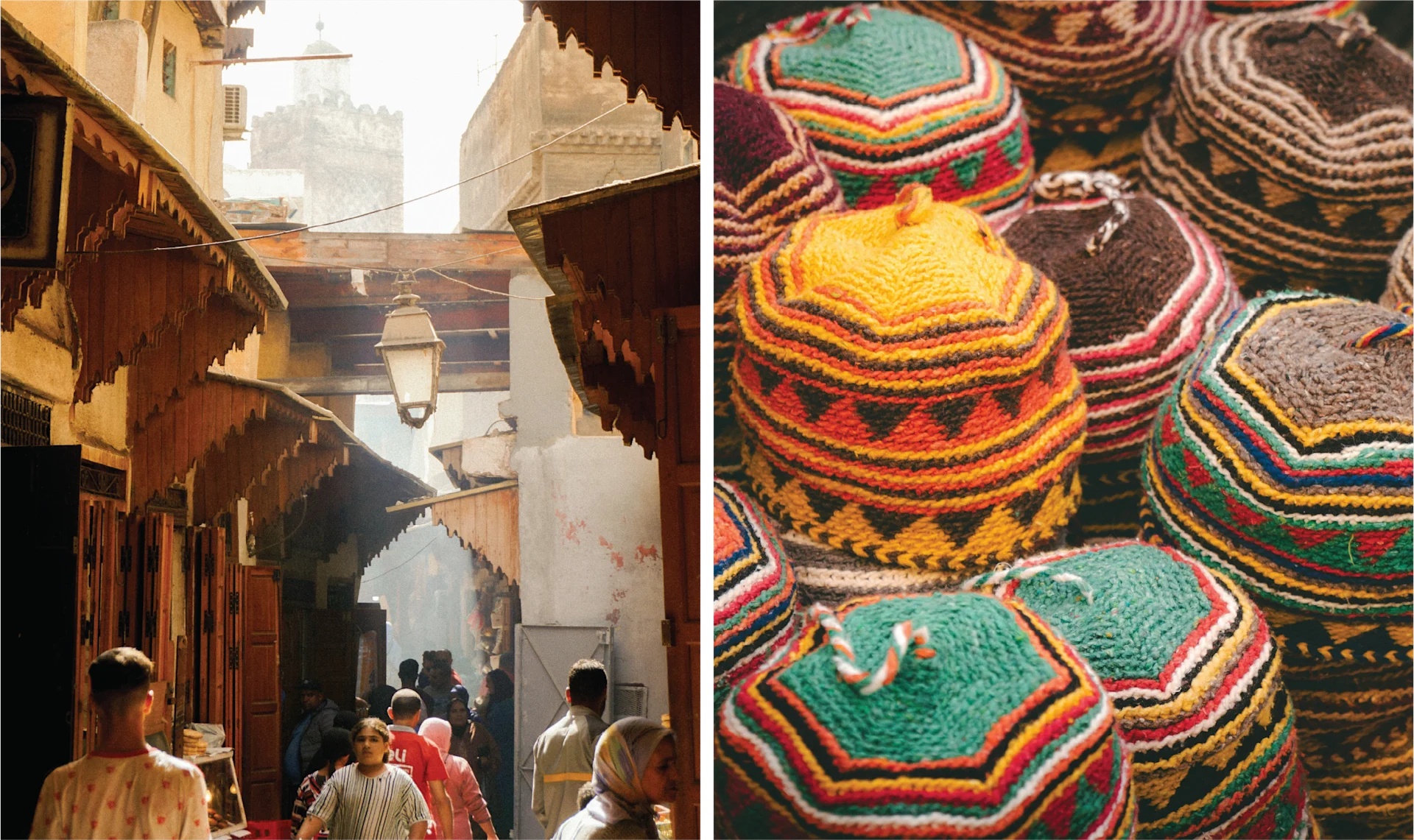
The main artery of Talaa Kebira moves like a river of people. Figures in hooded djellabas gather at tobacco stalls, their pointy silhouettes jutting above the crowd. Families from the Atlas Mountains linger at jewelers’ counters examining gold chains. Workers hurry toward the tanneries. Traders from across the Sahara scrutinize piles of dried figs, raisins, and dates.
At a bend in the lane, where two oncoming mules create a traffic jam, butcher stalls abruptly give way to stonecutters perched outside their workshops, chiseling epitaphs into slabs of marble. Beyond, a baker slides rounds of dough into a blazing oven, while a vendor across the lane dispenses fresh orange juice, sweet cakes, and advice to passing customers. The goods are as varied as the crowd: slippers, brass pots, carved doors, ceramics, perfumes and essential oils, brocades, carpets, and sweets. Shoppers part only for muleteers guiding their laden animals through the souk. Aromas mark invisible boundaries—coffee, rosewater, mint, onions, charcoal smoke, the unmistakable scent of tanning leather. And the soundtrack is equally vivid: the clang of coppersmiths, the calls of porters, the bells of water vendors, and the overlapping summons of the muezzins as evening settles over the rooftops.
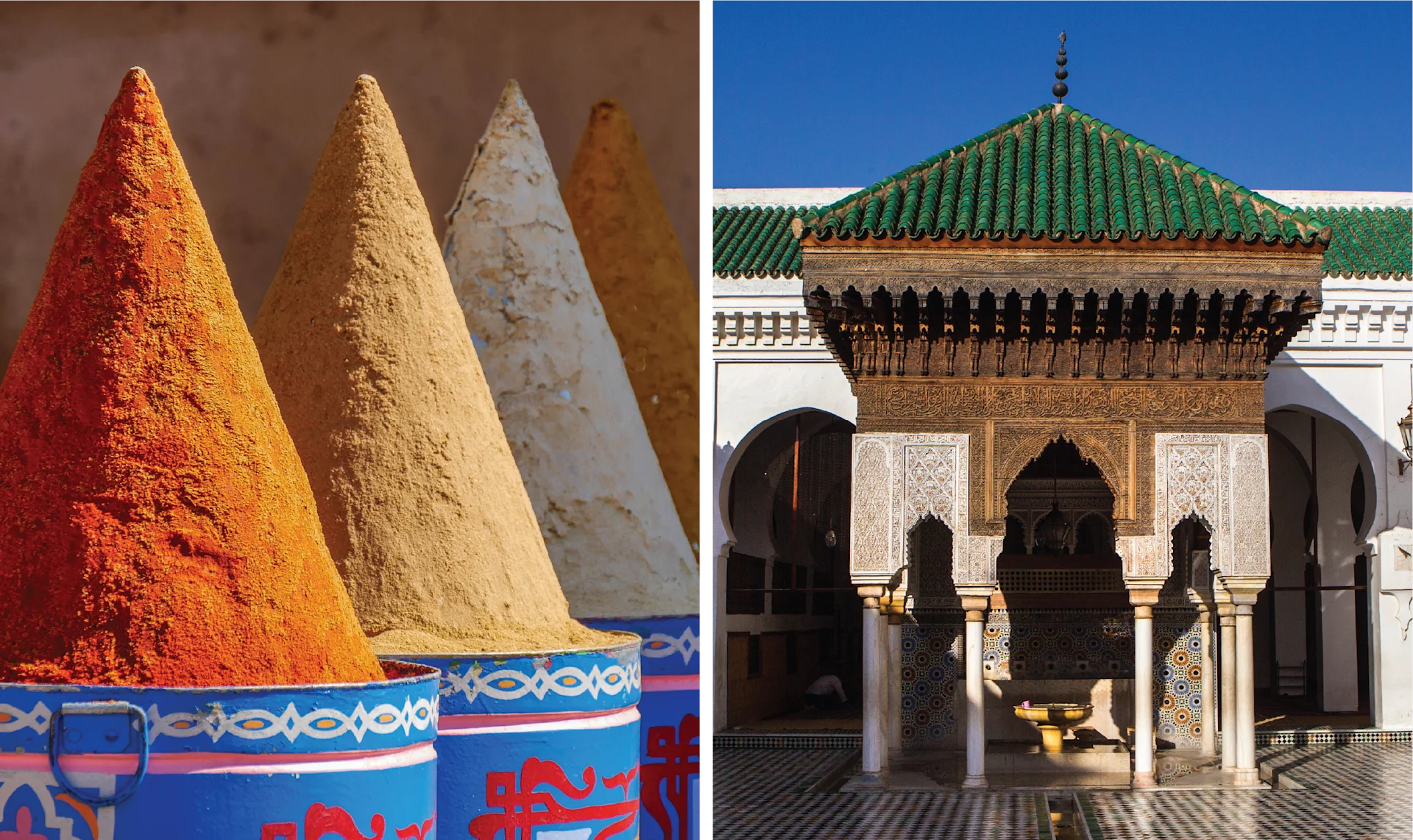
But there is another side to Fez, a more intimate interior world. I often find it by slipping through a doorway off one of the medina’s crowded lanes, passing in a single step from chaos to order, from commercial hurly-burly to the calm of a hidden patio. I sit in a swath of sun with my back against a warm wall as the sounds of the city fade to a distant murmur. It is the great contradiction of Fez—a city of constant movement with a deep quiet at its heart, found in riad courtyards, on rooftops at sunset, or over lunch in a shaded garden.
Still, Fez is no museum. New energy is moving through these alleyways as a younger generation of hoteliers, chefs, artists, and designers reinterprets the city’s traditions. There’s a renewed appreciation for craft alongside a wave of thoughtful restorations—crumbling riads transformed into smart homes and guesthouses—and institutions like the newly revived Dar Batha Museum of Islamic Arts taking on new life. The long-awaited reopening of the Palais Jamaï, after years of restoration, will be one of the most notable hotel debuts of 2026. And each year, the Festival of World Sacred Music brings an international mix of artists to the city, reinforcing Fez’ long-standing role as a cultural crossroads. What’s emerging isn’t a break from tradition, but a more deliberate way of growing within it.
Stay
Riad Fès
5 Derb Zerbtana
+212 5 35 74 12 06
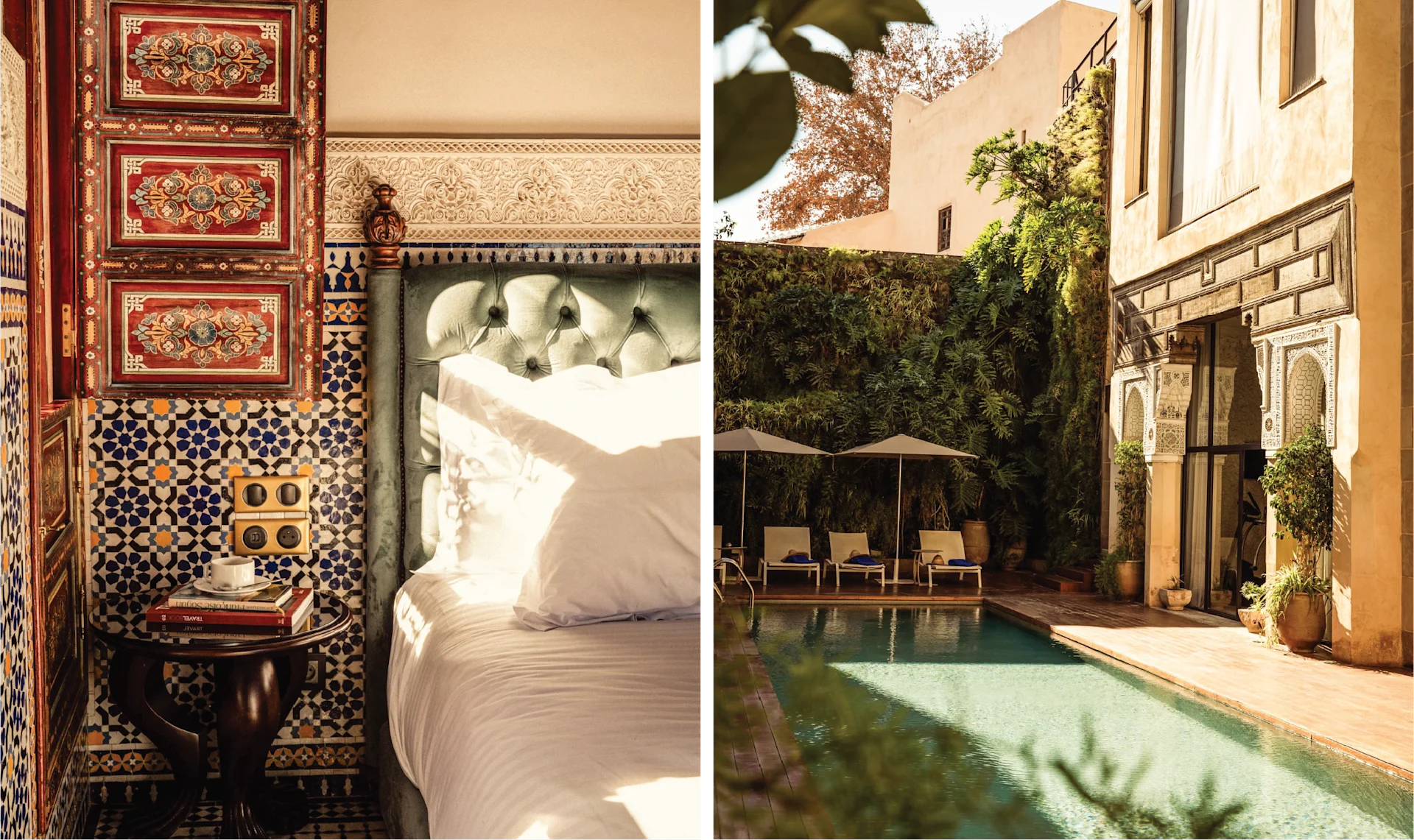
One of the pleasures of visiting Fez is staying in its secluded riads—traditional houses organized around elegant courtyards, many of which have been converted into boutique hotels. Among the grandest is this five-star Relais & Châteaux property arranged around three intricately tiled courtyards. Interiors evoke turn-of-the-century elegance with pianos, cocktail cabinets, bookshelves, and deep sofas. There is a small pool tucked into one courtyard, a rooftop bar overlooking the medina, and an in-house hammam and spa for traditional Moroccan scrubs and massages.