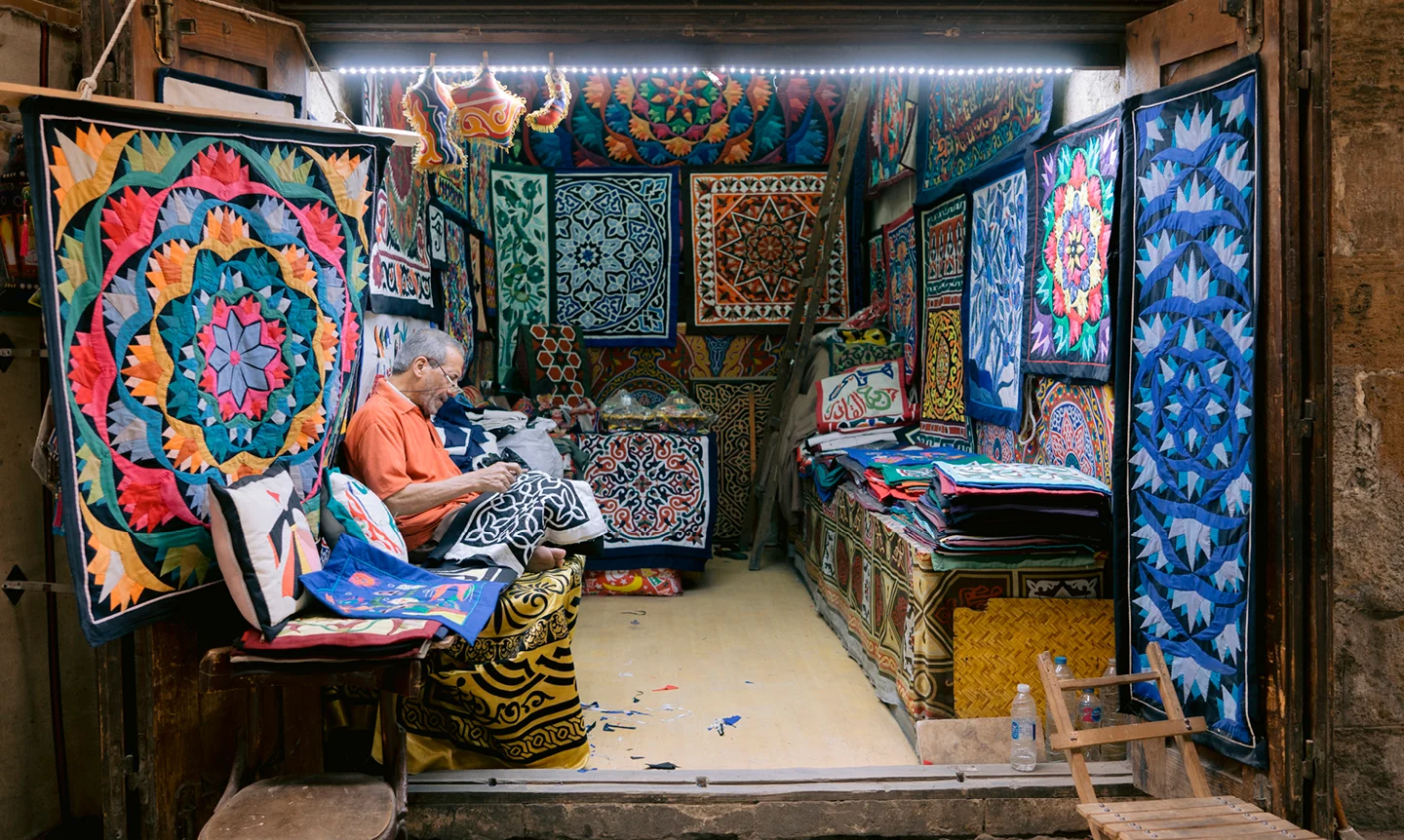
Cairo is a teeming city that enlivens all the senses, sometimes all at once. Many visitors come to Cairo for just a few days and with a set plan to visit the historic sites before heading off to Giza and beyond. This is unfortunate because it leaves little time for the many pleasures the city offers— from the busy street culture to the vibrant cafe society to the languid life along the Nile. Cairo is also home to various smalls shops and studios where artisans make some of the most exquisite treasures—some techniques dating back centuries.
PRIOR asked Margarita Andrade, who moved to Cairo from Ecuador in 2004 to start Mailaka Linens, a luxury embroidered bedding company, to guide us to the city's best shops— from the old world bazaar to the stylish streets of Zamalek, a neighborhood west of the city. Indeed, Andrade warns that the city is hectic. “Even crossing the street is complicated, but you learn to let go,” says Andrade. “It makes one more creative here.” This energy has allowed Andrade to expand her business, with a shop in Zamalek (see below) and Thread of Hope, her social enterprise which trains and employs disadvantaged Egyptian women and refugees in the embroidery. Here she opens up her address book to Cairo's hidden treasures.
Street of Tentmakers
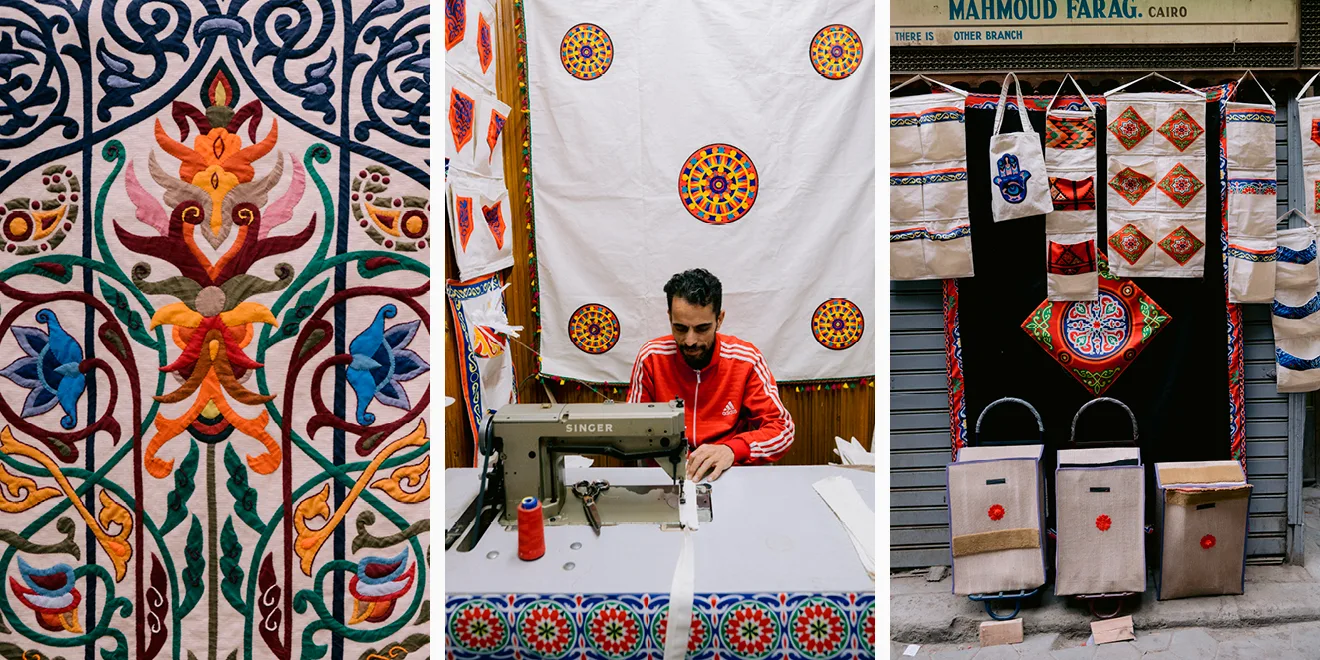
Located in the city’s last medieval quarters, the street of tentmakers is where artisans once stitched together colorful appliqué panels into tents and pavilions for traditional ceremonies. These days the narrow strip is packed with workers hand sewingfabrics into banners, cushion covers, and bags as well as tents that locals still use for weddings and funerals. Many of the patterns are inspired by scenes of Pharaonic art, folklore and traditional Islamic text.
Sharia Al Khayamiyya
Madu Cairo
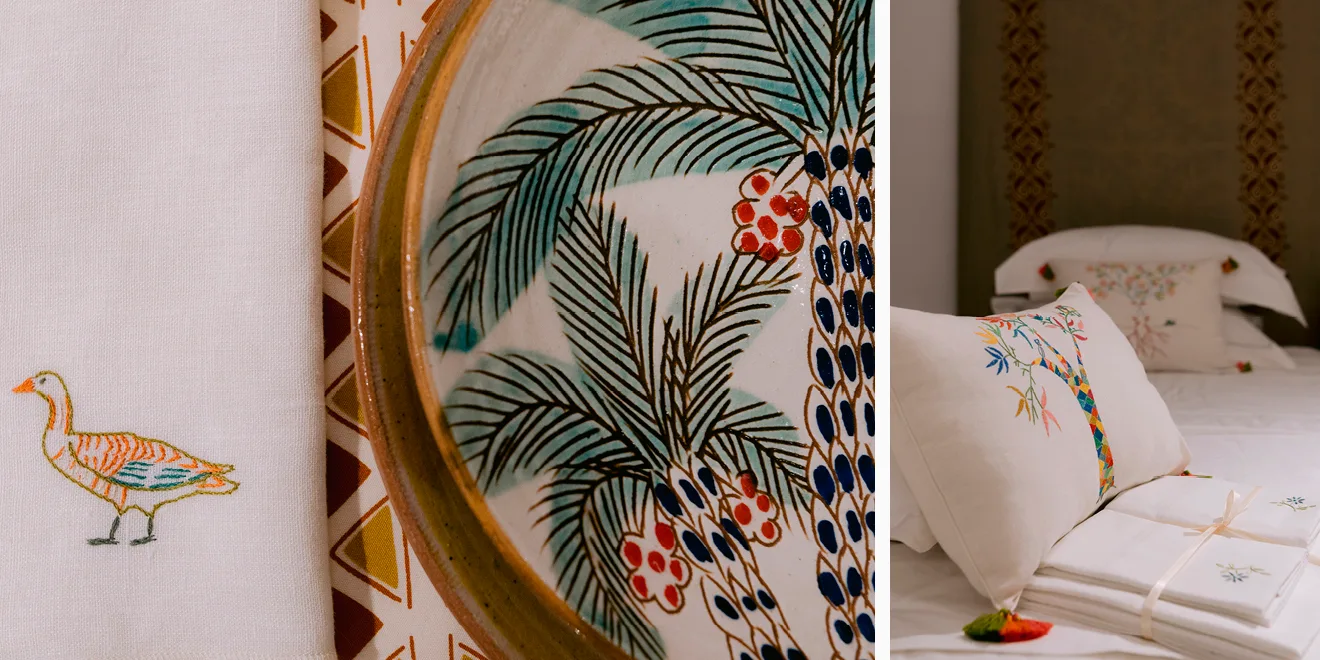
Margarita Andrade’s shop in Zamalek, showcases Malaika's elegant embroidered linens as well as a large selection of textiles, many of them printed with handmade dyes using antique printing blocks which are sourced from places like Afghanistan, Turkey and India. There’s also handmade ceramics from the nearby Fayoum oasis. Madu, a Pharaonic word that means “Of The People,” also sells crafts from across the globe— including Ugandan woven baskets, silk and velvet ikat from Uzbekistan, and line scarves from Bengal— sourced directly from the people who make them.
20 El Mansour Mohammed