In the sleepy hill town of Attard, a surprising cultural shift is unfolding. Until recently, the tiny Mediterranean nation south of Sicily excelled at sun, scenery, and package holidays but lacked hotels with a strong point of view. Casa Bonavita is changing that. The 17-room property, created by Suzanne and Christopher Sharp of London’s The Rug Company, occupies an 18th-century limestone mansion wrapped in lush gardens fragrant with citrus and flowers. It took the couple over a decade to fully restore the grounds and appoint the interiors with rare Italian furniture, Murano glass, hand-painted murals, and heirlooms from Suzanne’s Maltese family. The result reflects the couple's sensibilities: intimate yet grand, curated yet relaxed.
Casa Bonavita may be one of the year's most anticipated hotel openings, but perhaps more importantly, it feels like a watershed moment for Malta, whose aesthetic ambitions suddenly seem to match its rich cultural inheritance.

When
For the kind of burbling-fountain serenity Casa Bonavita affords to extend beyond its walls, shoulder season—or even winter, when the crowds disappear almost entirely—is ideal. Malta’s position between Sicily and North Africa means it runs hotter than much of the Mediterranean. Between late April and early June, and again in September and October, the sea is warm, gardens are in bloom, and the roads are far calmer than in peak summer, when temperatures soar into the 90s and shade is often scarce. If you do visit in summer, your stay will likely coincide with one of the island’s many rambunctious festas, when villages erupt in fireworks, marching bands, and saint’s-day celebrations that stretch late into the night.
Where
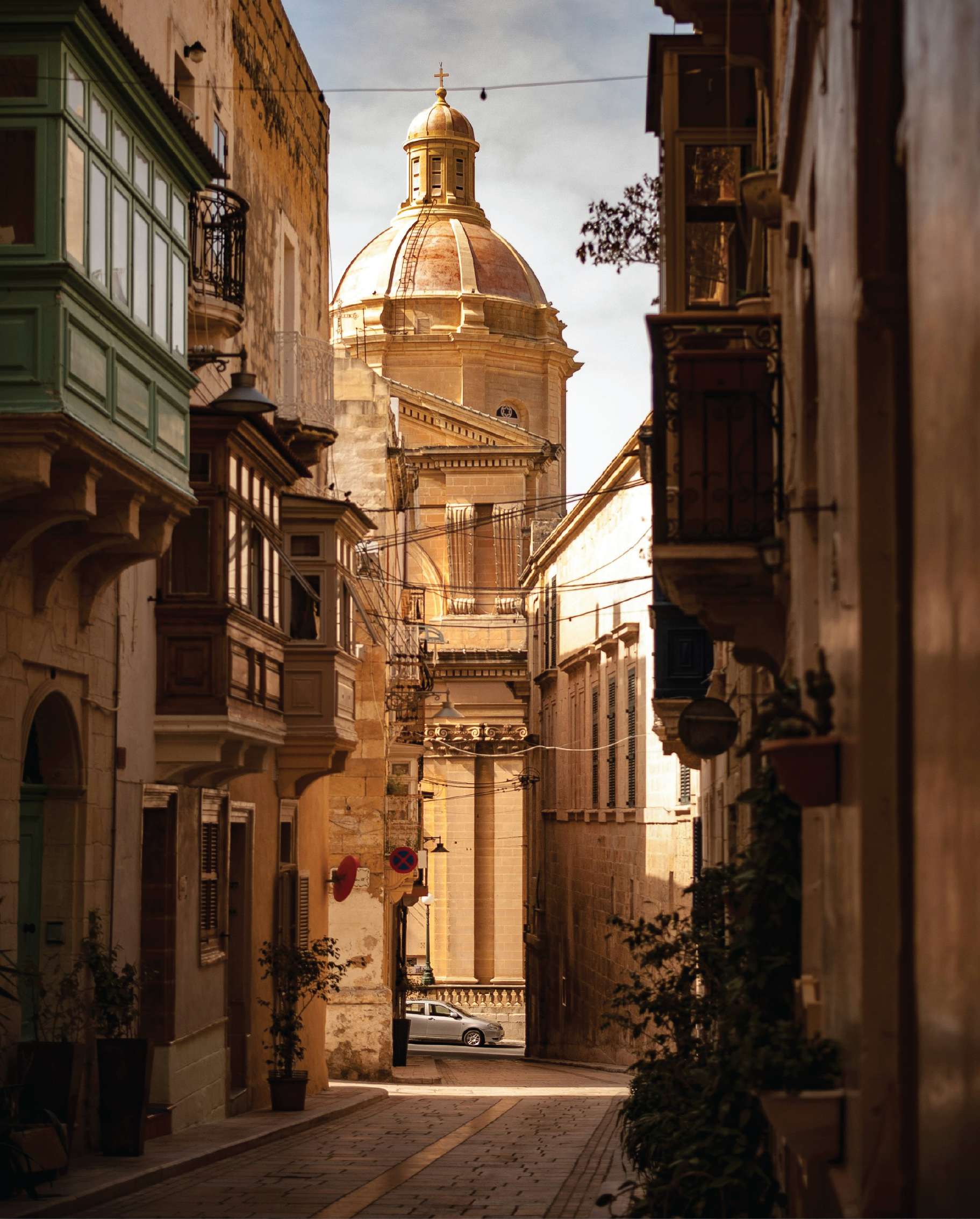
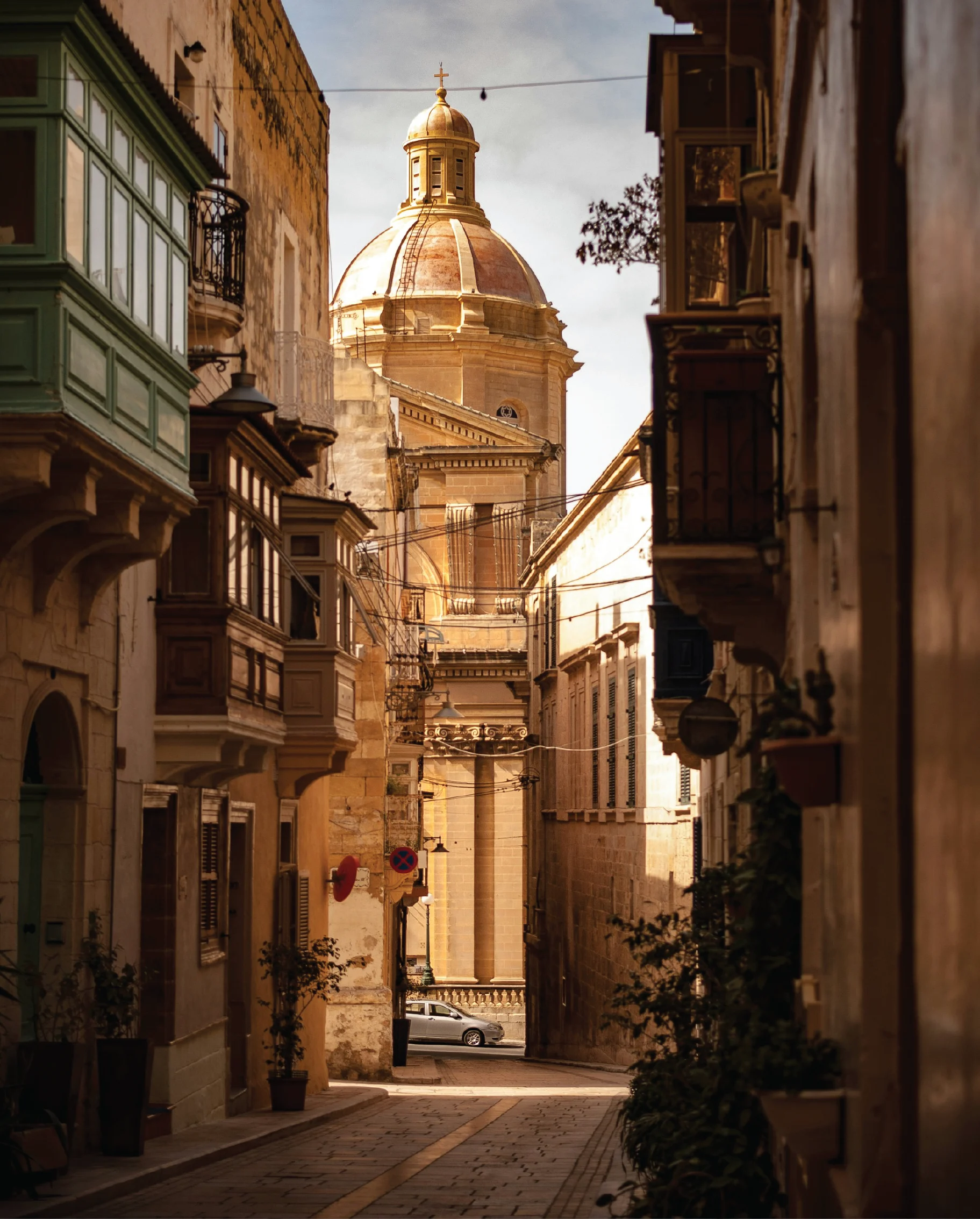
Set in the stately town of Attard near the geographic center of Malta, Casa Bonavita enjoys a strategic position between the island’s two historic poles: Valletta, the honey-toned fortified capital built by the Knights of St. John, and Mdina, the ancient walled city that served as Malta’s medieval seat of power—and more recently as a filming location for Game of Thrones. Villa Bologna Pottery is a five-minute walk away, while Valletta, the airport, and most beaches are about 15 minutes by taxi.
The Proprietors
Casa Bonavita was created by Suzanne and Christopher Sharp, the founders of London’s The Rug Company, whose richly textured interiors helped define British design in the late 1990s and early 2000s. Suzanne grew up in Malta before leaving for Rome as a teenager, and the hotel reflects both her Maltese roots and worldly influences. “Throughout the restoration, our aim was to create a house that feels intrinsically connected to its surroundings, where each room reveals a different facet of the island's rich cultural heritage,” she said. Their son Jamie, an antiques dealer, helped source many of the pieces that now fill the house.

Design
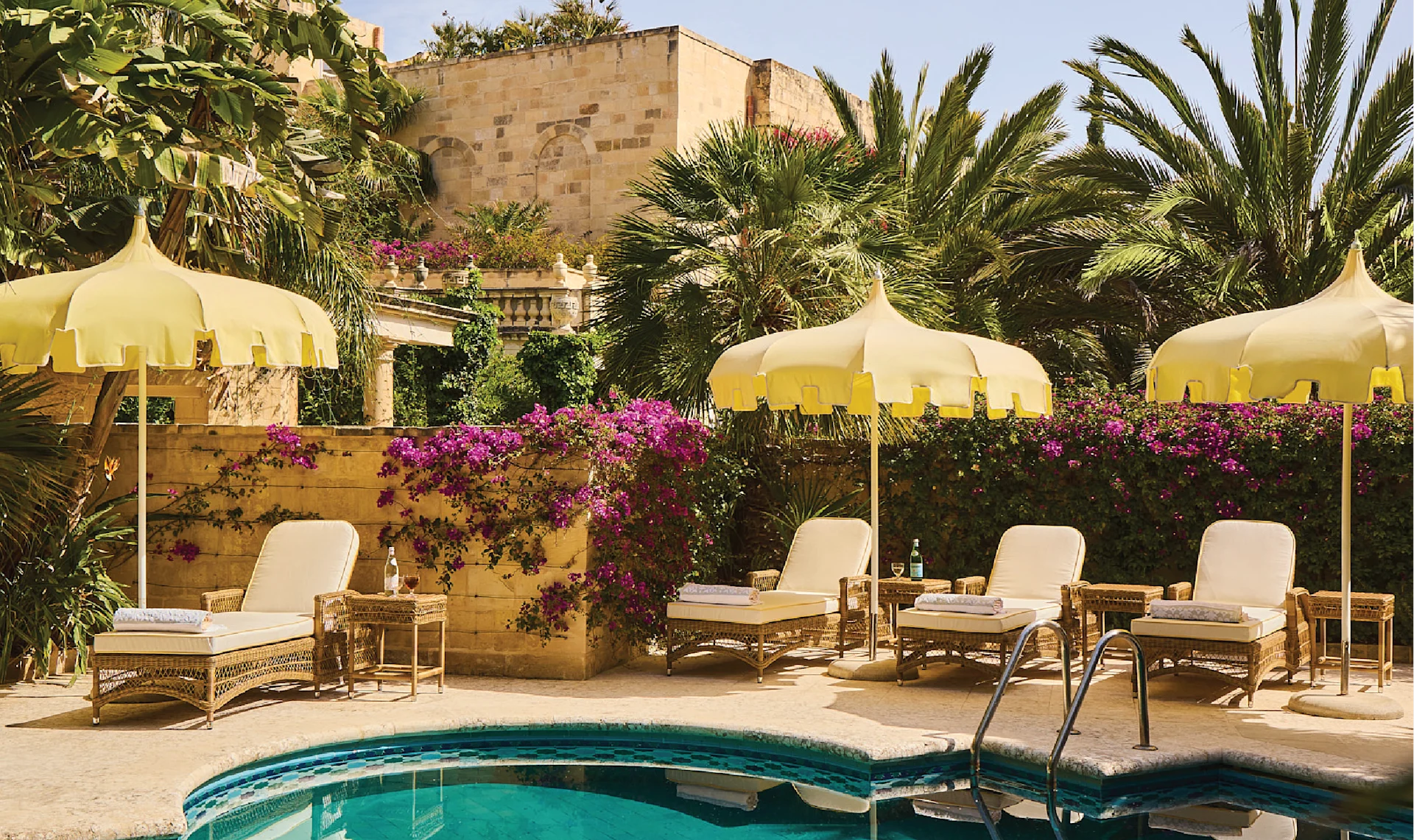
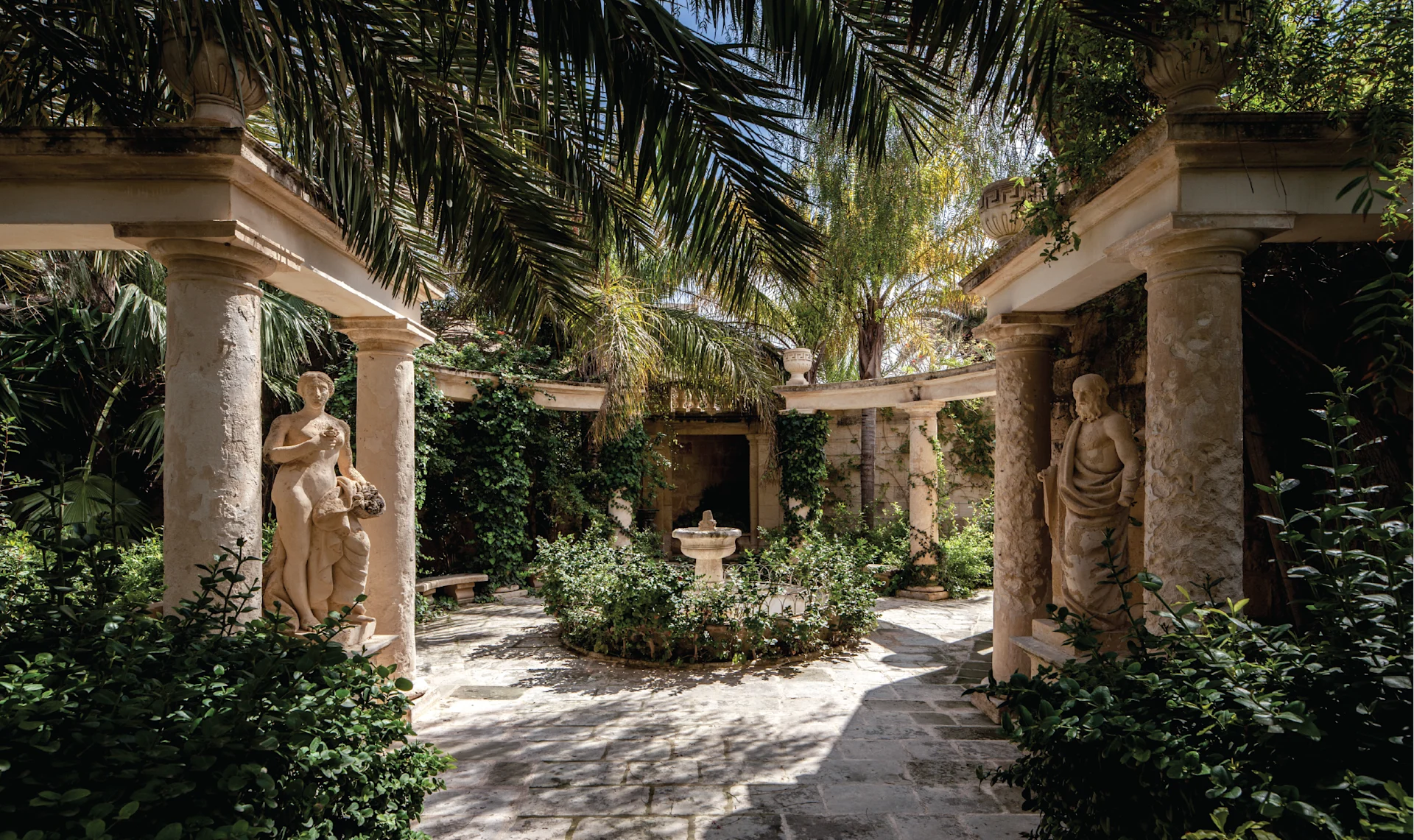
The design at Casa Bonavita extends far beyond the rooms; its greatest achievement may be the way the physical structures seem to dissolve into semi-wild gardens, terraces, and shaded outdoor sitting areas. Bougainvillea climbs the limestone walls in thick bursts of magenta nearly year-round, while purple plumbago flowers spill onto pathways lined with restored fountains and weathered statues. Around the pool, scalloped green umbrellas shade wicker loungers upholstered in striped fabrics, with olive trees and Maltese date palms softening the edges of the stone courtyards.
Inside, the decorative language pulls from southern Italy without being stagey. Limewashed walls, thick masonry, stone floors, and lofty frescoed ceilings are the bones of the house, while pale sage doors trimmed in oxblood add flashes of color throughout. There are mustard-colored sofas with delightfully overstuffed cushions, wrought-iron consoles against stark white walls, and fresh flowers bursting atop nearly every surface. The main entrance hall glows beneath amber uplighting and gilded sconces, while the Valletta Bar is wrapped in a custom de Gournay wallpaper that took a year to complete. Elsewhere, the decor is more playful: The waiting room ceiling is painted with whimsical interpretations of family crests and orange trees, a nod to Attard’s long association with citrus groves. The Sharps’ design embraces Mediterranean maximalism with enough wit to keep it from becoming precious, and the result is a tribute to both Malta’s vernacular architecture and the grand decorative traditions of the Mediterranean elite.
The Crowd
The hotel attracts the kind of guest who could spend hours reading beside a trickling fountain or drifting along flower-lined paths between the two pools. Design-literate and privacy-seeking travelers will find both inspiration and rejuvenation here. There is little of the see-and-be-seen flash that defines so many Mediterranean island hotels these days; the mood is cultivated and contemplative.
Rooms
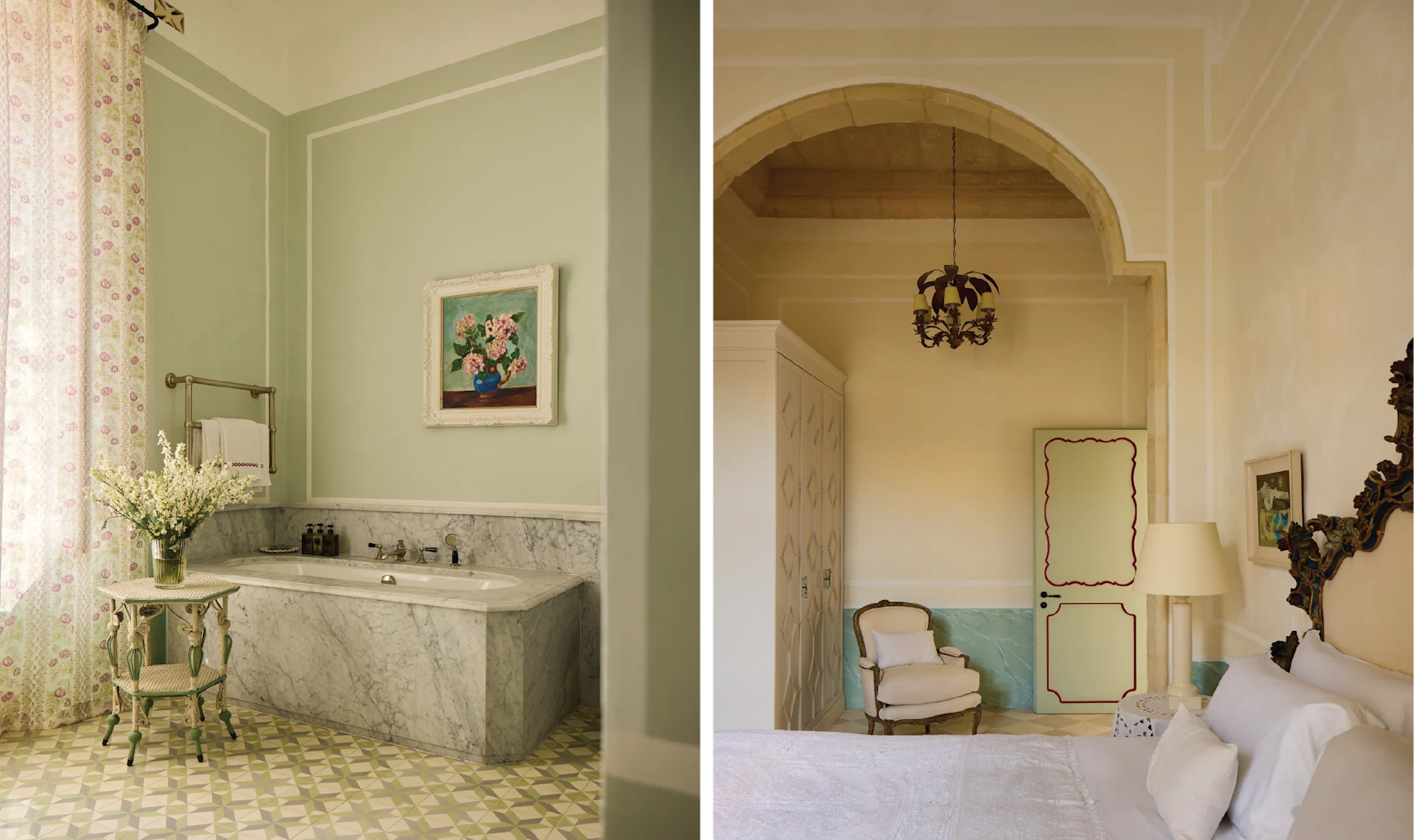
The rooms, including the soon-to-open 615-square-foot standalone Folly Suite across the way, strike a playful balance between restraint and ornament. Most are subdued, with plaster walls and soft light punctuated by striped curtains, colorful lampshades, and painted ceiling beams. The building’s architectural bones do much of the decorative lifting through vaulted ceilings, thick limestone walls, carved corbels, and oval windows. Canopy beds, antique writing desks, bespoke mirrors, and white ceramic lamps handmade by nearby Villa Bologna Pottery add to the charm. Bathrooms lean classic Anglo-European, with checkered marble floors, freestanding clawfoot tubs, and Lefroy Brooks fittings paired with Ortigia bath products. Some rooms open onto private balconies fringed with fresh mint and climbing greenery, while others feature hand-painted frescoes. Throughout, the guest rooms have a pleasing symmetry that balances out the more rococo bent of the common areas.
Dining
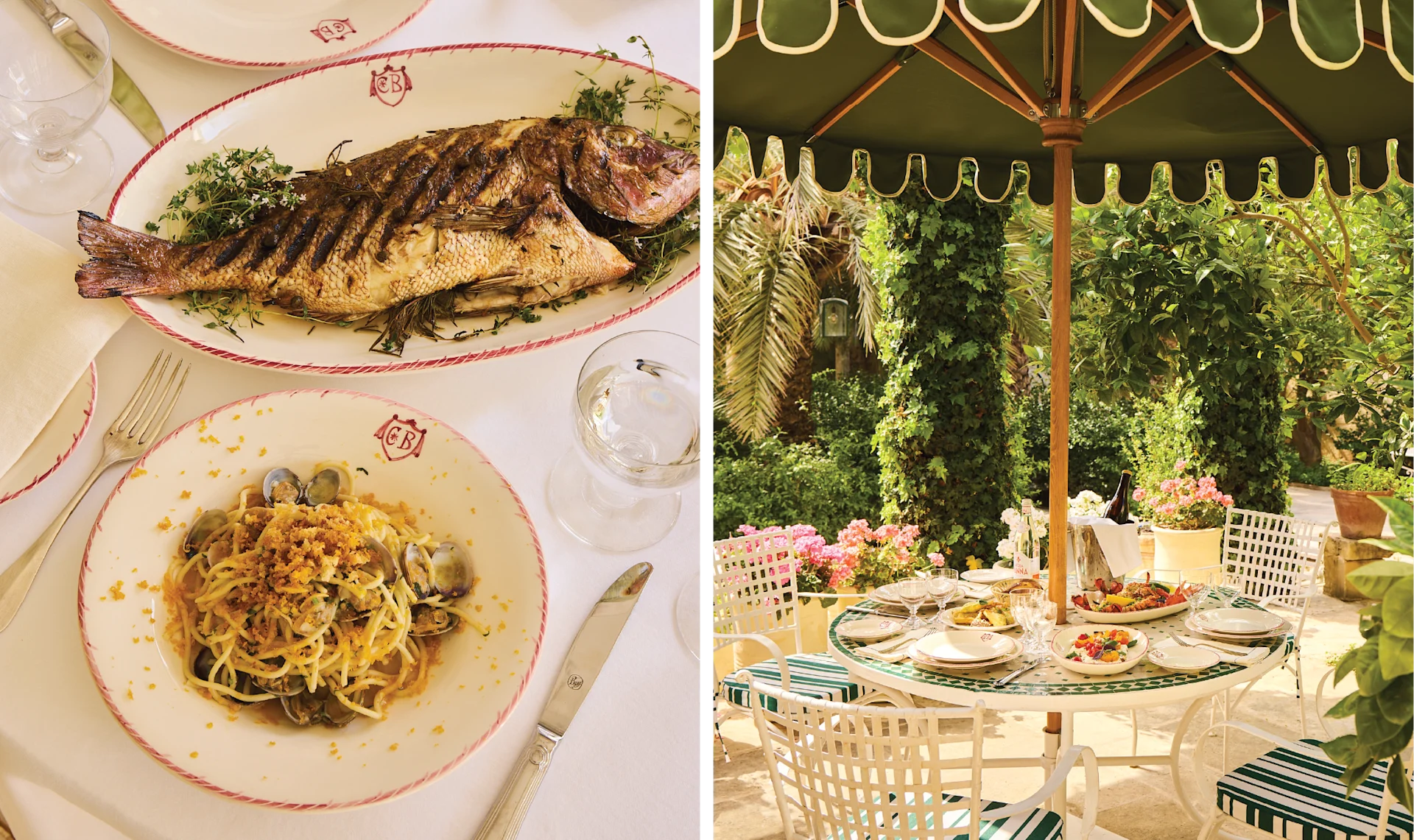
Executive chef Dex Oseman, formerly of London’s River Café, oversees a menu centered on seasonal Mediterranean cooking with a strong Italian bent. There are homemade pastas, risottos, simply grilled meats, and sides like braised spinach and potatoes al forno in addition to French flourishes in dishes like caviar with rösti, crudités, and roasted fish finished with beurre blanc. Much of the produce is grown nearby. After dinner, you might meander into the Valletta Bar for a nightcap or herbal tea.
Throughout the day, the original house kitchen puts out Maltese pastries, fruit, and cakes for grazing. The wine list leans predominantly Italian and French, with by-the-glass pours like Gavi di Gavi and Barbera. A smaller Maltese selection is available by the bottle. Breakfast is simple and straightforward: eggs, seasonal fruit, pastries, and strong coffee taken slowly from cushy wicker chairs.
Wellness
There are two swimming pools framed by limestone walls, potted olive trees, and greenery, along with a hammam, a sauna, a cold plunge, and a compact gym outfitted with free weights, a treadmill, and a stationary bike. Moorish influences appear throughout the spa spaces in the form of patterned tiles, pierced metal lanterns, and deep-toned stone, while bucket showers suspended overhead lend certain areas the feeling of an old bathhouse. In the months ahead, the hotel also plans to expand its wellness programming with bespoke treatments and visiting practitioners.
Beyond
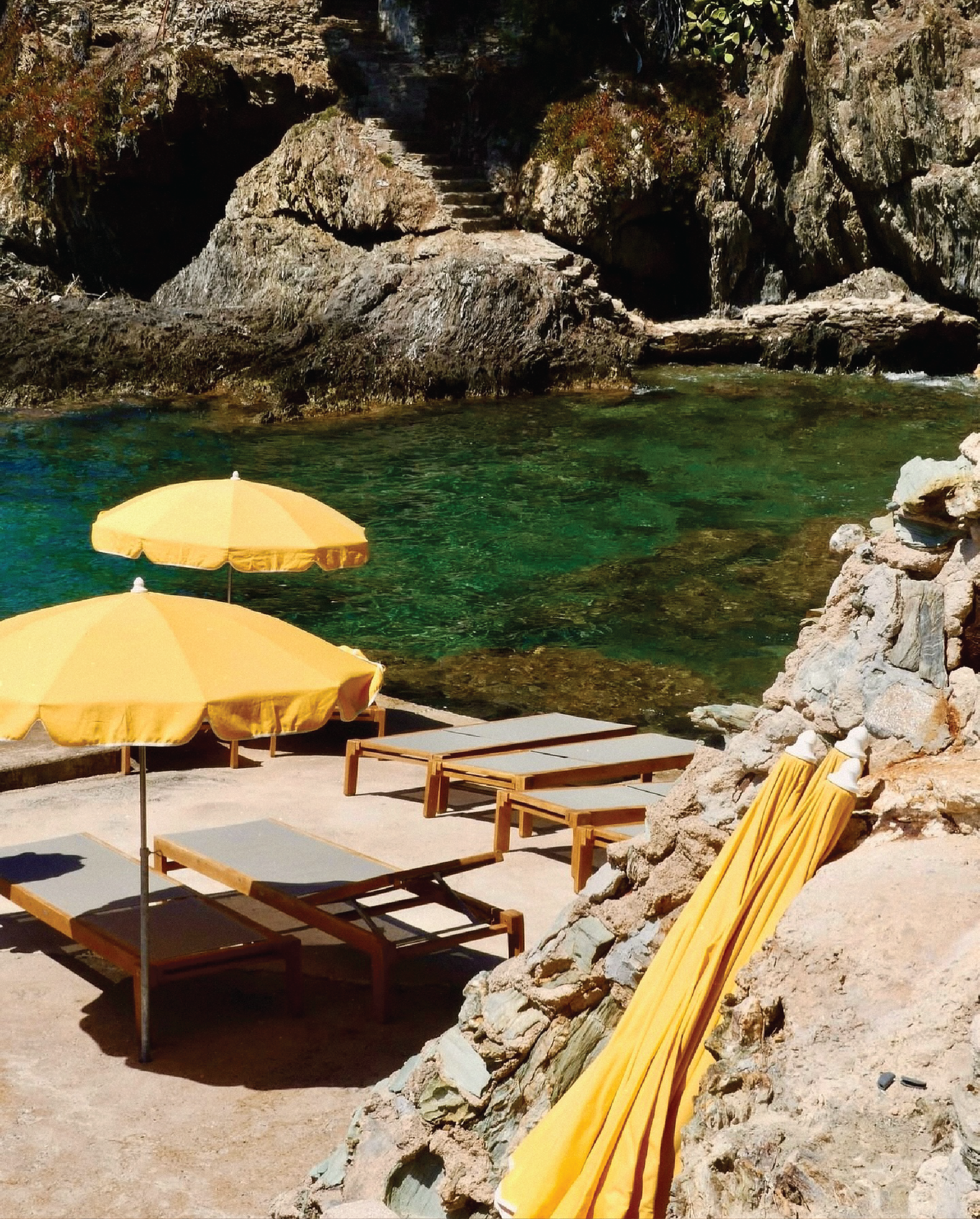
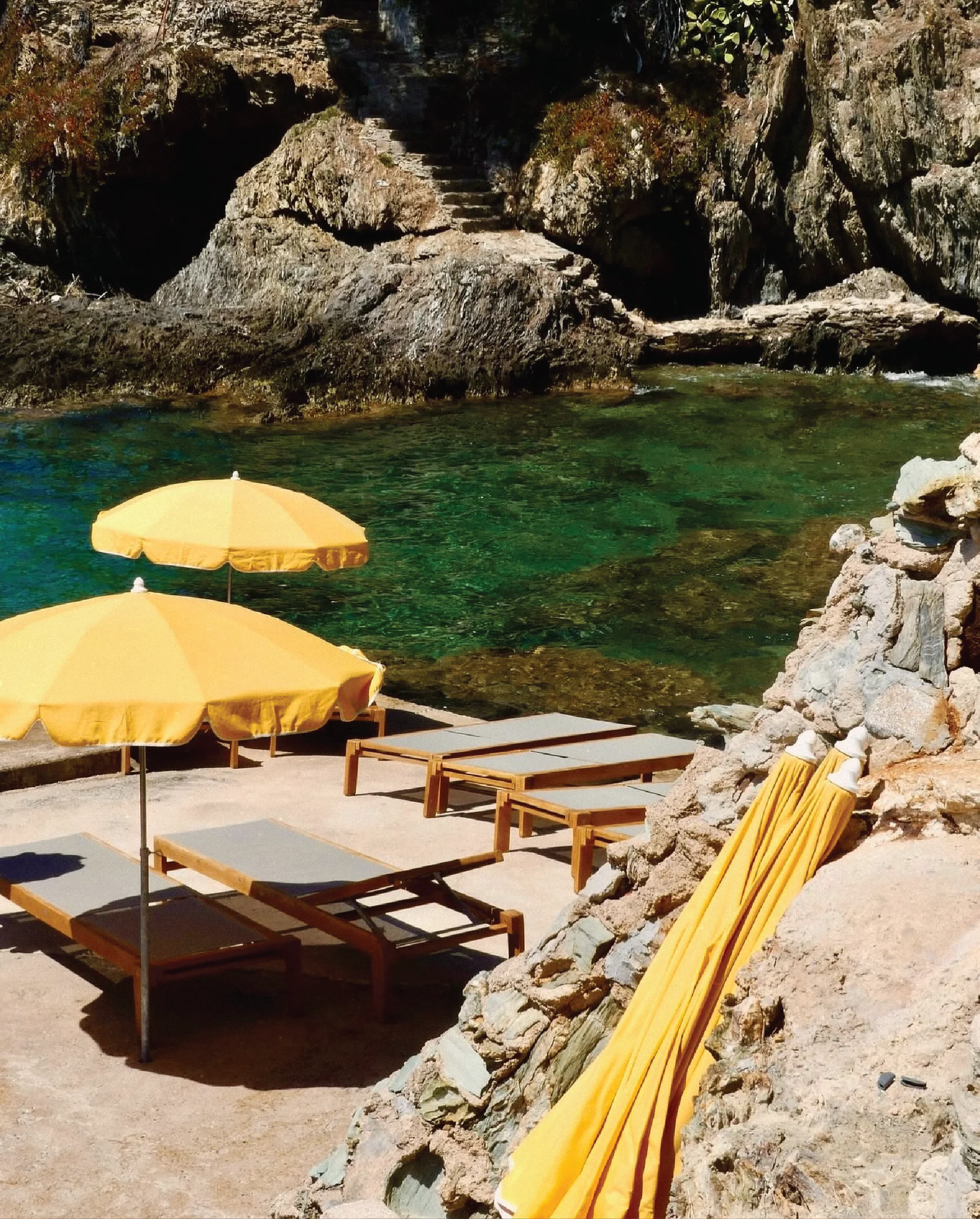
Valletta’s museums, wine bars, and harborfront restaurants are about 15 minutes away by taxi, as are the abutting towns of Mdina and Rabat, which conjure up Malta’s medieval past with their baroque churches and spooky catacombs. The nearby Villa Bologna Pottery is one of the country’s best stops for ceramics and decorative objects. Should you tire of the hotel’s two pools, a plethora of swimming coves and beaches are easily reachable by car.
Drawbacks
Attard is notably quiet, with little street life beyond a handful of cafés and neighborhood restaurants, so travelers seeking immediate beach access or a more kinetic Mediterranean atmosphere may wish to look elsewhere. The hotel’s inland location also means there are no dramatic sea views. At the time of writing, the property had been open only two weeks and was still smoothing out certain operational details, particularly around pacing during meals. Rooms also currently lack coffee- and tea-making facilities, which may mildly inconvenience guests who prefer their morning coffee before wandering down to breakfast.