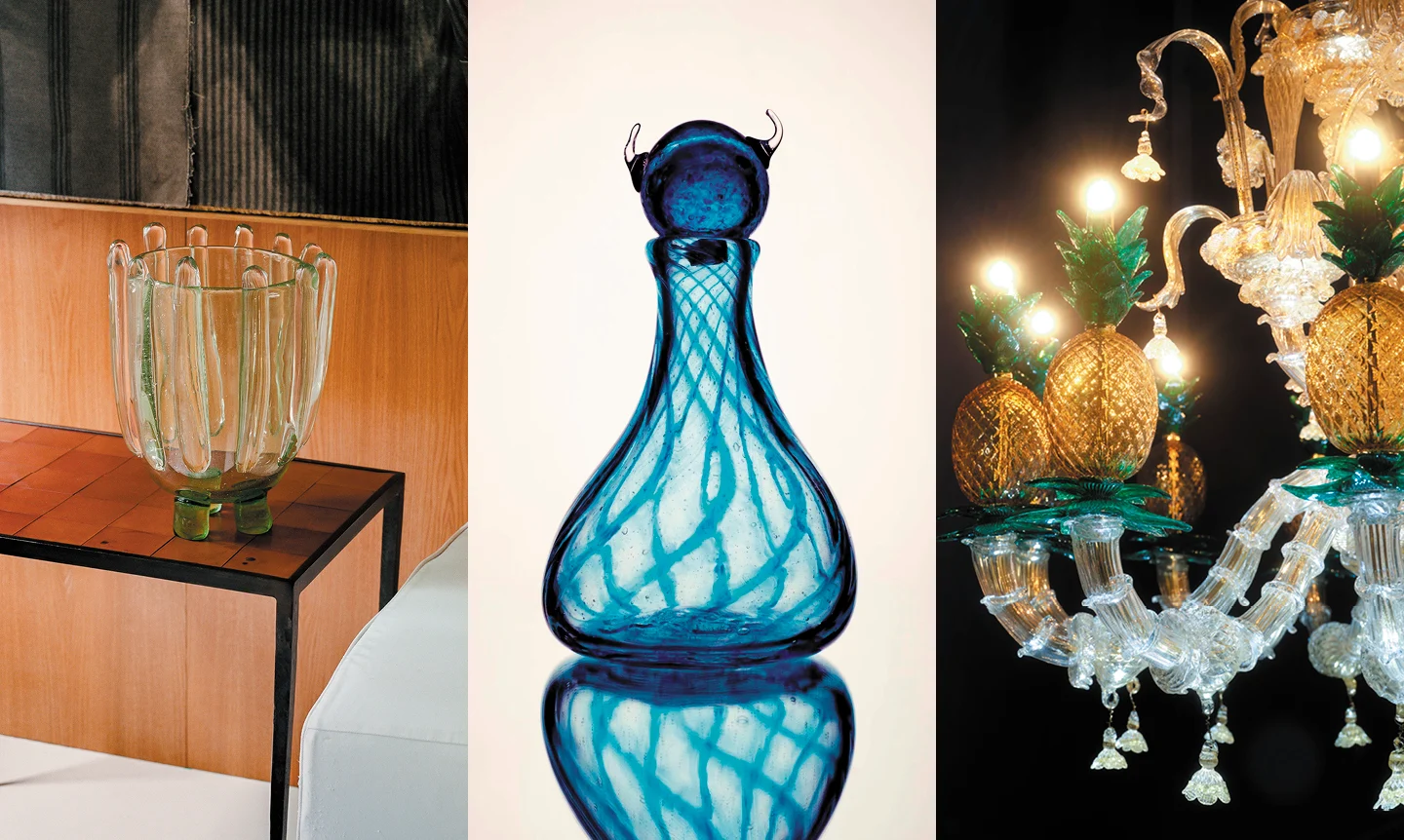
Gravity-defying energy prices are blamed for many of the world’s problems these days but one of the less-discussed victims of gas-market volatility? Murano glass, the centuries-old Italian craft of “art”-glassmaking beloved for its surrealist shapes, trippy colors and mythologized trade secrets. The high cost of methane, largely a byproduct of Russia’s ongoing war in Ukraine, means the dozens of red-hot furnaces that must burn at about 2,160 degrees Fahrenheit, 24-hours a day on Murano, a wisp of land with about 5,000 inhabitants just north of Venice, are now running on empty tanks. For the first time in its 700-year history, the ancient glass-blowing craft, already damaged by the pandemic, might become an “endangered heritage.”
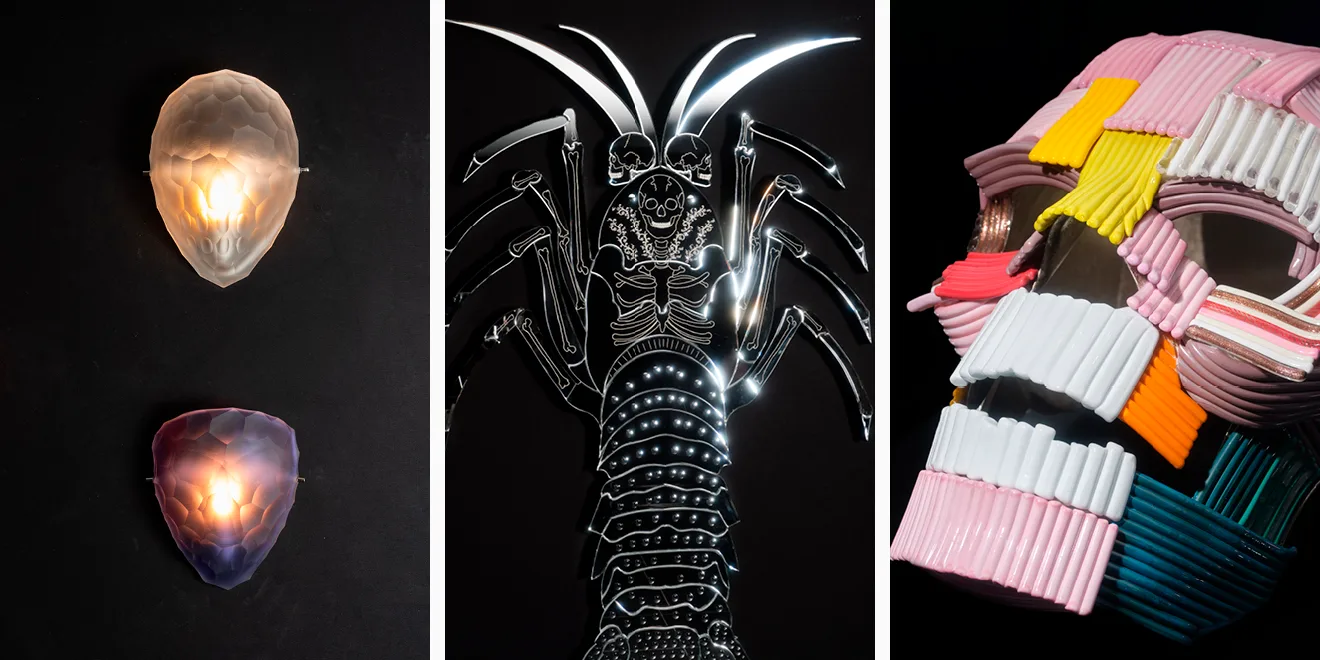
But it turns out, there’s a silver lining. There is now an urgent demand for Venetian art glass on the world stage. This week’s Salone del Mobile.Milano, or Milan Design Week, aims to paint Murano in a modern gloss. An exhibition of one-of-a-kind glass mirrors and chandeliers by the New York-based street artist Theodore Bradley opens today at BLOW, presented by the furniture retailer Artemest. “Forme del Bere” (Forms of Drinking), a survey of Murano drinking vessels both old and new, is on view at the Punta Conterie gallery in Venice through September. Next month, the International Perfume Foundation will host a gala in support of Murano’s craftspeople. “Murano is an important heritage we need to protect,” said Creezy Courtoy, the foundation’s founder. And despite the medium’s innate fragility, a new generation of designers and artisans from around the world are working to keep the Murano spirit alive, piece by piece.
Bethan Laura Wood
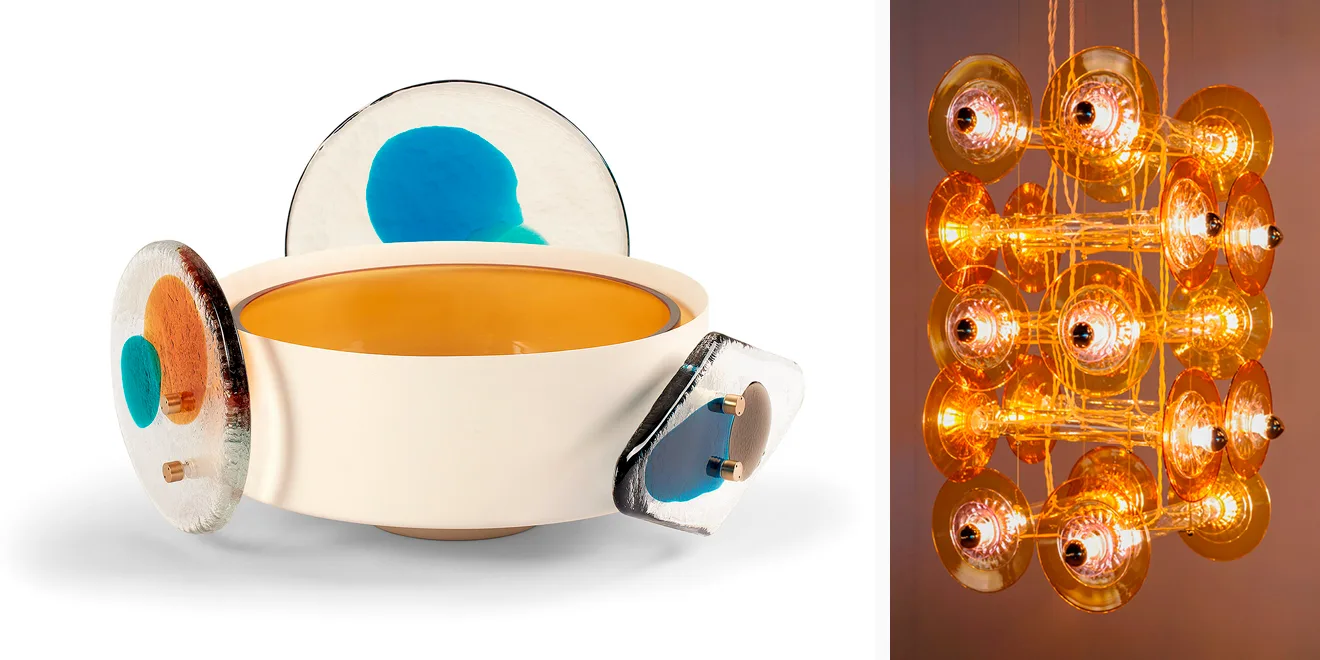
With her kaleidoscopic and colorful kewpie-doll personal aesthetic — she is known for her signature turquoise lipstick and two sky-blue dots on her cheeks — the British designer Bethan Laura Wood is like a piece of Murano “art glass” in human form. An intuition for clashing patterns and irregular shapes — the Wisteria chandelier, one of her best-known designs, consists of hand-dyed plastic flower petals that resembles a firework when illuminated — is perhaps why Wood, a Brit who lives in 1925 Art Deco building in East London, has become one of the most daring and ambitious practitioners of Venetian blown glass working today. Partnering with the Italian glass manufacturer Venini, Wood’s latest mischievous product is something she calls the “colordisc,” a bowl that doubles as a cylindrical flower vase (or is it the other way around?). Made ingeniously from lacquered brass and decorative glass, the modular creation includes an optional blown-glass vase in orange or blue, which, aside from adding additional pops of color, is designed to add or subtract the object’s depth depending on whether one wants to use it as a shallow fruit bowl or a vessel deep enough to hold water for flowers. Cheekiest of all, the two individual tiles of glass affixed to the exterior feature two blue dots, a hue Wood sourced from Venini Archive and, of course, her own signature face paint.
Dana Arbib
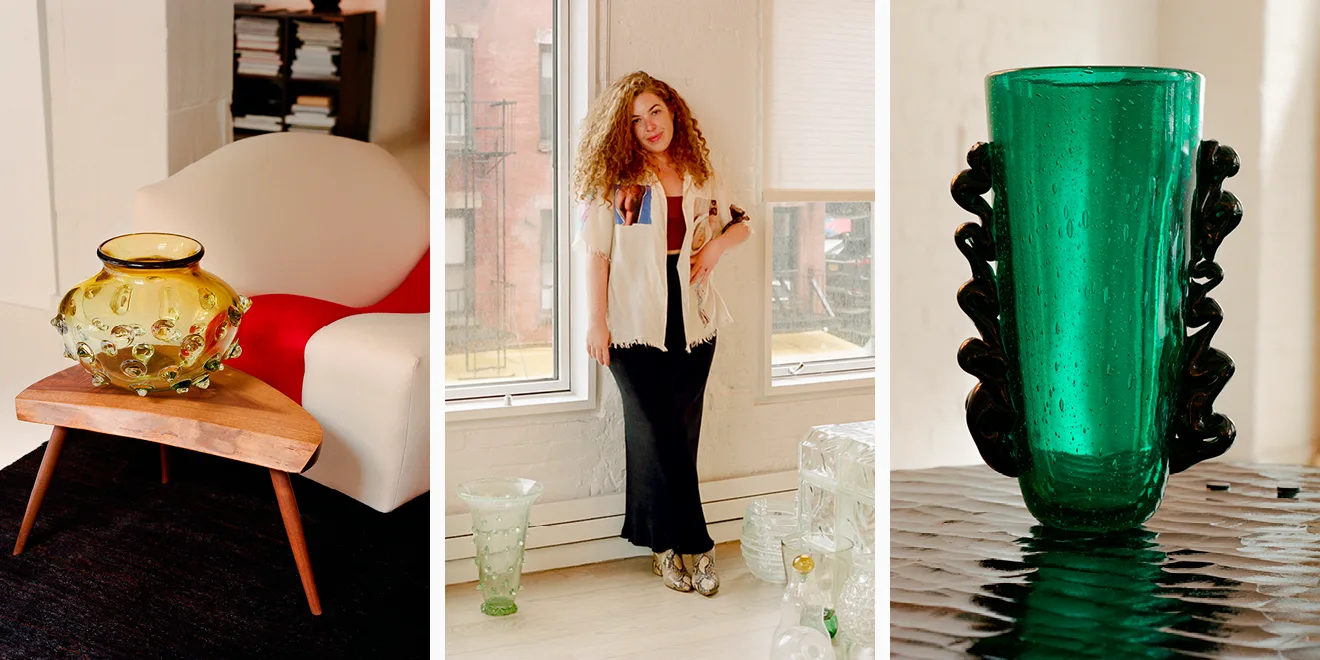
Over the last two years, the Libyan-designer Dana Arbib has traveled from her studio in New York City to Murano, where she worked with artisans on kelps-shaped glassware inspired by the shapes of North-African vessels and the blue-green colors of the area’s rich seascape. And like Murano’s long history of glassmaking mythmaking, Arbib discovered a secret of her own while learning from the island’s craftspeople: Her own great uncle, her family discovered, had immigrated from Libya to Venice in the late 1800s to run a glass-producing facility not far where she had been working herself during her time on the lagoon island. She called her resulting collection of oversize vases, plates and goblets “Vetro Alga,” which translates to “seaweed glass.” The collection has been exhibited by Tiwa Select gallery and counts the interior-decorator Michael Bargo, the designer Lazaro Hernandez and the furniture designer Emmanuel Olunkwa as fans. Fusing the long history of the Murano craft with her own Libyan backstory, Arbib’s globular works are at once monuments to heritage and shining examples of where glassmaking is headed next.
Campbell-Rey
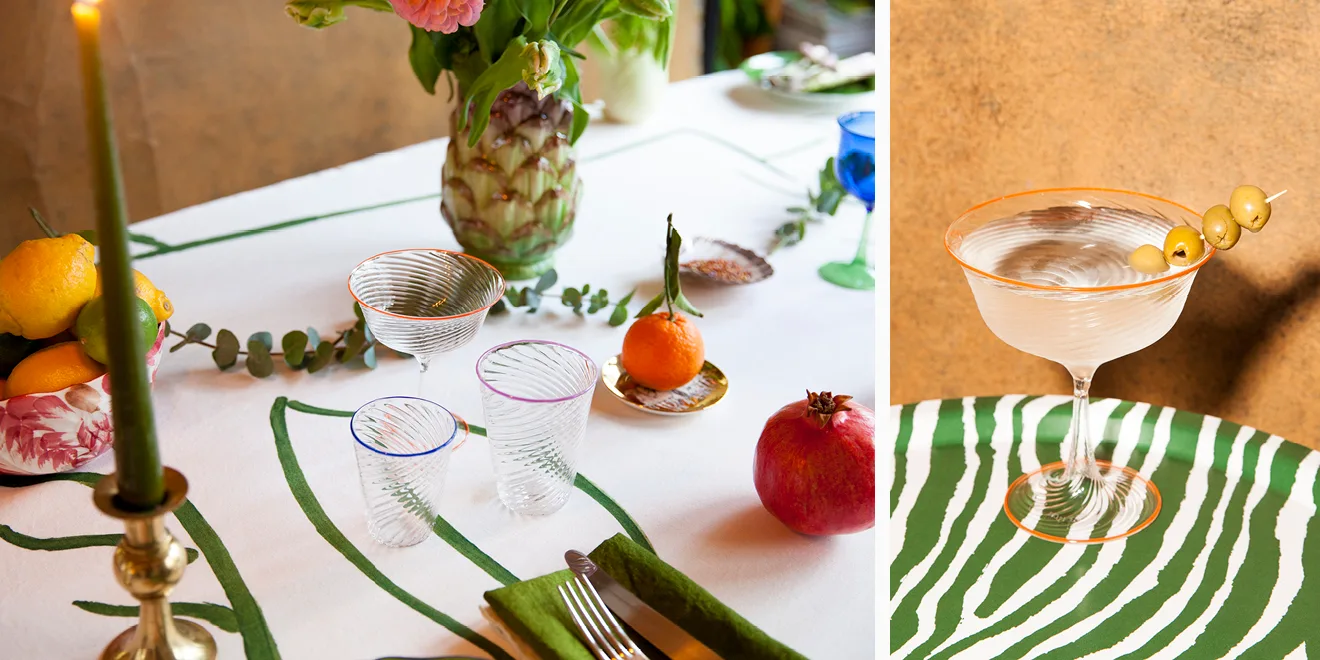
For Duncan Campbell and Charlotte Rey, the design duo behind Campbell-Rey, glassware is a dish best served in contrasting color. Launched during Milan Design Week in 2017, the spunky homeware collection has grown to include coupes, wine glasses, tumblers and highballs that seem designed to brighten up even the gloomiest of kitchens. Each piece is a two-tone construction picked from three colorways: blue and green, amber and violet, pink and yellow. The mix-and-match aesthetic — your stem color, your choice — is bright and fun, but that’s nothing compared to Campbell-Rey's sunnier offerings, including a series of carafes and bowls that come in five-striped colorways that appear to be pulled straight from a big-top circus — a reminder to even the most precious of 1st-Dibs devotees that it’s OK to clown around sometimes.
Jonah Takagi
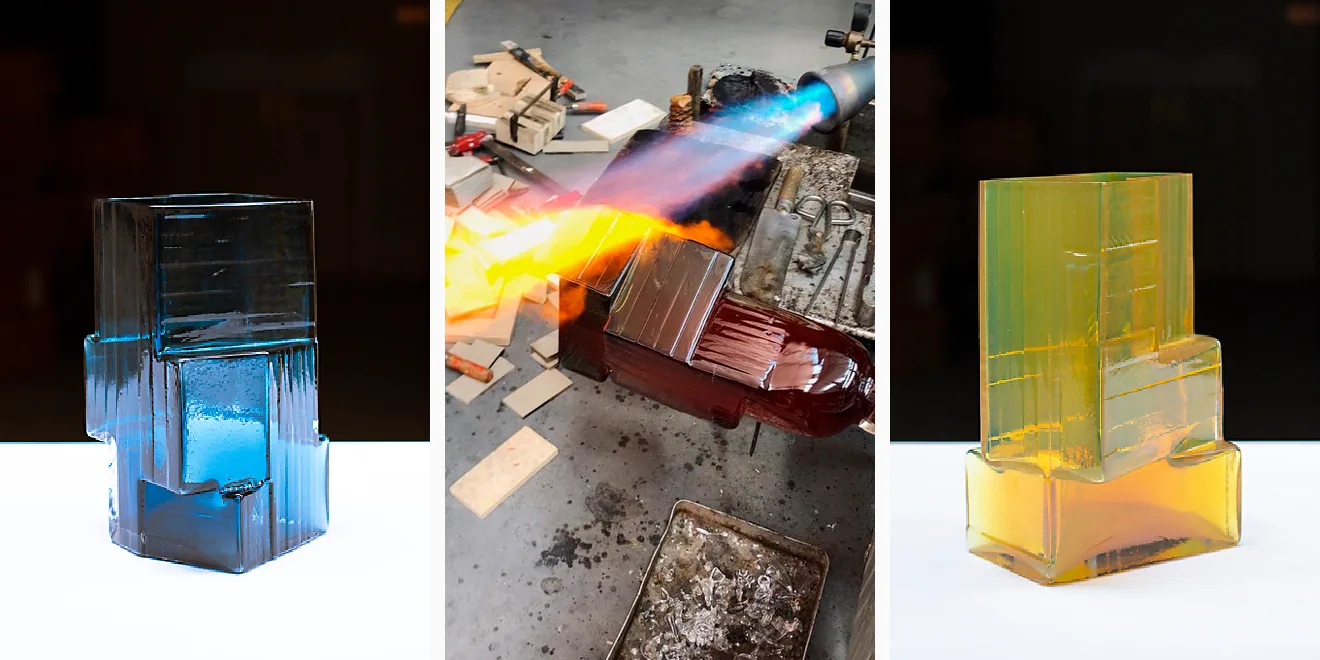
Just as sparkling wine is only Champagne if it’s crafted in the French region of the same name, many purists believe glassware can be considered Murano only if it comes from one of the Venetian island’s red-hot furnaces. A glass of bubbly would likely shatter in the hands of any traditionalist who encountered the work of Washington, D.C.-based designer Jonah Takagi, who has become something of a bull in the proverbial China shop for his outré and unconventional approach to glasswork. While a resident at CIRVA, a research center in France that invites artisans from all over the world to its studio in Marseilles to explore new ways to reinvent glass as a creative medium, Takagi made geometric vessels through a very unprecedented method: blowing hot glass into molds made from refractory bricks and ceramic sheets that had been discarded by previous glassmakers. The resulting rock-like forms come in speckled orange, yellow and red, echoing the inventive glassware made by his Venetian forebears so many centuries ago.
Luca Nichetto
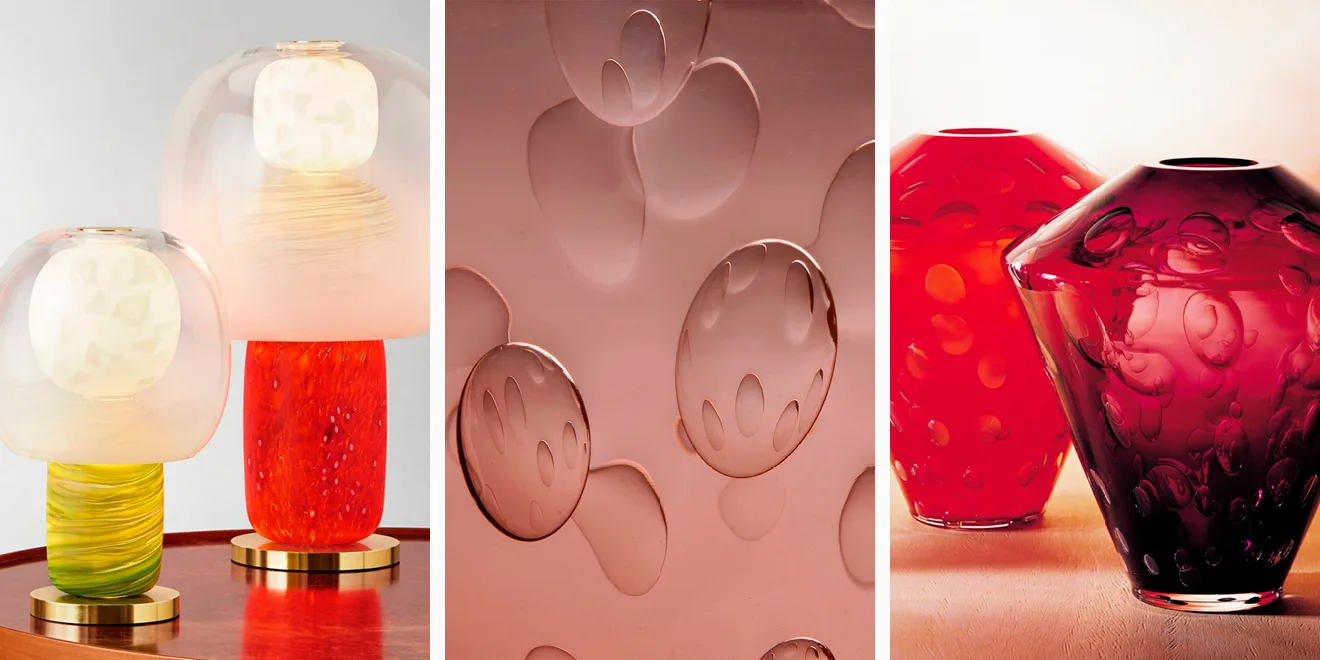
The Italian designer Luca Nichetto once told the New York Times that he has “Murano in the blood.” He wasn’t exaggerating. Born in Venice to a family of Murano artisans — his grandfather was a master glassblower and his mother decorated works fresh from the kilns — Nichetto got his start selling his childhood glass creations to local factories and, later, working for the storied Murano-glassware company Salviati and the heritage lighting company Foscarini. Today, an unmistakable Murano touch is on display in many of his most-famous designs, such as the bubble vases he produced with Gianpietro Gali in the early 2000s (which now fetch thousands of dollars on online auction sites) and, more recently, the table lights he designed for for Swedish heritage brand Svenskt Tenn. Nichetto is now something of a Murano televangelist working to make sure other industry peers understand the lost art of Venetian glass blowing. Last September, he curated Empathic – Discovering a Glass Legacy, an exhibition at Venice’s Punta Conterie gallery of original Murano-glass works by design superstars such as Ini Archibong, Elena Salmistraro and Marc Thorpe. A selection of Nichetto’s Murano goblets and glasses will be on view at the gallery through September.
Heven
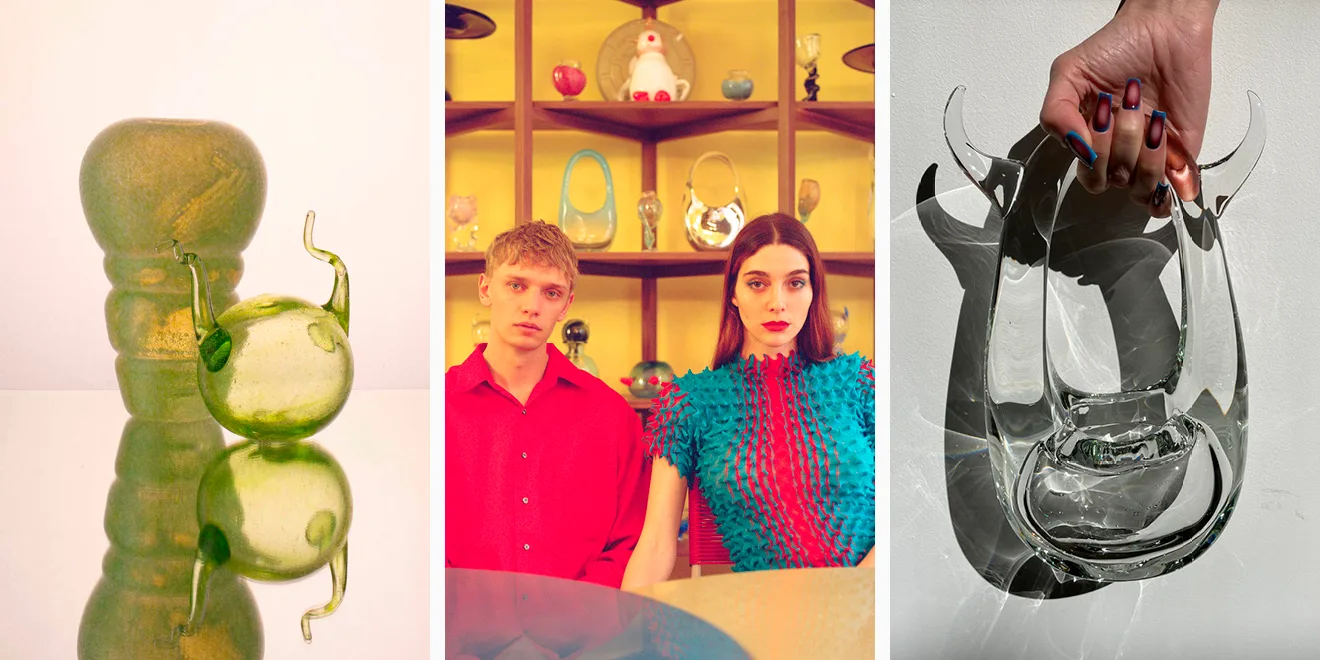
At first glance, Breanna Box and Peter Dupont, a pair of New-York based, twenty-something models who founded behind the irreverent glassware company Heven, are about as far from the classically-trained artisans of Murano as you can get. But what Heven gets better than many more-established glassware brands is that Murano is supposed to be fun, goofy even. Pieces available to purchase on the company’s website include a phantasmagoria of oddball creations: a baby-blue bubble vase wrapped in transparent hand-blown glass in the shape of clouds, carafes with devil horns and vases resembling waterlogged Mondrian paintings. A standout is Baby Yoda, a green opaline with a detachable translucent head resembling a certain infantile character from the Star Wars Disney+ series, The Mandalorian.