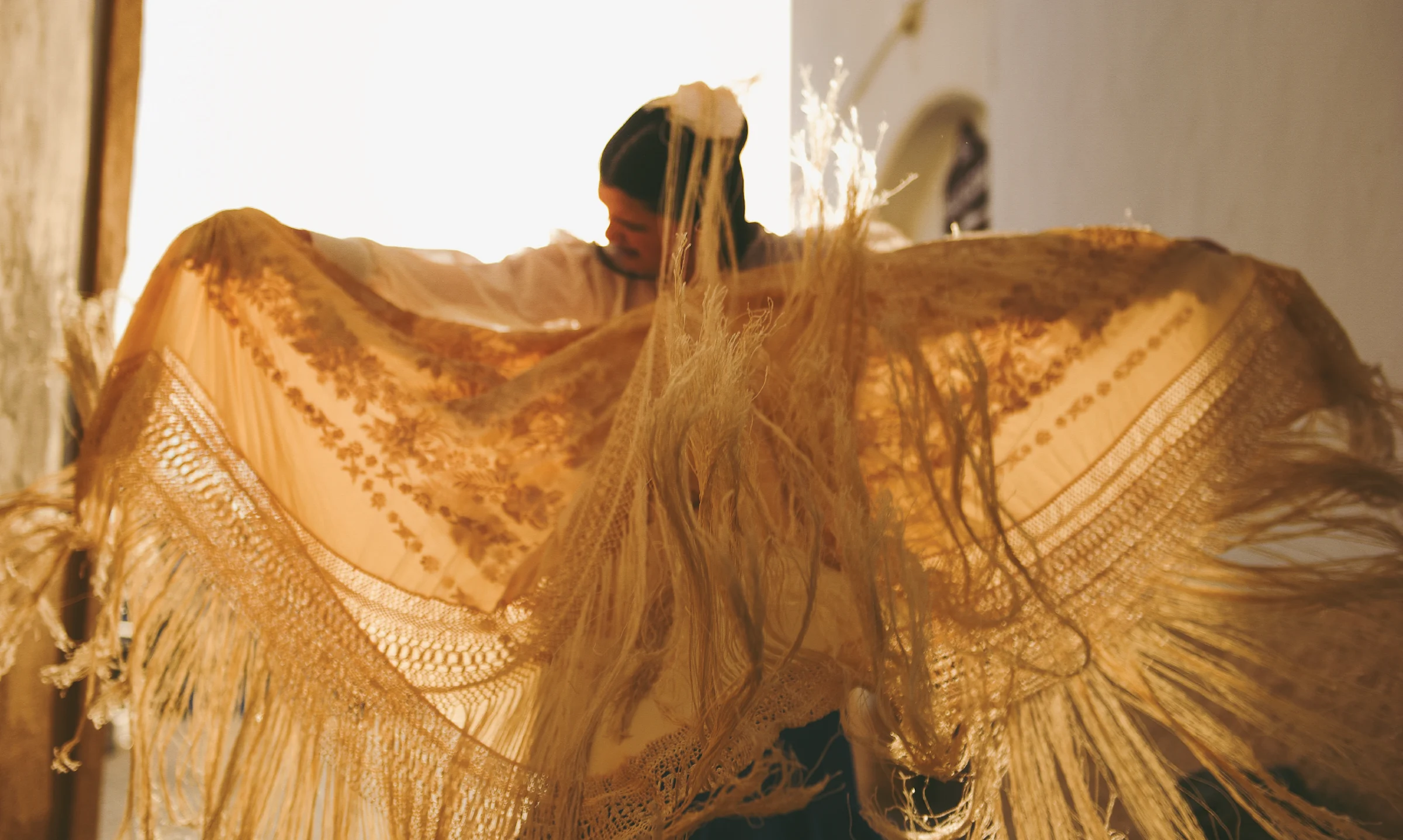
Onto the stage shuffled an elderly man, shyly acknowledging the audience. Accompanied by a guitarist, he began to sing—but what came out of his mouth was unlike any music I’d heard. This was no clean-lined, finely tuned voice but something raw and guttural, running from a sandpaper whisper to a sobbing lament to an animal-like howl.
It was a winter night in the late 1990s, and I had dropped into a cellar bar in Madrid to listen to the legendary flamenco singer Diego Rubichi. That serendipitous moment opened my eyes to an entirely new form of artistic expression.
As an amateur musician, I remember hearing echoes of North African maqam and North Indian classical music in Rubichi’s pungent modal harmonies and melodic lines. But it was the energy that stuck with me most—palpable, crackling in the air like static electricity. All around, people leaned forward in rapt attention, their handclaps and ecstatic cries of “olé!” in sync with the music’s ebb and flow.
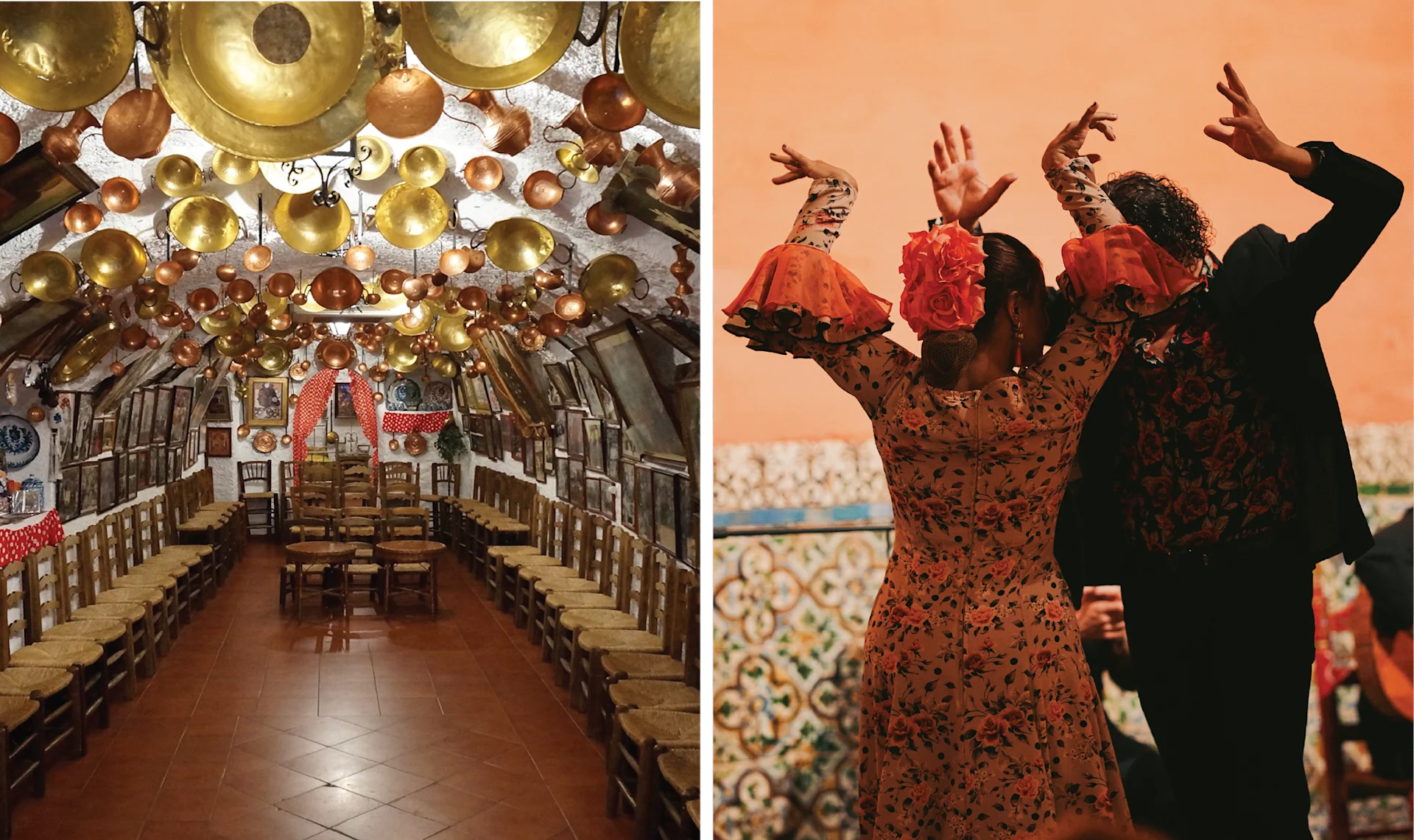
I didn’t have words for what Rubichi’s performance sparked in me then, but I do now: In that room, there was duende (often translated as “spirit”), the transcendent force that reveals itself in moments of great flamenco. The poet and playwright Federico García Lorca, an early proponent of the genre who was murdered by Spanish fascists 90 years ago, defined duende as “a mysterious and ineffable charm.” María del Mar Moreno—a bailaora (flamenco dancer) who’s graced Milan’s La Scala and Sadler’s Wells in London—tells me that when she feels duende, “It’s as if inspiration were grabbing you by the hair and taking you to another place. It’s a state of grace—a kind of nirvana where there’s no present, no future, and no past,” she says.
My first brush with duende in Madrid thrust me into the rich cultural universe of flamenco, one that goes far beyond (and often has little to do with) the package-tour clichés of big, frilly fans and clicking castanets. I signed up for an apprenticeship in the core genres: baile (dance), cante (song), and toque (guitars, handclapping, percussion). But it wasn’t enough: My fanboy travels led me from the cavernous clubs of Sacromonte in Granada—where flamenco troupes perform nightly in caves—to the tablaos of Seville and the concert halls of Barcelona and Madrid.
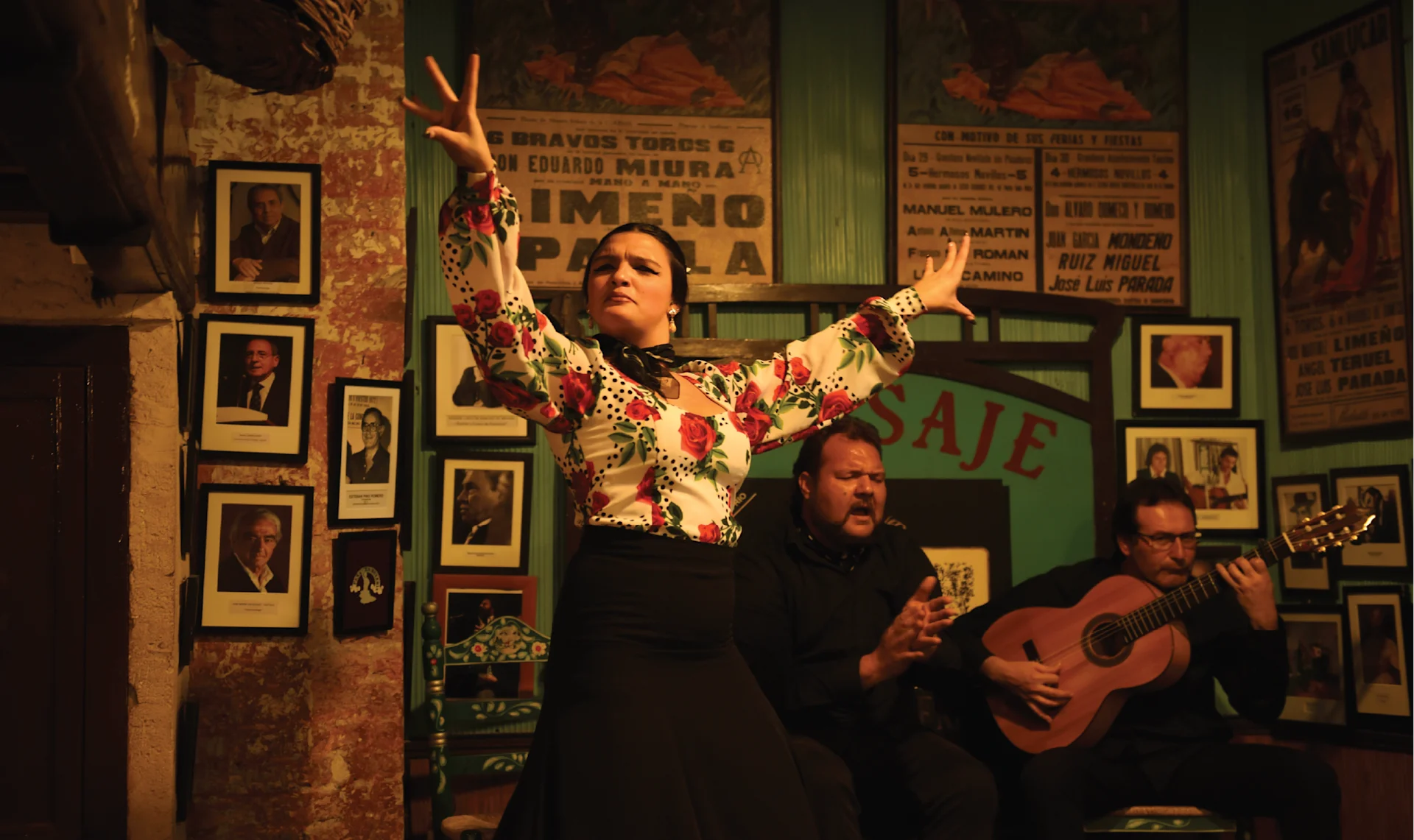
Yet nowhere did I feel the pulse quite so strongly as in Jerez de la Frontera, a cradle of flamenco and a seedbed for artists like Antonio Chacón, Lola Flores, La Paquera de Jerez, José Mercé—and Rubichi. During feria season, held early to mid-May, that pulse spills out of the tablaos and into the streets, where impromptu singing and dancing carry on late into the night in private casetas and public squares.
As time went on, I found myself drawn to a new generation fusing ancient forms with jazz, electronica, and Latin American and Caribbean sounds. In a word, flamenco felt cool. (Diego el Cigala’s “Lágrimas Negras,” which intimately links South America and southern Spain, and Elbicho’s debut LP—with its good-times mashup of rumba, jazz, and rock—were two albums I played to death.)
Flamenco was not the static folk tradition I’d once imagined, but its ancient origins were always in the background. While the genre is scarcely documented before the 19th century, it’s closely associated with the Romani, who arrived in Spain around the 15th century after expulsion from northern India. When flamenco does begin to appear in the record, its observers describe marginalized groups, referred to as “gypsies,” singing and dancing in taverns. Recognition as a serious artform came in 1922, when Lorca and Manuel de Falla staged their famous cante jondo celebration in Granada. Even so, for much of the 20th century, flamenco was still filed under “folklore,” shunned by polite society and little known beyond Spain.