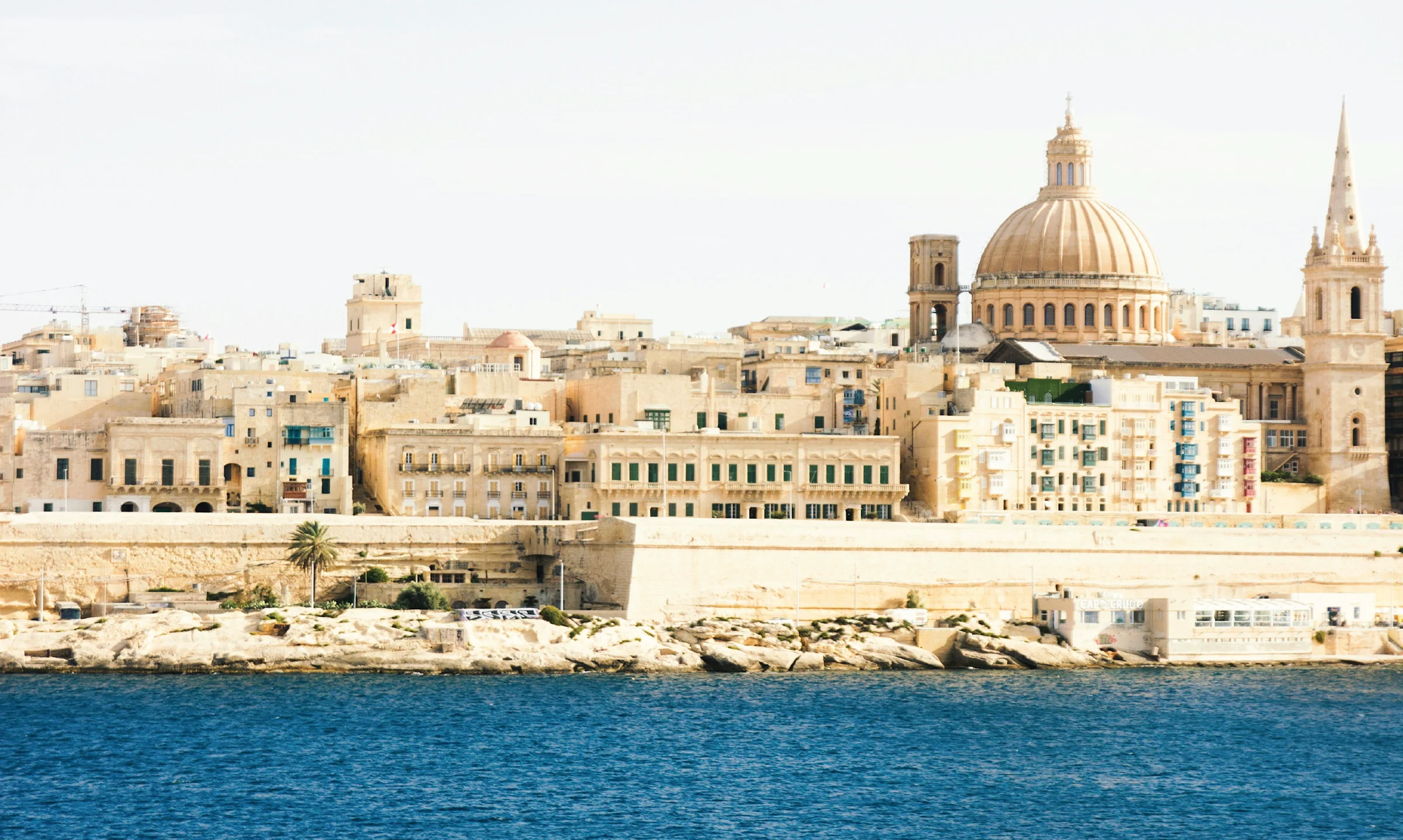
Stand on a street in Valletta, Malta’s capital, on a blisteringly hot summer day, and the heat never feels oppressive. The narrow lanes cast cool shadows, while the city’s grid system pulls Mediterranean air through the hilltop settlement like a cross breeze through open windows. The steep roads rise and fall with the craggy natural form of the outcrop upon which this fortified city was deliberately built.
Squint slightly, and Valletta can resemble a landlocked Venice, its honey-colored facades owing as much to the Arab world as to La Serenissima’s sumptuous extravagance. Malta’s character—oscillating between North Africa and southern Europe, fortified stronghold and cosmopolitan crossroads—define the archipelago some 50 miles south of Sicily.
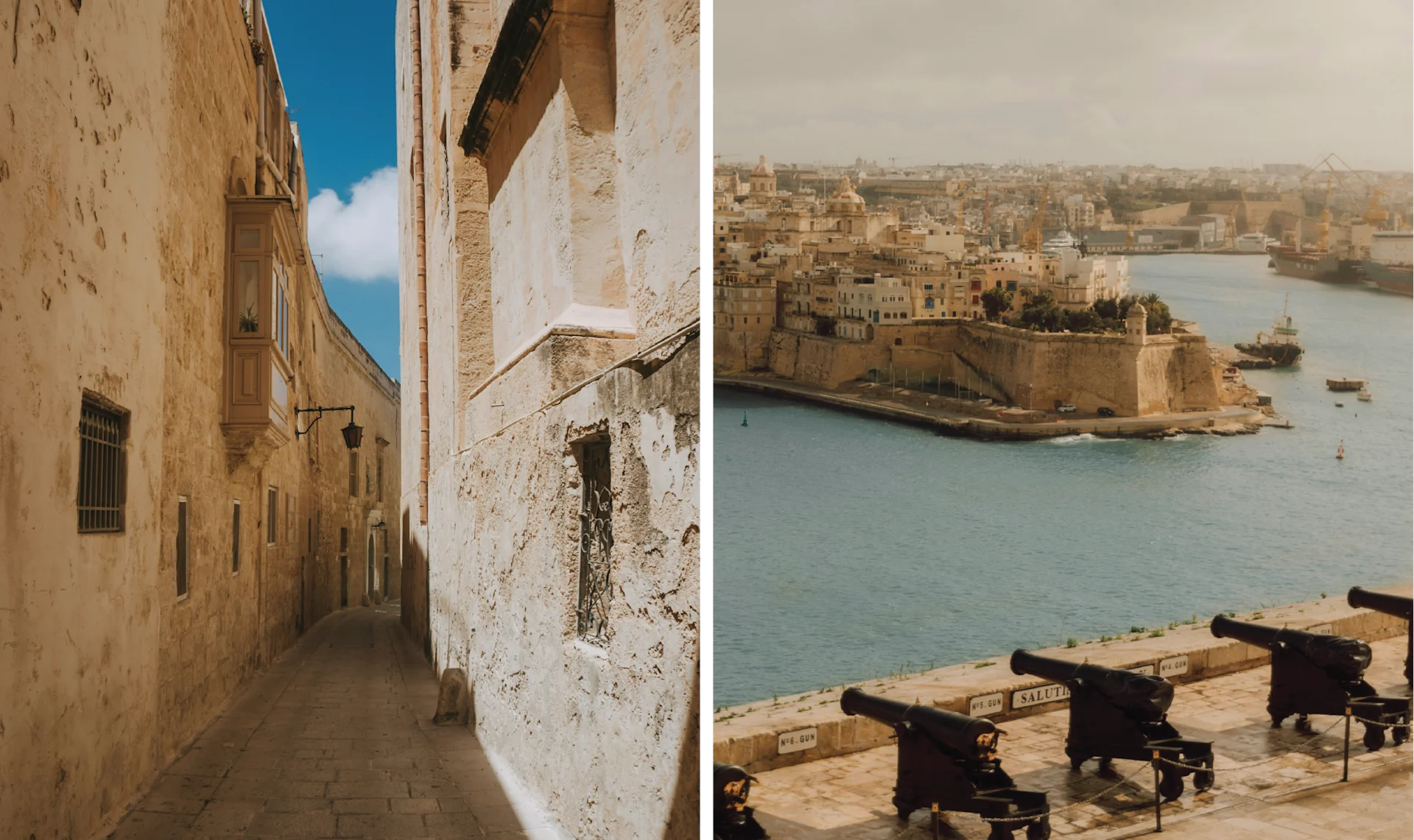
Malta has long been pulled between empires, its position in the Mediterranean leaving traces of Arab, Italian, and British influence—including in the Maltese language, a breathy Semitic tongue written in the Latin alphabet. The country comprises three islands: the namesake and largest, along with Gozo, a rural, countrified escape, and Comino, a shard-like spit wedged between the two. Together, they sit like rocky breadcrumbs swept from the table of Sicily, a location that made the archipelago a prized possession for centuries. During World War II, Churchill famously called Malta “an unsinkable aircraft carrier,” and King George VI later awarded the nation the George Cross in recognition of its fortitude.
That layered history also gave Malta an outward-looking openness that still surprises many visitors. Pride Week each fall has long made the island a draw for LGBTQ+ travelers, while its cultural landscape ranges from some of Europe’s oldest Neolithic temples to Malta International Contemporary Art Space (MICAS), a glass-and-metal contemporary arts center that crouches atop Valletta’s city walls like a supersize spider. Now a major hotel opening is bringing renewed attention to the island, just as Malta becomes easier to reach: This summer brings the first-ever nonstop route between the United States and Malta (via Delta). The Mediterranean may not have many true surprises left, but Malta still feels like one.
Stay
For years, Malta’s hotel scene was largely workmanlike, with few properties to seduce the design-minded traveler. The original outpost of the Corinthia chain remains charming, if a little careworn, though long-promised renovations are still pending. On nearby Comino, meanwhile, an abandoned resort occupying one of the island’s most coveted private sites is currently earmarked for a Six Senses-led transformation expected by 2029.
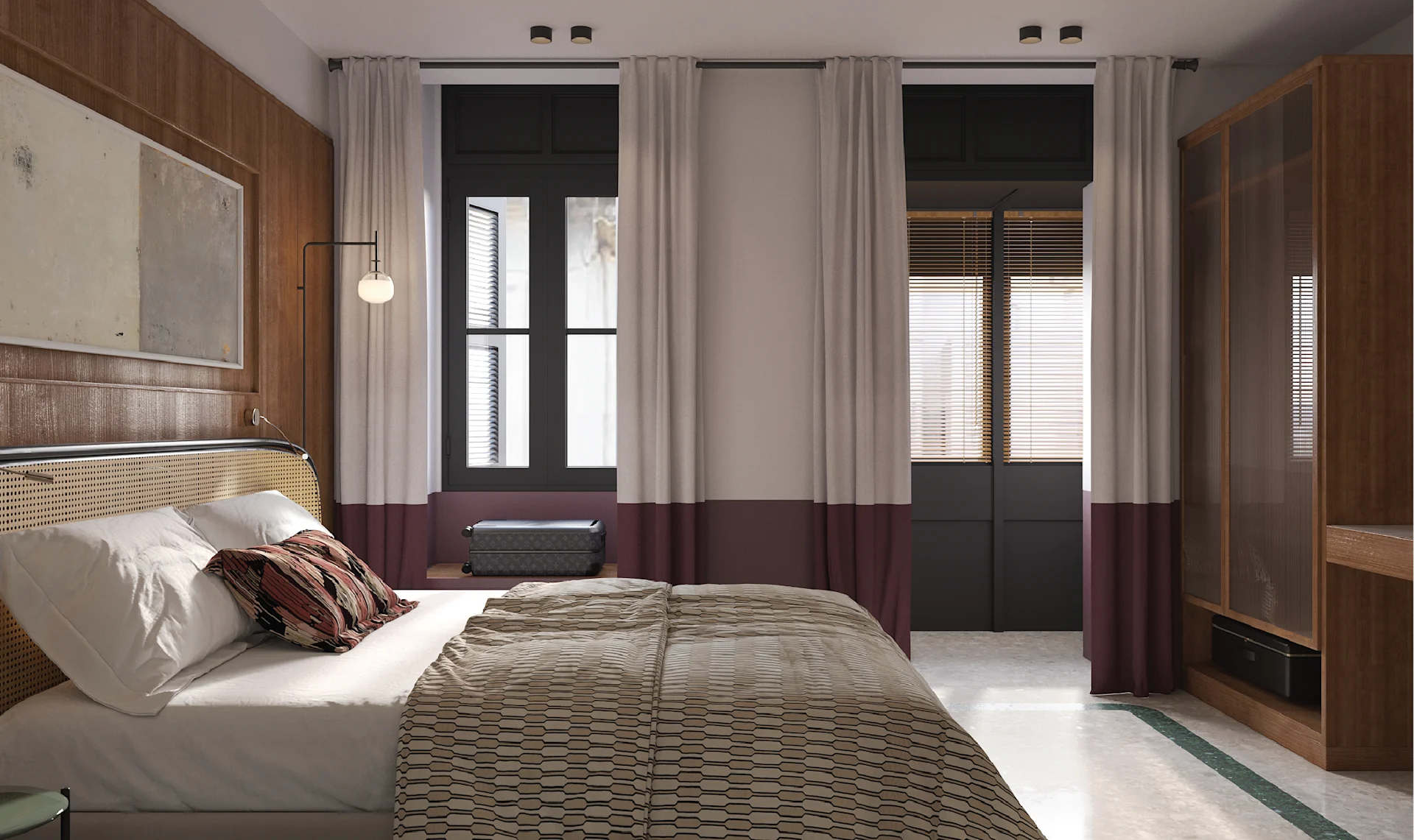
The more immediate shift comes in the form of two ambitious new boutique hotels, part of a broader jolt of excitement reshaping Malta’s hospitality scene. The first is Romègas, a hotel inside a 16th-century Valletta palazzo set to open this month that was once home to a namesake Knight of Malta. There’s an oasis-like rooftop pool and a restaurant from Marvin Gauci, the chef who has become an unofficial ambassador for contemporary Maltese cuisine. With its limestone interiors and restrained palette, the 23-room hotel aims squarely at the kind of traveler who might once have written Malta off as too provincial or package-oriented.
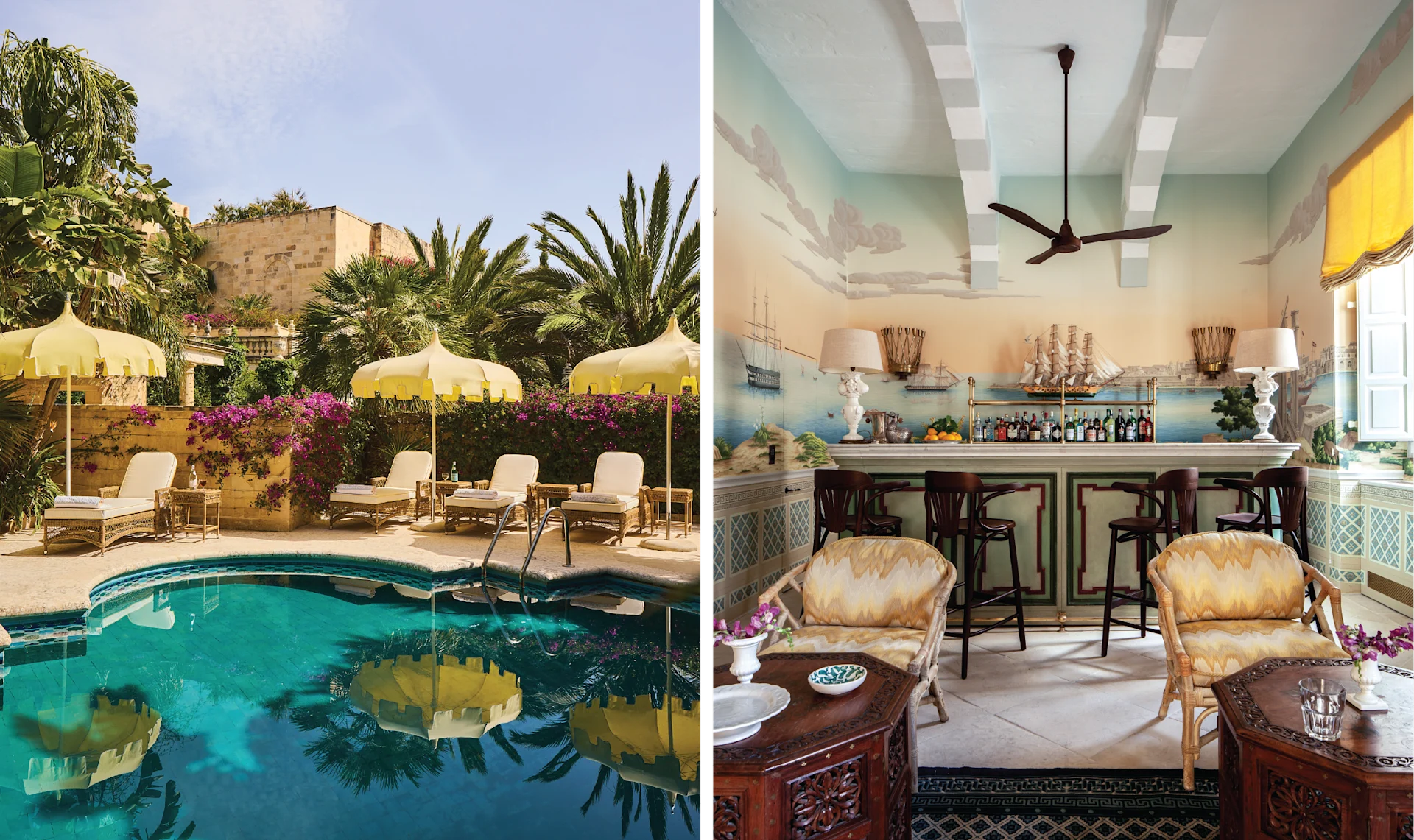
The second arrival, Casa Bonavita, may prove even more consequential. The hotel, which opened in May, is the work of Suzanne Sharp, the Malta-born cofounder of London’s The Rug Company. She spent years transforming an 18th-century mansion in Attard, a historic town at the bullseye center of the island. The result feels deeply personal: a kind of rococo for the current era, with interiors layered in Murano glass, antique Italian furniture, hand-painted tiles, and heirlooms gathered from Malta, North Africa, Italy, and England. A former kitchen has become a sleek bar wrapped in a hand-painted mural of Valletta’s harbor, while lush gardens spill around hidden terraces, fountains, and two palm-shaded outdoor pools. A new luxury hotel is hardly headline news elsewhere in the Mediterranean, but Casa Bonavita feels like the clearest sign yet that Malta is leveling up.
Eat & Drink
Malta’s food traditions reflect the island’s deep ties to Sicily and the Arab world. Look out for pastizzi, flaky fist-size pastries typically filled with ricotta or spiced peas, and ftira, a pizza-like flatbread topped with potatoes, tomatoes, olives, and tuna. Tal-Petut, a homey Maltese restaurant in Birgu across the harbor from Valletta in the Three Cities, has no printed menu, but the owner often serves one or both as part of the nightly feast.