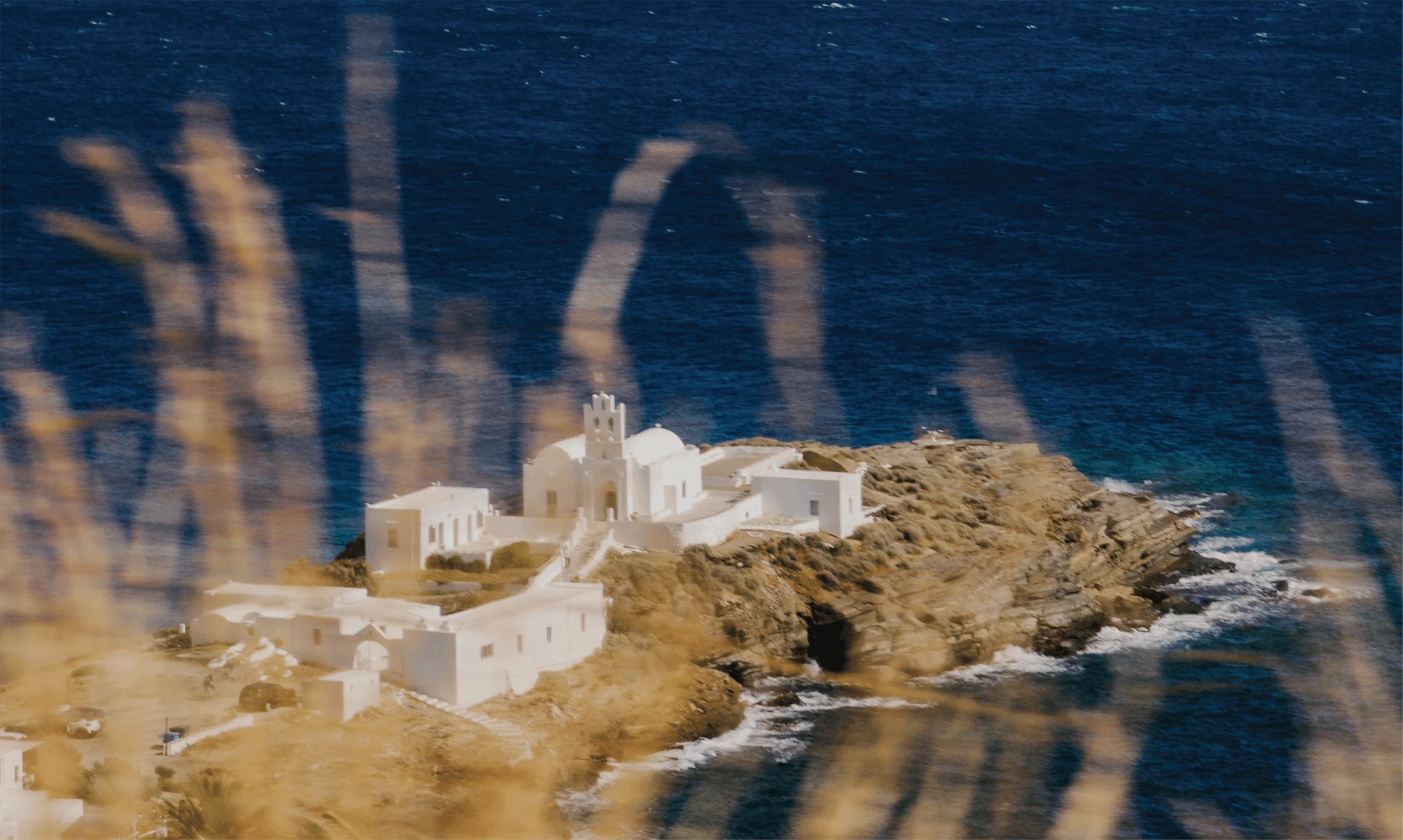
Beyond Santorini: Summer in Sifnos, Therasia, and Folegandros

Wind-whipped scrub, volcanic vineyards, and hidden coves show each Aegean landscape at its most elemental.

Category:Culture
Story By:Wojciech Rosiak
PublishedApril 17, 2026

I leave the mainland before dawn. The ferry belches smoke into the sky as trucks reverse into the hull, their engines grinding through the morning quiet. By the time I find a seat on deck, the port town of Piraeus is shrinking away.

The air is thick with diesel and salt, but there’s another smell wafting from the café: spanakopita, flaky spinach and feta pastry, still warm in its tray. I take a slice, along with a freddo cappuccino, and step outside. The sun is rising low and orange over the Aegean Sea as the boat rocks gently toward Folegandros.

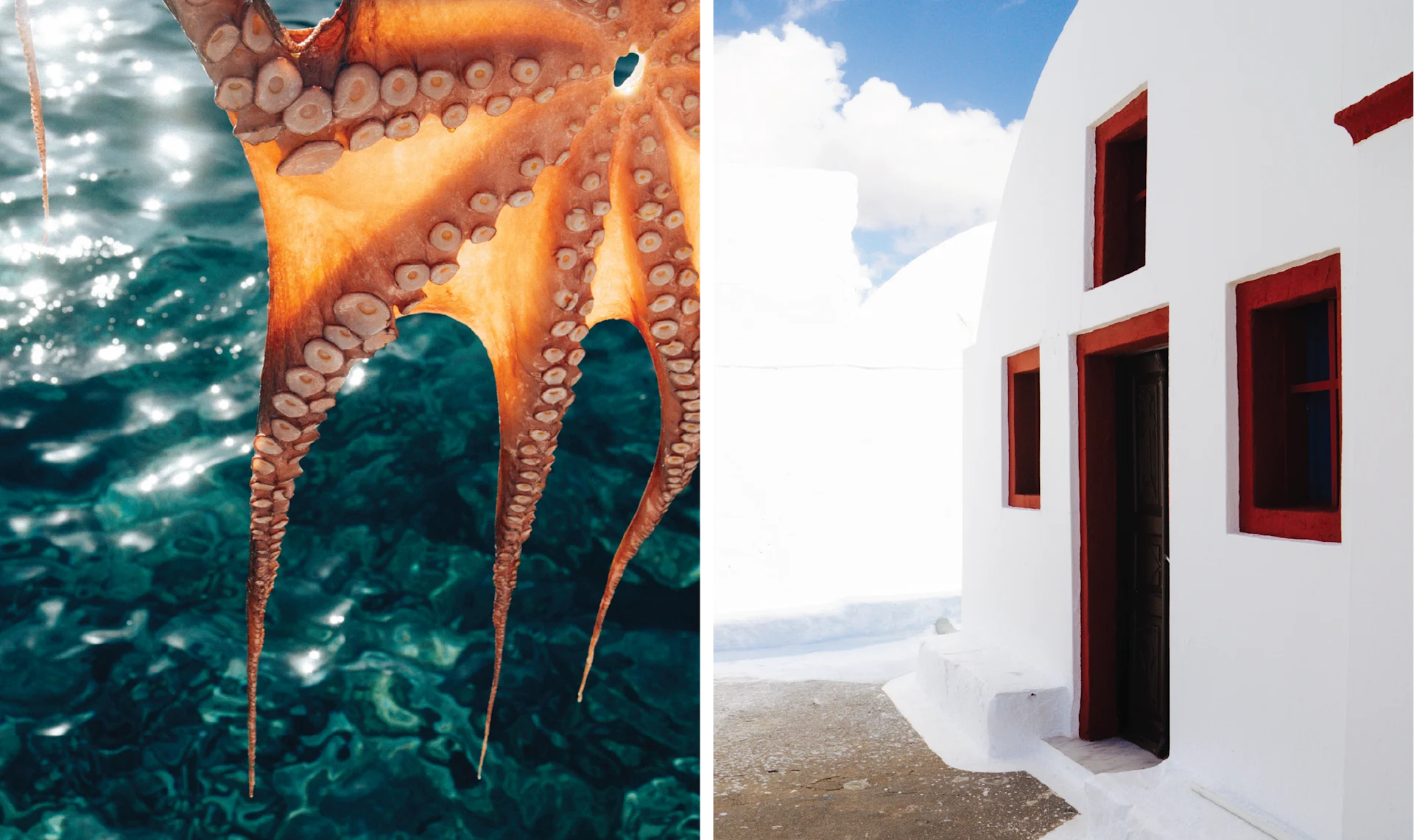
There are 220 islands in the Aegean, often within sight of one another, yet each has a distinct identity. I visit three—Folegandros, Sifnos, and Therasia—and come to understand them through air, earth, and fire.
1 /

Folegandros: Air

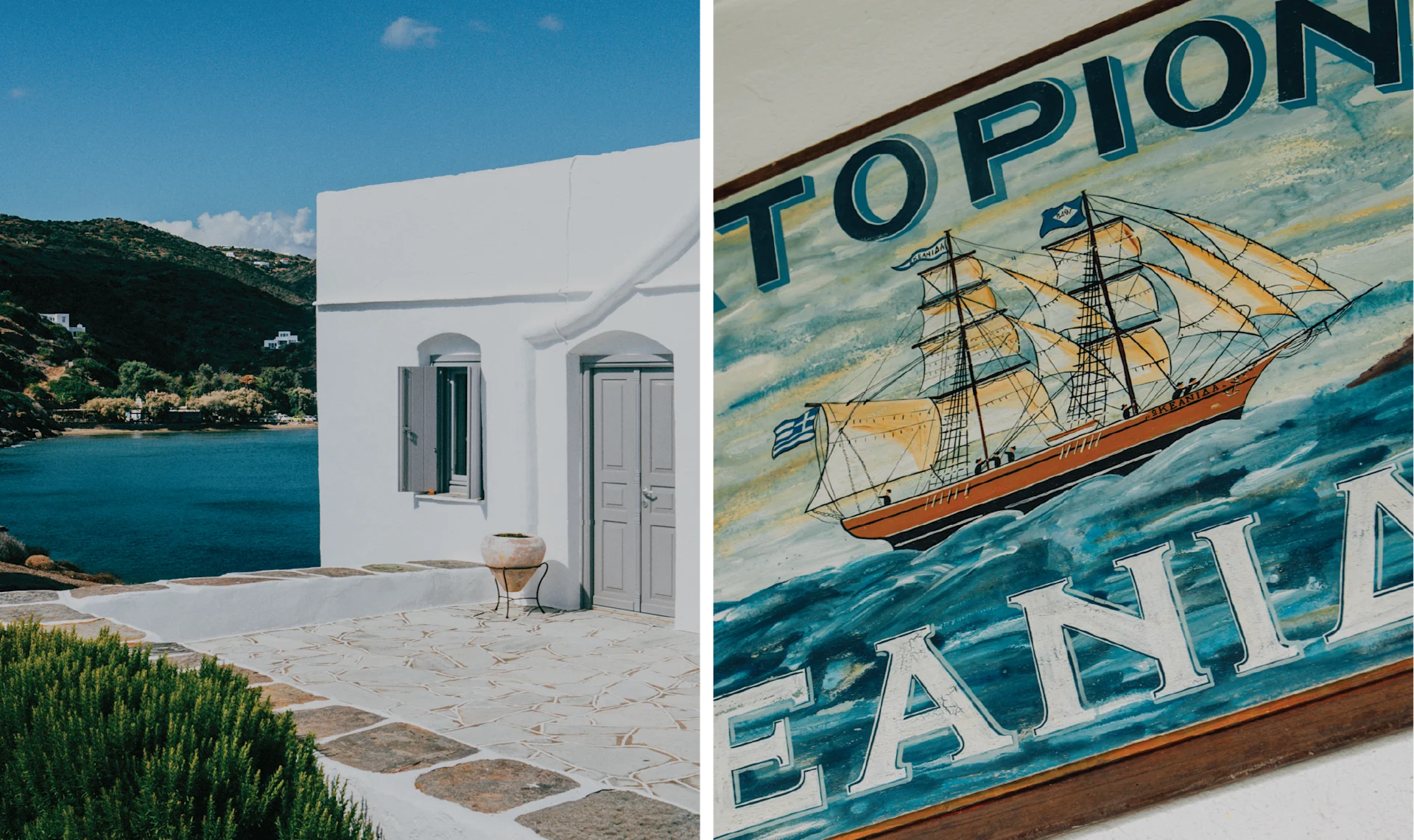
A whooshing gust hits me the moment I step off the ferry. I’m greeted by the meltemi, the dry summer wind that tears through everything it touches. It strains the boat’s rigging, bends the tamarisk trees lining the port’s edge, and tangles a fisherman’s nets on the quay.

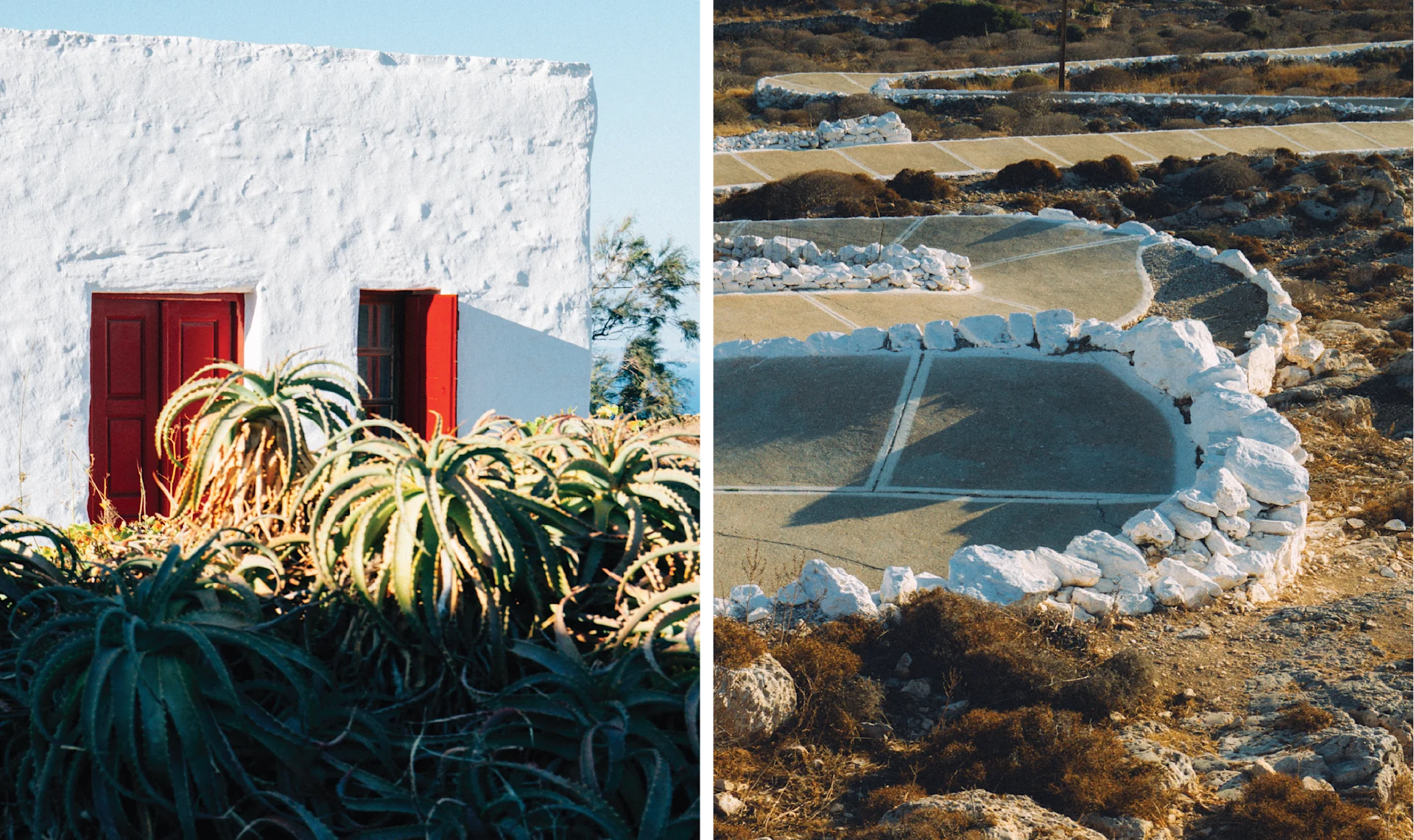
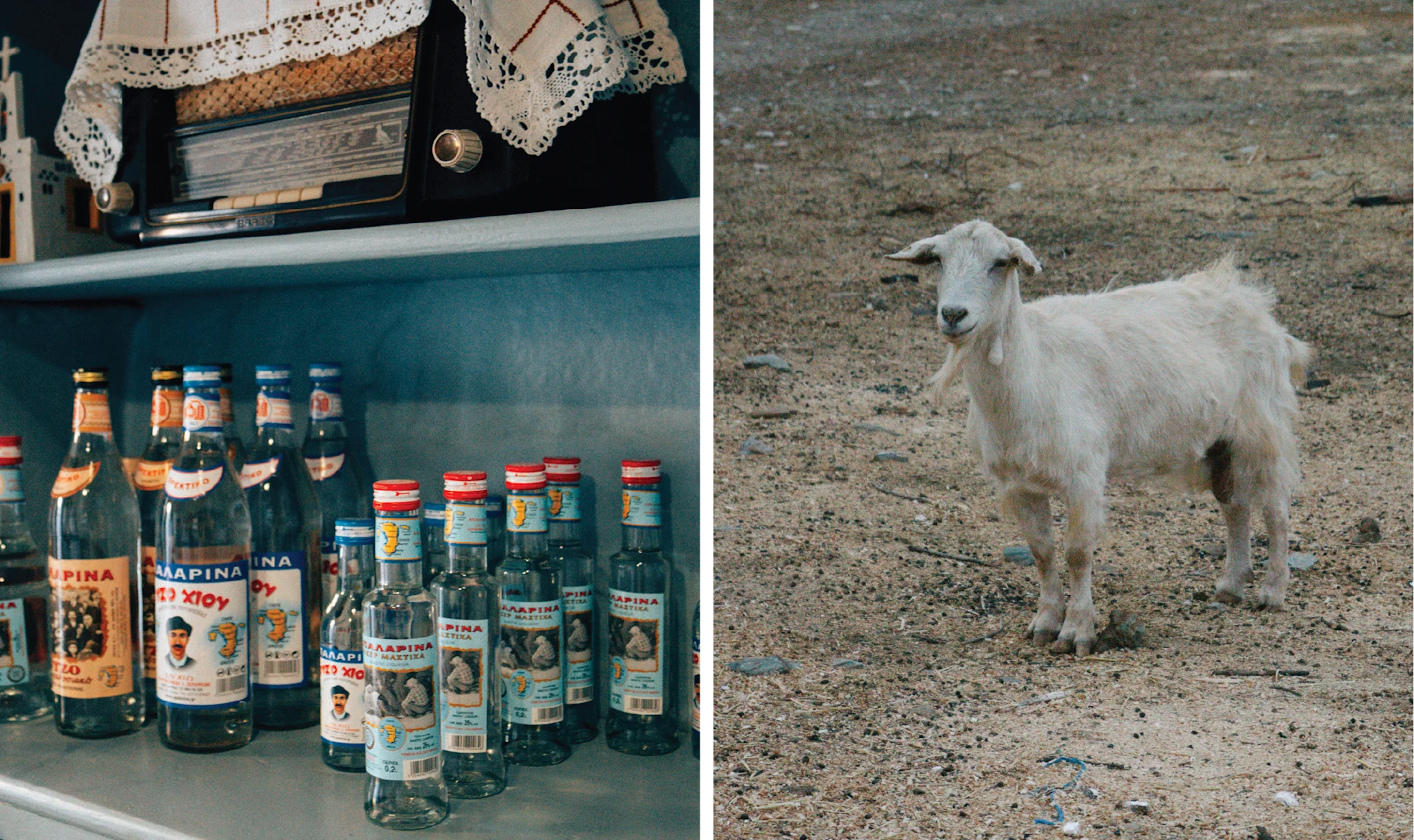
A single road runs the length of the island. While driving it, I notice circular stone platforms at exposed points, positioned to catch the breeze. I ask a local what they are. “Aloni,” he says: threshing floors. For thousands of years, grain was spread across these platforms and a mule would walk slow circles to trample them, sometimes dragging a stone-studded board to break the husks. The wind did the rest, blowing away loose straw and chaff, leaving behind clean grain.

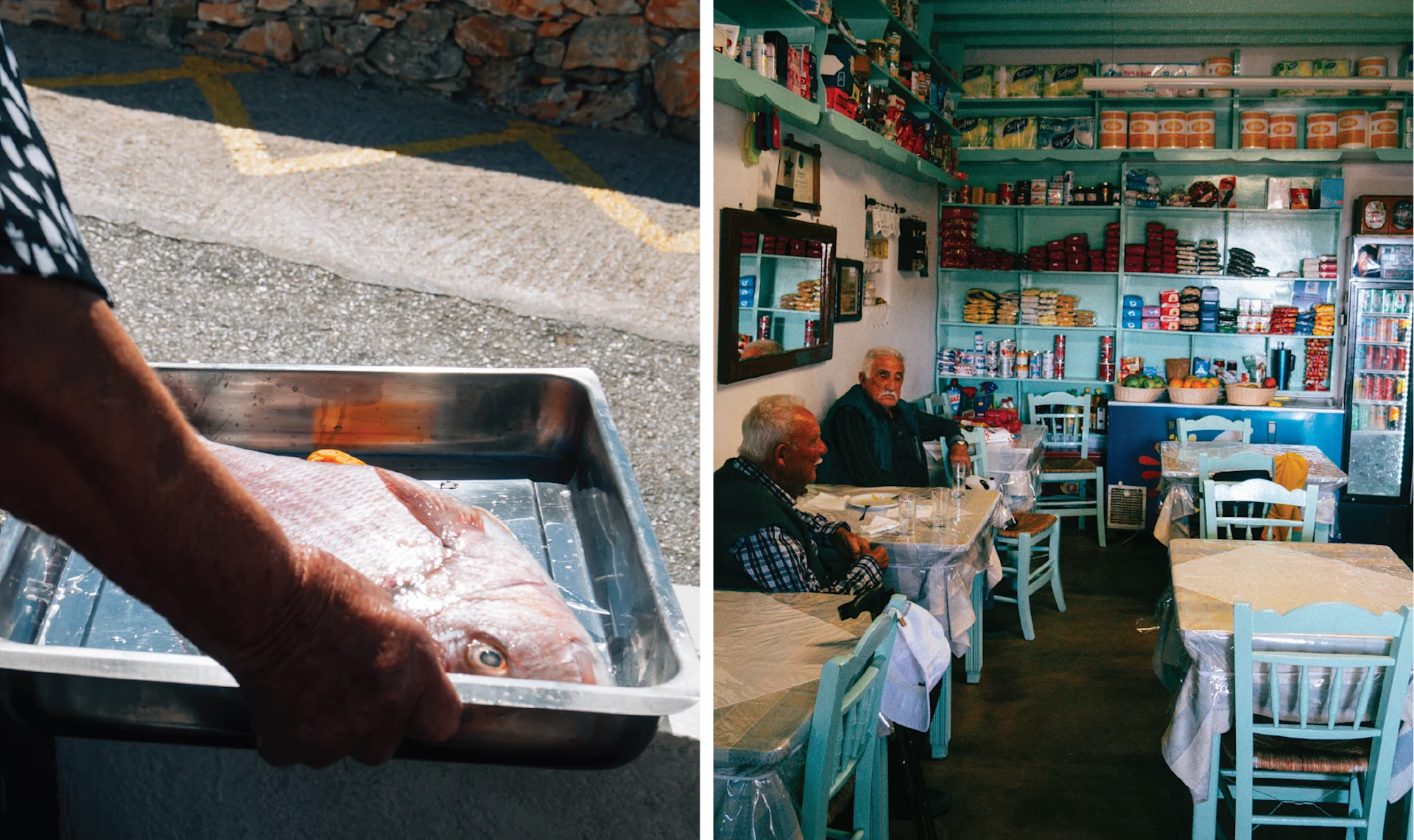
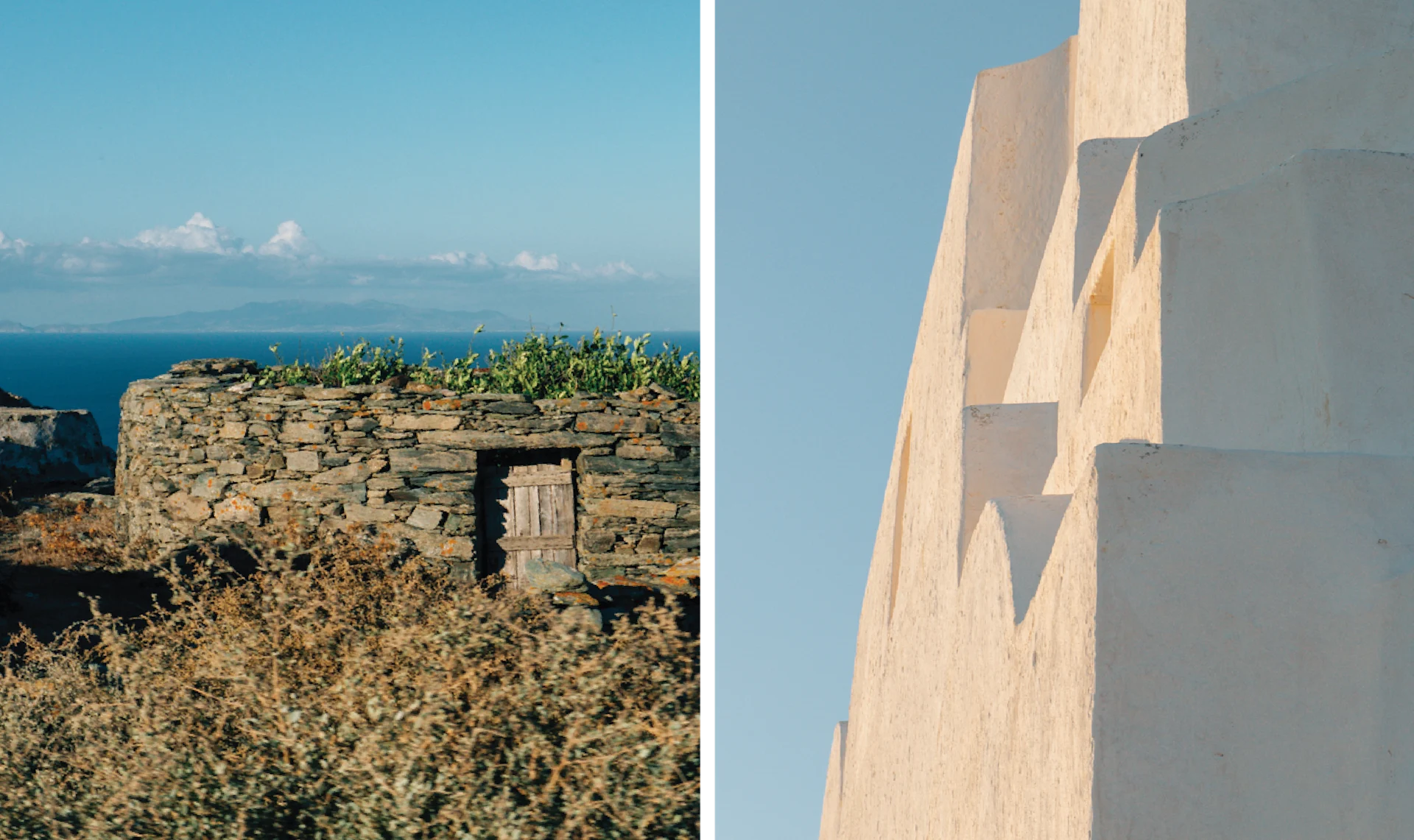
The meltemi is often more foe than friend. Along the island, small stone structures dot the countryside, built to shield lemon trees from gusts that would otherwise strip them bare. The wind is unrelenting as I sit for lunch, the paper tablecloths at Irini’s Taverna flapping against the clips that hold them in place.

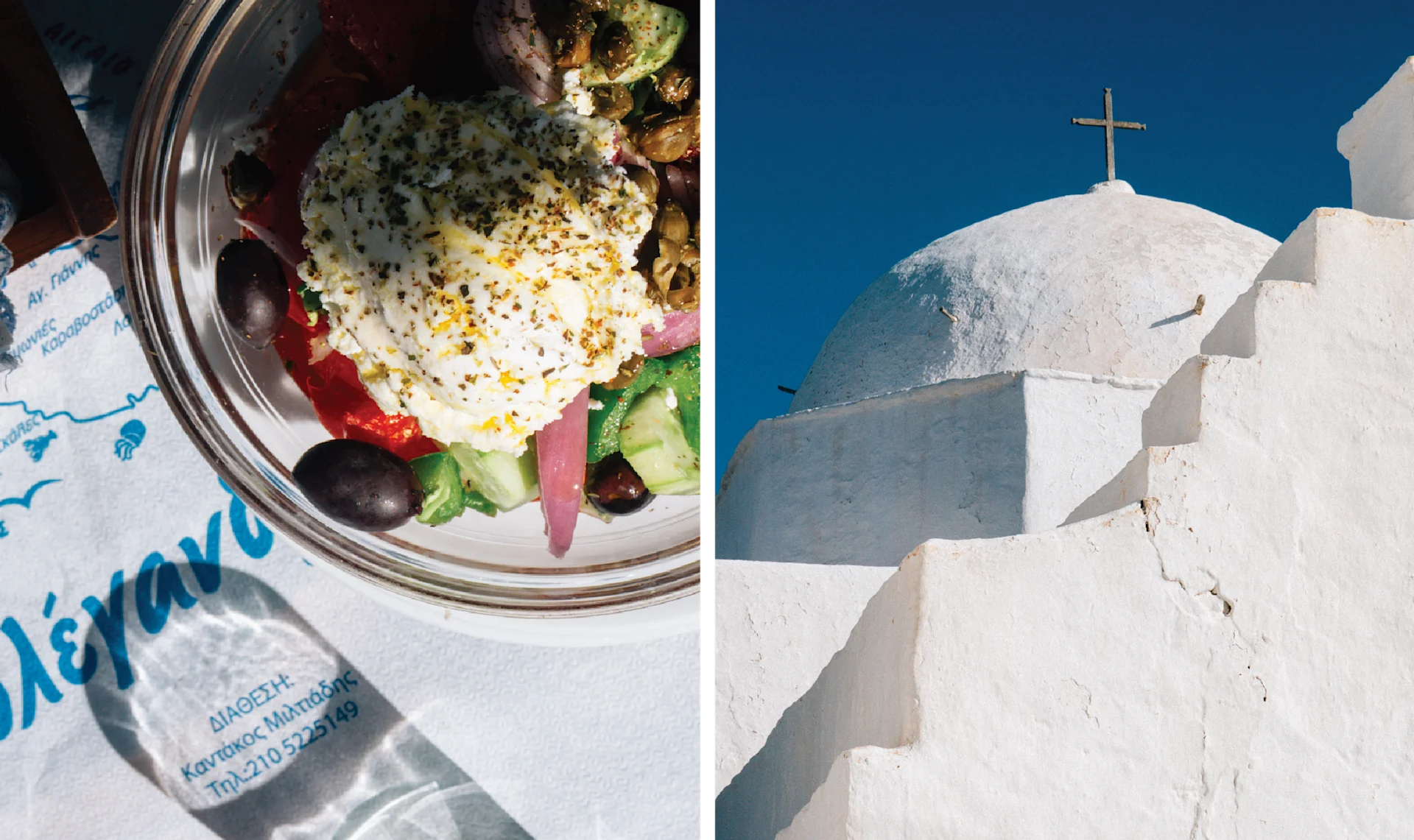
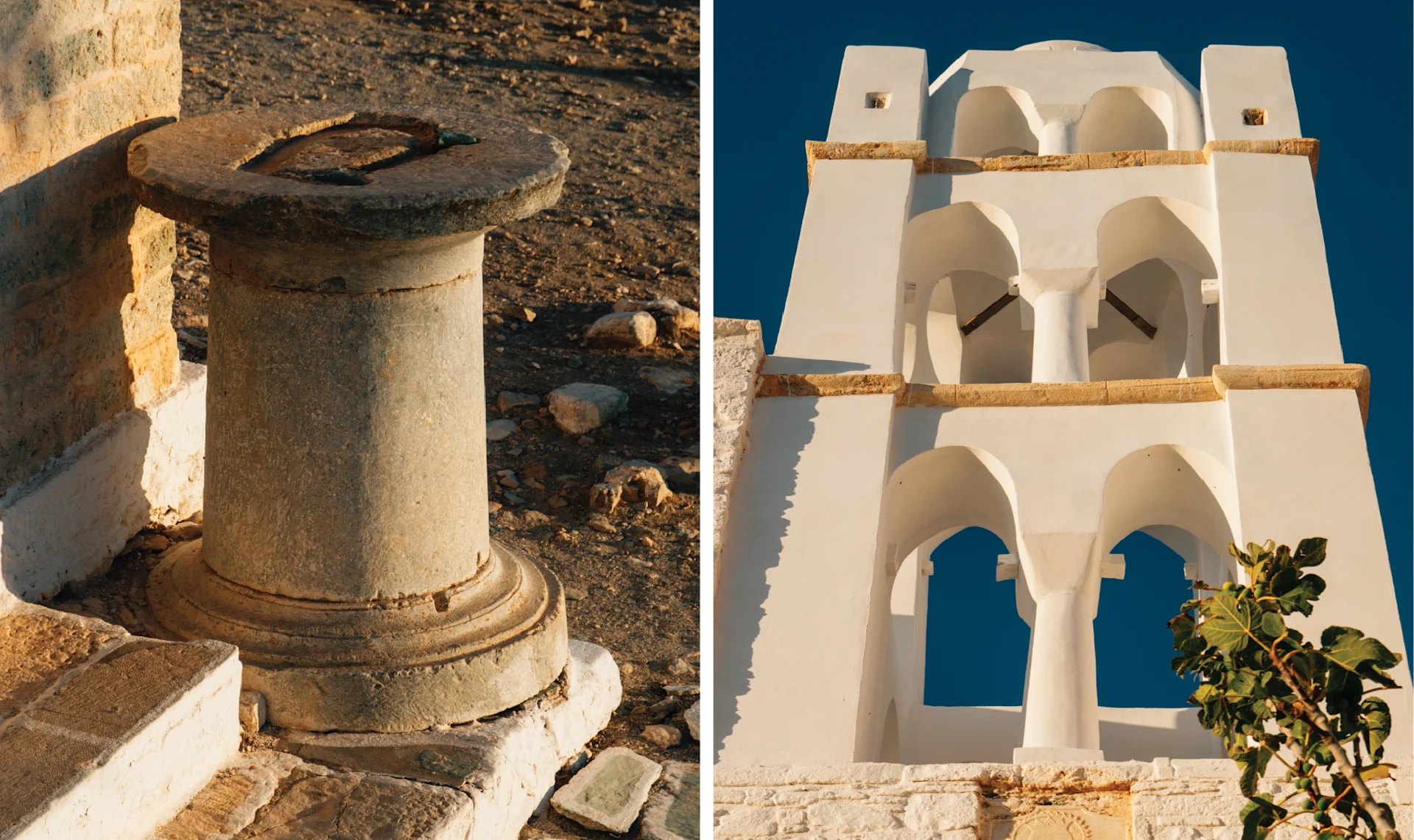
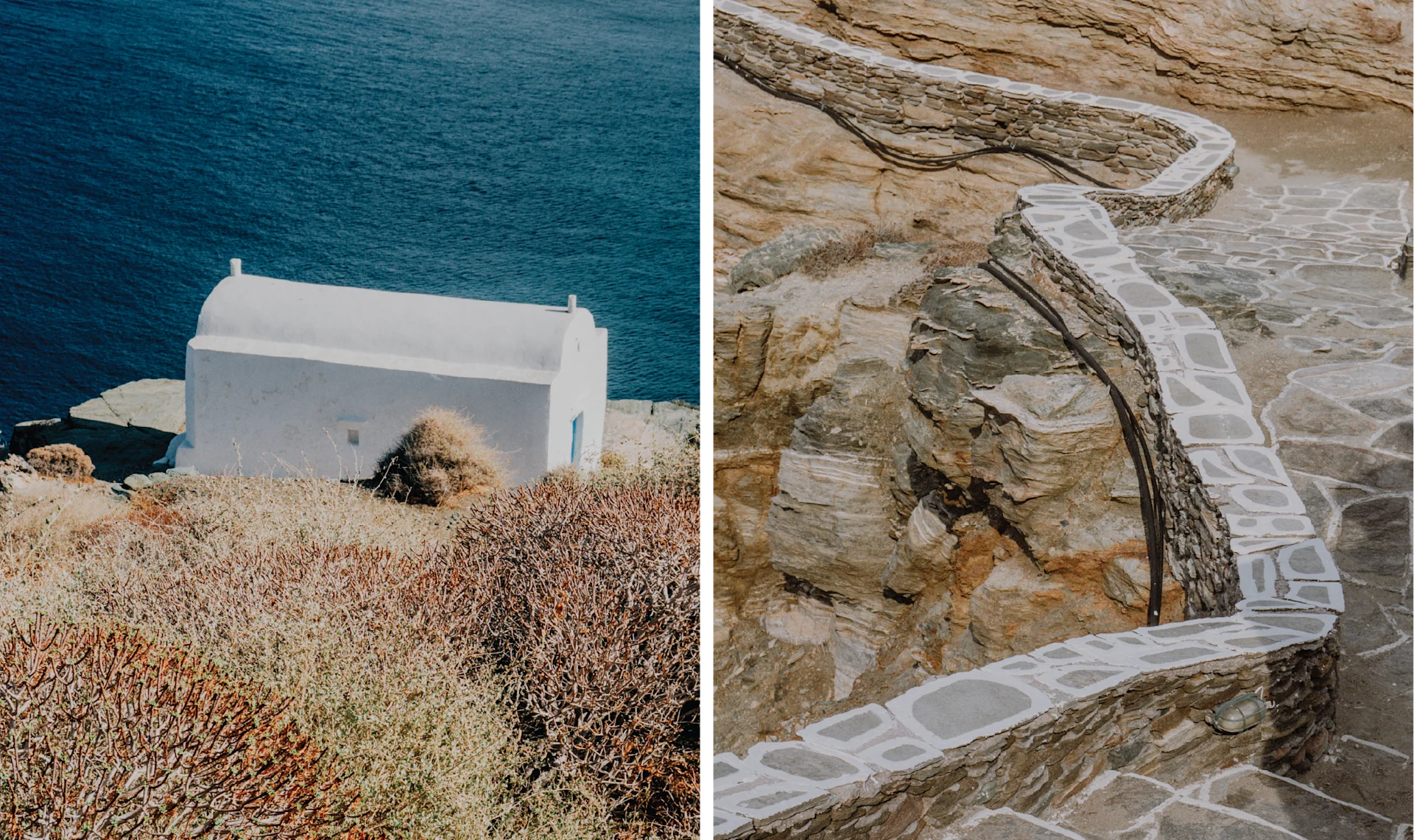
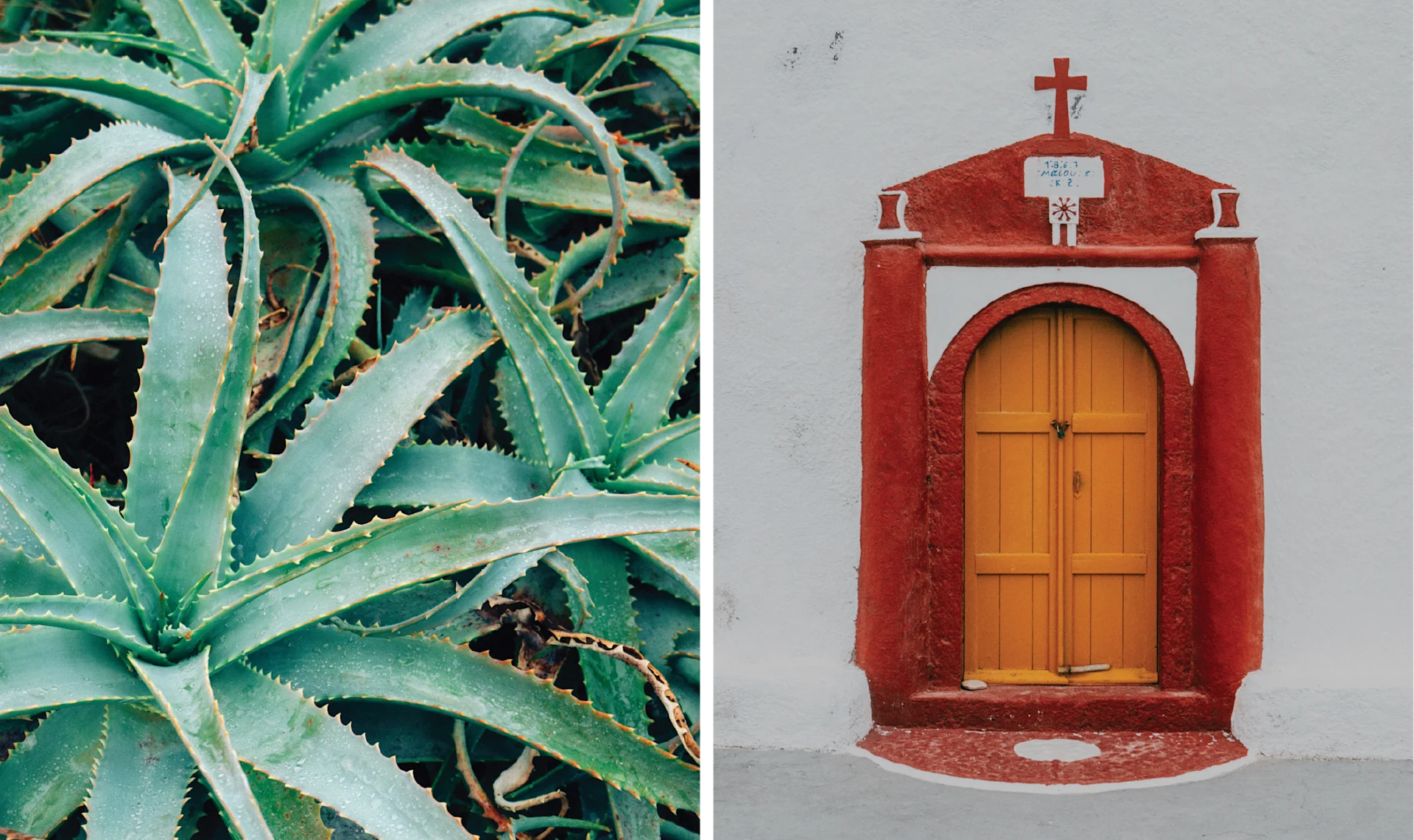
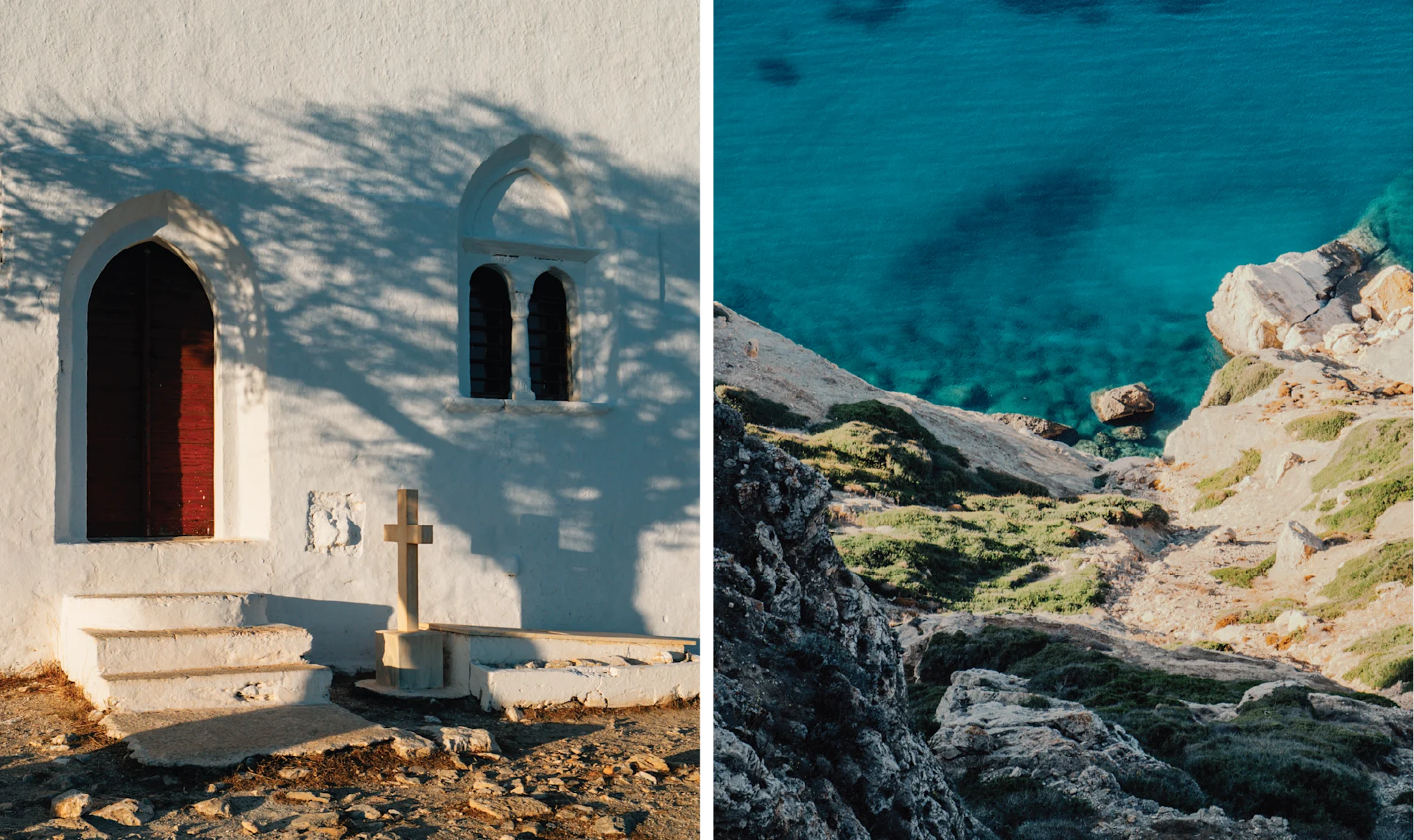
Further along, I follow a path from Pounda Square up to the Church of Panagia. As I climb the ridge up to the sanctuary, the wind kicks up dust and fills the air with the scent of wild thyme and myrrh. Inside there’s a silver icon that is said to be miraculous: In 1790, a fleet of Algerian pirate ships approached the island attempting to come ashore when a sudden wind rose and sank them all.

1 /

Sifnos: Earth

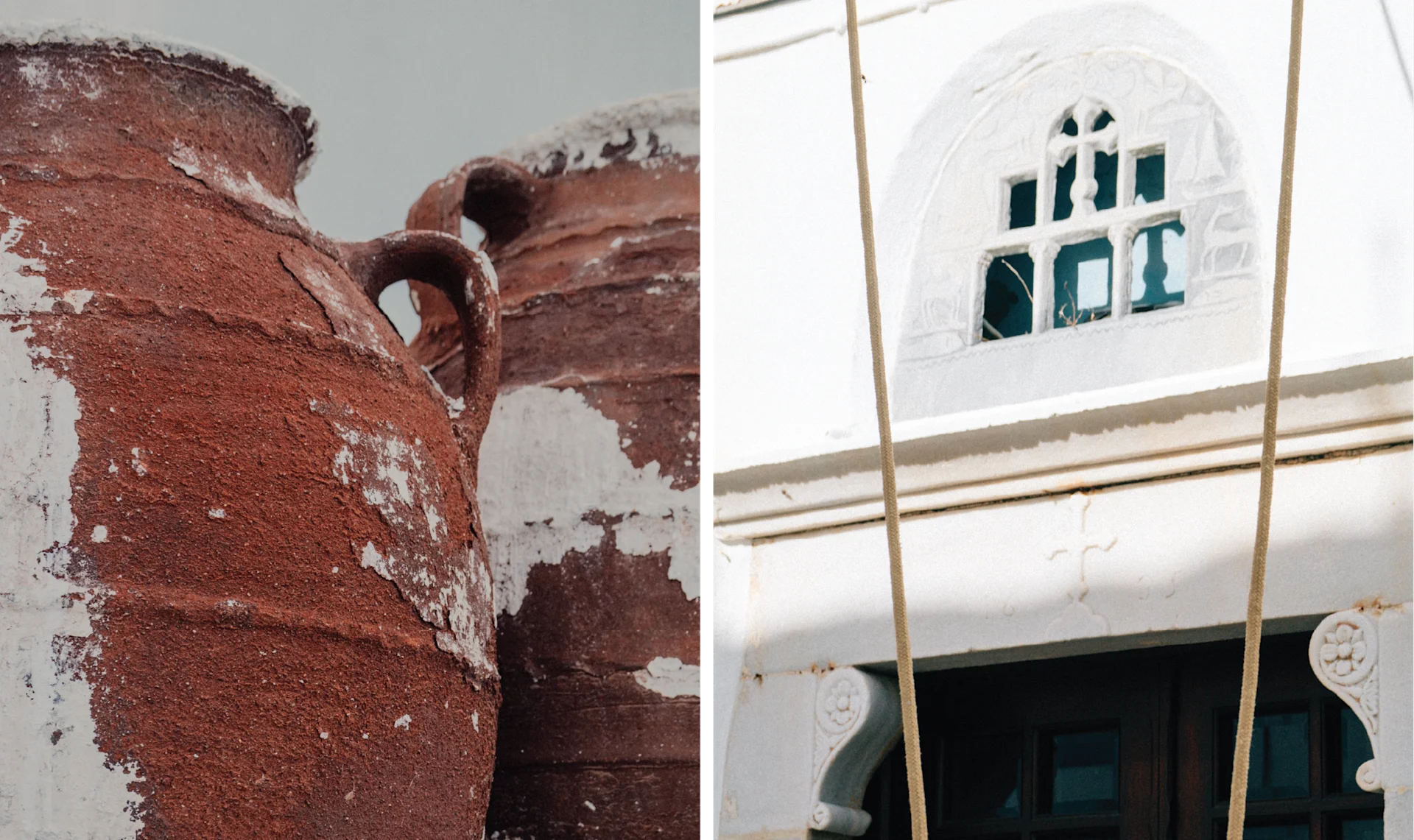
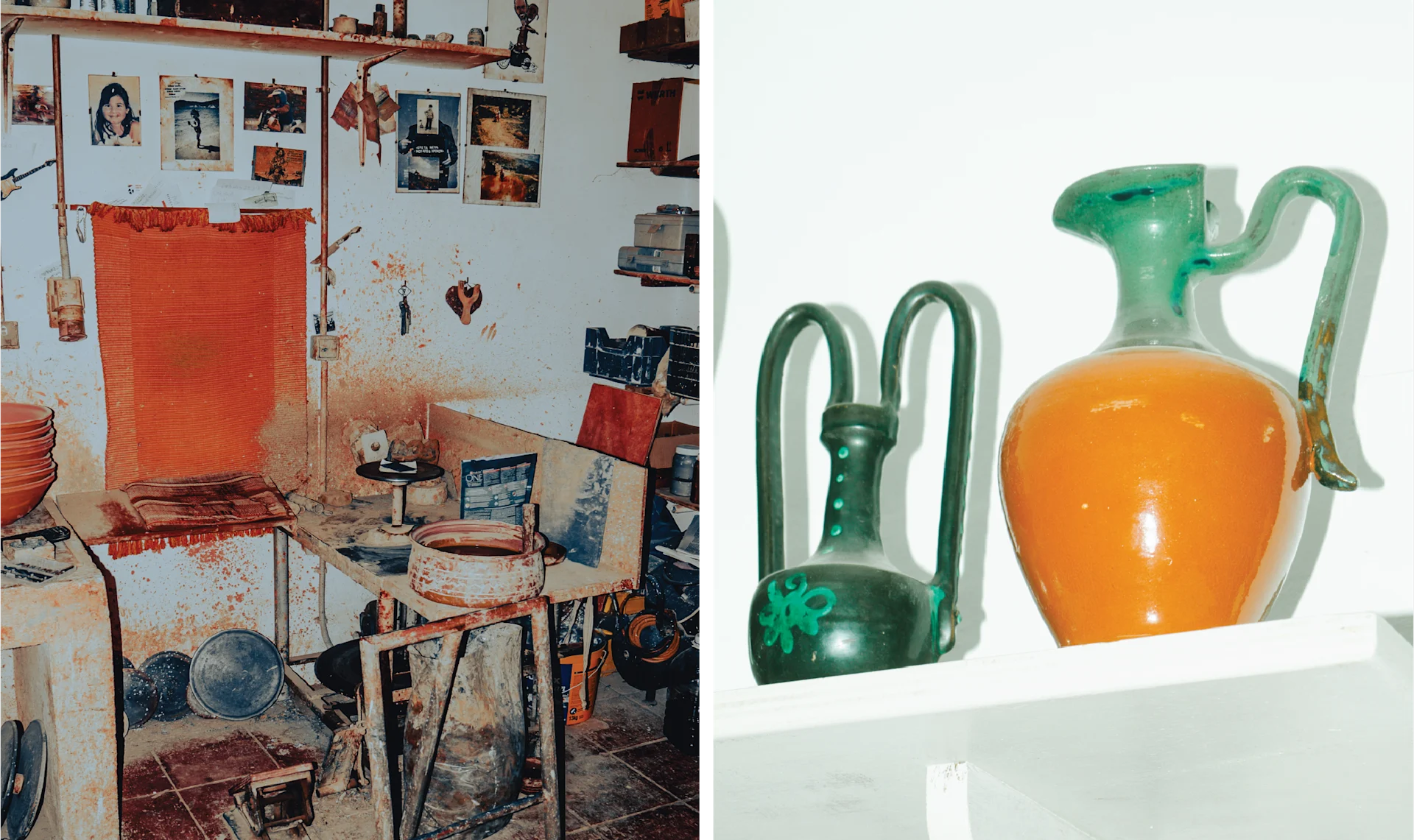
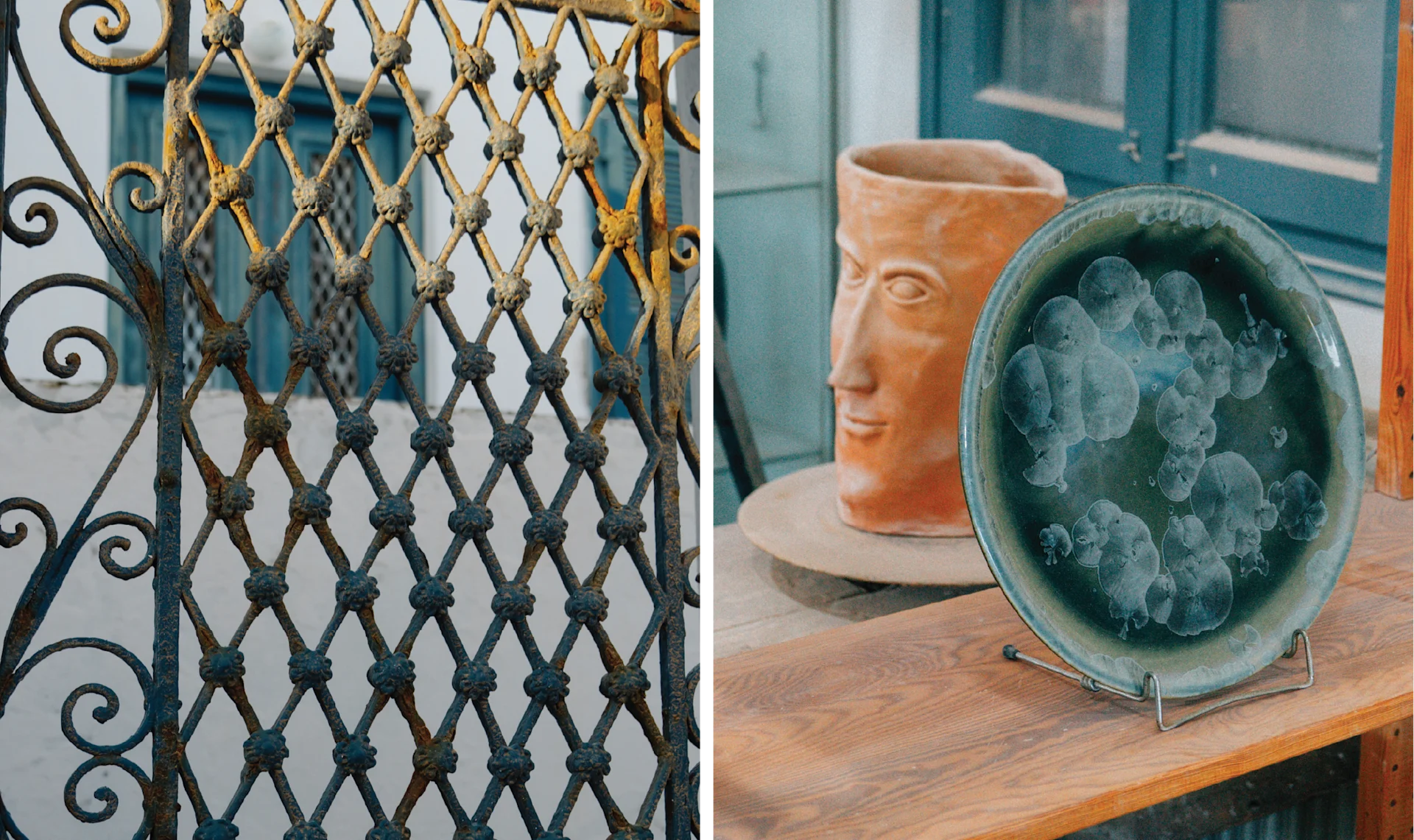
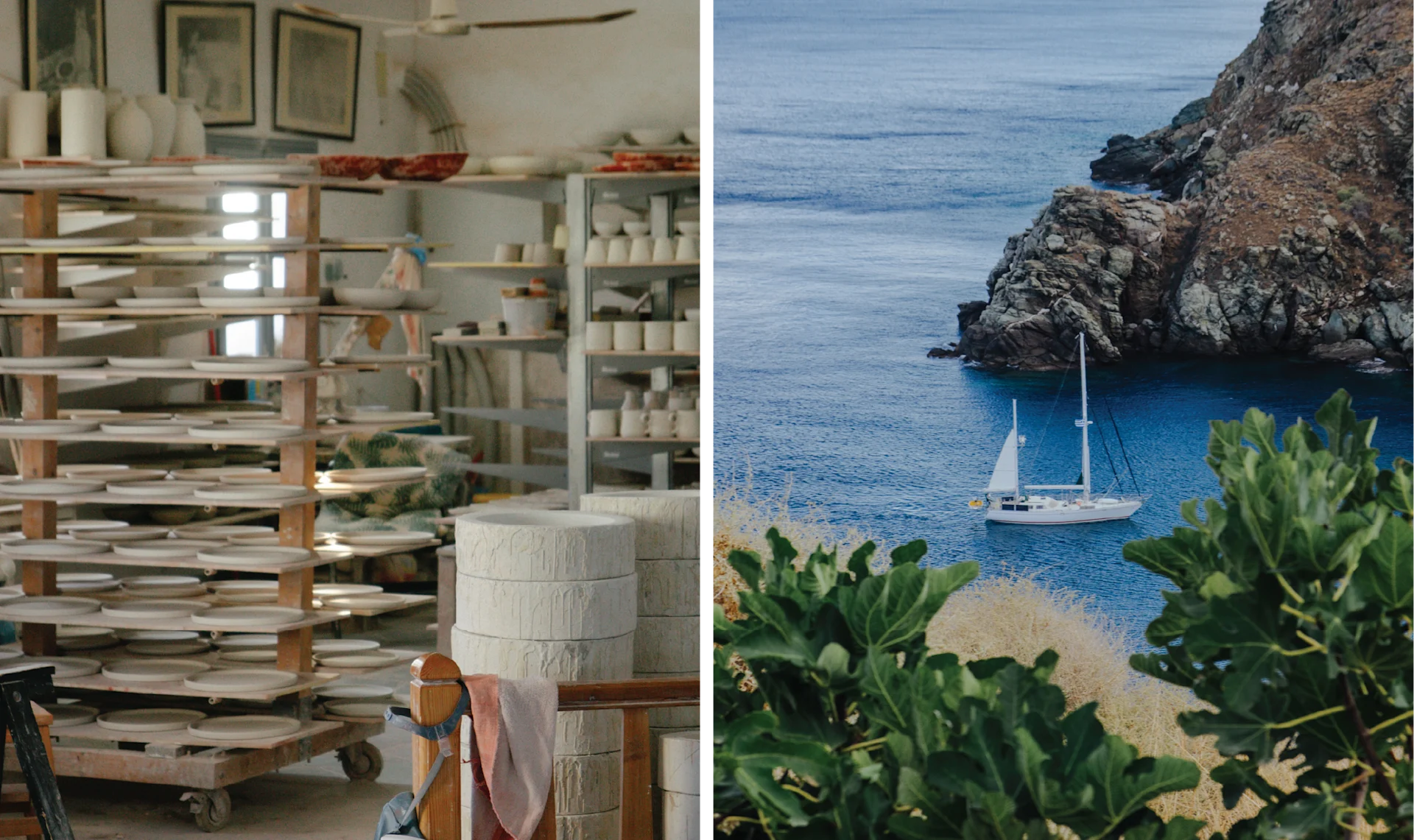
At Apostolidis Ceramics in the village of Kamares, owner and artist Giannis works local clay in the space his grandfather built. Shelves hold skepastaria, traditional lidded pots used to make revithada, a centuries-old, slow-cooked chickpea stew flavored with lemon and dill. In the back, the iron-rich clay vessels smell damp, raw, and metallic.

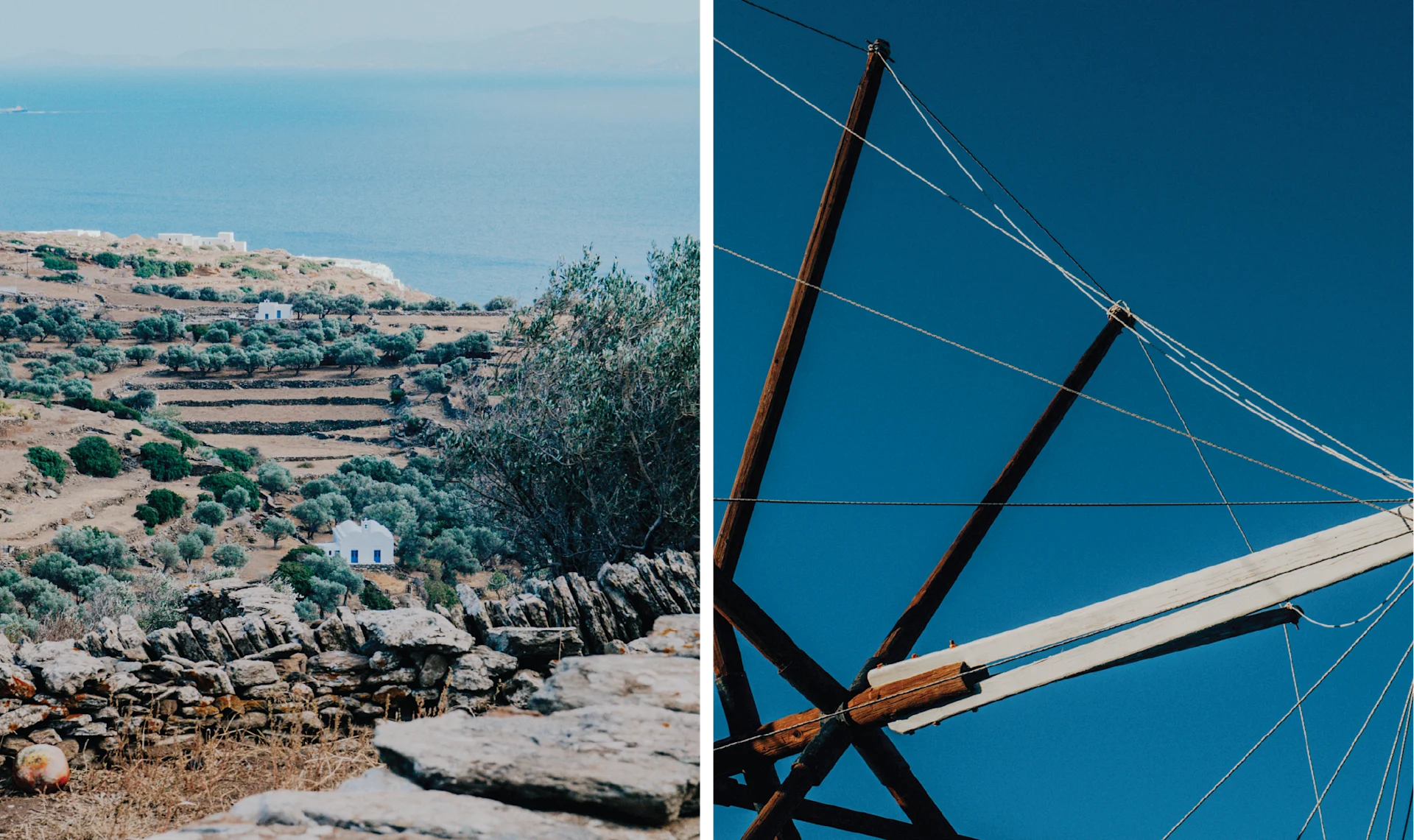
Across the island, the soft soil is held in place by stone terraces—something for the roots of olive trees to cling to so they don’t topple over. You can almost taste the terrain in the oil they produce: full-bodied, peppery, and viscous.

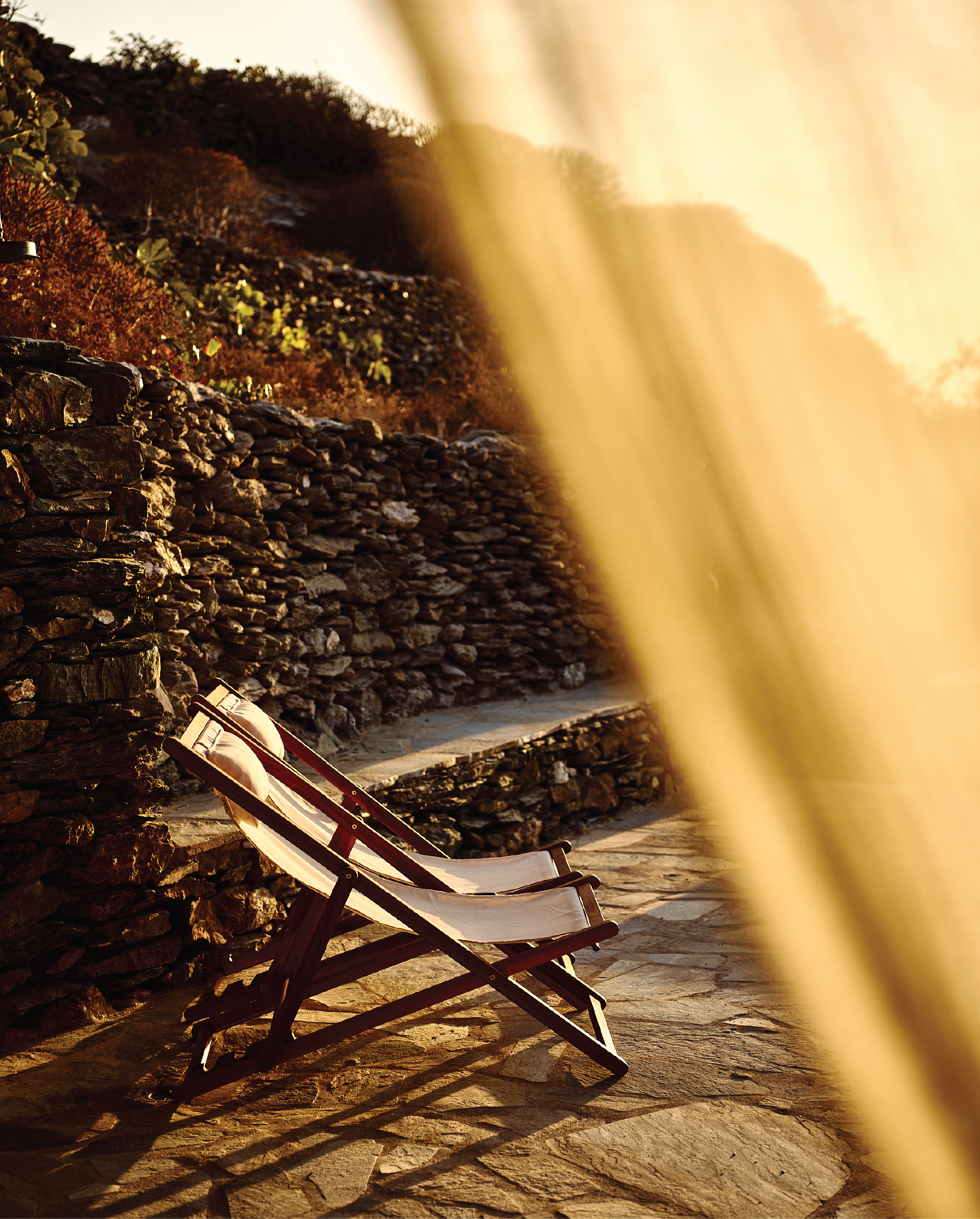
Cobblestone footpaths, or kalderimia, cut through the landscape, worn smooth by centuries of feet and hooves. Low stone walls hold the hillsides in place along their edges. Tufts of thyme and rosemary push through the cracks, the soil alive beneath the stone.

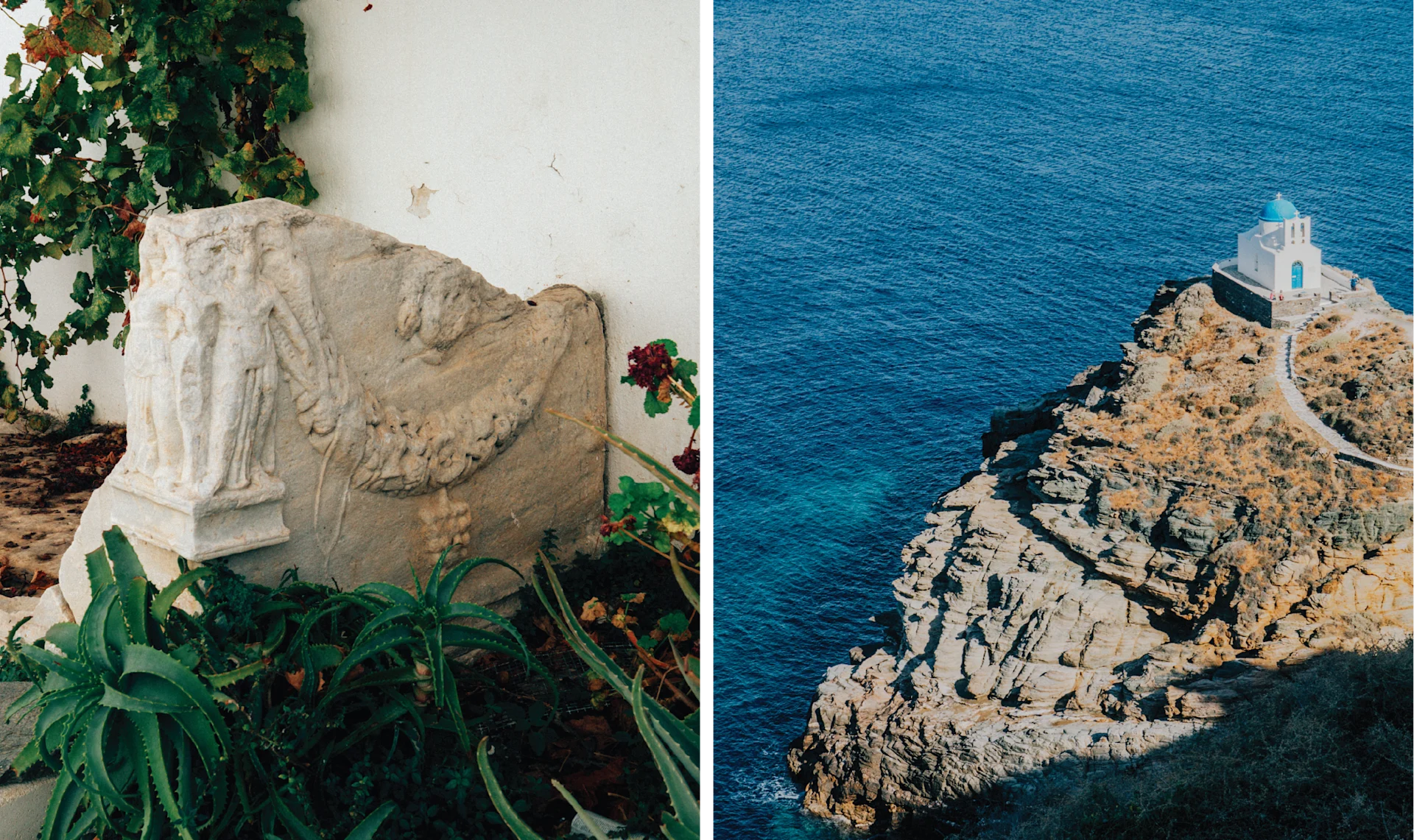
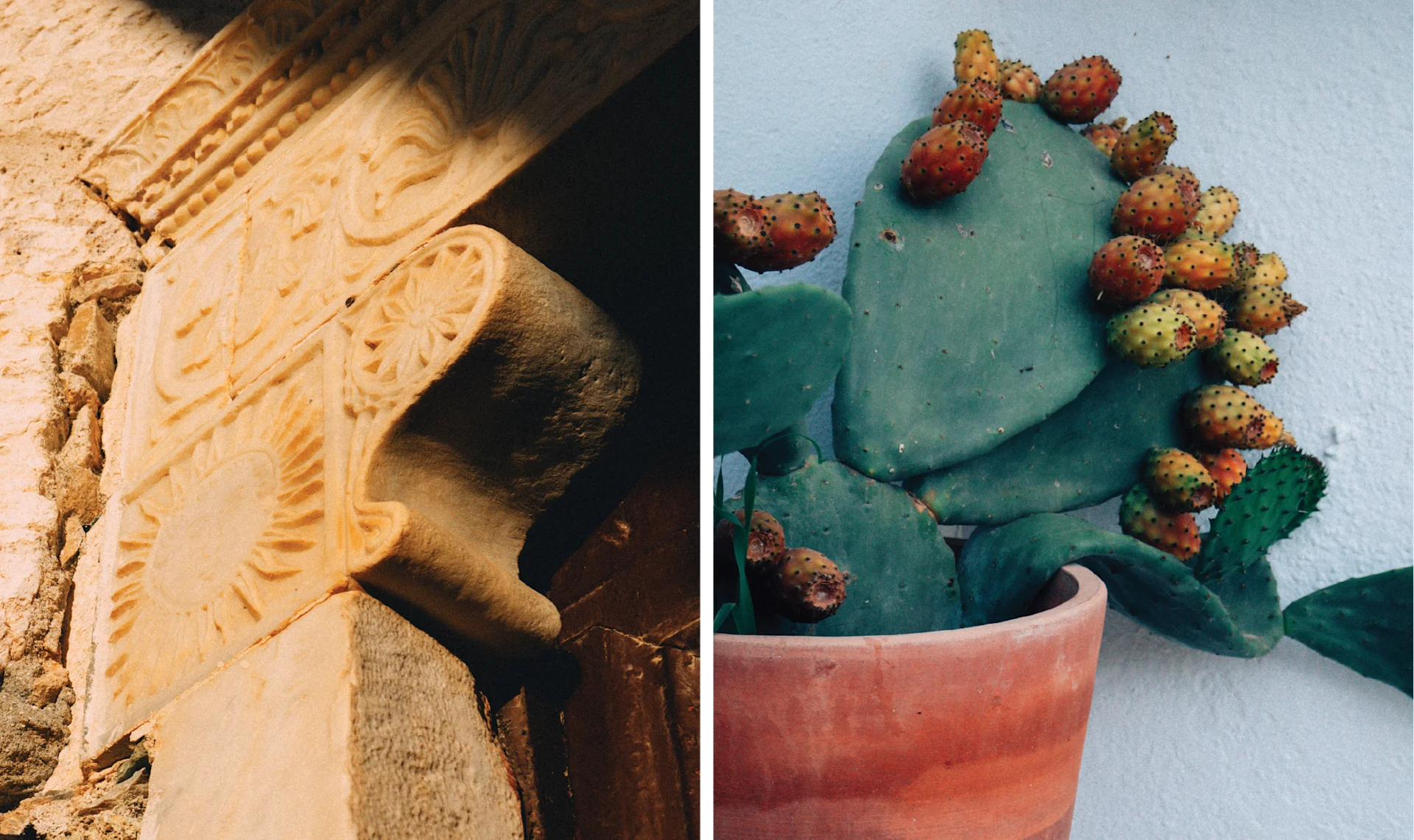
In the village of Kastro, there are columns and sarcophagi scattered along the sidewalk, hewn from the same stone beneath my feet. Later, at the Theodorou Pastry Shop, I watch a baker transform almonds into amygdalota, a traditional chewy cookie. On Sifnos, it all comes back to the ground: clay, stone, and what grows from it.

1 /

Therasia: Fire

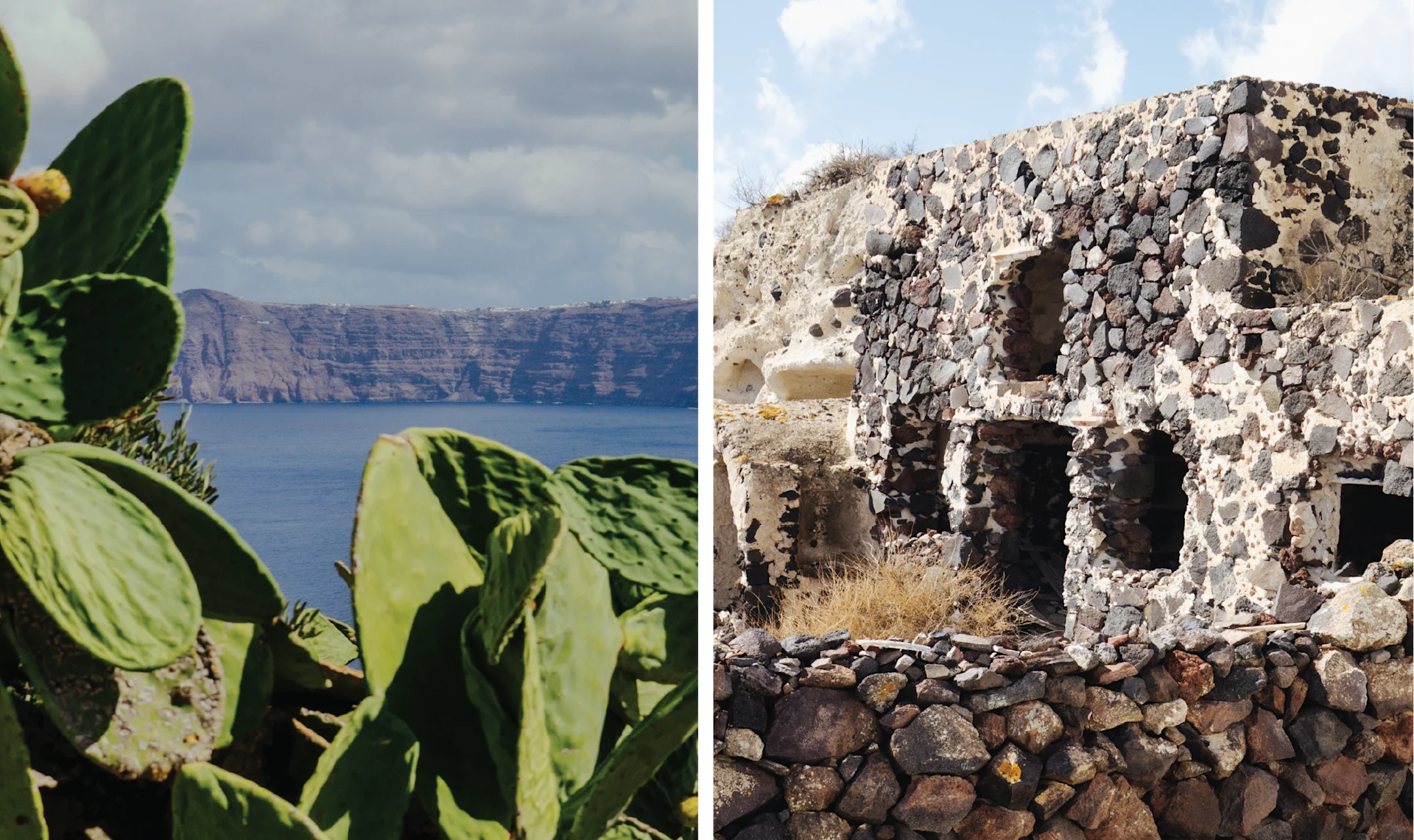
I arrive by taxi boat, rounding into a harbor as white waves break against black volcanic pebbles worn smooth by the surf. I pick one up: It’s pumice, light as cork and made of compressed ash from an eruption more than 3,500 years ago.

The ground is warm, even in the shade; the heat seems to come from below. Santorini, just across the water, is lined with cruise ships. Both islands are volcanic, but unlike its overrun neighbor, only about 250 people live here year-round.

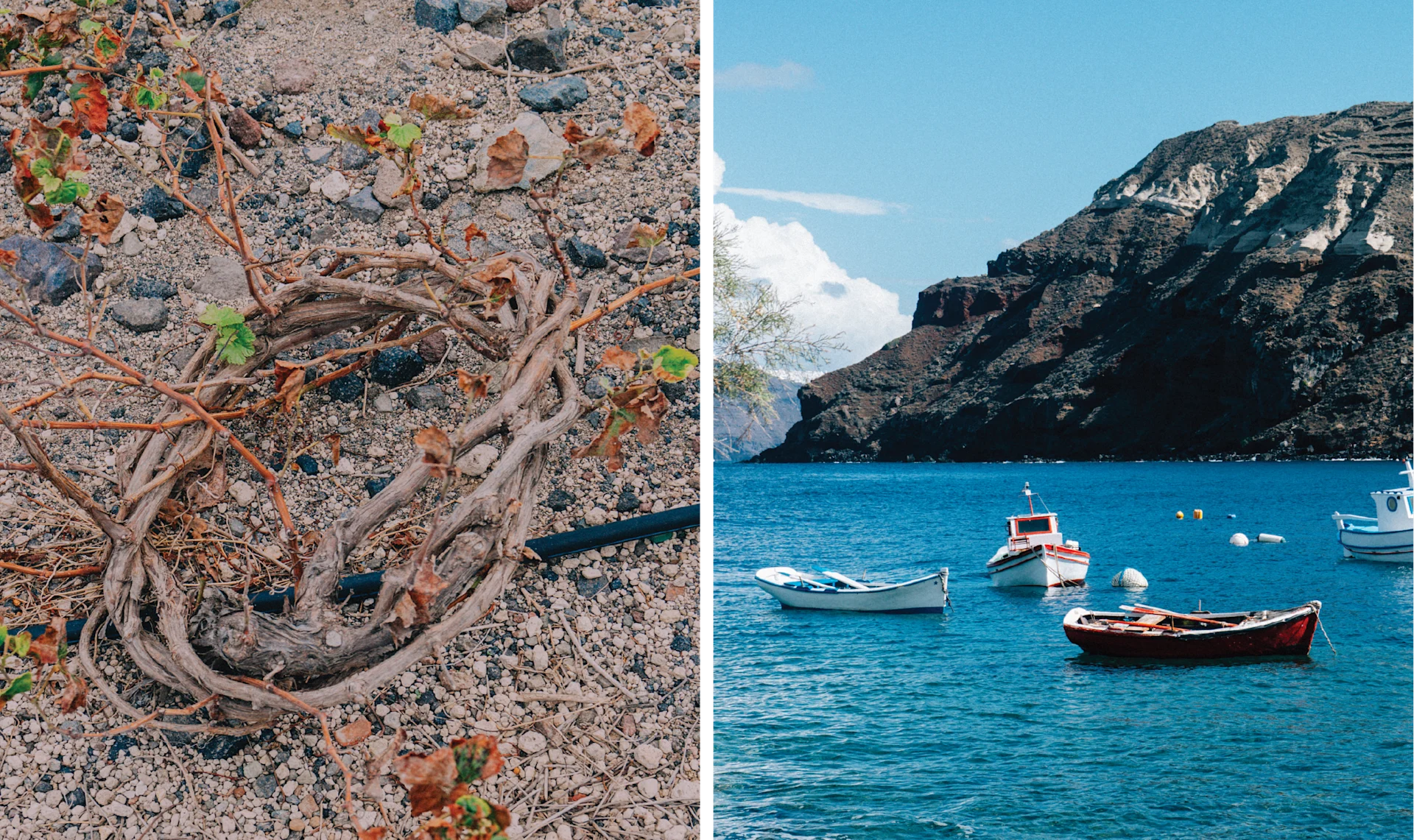
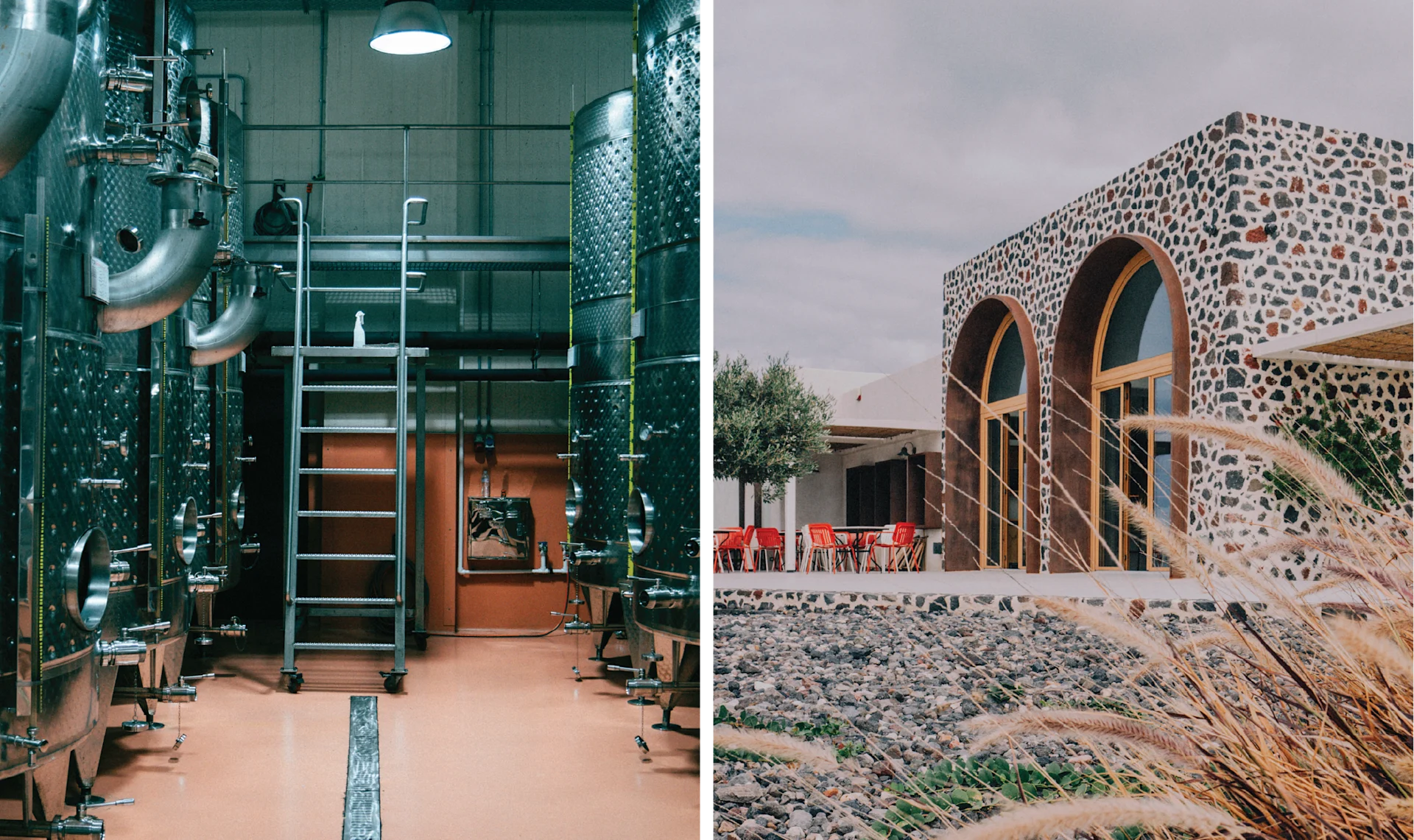
My first stop is Mikra Thira, a renowned family winery where the vines are trained low, resembling baskets, to protect the grapes from the wind and sun. The volcanic soil they grow in is poor, which limits yields but concentrates flavor. The white Assyrtiko is dry, mineral, and saline.

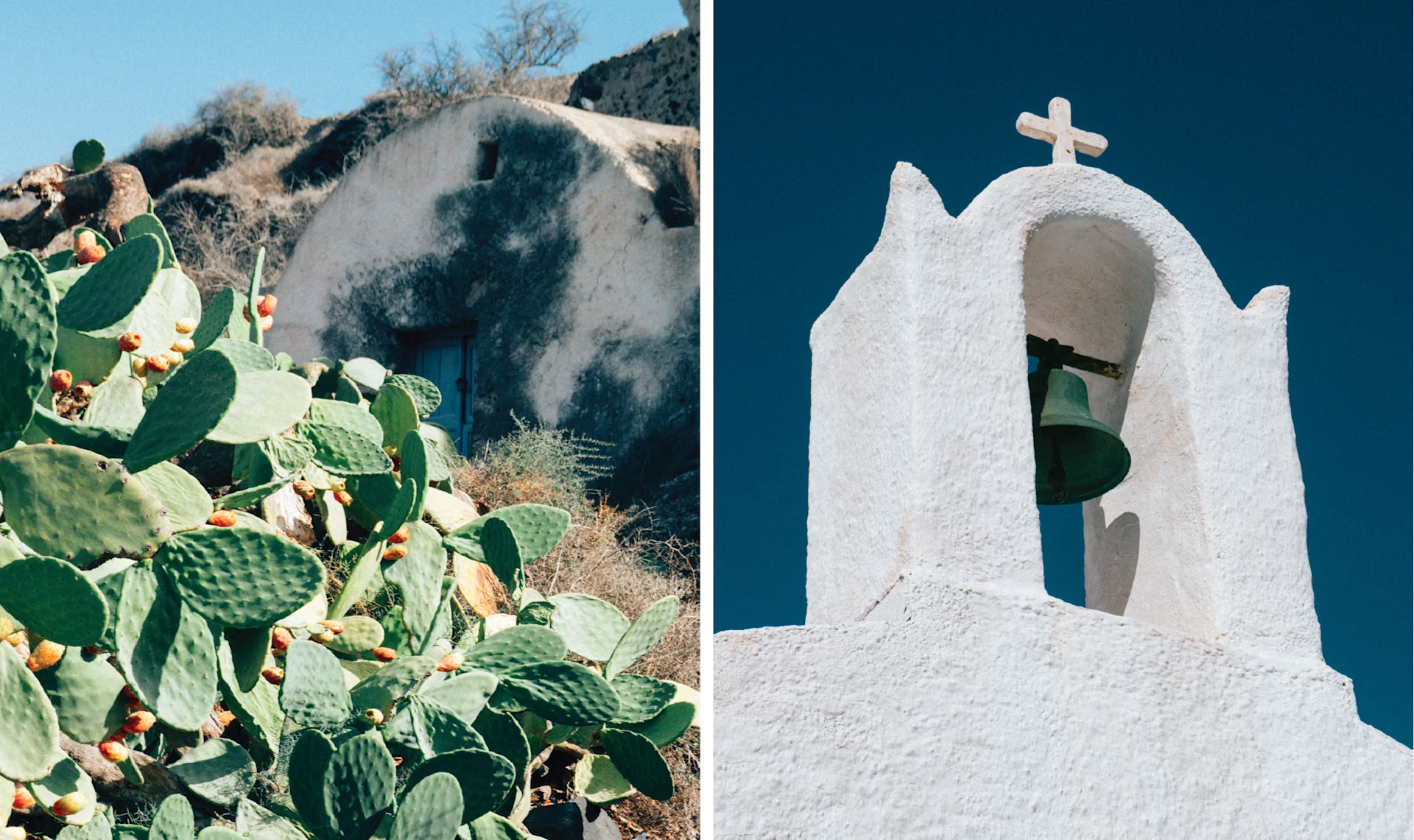
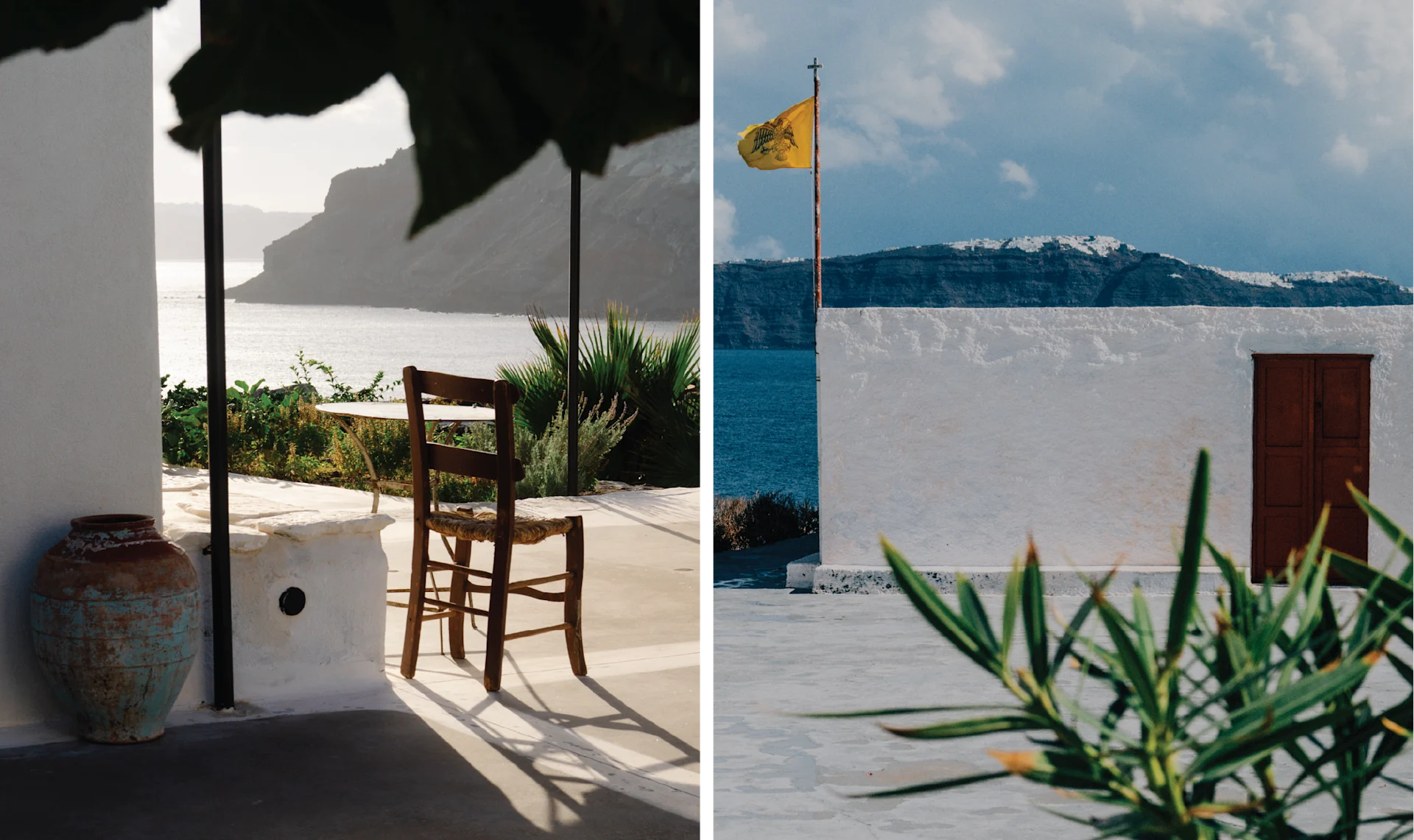
Beyond the winery, a path to the Moni Kimiseos tis Theotokou monastery crosses loose basalt. From this small church at the island’s edge, the volcano is visible across the caldera and the sea washes over hot springs.

Back at Santa Irini Retreat, I slice into a deep red tomato and dip hearth bread into melitzanosalata, a smoky spread made from charred white eggplant grown in the backyard. Beneath it all is the land, forged by volcanoes and smoothed by time.

PRIOR
Already a subscriber?Sign in here