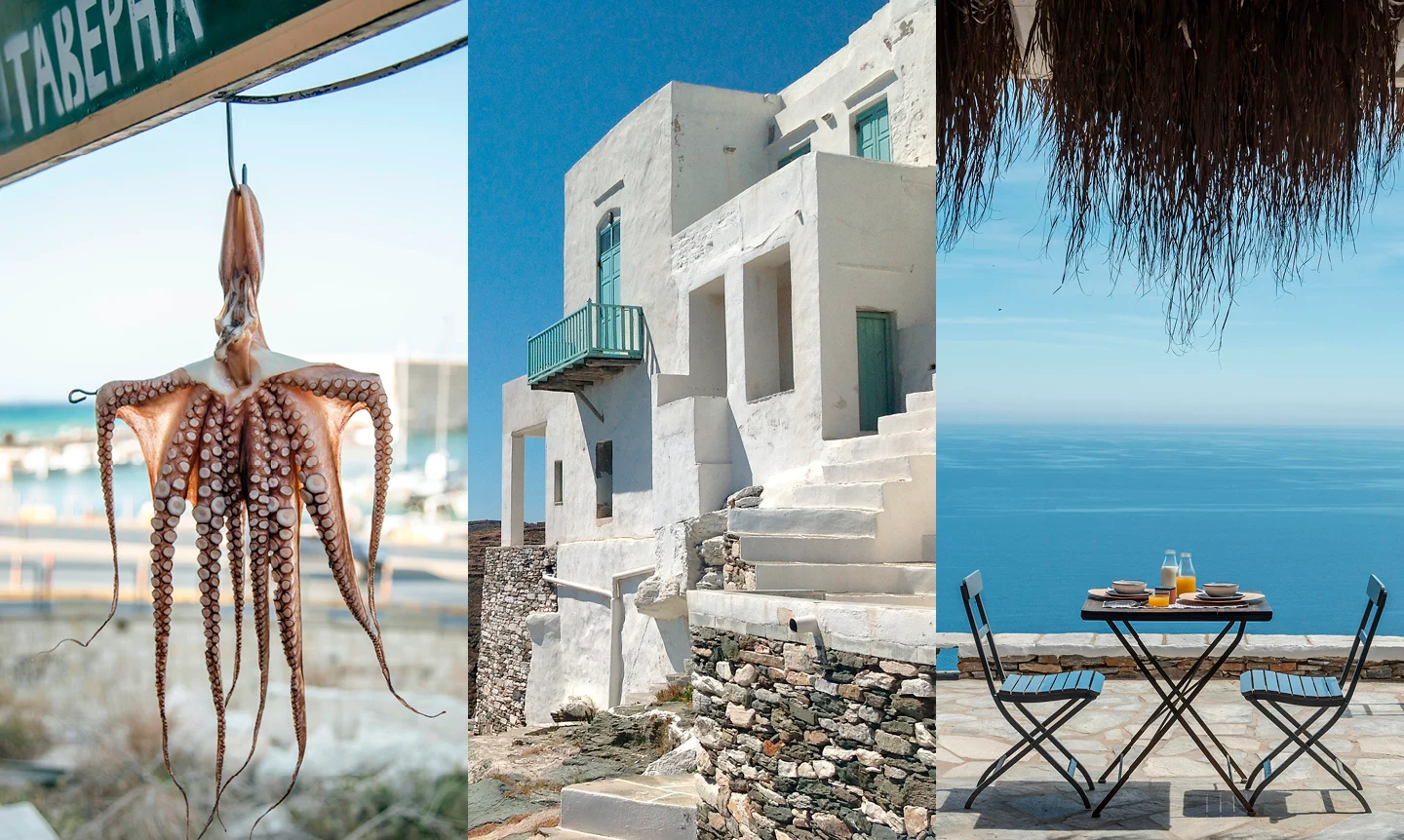
The tiny island of Sifnos often yields the spotlight to its more frequented neighbors in the Cyclades, like Santorini or Mykonos. Yet epicures have long descended upon its pebble beaches in search of a good meal—or rather, an exceptional one, with the island now regarded as one of the Greek islands’ standout food destinations.
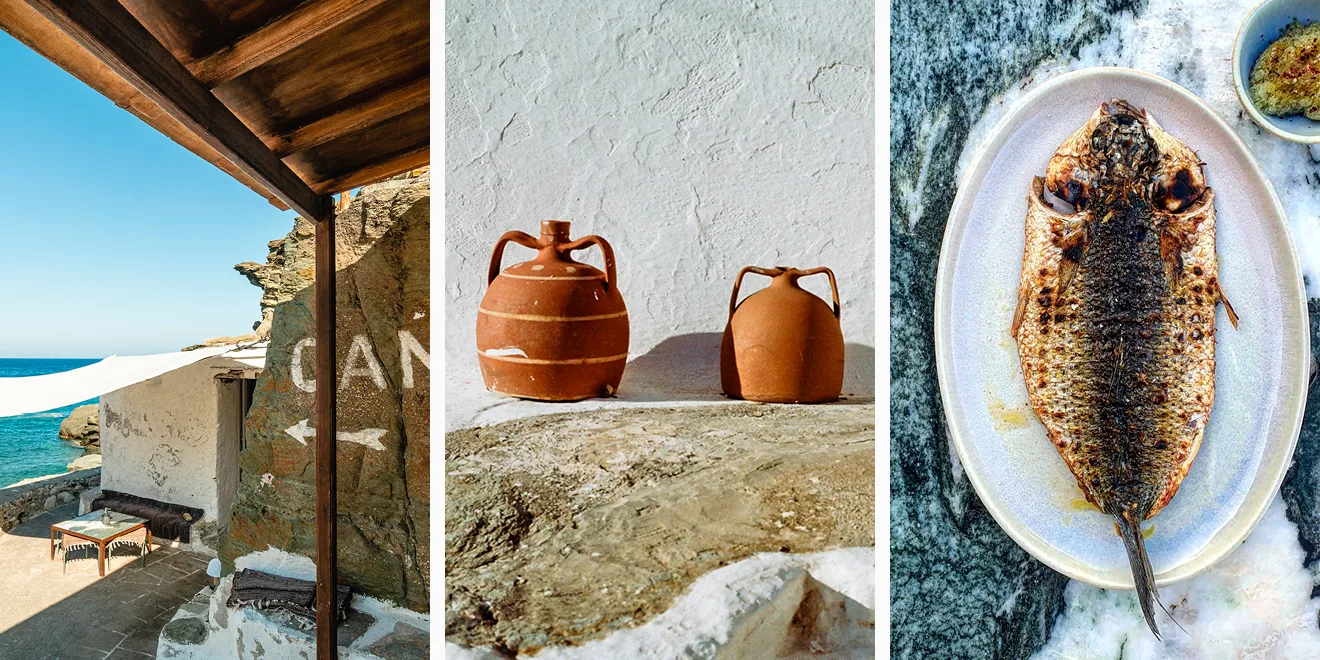
Some attribute this to Nikos Tselementes, Greece’s first celebrity chef, who brought his native island international exposure with his 1926 cookbook Greek Grocery. Though criticized for fusing Greek staples with French techniques—locals argue his only real contribution to Greek cuisine is moussaka—he helped bring Sifnos’s food culture into view. But the island's culinary roots go far deeper; in fact, they lie in the soil itself.
Sifnos’s soil—a red clay rich in minerals—has been used for pottery since the Early Cycladic period, shaping local cuisine at a time when other islands still cooked over open fires. Able to withstand high heat, it gave rise to the large vessels used for the island’s slow-cooked stews and casseroles. Revithada, a chickpea stew baked overnight in a skepastaria, and mastelo, lamb with wine and dill cooked in earthenware, remain staples. Today, as many as eighteen pottery workshops continue the tradition, and many are open to visitors.
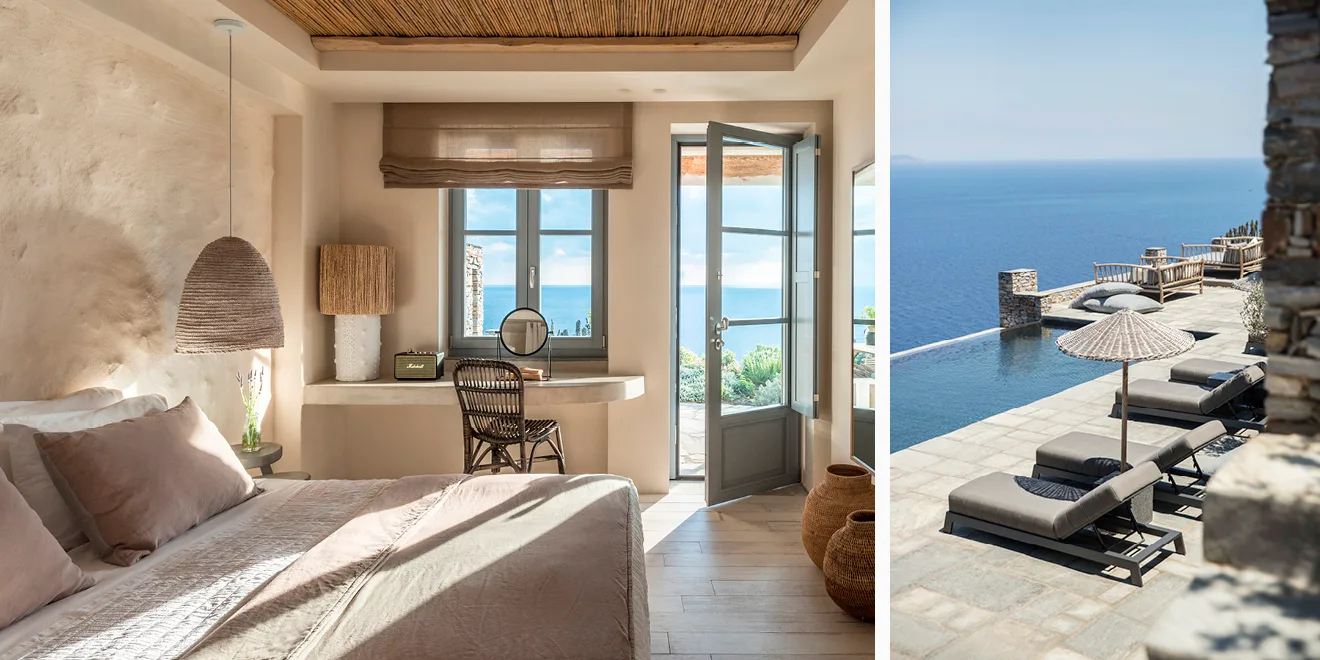
The island is as dedicated to slow-cooking as it is to slow living. Its charms—stone paths winding through mazes of cubic white homes, churches with blue cupolas, and a wild coastline dotted with hidden coves—remain largely spared from the tourist hum. “The development of tourism follows the rhythm of the island,” says Isidora Chandeli, co-owner of Verina Astra hotel. “The island primarily attracts people who are travelers, not tourists.” The approach is reflected in the property itself: framed by the church of Poulati, the cliffside retreat is made up of fourteen stone villas, each with its own private terrace and an infinity pool overlooking the Aegean. Chandeli and her laid-back staff serve as local guides, helping unlock the island’s quieter side. Here’s a guide to get you started.
Where to Eat and Drink
Omega3
Tucked along Sifnos’s busiest beach, Platis Gialos—known for its long stretch of sand lined with restaurants—Omega3 is an unpretentious fish bar where high-top stools and communal tables bring together the likes of Jeff Bezos and Tom Hanks with the island’s barefoot locals. Dishes—semi-cured amberjack with dashi brown butter and smoked tomatoes, or red shrimp ceviche with avocado mousse—are served as small plates, meant to be shared.
Cantina
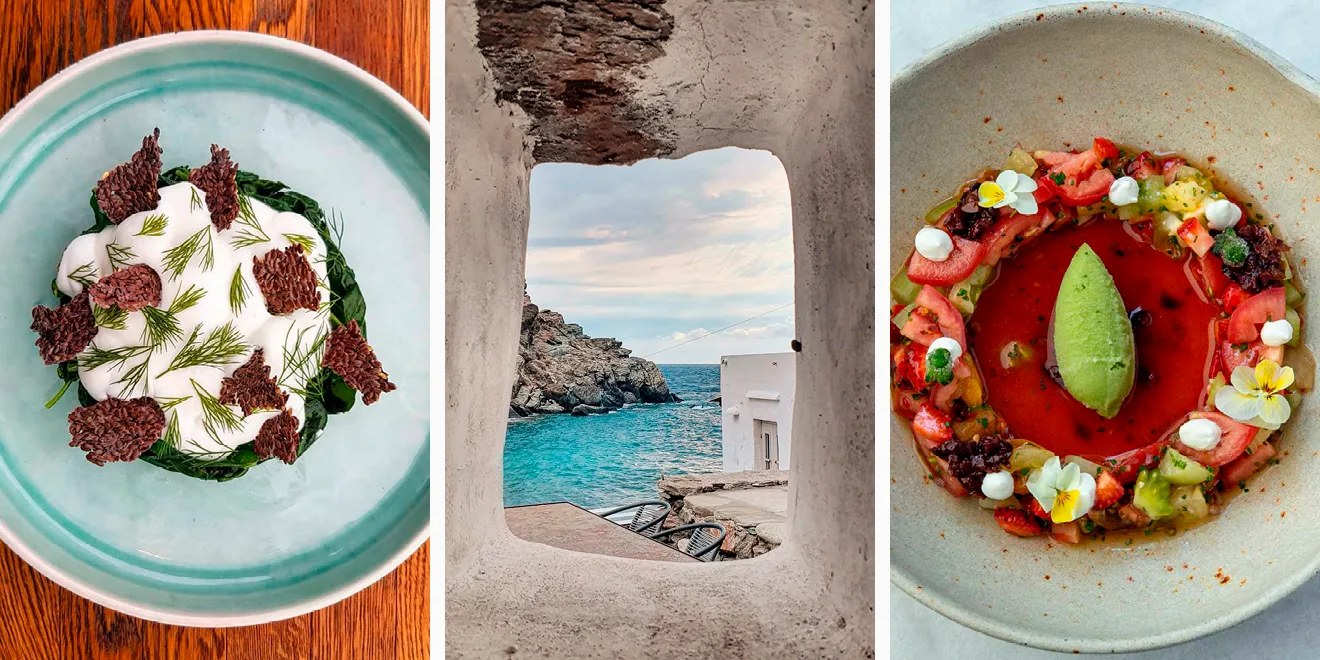
Molecular biologist-turned-chef Giorgos Samoilis left his nine-year post at Omega3 to open Cantina. The restaurant sits below the ancient hilltop town of Kastro, in the tiny cove of Seralia—arguably the island's most stunning bay (though reaching it requires a 99-step descent with no car access). “It acts like a filter," Samoilis says. "Anyone who decides to walk down the steps has already taken a conscious decision to visit.”
Cantina looks like it came straight from the rocks; in fact, Samoilis instructed the architect not to touch anything surrounding it. The result is a rustic haven within ancient xerolithies, dry-stone walls. Overhanging rocks and wild greens define the decor, with many of the latter finding their way onto Cantina’s menus, which change daily as part of a no-waste approach. Most ingredients come from the island, with bread baked in a wood-fire oven, organic vegetables, sustainable fish, and cage-free meat. Reservations are essential.
Bostani Restaurant & Bar
Bostani, in Verina Astra hotel, offers fine dining in a relaxed setting near the hotel. Much of the produce comes from its own bostani, or garden, but the approach goes beyond farm-to-table. Chef Nikos Thomas, of Athens’s Simul, reworks traditional flavors with a lighter, more modern hand—beef carpaccio with kumquat and smoked herring roe, or chickpeas with veal marrow and crayfish, a refined take on Sifnos’s classic revithada.