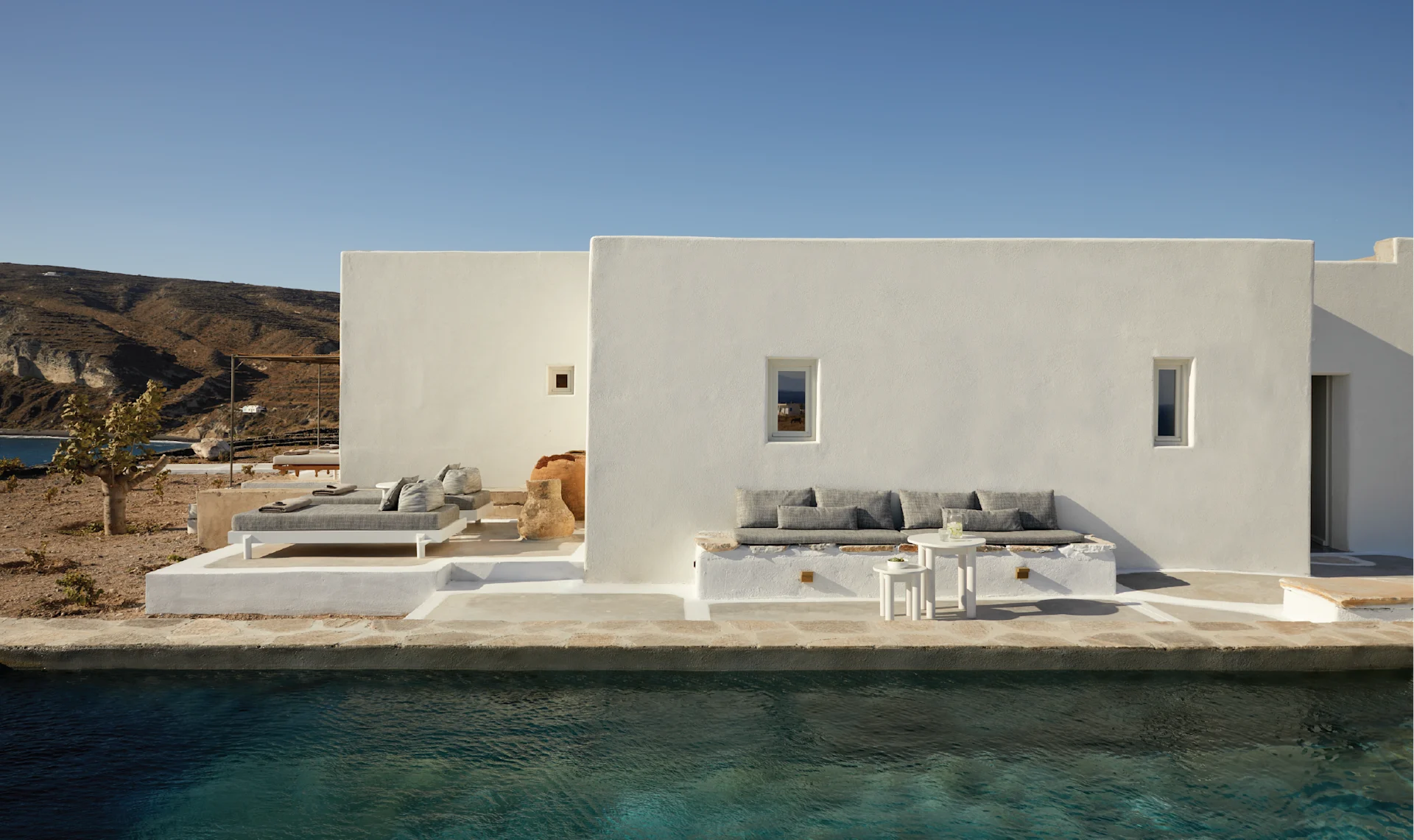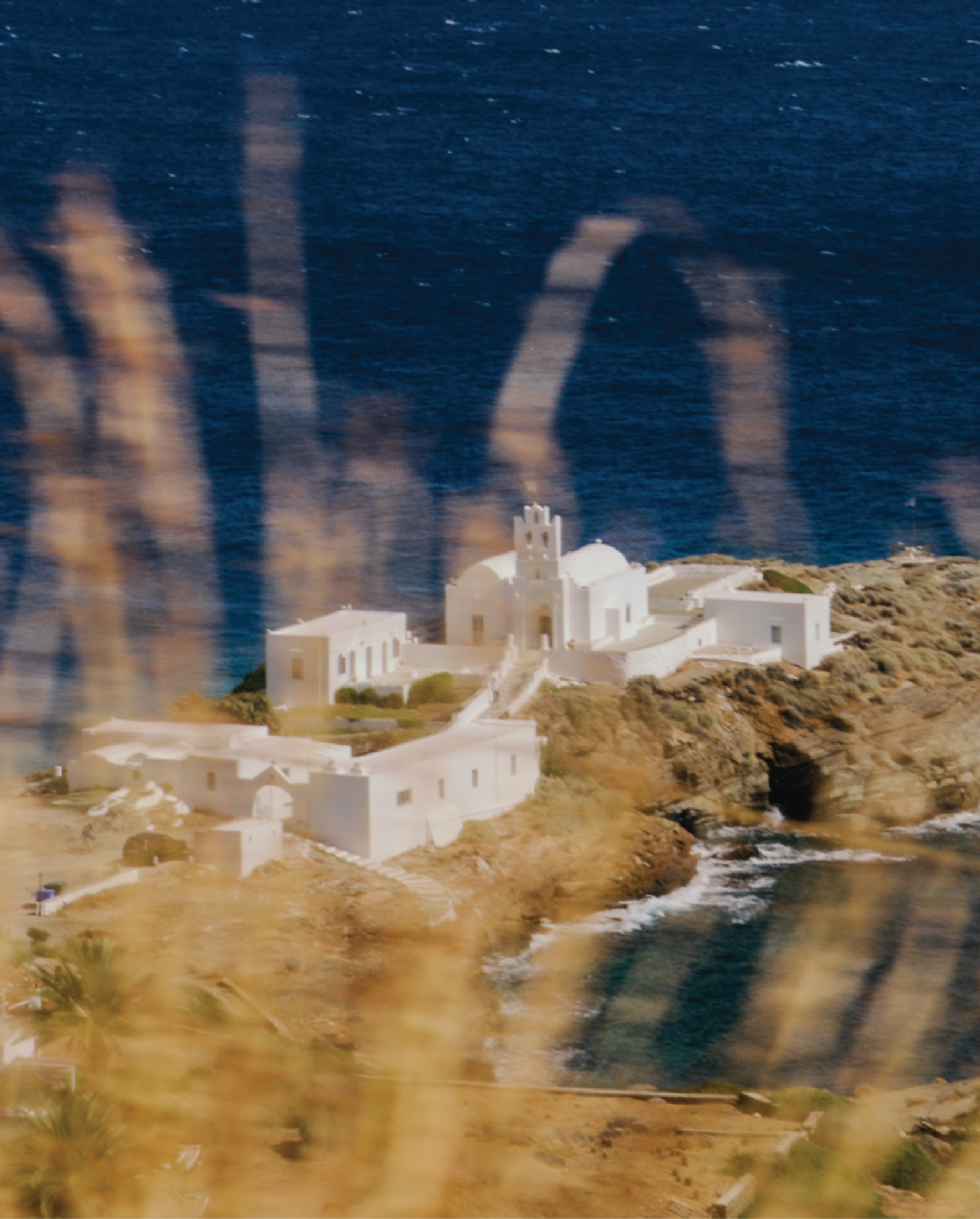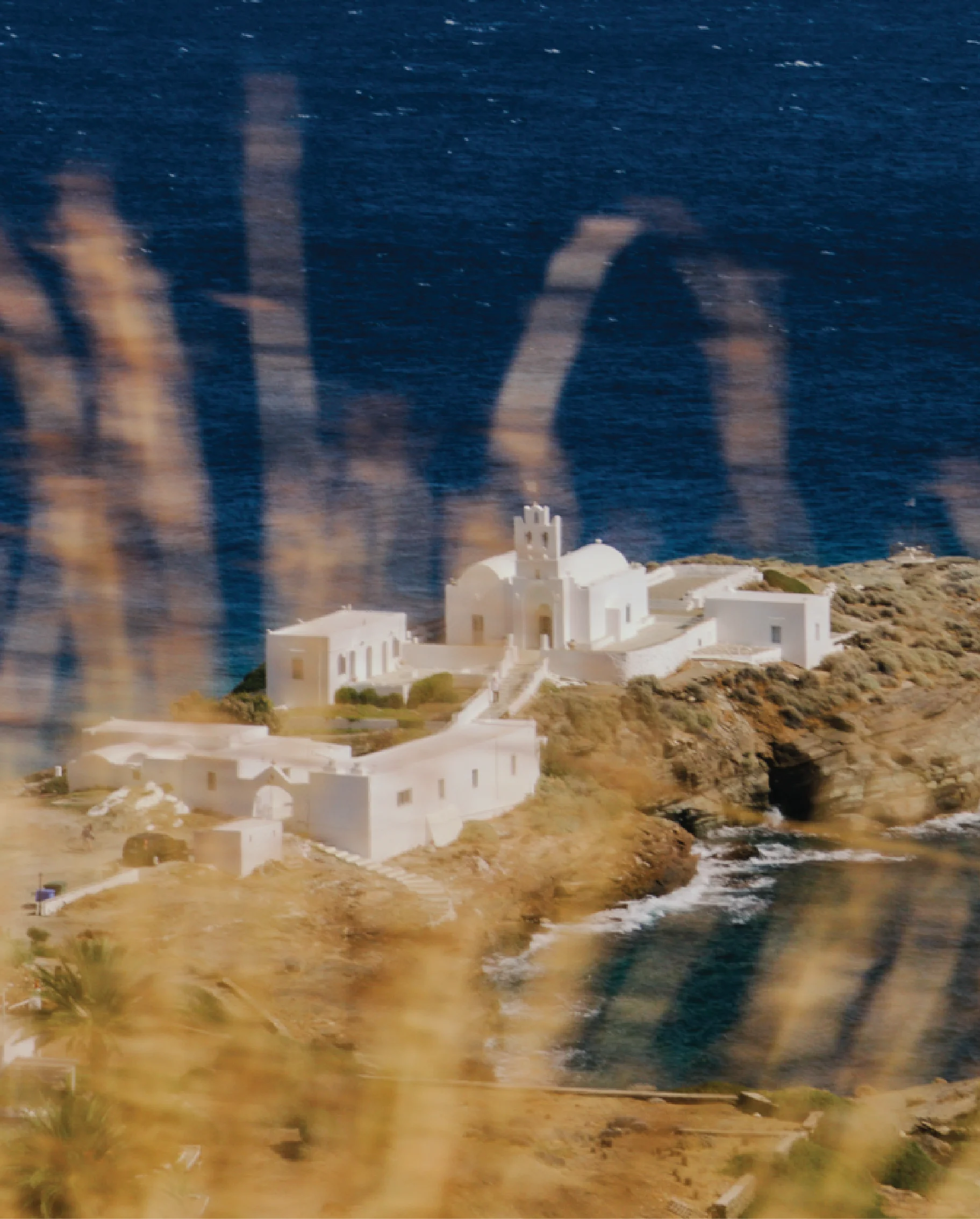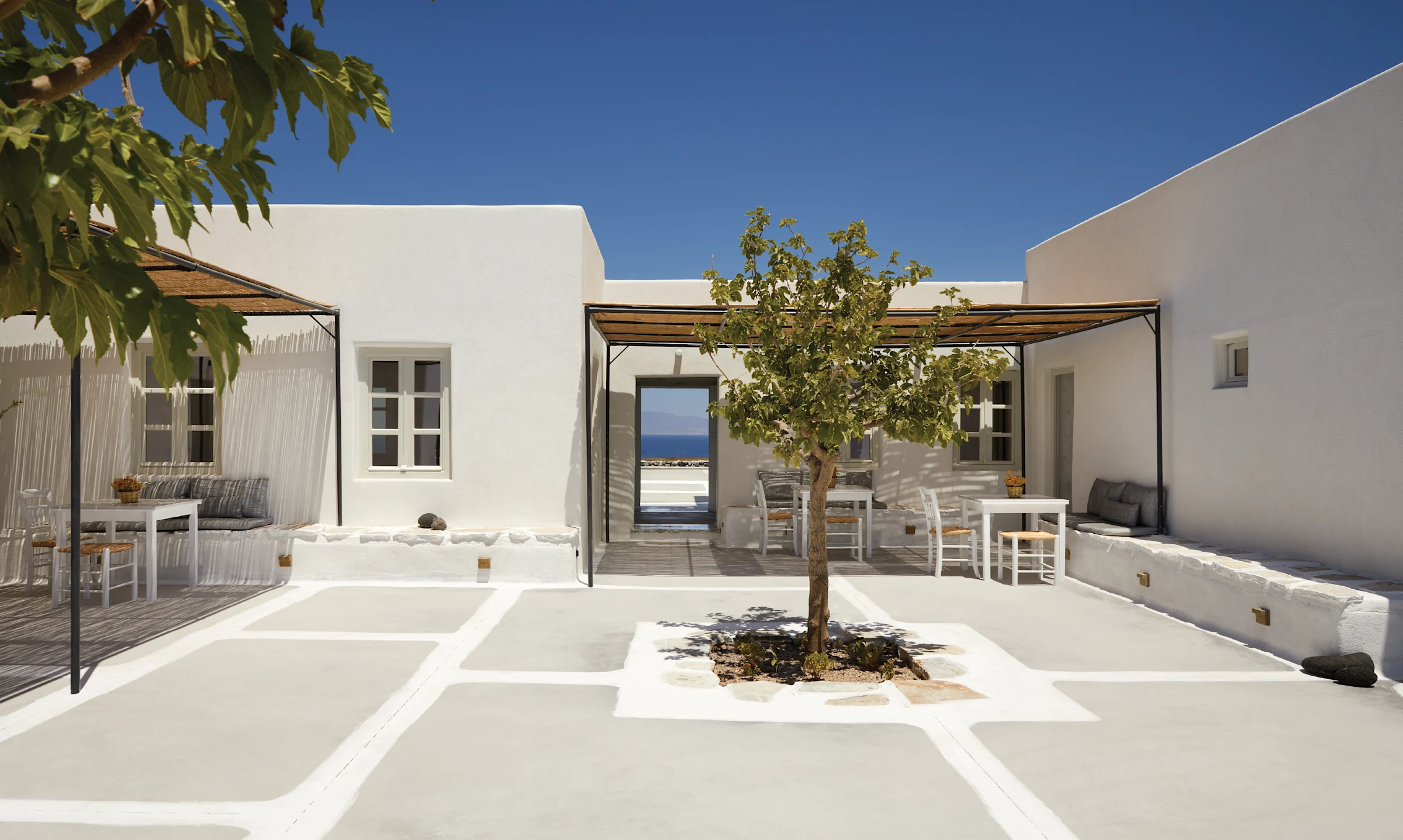
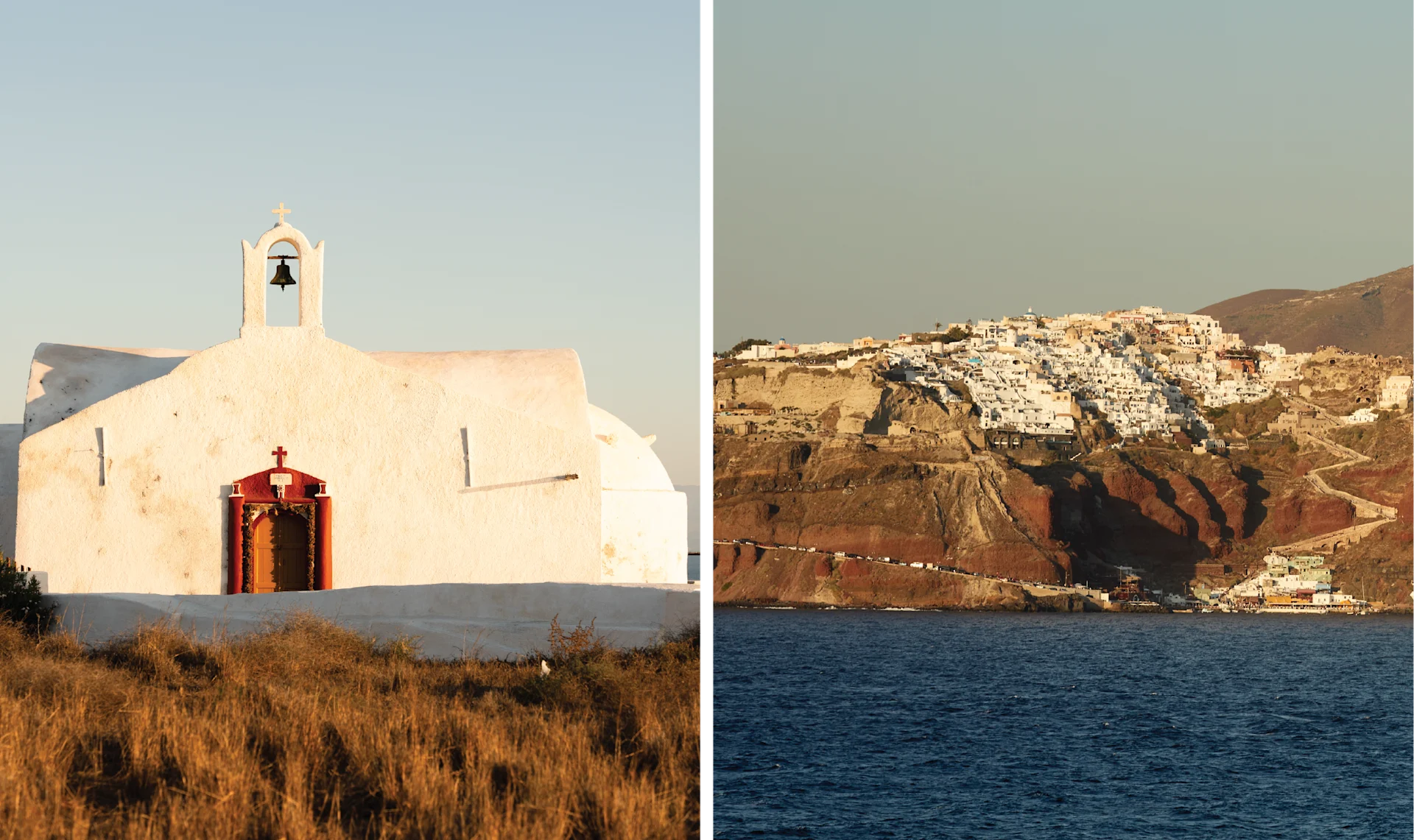
Santa Irini Retreat is a small oasis on Therasia, a quieter, often-overlooked Aegean island that forms part of the Santorini caldera. Perched on a cliff in the village of Agia Eirini, the property looks directly across the water to Oia. Built into original stone structures using traditional Cycladic methods, Santa Irini is owned by a couple with deep ties to the land and offers what neighboring Santorini has largely lost: an intimate, relaxed experience that’s unpolished in all the right ways.
When
The best time to visit is in June or September—before or after the strong meltemi winds arrive and start to lash the islands—when the weather is warm but manageable. July and August aren’t out of the question, but the island is best experienced during the slow pace of shoulder season.
Where
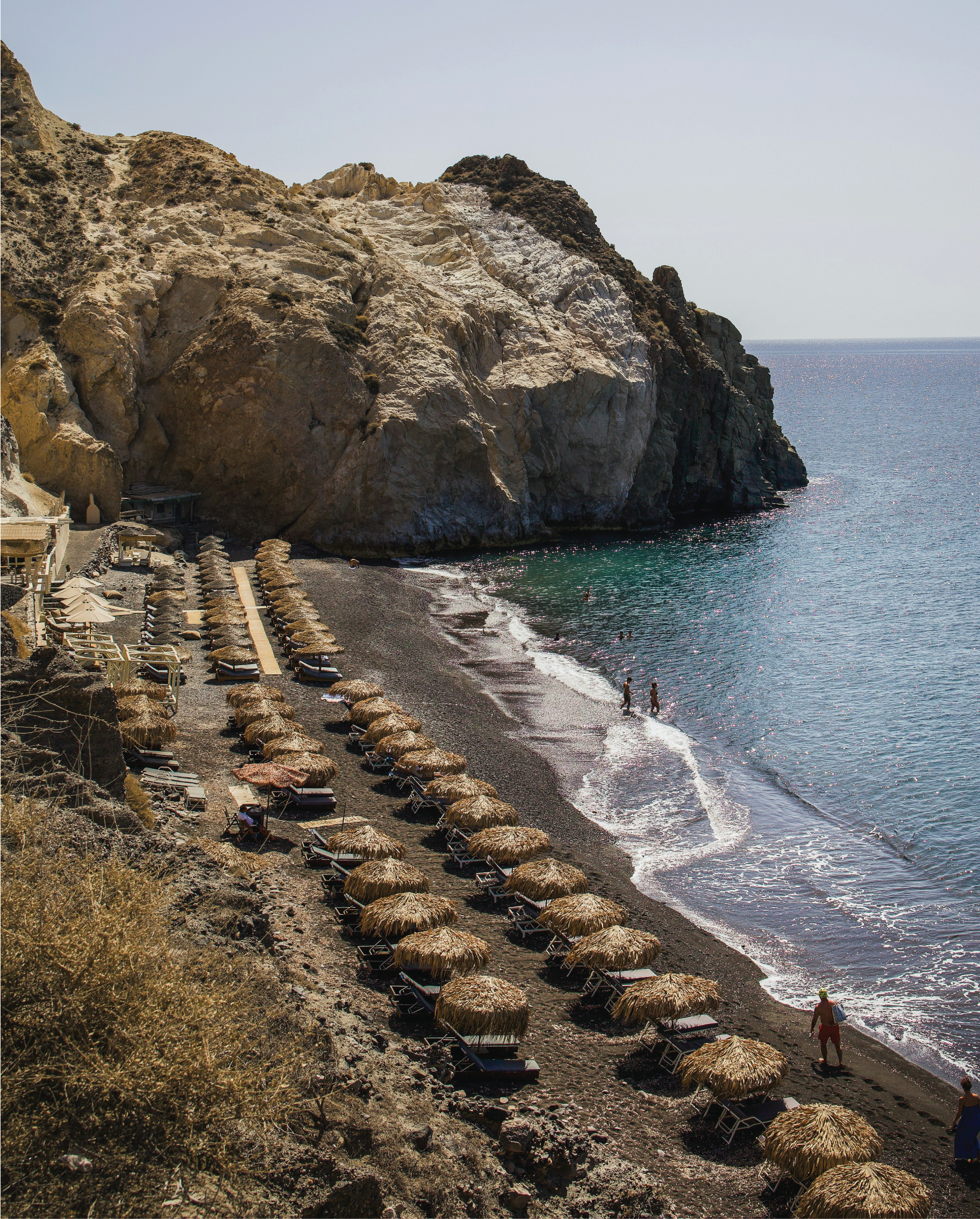
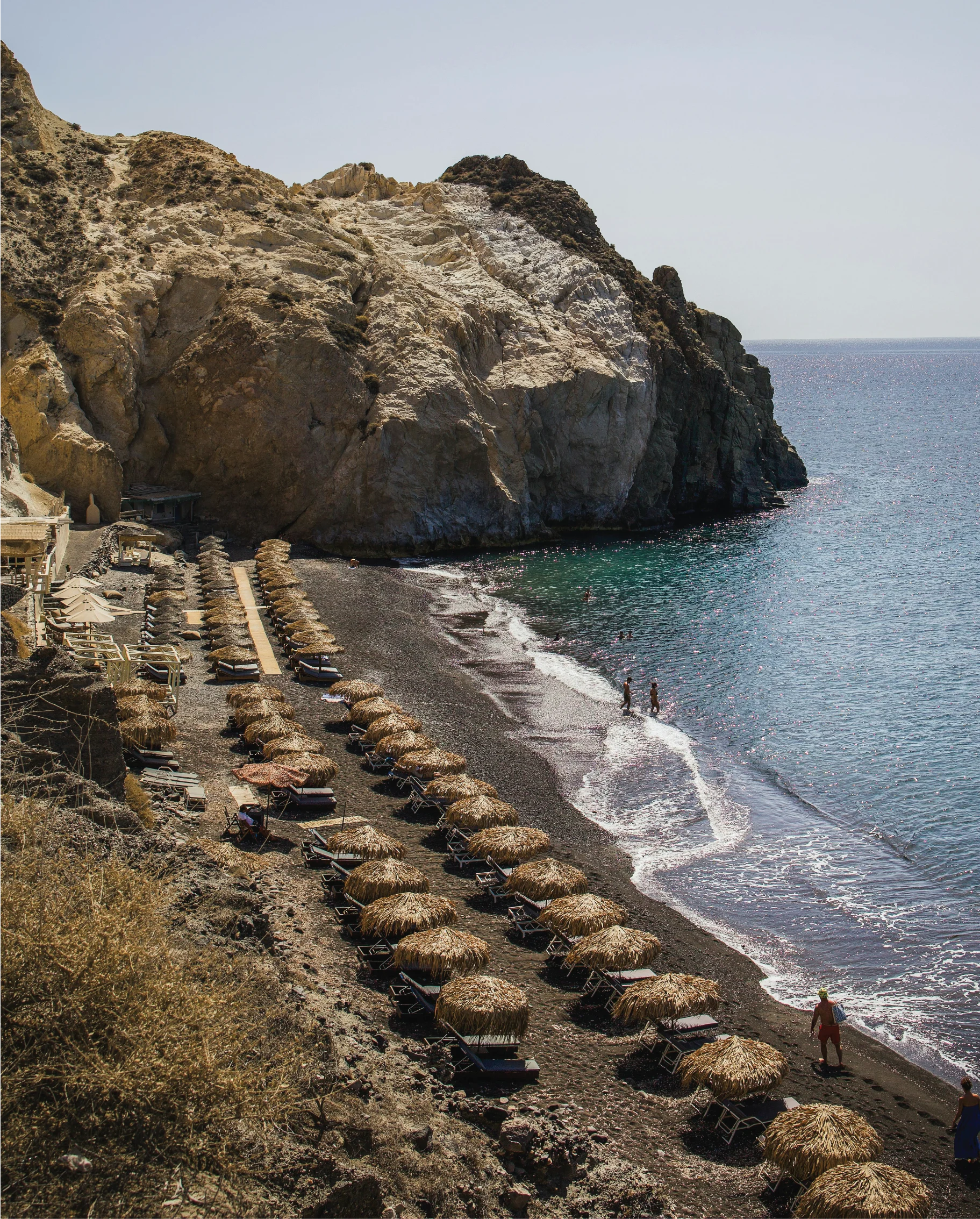
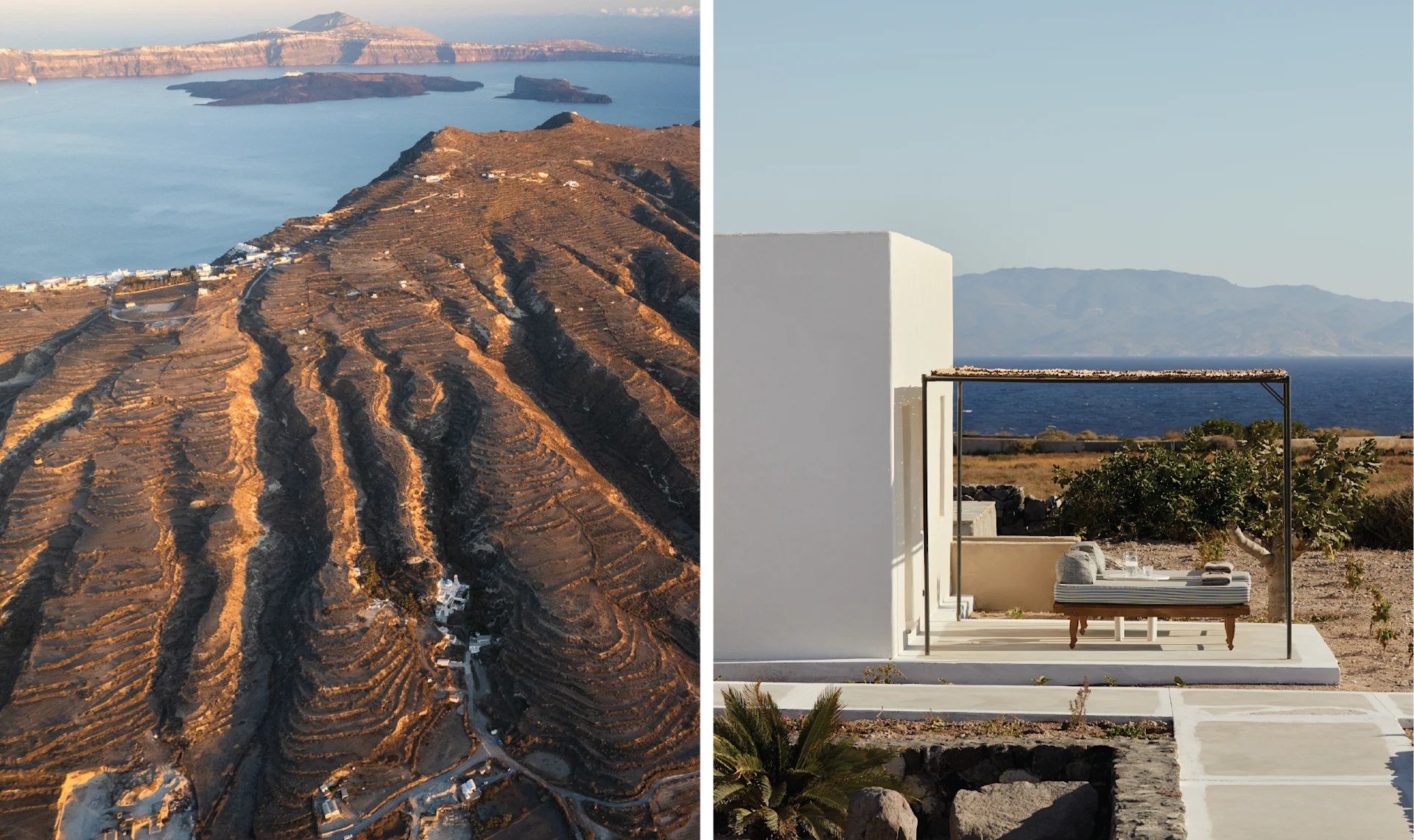
Therasia sits opposite Santorini, just across the caldera, but is part of the same volcanic archipelago. It remains largely unspoiled by tourism and is favored for its leisurely lifestyle and sweeping views of the Aegean. The easiest approach is via Santorini, followed by a short transfer by boat or helicopter.
The Proprietors
The property is run by Paris Savvidis and Dimitris Kriezis, who wanted to create a space that would seamlessly blend with the surrounding landscape. Kriezis inherited the land from his aunt, which included a small chapel constructed in 1876. Local lore holds that Venetian sailors misheard “Santa Irini,” which led to the naming of Santorini.
Design
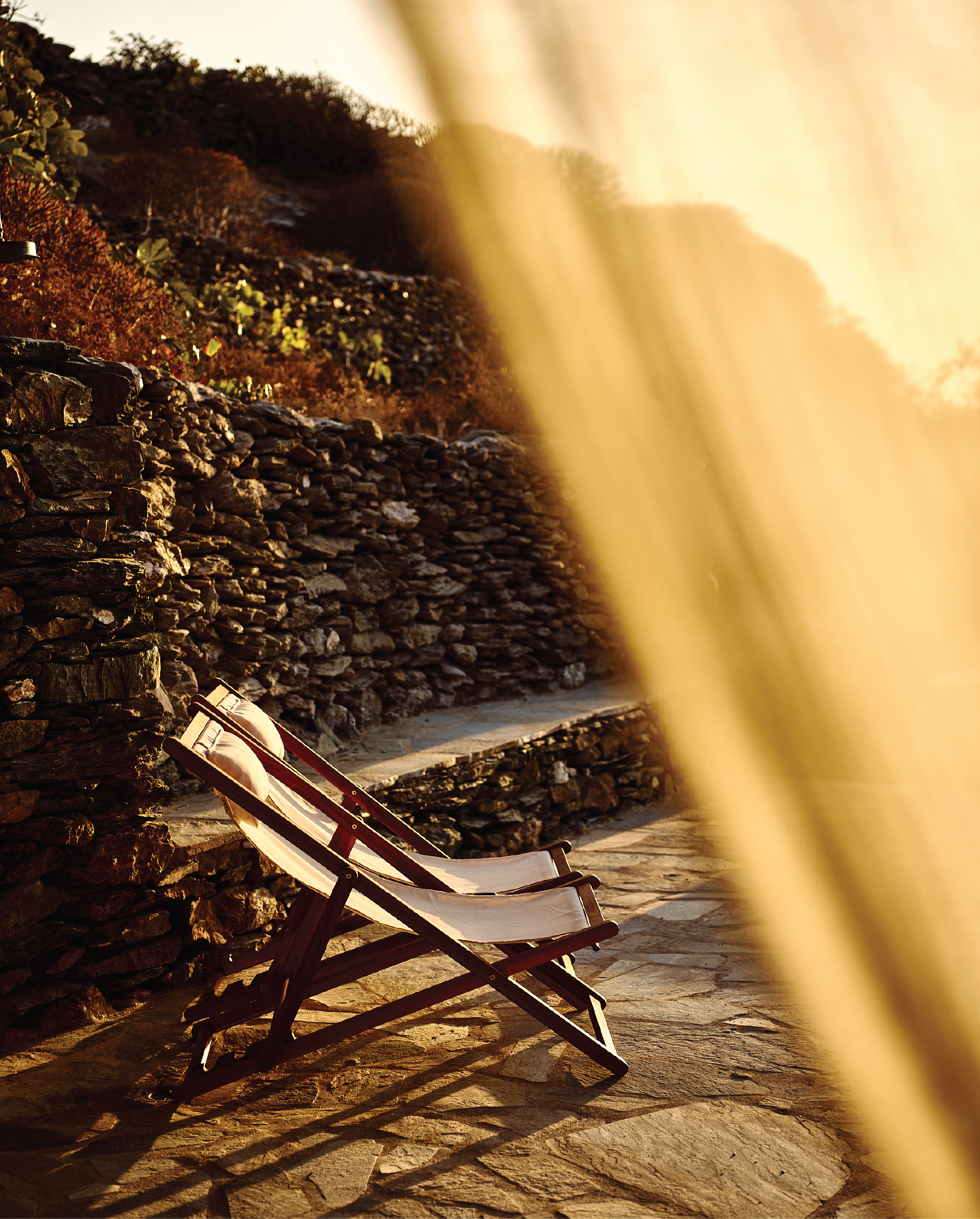
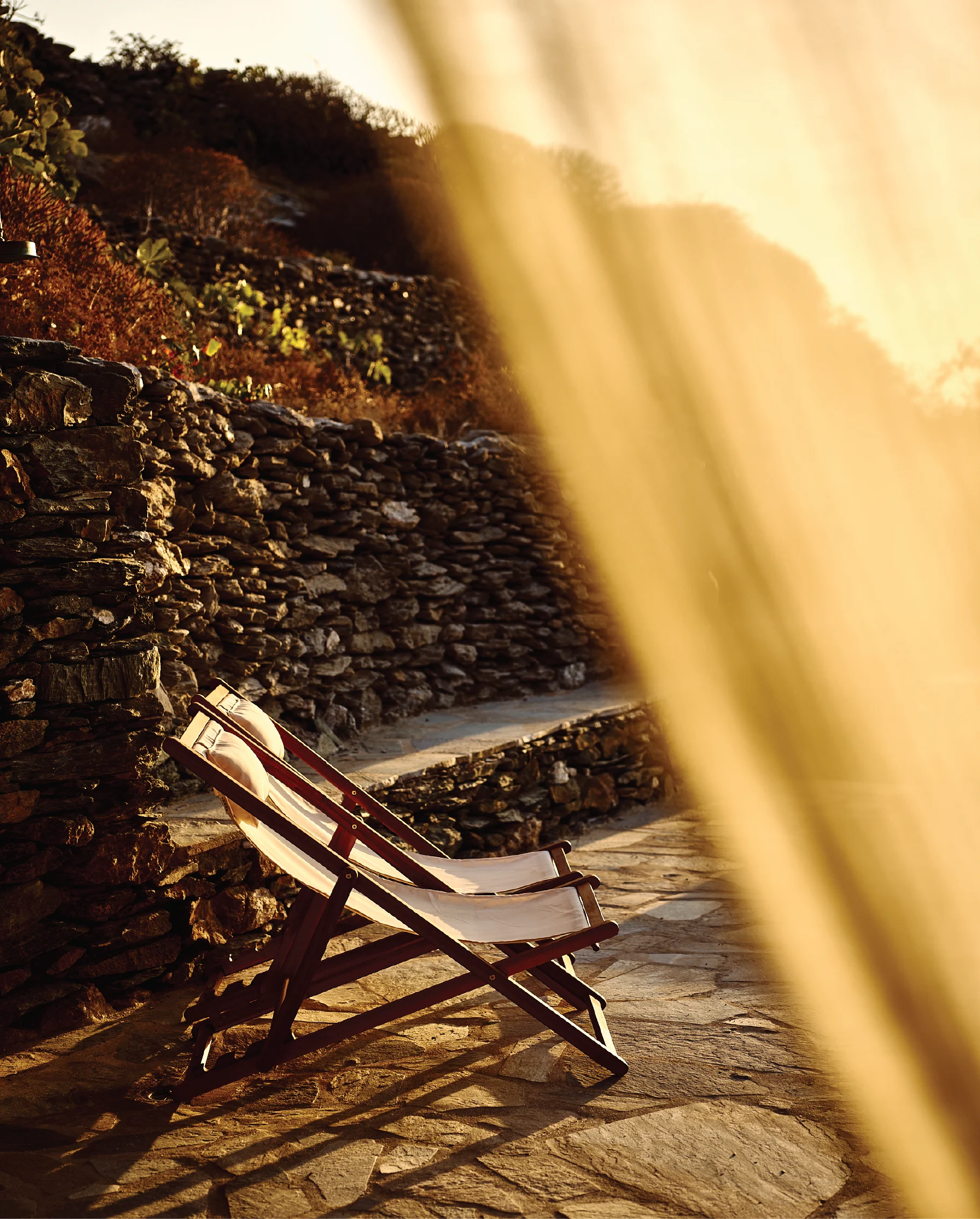
Original structures were combined with new additions, all created using traditional Cycladic techniques. Stone limewashed walls reflect the sun and resist moisture, while interiors—shaped with the help of Greek scenographers—are filled with curious knicknacks. Mediterranean plants grow throughout the grounds, like caper bush, rosemary, bougainvillea, geranium, and grape vines, and the deep red volcanic soil underpins a working kitchen garden.
The Crowd
Guests here are not passing through on a Santorini itinerary. They have made a deliberate choice to see the Cyclades as they once were: quiet, less aesthetic, and more lived-in. Couples, photographers, families, and solo travelers are drawn by the cliff-edge views, the communal table, and being in a part of Greece that’s miraculously not overrun.
Rooms
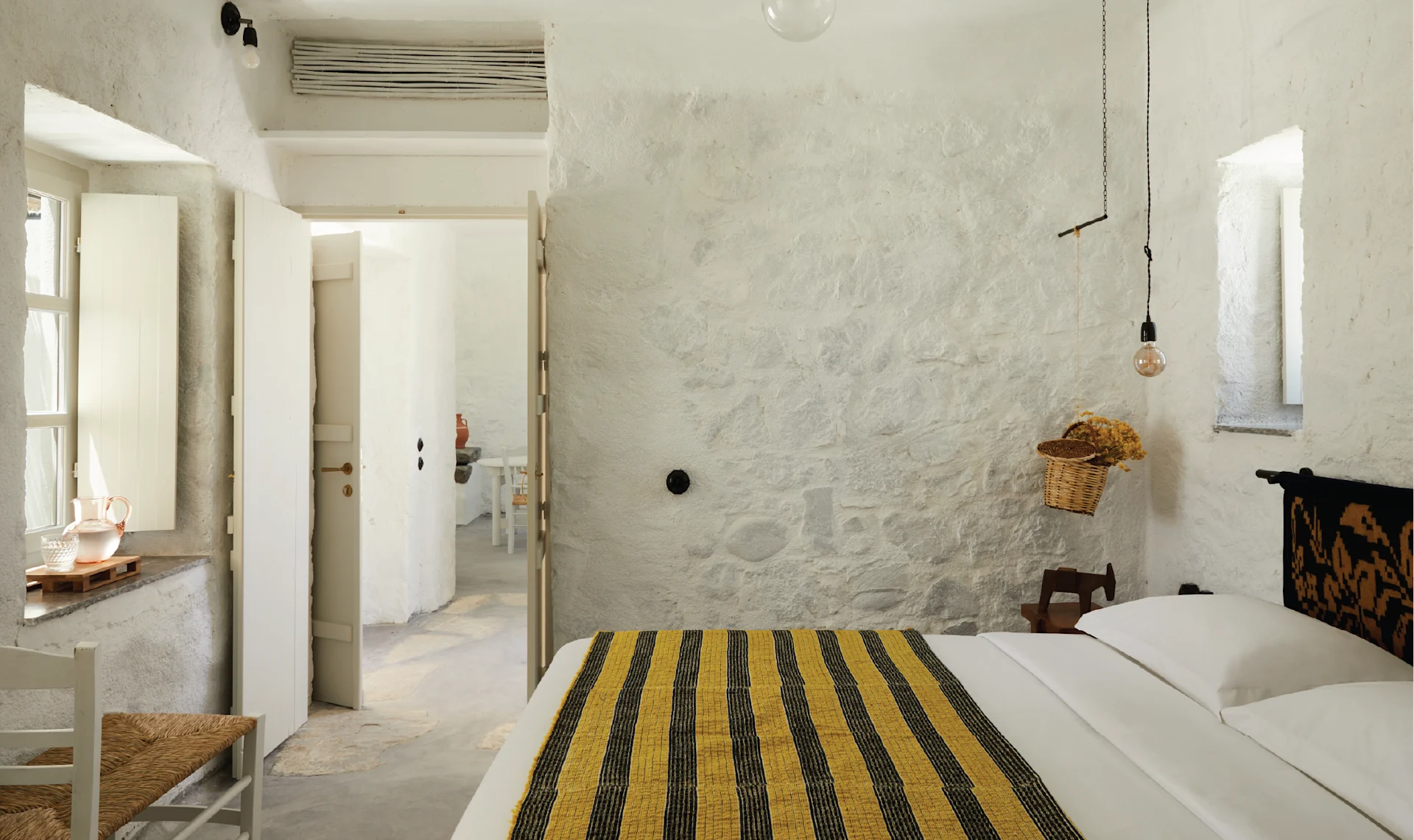
Santa Irini has four suites and a villa that can host up to 18 guests. The spaces are airy and juxtaposed with church candelabras, embroidered tapestries, wicker baskets, and handcrafted furniture. Private areas open onto a communal courtyard that feels more like a miniature village square, and there’s a pool with a wheelchair-accessible jacuzzi in the back.
Dining
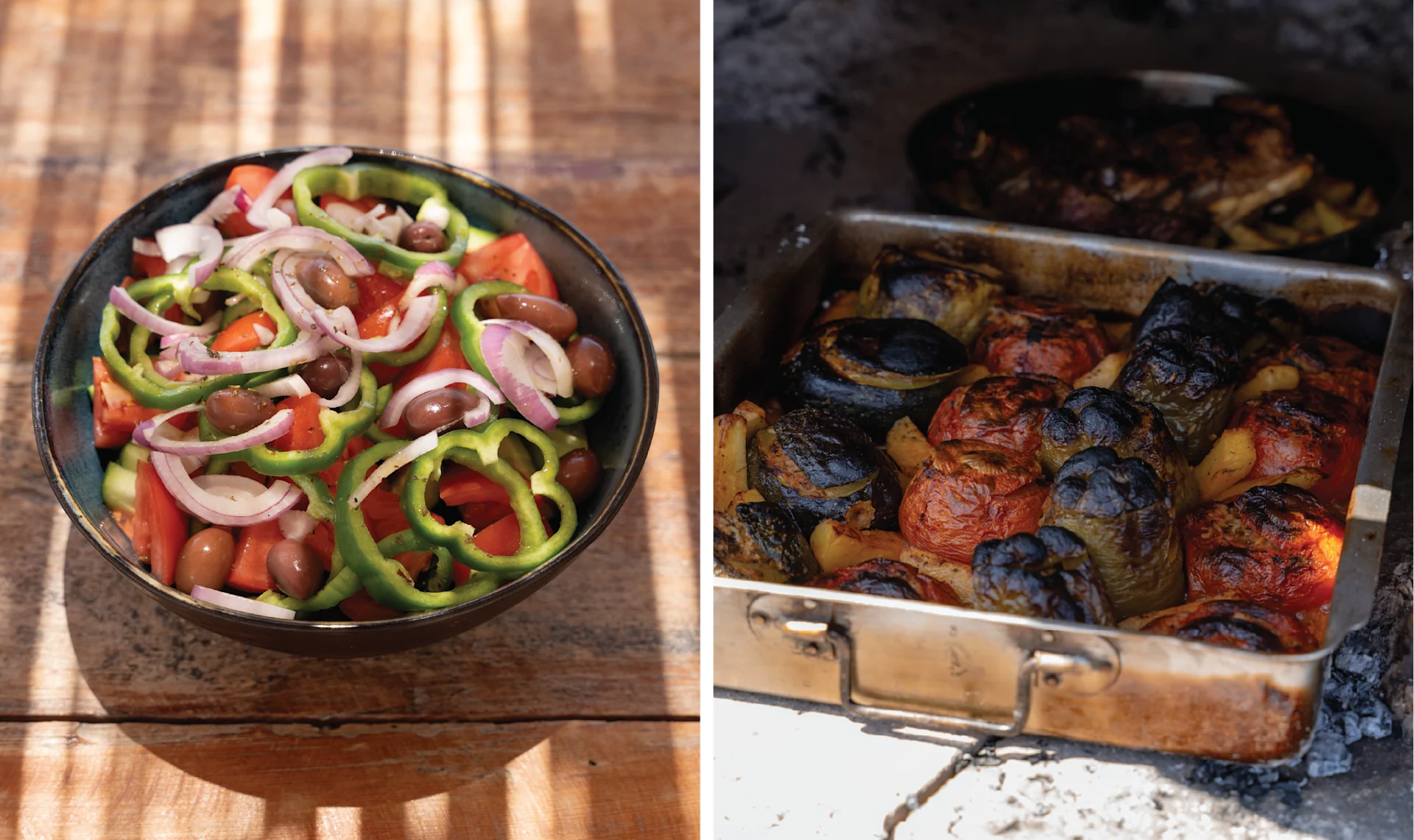
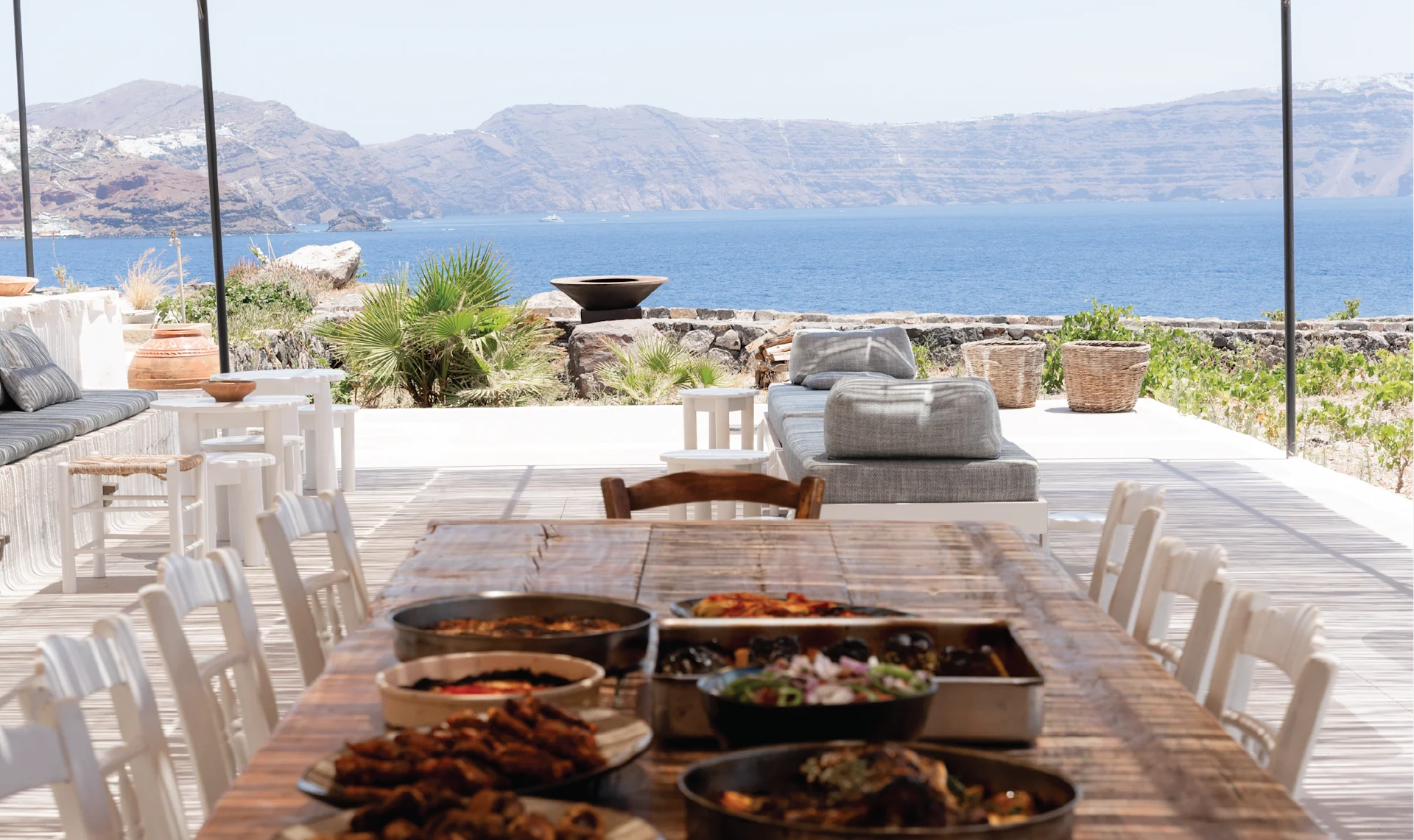
Don’t expect a menu. Guests sit together at a long table in the kitchen or on the terrace, evoking the rhythm of a customary Greek family meal. The setting is simple: vintage olive oil tins, brass mortars and pestles, and paint-worn furniture. Dishes draw from the island’s bounty: white eggplant, Santorini tomatoes, rice-stuffed peppers, wood-fired goat meat, and house-baked bread. Wines come from Mikra Thira, where purposely low-planted vines withstand the sun and wind.
Beyond
Cooking classes can be arranged on request, beginning with lighting the wood-burning oven with dried vines. Then, learn how to prepare a spread of traditional dishes, including breads, pies, eggplant salad, tzatziki, tomato fritters, shrimp saganaki, and pan-fried potatoes with feta.
Drawbacks
Dining options are limited and there is little nightlife, but Santorini is a short boat ride away.