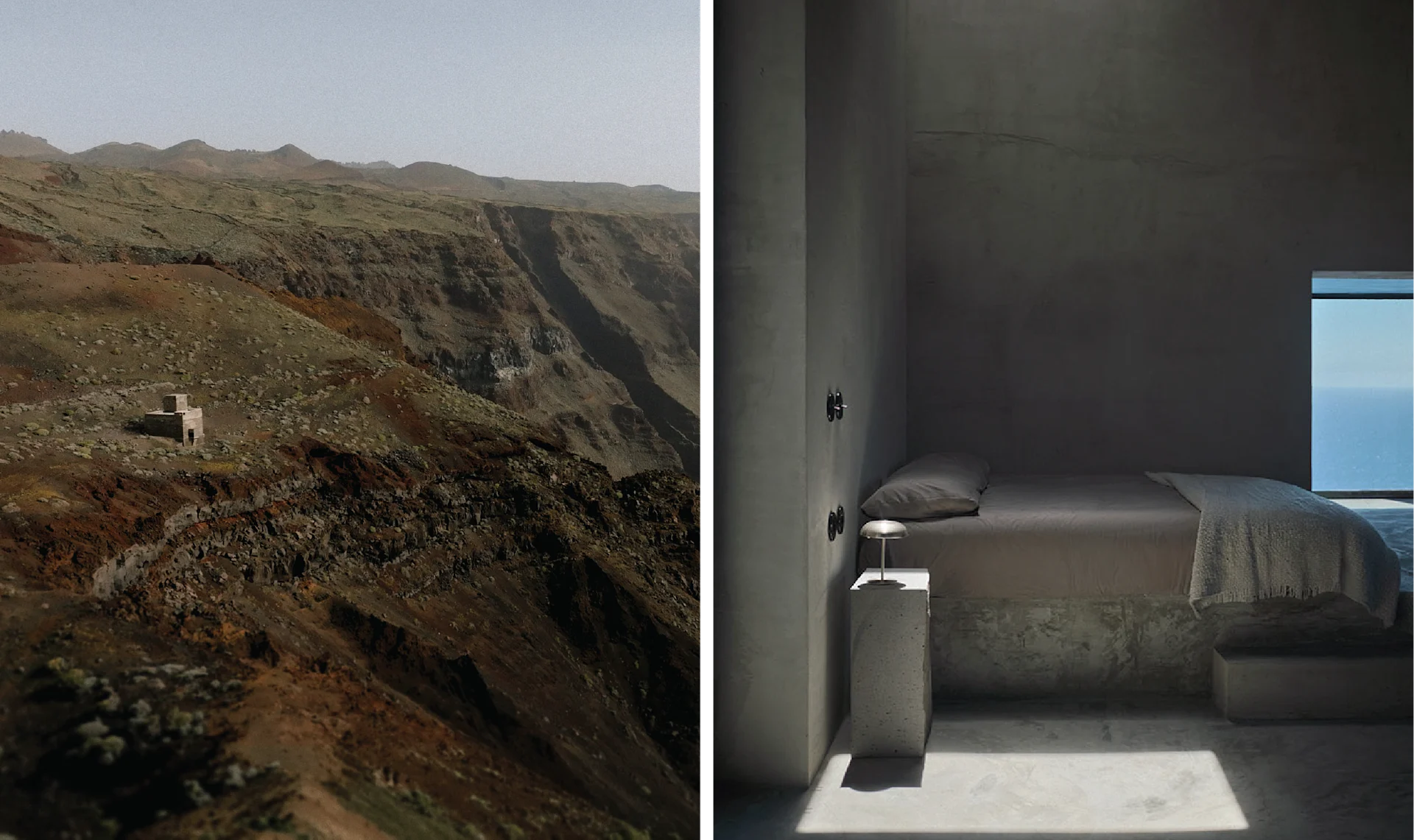
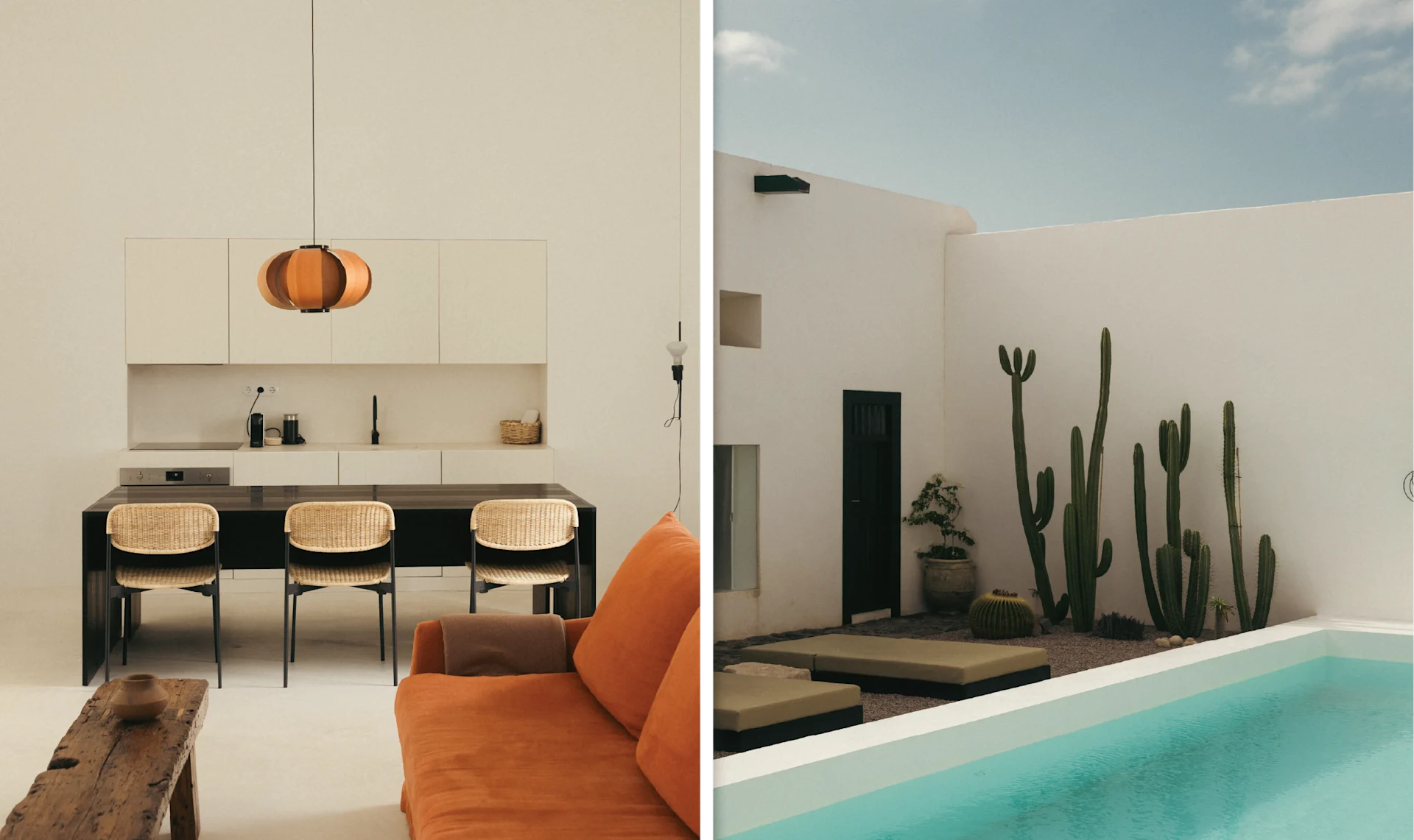
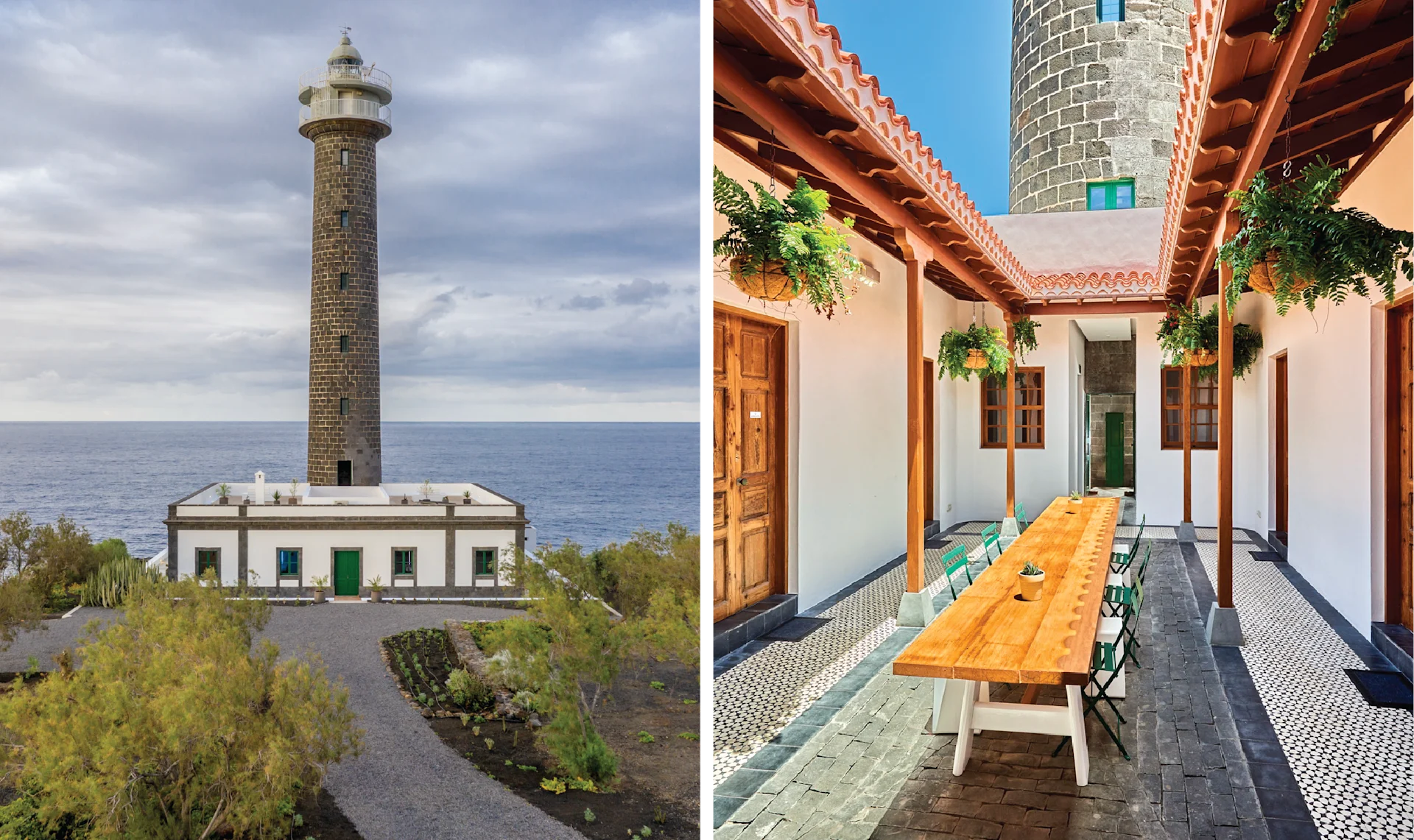
It would make a great Bond villain’s lair: a concrete outpost perched above the Atlantic on the southern tip of El Hierro, with no neighbors within a five-mile radius. A few steps from the rear window, crumbling lava cliffs plunge to the cobalt-blue ocean far below. But where a Bond villain might install a command center, El Elevador—which opened this month—offers a typewriter, a Hasselblad camera, and little to do besides stare at the sea. A concrete-and-glass reinvention of an abandoned water-pumping station, it is an extraordinary place to stay—and a promising development for an archipelago long associated with bland resorts.
The Canary Islands are something of an oddity. A few hundred miles off the coast of West Africa, they’re politically and culturally part of Spain. And despite being closer to the Sahara than to Seville, they enjoy a mild climate year-round that has long lured masses of sun-starved Northern Europeans.
Yet if you look past the cookie-cutter vacation hubs, each island has its own personality. Tenerife divides neatly between the dusty, tourist-heavy south and the verdant slopes of the north. Gran Canaria combines dense subtropical forests with the urban energy of Las Palmas, the archipelago’s largest city. La Palma, one of Europe’s steepest islands, is a world of laurel forests, banana plantations, and plunging ravines. The closer to the African mainland, the more barren the landscape becomes: Lanzarote’s red-black volcanic surface is dotted with cacti while the treeless hills of Fuerteventura have an almost lunar austerity. El Hierro, home to El Elevador, is the archipelago’s westernmost frontier, packing volcano cones, misty plateaus, and dark woodlands into its modest 104 square miles.
The Canaries’ cultural heritage is no less distinctive. The local variant of Spanish is largely Castilian in vocabulary but Caribbean in intonation, a testament to centuries of cultural exchange with Latin America. (La Gomera’s silbo gomero whistling language is still used by shepherds and taught in local schools.) The Spanish conquest left behind a series of handsome, well-kept towns built from whitewash and dark stone, including Garachico on Tenerife, Teguise on Lanzarote, and Betancuria on Fuerteventura.
Over the centuries the people of the Canaries have known poverty, hunger, and drought. So when the tourism boom arrived in the 1960s, they embraced it wholeheartedly, building the high-rise beach resorts that still dominate much of the accommodation offerings today. Recent years have seen a trickle of boutique rural and historic properties, particularly on Lanzarote and Tenerife, but only now are we seeing the emergence of something genuinely new: privately driven projects that put design, landscape, and local character over crowd-pleasing standardization. El Elevador, which opened this month, is among the most compelling examples yet, joining a small but growing category of stays that offer a more intimate way into the archipelago.