For almost 45 years, Ted Muehling (@tedmuehling) has been designing jewelry and decorative objects that find their inspiration in the forms and shapes of nature.
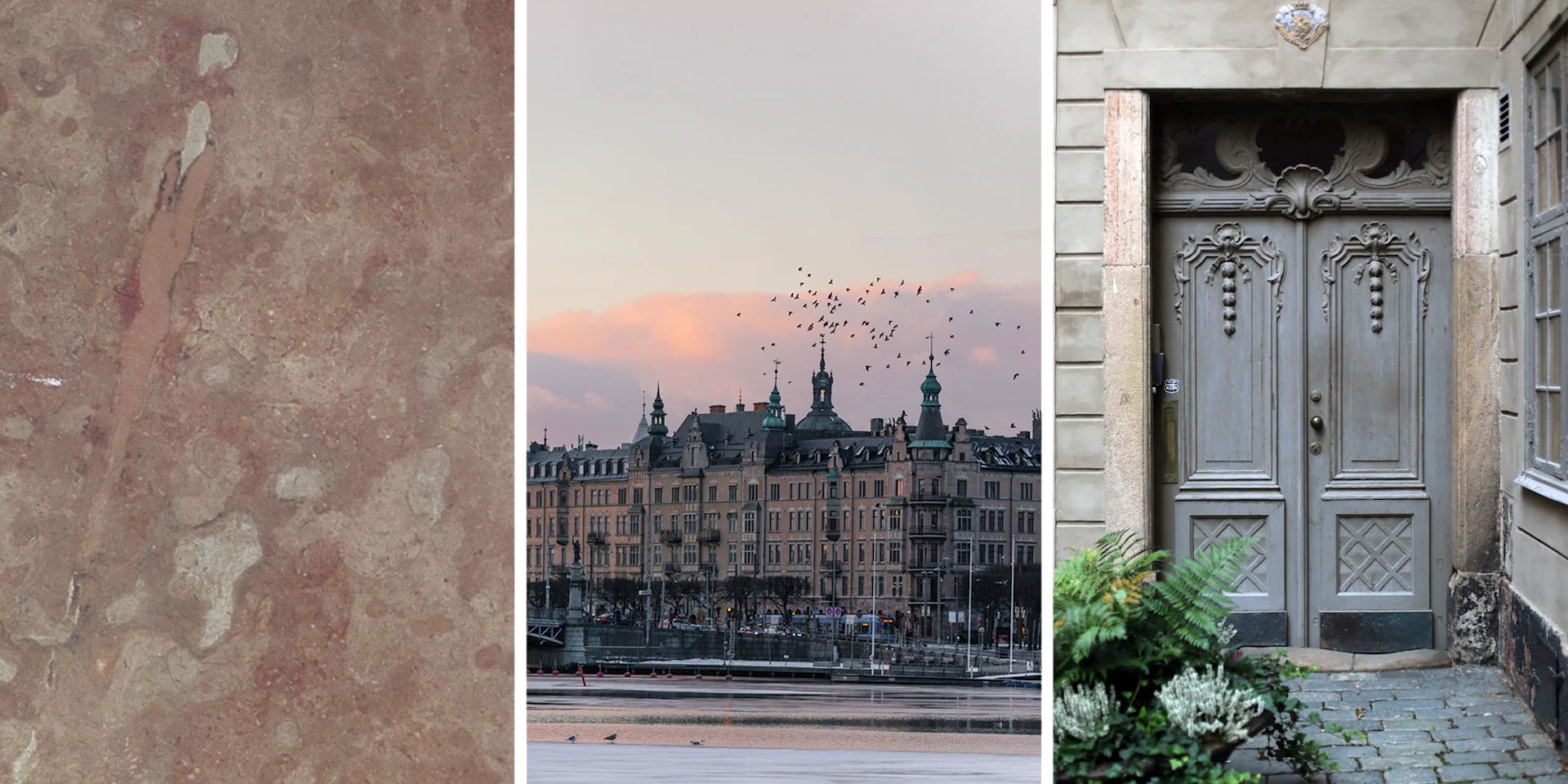
"One place I frequently travel to is Sweden; my partner of many years, Mats Gustafson, has a wonderful apartment in Stockholm and we have many dear friends and family there. Upon arriving at Arlanda Airport I am always struck by the stone floors—this interior paving stone is ubiquitous in Sweden, from museums to hospitals, palaces, libraries, apartment building halls and stairways. It is a limestone from Öland, an island in the Baltic. It is honed to a fine smoothness, not shiny like granite; more burnished than polished. Durable, but with an inherent softness. Appropriately Swedish, even in its restrained and subtle colors, from brick pink to blue-gray to gray-brown. It invites you to glide lightly over it. It is also full of fossils, lovely shapes of creatures trapped in the ocean floor 450 million years ago. I love shuffling my way up the graceful, curving stairway to our 19-century apartment, on that ancient sea.”
Franco Loro Piana (@ifrenkyboy) is co-founder, with his brother Giacomo, of Milan-based SEASE (@seaseofficial), which designs chic, sustainable, high-tech clothes for the sailor, skier, and stylish city dweller.
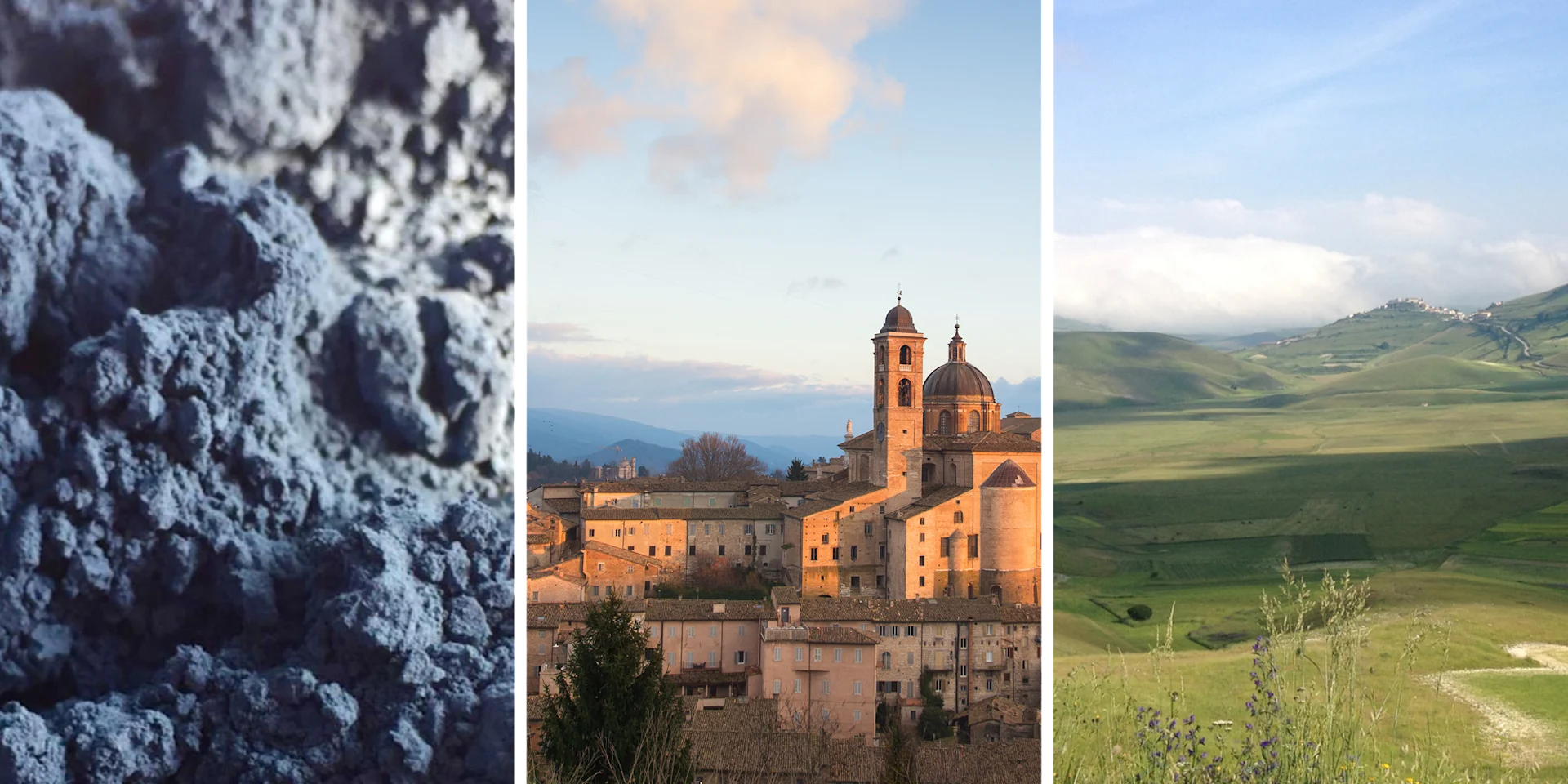
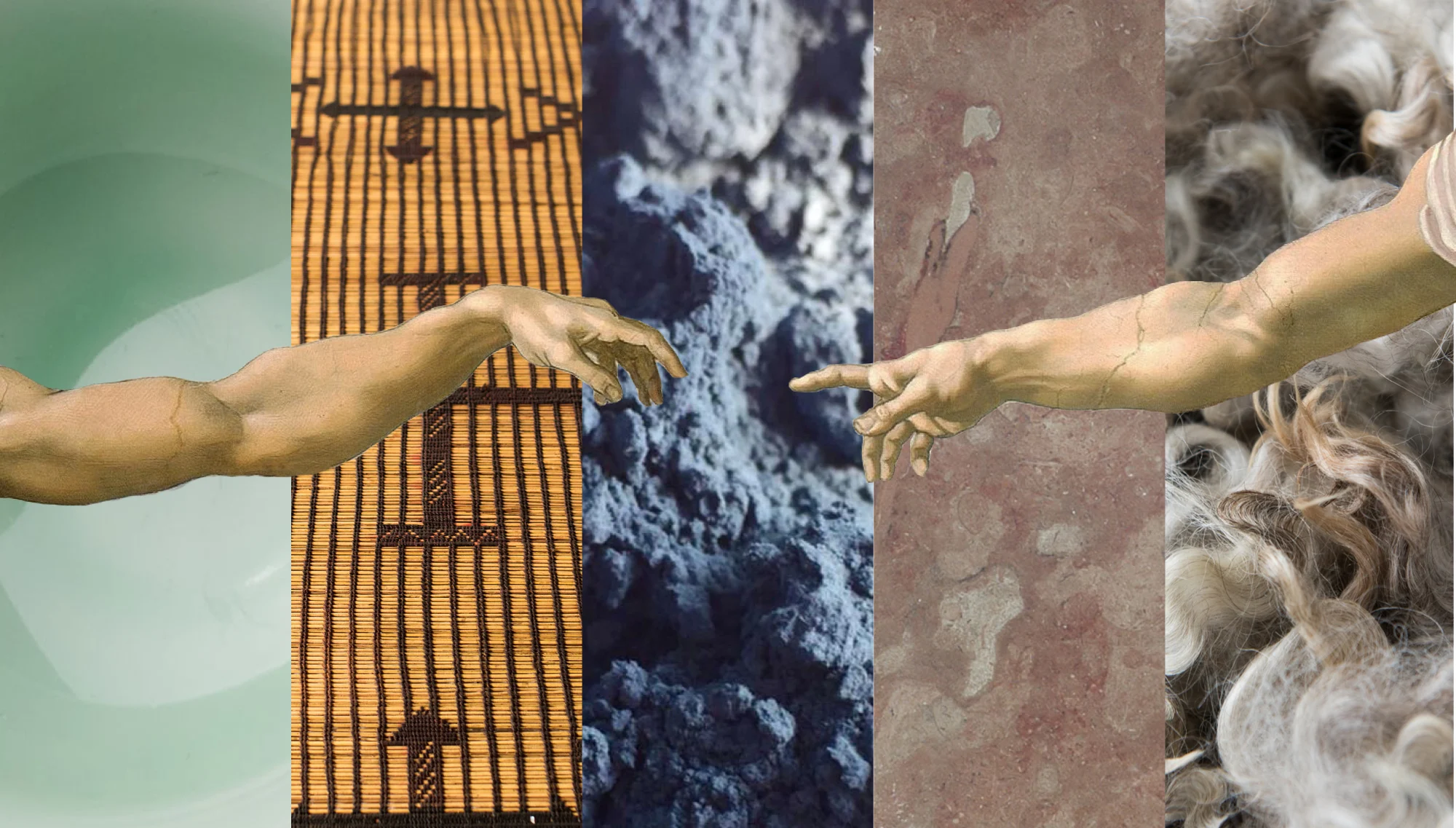
“There is a particular pigment obtained from Isatiis Tinctoria—a plant known as ‘guado’ in Italian, and dyer’s woad in English—which, when I sift through it with my fingers, immediately reminds me of the countryside in Le Marche. It comes in small sundried lightweight blocks, which are pulverized into tiny and ultra-smooth particles. Pigment dust in your hands is like ...it’s like feeling a painting; one could say like lapis dust, but probably even more lightweight. And in fact this was guado’s original use: as a color for paintings and frescoes, before eventually it was used for dyeing various cloths. Historically it was known as l’oro blu, blue gold.
In modern times, Guado, as it’s more commonly known now, is at the root of a fascinating project local to Le Marche, a territory that has been hard-hit by earthquakes: the breeding of native sheep for wool, which is then dyed the most beautiful blue shades, thanks to the botanicals extracted from the plant. It’s an eco-conscious, low-emission technique dating back to the Renaissance—the best testament I’ve found to the Italian art of starting over. I treasure the memory of the first time I came across it.”