Télla Théra: Checking In & Checking Out
West of Chania, Crete, terraced rooms spill down an olive-covered mountainside where pared-back architecture meets coffee tables hewn from local boulders and ceramics from nearby Margarites.
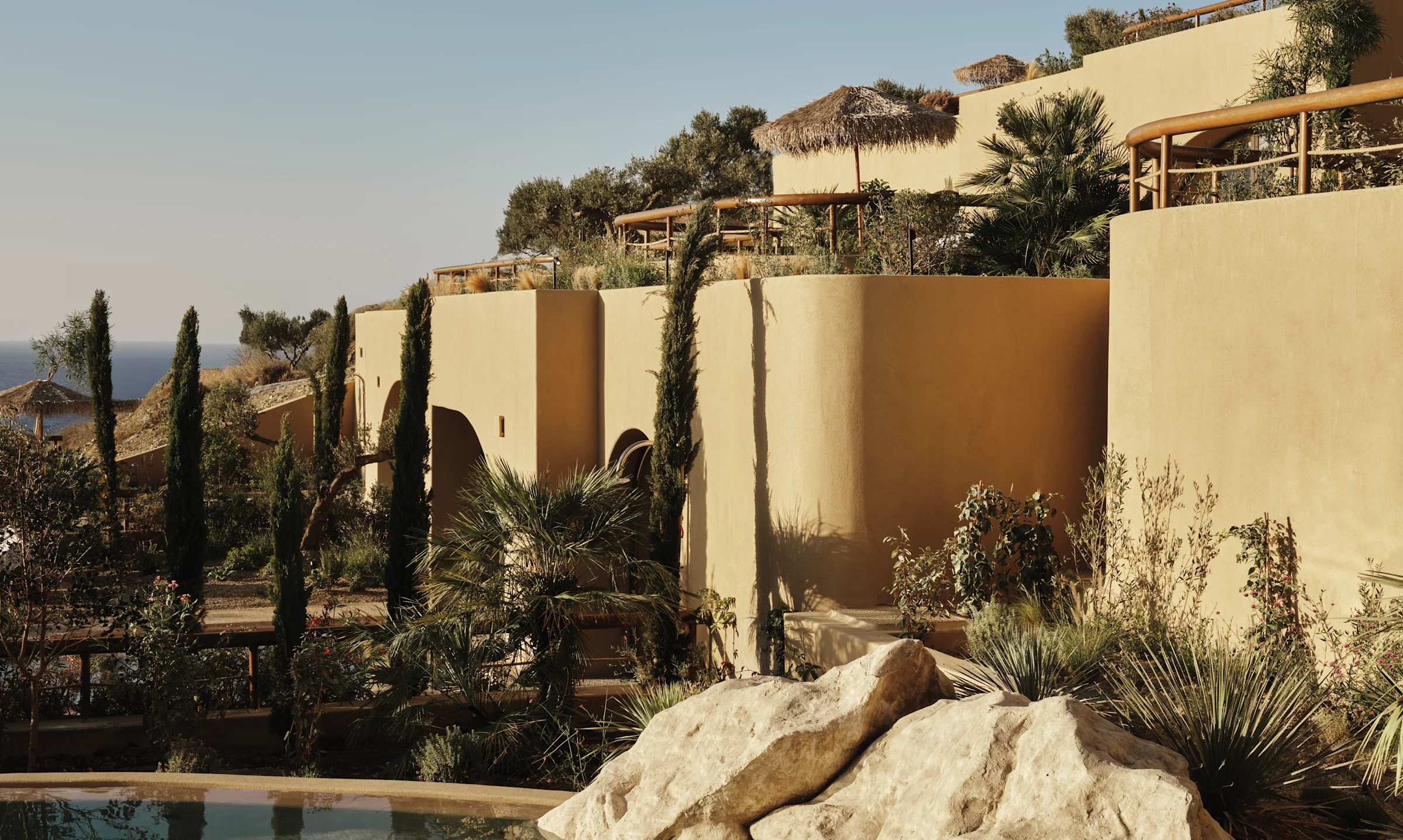
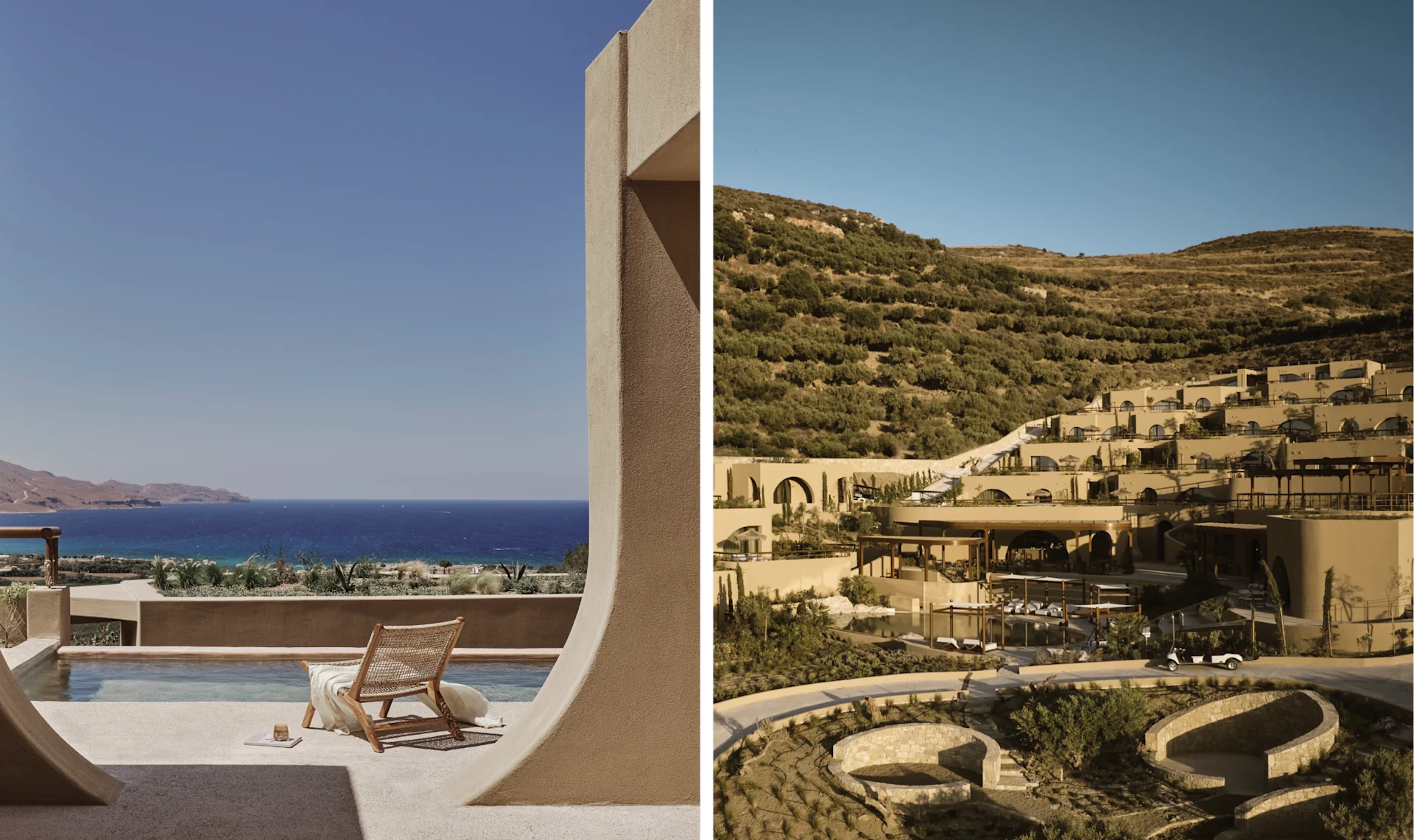
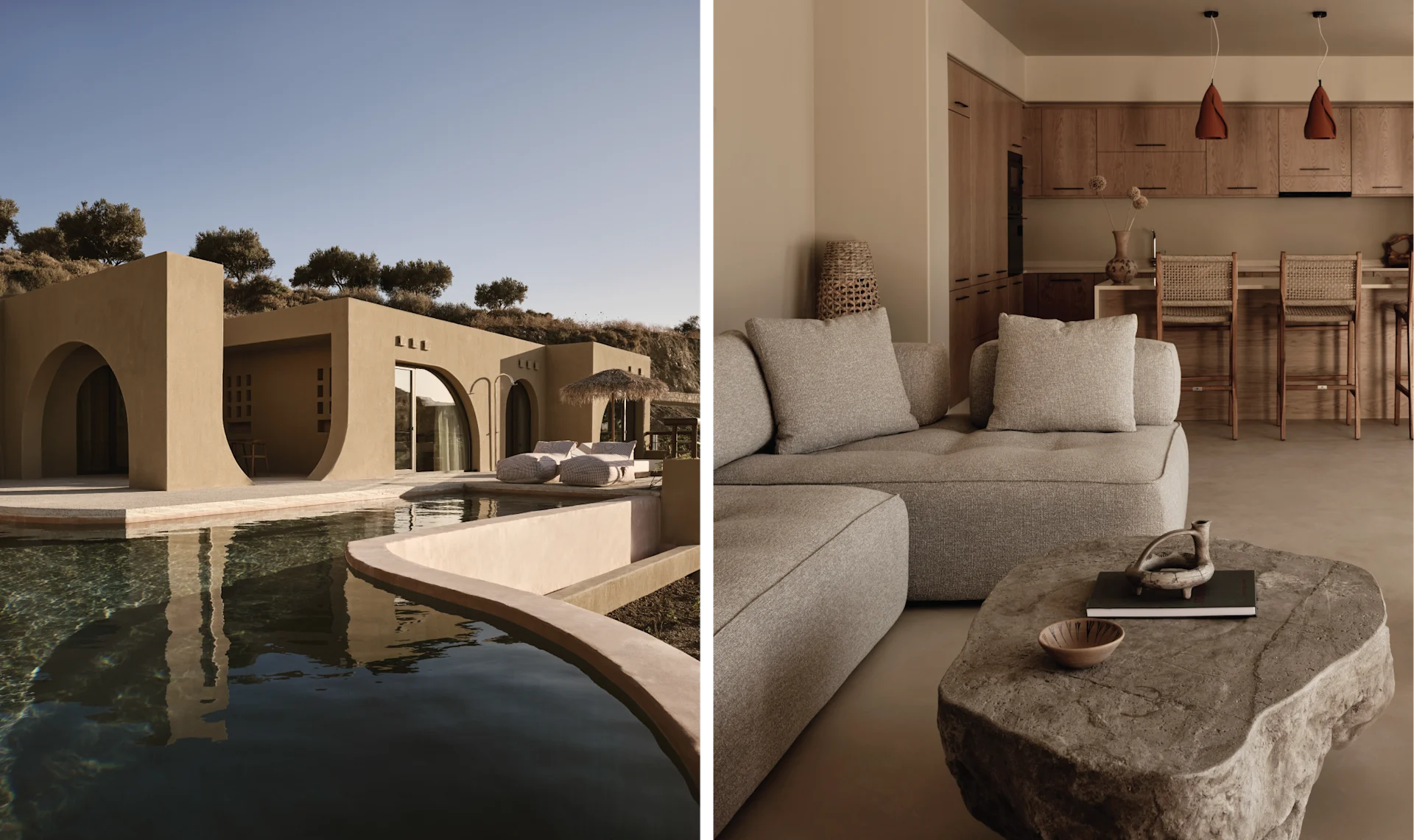
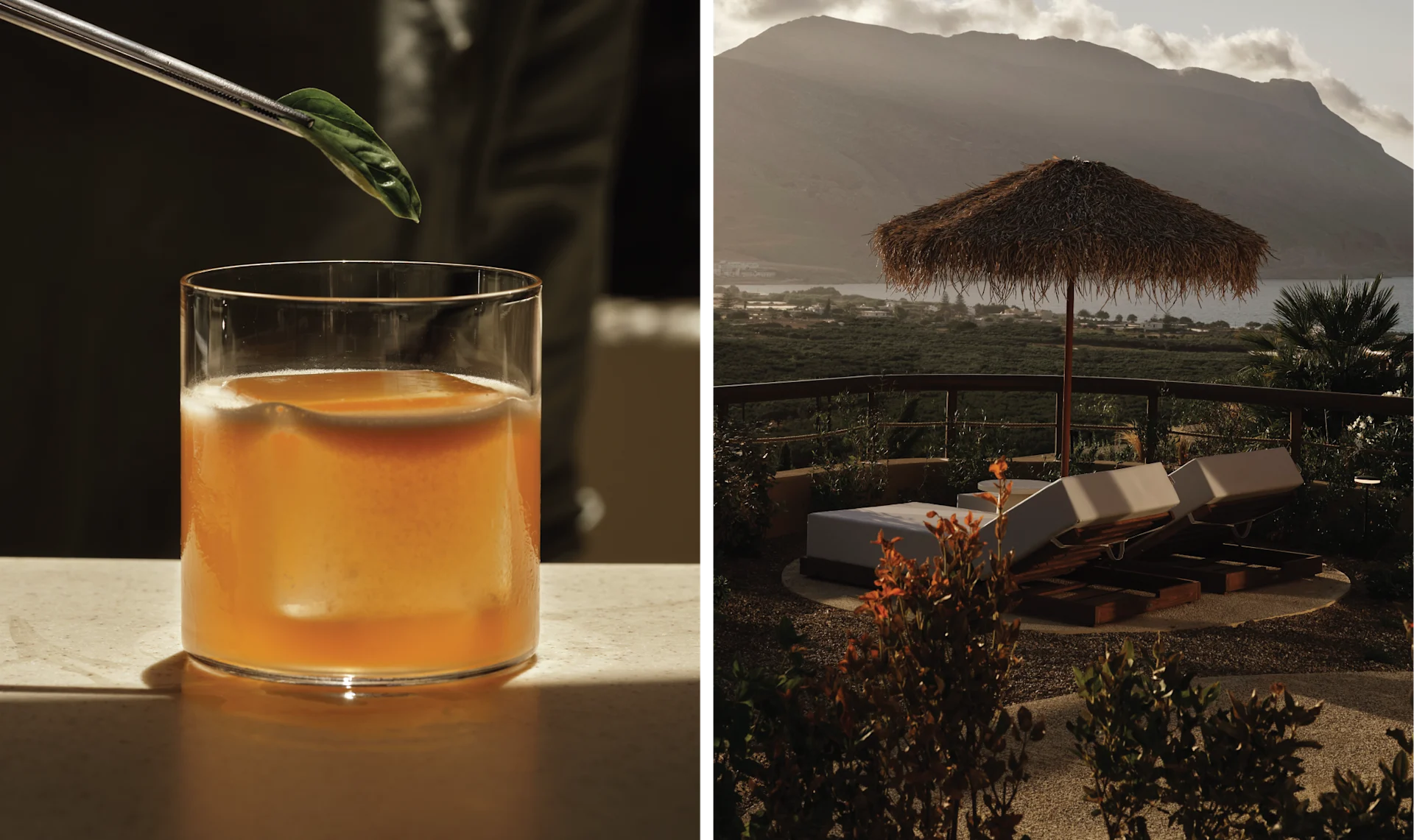
A series of terraced rooms hugging the gentle curve of a mountainside, Télla Théra is a resort that hardly feels like one. Its human scale is reflected in a quiet indoor-outdoor restaurant overlooking the Mediterranean, an intimate spa, and rooms with private gardens and plunge pools. You could easily spend your entire stay without leaving the property, but it also makes an ideal base for exploring western Crete—from Chania and its surrounding villages to hiking trails, family-run tavernas, and quiet beaches. Opened last year, the hotel feels contemporary, with painted concrete floors, coffee tables hewn from boulders, and rentable e-bikes, yet it camouflages into the surrounding hills thanks to its low-profile design.
When
The hotel is open from April to November and comes to life in shoulder season, when manageably warm days are ideal for hiking, village-hopping, and long lunches on the coast. Outside of the summer crush, western Crete's beaches are fairly uncrowded. Summer is best if swimming is your priority, though you'll be sharing the island with many more visitors.
Where
Télla Théra is on Crete's northwest coast, a 50-minute drive west of Chania, one of Crete's most charming and best-preserved cities. The setting among rolling olive groves feels secluded, but the hotel is well placed for exploring nearby beaches, mountain villages, and hiking and biking trails. You'll want a car to make the most of the area.
The Proprietors
Télla Théra is the first hotel from the husband-and-wife team of Loukas Tourkomanis, who previously worked in Greek hospitality, and Chevon Low, whose background spans tourism and sustainability. The pair met while working at Airbnb before leaving to build what they describe as a lifelong dream. They envisioned a pared-back aesthetic complemented by handpicked, locally made objects. Many of the farmers, beekeepers, ceramicists, and other artisans whose work appears throughout the property are people they know personally.
Design
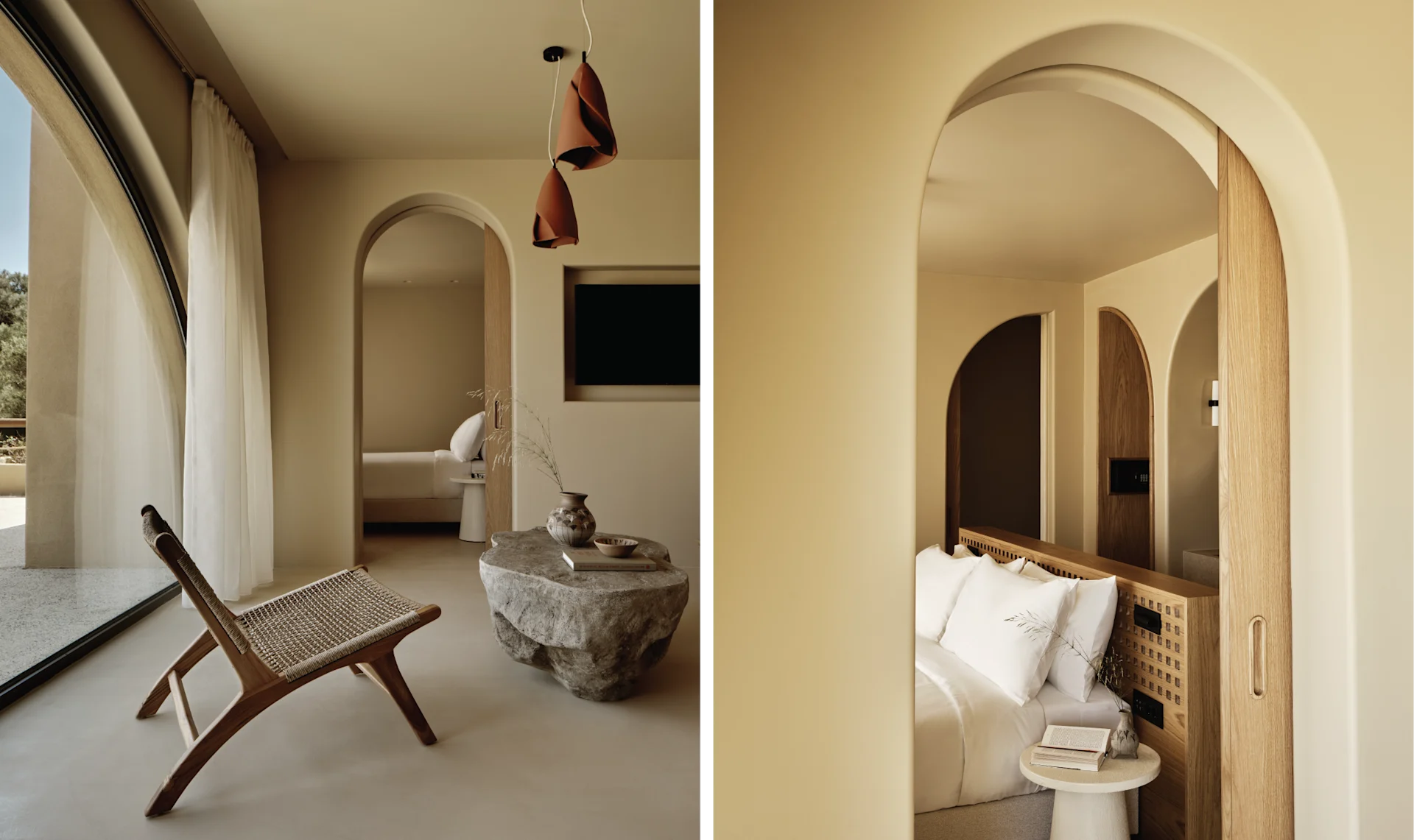
Much of the furniture was handcrafted by local carpenter Giorgos Papadakis in his workshop about seven kilometers away using Forest Stewardship Council-certified wood. Many of the ceramics come from Keramion, a studio in the village of Margarites, where founders Giorgos Moustakas and Chrysanthi Panagiotou hand-collect clay and fire their pieces with olive branches they gather from their trees. Landscape architect Karolos Chanikian planted the grounds with native species. Inside, softly textured plaster walls, woven seating, and handmade ceramics give the rooms weight and texture without distracting from the sea beyond.
The Crowd
Couples make up the majority of guests, many in their 30s and 40s, drawn by the promise of resort amenities without the feel of a sprawling mega-property. It's the kind of place where you can spend the morning hiking or exploring villages, the afternoon by the pool, and dinner on the terrace without ever feeling like you're in a polished luxury machine. Service is warm and informal, and the mood is low-key—more linen shirts and sandals than jackets and heels. If Chania is where you go for culture and history, this is where you come for nature and quietude.
Courtesy Télla Théra
Télla Théra
Courtesy Télla Théra
Télla Théra
Courtesy Télla Théra
Télla Théra
Courtesy Télla Théra
Télla Théra
Courtesy Télla Théra
Télla Théra
Courtesy Télla Théra
Télla Théra
Courtesy Télla Théra
Télla Théra
Courtesy Télla Théra
Télla Théra
Courtesy Télla Théra
Télla Théra
Courtesy Télla Théra
Télla Théra
Courtesy Télla Théra
Télla Théra
Courtesy Télla Théra
Télla Théra
Rooms
Expect muted earth tones, handcrafted furniture, and broad arched windows framing the Mediterranean. The rooms mix handcrafted details with contemporary hotel finishes—not every pairing is equally successful, but the generous proportions and outdoor spaces more than compensate. Many rooms open onto private gardens with plunge pools and outdoor showers.
Dining
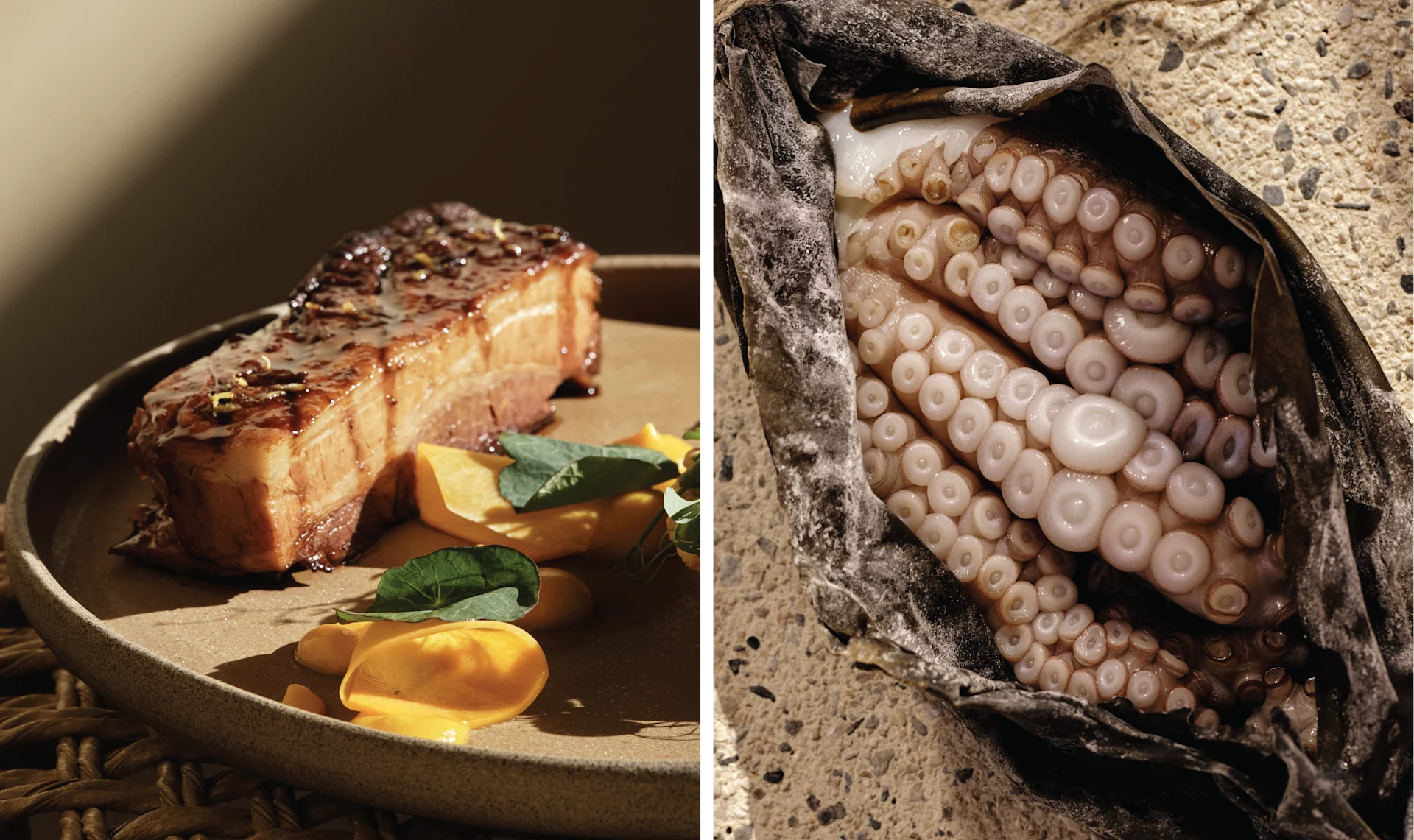
The restaurant, Anemoia, serves breakfast, lunch, and dinner, but mornings are the highlight. Excellent single-origin coffee accompanies a spread of Cretan specialties, including apaki (smoked cured pork), tsoureki (a lightly sweet, brioche-like bread), and fresh kalitsounia (small folded pastries filled with sweet mizithra cheese). Meals are served on a terrace overlooking the pool and the Mediterranean; nearly all ingredients are sourced from Crete.
Wellness
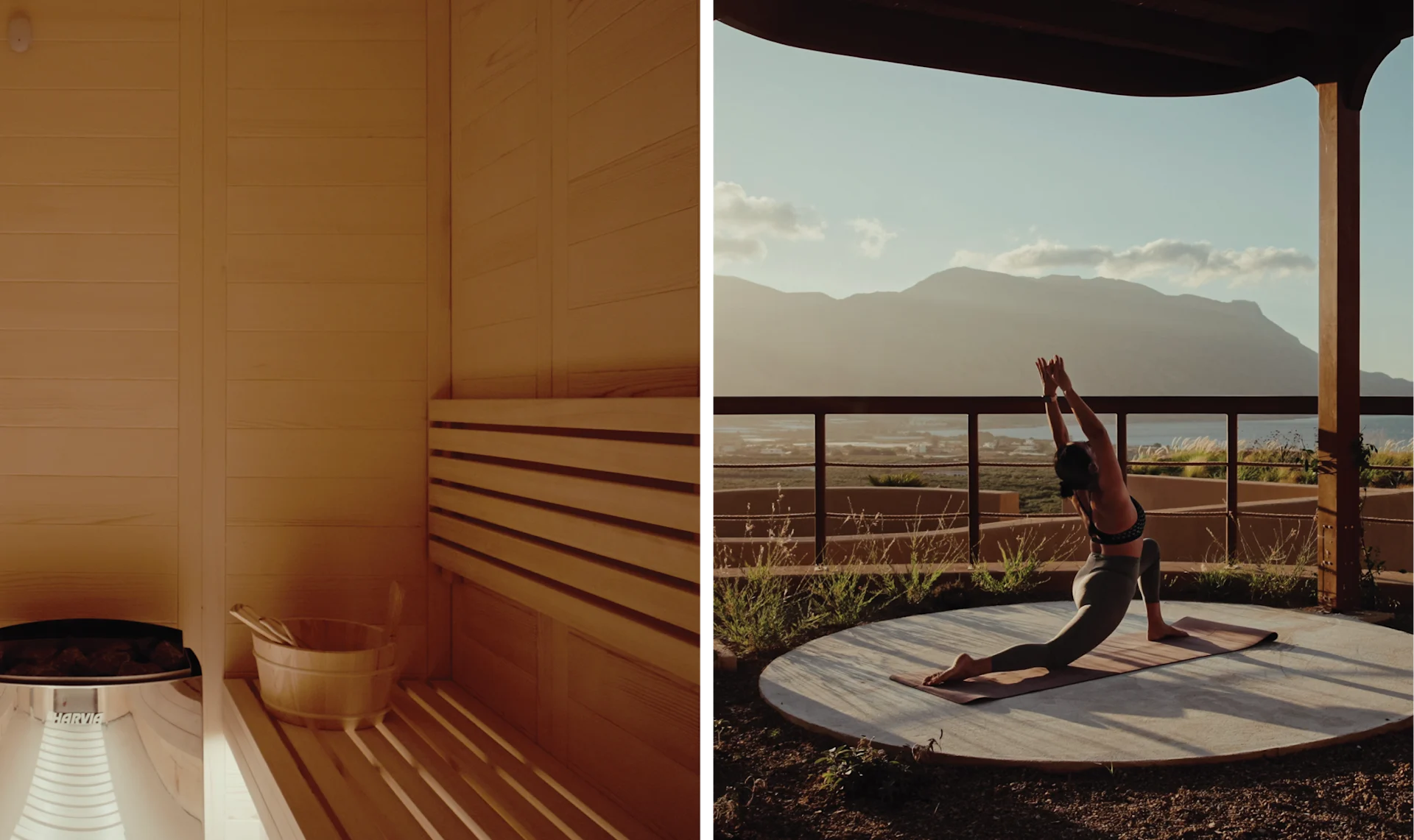
The spa is compact but well equipped, with four treatment rooms, an indoor magnesium pool, a sauna, a steam room, and a chromotherapy shower. Treatments use products from Greek brands Bioaroma and Aenaon and draw on Stoic philosophy and the four classical elements, though you don't need to subscribe to any of that to appreciate a fantastic massage. Oceanis toiletries are stocked in the guest rooms. There's also an on-site gym as well as e-bikes available to rent (for a fee).
Impact
Sustainability is baked into nearly every aspect of the operation, earning the hotel Green Key certification and the 2026 Greek Hotel of the Year Gold award in the Luxury Eco Hotel/Resort category. Much of the property was built by local construction crews, around 80 percent of the staff live nearby, and partnerships with local farmers, fishmongers, and artisans extend well beyond the supply chain. Solar and geothermal systems power much of the hotel, original olive trees were preserved during construction, single-use plastics have been eliminated, and the kitchen follows a zero-waste philosophy with root-to-tip cooking, composting, and produce from the on-site garden. The hotel also supports local schools and community associations through ongoing donations.
Drawbacks
The hotel's strengths far outweigh its shortcomings, though there are a few minor tradeoffs. Some of the contemporary room finishes don't have quite the same magnetism as the locally crafted elements, and a handful of extras—including heating the room's plunge pool and renting an e-bike—require an additional charge. Breakfast is the culinary highlight, and while the service is friendly and relaxed, it occasionally lacks the efficiency you'd expect from a hotel of this caliber. Finally, the rural setting means a car is all but essential.
Discover PRIOR Access and unlock the possibilities of immersive custom travel, with our dedicated Travel Designers crafting seamless, deeply personal journeys.
Discover PRIOR Access and unlock the possibilities of immersive custom travel, with our dedicated Travel Designers crafting seamless, deeply personal journeys.