This article is part of a Buenos Aires story collection, each story exploring a cultural expression emblematic of the Argentine capital. The other two stories deep dive on asado and fileteado porteño.
Of all the cultures unique to Buenos Aires, tango is perhaps its most emblematic. More than merely a dance, it represents one of Argentina's most significant cultural exports and continues to thrive as both a performance art and a social practice throughout the capital. With its precise technique, aching music, and complex etiquette, tango embodies the Porteño character: elegant, passionate, and deeply connected to its immigrant roots.
Originating in the late 19th century, tango developed from an unlikely fusion of influences. African candombe rhythms merged with European musical traditions — Italian melodies, Spanish guitar, and German bandoneón — creating a distinctly Argentine expression. The dance evolved in conventillos (tenement houses) and port neighborhoods where immigrants gathered, initially viewed as provocative before gaining widespread acceptance.
"Tango emerged as a raw, passionate expression of longing, identity, and resilience — a dance of the soul shaped by the city's immigrant roots and smoky milongas," says Carlos Copello, internationally renowned dancer at Rojo Tango. Though initially rejected by Buenos Aires' elite, tango was embraced by Parisian high society in the early 1900s, returning to Argentina with newfound respect. By the 1940s, the peak of tango’s Golden Age, any given night in Buenos Aires meant that orchestras were packing grand ballrooms, and records of Carlos Gardel’s signature baritone were crooning over the speakers.
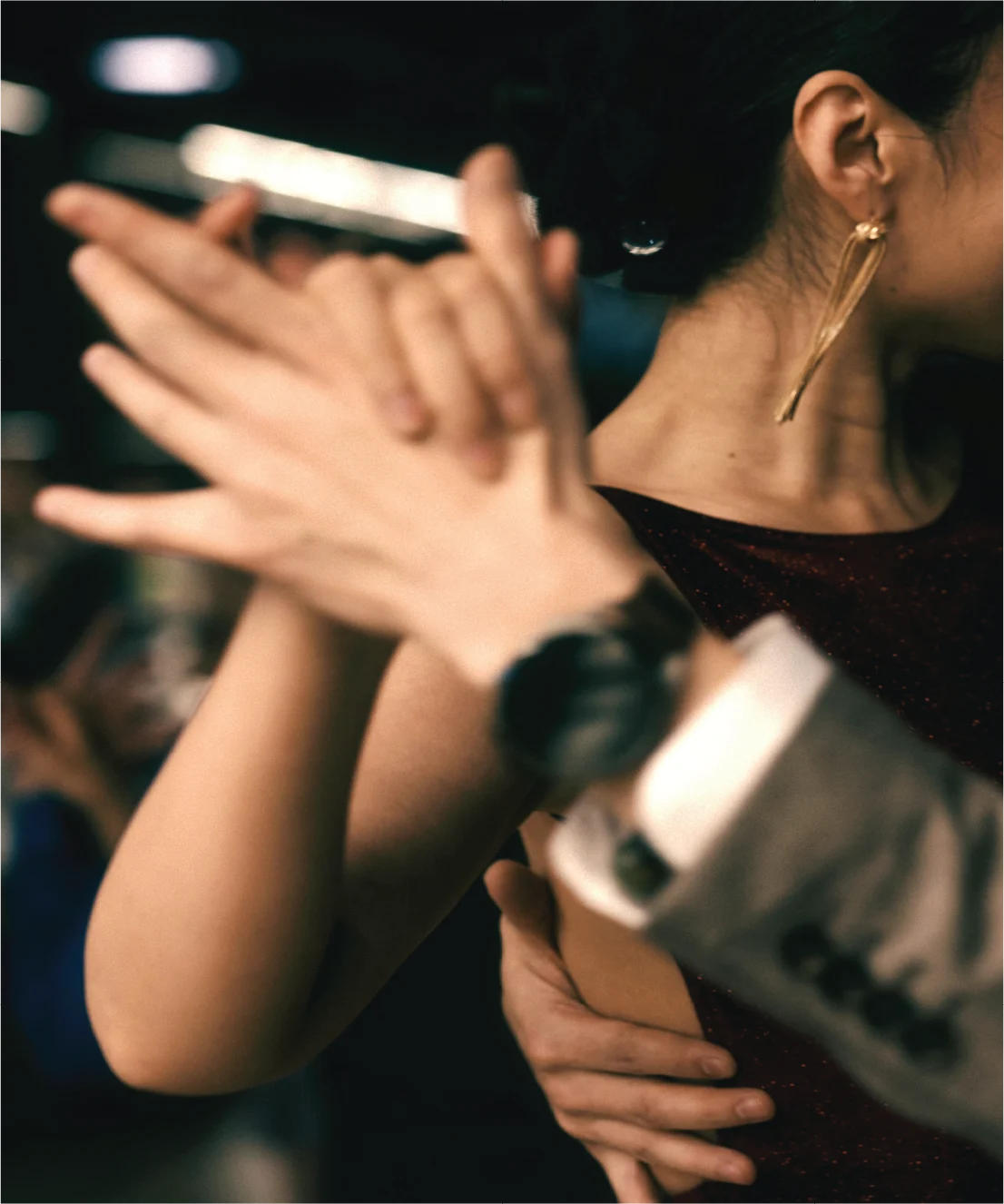
Experiencing tango in Buenos Aires today means navigating its myriad forms. Walking through San Telmo on Sunday afternoons, you'll find couples dancing beneath violet jacaranda trees in Plaza Dorrego, their movements precise and controlled despite the informal setting. From there, many tango shops and museums can be explored before nightfall, when tango shows and milongas begin. But it’s the latter where the dance’s true social character is visible. At milongas, Porteños with decades of experience share the floor with young professionals and international devotees. The dimmed lighting, careful seating arrangements, and unspoken codes of conduct preserve rituals that have structured these gatherings for generations.
"Tango is difficult to define, yet it’s quintessentially Argentine," reflects Diego Braude, tango dancer and teacher at Gallo Rojo. "For some, it's part of their memories from when they were kids, their older relatives listening to tango all day long, singing the lyrics. For others, it's having discovered a passion later in their lives. Either way, it's a place where many have found a second home and where they have rediscovered themselves.”
Even as tango evolves — with nuevo tango incorporating modern movements and queer milongas breaking stayed gender roles — its essence remains rooted in connection: two strangers meeting in embrace, moving as one across the floor. During a visit to Buenos Aires, it’s practically a requirement to visit one of the city’s milongas.
But before you go, understanding milonga etiquette is a must.
Upon entering a milonga, you'll notice that the seating is typically arranged by gender. Men and women sit on opposite sides or at separate tables, facilitating the cabeceo system: a subtle head nod or eye contact from across the room, the traditional invitation to dance and a practice that preserves personal agency in a crowded venue. If you agree, you’ll join dancers and navigate counterclockwise around the floor in what's called la ronda, maintaining a steady flow and respecting the line of dance to prevent collisions.