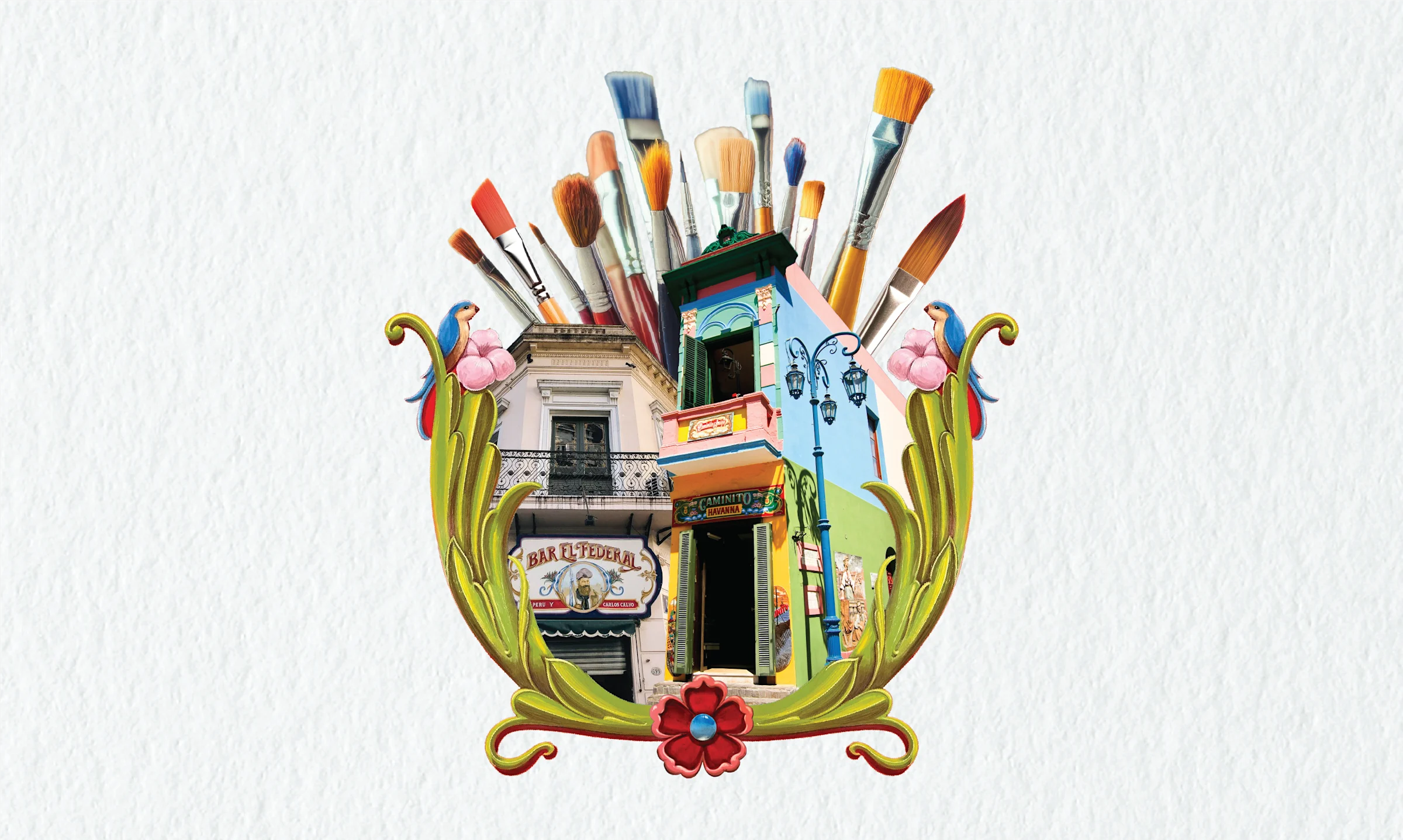
This article is part of a Buenos Aires story collection, each story exploring a cultural expression emblematic of the Argentine capital. The other two stories deep dive on tango and asado.
There are many inventions of which Argentine people are proud — the ballpoint pen, the coronary artery bypass, the alfajor — but few are as enchanting as fileteado porteño. Marked by swooping ornate brushstrokes, bright colors, and signature motifs imbued with movement, the art form is an emblematic part of the Buenos Aires landscape, visible on buses, signage, and building walls. If tango is the soundtrack of Buenos Aires, then fileteado is its iconography — a style shaping the streets themselves. Despite its iconic status, it narrowly escaped being lost to the sands of time. Today? It’s a universally-recognized style that’s testament to Argentine resilience and creativity.
Though its origins can be traced to the late 19th century when Italian immigrants developed it to paint horse-drawn carts, fileteado transformed into a greater symbol. “[Fileteado] came about in Buenos Aires as a simple decorative style that grew more complex over time, due in part to the architectural influence of the city’s buildings,” says fileteador Gustavo Ferrari.
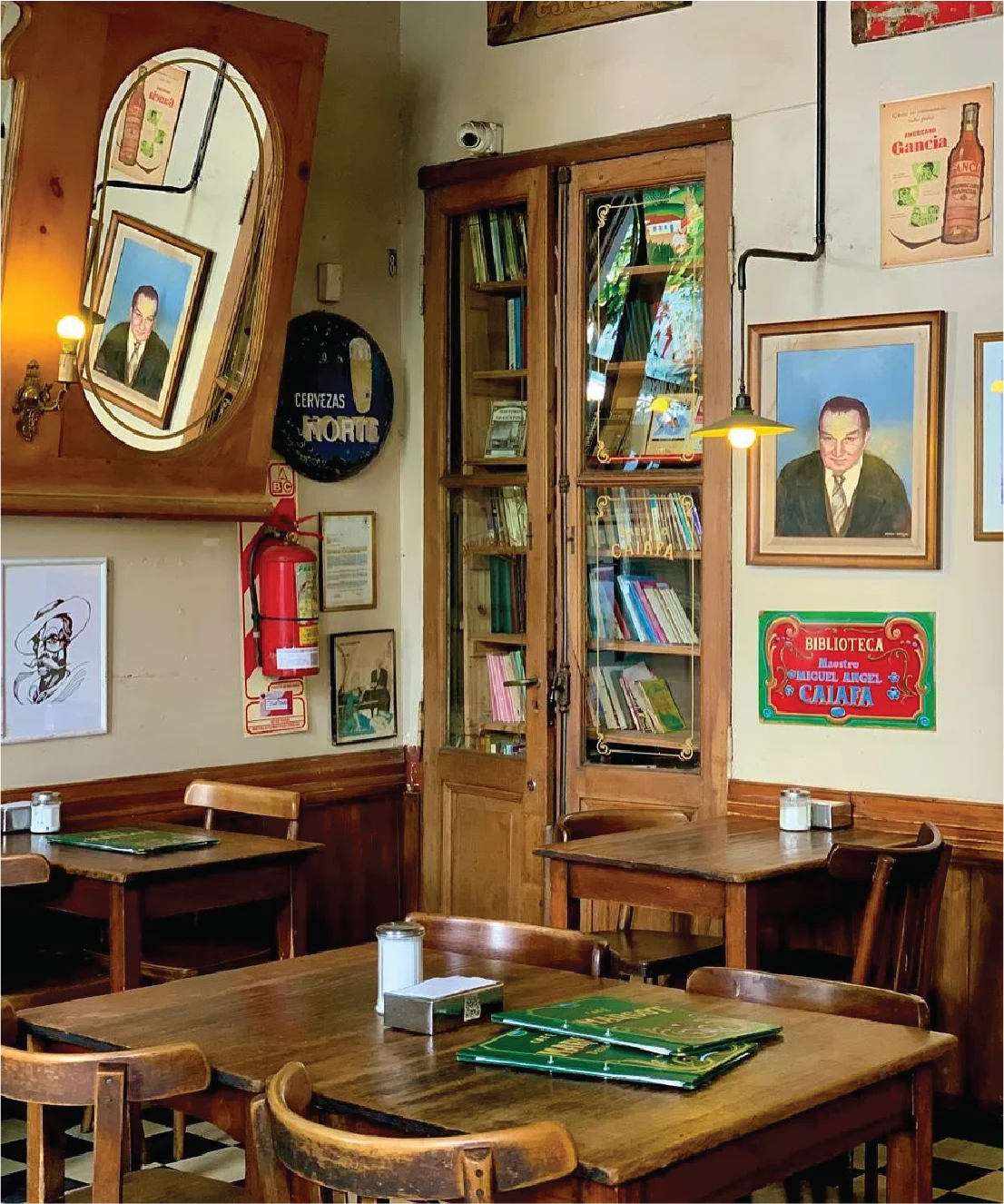
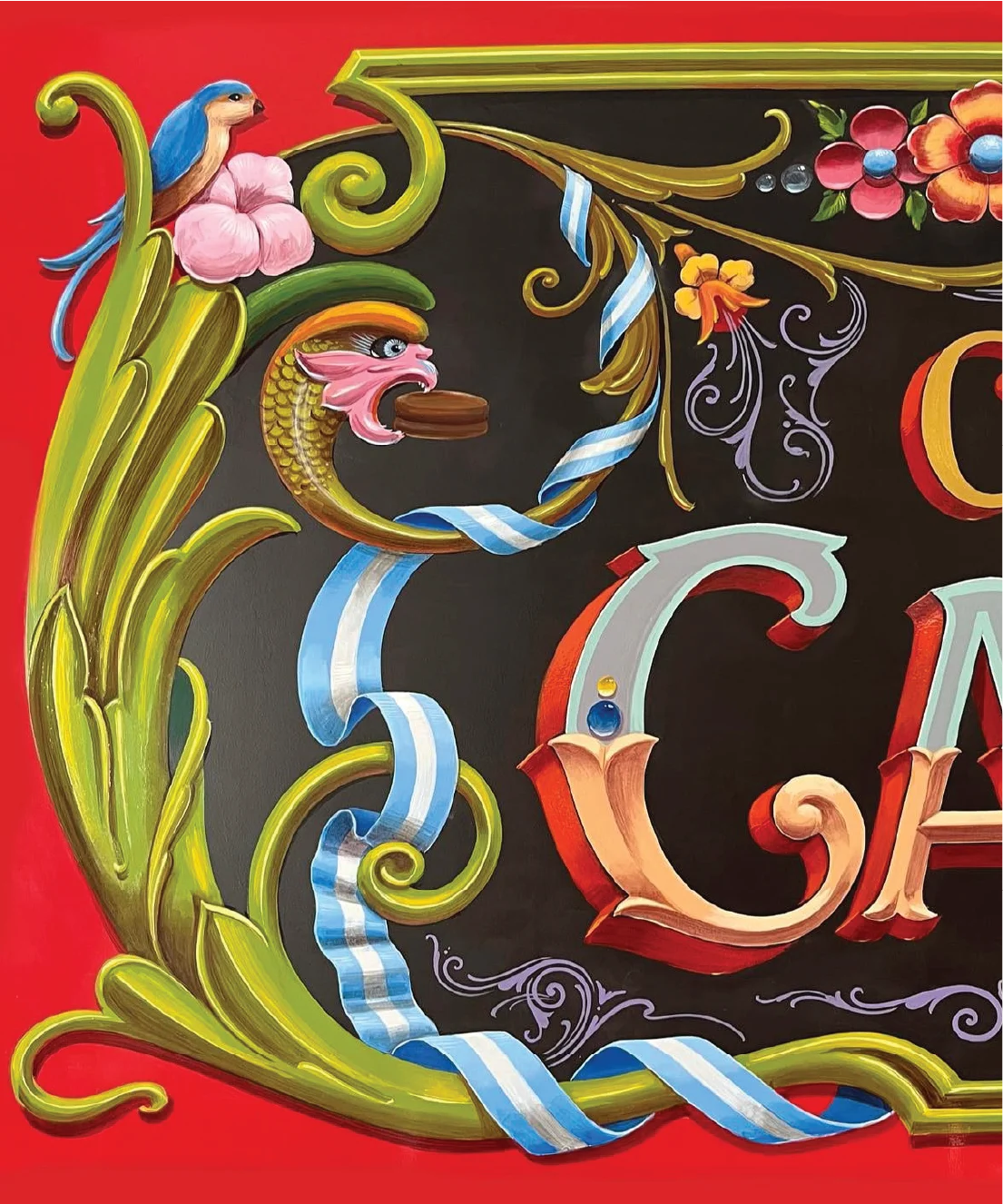
Initially, the painted carts were intended to signify commercial prosperity. Fileteadores drew inspiration from classic elements — ribbons, flowers, birds, and dragons — while painting in a three-dimensional style with long ox hair brushes. Employing symmetry, gradient block and cursive lettering, and symbolic imagery, the style became known as filete, derived from the Latin filum meaning “fine line” or “threadlike.” Filete migrated from the carts to trucks and buses, solidifying its ubiquitous presence in porteño life.
“More than just an aesthetic choice, fileteado is a sociocultural artistic expression,” fileteadora Silvia Dotta explains. Phrases used in the designs were a mix of popular wisdom or phrases, a barometer of Argentine social attitudes featuring jokes or popular tango lyrics. At the time, however, fileteado still wasn’t seen as central to the cultural fabric.
When animal traction was outlawed in 1963, thousands of carts were burned, and along with them the first examples of fileteado. “[The style] was part of the urban landscape, yet there wasn’t awareness about its artistic or patrimonial value,” Dotta adds. Another blow came in 1975, when fileteado was banned from city buses by the military government to ‘reduce visual contamination.’ Artists realized: keep painting or risk losing the form forever.
To ensure fileteado’s future, the old guard began teaching classes and women were welcomed into the fold, after historically being excluded from the male-dominated body shops and garages where the craft was learned. The first fileteado gallery exhibit took place in September 1970, “forcing [us] to see it through different eyes,” Dotta explains. City buses expanded into storefronts, facades, household objects, and international brand campaigns.
The Fileteadores Association was founded in 2012, consolidating the sense of belonging fueled by the community’s love for porteño culture. Three years later, UNESCO would declare fileteado part of the Intangible Cultural Heritage of Humanity. Social media and digital tools have ushered in a new era, and activists like Fileteadorxs del Conurbano remain true to its roots of social expression, using the art form to honor the 30,000 disappeared during Argentina’s last military dictatorship or recent victims of gender-based violence. Today, fileteado is found at every turn, often personalized with names of loved ones, pets, or favorite soccer players.