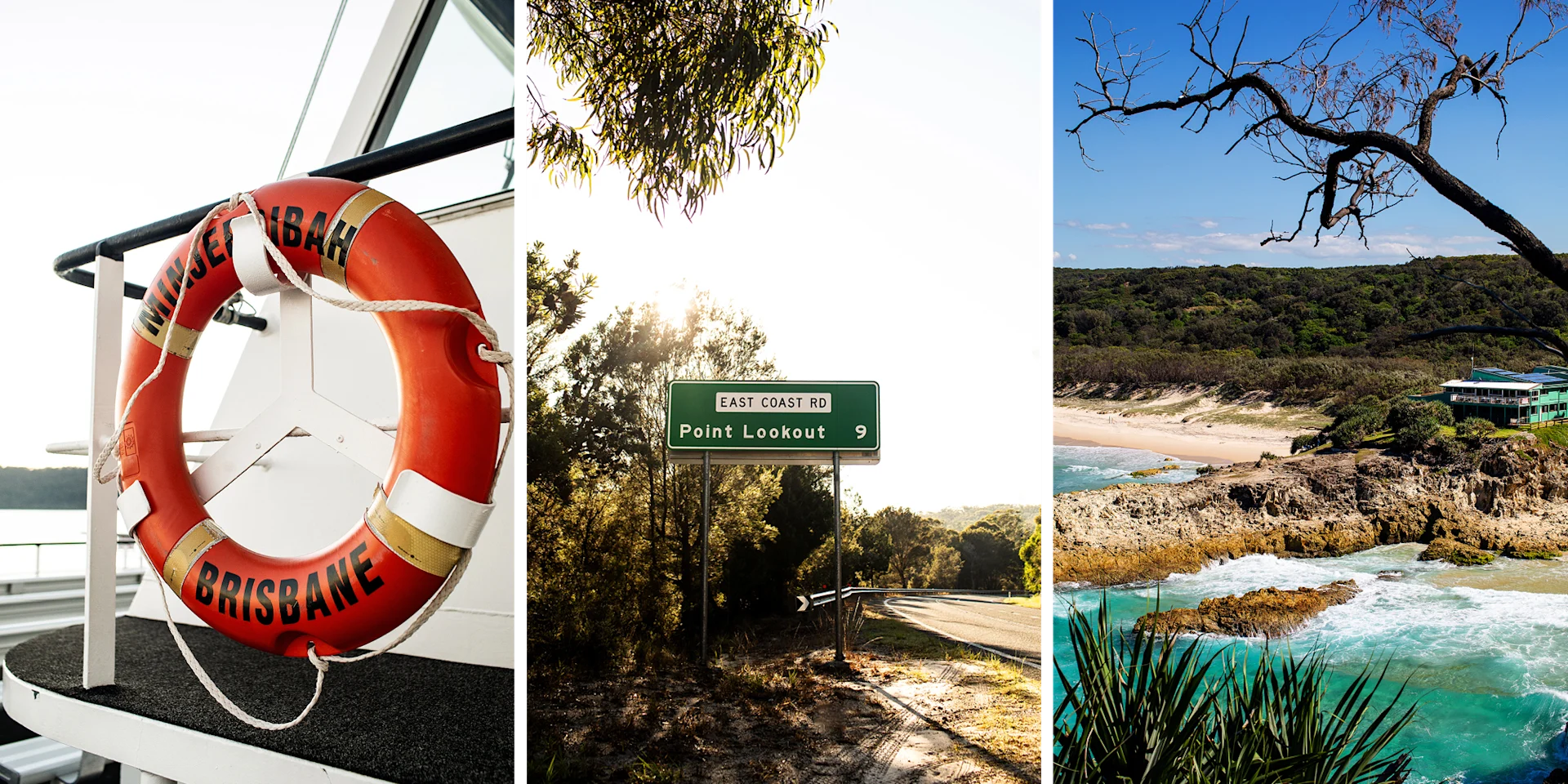
There is something rather primal about travelling over water on a small boat. You willingly surrender to whatever mood the sea wants to throw at you and you forget life’s pressures. Nowhere are you more conscious of this than sitting on a plastic weathered seat on the deck of the old Stradbroke Island water taxi as it crosses Moreton Bay, bound for an island 30km southeast of Brisbane, in Queensland. No bridge was ever built to connect this island paradise to the mainland and that’s what has kept it secret...kept it safe.
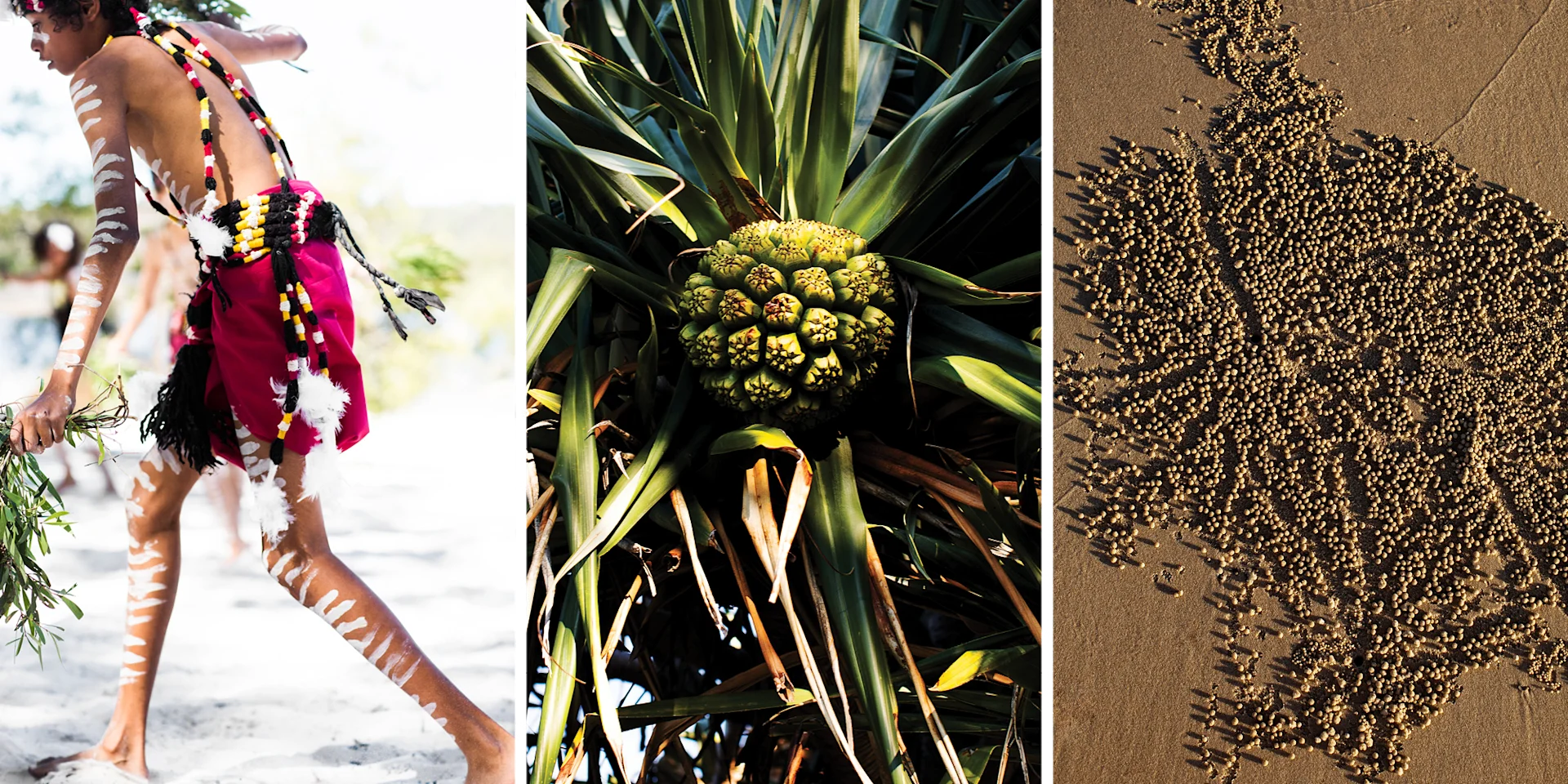
Stradbroke is a paradise of empty stretches of beach and dunes, lanky mangroves, eye-piercing aquamarine waters, abundant wildlife and sacred lands connecting 25,000 years of indigenous Quandamooka Country to the present. It feels wild and exotic to be so close to nature in this modern world and equally as emotional. Affectionately known as ‘Straddie’, though respectively known as ‘Minjerribah’ by the traditional Quandamooka people, it is Moreton Bay’s largest island, split into two halves in 1895.
I have a timber weekender on the island and everyday I am not there it’s on my mind. I long to be where the bush meets the beach. From the deck of my house on the north, the unmistakable screech of the lorikeets can be heard for miles, as they fly about the Norfolk Pines. Their rainbow-coloured wings dart from branch to branch in a frantic buzz. This is probably the most hectic show you will see on the entire island other than the Old Surf Club, where everyone including the staff, are barefoot in damp ‘togs’ as they sip their sundowners.
What it lacks in mod cons it makes up for in its abundant nature, showing off what Australia is most well known for. There is a plentiful supply of prawns trawled out around Shag Rock off the Point Lookout headland. When the wattle (yellow acacia or mimosa) is in full bloom on land you know the mullet are in season and out in the waters the Stradbroke Island oysters are grown in old leases in the passage of Amity. The mangroves provide a quiet refuge for native animals like the threatened dugong, a shy and gentle sea cow, whose herds graze only on underwater beds of seagrass.
But the way to experience the call of nature at its purest is ‘The Gorge Walk’ at Point Lookout. Its Sheoak trees teems with curious wallabies, grey kangaroos, and kookaburras laughing and bouncing in their feathery branches. From the wooden track, you can gaze into the gorge and where an underwater world of dolphins, sea turtles and manta rays put on a show. Out on the horizon migrating whales breach and plunge.
Rich in turn of the century European colonial history and hardship, Dunwich on the western side of North Stradbroke is a historic town, once an outpost colony for Leprosy, with the only signs of Victorian-era architecture on the island. Amity Point, a low-lying village at the north-western tip, is clustered with tired yet charming fibro Fisherman’s shacks in faded pastel pinks and blues, and boasts some of the largest shark numbers in the world. The local catch at Amity is bream, tailor, snapper and if you are lucky the spectacular marlin which you buy with cash straight from the houses of the fishermen. They paint signs detailing their catch in scrawled local lingo. Pan-fried over a camp fire, the fish is so fresh it needs little more than a skillet and a flame.