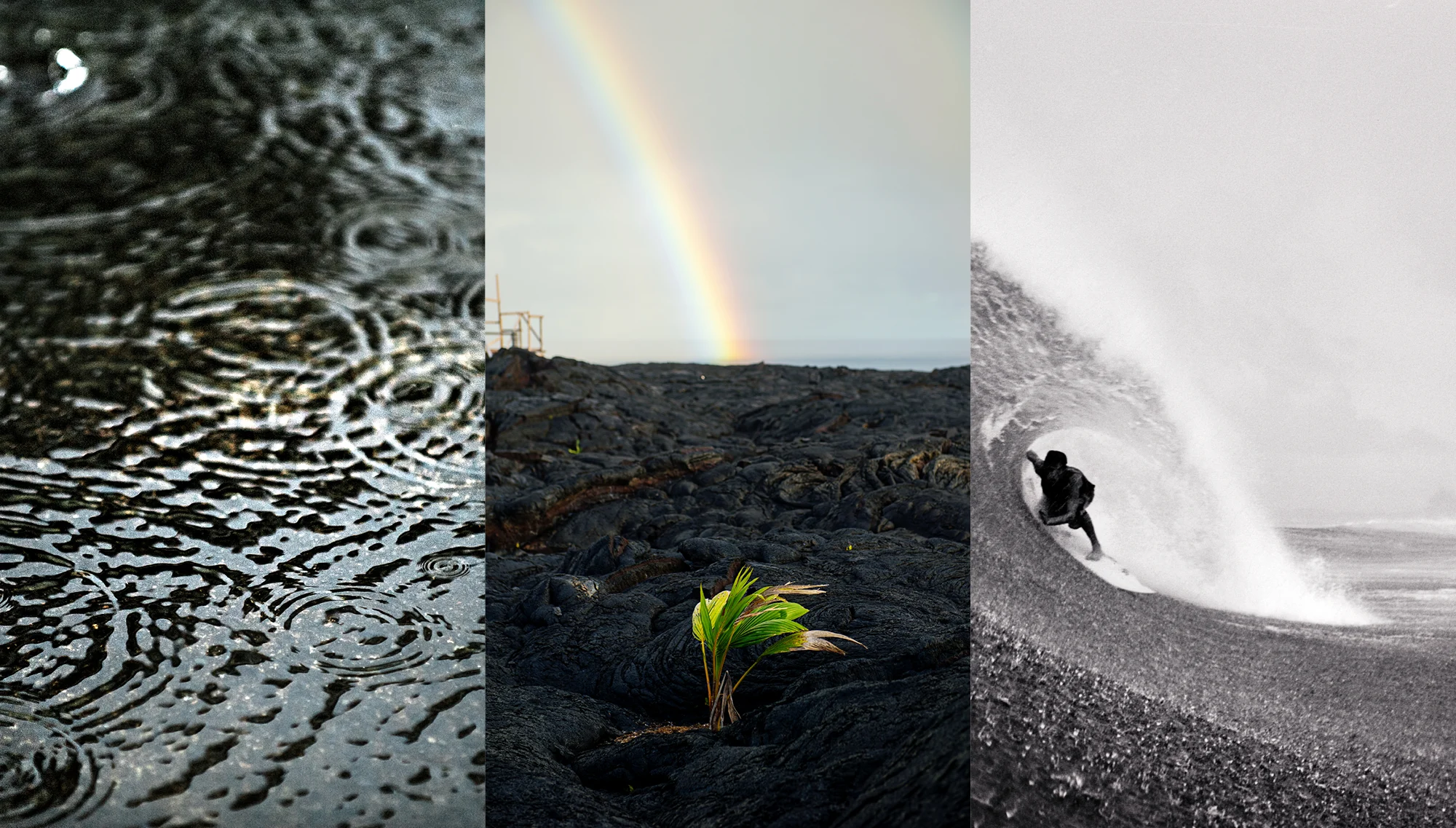
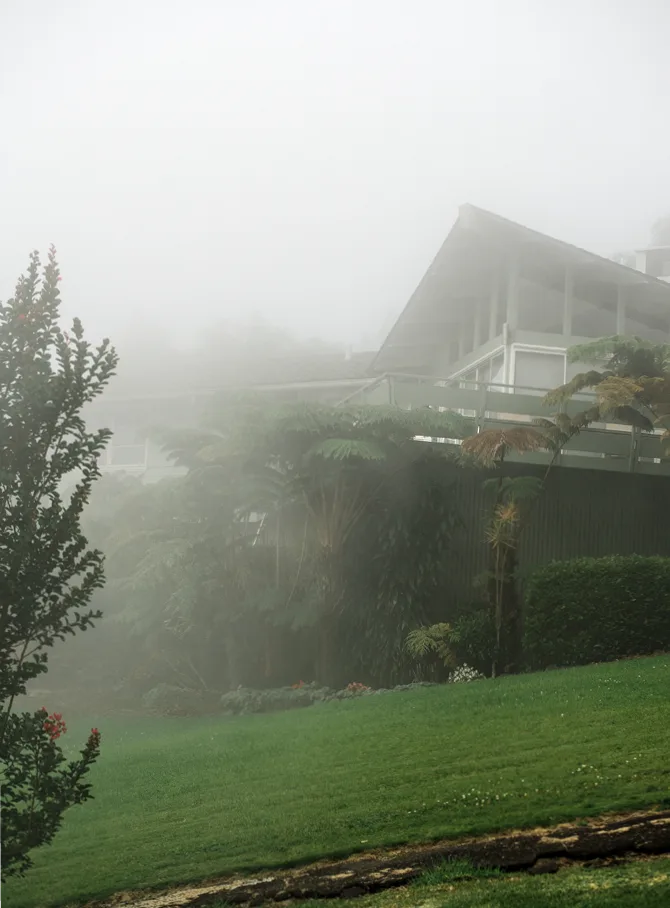
The rain does the oddest thing where my family resides in Pālolo Valley, on O’ahu. It’s a chilly, concentrated mist that starts in the valley’s upper recesses, travels down through its middle terrain, then, as the elevation moderately levels out, dissipates right where a small hill rests by the main thoroughfare. On command. Without fail. This rain just will not spill past this fated point. A resolution so consistent and deliberate, its vanishing feels more like a refusal. As if destined to remain there, nestled in the valley, and nowhere else.
Lo and behold, that rain has a name: Līlīlehua. According to a Hawaiian legend, the small hill in question was the arching back of a mo‘o, a supernatural reptile, that was enamored with a woman named Līlīlehua who lived in the valley. However, when she fell in love with another human, the lizard, in a spell of jealousy, transformed her into a lonely rain, one that makes a concerted effort to avoid the creature’s domain and disappears when she nears it.
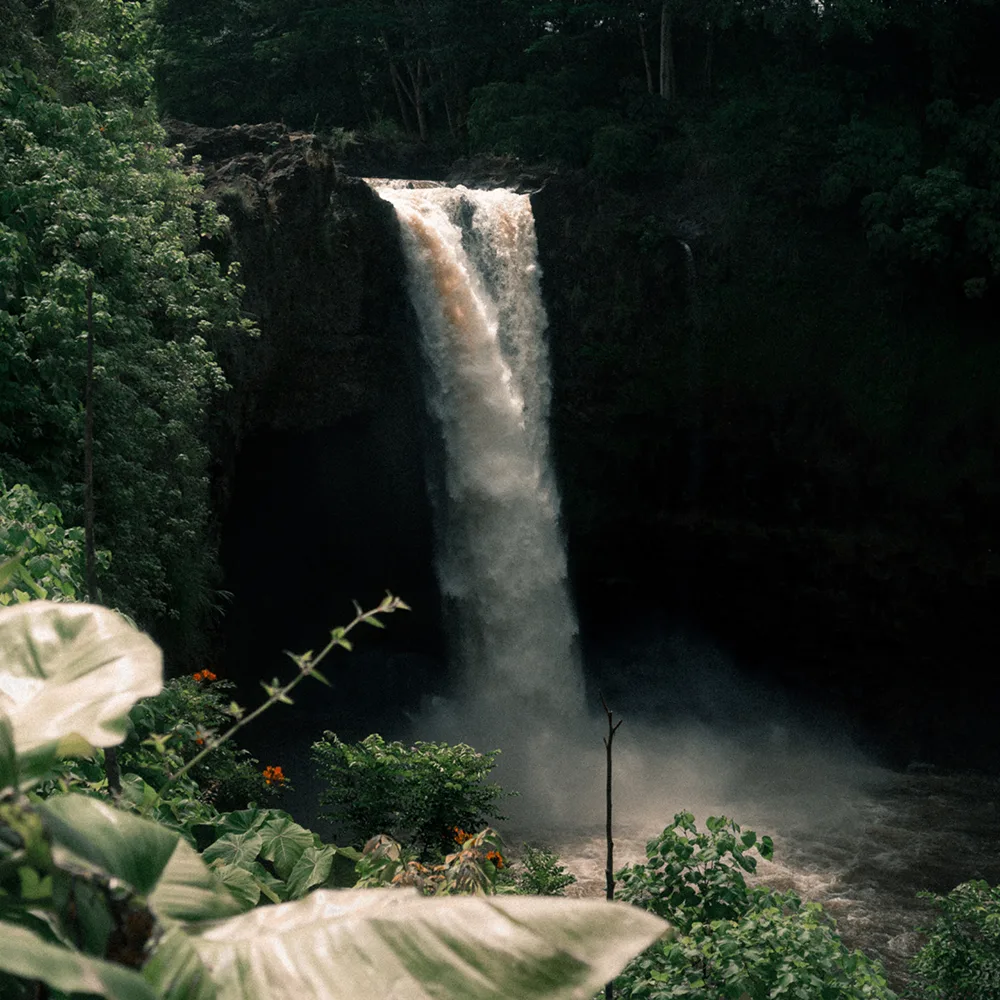
This is just one of the many names given to the rains found throughout Hawai‘i. Ua, the catch-all word for rain in Hawaiian, is so prevalent, noteworthy, and idiosyncratic that a single noun apparently wouldn’t suffice for the Hawaiian people. They would require more than 200 terms and phrases. As evidenced by this naming tradition, Hawaiians clearly value the rains and have long observed their intricacies in great detail: the intensity with which they fall, the angles they form when swooping around cliffs, their varying iridescent colors, the locations where they manifest and are forever linked.
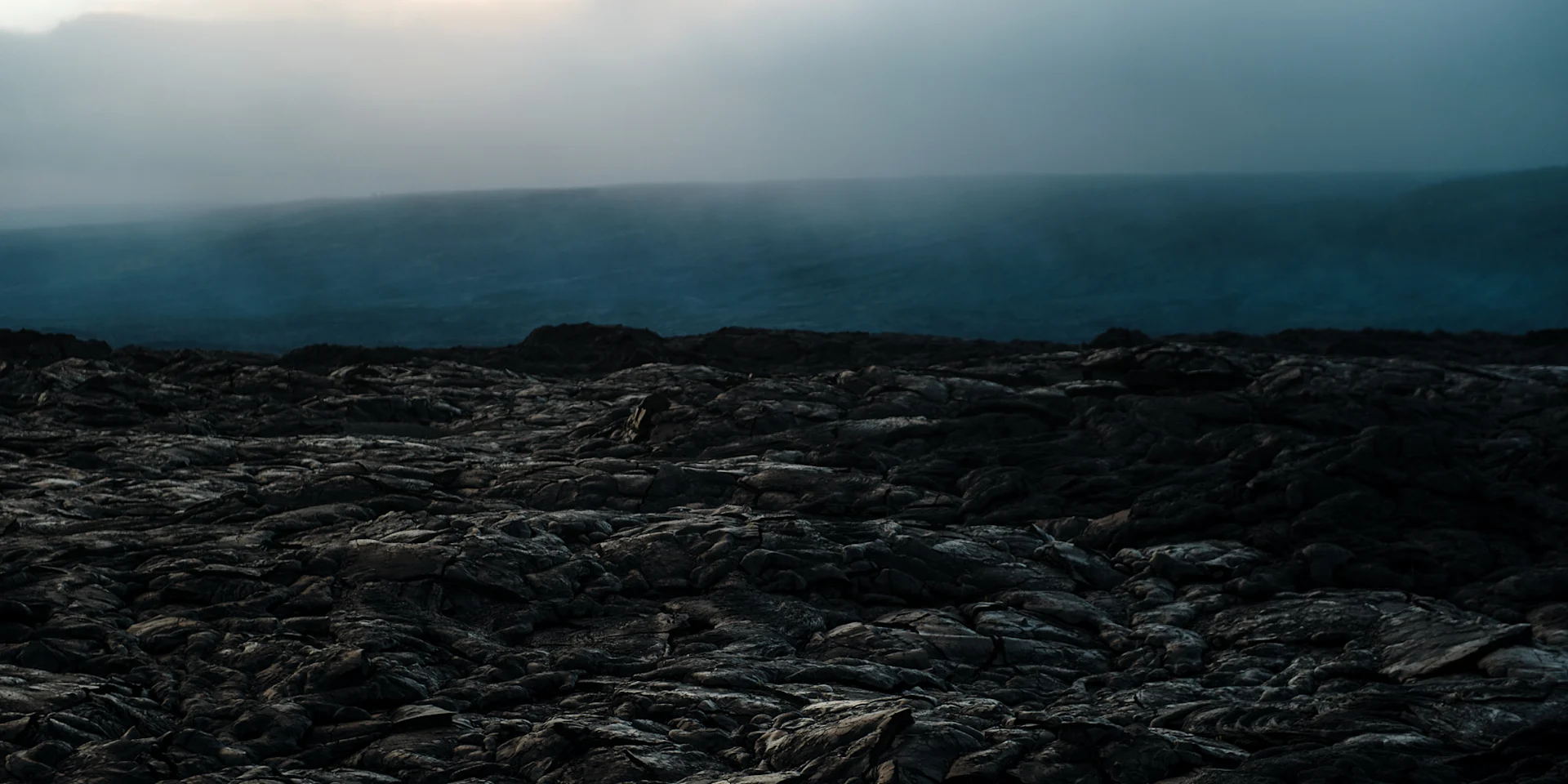
This treasured extension of the native language was collected in Hānau Ka Ua: Hawaiian Rain Names, an encyclopedic record sourced from Hawaiian songs, chants, stories, proverbs, and oral histories. By gathering them, authors Collette Leimomi Akana and Kiele Gonzalez affirm the close kinship and reverence that Hawaiians have for this near-daily occurrence. With this desire to distinguish them, Native Hawaiians also keyed into a singular and measurable fact of the islands’ atmosphere: Hawai‘i is the only place in the United States, and one of the few regions in the world, where rainfall gradients are as steep, increasing 25 inches for each mile traveled along a straight line.
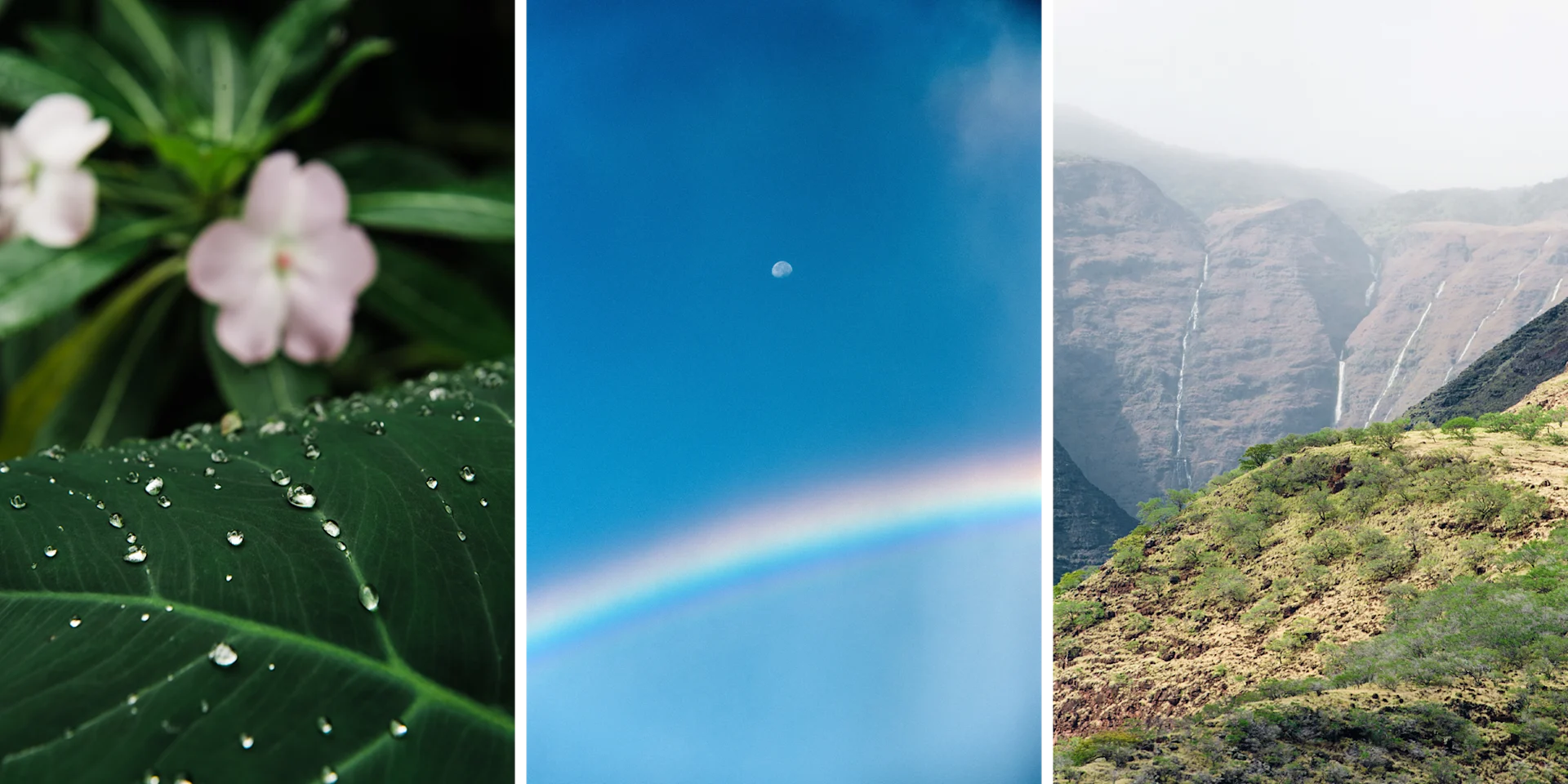
On the straight line that traces my own life in Hawai‘i—from where I was born to where I went to school to where I currently live in Honolulu—I’ve found myself entwined with a number of rains. Līlīlehua, however, still remains the most special to me. Perhaps because it was the first that I learned. Since that name was assigned to it by the earliest Hawaiians who dwelled in Pālolo, the valley, like every district in Honolulu, has changed dramatically with modern times. Nowadays when I visit family there, I’ll find myself driving past the sprawl of homes, the elementary school with the community swimming pool, the tangled network of telephone wires up above, and think about how my ancestors wouldn’t have been able to fathom how much of Hawai‘i has changed. As I continue further toward the restful mountains we call home, I’ll inevitably be made to switch on my windshield wipers. In that moment I’m reminded: But they would recognize this rain.
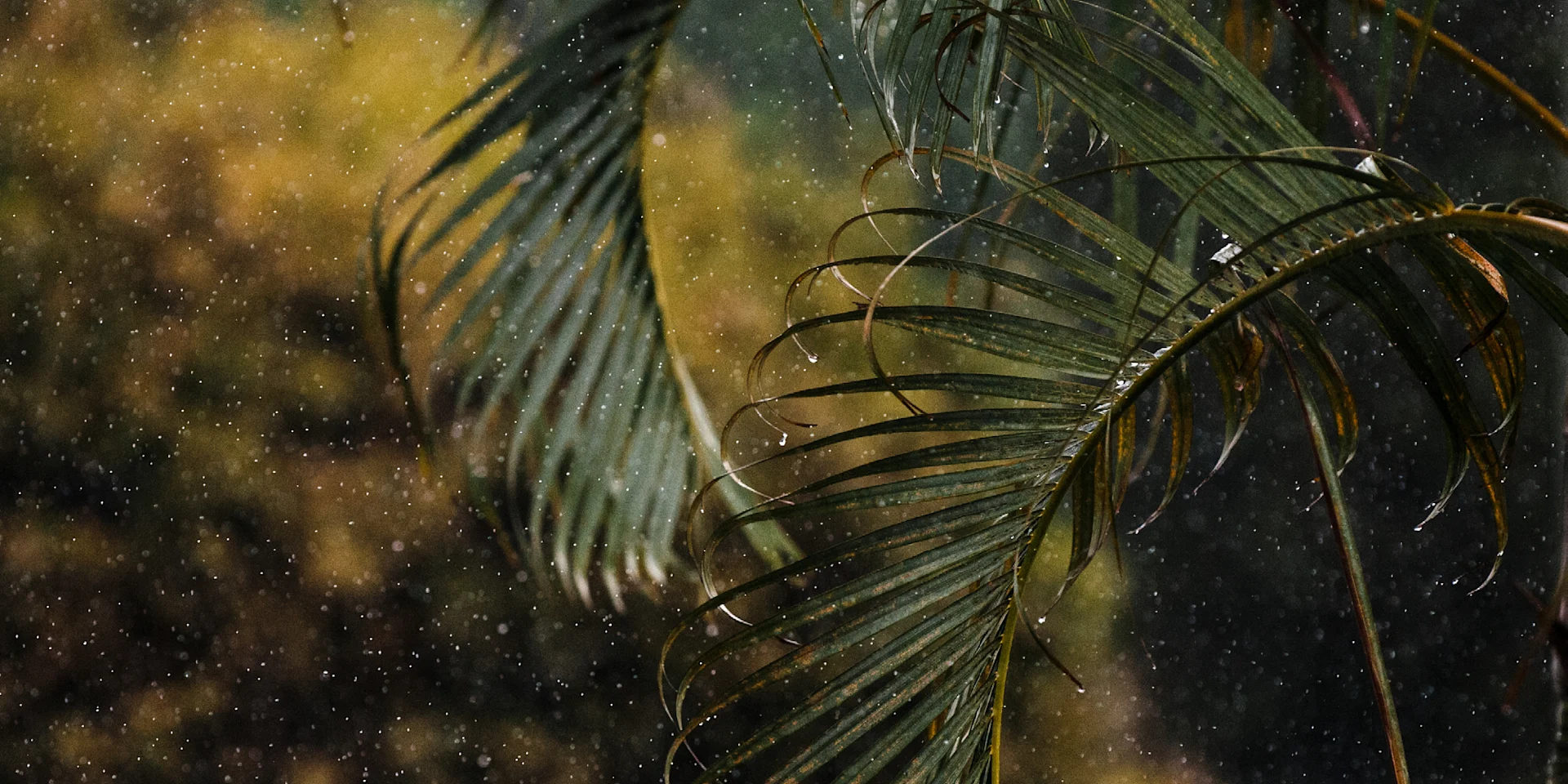
A glossary of selected rain names
For locals, a passing rain shower is business as usual; for visitors, an unexpected downpour can be received as a damper on the day’s heavily scheduled agenda. Knowing that behind every rain is a traditional Hawaiian name—which can reveal anything from the vegetation of the region to the psyche of its receiver—instantly changes anyone’s outlook.
‘Awa: a fine rain; falls in fine, icy drops that makes oneʻs head appear white like a gray-haired man
Kuāua: a rain without wind extending over a small area; a farmer would count this rain to help determine when it was time to plant sweet potatoes