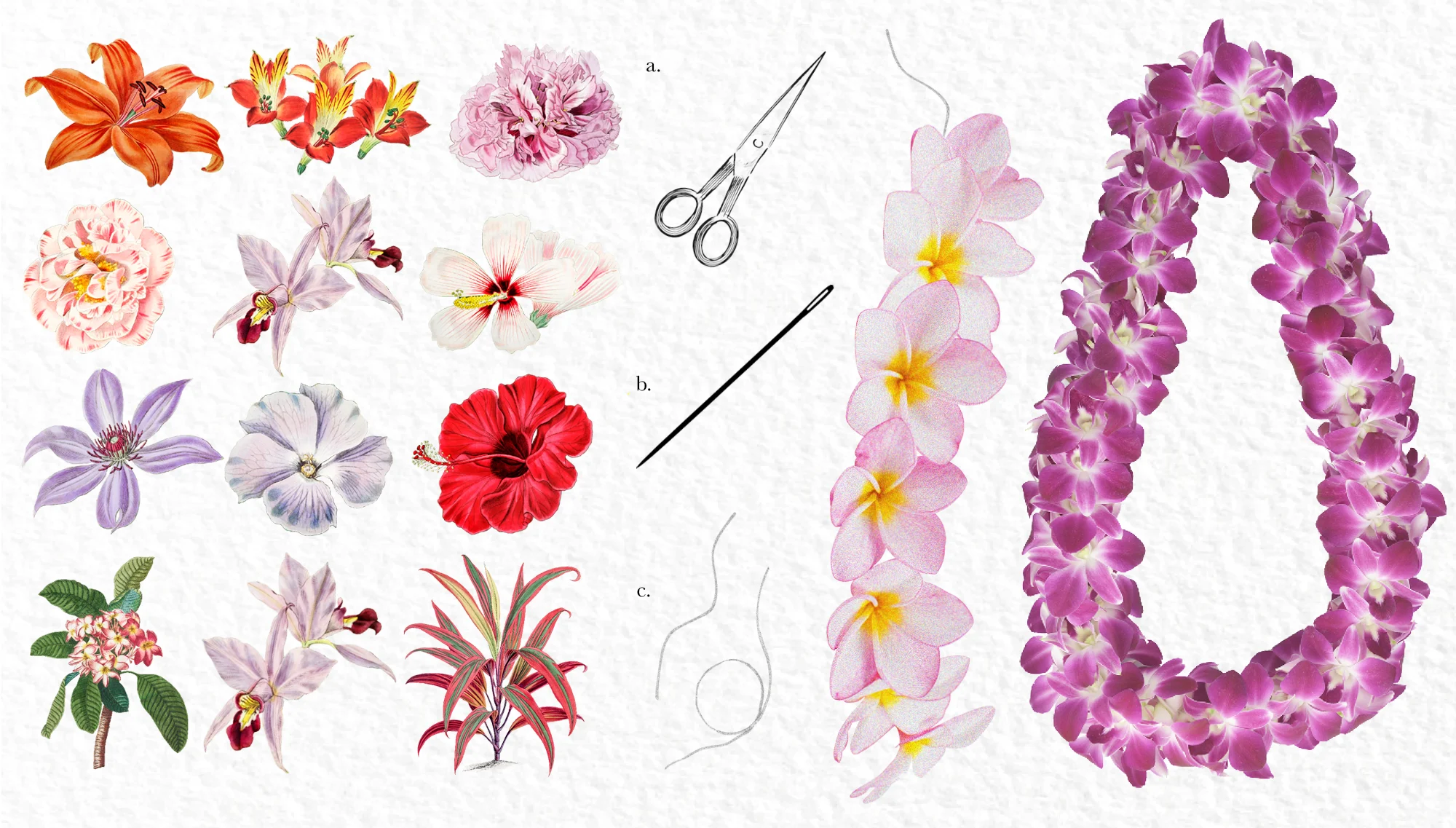
Nothing says aloha like a lei. A simple strand of flowers worn around the neck or crowning one’s hair has become the islands’ most heartfelt (and fragrant) way to celebrate and show someone affection. Once the province of hula dancers and professional lei shops, at least when it came to crafting them, a new set of local makers are taking the practice into their own hands—reimagining the aesthetics and politics of the lei along the way. Below, we dive deep into the indigenous craft’s history and unspoken customs every visitor should know.
A Gift to the Gods Becomes a Gesture of Affection
First brought by Polynesian settlers, “the tradition of lei-making served as a means of giving gifts to the gods,” explains Honolulu-based lei maker Meleana Estes. Ancient Hawaiians continued the practice for hula, social rank, adornment, and religious purposes. “A lot of them were very simple, used for symbolic purposes,” says legendary lei maker Bill Char of the lei’s aesthetic and reason for being back then.
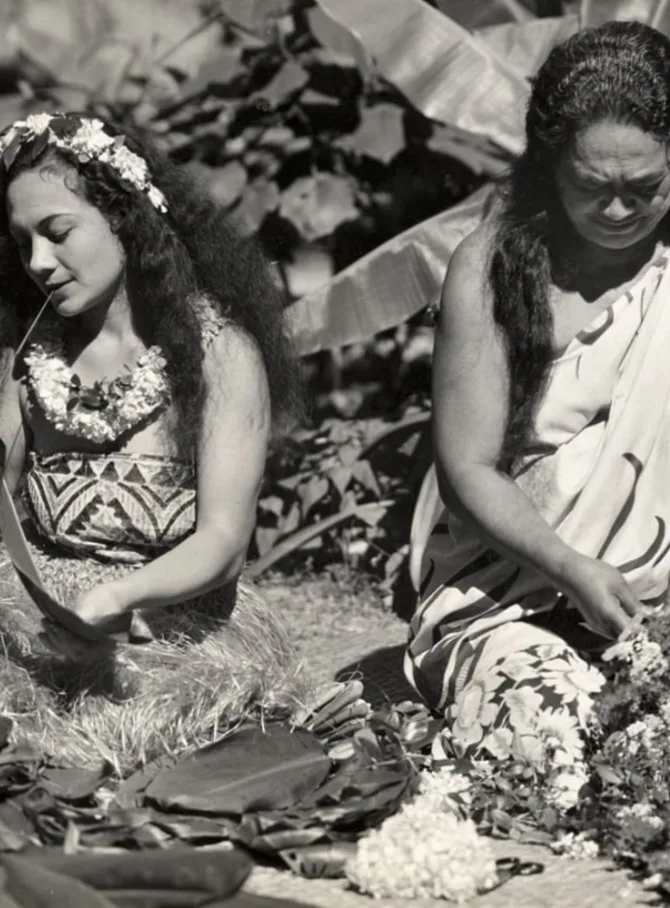
Modern lei culture as the world knows it today—think Elvis in an Aloha shirt, strumming a ukulele, and wearing a lei—started in the 1930s, when tourists would come to the islands by steamship. At the harbor, they would be given big, blooming flower lei upon arrival (which also explains the joke, “I was lei’d in Hawaii!”). From there it became a commercial enterprise, with lei shops popping up around Honolulu’s Chinatown, and customary for locals to give lei on celebratory occasions.
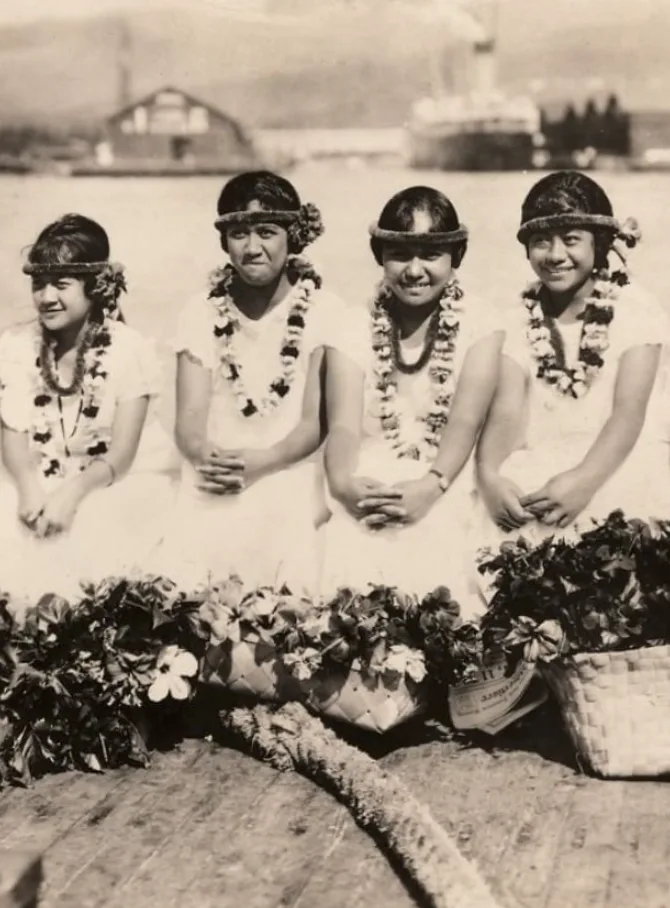
Today lei are given for many reasons. Some are festive and momentous, like graduations or weddings or funerals. Others are more everyday, like birthdays or good news. “Any occasion you want to share love in that way, it’s in our tradition to give lei,” says Estes, hinting there are no formal rules. “It’s our ultimate expression and embodiment of Aloha.”
Looking for a Lei? Common Types to Know
Lei draped around the neck are typically what’s known as lei kui. (Kui meaning to string pierced objects like flowers, seeds, or shells.) The style became popularized in the ’30s with tourism and endures today. Anything crowning the head is lei po’o. Haku, meaning to weave, is a technique of making a lei po’o—but locals commonly use the word to refer to any head lei, so feel free to use them interchangeably.
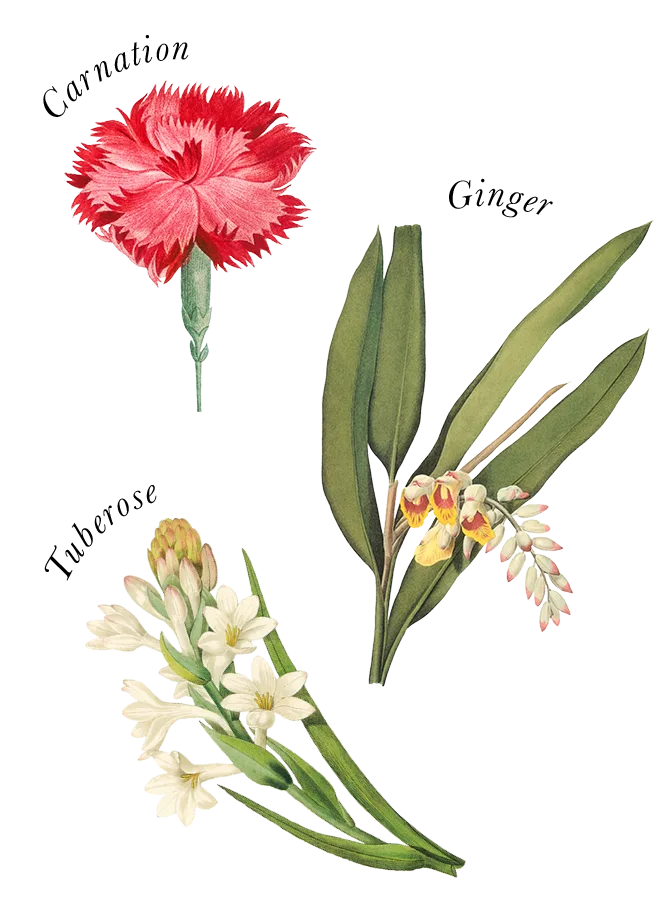
Ancient Hawaiians used materials such as bone, carved wood, shell, and the ribs of coconut palm in addition to local flora for their lei. Hawai‘i residents have been known to grow plumeria, puakenikeni, and pakalana vines to create homemade ones. Common flower shop lei, which can be found in Honolulu’s Chinatown, include carnations (which are vibrant and thick), ginger (exquisitely woven and almost lace collar-like) and tuberose (delicately simple and sweetly scented).
If you’re heading to a specific occasion, maile lei, made from a verdant, fragrant vine that’s in increasingly short supply from overcommercialization, are frequently given at graduations or weddings; hala, which is strung from the plant’s blazing-orange fruit that’s been carved, are often bestowed at funerals; and pikake, an elegant pearl-like, aromatic flower, is the lei of choice for brides.
Bumbai You Learn*: Unspoken Customs
** A local pidgin phrase meaning, “Someday you’ll learn.”