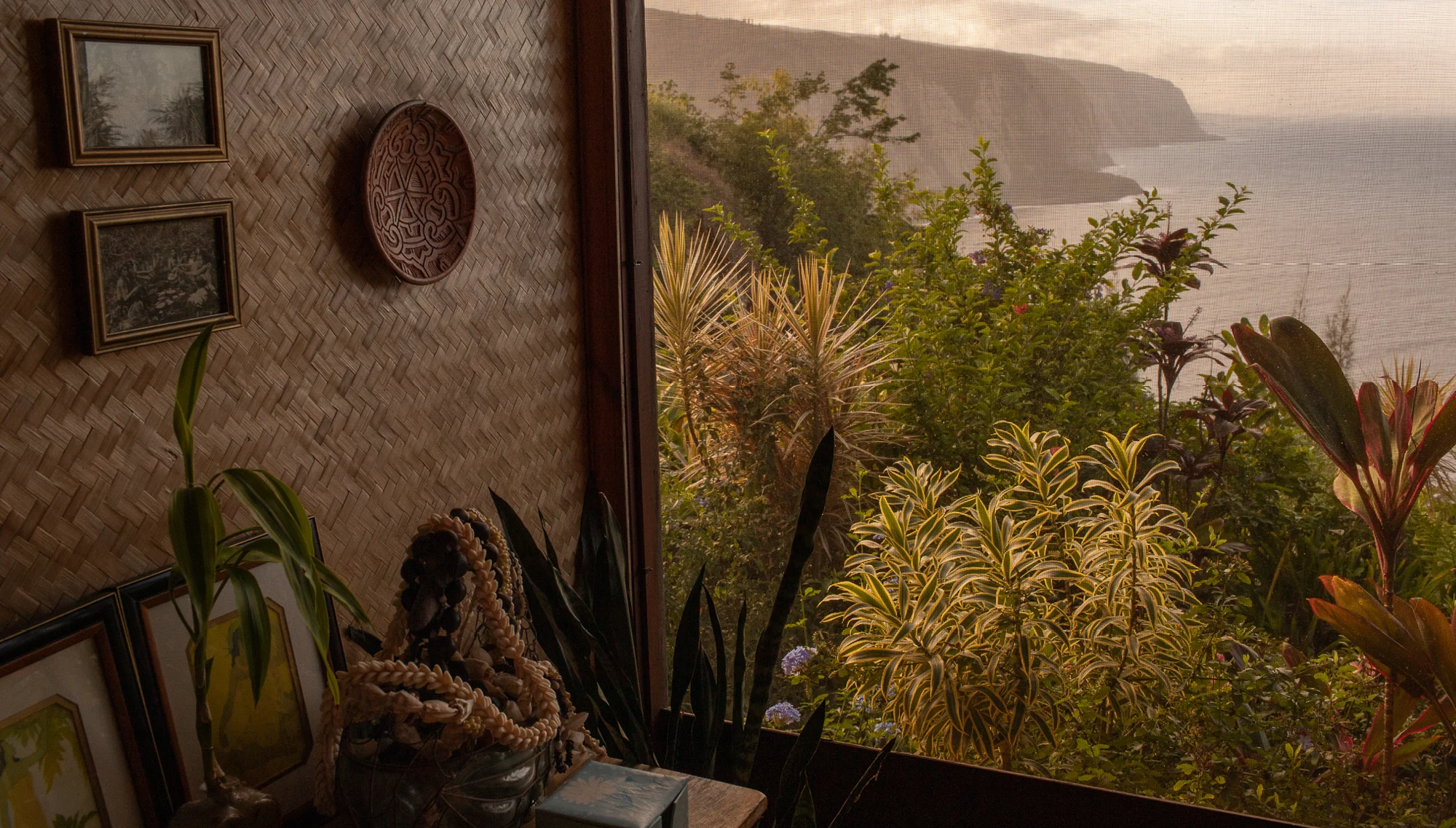
My son and I have just spotted a green sea turtle (honu in Hawaiian) foraging for moss along the sun dappled sandy ocean floor 20-feet below us. Slowly, the turtle flows upwards, more butterfly than fish, until it reaches the surface, inhales with a wide toothless gulp of air and descends again, just a few feet of clear blue ocean beyond my arm's reach. Wearing fins, mask and snorkel, I gently swim across an especially calm turquoise and tree-lined Waialea Bay, towing my son on a boogie board.
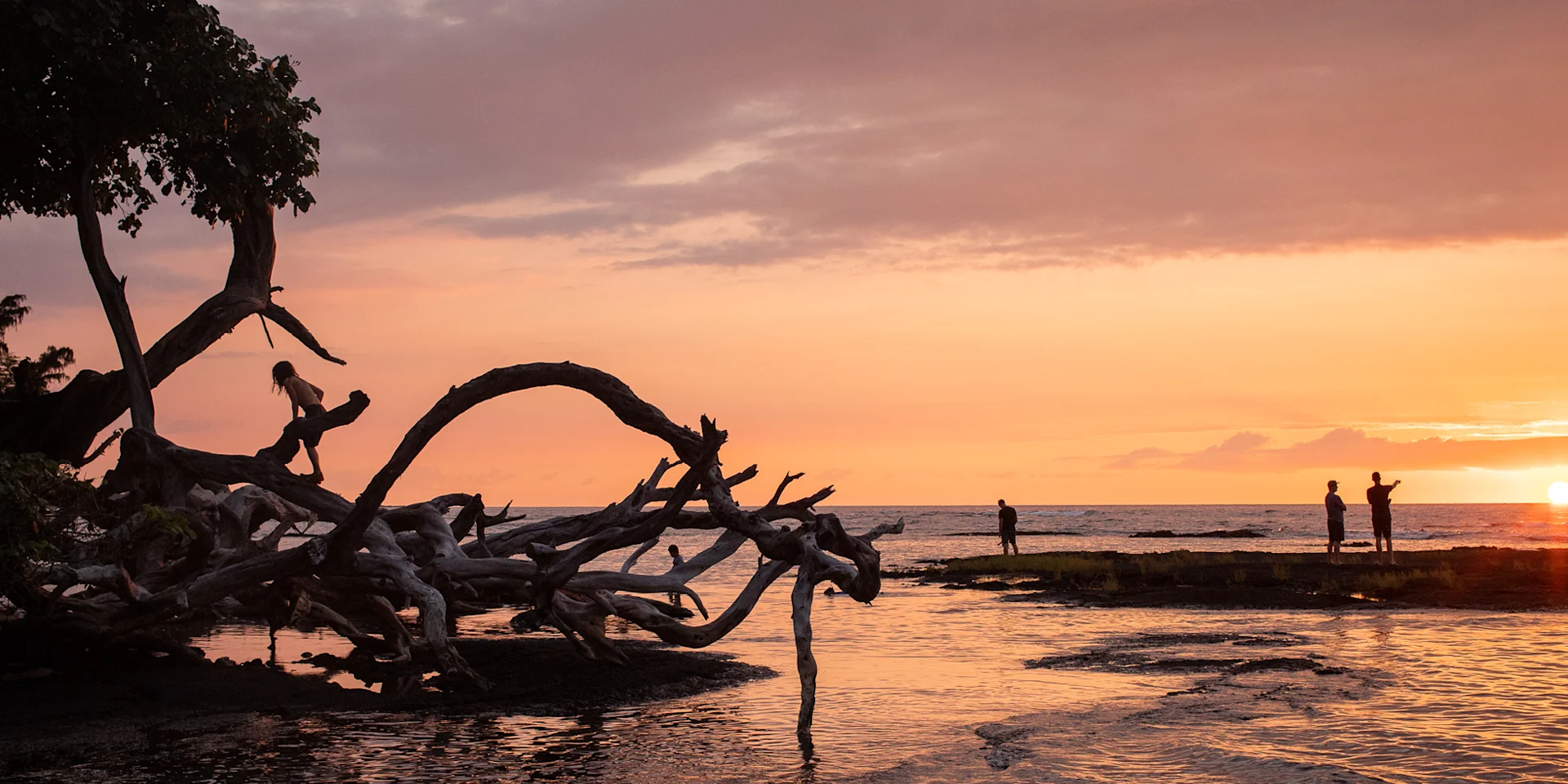
To see the Big Island of Hawai‘i from the water (submerged in a perfect temperature at 77 degrees Fahrenheit) means you will see golden rays of sunshine permeate the turquoise waters, the bright pinks, oranges, and long, inky spikes of sea urchins clinging to the rocks, angelfish, puffers, and eagle rays, all darting and flying through the corals and dark lava rocks. From the water is a perfect place to watch the early morning sun cast long shadows across Kohala mountain, or the frequent rainbows that adorn the heaving crown of the Big Island. This water view, the almost endless winter sunshine, and the wide-open spaces is what keeps bringing me (and my family) back to this magical island.
Up until fairly recently, Hawai‘i had been a place to visit: surf trips from my home in Northern California, a destination for our wedding on Hanalei Bay in Kauai, and more photography jobs than I can easily count. But, after our first 8-months without childcare or in-person school during Covid, we decided to try living and working remotely on the Big Island once Hawai‘i opened up again to visitors.
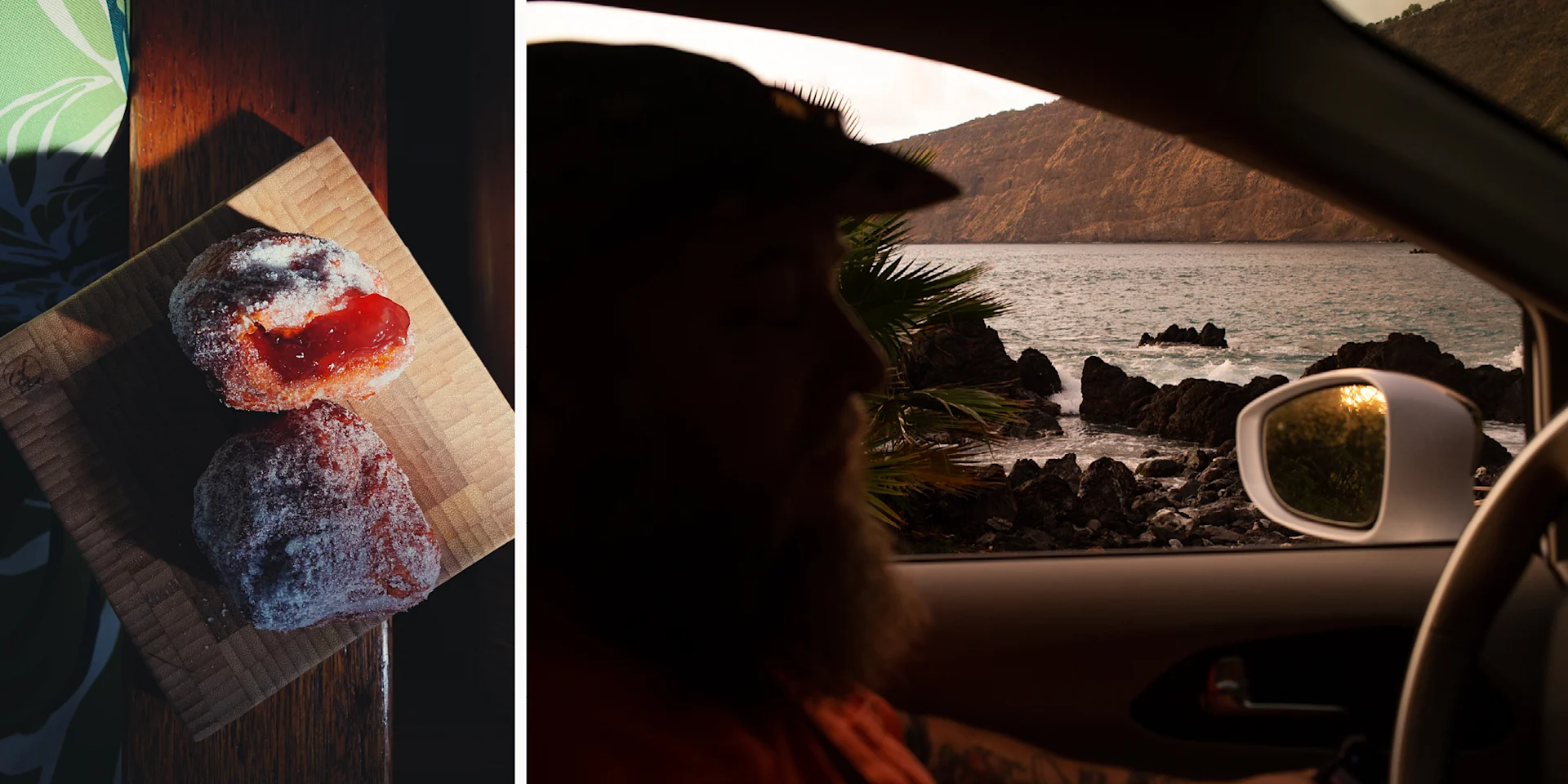
The incredible landscape of Hawai‘i is formed by five volcanoes merging together high above a hot spot deep in the earth’s crust, constantly creating and re-creating this wild and vast natural land. Hawaiians call the goddess of all volcanoes and fire Pele, and her legendary house is located here on the Big Island, deep within Kilauea volcano. Pele is still revered throughout the islands by many. Knowing her name will serve you well when you visit, as the Hawaiian language commands a strong presence that is only growing as native Hawaiians seek to educate their children with the culture and language of their land. Other native Hawaiian words become useful, too: mauka (toward the mountain), makai (toward the sea), and hale (home). On the islands, cardinal directions are less useful. Statements like, head up the mountain, or towards the sea make more sense as you make your way around the natural landscape.
One of the best ways to see the diversity of wonders of this place—the Big Island encompasses eight of the planet’s 13 climate zones in a compact 4,000 square miles—is by road trip. There is novelty in being able to drive a ring road around an entire island in one day, but unless you are under a major time constraint, a road trip with a night or two of stays here and there along the way provides time for stops along the way to taste local delicacies like laulau, malasadas and poke, time to hike across a lava field to float in a blue lagoon, or time to be in a perfect position on the rim of Kilauea’s crater Halema’uma’u as the volcanic gases begin to glow pink and red into the night and the stars blink on.
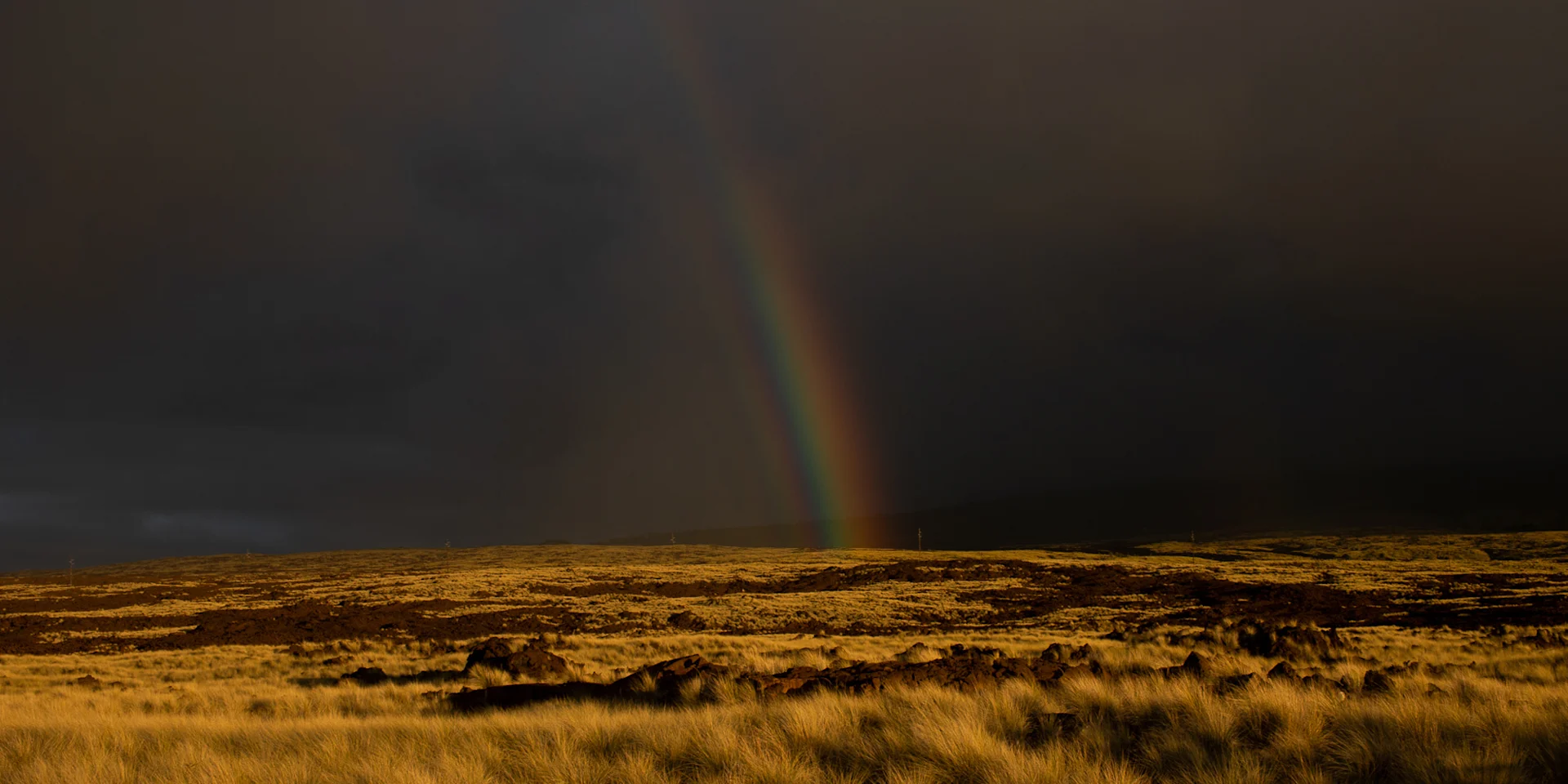
You can tailor your journey around the island in three routes. North over the lava fields of Kohala and up through the pasturelands and dramatic overlooks of the Pololū and Waipi’o valleys, South through the more populated lush hillsides that overlook the sea and then up into major destination of Hawai‘i Volcanoes National Park, or over the saddle road through the Middle of the island into the fog and rain at the base of Mauna Kea. Here are a few ideas for how to chart your journey.
North
North from the Kona airport takes you along the Kohala Coast, an arid region varnished in lava flows and dotted with palm lined roads. The miles and miles of pāhoehoe (smooth lava) and a’ā (very sharp lava) expand across the resorts and neighborhoods on the shore. It's a wide-open landscape a bit like the American West and all the luxury hotels on the island are here. My family has been living in a residential hamlet called Puako. A rock reef outside of Puako protects the area for swimming and makes it amazing for snorkeling—especially with the resident turtles who haul themselves up onto the sand or rocks each night to sleep. (Shhh...make sure not to disturb them though. They're protected by law.)
Mauna Lani
Nearby Mauna Lani Resort (meaning “mountain reaching heaven” in Hawaiian) has recently undergone a change of hands to become an Auberge Resort property. The renovation nods to the mainland-company’s roots: a natural palette and open floor plan makes the entire resort feel like one magnificent California home. However, the property still feels distinctly Hawaiian thanks to thoughtful touches—traditional ceremonial pieces and Hawaiian landscape photography decorate the hotel and all the rooms feature expansive lanais (Hawaiian porches). Fresh and local Hawaiian Islands’ ingredients are a focus across the resort’s three restaurants but especially at the breezy and elegant Canoe House. The property offers three distinct swimming areas, including a stunning and peaceful adults-only pool overlooking the crashing surf beyond the protected swim area situated inside the rock reef—a near perfect way to experience this unique area of the island.