It is well known, to the point of being a cliché, that the French maintain an emotional relationship with cheese. Yet there are few who respond so passionately to the topic as Véronique Richez-Lerouge. For years, the journalist has been fighting to preserve traditional cheeses in the face of increasingly mass-produced variations. Speaking frequently on the topic in the French media, she has published several books bearing battlesome titles such as France, Your Cheese is Clearing Out!, Attack on Our Cheeses, and The Crying Cow (the latter referencing the well-known industrially produced The Laughing Cow).
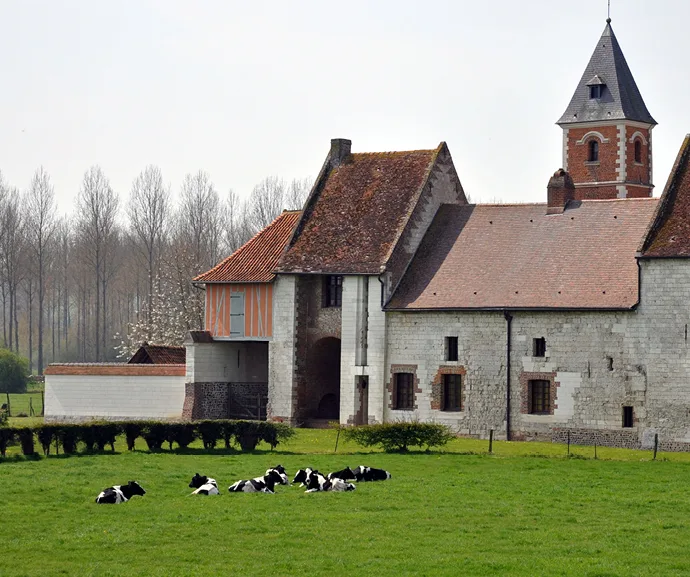
This year, the pugnacious Richez-Lerouge, who is distinguished by a red mane and piercing blue eyes, has been rallying anew. Only this time the cheese in question is not just any dairy product but Camembert, a culinary symbol as inextricably linked with France as the Eiffel Tower, the baguette, or the country’s very identity as a beacon of excellence in the kitchen and pantry. Traditionally, the creamy, pungent cheese has been produced in and around its namesake village in Normandy using techniques virtually unchanged since the French Revolution.
However, earlier this year, new production standards were agreed between industrial and artisan cheesemakers after a decade-long legal dispute. These state that the lucrative EU seal of Camembert approval is no longer restricted to cheeses made the time-honored way from raw milk—which, in effect, frees up imitations to be produced from pasteurized milk. As part of the agreement, mass producers are obliged to source at least thirty percent of their milk from Norman-breed cattle pasture-raised in the region. A fair compromise, one would think, but Madame Richez-Lerouge disagrees.
You warn that the new regulations could mean the end of the Camembert. Aren’t you being overly dramatic?
The situation is dramatic! Dramatic for all stakeholders, but in particular for consumers who are duped into buying fake, industrially produced Camembert, thinking it’s the original.

Why is it so important for a cheese to be made from raw milk?
Raw milk retains the taste and the characteristics of the terroir. Pasteurization kills all life within—the bacteria, the germs, the microbes. Basically, it kills everything that makes for the taste, and you end up with a dead and tasteless cheese that needs all kinds of additives to be revived.
Some might object, saying that pasteurization makes cheese safer for consumption. How do you respond?
That they’re wrong. Just a few weeks ago, we had a scandal in France dealing with contaminated formula. It had been sterilized a number of times and still contained salmonella bacteria. Raw milk contains a plethora of desirable organisms which fight and eliminate undesirable ones. This does not mean, of course, that we can forego a strict hygiene regimen.