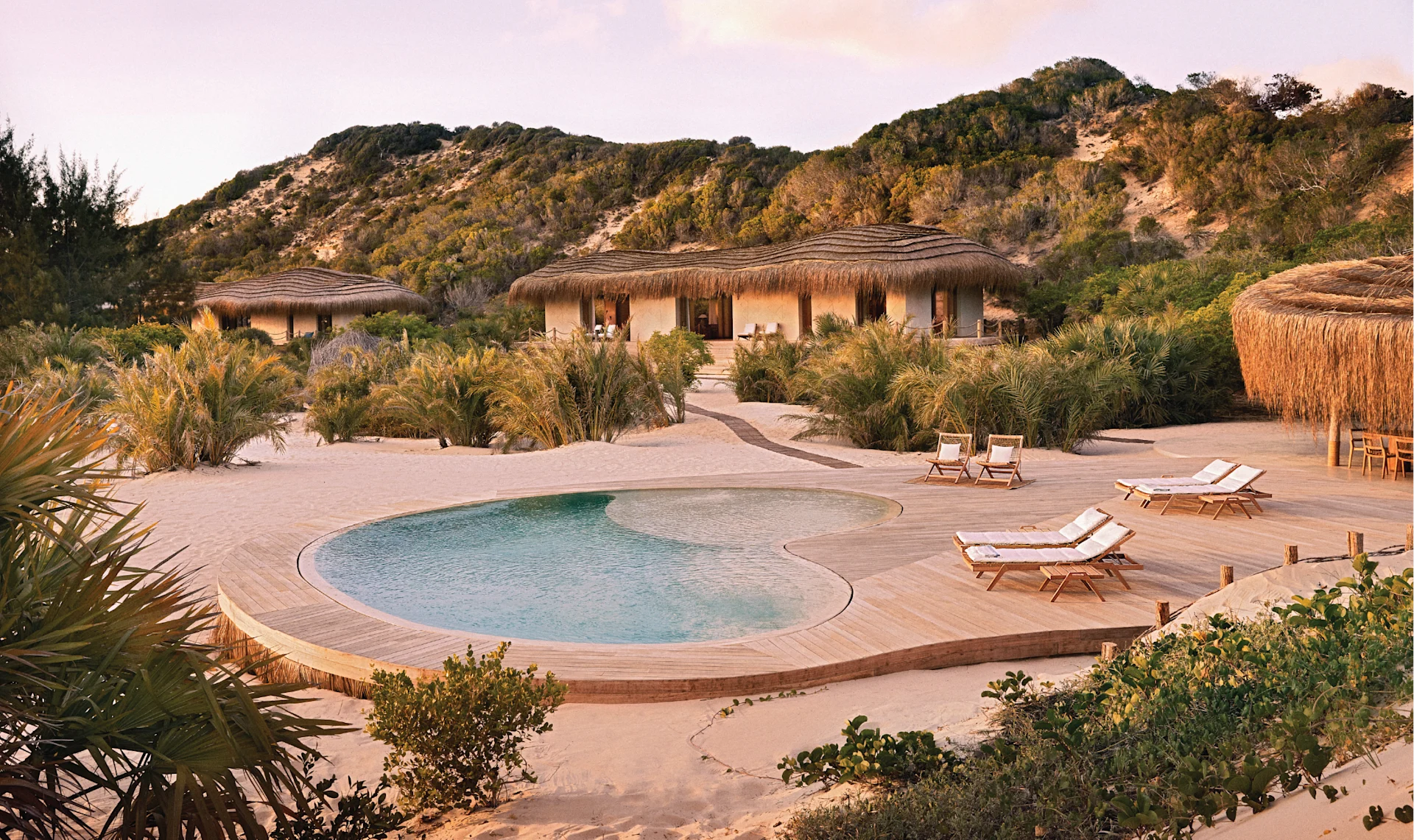
On the southern tip of Benguerra Island, where soft white sand and low green vegetation give way to bands of deep blue surf, Kisawa Sanctuary occupies one of the most secluded stretches of the Mozambican coast. The resort, which opened in 2021, comprises eight residences spread across the island’s quiet southern reaches, their undulating thatched roofs seemingly camouflaged into the surrounding dunes.
Benguerra is the second-largest island in the Bazaruto Archipelago, off southeastern Africa. It was historically a stop along Indian Ocean trade routes, but today, it’s better known for its reefs, beaches, and relative lack of development. The name Kisawa, meaning “unbreakable” in Tswa, reflects the property’s broader emphasis on bringing wilderness and wellbeing together. Between languid stretches at the beach, guests can enjoy seafood lunches, dinners amid the dunes, and time spent at the spa, watersports center, and surrounding marine park.

When
It’s best to visit during the dry season, between May and November. The days are clear, the breeze is cool, and if you’re there between July and October, you might catch a glimpse of humpback whales migrating through the Mozambique Channel. Mozambique’s summer lasts from November through April, where you can expect higher temps and heavier rainfall, particularly between February and March.
Where
Much of the surrounding area falls within the Bazaruto Archipelago National Marine Park, an 888-square-mile protected reserve home to coral reefs, seagrass beds, and one of the Indian Ocean’s last viable dugong populations. Kisawa Sanctuary occupies the island’s quieter southern tip, with 740 acres separating the property from the outside world. The island is reached by helicopter or boat from Vilankulo on the mainland, with easy onward connections from Johannesburg.

Design
The exteriors draw on expert local craftsmanship and native island materials, including thatched roofs, woven reed panels, and sand-colored plaster, while the interiors are decorated with custom furniture and African-designed artworks.
One of the resort’s more unusual features is the way it was constructed. Using a patented 3D-printing technology, the team behind Kisawa Sanctuary developed a mortar from the island’s sand and used it to print portions of the building materials on site, an approach intended to reduce the environmental impact on the surrounding landscape and wildlife.

Rooms
The scale of the residences at Kisawa Sanctuary is striking. Ceilings soar above 15 feet, showers are the size of bathrooms elsewhere, and even the smallest residence occupies its own acre of private land; the largest stretches across more than two-and-a-half. Each comes with a private pool deck set atop the dunes, expansive indoor-outdoor living areas, and its own electric Mini Moke for navigating the property’s sandy paths. (Insider tip: If you ask nicely, you might get to take the license plate home as a keepsake.) Despite the scale, the spaces rarely feel ostentatious, thanks to the muted palette, natural materials, and the way the architecture opens continuously onto the surrounding landscape.
Service
Each residence has a dedicated butler who is reachable via Whatsapp at all hours. Staff silently take note of guest behavior, such as dining habits and daily comings and goings, which makes for a frictionless stay.
Dining
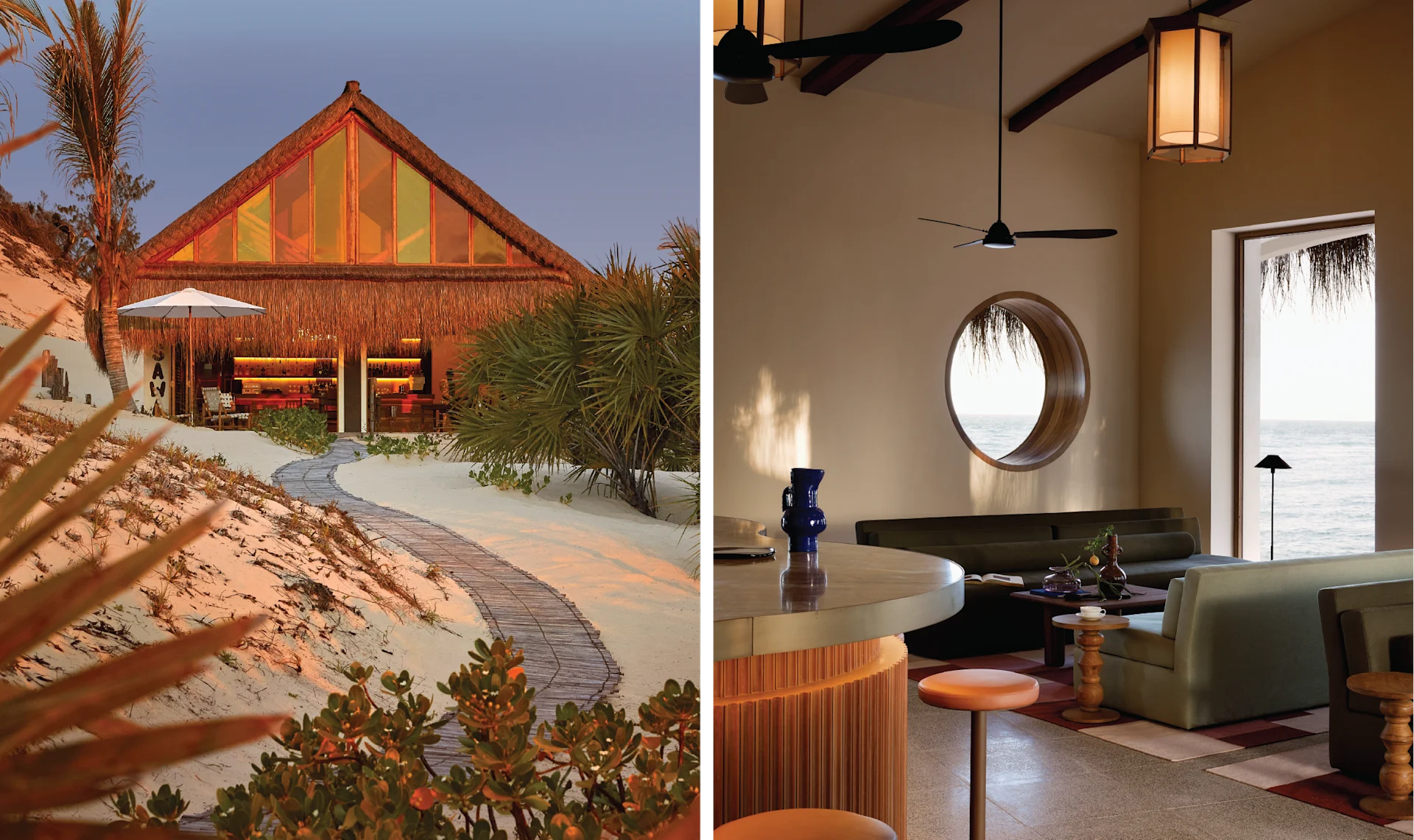
The culinary program was designed with long stays in mind. There are three main venues: The Main Terrace, which serves global cuisine for breakfast, lunch, afternoon tea, and dinner and is described as Kisawa’s “extended living room”; the Cove Mussassa, a relaxed beach bar and cafe; and Baracca, an oceanfront restaurant focusing on Mozambican cuisine. The newer Garden Nursery restaurant sits within the property’s permaculture garden and centers lunch around produce grown on-site. There’s also a pizza tuk-tuk, a wine room tucked off the main terrace, 24-hour room service, and picnic setups that can be arranged across the island.
Wellness
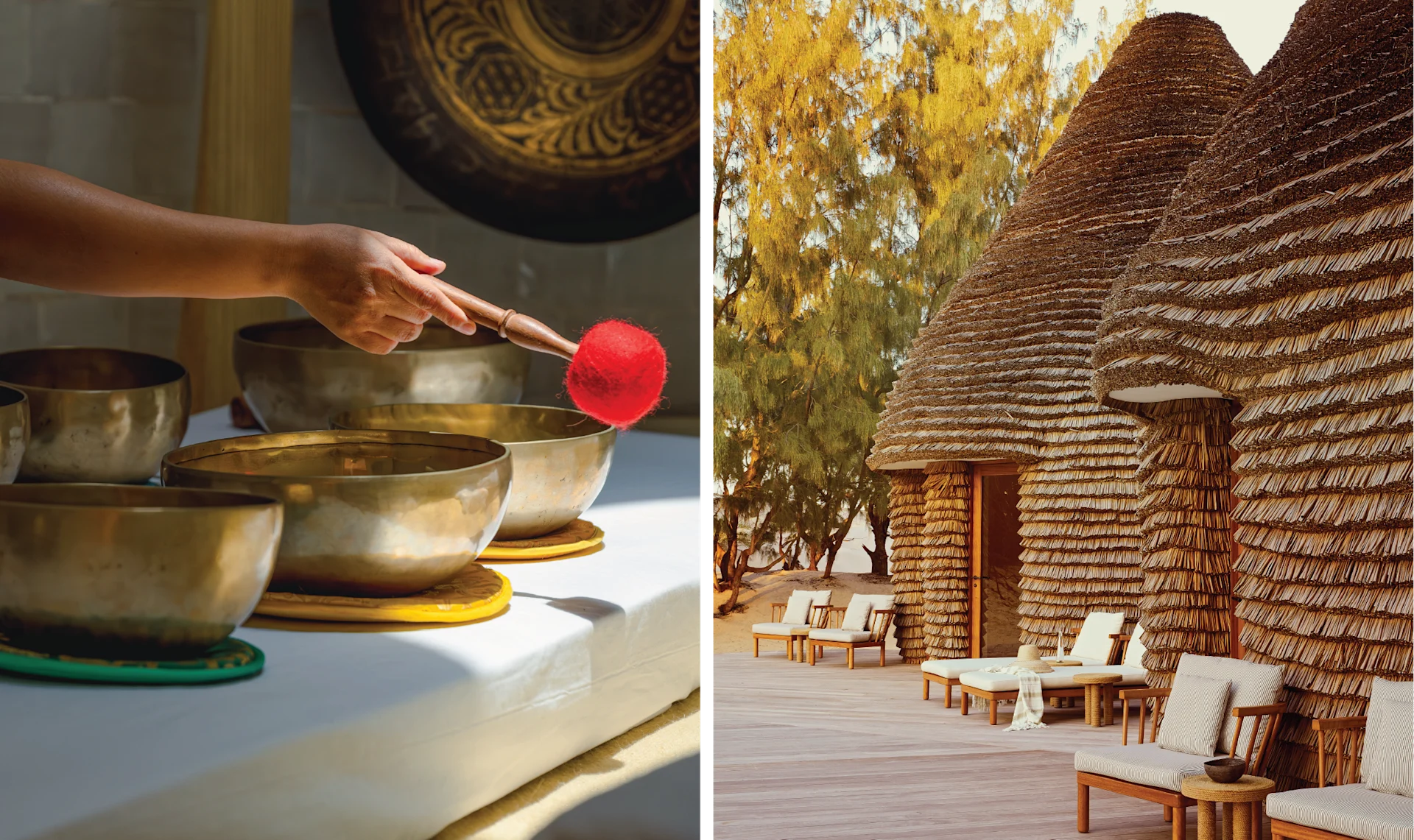
Wellness is at the core of the Kisawa Sanctuary ethos. With an award-winning spa and gym, the Natural Wellness Center provides a holistic experience, with menu offerings that include facials, aromatherapy, energy healings, yoga, reflexology, and massages like deep-tissue, hot stone, pre-natal, and more. There’s also an infrared sauna, a personal trainer, and sunburn soother therapy for the days you were a little too relaxed on the beach.
Drawbacks
Traveling to Mozambique still requires a degree of patience, particularly when it comes to visas and airport logistics, which can feel less streamlined than in more established luxury destinations. Occasional language barriers can arise given that much of the staff is locally hired. For most guests, however, those logistical imperfections are part of what continues to make the destination feel relatively untouched.