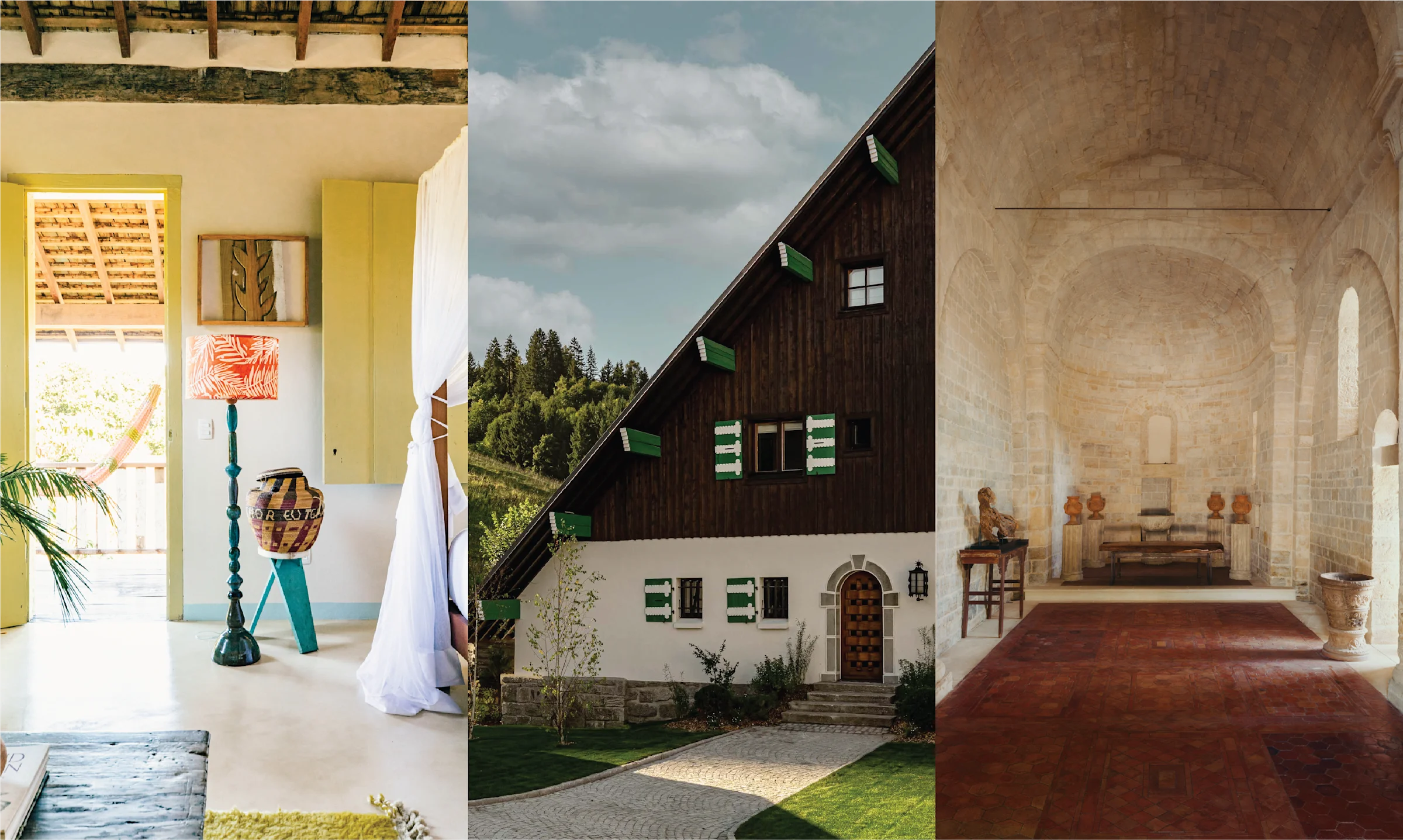
There’s a particular kind of experience that emerges when a property stops performing like a hotel. No room numbers on doors, no check-in desk, no negotiating breakfast times or pool chairs with other guests. Instead, multigenerational families and close-knit groups arrive at a house that functions entirely as their own; keys are handed over, staff is introduced by name, and kitchens, living rooms, and terraces are available at any hour. The freedom is immediate: meals can happen at midnight or at dawn, guests scatter across gardens or gather in one room, children run without fear of disturbing neighbors who don’t exist.
Yet these aren’t simply villa rentals. Each property is rooted in genuine craft and history. What distinguishes them further is the exceptional service and culinary infrastructure; Specialty cocktails appear when wanted, beach setups materialize without asking, and elaborate dinners are laid under olive trees without the need to plan a thing. The appeal lives in this specific balance: the intimacy and autonomy of a private home, animated by the kind of experiences that are nearly impossible to orchestrate alone. These places function as playgrounds for living well, removing every friction point. What remains is the rhythm of being together, unhurried and unencumbered.
La Cavalerie, Provence
Nestled within the foothills of Provence's southern Luberon, La Cavalerie quietly opens its doors to the storied 65-hectare private estate of the late couturier Emmanuel Ungaro. Originally a 12th-century knight's templar commanderie and a 17th-century farmhouse, Aix-en-Provence-born Ungaro spent years working with the local craftsmen and landscape gardeners to restore the medieval property into an intimate creative refuge. From Franciscan façades and reclaimed Italian marble floors to handcrafted tiles and a grand Venetian staircase, the 800-year-old estate is layered with Italian heritage pieces sourced from his extensive travels across Italy, as a nod to his Italian ancestry. Since his passing in 2019, Ungaro's Paris-based daughter Cosima and husband Austin Feilders have become intentional stewards of the estate's future and have embarked on a meticulous five-year restoration to both preserve and open the regenerative estate to guests, an invitation into the rhythms and rituals of Ungaro's multisensorial world.
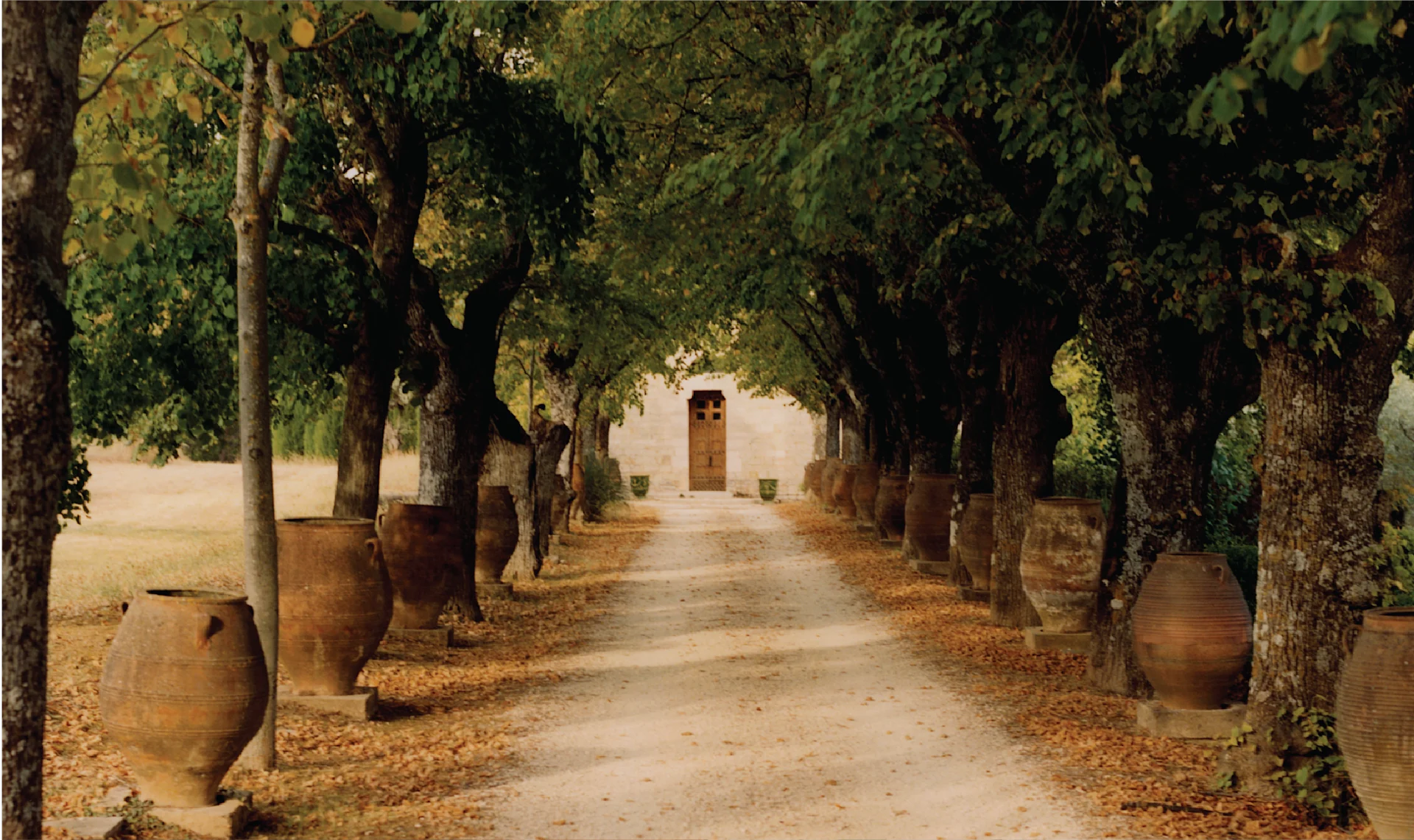
The southern Luberon remains less trafficked than the Alpilles or the northern villages that draw summer crowds, its ochre cliffs and stone hamlets attracting those seeking Provence without performance. Spring brings wildflowers across the protected parkland, while autumn coincides with the olive harvest when the estate produces its olio nuovo. The region's weekly markets in Apt and Lourmarin offer direct access to producers—cheese makers, truffle hunters, vegetable growers working land their families have farmed for generations. Nearby Aix-en-Provence, where Cézanne painted Mont Sainte-Victoire obsessively and Ungaro was born, sits 45 minutes west. The property’s positioning allows immersion in working agricultural landscapes and proximity to the cultural infrastructure of galleries, antiquaires, and Michelin-starred restaurants that define contemporary Provençal life.
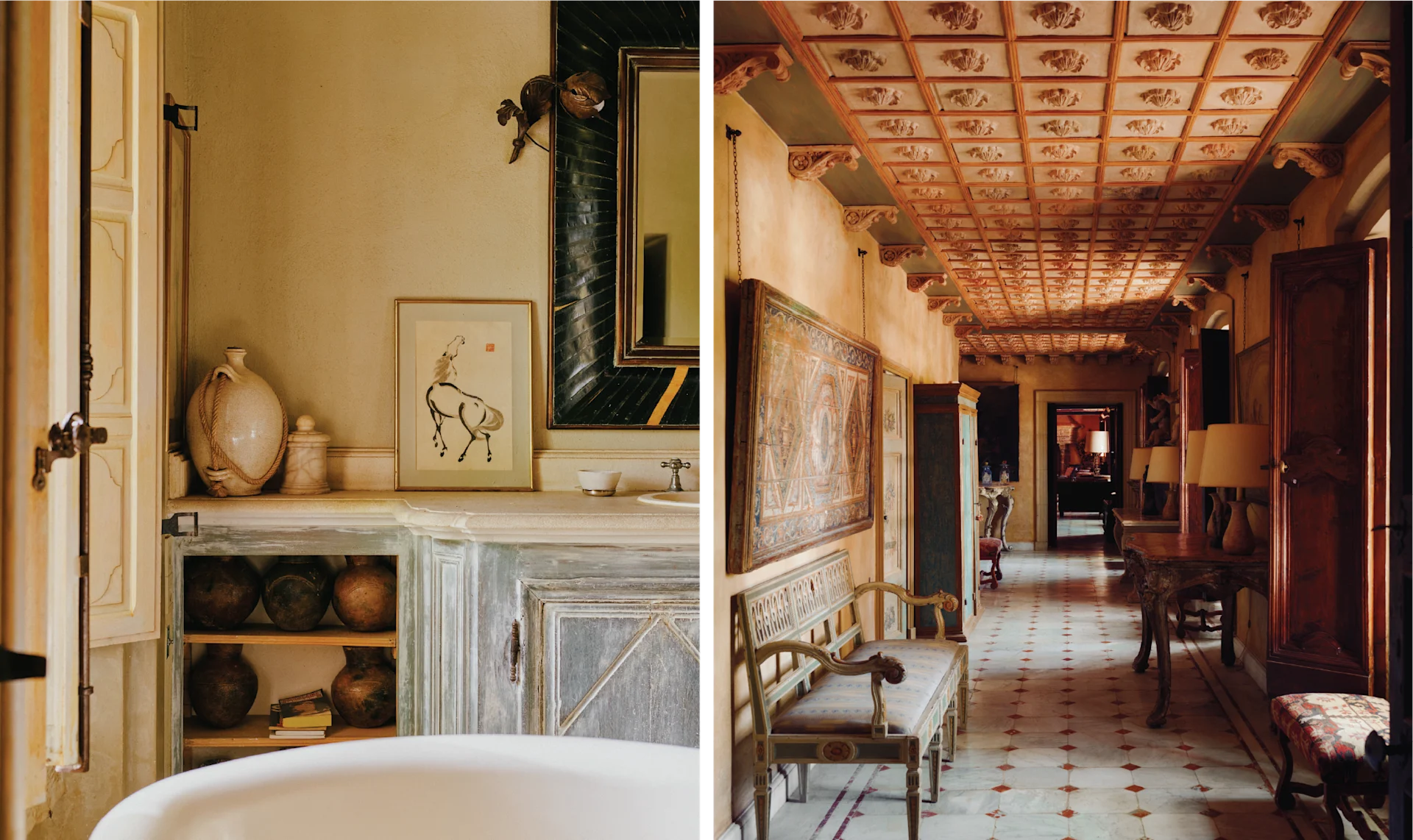
The estate features 11 bedrooms across two restored residences available separately or together for a complete buyout. La Commanderie, Ungaro's original seven-bedroom home in the 800-year-old main house, preserves his vision with vaulted ceilings, monumental fireplaces, and the grand Venetian staircase connecting floors filled with his collections. La Bergerie, a 17th-century shepherd's house restored by Cosima and Austin into a four-bedroom residence, is a more contemporary counterpoint. Days are spent strolling through the estate's UNESCO-designated biosphere and olive groves where they produce some of France's finest olio nuovo, at nearby vineyards or Provençal markets sourcing seasonal ingredients, in the library reading, by the freshwater pool, and at the open-air spa La Source, which draws from a natural spring. NOMA-trained chef Bernardo Costantino creates seasonal menus served three times daily on tableware from the family archive and pieces collected from Syria, Colombia, India, and regional brocantes—meals appearing under centuries-old chestnut trees, on terraces overlooking the Luberon, beside the groves themselves.
Le Sarto, Megève
In 1941, Henry Jacques Le Même completed Le Sarto, an Art Deco chalet that captured his fully realized vision for Alpine architecture. Le Même arrived in Megève in 1925 at the behest of the Rothschilds to design France's answer to St. Moritz, eventually creating more than 250 buildings that established the village's identity. His "Chalet du Skieur" concept—spacious living rooms opening to valley views, sculptural fireplaces, geometric ceramic floors—defined modern mountain luxury. Le Sarto preserves these principles in sculpted woodwork, Art Deco lines, and Scandinavian folk details. Three of Le Même's chalets now carry France's 20th Century Heritage designation. Following a two-year restoration with architectural studio CLAVES, Iconic House operates the 650-square-meter residence as its second alpine property.
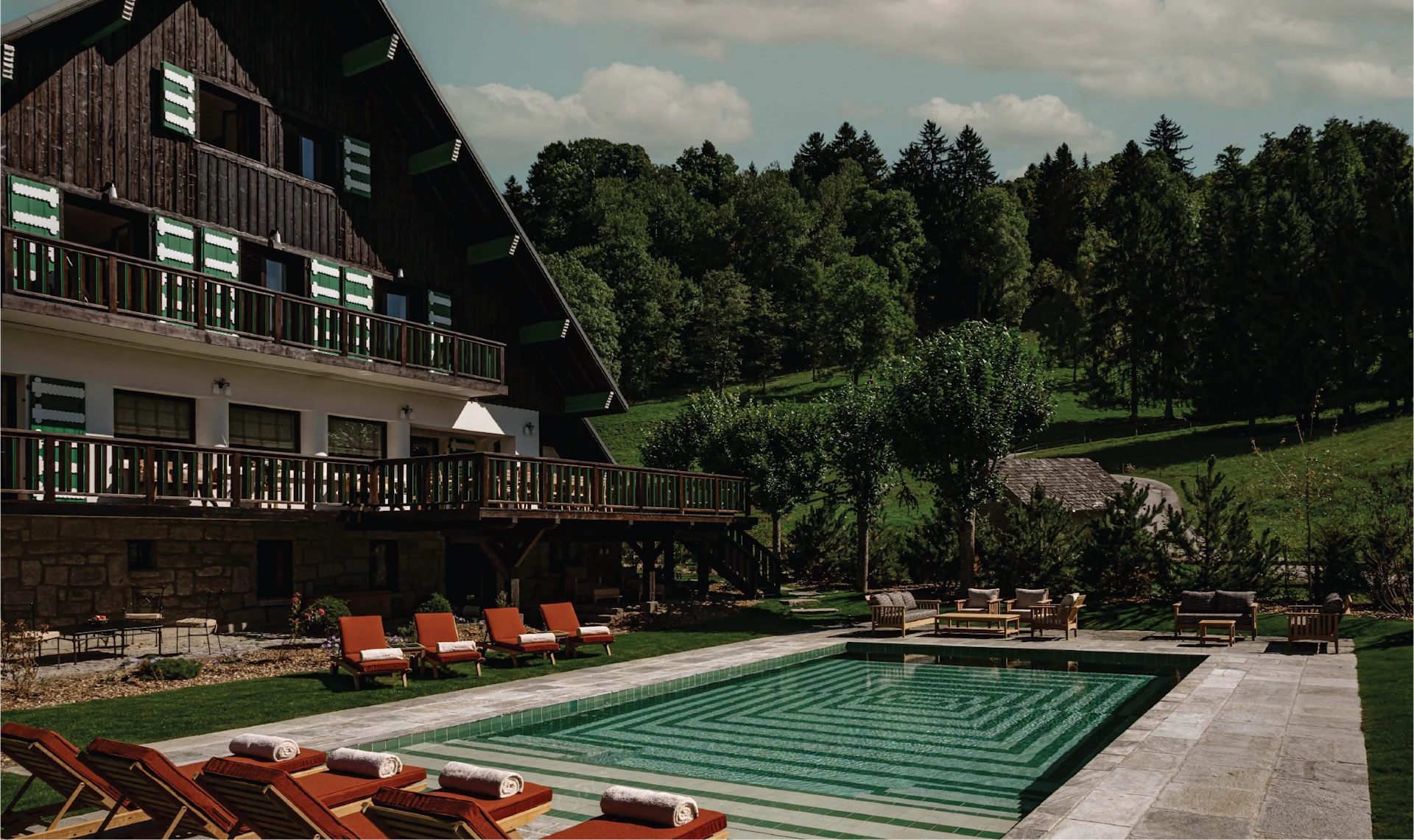
With all the amenities to support longer stays, the chalet accommodates 15 guests across seven bedrooms, with reception areas flowing onto terraces, an outdoor heated pool and Nordic bath, and an interior spa with a pool, sauna, and hammam, and fitness rooms. A chalet manager coordinates logistics, with a private chef providing half-board and maître d'hôtel overseeing service year-round except low season. Winter draws skiers while summer attracts hikers and cyclists seeking cooler alpine temperatures.
Megève sits lower and gentler than neighboring villages, its slopes suited to intermediate skiers and families. This positioning preserved an atmosphere less frenetic than Chamonix, more village-centered than purpose-built Courchevel. The pedestrianized center retains Le Même's buildings, housing galleries, boutiques, and restaurants ranging from Michelin-starred to mountain refuges. Lower elevation means January through March for reliable snow. Summer opens hiking trails to high-altitude lakes, the Tour du Mont Blanc route, and music festivals in outdoor venues.