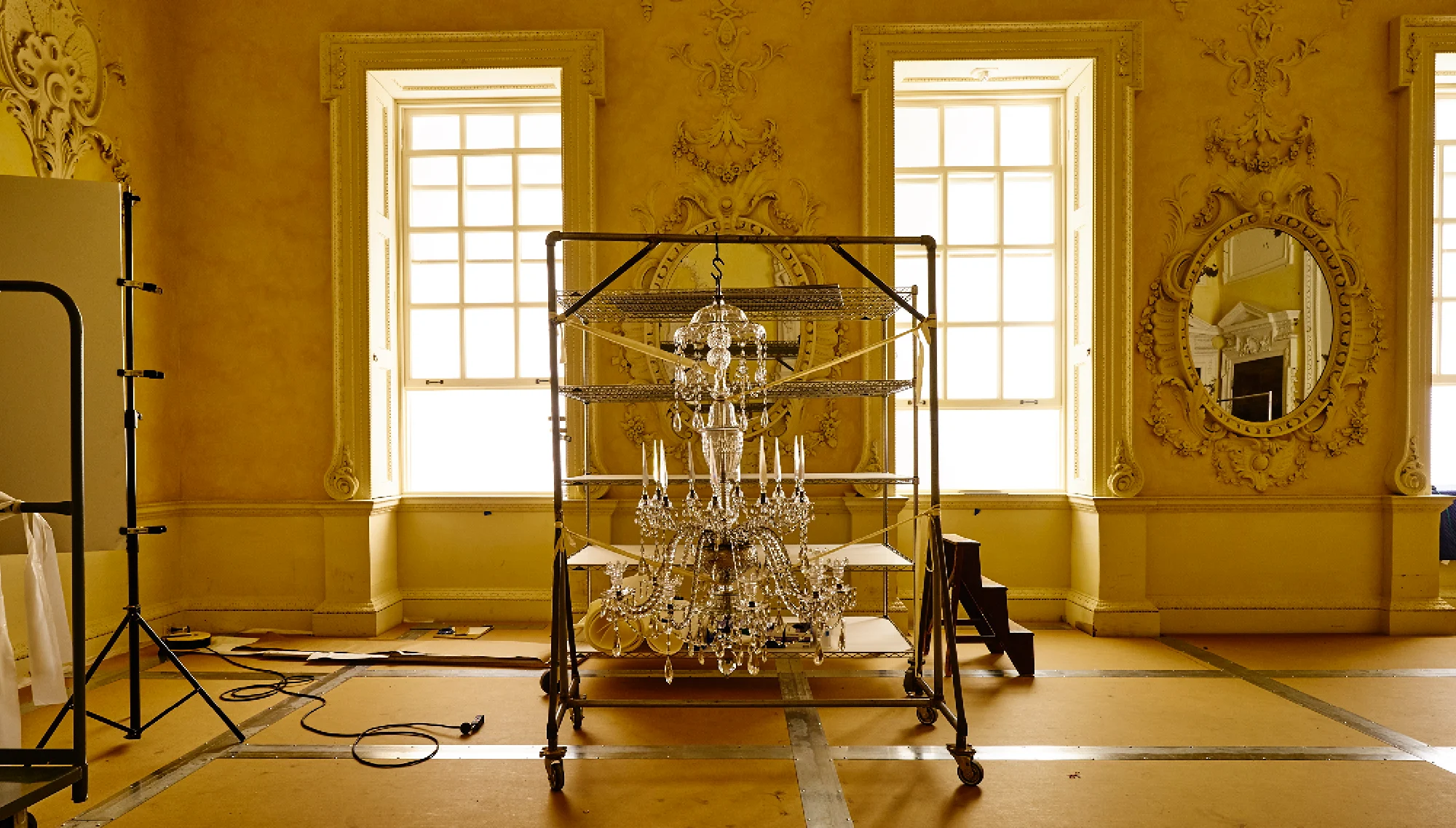
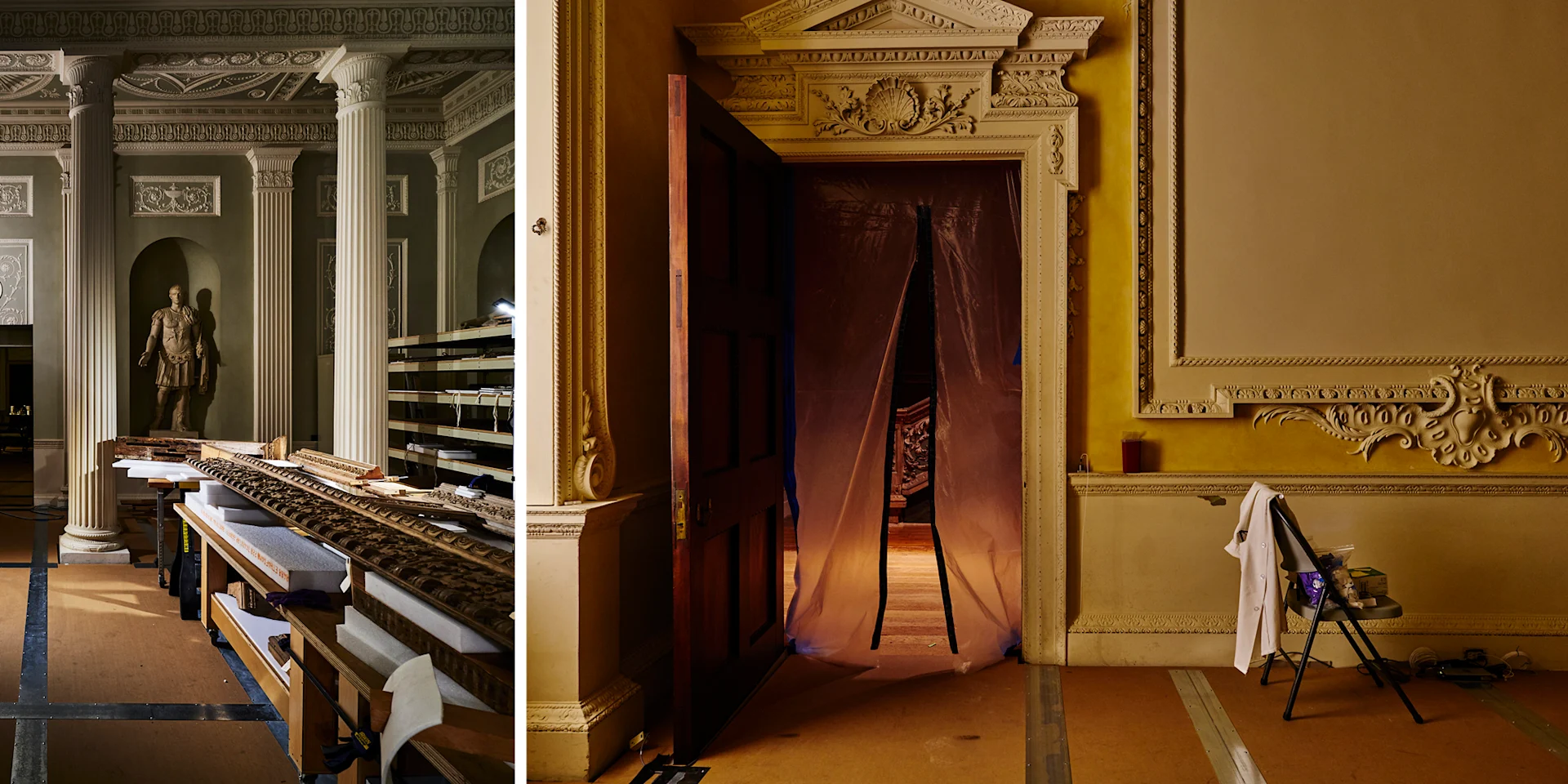
As though a visit to the Met at 25% capacity isn’t magical enough for New Yorkers who’ve had to schedule their visits around the tourist crush — until now, only Anna Wintour could have the Temple of Dendur to herself — there is a delightful new discovery to be made. Turn right past the medieval court and pass through a door you could have sworn wasn’t there before. (It was, but it had been sealed off for decades.) You’ll find yourself drifting through 10 exquisite rooms filled with British decorative arts, displayed with modern style and sophisticated cheek, thanks to their designers, the husband and wife team of Robin Standefer and Stephen Alesch of Roman & Williams.
Gone are the Chippendale and the staged vignettes cordoned off by dusty ropes. Instead, you’ll find soaring bronze-edged vitrines in which over 100 teapots, from gilt to humble slip, are lit like jewels; a soaring carved staircase from the 17th century that you can actually climb; and intimate pocket galleries where you can view textiles in a new way. With the elaborate color story — part of a collaboration with Farrow & Ball, of course — and complex display cases that took a year to build, the feeling is much more cinematic and retail-esque. That’s because, as Standefer explains, the couple was driven by “object lust” to bring the collection to life for a new generation, drawing upon the couple’s beginnings as film set designers. It was this immersion in craftsmanship and beautiful useful objects that led to the creation of their home store and restaurant, The Guild, in SoHo.
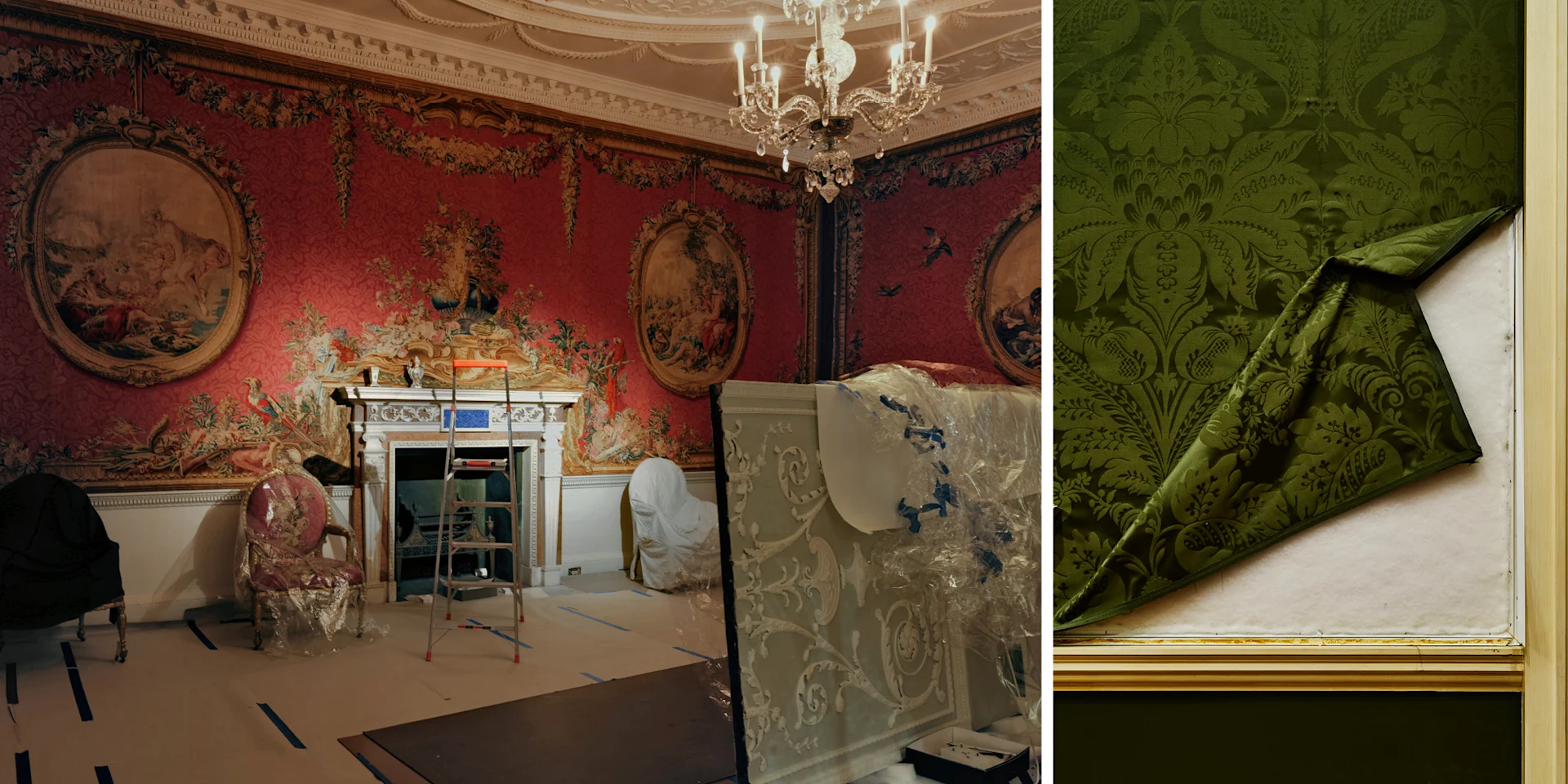
After competing for the job for two years, the duo spent over six years working with the curators, including Sarah Lawrence from the department of European sculpture and decorative arts and Wolf Burchard, the Met’s associate curator of British furniture and decorative arts, to create 11,000 square feet of new galleries housing objects from the 16th through the 19th centuries. (The collection has moved many times since it opened in 1910; the renovation marks the museum’s 150th anniversary. The galleries’ opening had the ill-timed opening date of March 2, meaning that few have seen this new jewel in the city’s beloved cultural crown.)
“It was a very bold move,” Burchard said of the choice. “Roman and Williams were chosen because of their ability to create spaces in which people enjoy spending time — see their restaurants, bars and shops. Their experience with film sets, paired with the fact they had never worked in a museum context before, brought an entirely fresh approach to the presentation of our collection, for which they created a new stage set of operatic drama.”
They also rose to the daunting task of contextualizing objects that were, in many instances, made for a class that was enriched by slave labor. Take the teapots, which, Standefer points out, were originally designed to be enticing as a way to get Brits excited about buying the new import. “Not only is it a visually extremely compelling presentation,” says Burchard, “but it allows us to simultaneously address an array of subjects: creativity and British entrepreneurialism, the tea trade and expansion of the British Empire and, of course, the transatlantic Slave Trade.”
“The vast majority of these things were designed to give joy to their owner or beholder,” Burchard said of the collection, which includes many more common objects of beauty than the typical sterile displays of singular, manor-born objets. “Our hope is therefore that the stage set that Roman and Williams created to showcase our collection helps to convey some of that aesthetic pleasure, while acknowledging and interrogating the complex, sometimes disturbing history of these objects.”
Thanks to Roman & Williams’ design, pleasure leads. We asked Standefer to show us her five favorite elements in the galleries. Be sure to reserve your spot at the Met now — before the tourists (and New Yorkers) return. Because, thanks to brilliant updates like this, the Met will always be at the top of everyone’s list.
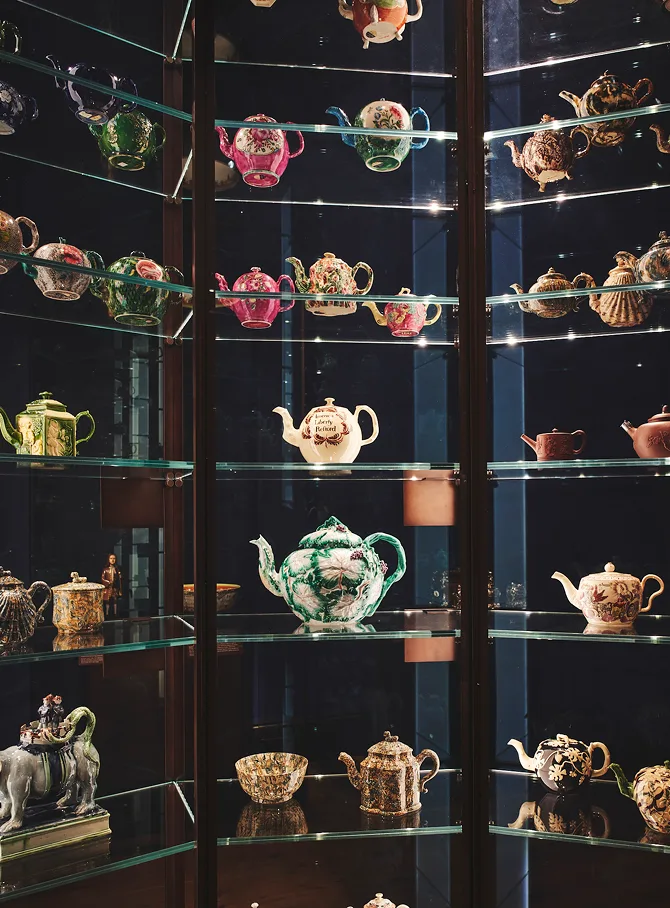
“It’s a moment of total retail drama, with 10-foot-high cases in a 12-foot semicircle. It’s about massing: The Met has thousands of teapots. If you show four teapots, it’s quite polite. We inspired them to embrace objects that were more powerful in mass. When you visit this case, you see the barrage of graphics and see a culture that pulled ideas and references and designs from around the world to promote this new beverage, if you want to boil it down.