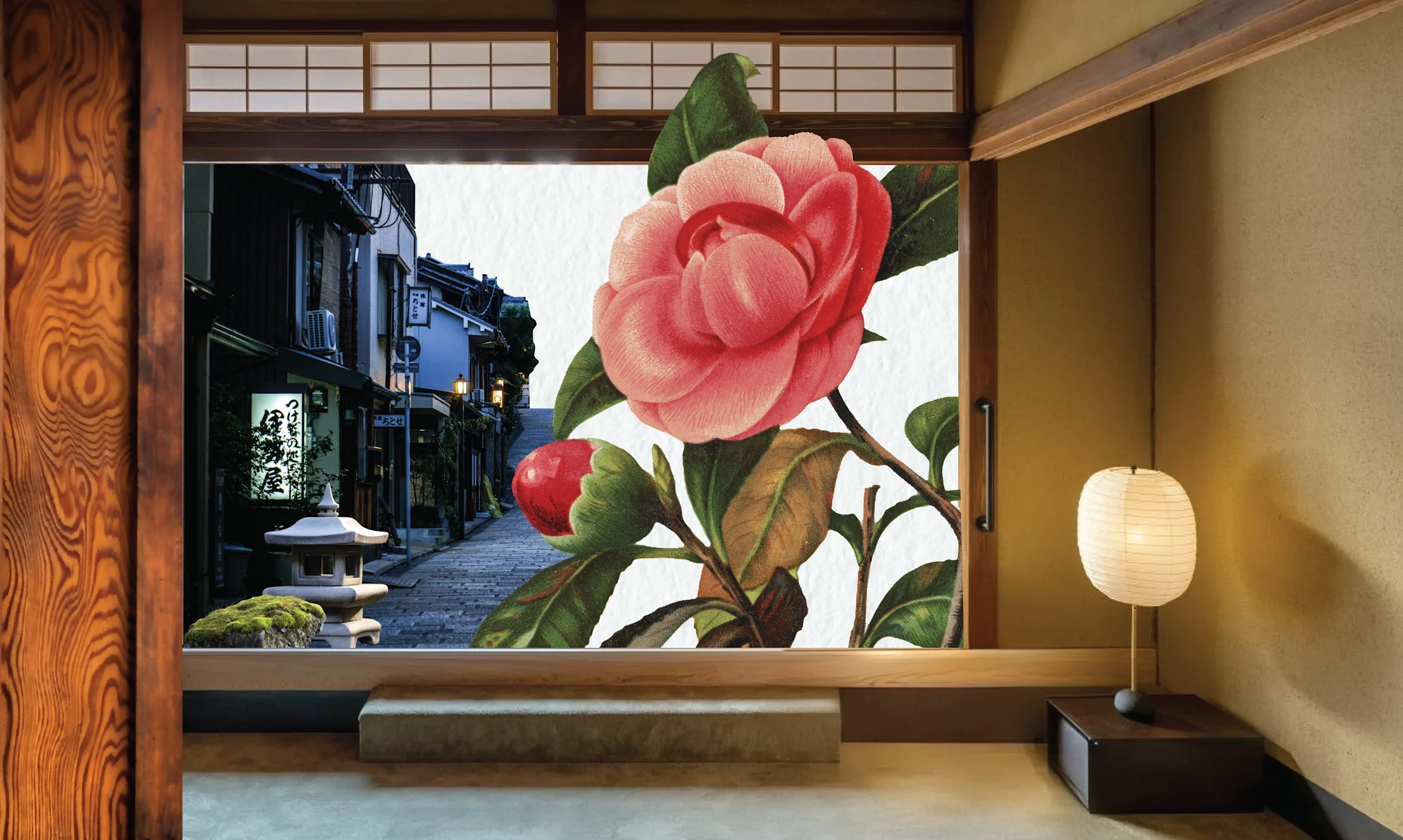
This article is part of a Kyoto story collection, each story exploring a cultural expression emblematic of the Japanese city. The other two stories deep dive on kimono and kaiseki.
Narrow lattice-wood facades. Organic sweeps of earthen walls. Light-filtering paper screens. The scent of woven tatami mats. And hidden courtyard gardens tethered to the micro-seasons. There are few more immersive Japanese experiences than slipping off shoes and crossing the threshold of a traditional townhouse known as a machiya — a time-capsule haven of light and shadows, natural materials and softly crafted beauty.
Japanese cities were once filled with machiya townhouses — often immediately recognisable by their narrow wood facades and deep footprint, having traditionally been used by merchants as shops at the front, with homes at the rear. In recent decades, machiya have progressively vanished from Japan’s urban landscapes. Many of those that survived Second World War bomb blitzes went on to disappear in the nation’s rapid post-war industrialisation, with a large volume still being demolished today in favor of new developments.
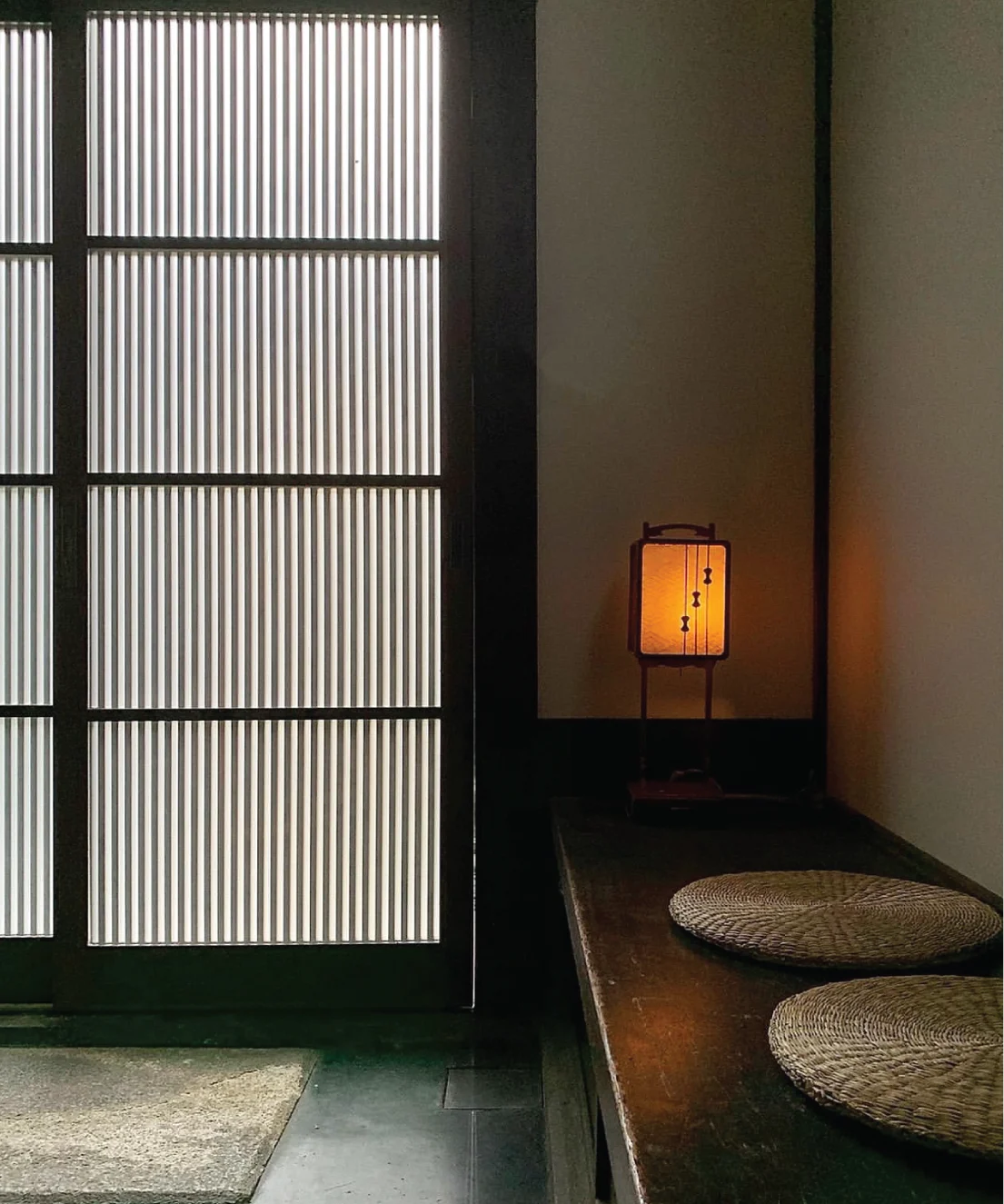
There are still, however, pockets of machiya paradise in Japan — and one such spot is Kyoto where they are known as kyo-machiya. Even within the scenic confines of this former ancient capital, machiya numbers are in steady decline — yet the unique vernacular of its townhouses (whose long, deep layout is dubbed unagi no nedoko — or “eel beds”) is still a signature presence on low-rise grid-lined lanes.
A machiya offers an intimate taste of the Zen Buddhist-inspired aesthetics that elementally underpin Japanese culture — with the journey typically starting in the stone genkan entryway where shoes are slipped off. Stepping inside, the material palette is as unique as it is soul-soothingly serene: drawing deeply from the natural world, there is typically an interior scenescape harmonizing woods, tatami, stone, paper, bamboo. Etched into surfaces is the patina of time, from the slowly aging sweeps of hand-crafted tsuchikabe earthen plaster walls to the gently lightening tatami flooring.
In short, a machiya is the spatial expression of the elemental awareness engrained into Japanese DNA — of the endless cycle of nature and the fleeting beauty of life (a perspective also reflected in cherry blossom appreciation, tea ceremony, and ikebana flower arranging). I myself have been immersed in this beauty-drenched world since moving to Kyoto with my family in 2022, after 15 years living in Tokyo. In the process, we swapped a bright modern apartment in Nakameguro for a wooden kyo-machiya townhouse in the old textile district Nishijin.

Living in a machiya changes the palette of your daily life. The deeper textures and tones of the natural materials sharpen your sensitivity to the beauty of light and shadow (while it’s much darker than our Tokyo home, I know exactly when to enjoy the late morning sunlight hitting earthen walls above the kitchen sink). Nature is center stage, not only through the materials but also our garden. Sitting between the house and the rear storage building known as a kura, provides a mini microcosm of the natural world, with stones, lanterns, trees, flowers. Most poetically, it’s a constant reminder of the shifting seasons — from the fleeting nectar-like sweetness of kinmokusai (sweet osmanthus) in early autumn to the wintertime blooms of lipstick-red tsubaki (camellias).
For visitors, there are many ways to dip into this world. A growing number of restoration projects are tapping into the beauty of machiya in Kyoto, reimagining them as galleries, tea rooms, design stores, and hotels. Hanaré is one such company. Co-founded by Kyoto residents Chie and Christian Lengellé, they worked with specialist artisans and contemporary architects to renovate machiya, and create timelessly serene accommodation across the city (they currently have five, with one more launching in May).