One Saturday morning in late March 1977, the weather on the hill of Garavicchio, Capalbio, was gloomy: not exactly cold, but grey and humid. The eighteenth-century villa on top of the hill, belonging to brothers Carlo and Nicola Caracciolo (my uncle and my father), was one of the few homes built before the draining of the marshlands that for centuries had infested this stretch of coastline, known as Maremma, with deadly malaria. That morning in March the house was alight. A fragrance of roasts and rosemary pervaded the house and merged with the scent of oak logs burning in the fireplaces. A special guest was expected that day: Niki de Saint Phalle.
The French-American artist had flown in from Paris that very morning with the mission of finding a piece of land on which to realize her dream project, the Tarot Garden. Niki had often spoken about this to Marella Agnelli, Carlo and Nicola’s sister. The two women had met in New York in the early Fifties, when they were in their twenties, in the studio of Erwin Blumenfeld, the great photographer for whom they modeled, and became lifelong friends. A few years later Niki, who by then was married and a mother, sank into a deep depression. Interned in a psychiatric institution in Nice, France, she was rapidly diagnosed as schizophrenic and bombarded with a mix of barbiturates and electric shocks. A young psychiatrist at the institute sensed that she was not a schizophrenic and experimented with a therapy that revolved around painting. That was the turning point. As Niki herself revealed to me years later, shortly after starting this therapy she had a dream that marked her rebirth: a monumental garden that represented the twenty-two Major Arcana of the tarot cards. Every Arcana, in her vision, marked a passage of a spiritual journey.
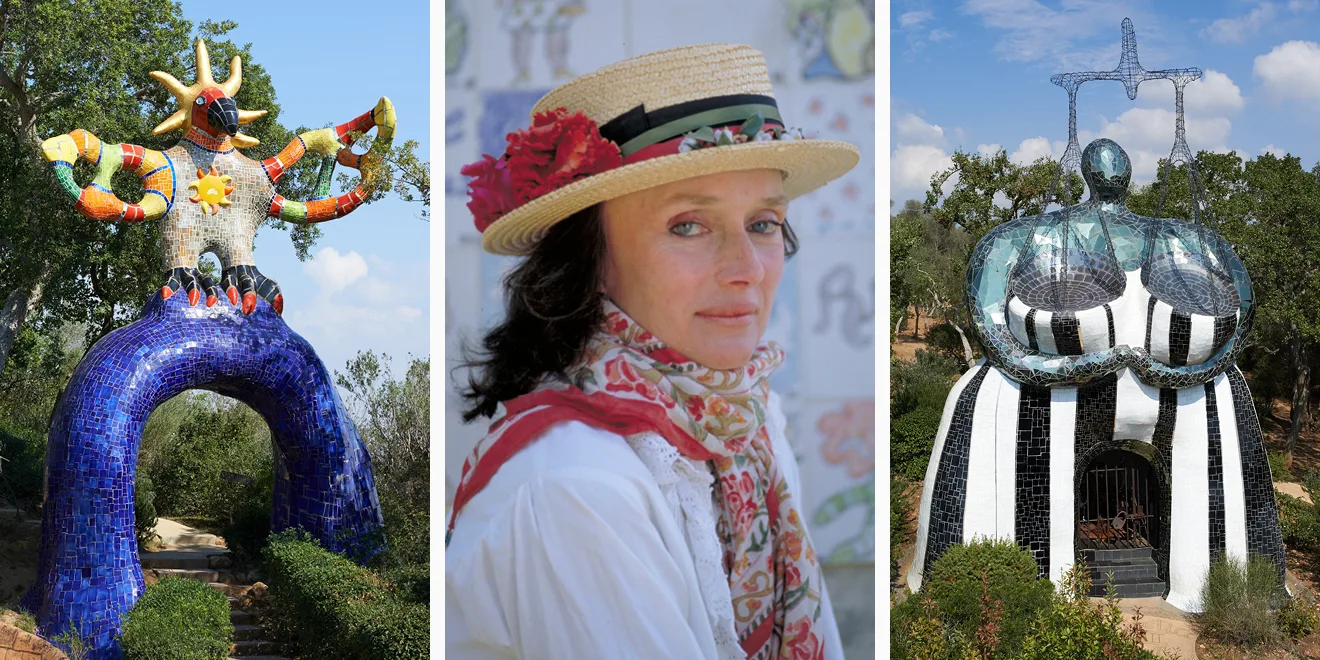
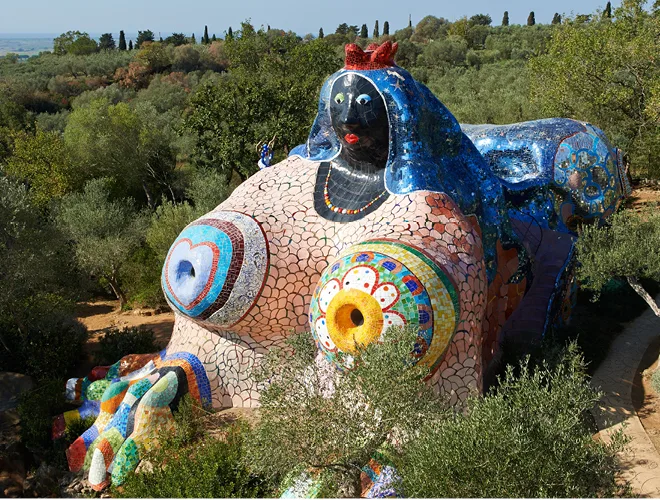
By spring of 1977, Niki was known in the art world for the spectacular and irreverent artistic performances with her partner, the Swiss sculptor Jean Tinguely, and for her cheeky Nanà sculptures—a joyful tribute to female creativity, sexuality and freedom. Now, at forty-seven and in full artistic bloom, the moment had come to give substance to that youthful dream. Her friend Marella suggested she meet her brothers. Carlo was then a fifty-two-year-old publisher who had recently launched the daily La Repubblica, soon to become one of the major independent and “liberal” newspapers in Italy. Nicola was now a forty-five-year-old documentary filmmaker with a passion for history and literature. He was also a militant environmentalist. Guests of the house tended to be journalists and intellectuals. In Garavicchio, Niki came into contact with a dynamic group of people that adhered to democratic ideals and were moved by a desire for social change.
Wearing a colorful dress designed for her by her friend Thea Porter, one of the pioneers in fashion of the “hippie chic” style of the Sixties and Seventies, Niki made her entrance that day holding a small clay model in her hands. It was the miniature of her “dream:” a fantasy world inhabited by birds in flight, tentacular trees, Popes, both male and female, and crowned sphinxes. She spoke of Gaudì’s Parc Guell, in Barcelona, and of the 16th-century gardening folly known as the “Park of the Monsters” in nearby Bomarzo. Memories from that spring day for me, a shy twelve year old at the time, remain indelible. Niki radiated enthusiasm and strength and I became instantly fascinated by her. After lunch, we all went for a long walk in the rain. I remember the scent of the asphodels and of the wet earth; the call of the hoopoe birds amongst the olive groves and the colourful plumes that soared from Niki’s wide-brimmed hat. By the end of the afternoon she indicated a natural amphitheatre immersed in thick Mediterranean vegetation. The Tarot Garden dream was becoming a reality.
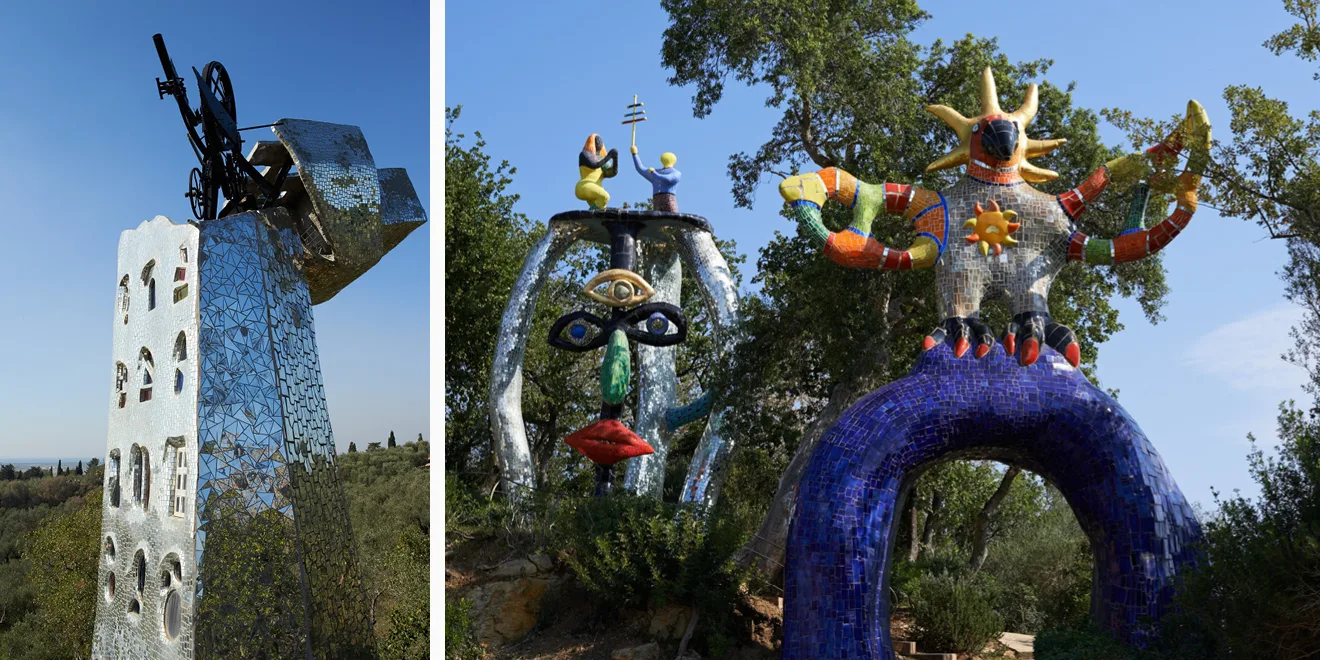
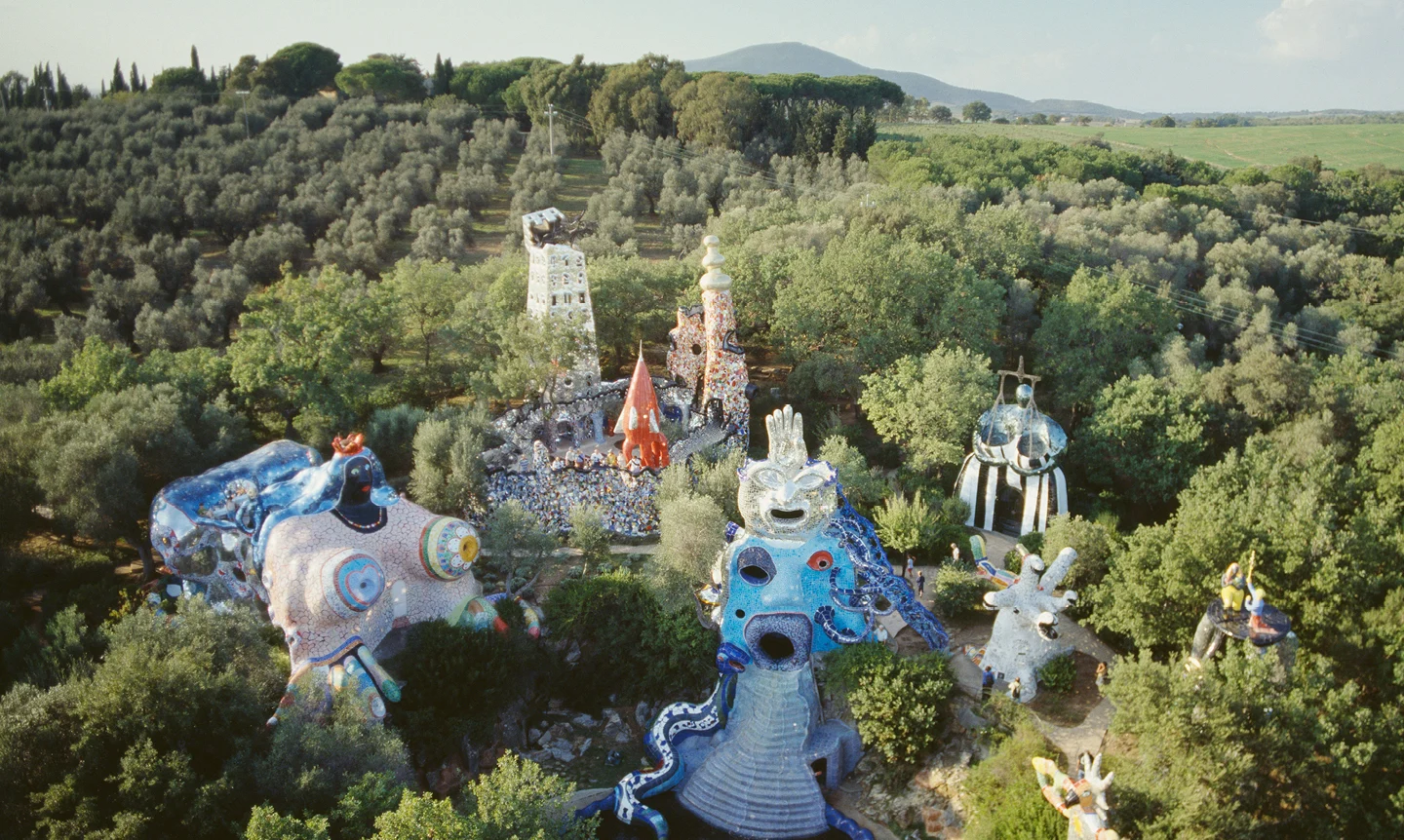
As an adolescent, I witnessed the transformation of these two hectares of hilly wilderness into a dreamy sculpture garden inhabited with dragons, female warriors, colossal snakes, angels, devils, bold Nanà figures and the many symbols from the tarot deck. A couple of summers, encouraged by Niki, I tried my hand at welding parts of the metal that formed the structure upon which cement was sprayed. Niki and her team later covered every inch of the concrete with a delicate mosaic of colored glass, mirrors and hand painted ceramic tiles. The garden allowed her to experiment with the entire spectrum of human experiences represented by the tarot cards: from the primordial vitality represented by the Sun to the melancholies of the Moon, from the spiritual wanderings of the Hermit to the world of darkness represented by Death. The focal point of the garden is the Fountain of Fortune, a kinetic metal sculpture by Jean Tinguely with waterspouts and wheels endlessly turning, symbolizing fortune. Water pours into the fountain from the mouth of a cyclopean head, which is connected to the fountain by a staircase covered in marbleized pale blue majolica tiles that shines under the cascade of water.
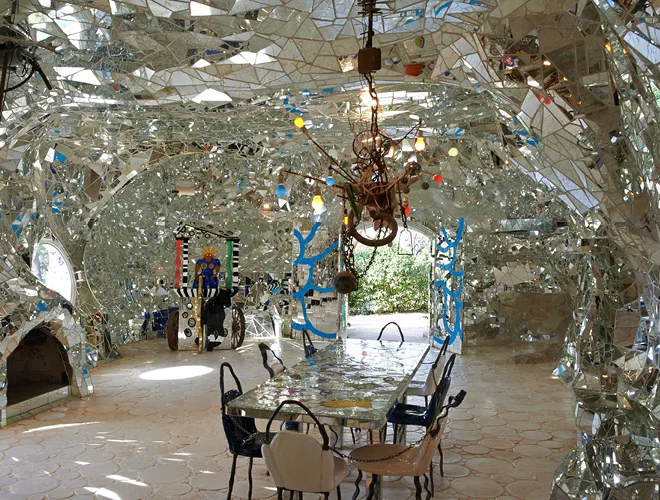
To Niki’s joy, the fountain transformed the area into a natural oasis for migrating birds and other wild animals. Her love of nature and her embattled defense of the environment are affirmed by the murals inside the “castle:” the hunted rhino wounded to death; a blue sea overwhelmed by a wave of blackness, evoking petrol; a column made of corals, symbol of a delicate and defenseless nature. Not one of Garavicchio’s ancient oaks and olives was cut to make place for the sculptures. The year 1979, when construction began, was the same year the Italian government approved a crazy plan to build what was to become the largest nuclear plant in Europe, just a few miles south of the garden, in seismic territory. Thanks to my father, Garavicchio became the theater of meetings between different factions of a nascent environmental movement. Niki came to realize that the Tarot Garden was becoming much larger than a dream. It was establishing itself, in the eyes of the local population but also nationally and internationally, as a political symbol of a civil and non-violent resistance in what was to become one of the great wars of our times: the defense of the natural environment.
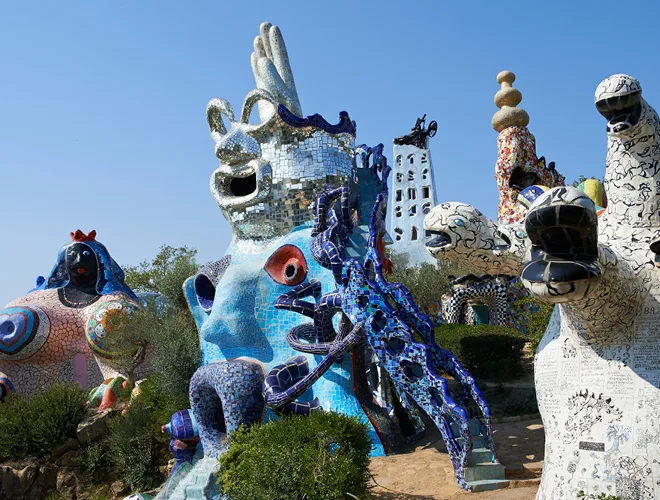
One day, Niki declared that the hand dominating the garden from above the head of the Magus, its giant palm facing towards the lands on which the menacing nuclear plant was being built, represented nothing less but divine will itself, protecting both the landscape and its inhabitants. It turned out to be a prophetic affirmation. Who could have thought, at the time, that a national referendum would eventually put a stop to what should have become, in the intentions of the then-political establishment, the largest nuclear power plant in the whole of Europe? The Tuscan Maremma, despite other more recent attacks, remains to this day an oasis of peace and natural beauty. The grassroots environmental movement that grew out of the fields of this region found an impassioned and unexpected ally in Niki de Saint Phalle.
To visit the Tarot garden, make a reservation online. Artist Niki de Saint Phalle’s foundation has organized a show of her work and life in the town of Capalbio this summer with 100 artworks across two locations: the Frantonio Gallery and the town’s old castle. The exhibition, which opened on July 10, will continue until November 3 (open daily through September 30 and weekends only thereafter).