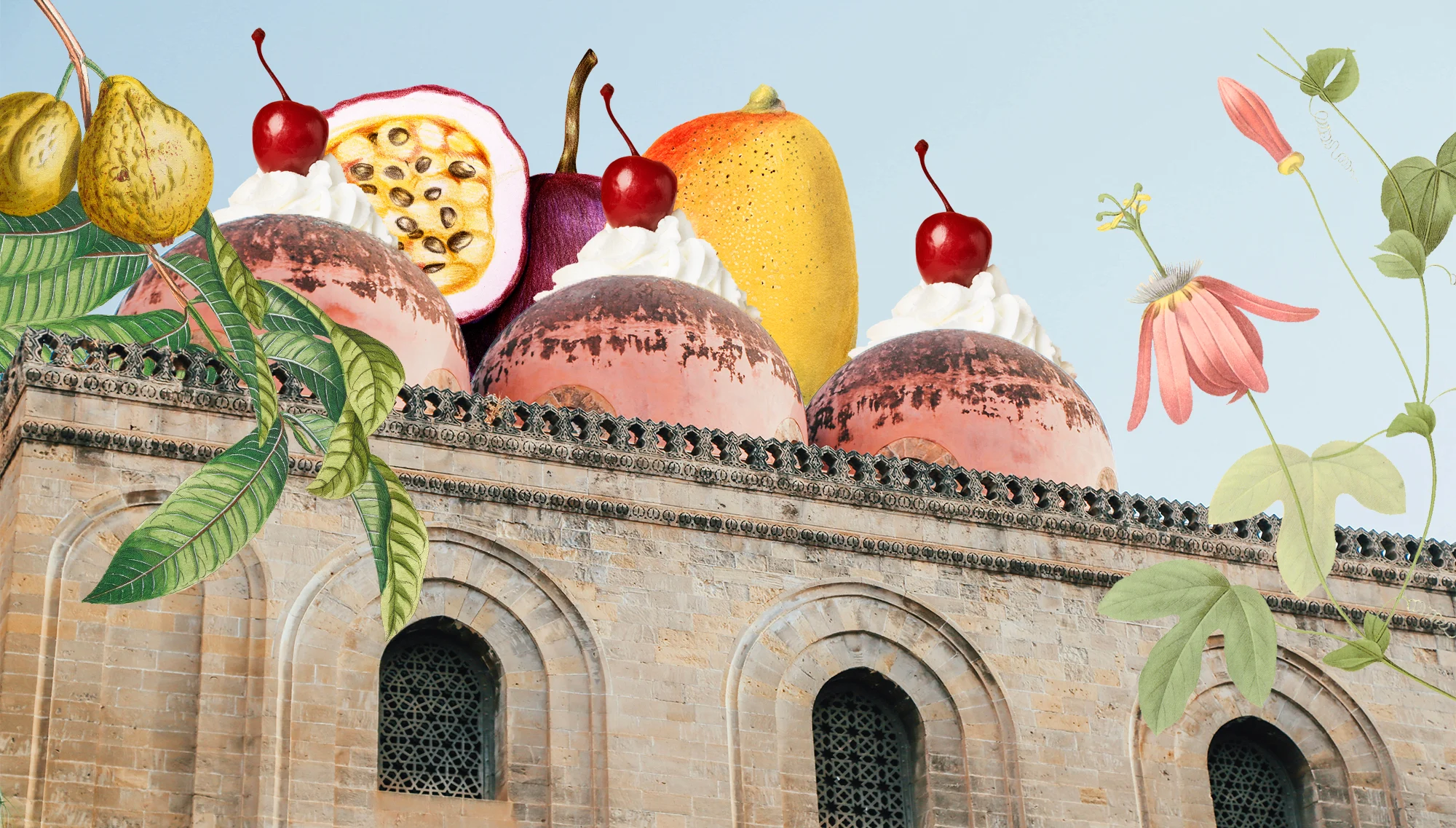
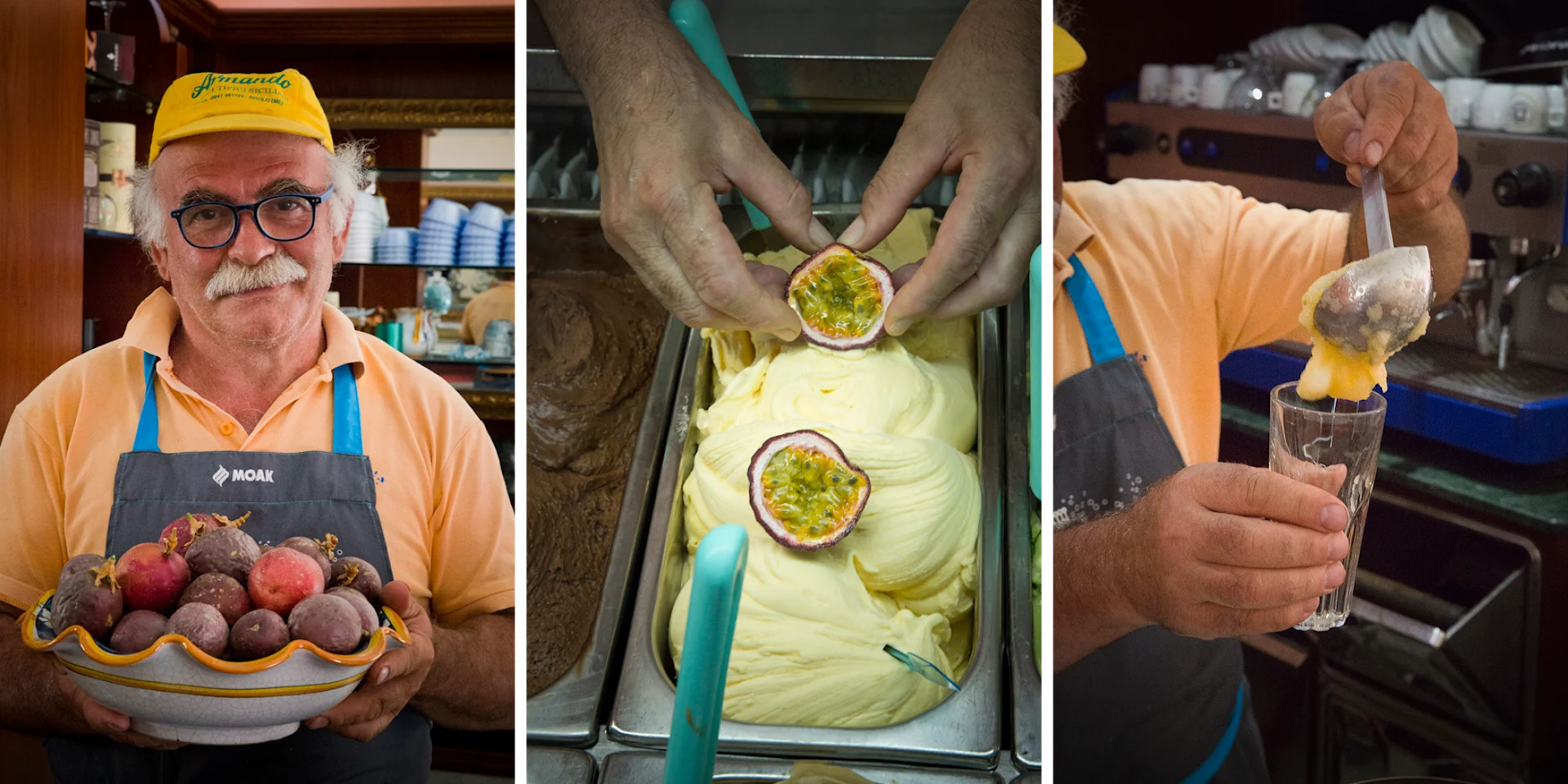
For Bruno Armando, there is no doubt that the best mangoes are grown in Sicily. “Our mangoes travel less and are therefore naturally riper, juicier, and more intense,” says the respected pasticciere from the northeastern town of Brolo in a typically understated Italian fashion. Only in the last few planet-warming years has Armando, who works exclusively with local ingredients, been able to incorporate such aromatic tropical fruits into his sweets. Less novel, however, is the fact that Sicilian pasticcieri and gelatieri have spent millennia experimenting with new ingredients and adapting them to Sicilian recipes.
Nearly everything grown in Sicily today arrived from elsewhere at some point: olives with the Phoenicians, almonds with the Greeks, pistachios and sugarcane with the Arabs. Oranges are said to have been introduced by a monk returning from the Philippines, while prickly pears arrived with the Spanish, who ruled both Mexico and Sicily. For centuries, local confectioners have transformed these imports into the island's exuberant sweets, ice creams, and granite. Among this dazzling abundance, one dessert stands above the rest as Sicily's most emblematic: the cassata.
This elaborately decorated cake consists of sponge cake soaked in liqueur or fruit juice, layered with sweetened sheep's milk ricotta, candied fruit, and chocolate. It is then enrobed in marzipan, glazed in shades of green and pink, and lavishly ornamented.
Cassata dates back centuries and was first mentioned in writing in the 14th century, explains Armando as he pulls one of the ornate cakes from his refrigerator. Some trace its origins even further, to the 10th century and the arrival of the Arabs in Sicily. “It has constantly evolved,” he says.
It is believed that ricotta sweetened with honey was eaten here when the island was still a Ancient Greek colony. But with changes in its rulers, so changed the dish. Sicily's many invaders all left their mark—in architecture, culture, and agriculture—and in the preparation of the cassata.
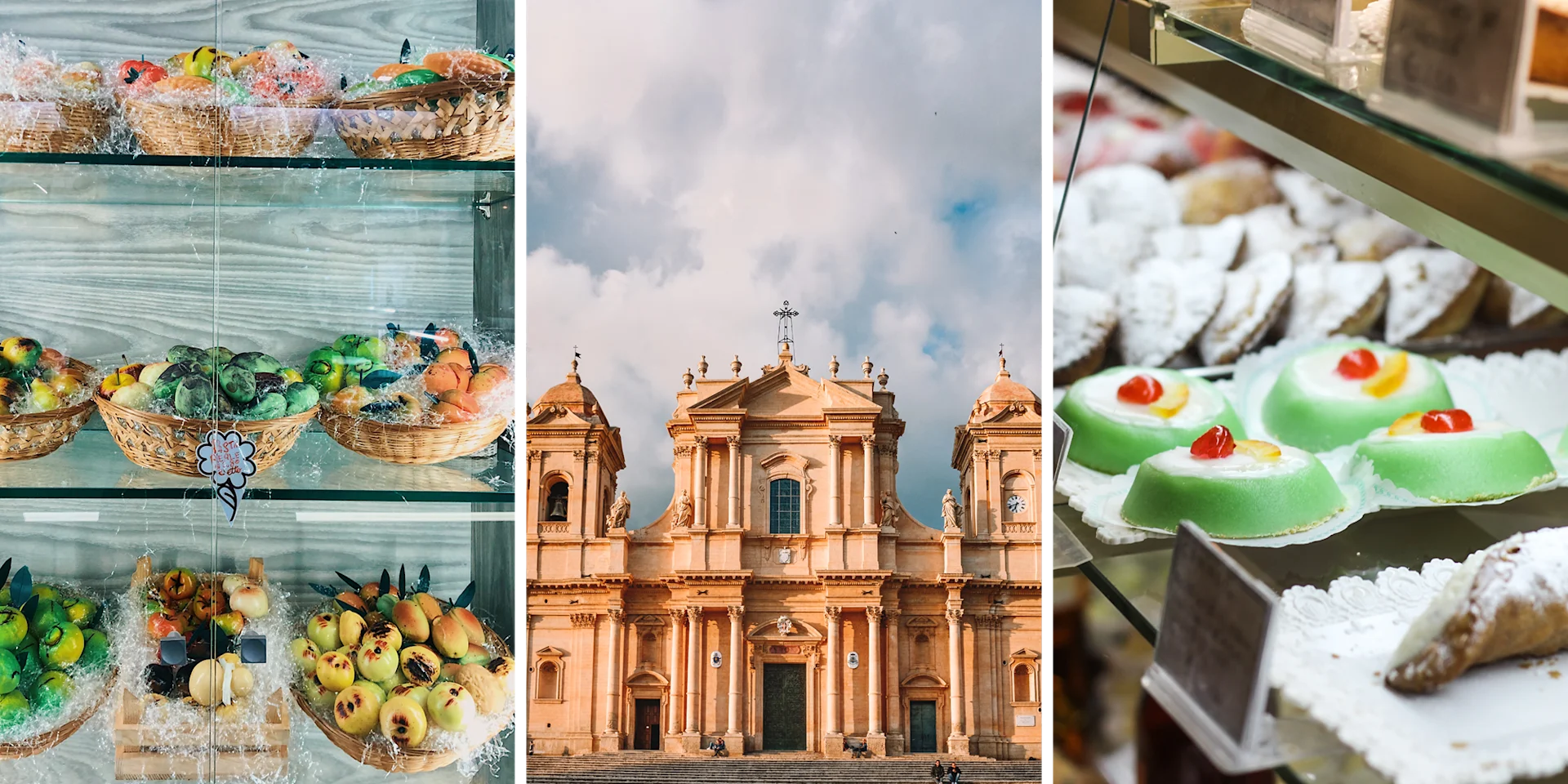
“The cassata is made with candied fruit,” which he attributes to Middle Eastern culinary traditions. Chocolate, a frequent addition, was brought by the Spanish from the Americas. And the Norman rulers may have mastered the technique of making marzipan from almonds and sugar. “However, one thing never changed,” says Armando emphatically: “The ricotta for the cream must exclusively be made from sheep’s milk.” At some point, someone came up with the idea of covering the ricotta cream with marzipan and icing it with sugar.
That someone was likely a nun, Armando says, “because patisserie production took place in convents for centuries.” To this day, religious occasions in Sicily—including funerals—are marked by baroque quantities of desserts. Their close association with feast days and rituals has helped preserve many traditional dolci through centuries of hardship and poverty.

From the 17th century onward, cassata acquired its exuberant appearance through lavish garnishes of candied fruit, including oranges, pears, citrons, cherries, and quince—and, more recently, mangoes, lychees, and guavas. “One can also add pistachios or almonds, which is common in some parts of the island,” says Armando. In such cases, however, “a true Sicilian artisan” uses only local ingredients. “You won't find a better almond than the Avola, grown around Siracusa in the island's southeast,” says the pasticciere. “And the same goes for the Bronte pistachio, which grows in the volcanic soils of Mount Etna and is harvested only every other year to develop its full intensity.”