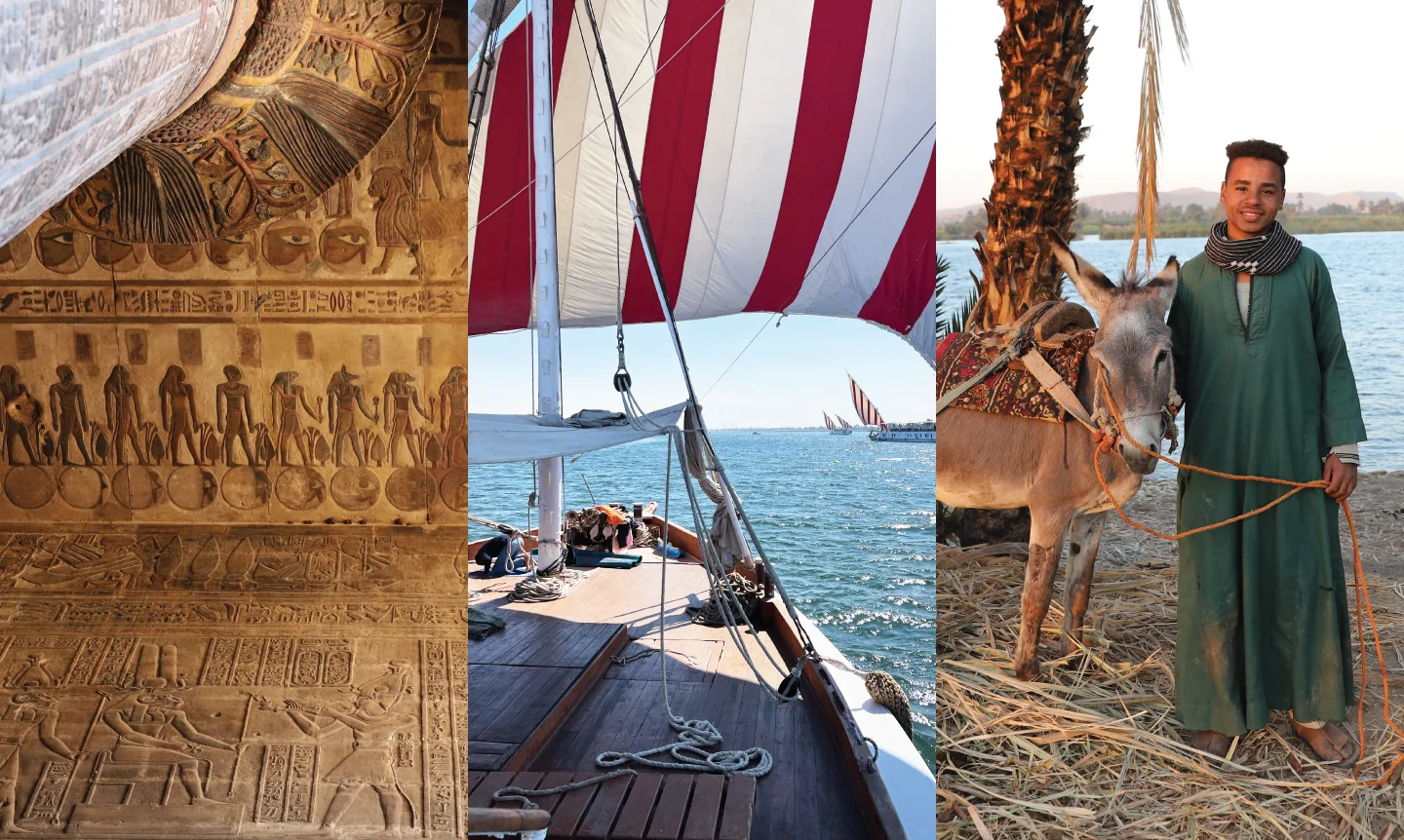
It was nearly a year in the making: after a few Covid delays, childcare fumbles and a lost passport, I finally had the chance to travel to Egypt with three childhood friends. We were embarking on Meroe, one of the dahabiyas, or traditional Nile river boats, in the Nour El Nil fleet, that hosts passengers on a five-day cruise up the Nile, from the southern city of Luxor down to Aswan. I had seen enough images on my Instagram feed of the company’s flotilla of red and white sails billowing along the Nile over the last 18 months (Egyptology seems to be having a moment— last year marked the centennial of Howard Carter’s opening of King Tutankhamun’s tomb and the massive Grand Egyptian Museum in Giza, which will hold over 100,000 artifacts, will finally open later in 2023.). I almost felt I had already been. But even for this seasoned traveler, the trip left me, in a word, gobsmacked.
My friends decided to head over to Cairo a day earlier to see the Pyramids (they arrived by 8 a.m. to beat the crowds), so I met up with them after in Luxor. My slightly type-A, check- every-box New Yorker anxiety over missing out was soothed by a large ceramic floral plate and striped caftan my friends brought me from Madu, an incredibly chic homeware shop in Cairo, as a consolation prize.
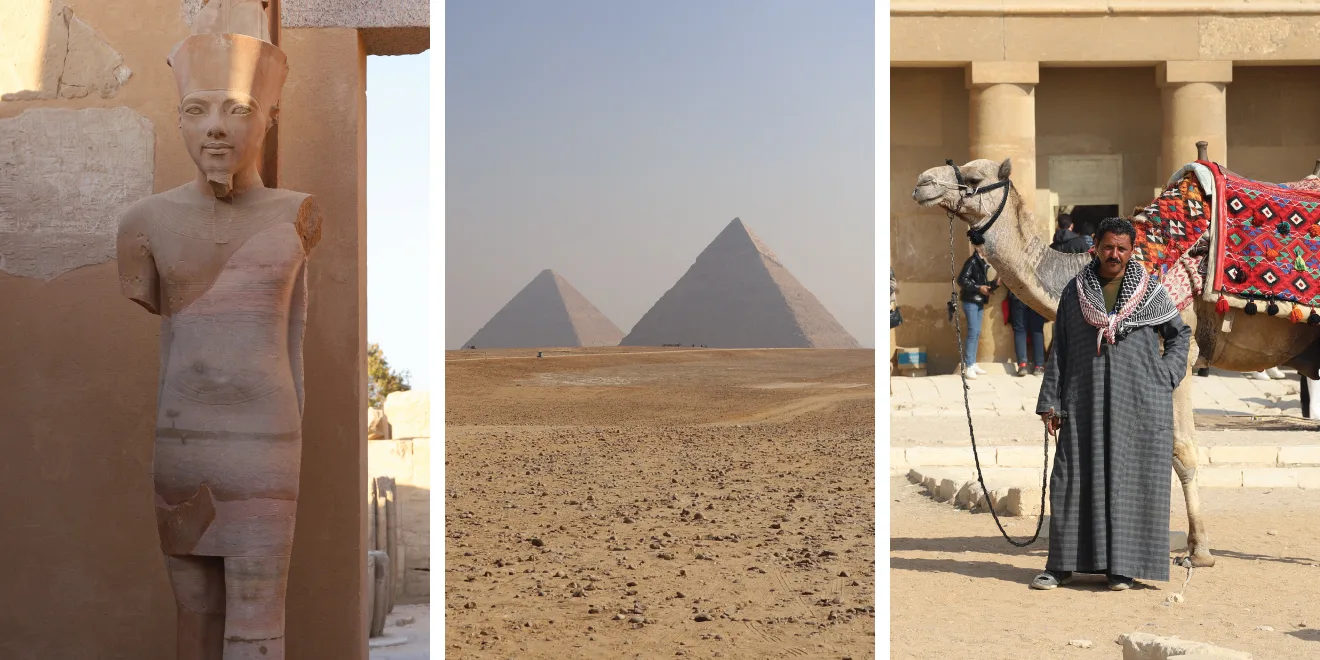
Thankfully, Luxor, essentially is a city as sprawling open-air museum, easily made up for any remaining FOMO angst with its motherlode of ancient Egyptian antiquities. The main sight on the East Bank is the many temples of Karnak, while the West Bank is home to the Valley of the Kings, where Tutankhamen and other pharaohs were buried, and Valley of the Queens, the necropolis for royal wives and children. For our first day, we decided to focus on the Karnak complex dedicated to the ancient sun God Amun Re. Built over 2,000 years ago, each subsequent pharaoh added their own flourish to the vast mix of chapels and pylons. The complex, about the size of ten cathedrals in total, was an easy way to spend the day, ambling among the kiosks, obelisks and causeway of columns.
In order to limit the number of people entering (apparently all that tourist breathing can do major damage to the wall paintings), only some of the tombs in the Valley of the Kings are open at any given time. It’s worth paying extra (just a few dollars, really) to visit the tombs of Seti I and Ramesses VI, which are some of the largest and filled with ornate, colorful scenes and symbols depicting ancient texts from the Book of Dead and the Litany of Ra. I was expecting just to catch glimpses of random fragments from these ancient sites, but the walls of each artifact were so vivid and intact it was as if they were painted yesterday. It’s sad to think that much of the treasures that once filled these tombs have been pilfered and now sit from their original grounds in museums around the world. But in many ways, it feels even more sacred to be able to still see what has been left in situ. The Temple of Dendur at the Metropolitan Museum of Art back home will never feel the same to me.
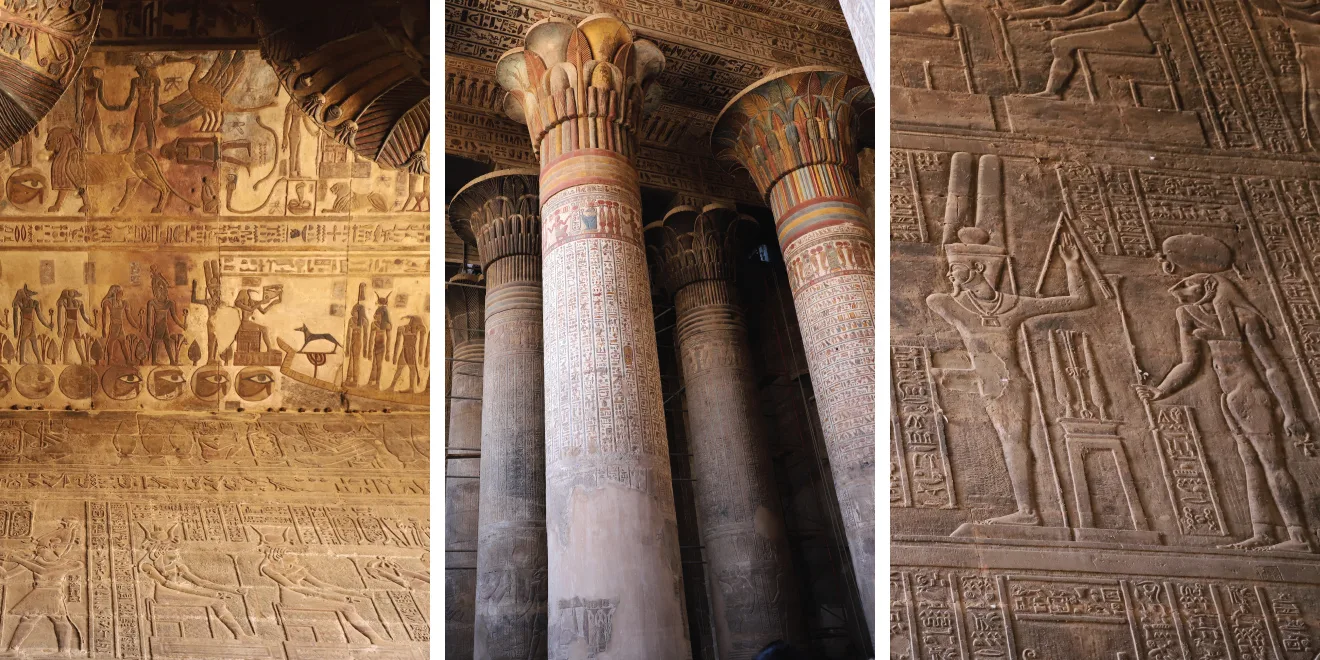
Over in the Valley of the Queens, the tomb of Queen Nefertari, the wife of Ramesses II (or Ramesses the Great, if you will) is not to be missed. Most notably, it's the only one here not shrouded in glass. We arrived just a few minutes before the closing time of 4 p.m, which meant we had to bribe — gently — the entrance guard to allow us in. I promised I’d buy a mini sarcophagus as a gift for my 7-year-old from his friend’s kiosk on the way out. We paid the equivalent of about 50 U.S. dollars per ticket for about ten minutes in the tomb. We half-jokingly debated limiting the number of times we exhaled around the extant monuments to human history, but in truth the walls depicting chapters from the Book of the Dead, which show how the beloved Nefertari transforms into a bird in the afterlife, left us speechless. I had to stop myself from reaching out to touch this ancient wallpaper of hieroglyphics. Such a staggering display of human artistic achievement can almost make you lose your museum manners.
It was almost dusk when we arrived at Hatshepsut, a mortuary temple built by Pharaoh Hatshepsut, one of Egypt’s only female rules, who reigned for two peaceful and prosperous decades. The 3500-year-old temple is carved into the bottom of rugged limestone cliffs, most of what visitors see has been painstakingly reconstructed since it was discovered in 1891. We were informed by our guide that the following night there was going to be a massive dance rave with different D.J.s at this very site. (That explained why my Air Cairo flight to Luxor was filled with club kids in Yeezy-style sneakers.) Typically, I would roll my eyes at the made-for-TikTok EDM vibes. Would they appreciate what stood before them? But as the sun set on this elegant temple built into the escarpment, I couldn’t think of a more mythical place to dance the night away.
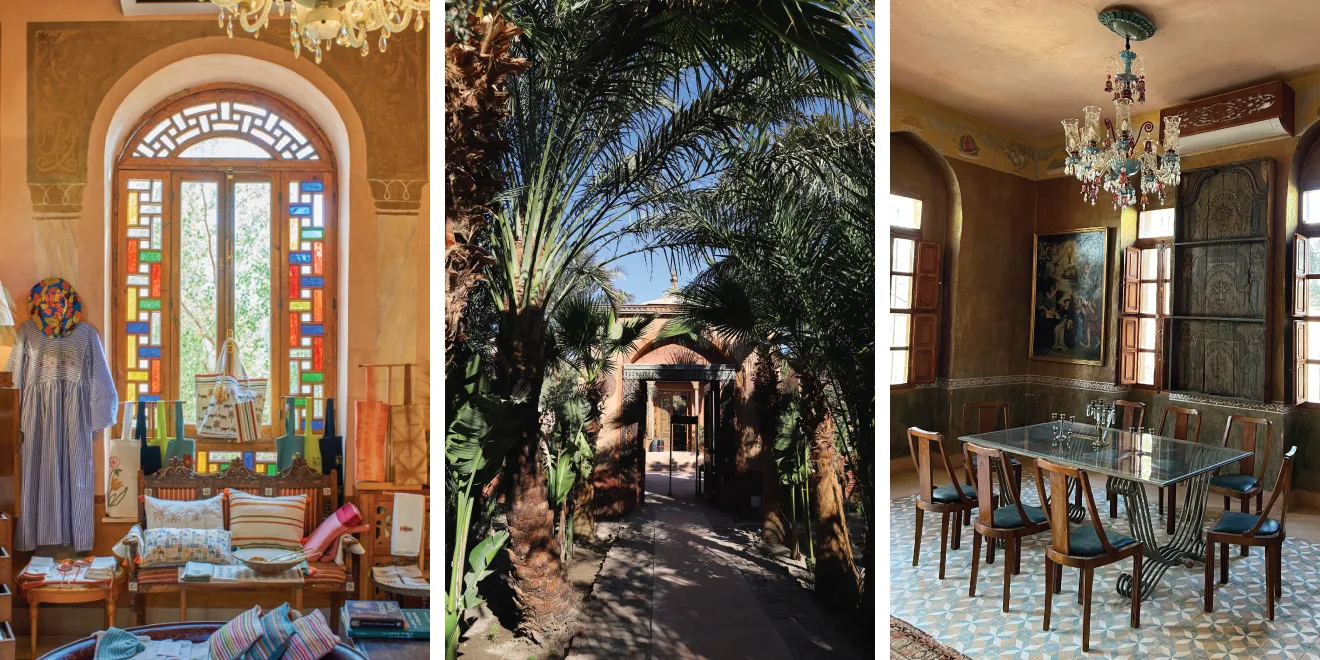
After sightseeing, we retired to the oasis of courtyards and lush gardens at Al Moudira Hotel. The property is expanding and will soon have a private villa decorated in Egyptian antiques, (complete with a private plunge pool) and enough landscaped outdoor areas to include a running path on the grounds. The hotel’s gift shop is essentially a satellite wing of Madu, the Cairo store run by Margarita Andrade. The shop employs local women and teaches embroidery skills to refugees, so it is stocked with colorful textiles, handmade scarves, Malaika linens and ceramics made by artists from the Fayoum oasis in the south. While most of the hotel’s guests, including my group, spend two nights at the Al Moudira before heading off to boat down the Nile, I suggest tacking on an extra day just to soak up the hotel’s quiet splendor.
In the morning, we made a stop at Edfu, where we saw the Temple of Horus, a wonderfully well-preserved shrine that was built during the reign of Nectanebo II, from 360 to 343 B.C. We next climbed aboard the Meroe, one of the seven boats in our Nour el Nil fleet. (The newest one, Roman, features solar power.) Once aboard, we cheered with glasses of hibiscus juice before making our way up the Nile. The cabin felt much more spacious than what I had gathered from looking at the images online. This was even more of a blessing since our bags were overflowing with souvenirs already. I was already trying to figure out if I could buy the wire-and-rope chair in my room, which looked straight out of Marni’s market collection. Next time, I’m renting a container for a bigger haul back.