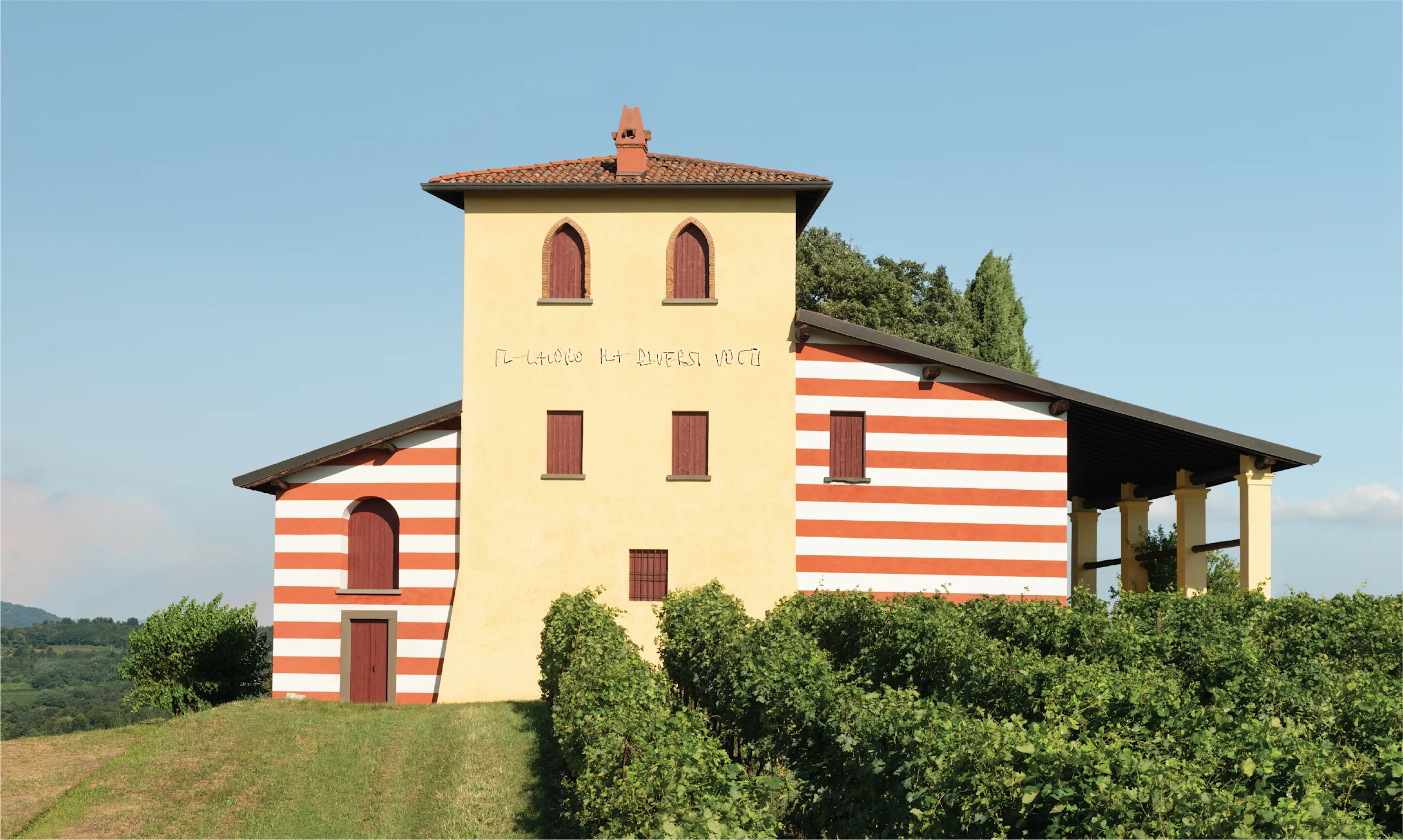
While everyone knows Prosecco, Italy produces a lesser-known sparkling gem: Franciacorta. Just an hour northeast of Milan, this small region turns out some 19 million bottles annually—a fraction of Prosecco’s 600 million—yet its wines are consistently among the country’s most precise and age-worthy.
Wine has been made in Franciacorta for centuries, but it wasn’t until the 1960s that producers began to focus on traditional-method sparkling wines. Industrialists from Milan and Bergamo initially planted chardonnay and pinot noir—two of Champagne’s three principal grapes—with the aim of emulating the French model. Today, the region adheres to what Jancis Robinson, in The Oxford Companion to Wine, calls an “admirable code of self-regulation…at least as strict as Champagne’s,” requiring extended lees aging: a minimum of 18 months for nonvintage wines and 60 months for Riserva. The result is bottles with depth, structure, and real aging potential.
That seriousness extends underground. Many estates maintain expansive subterranean cellars that are reminiscent of Champagne’s. And unlike other Italian wine regions where visits can feel opaque or appointment-only, Franciacorta is known to welcome the public. Renewed investments in hillside vineyards and organic methods further raised quality, making the case for a visit even stronger.
The industry has long attracted polished villas, discreet hotels, and Michelin-starred osterias. Yet rustic pleasures remain: family-run estates, handmade regional cheeses, locally cured sardines, and wooden boats drifting across Lake Iseo. Spend a day tasting and lingering over lunch by the water, and you begin to understand both the refinement and the restraint that define this corner of Lombardy.
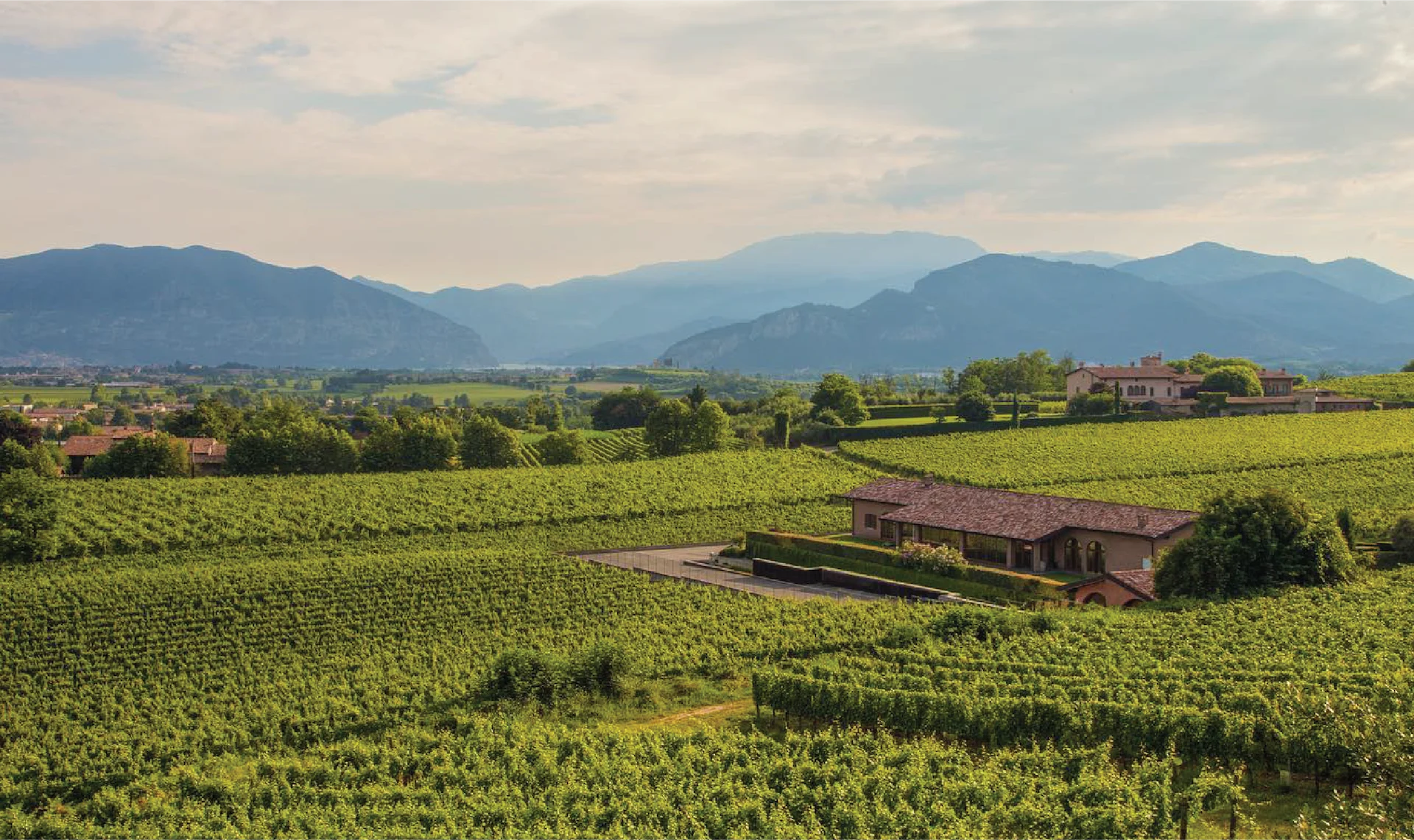
360-Degree Vineyard Views at Ronco Calino
The story goes that founder Paolo Radici only drank sparkling wine, making his purchase of this estate a logistical indulgence. The property, acquired from renowned pianist Arturo Benedetti Michelangeli, has been run since 2002 by Radici’s wife, Lara Imberti Radici, who oversees the certified organic winery. Six miles from Lake Iseo, Ronco Calino runs along a north-facing hillside planted with 25 acres of vines—roughly a quarter of them pinot noir—that yield bottles with notable richness and texture. The estate is fringed by 120 olive trees, and ongoing efforts focus on biodiversity and reducing the winery’s carbon footprint. From the glass-lined lounge at the heart of the cellar, you can sip your bubbly encircled by the vines that produced it. Tours are offered daily.

Meeting the Family at Faccoli
This small, family-run estate has been making wine for more than six decades, with visits led by family members. While many producers cluster near Lake Iseo, Faccoli sits on the far side of Monte Orfano, a broad hill that shields its vineyards from rain and hail and makes them among the sunniest in the region.
The house style favors dry wines that speak clearly of the terroir. You won’t find Satèn here—that softer, less fizzy blanc de blancs style once fashionable in Franciacorta. Instead, tastings unfold at a large wooden table beside a fireplace, with four carefully considered wines that reflect the estate’s distinctive approach.

Palazzo Grandeur at Guido Berlucchi
Guido Berlucchi, one of Franciacorta’s pioneering estates, balances classicism with innovation. The heart of the property is a grand 17th-century palazzo, and the surrounding vineyards have been mapped with aerial equipment to identify optimal growing zones.