Nearly 700 hundred miles north of Mendoza, almost a straight shot up Ruta 40, which runs alongside the gravitational and grand Andes mountains, sits the small city and large wine region of Cafayate. It’s always compared with (and overshadowed by) Mendoza, which is hardly fair, considering how distinct the two are—they both just happen to be wine places in Argentina. This northern region, in the middle of the Valles Calchaquíes in the heart of the Salta province, has vineyards at some of the highest altitudes in the world, some more than 6,000 feet above sea level. It is also set just below the Tropic of Capricorn, which means that unbridled sun shines intensely on the vines, but the evenings get mountain-cool, a win-win when it comes to quality winemaking.
It’s true; there’s Malbec made in Cafayate, just like in Mendoza, but up here the signature grape is a Torrontés, a super perfumey white grape (similar in a way, to Alsatian Gewurztraminer) that produces wines fresh and high in acidity. Cafayate is so good at this grape that winemakers from other parts of the country, yes from Mendoza, source their Torrontés fruit from Cafayate.
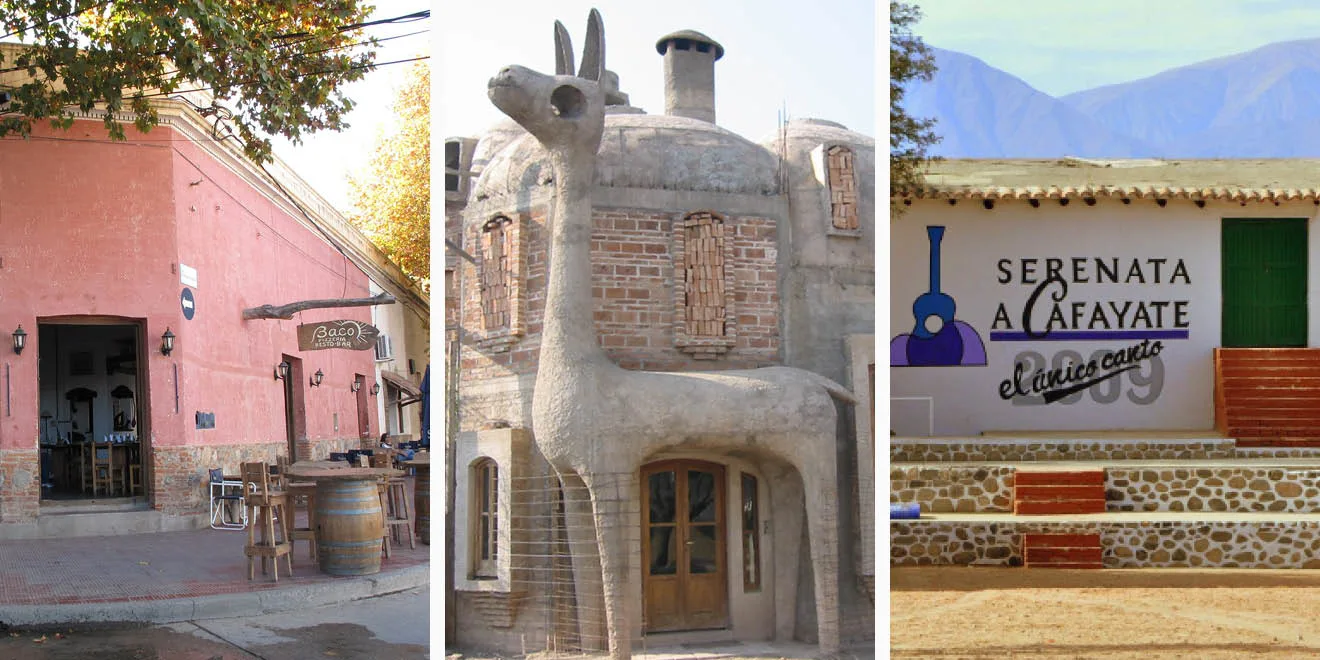
The best way to get to Cafayate is to fly from Buenos Aires to Salta and then drive for three hours southwest, through a dramatically shape shifting landscape. In the summer, deep green tobacco fields lead to a large water reserve and on through windswept sand dunes and to a red, practically lunar landscape that gives way to thousands of acres of vineyard. And while wine has been made in Cafayate for centuries, thanks to an influx of largely European immigrants, it’s only been in the last decade or so that Cafayate has catered to travelers, adding hotels and some restaurants to meet the ample interest from outside Cafayate—and even outside Argentina—in the land and vineyards here.
The city itself still has a very rustic, small-town vibe and an afternoon sitting at a café like Ampi or Baco on the main square makes for good people (and donkey) watching. But the hotels and wineries that have sprung up here have become ambassadors for the region. This is the sort of place where it makes good sense to rely on assistance to help set up horseback or biking excursions into the red terrain of Quebrada de las Conchas national park or to arrange an asado, just like many many Argentineans will have at their homes, on a Sunday afternoon.
Here are some of the wineries, hotels, and restaurants that will give you an intimate look at Cafayate—from its mountainside vines to its hand-formed empanadas.
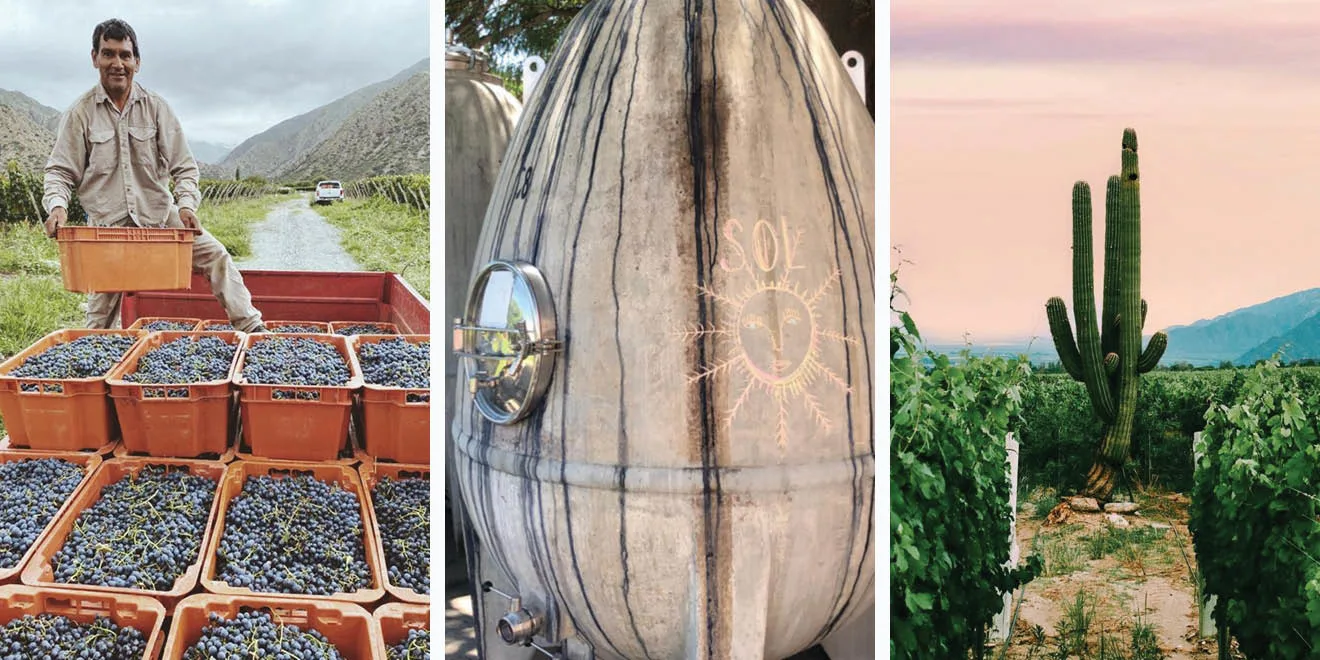
WINERIES TO VISIT
Vallisto
Francisco (Pancho) Lavaque’s family has been making wine in Cafayate since the late 1800s, but in 2010, he branched off on his own to start Vallisto with French winemaker Hugh Ryman. While many of Cafayate’s wineries are growing international grape varieties—like Cabernet Sauvignon and Chardonnay—in addition to the staple Torrontés and Malbec, that’s not where Lavaque’s interests lie. While he makes Torrontés and Malbec, he’s also working with old-school varieties like Criolla Chica and Tannat (from 100 year-old vines) with the goal of giving a more authentic picture of the terroir and landscape of Cafayate.
Av. Gral. Güemes Sur 235
San Pedro de Yacochuya
The Etchart family has been making wine in Cafayate since the 1850s. In the ’90s, the family sold off its namesake winery to Pernod-Ricard and established this, high up in the mountains 6,500 feet above sea level in the Yacochuya Valley, one of the highest vineyards in the world with some vines that are more than 60 years old. This is the only winery in the area that has truly achieved cult status for its inky Malbec and intensely structured Cabernet Sauvignon, thanks in part to the enduring Etchart family and in part to its hiring of Michel Rolland, an important and astoundingly prolific winemaking consultant from Bordeaux, who has helped put many Argentine wines on the world stage. Reservations are required for visits.
Ruta Prov. No. 2, km 6
El Porvenir
Lucía Romero-Marcuzzi is the third generation of her family to lead their winery in Cafayate. The current iteration is 20 years old and sits in an historic adobe building in the middle of the city. The Romero-Marcuzzi family now owns four distinct vineyards in Cafayate, but its prize site is Finca el Retiro in the hills outside town, where palm trees meet 65 year-old Torrontés vines. The winery hosts visitors, with picnic lunches, for those who reserve ahead. (Lucía is tireless, running El Porvenir and its guest house, while also managing a number of side wine projects of her own. Be sure to ask about those, too.)