When Paulo Amaral started his job as winemaker and vine manager at the José de Sousa winery in Portugal’s Alentejo region, he thought that it was impossible to produce wine in clay pots. “I was trained to produce the cleanest, most flawless wines possible using the most modern techniques,” the winemaker recalls. “And all of a sudden I was supposed to throw all my acquired knowledge overboard.”
Amaral is from northern Portugal. If he were from Alentejo, he would have been familiar with the mighty clay pots that can still be found in a number of wineries, taverns and private houses in the region east of Lisbon. “It’s a way of winemaking that goes back to the Roman times,” Amaral explains but right now couldn’t be more contemporary. That might be less than the 8,000-year-old wine tradition of Georgia, the motherland of viticulture, but we’re still talking 2,000 years of history. The tradition you may have heard as a buzzword amongst the savviest wine drinkers right now as amphora.
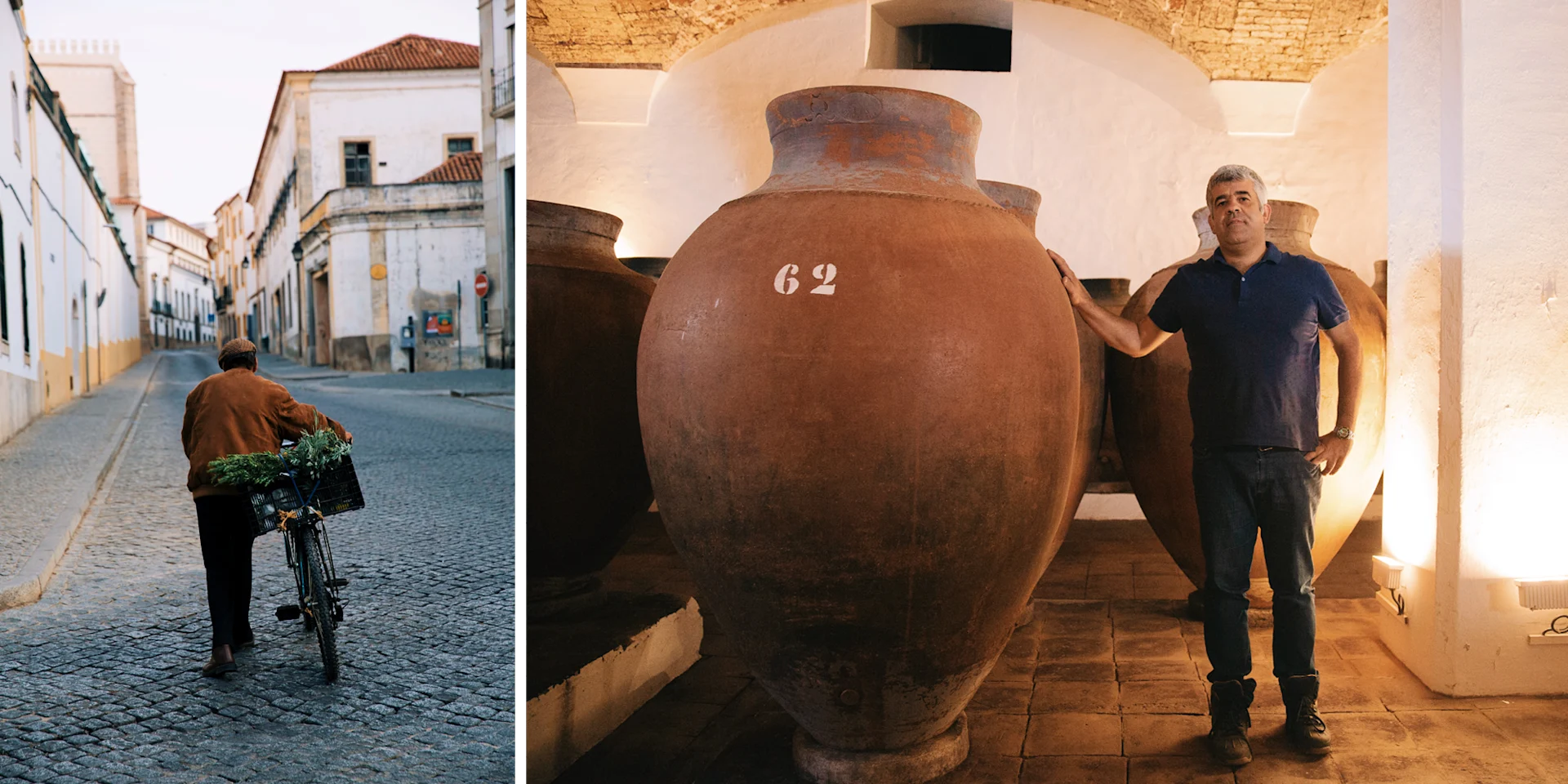
After many centuries, the use of talhas, as the vessels are called in Portugal, decreased starting in the late 1900s. More winegrowers switched to gleaming steel tanks with controlled temperatures, selected yeasts and to all the other modern aids that are par for the course in contemporary ‘conventional’ viticulture.
It was these techniques that enabled the wines of the Alentejo to make a huge leap in quality and recognition in recent years. For decades, this sparsely populated region, with its exceptionally hot summers and surprisingly brisk winters, was known for simple wines that were served in large quantities and at low prices in local taverns. However, local winemakers have managed to improve the wines in recent years, polishing their image like so many regions once considered undesirable and now covetable.
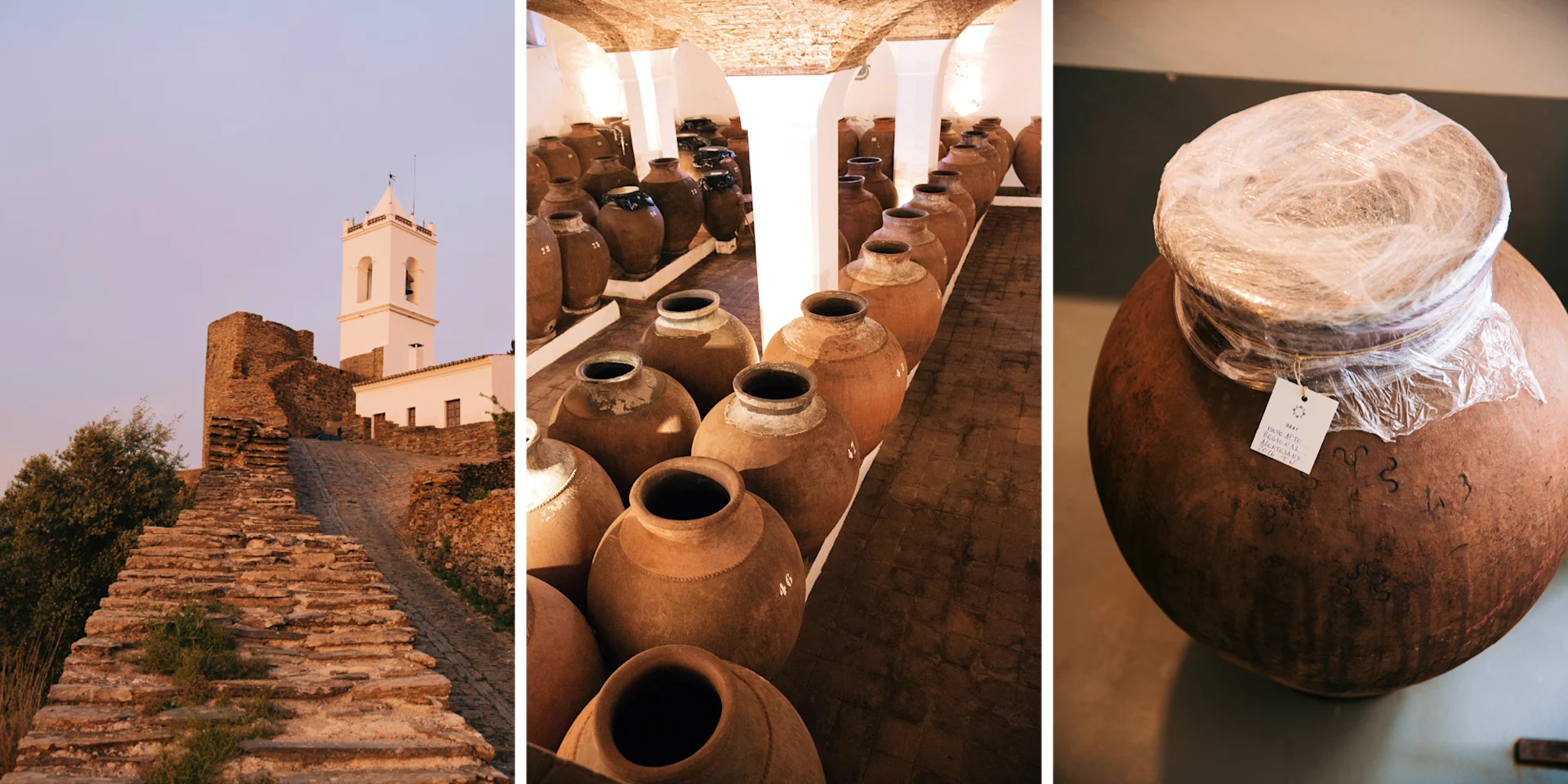
But the tide has turned once again. Today, a growing number of wine drinkers are demanding the original and unusual. Old-school, technology-free production methods garnish the kind of rarity bragging rights that power the modern wine world. As a result, many Alentejo producers have rediscovered the old clay vessels and a tradition is reborn.
Of course, the global hype for the Georgian amphorae, the so-called kvevri, played a huge part. “The Georgians inspired winemakers all over the world to make wines in amphorae, even in regions without any practice in that matter, thus it was obvious that we should revive our tradition.” says Amaral as he walks across the courtyard of the picturesque wine estate with its blue-edged white buildings.
In one of them is the winery’s showpiece: a vaulted room set a few meters below ground, filled with over 100 clay vessels of all sizes, the largest of which are two meters high. It is an impressive sight, like an urn-filled burial chamber. “They have been standing here since 1878,” says Amaral.
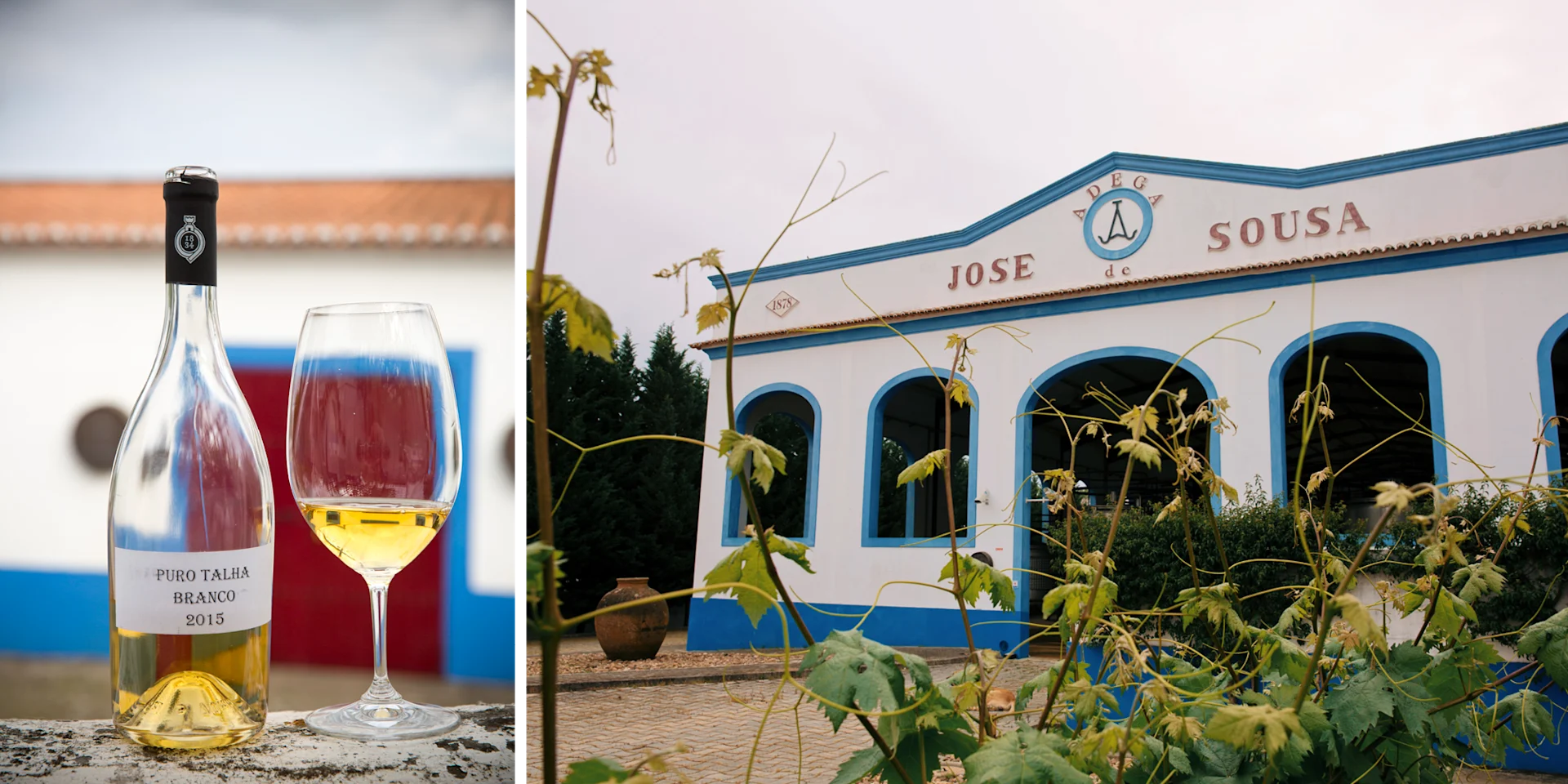
In order to carry the Vinho de Talha Denomination of Origin (DOC) the grapes must be destemmed after the late-August harvest before being placed in the talha, where they ferment spontaneously and remain in the must until mid-November. That's all there is to it. After that, the wines are ready for drinking. Some of them are left to mature even longer and are placed in other talhas, which are sealed with olive oil to prevent the effects of oxygen. “The most amazing thing for me was that this actually works and prevents defects,” says Amaral. “The olive oil and the destemming are the main differences to the Georgian kvevri, in which the berries ferment together with the stalk and are sealed with clay. Moreover, Georgian wines remain much longer on the must.”