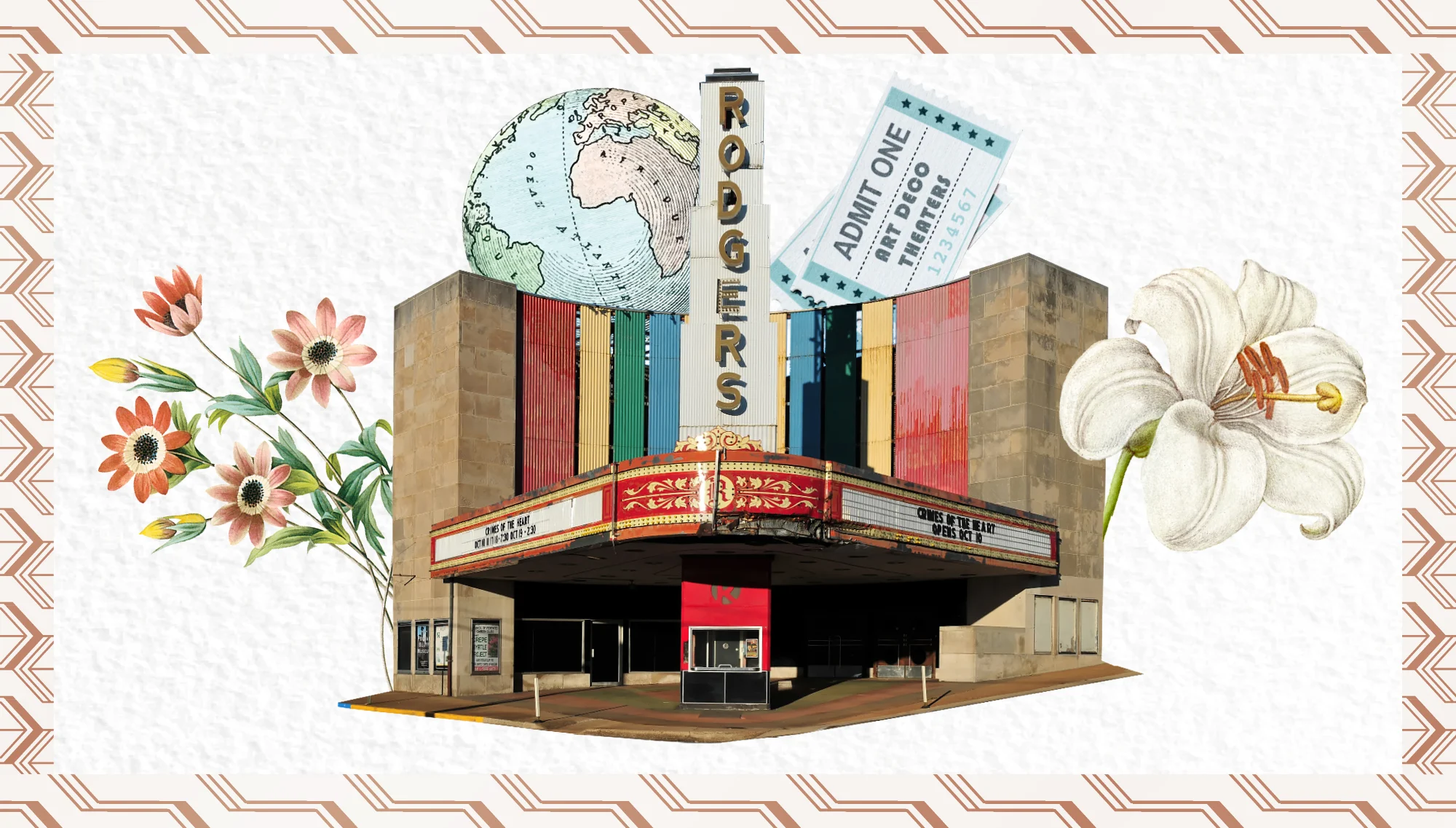
Few existing architectural symbols capture the boom of Hollywood’s nascent cinema industry more evocatively than Art Deco theaters. These emerged in the 1920s and ‘30s as Art Deco and Art Nouveau were reaching their zeniths, but also in the midst of other historic milestones: the Flapper Era, the Suffragist Movement, Paris’ ascent on the global artistic stage and, of course, the Great Depression. With their facades boldly festooned in heraldic chevrons and courtly colonnades, Art Deco theaters across the globe stood as symbols of the interwar era’s cultural and commercial optimism.
Often seating thousands, these temples of high and pop culture emerged as essential gathering spots for the urban affluent and entertainment-hungry masses. They also often contained technological wonders like air-conditioning, elevators and parking, still rarities at the time. These cultural centers offered the public an escape from the urban chaos to lose themselves in the grandeur and romance that only Hollywood can deliver—all accented by the Deco era’s futuristic splendor.

Many of the most elaborate of these Art Deco gems have been destroyed or repurposed—the Odeon Marble Arch in London was demolished in 1964 to make way for a widescreen cinema, while the curvilinear Alhambra in Tel Aviv is now consecrated to another Hollywood fixation as a Church of Scientology center. But many still stand strong—some even continuing to show films, others now used as performance halls. Whatever their contemporary function, these enduring beauties are still worth a visit to take in their mix of Art Deco flavor meshed with local culture and materials. Here are a few worth flying for.
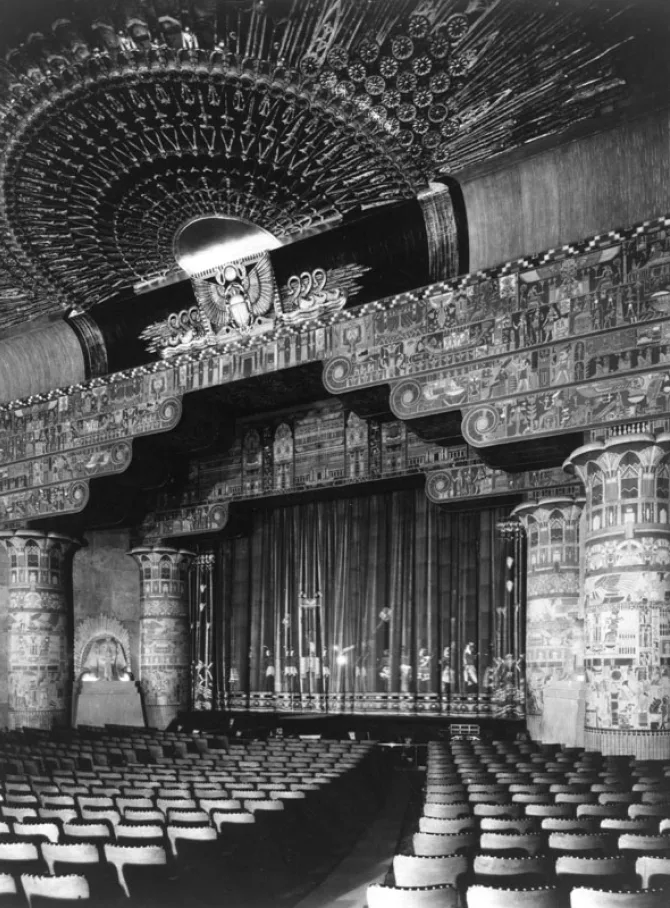
Los Angeles: Grauman’s Egyptian Theatre
No cinema better evokes Hollywood’s Deco-era lore like the Grauman’s Egyptian Theatre in Los Angeles. Built in downtown L.A. in 1928, it was designed in a Deco-meets-Pharaonic style now known as Neo-Egyptian, with hieroglyphs inside and out, along with four massive columns fronting the theater’s main entrance—each more than 20 feet wide. Home to the first-ever movie premiere (Robin Hood in 1922), it’s now owned, of course, by Netflix, which intends to use the space for special film events.
Mexico City: Cine Metropólitan
In the historic Centro district, the 1943 Cine Metropólitan—which originally held 3,600 seats—is fittingly grand for a city of 20 million. It debuted as a movie theater with a linear Art Deco facade by Mexican architect Pedro Gorozpe; interiors are French neoclassical, with gilded corinthian columns and oil paintings depicting aristocratic life. In the ‘50s, it became the place for children in Mexico City to watch Disney movies; today it’s a concert venue known as the Teatro Metropolitan.

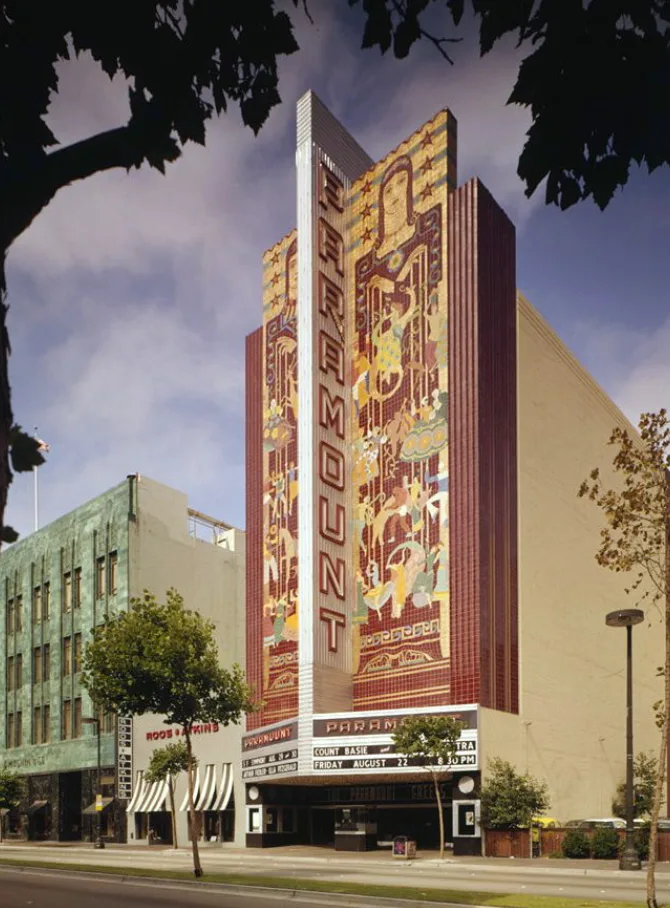
Oakland, CA: The Paramount
The 1931 Paramount Theater stands as a symbol of its own glory, having once prevailed as the Bay Area’s most influential cinema. Built by Timothy Pflueger, the San Francisco architect behind the city’s Pacific Coast Stock Exchange, the Paramount was acquired by the City of Oakland, which oversaw a meticulous restoration that preserved most of its Deco details—zig-zagged flooring and swirling ceiling lights. Today it hosts a robust film schedule and is home to the Oakland Symphony Orchestra.
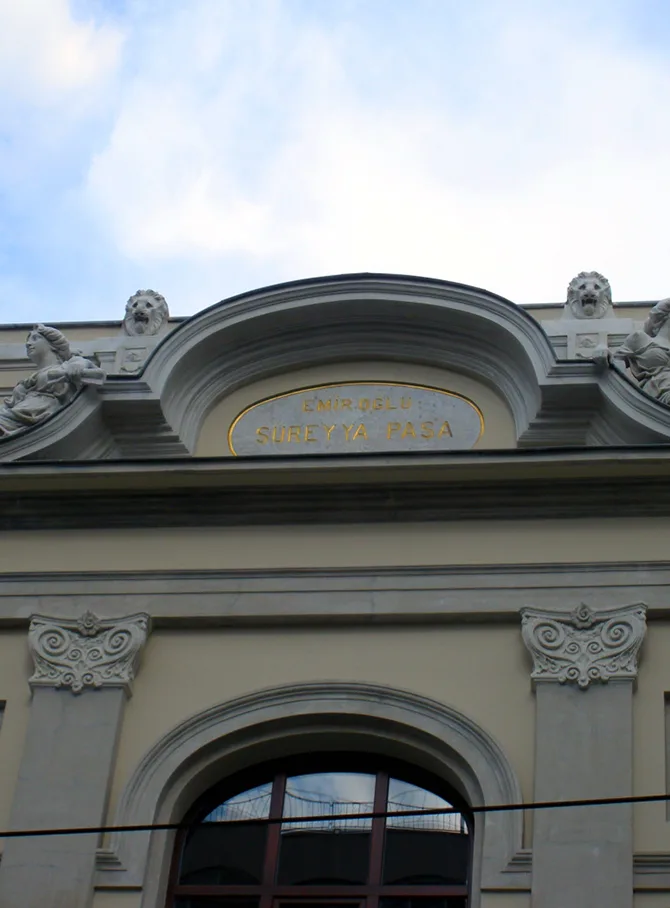
Istanbul: Süreyya Opera House
Set in Istanbul’s upscale Kadıköy district near the Bosphorus, the 1920s-era Süreyya is distinguished by its carved-stone facade evoking European Belle-Epoque designs. The interiors are Art Deco dreamscapes, with richly-inlaid ceiling murals, curved balustrades and Tiffany-style chandeliers. Though the Süreyya was envisioned as a place for opera and musical theater, it had a colorful history as a site for weddings, plays and a cinema; today, the Istanbul State Opera and Ballet commands the stage.
Mumbai: The Regal
In the 1930s, when Mumbai rose as India’s answer to Hollywood, the Regal was the city’s most glorious Art Deco cinema. It debuted in 1933 on the busy Colaba Causeway, and, according to lore, was India’s first fully air-conditioned theater. The Regal’s concrete exterior is topped by a ziggurat-style crown; interiors are lined in elaborate Czech mirrors, orange and jade-green sunray motifs and bas-relief theatrical masks flanking the massive movie screen, which still regularly shows films.