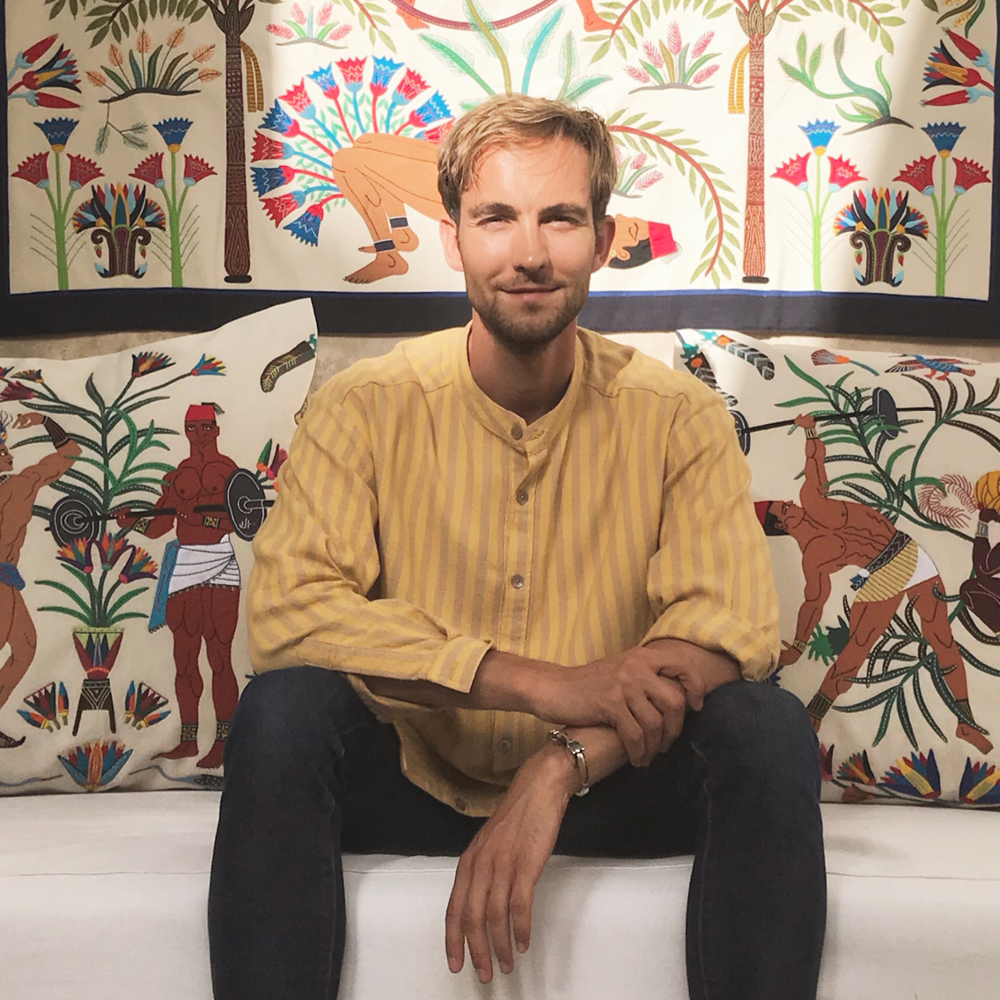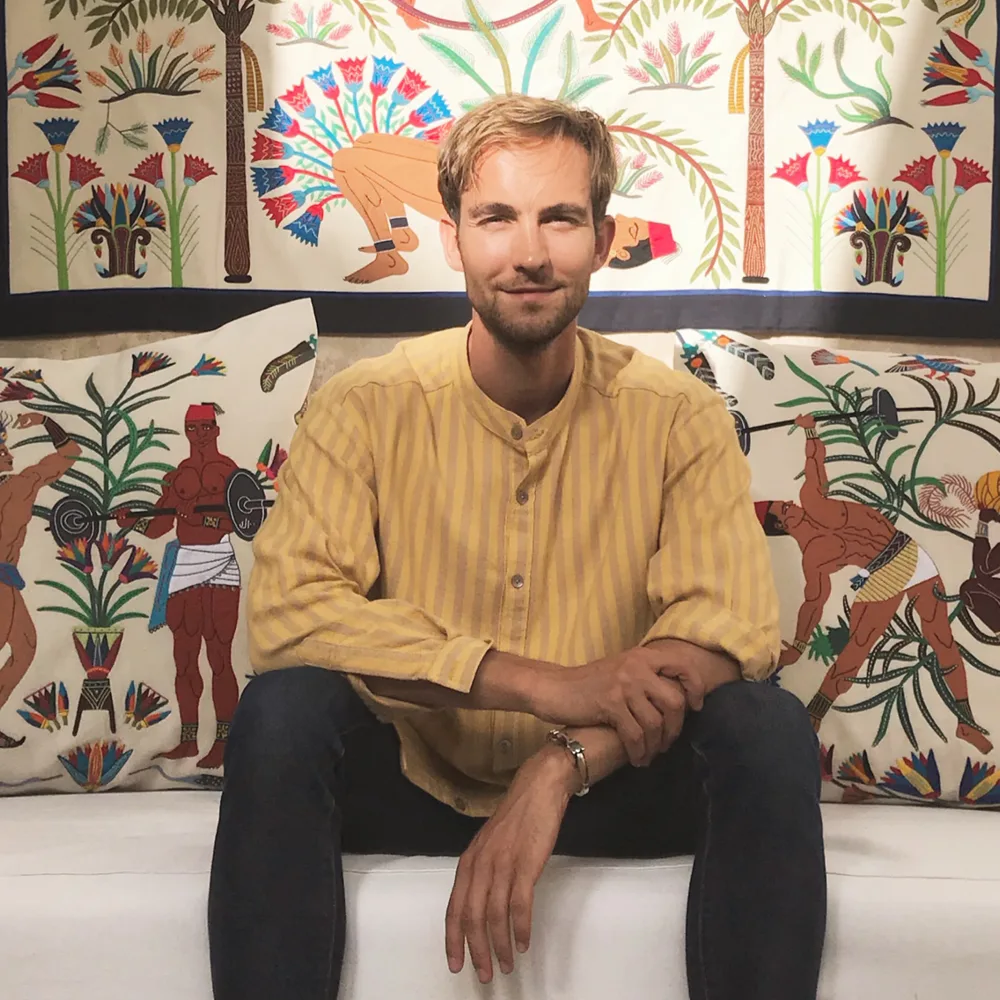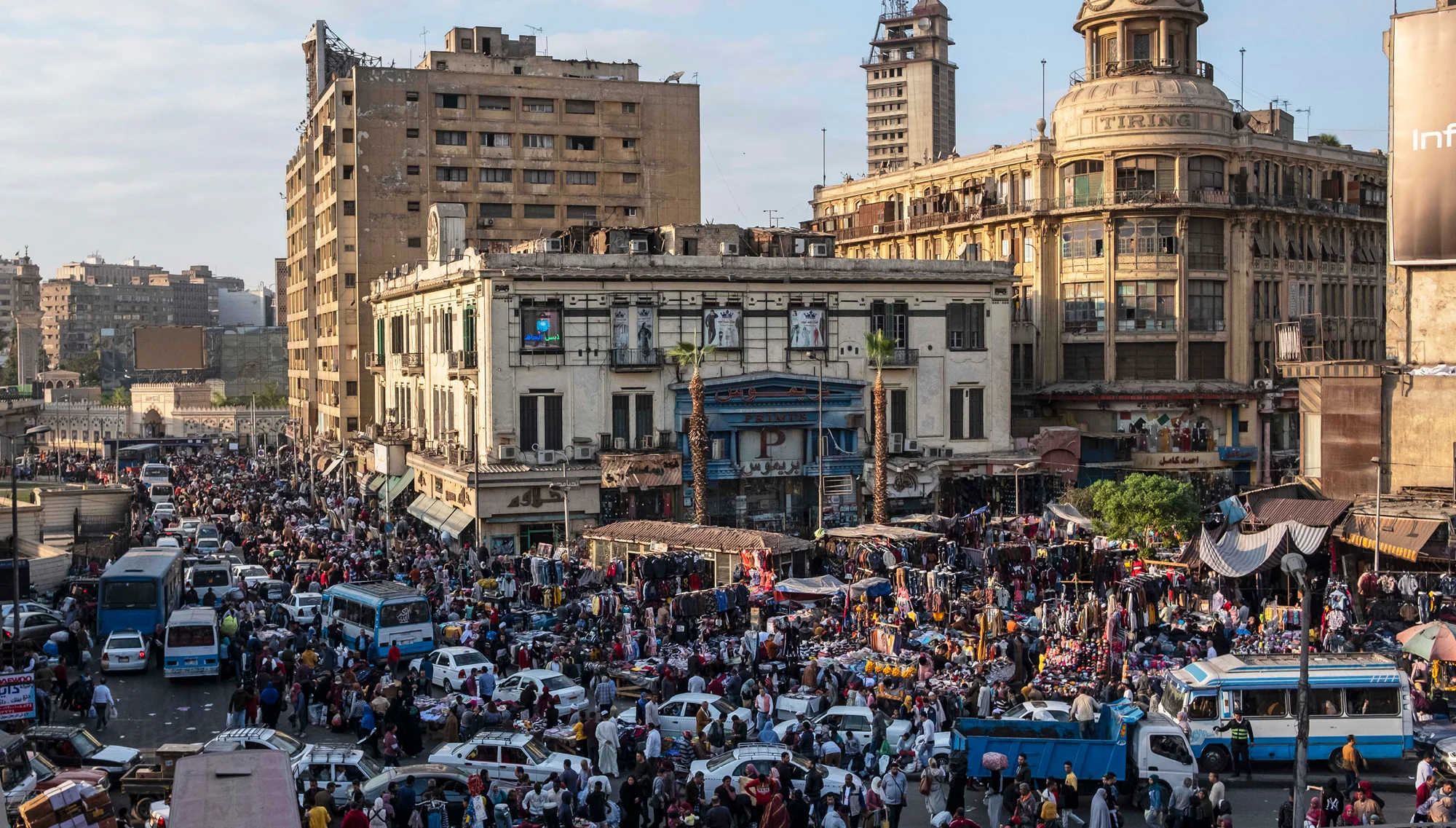
For French illustrator and textile designer Louis Barthélemy, it’s the hectic melee of Downtown Cairo that keeps him coming back to the city he now calls his second home. “In Paris we resist it, but in Cairo they accept chaos with a sense of humor and softness that I find liberating,” the 30-year-old says. “The city is a puzzle; you go from one world to the next in one day, from the old Cairo and its grand boulevards to the contemporary Cairo and its shiny Starbucks to the Islamic Cairo with its hammams, souks and minarets.”
When in Cairo, which he visits several times a year, Barthélemy searches out fragments of Egypt’s past and uses those images to stitch together his own fantasy tableau of the city’s most carefree gilded era during the late 1800s and early 1900s. “I picture in my mind the blissful frivolous scenes and parties that happened over a century ago in these grand buildings and lush gardens, now faded and overgrown, and those images often find themselves into my tapestries.”
Barthélemy gave PRIOR his list of the historic buildings and social spaces that intrigue and inspire him in the Egyptian capital and beyond.
My favorite two neighborhoods in Cairo are Downtown and Zamalek. The urban development of the city has been so manic in the last few decades with its population boom and the sprawl of concrete high-rises that unfortunately much of the most charming architecture in the historic center, such as Darb el Ahmar and El Gamalia quarters, have been destroyed. But exploring Downtown, with its grand boulevards and faded Belle Epoque European-inspired architecture, and leafy Zamalek, an island in the Nile that was originally developed in the 1860s with the Gezira Palace by Khedive Ismail (the viceroy overseeing Egypt and Sudan in the second half of 19th century until he was removed by the British), feels like travelling back in time.
Zamalek is full of banyan and jacaranda trees and the buildings have incredible frescoes; it is one of the few neighborhoods that you can actually stroll around. Often, when I wander its streets, I think about the Empress Eugenie, the wife of Napoleon II, (it was rumored that Ismail was infatuated with her) and her visit to Cairo in 1869 to celebrate the opening of the Suez Canal.
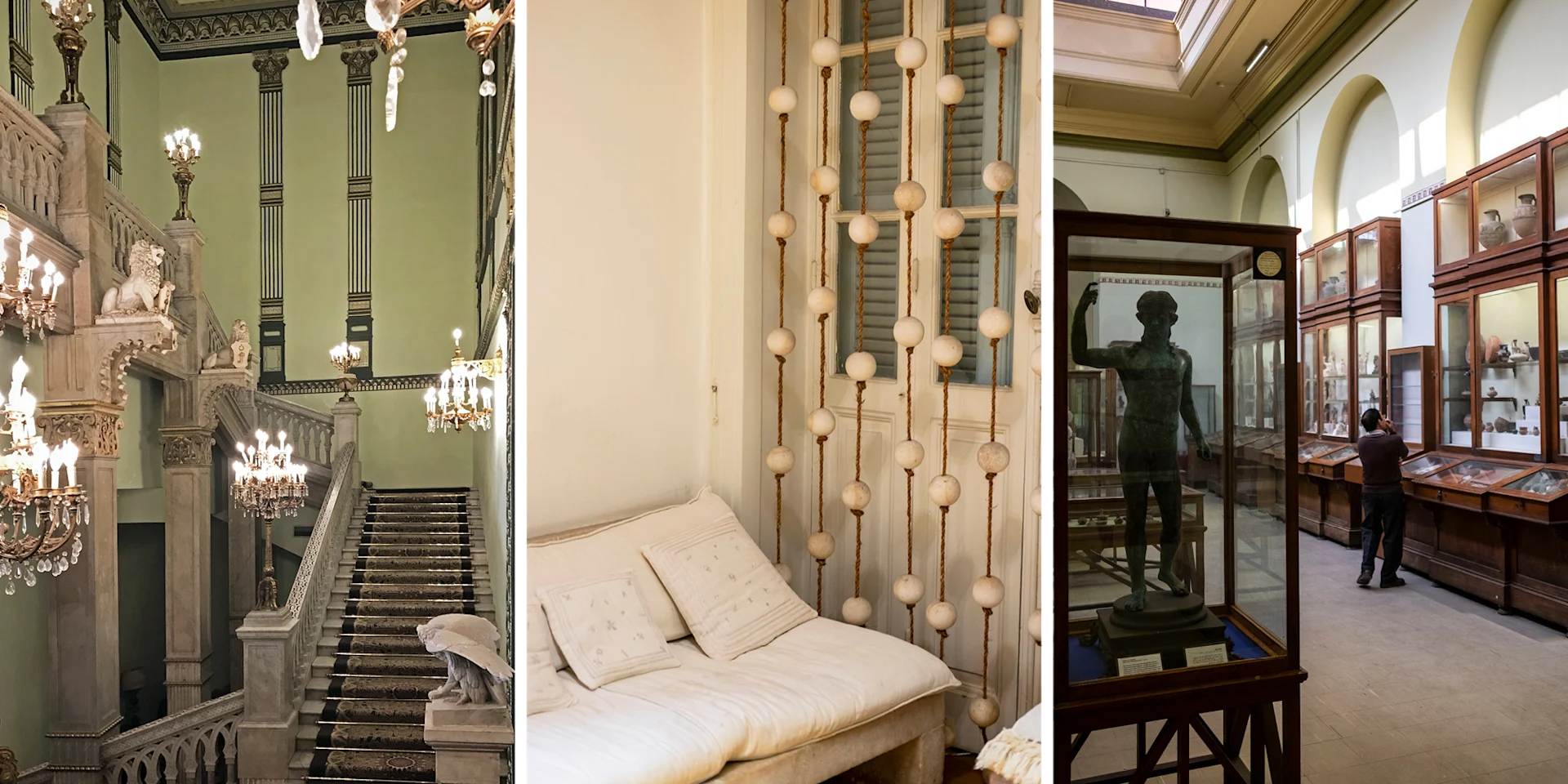
I love the faded grandeur of the lobby of the Marriott near the Opera House in Zamalek, with its pistachio-painted stairway. The central wing was at one point part of the Gezira Palace, which had been converted to a luxury hotel at the end of the 19th century. It’s very nostalgic and charming. To escape the extreme heat in the summer I often go here for a cocktail—something one can rarely find in Cairo. I love to sit under a pergola in the haunted gardens and listen to live jazz. It’s such an oasis in the middle of the dusty Kafkaesque city, popular with upper class locals–gossiping Egyptian matrons-and expats with a fascination for history.
Not far from the Marriott is a very cute place called the Holm Café. It’s not easy to eat well in Cairo because the best food is often found in private homes, but Holm is an exception, serving fresh things like tartines slathered with labneh and za’atar, salads and a kind of Oriental take on a smoothie (a drink made of dates, nuts, bananas and honey). I use it as a hub to work and relax, and often stay for lunch or read a book.
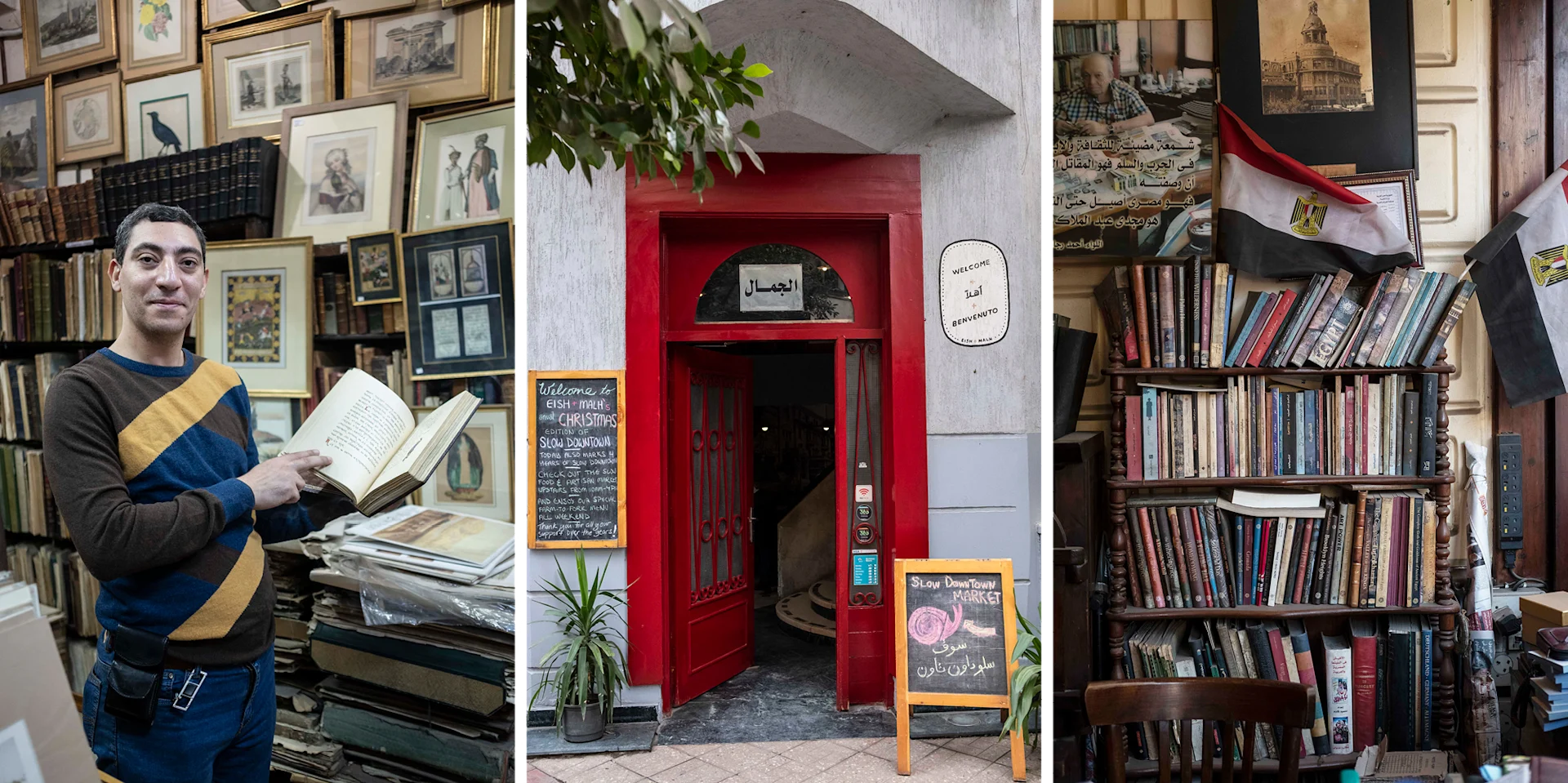
An elegant Coptic woman I know named Leila Benamatalla has a boutique in an apartment in an historic building called Siwa Creations where she sells a beautiful selection of votive candles of all sizes, and furniture carved from blocks of salt, as well as bed linens embroidered with desert landscapes under stars, made by craftswomen in the Egyptian oasis of Siwa close to the border with Libya. This is often where I go to buy special gifts for friends.