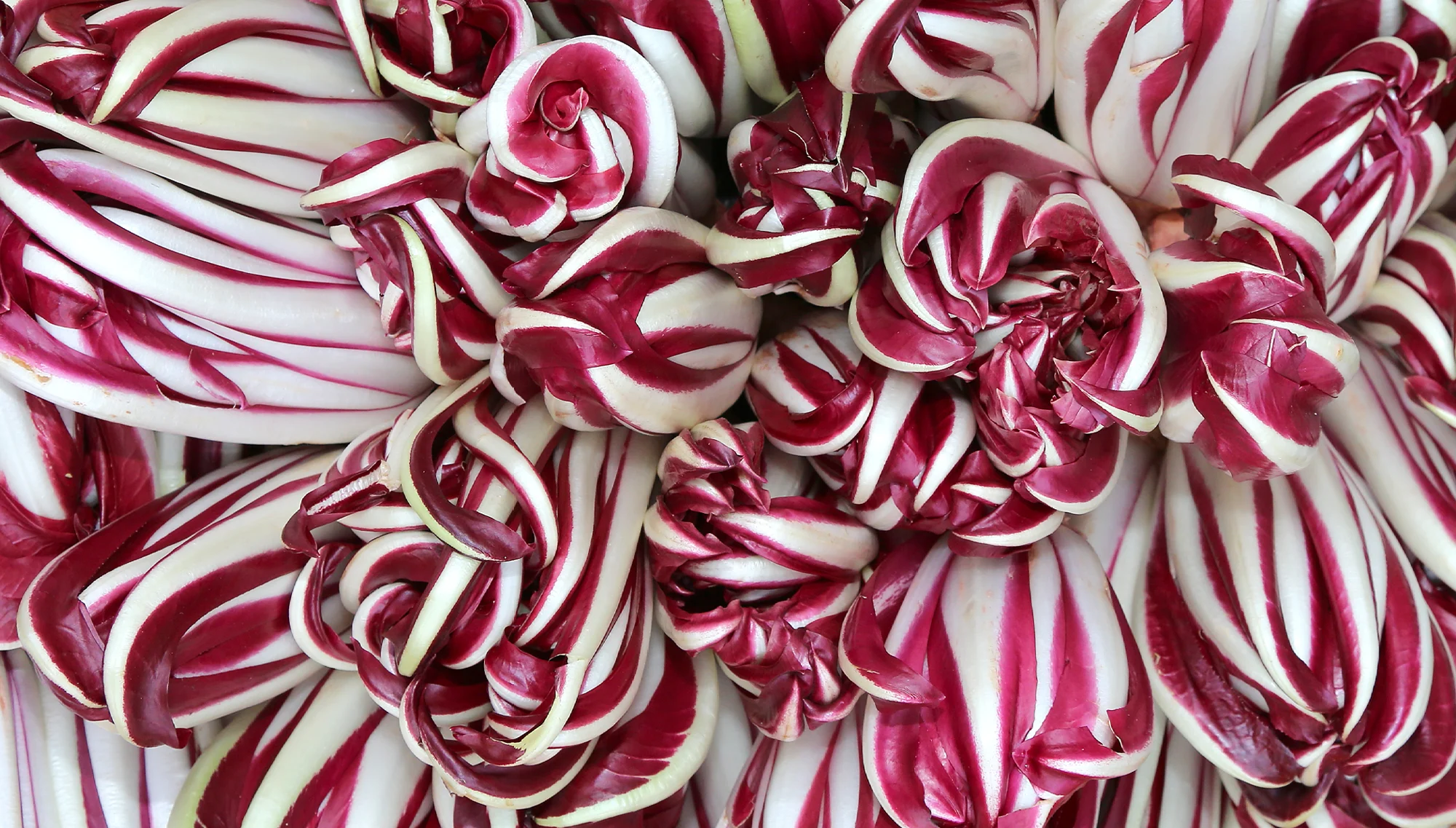
In fair Verona, where we lay our scene—or more precisely, the surrounding Veneto region of northeast Italy, birthplace of the humble radicchio. For centuries farmers here have grown a number of varieties of the plant which, like wine varieties, are often uniquely tied to the places after which they are named. Modern cultivation of radicchio began in the 1400s in response to Italians’ appetite for lettuce even during the coldest of days. This challenged growers to develop elaborate techniques and hybrids that would deliver vitamin-rich produce in the winter months. Thus the splendid, slightly bitter radicchio was born.
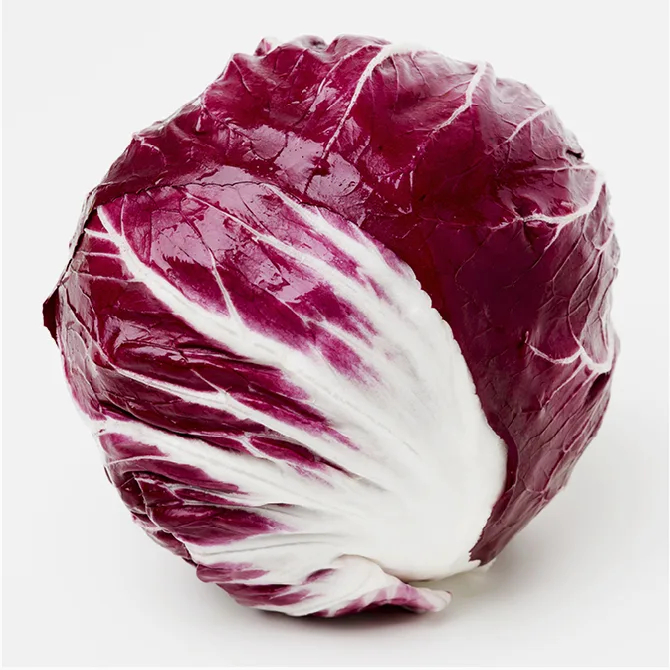
Chioggia
The most popular variety of radicchio, this species owes its name to the town of Chioggia in the Venetian Lagoon. The unassuming fishing port—also known as “Little Venice” and “the Poor Man’s Venice”—is said to resemble what its popular neighbor might look like had it never benefited from the riches of trade.
First cultivated in the 1930s, radicchio di Chioggia is reminiscent of an iceberg lettuce but with a pronounced reddish-purple crown and bright-white veins stemming from its base.

Castelfranco
The Castelfranco variety of radicchio is thought to have developed some time during the eighteenth century in the eponymous city as a hybrid from precoce and endive. It resembles a round, leafy Bibb lettuce, but with tiny red spots on its creamy, light-green leaves.
The town was also the birthplace of Renaissance painter Giorgione. His masterpiece Madonna Castelfranco, which can still be seen in the town today, depicts the Virgin Mary in a deep-red dress marvelously emphasized by surrounding shades of green—not unlike the colors of the radicchio in question.
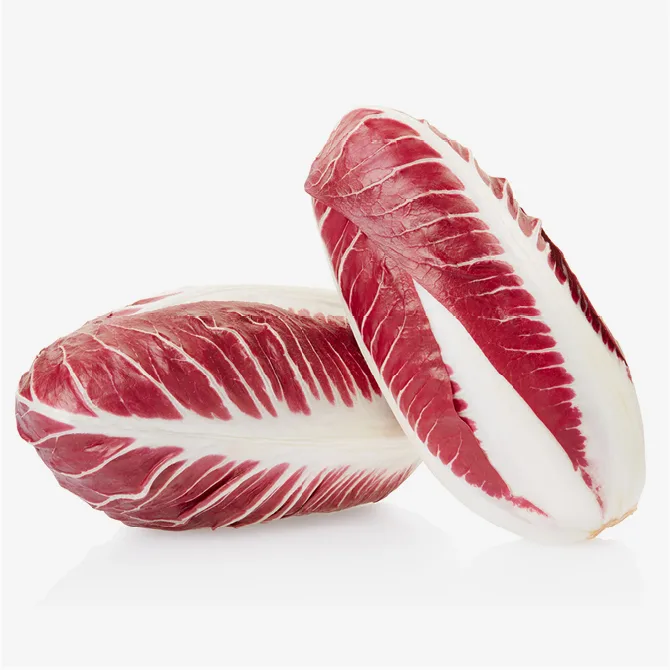
Treviso Precoce
Regarded as an off-piste secret of the Veneto region, Treviso is a relaxed provincial town threaded with ancient waterways and narrow cobbled streets. The area beyond its medieval city walls is considered the capital of radicchio cultivation, with fields bearing the eponymous radicchio rosso di Treviso tardive.
Reputedly the original variety of the crop, its elongated, tightly closed form resembles endive, but with a pronounced purple hue.

Treviso Tardivo
The other namesake radicchio of Treviso, the tardivo (late) variety is named for its unique harvesting process. Sowing takes place in spring; while in fall, the shoots are cut and placed in lukewarm water, causing them to bud anew.