Come January, as reliably as post-holiday diet resolutions, publications big and small release their laundry lists of places around the world to visit in the new year.
Though many 2024 roundups have been spot-on (and others a bit random, perhaps), we noticed a few themes missing from the annual where-to-travel lists.
With that in mind, our 2024 list highlights places across the map where travelers can see the world anew.
Paris, an obvious choice for any year, is hosting the upcoming Summer Olympics. Naturally, it’s on our radar.
Norway’s weak krone has strengthened opportunities for travelers to experience friluftsliv, a Norwegian term which translates roughly to “open air life.” So the Nordic country made the cut, too.
A Bluey bounce has suddenly made Brisbane Australia's buzziest city, so it also appears on our list.
Each of the seven destinations below offer their own delights and charms and are worthy additions to any travel agendas in the year ahead.
Beyond Backpacking
Bangkok is set on a new sophisticated path, with plenty of spicy, high-concept fun
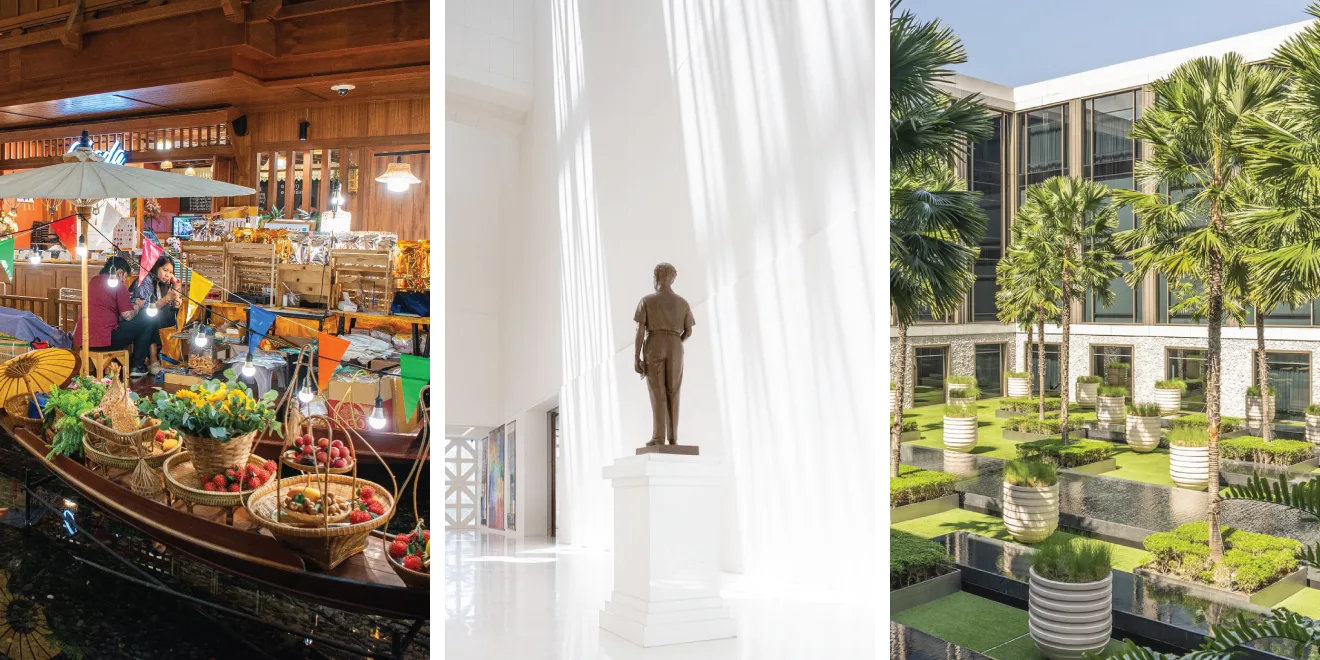
The other “City of Angels,” the Thai capital, is spreading its wings anew. Pre-pandemic, there was a feeling that the great Asian metropolis of Bangkok had become overrun with an odd combination of rowdy backpackers and cookie-cutter beach resorts. Sure, we’re a little worried that the city will only become even more of a tourism zoo as The White Lotus captures global audiences yet again, when the show’s Thailand-based (and Parker Posey-starring) third season airs sometime next year (à la the tourism swell spurred by the 2000 Leonardo DiCaprio vacation caper The Beach). But right now, at least, the city is sizzling with a brightness and creative optimism that you won’t find in other urban hubs in the region.
Famed for its madcap street life and legendary outdoor food vendors, Bangkok is now home to a wave of local chefs and young gallerists who are bringing new flavors to both banks of the Chao Phraya river. Notably, the floating market at Icon Siam, a futuristic mall, features family-run street food stalls selling crab omelets made from recipes passed down for generations. Nearby, cultural must-sees include Art Space, a waterfront satellite of Bangkok’s Museum of Contemporary Art, and the artisanal haunts along the revitalized Charoen Krung Road, such as Citizen Tea Canteen of Nowhere and Central: The Original Store.
Bangkok, more than any other place in the world, for what it is worth, happens to be home to four properties on The World’s 50 Best Hotels list: Mandarin Oriental Bangkok, Capella Bangkok, The Siam and Four Seasons Hotel Bangkok at Chao Phraya River. (Side note: More on that topic soon.) At PRIOR, we tend to opt for smaller, independent stays that give a feel of a place. But in Asia, somehow, the equation is flipped. Big brands do big business, often becoming postcard-worthy symbols of the city they’re in itself — as surely the Four Seasons complex, an upcoming White Lotus filming location, will likely do for Bangkok.
Paris Around the Perimeter
Beyond the suburbs of the Olympic city, countryside style setters have opened dreamy, bucolic escapes and agenda-setting restaurants.
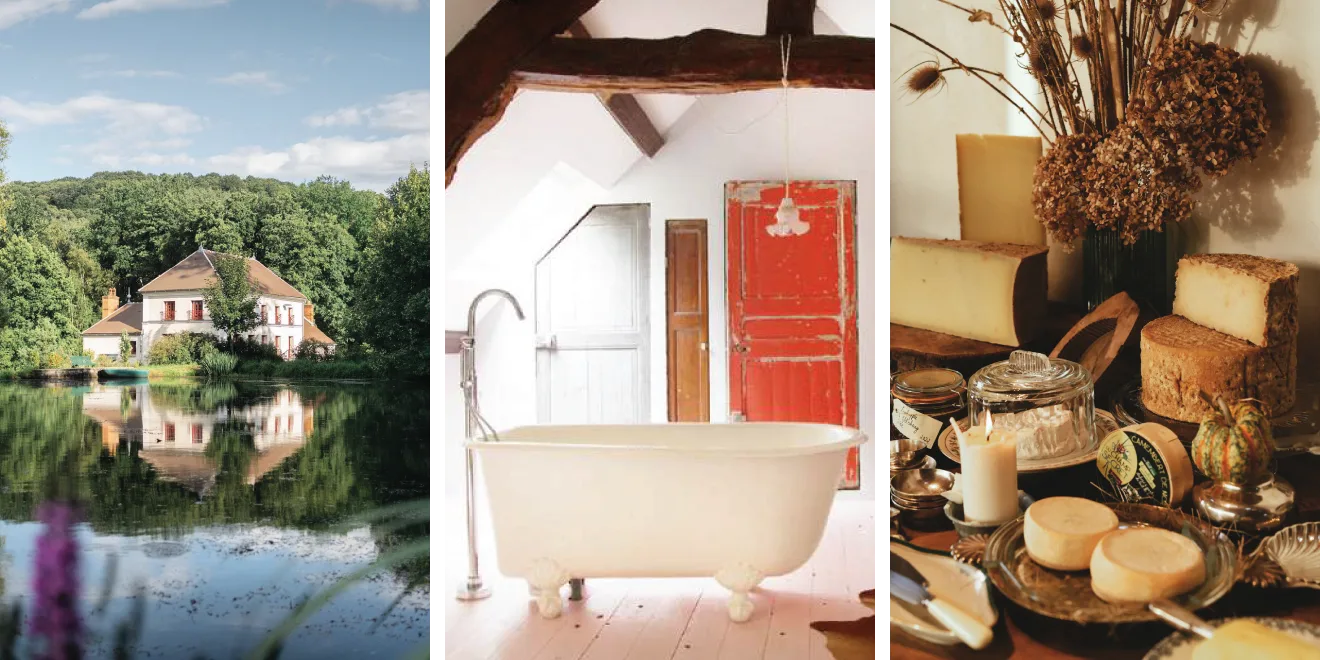
The 2024 Summer Olympics means all roads now lead to Paris. For a break from the impending masses, there are plenty of countryside escapes to be found just an hour or so outside the city, each offering a surprising mix of thrilling cuisine, whimsical stays and immersive art.
One of our favorites: Le Doyenné, chef-owners James Henry and Shaun Kelly’s farm and restaurant, where meals are built around the heirloom vegetables grown on the historical grounds of Château de Saint-Vrain. For biking and hiking, head to Le Barn, a charming hotel and wellness center in Bonnelles that offers spa treatments and even a horse stable. Just a few miles from Foundation Monet in Giverny, the house and gardens of Claude Monet, sits Exteona, a restaurant-guesthouse that doubles as a sanctuary of silence and solitude. Guests at Le Grand Côntrole can now stay at Versailles overnight (and get special access within the palace itself).
Le Perche, in the south-east corner of Normandy, has long been a favorite getaway for Parisians. Now, the area is increasingly a gourmand getaway, thanks to Oiseau Oiseau, a homey restaurant sitting mixing elevated comfort food (squash-and-quince pie) with woodsy décor, and D’Une Île, a new venture by the team behind Septime La Cave and Clamato with a maison de campagne for overnight stays.
True Bluey
“Brisvegas,” no more. Brisbane has finally come of age as an ascending Australian cultural capital, thanks to a population boom and a certain little cartoon dog.
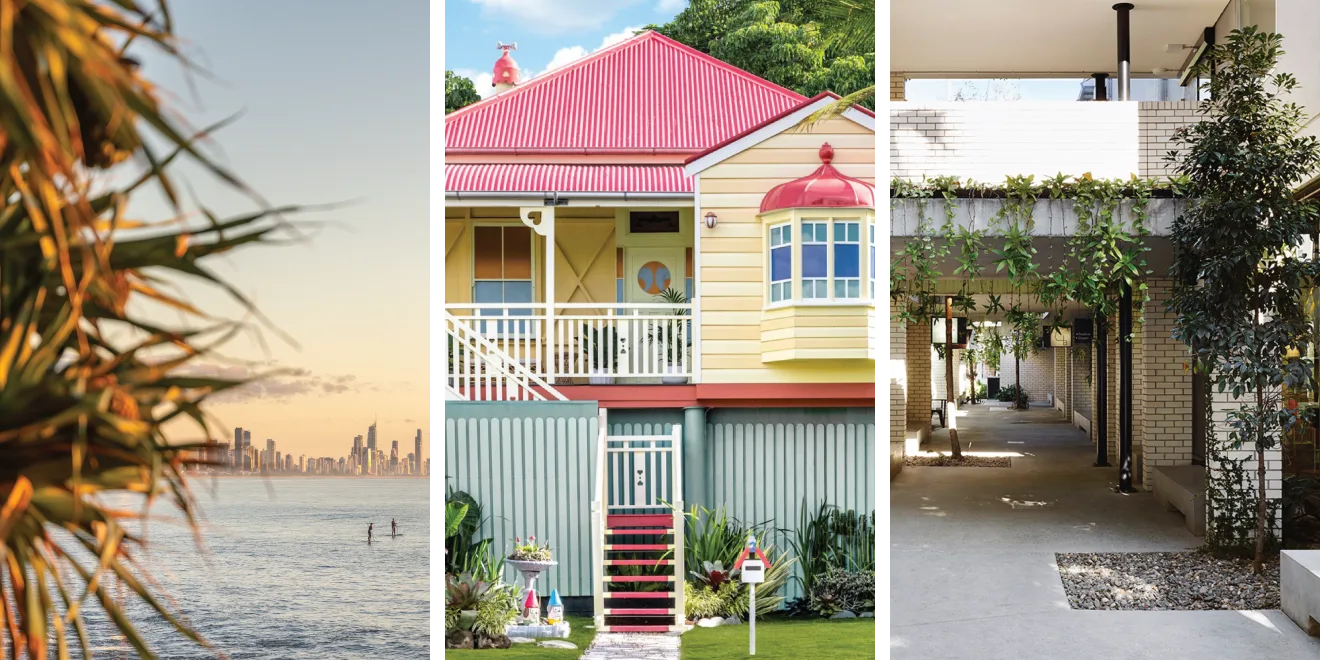
Ironically, South East Queensland, the fastest growing region in Australia, has also been one with the slowest-changing public opinion. But now, as if overnight, Brisbane, a sprawling city once nicknamed “Bris Vegas” and “Brisneyland,” is increasingly Australia’s cultural epicenter. There is hometown boy Jacob Elordi, who had star turns in Priscilla and Saltburn. The city itself is the most memorable character in the Netflix series Boy Swallows Universe, a seven-part drama based on the book by Trent Dalton that takes place in 1980s Brisbane. But the true global phenomenon to put cheery, subtropical Brisbane style on the map is Bluey, the utterly charming children’s cartoon about a dog family that lives in a suburban home in Brisbane, complete with its technicolor backdrop of palm trees and down-to-the-tin-and-timber showcases of historic “Queenslander” architecture.
Indeed, Brisbane, it should be noted, remains home to some of the most interesting architects in Oz, including Nielsen Jenkins, Vokes Peters and the firm Richards and Spence. The Queensland Cultural Centre, a Barbican-like complex, is adding another theater wing this year (the idea of which used to be unthinkable in Australia’s southern states). There is QAGOMA, too, with its exquisite Indigenous art collections, the well regarded Queensland Ballet and a stunner of a State Library (a sleeper, perhaps, but one that would be the envy of any capital city). The Brisbane River, the longest river in South East Queensland, flows through the city, before emptying into Moreton Bay on the Coral Sea. The seriously behemoth “world-class” casino complex that continues to rise on its banks feels like a big mistake — and sadly consistent with the city’s history of development projects that have historically blighted the coasts.
Though Brisbane is a river city, one with no coastlines like those of the neighboring constellation of sleepy small towns on the Sunshine Coast, Moreton Bay is home to the beautiful, barefoot-friendly Minjerribah, or North Stradbroke Island, an extraordinarily special bush-meets-beach length of paradise fiercely protected by locals. Rent a typical beach house or stay above the pub at the Stanbroke Hotel). Restaurant and food culture in Brisbane has always been decades behind the southern cities, but the food scene is catching up quickly. (With a special nod to Agnes Restaurant and its offshoot bakery). Case in point: Martin Boetz, originally of turn of the millennium sleek Thai restaurant Longrain, has come back to the kitchens after a long hiatus to open Short Grain in the Fortitude Valley, a once grimy redlight district that still has some fun after-dark shadows of the past.
This brings us to a huge catalyst for change in the city: the James Street Precinct, which for over two decades has grown to become, shockingly, the best independent shopping street in Australia. (We have it on good authority that the Vogue Australia editors quietly agree). It is anchored by The Calile Hotel, which, frankly, is also likely the best urban stay in the country. The international acclaim has — and should — come hotel’s way, due to the smart and steady hand of the Malouf family, whose real achievement has been the entire revitalization of the precinct. North of the city, a new Calile property is set to open on the Sunshine Coast in the tony beach enclave of Noosa, which is beginning to experience a much-needed injection of youthful energy. And further south, the glitzy and gritty Gold Coast is also in the throes of reinvention. Notably, the savvy Baz Luhrman and Catherine Martin have moved there, even dubbing the region “Goldiewood.” But like the rest of South Eastern Australia, this renaissance is in its infancy, as bouncy and bright as Bluey herself.
Sphere City
Las Vegas is now America’s newly-minted entertainment capital, complete with a 360-foot-tall amphitheater resembling a living emoji, a new Jurassic Park and some of the best Asian cuisine in the country.
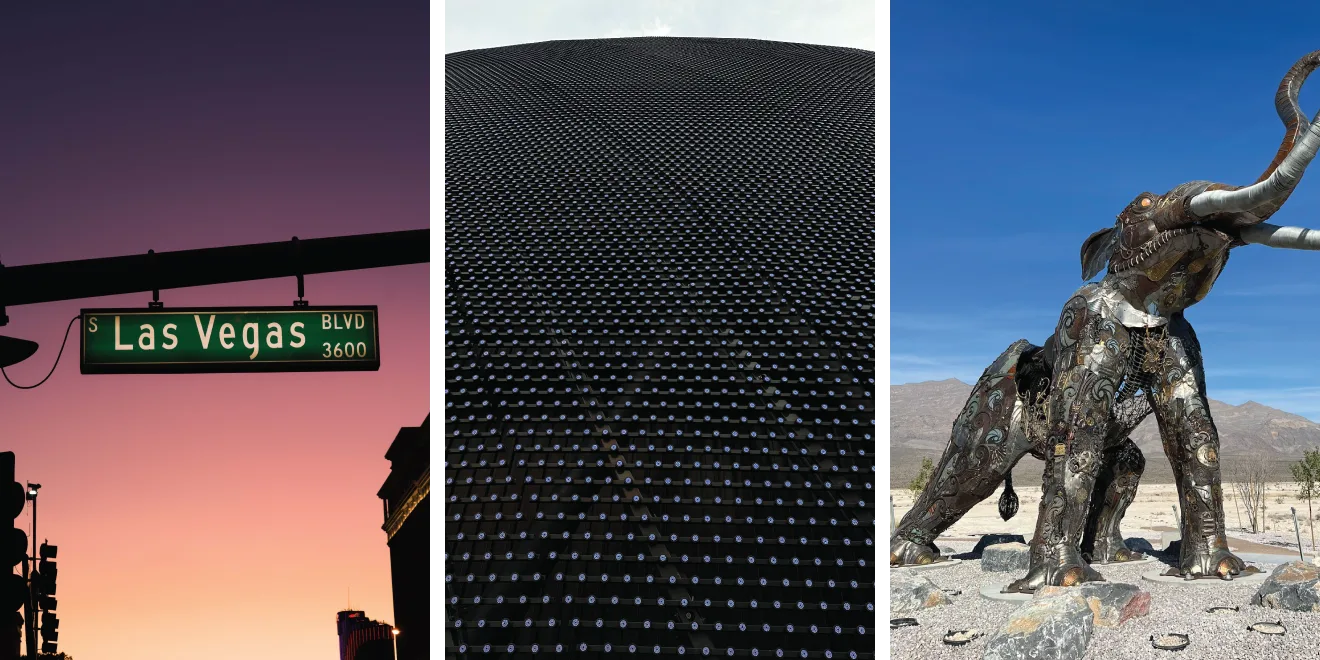
It’s official: Las Vegas is America's newly-minted live-entertainment capital, drawing big-name acts (Adele, Gaga, U2 and, come April, Phish at the Sphere) and big numbers of visitorsg tv (with some 40 million visitors each year, the city is the 6th largest destination in the United States).
Of course, only-in-Vegas spectacles are still a draw, if that’s your thing, like the flashy Fontainebleau, a new resort and casino on the strip housing a whopping three dozen bars and restaurants. But more than ever, there are plenty of other flavors worth a gamble, like some of the most superb Chinese, Korean, Japanese, Malaysian cuisines in the country, from local haunts scattered throughout Chinatown Vegas to Best Friend, Roy Choi’s Korean-fusion restaurant at the Park MGM featuring its own refrigerated kimchi-fermentation room.
Still, the Sphere remains Sin City’s biggest showstopper, starting with the view of, say, a googly-eyed smiley face or Blade Runner-esque blinking eye made by the 1.2 million LED screens covering the 360-foot-tall amphitheater as you touch down at Harry Reid International Airport. And with the Ice Age Fossils State Park opening this month along the upper Las Vegas Wash, it’s clear America’s desert megapolis has over-the-top ambitions rivaling Dubai, just without any of the restrictions.
‘Friluftsliv,’ Headed North to Norway
Storm Watching On the Fjord’s Edge and fisherman cabins with ultra-modern dining.
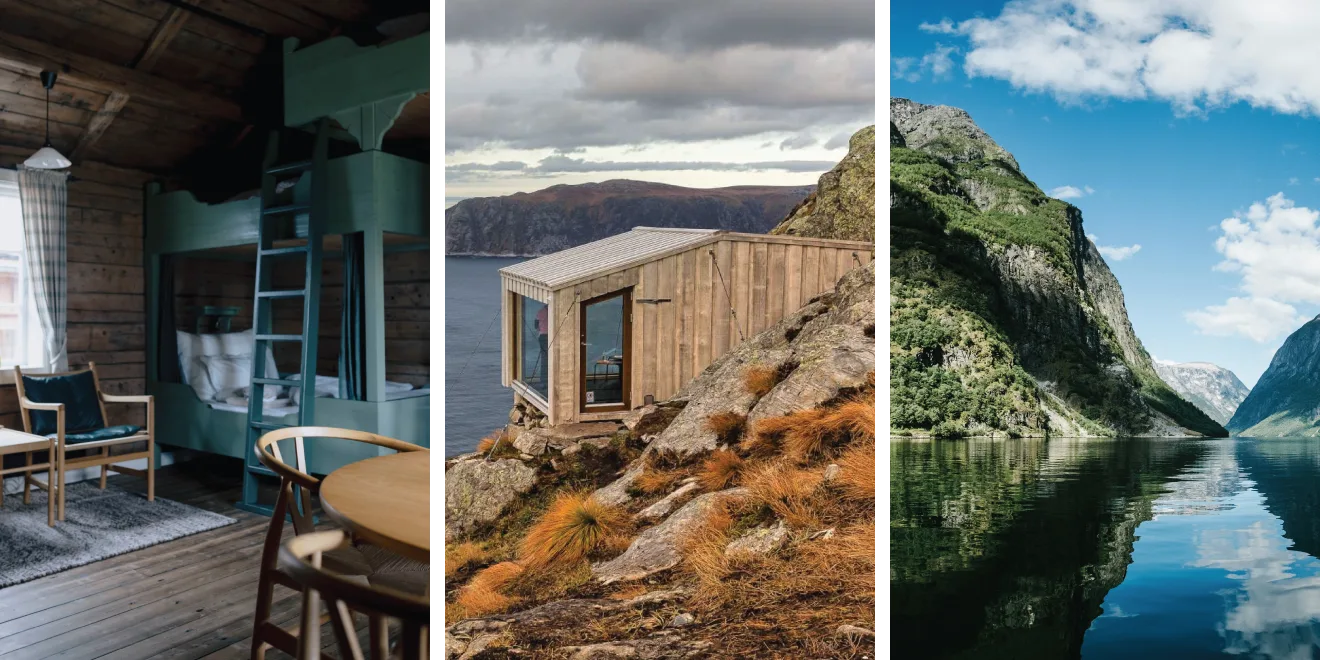
Heat waves in Southern Europe — even hotter ones — are shifting tourist routes north, as travelers seek more bearable climes. And Norway, notoriously expensive, is finally more affordable, thanks to historically low rates for the Krone against the Euro and U.S. dollar. Cheaper costs afford the chance for travelers to experience friluftsliv, a Norwegian term that can be translated to soaking up the profound simplicity of nature without destroying or disturbing the land.
Many of the country’s best stays are thrilling immersions in Norway's unique landscapes. In Bremanger, Dosabu, a “storm watching” cabin, is perched on the edge of Frøya, a rocky island just west of Kalvåg. About a 90-minutes drive from Ålesund, in Valldal, Juvet Landscape Hotel is a farmstead with the tagline “leave the world behind” — the perfect set piece for a meeting of the investor minds in the final season of Succession.
And on the very edge of the Arctic Circle, in the Norwegian archipelago of Lofoten, sits a fishing community with only around 1,000 residents. There, the family-run Holmen Lofoten mixes original fisherman cabins with ultra-modern dining options, embodying the forward-thinking hospitality embedded in Scandinavian slow living.
Ghana’s Capital of Taste
The next chapter of African cool is being written in Accra, with a reinvented street food scene, spotlight on its historic landmarks and dazzling natural wonders.
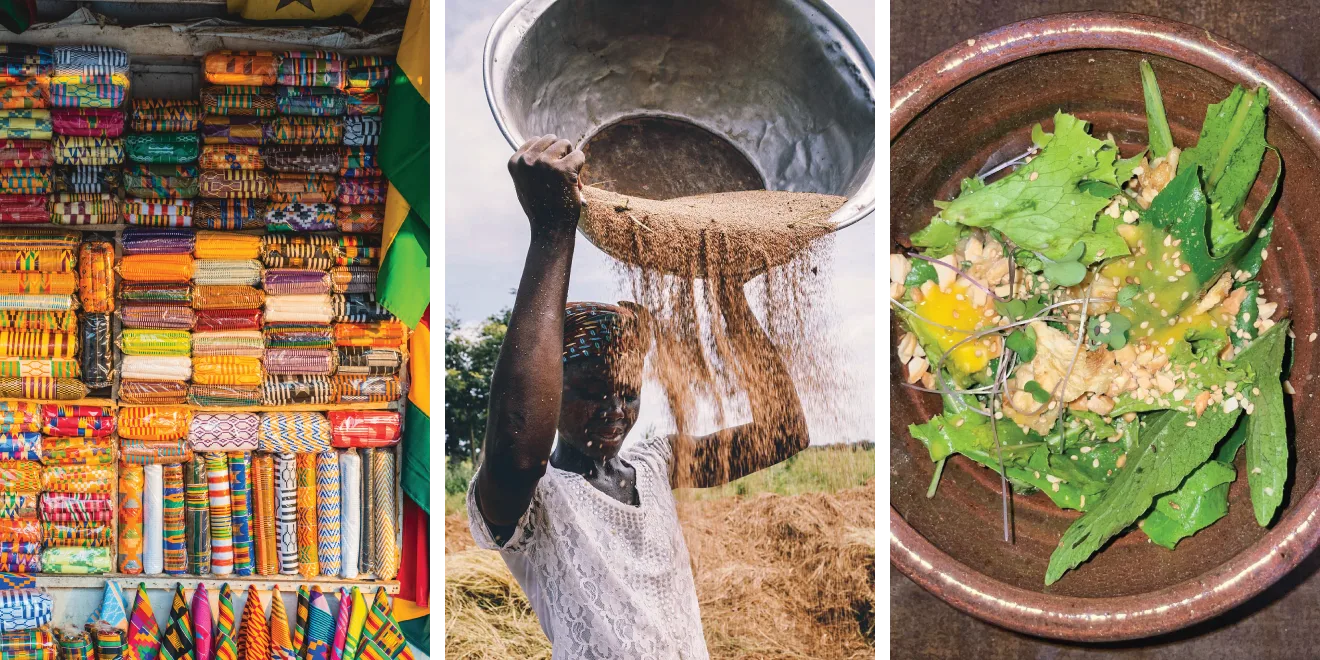
Inside Accra, Ghana’s capital, a new generation of restaurateurs — such as Kwasi Osei-Kusi, the brainchild behind Le Petit Oiseau, a modernist Afro-French spot pairing pasture-raised guinea fowl with fermented white wine from Western Cape — mixologists — order the Hewale (100-proof Bacardi spiced rum, baobab powder, coconut milk, pomegranate and mint) at the Mix Restaurant — and sustainable-food projects — Ghana Food Movement, a network of culinary thought leaders, offers “food safaris” to local farms — are transforming Ghanaian cuisine and rethinking everyday ingredients through modern dishes rooted in tradition.
And just a few hours outside the city sits a pair of Ghana’s most stirring spectacles: Cape Coast Castle, a port used for the slave trade in the 17th century that is now a must-visit geopolitical pit stop for everyone from New York City mayor Eric Adams to Vice President Kamala Harris; and Kakum National Park, a nature reserve comprised of canopy walkways over 100feet above the rainforest floor that allows visitors to “air hike” through canopies filled with a menagerie of rosy bee-eaters, blue-throated rollers, copper sunbirds and laughing doves.
Off the Beaten Sicilian Path
Sicilian Saturation? Not so, as attention turns from East to West and Palermo gets a polish.

Tourists tend to flock to Sicily’s picturesque eastern and southeastern cities. And the crowds in Noto, Syracuse and Taormina continue to swell. But Palermo is are just as many dramatic ruins, better beaches and regionally-diverse dishes served on Sicily’s less-visited western half.
The Planeta family, perhaps best known for the wines and olive oils that they produce across the island, have now opened La Foresteria Planeta Estate, a countryside “wine resort” just west of the town of Menfi, where rooms are named after herbs and terraces offering sweeping views of the vineyards, olive groves and the sea.
For decades — even centuries, perhaps — Sicily’s grandest city, Palermo, had been crumbling under the weight of corruption. Though a whiff of mafia manipulation still lingers, a generational tipping point seems to have occurred as tastemakers like Luca Guadanino move into palazzi and Piazza Giovanni Meli teems with post-pandemic life. Palermo, importantly, is also a day tripper’s playground. Just west of the city is Mondello, a where Palermtani s go on Riserva Dello Zingaro, a four-mile-long nature reserve that opens with Tonnara di Scopello, a former tuna fishery turned into a pink hotel decorated with weaving tools, nets and boats once active from the 13th to the 20th century.
Then there are the constellation of islands off the Sicilian coast that remain largely untouched by visitors. Up north sits the tiny volcanic island of Ustica, a marine reserve rivaled by few in the Mediterranean featuring seabeds favored by scuba divers. And off the western edge of Sicily, the Egadi Islands (Favignana, Marettimo and Levanzo) are flush with isolated coves, plummeting limestone cliffs, Paleolithic cave paintings, and some of the largest ancient tuna fisheries in Italy.