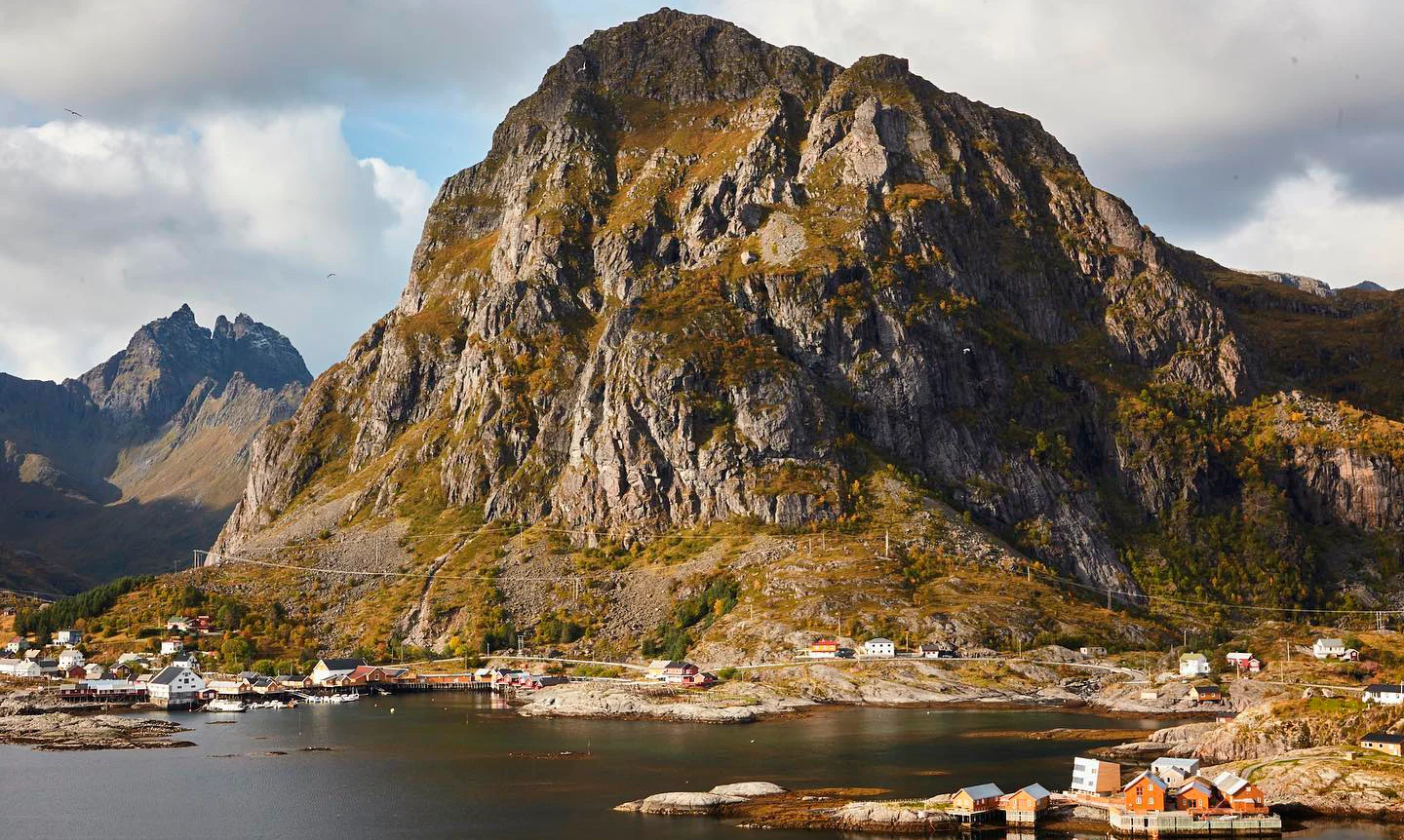
On the very edge of the Arctic Circle, the Norwegian archipelago of Lofoten, a fishing and agricultural district with only 1,000 residents scattered throughout, is known to adventurers as a must-visit destination for hiking, climbing, skiing, and arctic surfing. Majestic fjords, snow-capped mountains, and some of the most fish-dense sea in the region are reason enough to visit. But aside from the natural beauty of its surroundings, Holmen Lofoten, a family-run property, is a destination in its own right: a complex of original fishermen’s cabins and modern additions, with a restaurant that embodies sustainable indulgence and Scandinavian slow living.
The Check In
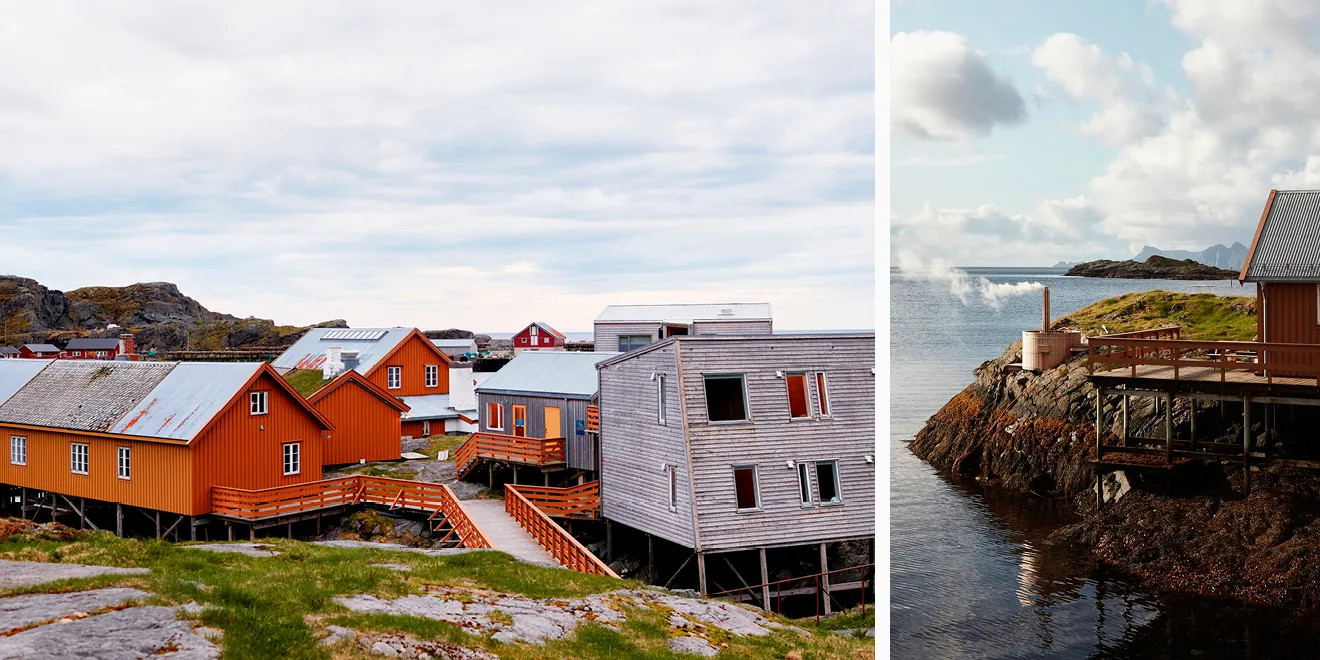
About an hour and a half drive from the regional Leknes airport, the town of Holmen lies at the very tip of the Norwegian archipelago, and squarely within the Arctic Circle. The drive is dramatic with a landscape of jagged mountains that jut right out into the sea. One could mistake the white sand and crystalline waters that surround your for say a tropical island but a quick dip in the glacial sea will be a bracing reminder that you are indeed in the northern region of Norway. The views change according to season— spring welcomes visitors with green snow-capped mountains dotted with spring flowers while winters can blanket the entire region in snow. (Thanks to the nation’s strong sense of design and industry, a tunnel takes you through some of the immense mountains that would otherwise take a car winding up and around these great peaks.) A walk bridge leads guests on to the isle, where a set of original fishermen cabins are perched on wooden beams atop a rocky outcrop. Alongside the traditional timber huts there are additional accommodations, which are an angular riff on the simple barn structures that are seen throughout Norway.
Holmen’s founder Ingunn Rasmusse runs the property with her family; her son and his girlfriend are in charge of experiences, while her brother, Audin, is an expert hiking guide, who does a daily climb of 500 meters in 25 minutes. He once led a blind woman who dreamed of climbing the fjords up a mountain, holding her hand the entire way.
Having grown up fishing and foraging on the property, Ingunn and her family are preternaturally self-sufficient. Since inheriting the property twenty years ago, Ingunn has worked to convert the family property from a series of fisherman’s cabins to a restaurant and hotel. Home indeed is where the hearth is as the kitchen and dining room, which is kitted out with blankets and sheepskin rugs, serve as the property’s main social hub, where guests gather for breakfast, lunch, and dinner. As a rule, Holmen encourages guests to spend at least three nights to fall into the slower pace of Lofoten living. Rather than stacking your days with endless activities, the team encourages guests to take their time and enjoy the spectacular surroundings and the natural cycles of living so close to the land.
The Look
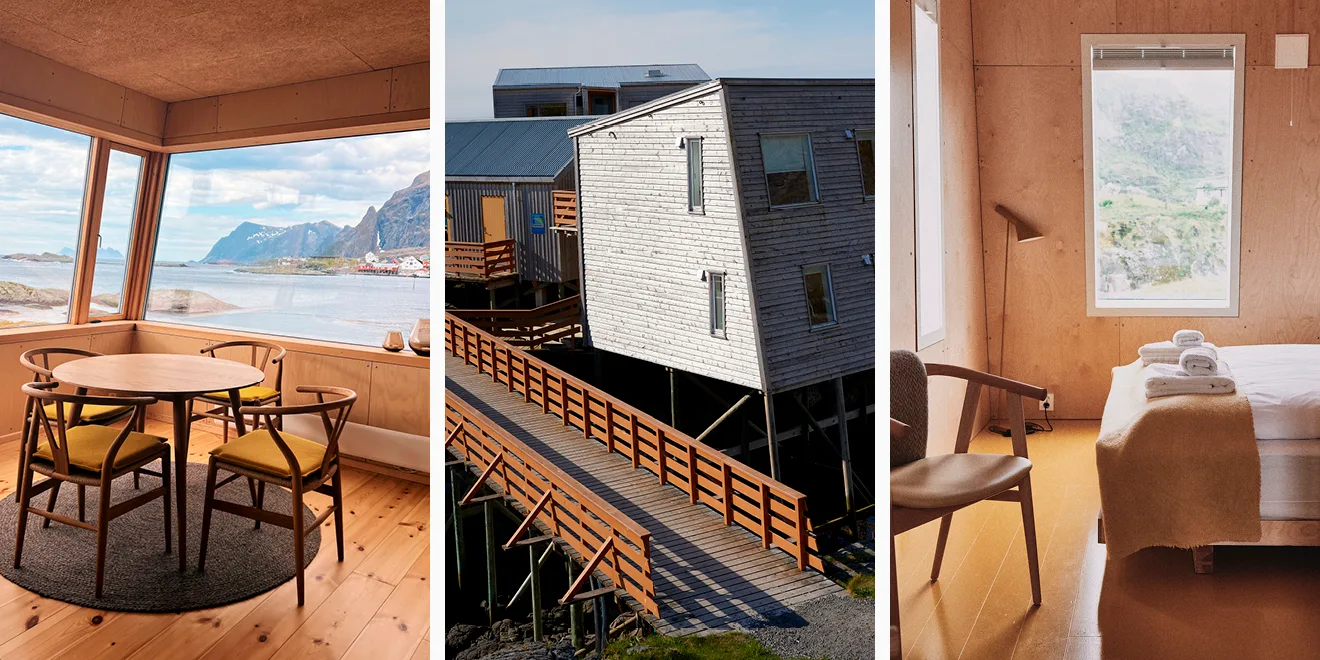
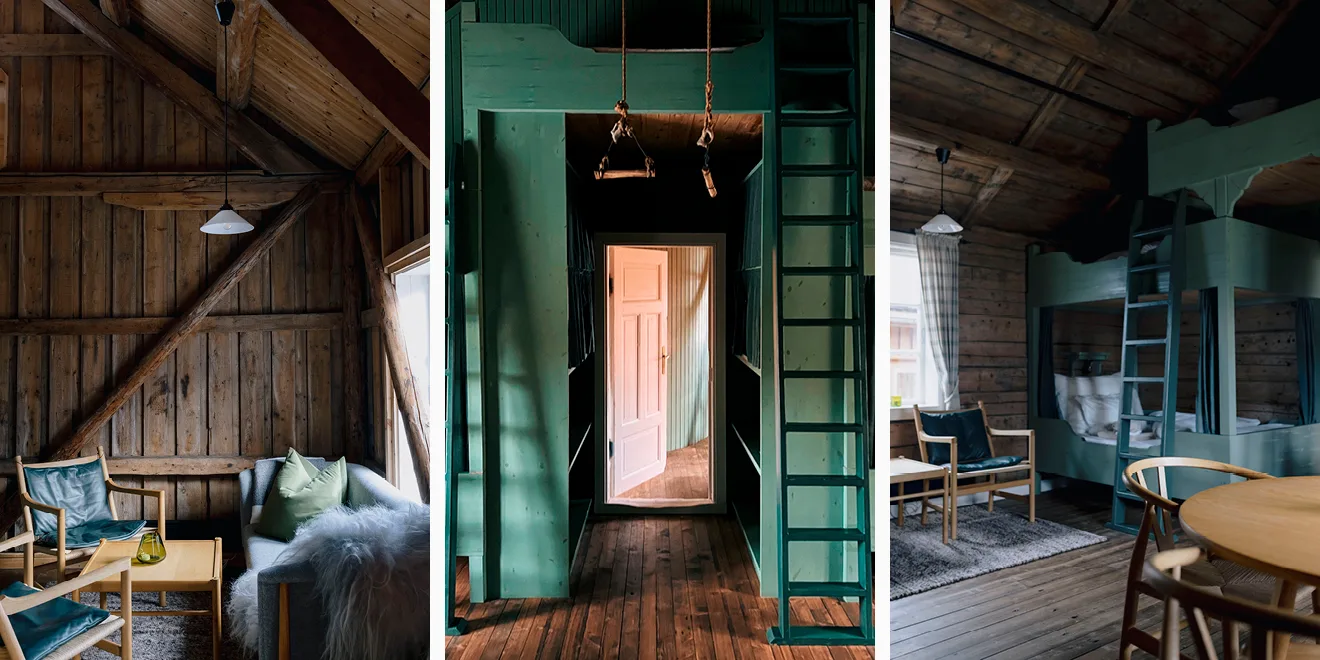
Throughout the property, whether in the rustic interiors of the converted fisherman's cabins or the newer suites, you’ll find the greatest hits of Scandinavian style from designers like Carl Hansen (dining chairs) to Louis Poulsen (lighting). The cabins maintain much of their original character, with timber wood walls and wood-burning stoves.
The Rooms
While the standard double rooms are spare, the suites are comfortable in a distinctly Holmen way, embracing the value of slow living. Each 2 bedroom suite is equipped with a kitchenette, mini-sauna, fireplace, and corner view onto the bay, where you can look out onto Lofoten’s ever-changing landscape (it’s a convenient way to figure out how many layers to wear for the day’s adventures). For those who appreciate more rustic charm— and don’t mind sleeping in single beds— the fishermen’s huts offer a uniquely Norwegian experience. They’re updated takes on the original cabins, with wooden bunk beds painted mint green, trimmed in a homey flannel fabric. There’s even rings hanging from the ceiling where fishermen would stretch after a back-breaking day at the sea.
The Food & Drink:
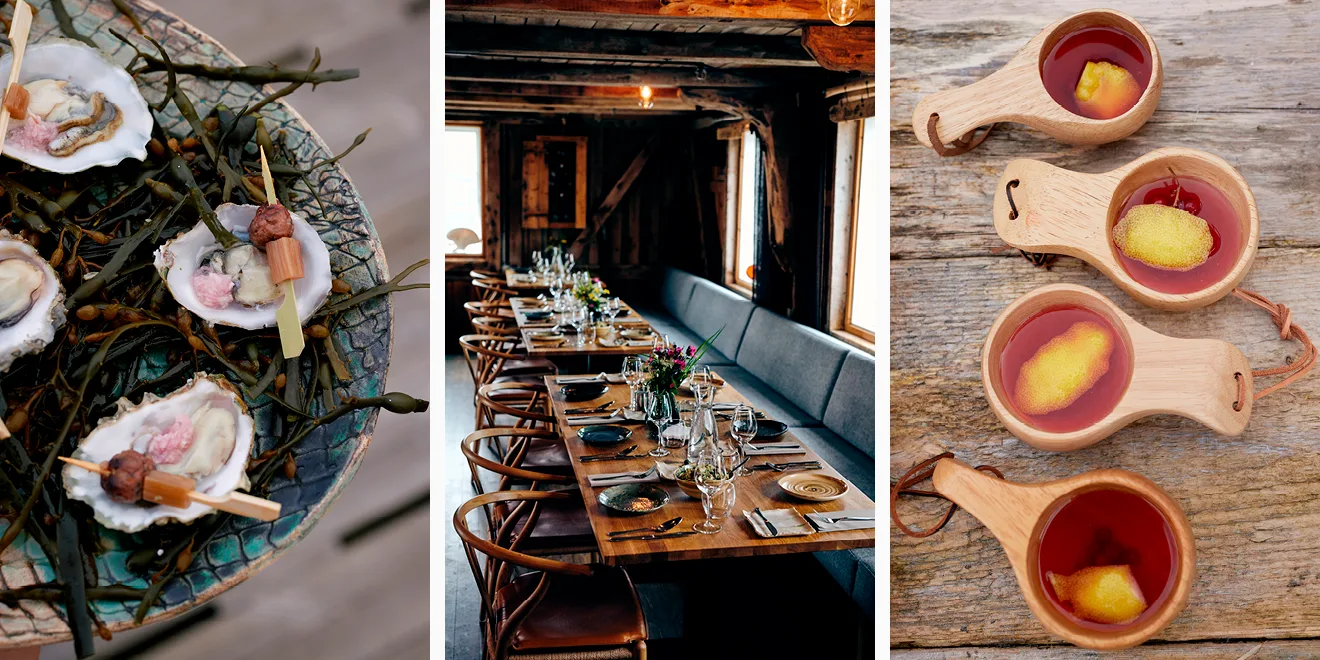
As much as Lofoten is about experiencing the land, it’s also about sacking out in front of a fireplace at the hotel, and then refueling with a five-course meal. All of the ingredients come from the island, whether it’s fish fresh-caught from the bay or quail from local farms. A highlight is the Kitchen on the Edge of the World program that invites visiting chefs, cocktail makers, artisans, and guest artists to create menus using locally-sourced ingredients.(During our visit, a blacksmith served a remixed version of a traditional port-based cocktail, heated up using iron from the forge.) The dinners are indulgent yet approachable— a roasted duck with Frederiksdal sauce, almonds, and radicchio was accompanied by a heaping bowl of fries— and can last until the early hours between the five courses, or a briefer affair if you order a la carte. The next morning’s breakfast is quintessentially Scandinavian - housemade granola, fruits, cured fish and crisp bread and plenty of butter. Many of the visiting chefs are invited by Valentine Warner, who runs the program, and is Ingunn’s creative food partner. His culinary ethos, slightly Viking in nature, is the perfect complement to Holmen’s majestic natural beauty.
The Check Out
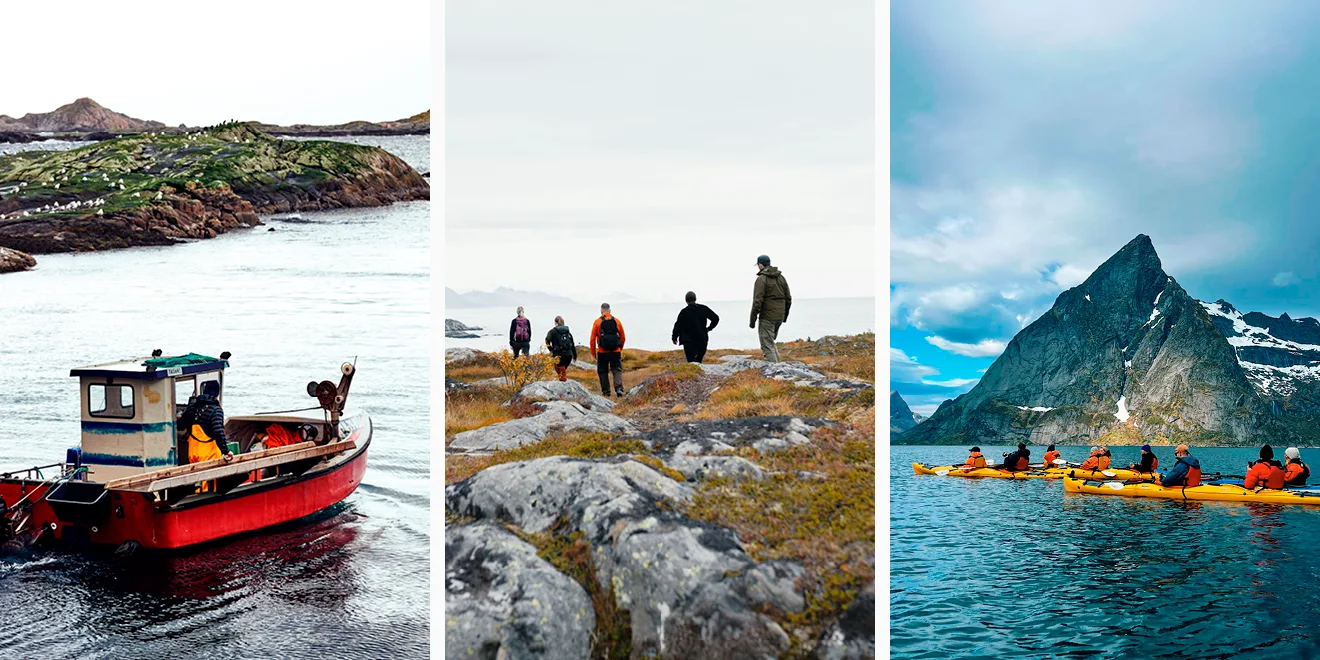
As with everything in Lofoten, the experience is entirely dependent on weather and conditions. While the property offers many activities, guests are more than welcome to explore the islands on their own. March is fishing season, when the Arctic cod migrate to the island, making it an ideal time to go out with the local fishermen. (The hotel can typically arrange this, but guests need to book almost a year in advance.) If you’re looking for a chance to catch the Aurora Borealis, September through November is your best bet (though nothing is ever guaranteed on the island due to the weather.) June through August is peak summer season, when you’ll have to contend with crowds, but it’s the optimum time for hiking, foraging, picnicking, kayaking, and taking a dip in the Arctic water— which, admittedly, can become addictive. While sightings aren't guaranteed, Norway is one of the few places where you can catch a glimpse of the endangered killer whale; on our visit, a pod of about twenty orcas appeared alongside the rib boat— one of the defining experiences of an overall spectacular setting.