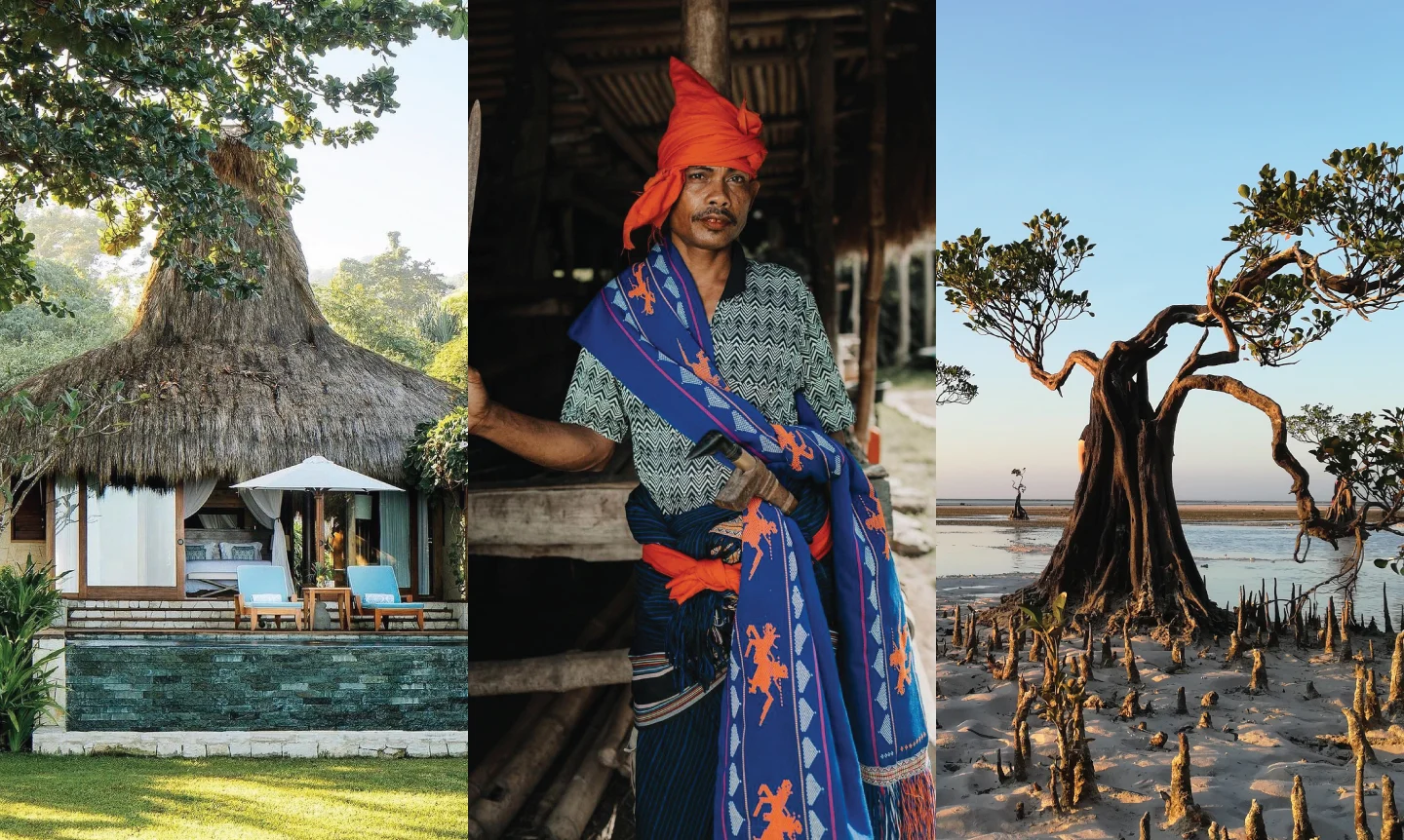
The instant nature of today’s attention economy means secret travel spots rarely stay hidden for long. It's few and far between, then, when it feels like you've stumbled upon a place at exactly the right moment: That sweet spot when the first wave of new boutique hotels flag your attention, but you’re still likely the only foreign face on the beach.
Such is the case with Sumba, a rugged Indonesian island about an hour and a half to Bali's east, where a handful of intrepid international hoteliers are just now putting down roots amidst the isolated surf breaks and rural villages.
While overtourism has dented some of Bali's most beautiful corners and oat-milk smoothie bowls have brought a vanilla flavor to Lombok, Sumba still feels as if little has changed over the last century. Instead of chi-chi Mediterranean eateries and Indo-fusion dining concepts, humble warungs (small family-owned Indonesian restaurants from plywood and crinkle-cut steel) line the island’s dusty roads. Expect shrieking local youngsters, not content-streaming TikTokers, gathering by the otherworldly rock formations on Mandorak beach or cannonballing into the glassy waters of Waikuri Lagoon. In lieu of techno-thumping beach clubs, Sumba's white-sand scene gently comes alive at dusk, when locals flock to the low-tide shallows in search of clams and strings of edible seaweed to cook back home.
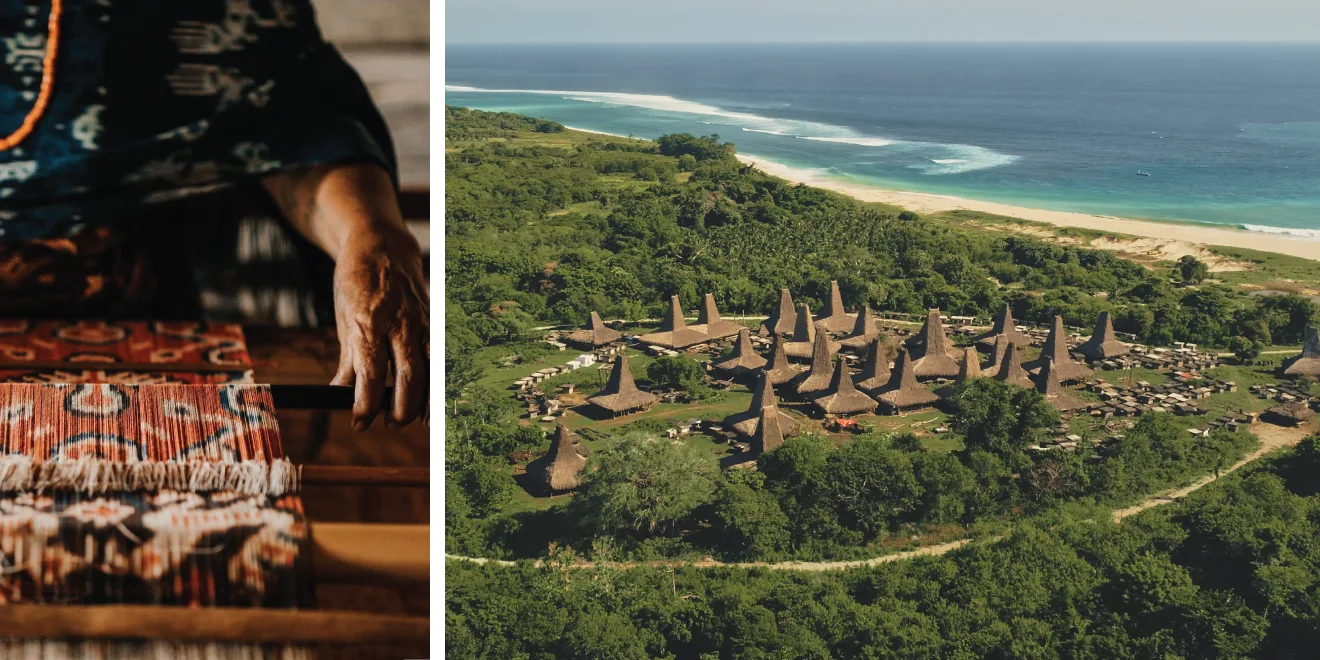
Inland Sumba is every bit as bucolic. Stilted, thatch-roofed dwellings are nestled between rice paddies and hills covered in sun-scorched grass. Ancient villages are a melting pot of ikat weavers (an Indonesian dyeing technique used to pattern textiles), buffalo herders, cassava farmers and practitioners of the island’s ancestral form of religion known as Marapu. Here, funeral ceremonies and traditional cattle sacrifices, passed down since the Bronze Age, are still performed by betel nut-chewing rato shamans.
At the start of the millennium, Sumba was seen as a close-lipped secret for clued-in surfers and Hollywood types (Heidi Klum, the Beckhams) who flocked to Nihi Sumba, the island's first — and until recently, only — high-end resort. Now, nearly two decades later, a new crop of global hoteliers have arrived on the island’s rocky, rambling shores.
"Sumba seems to live in its own time and space," says Evgeunia Ivara, one half of the couple behind Cap Karoso, a tropical-modernist beach resort on the island's isolated southwestern tip, which opened at the tail end of last year. "The roads are empty, the landscapes untouched. I've never encountered such a feeling of freedom and sense of discovery as I did when I first arrived here."
Perhaps ironically, Ivara, who worked in marketing at LVMH previously, is working to keep Sumba’s branding as a remote escape just the way it is. While big-brand developers are sniffing around for the choicest beachfront plots, the island independent-minded hoteliers are treading lightly on the unspoiled land to not interrupt the communities who have called Sumba home for thousands of years.
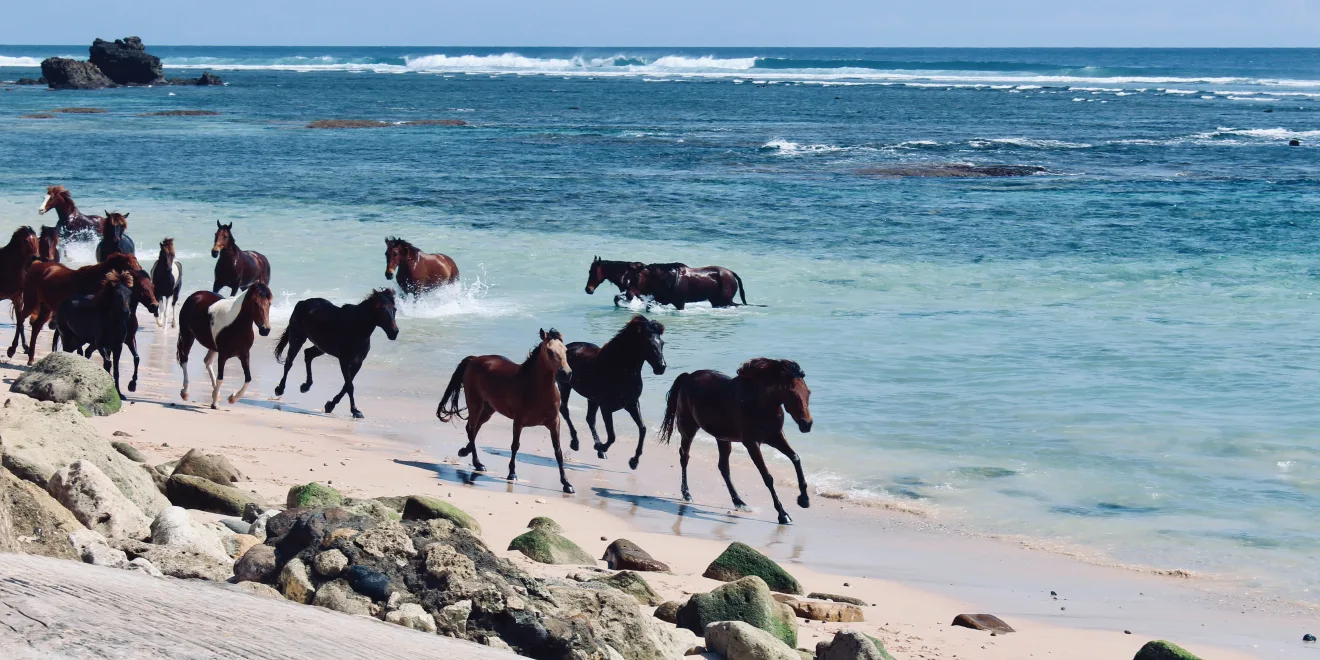
Keeping Sumba as free of heavy international foot traffic as possible means it pays for travelers to plan ahead. The island’s tourism infrastructure is still at its infancy. Drives between different districts, such as Lamboya or Kodi, can sometimes take up to three hours to traverse.