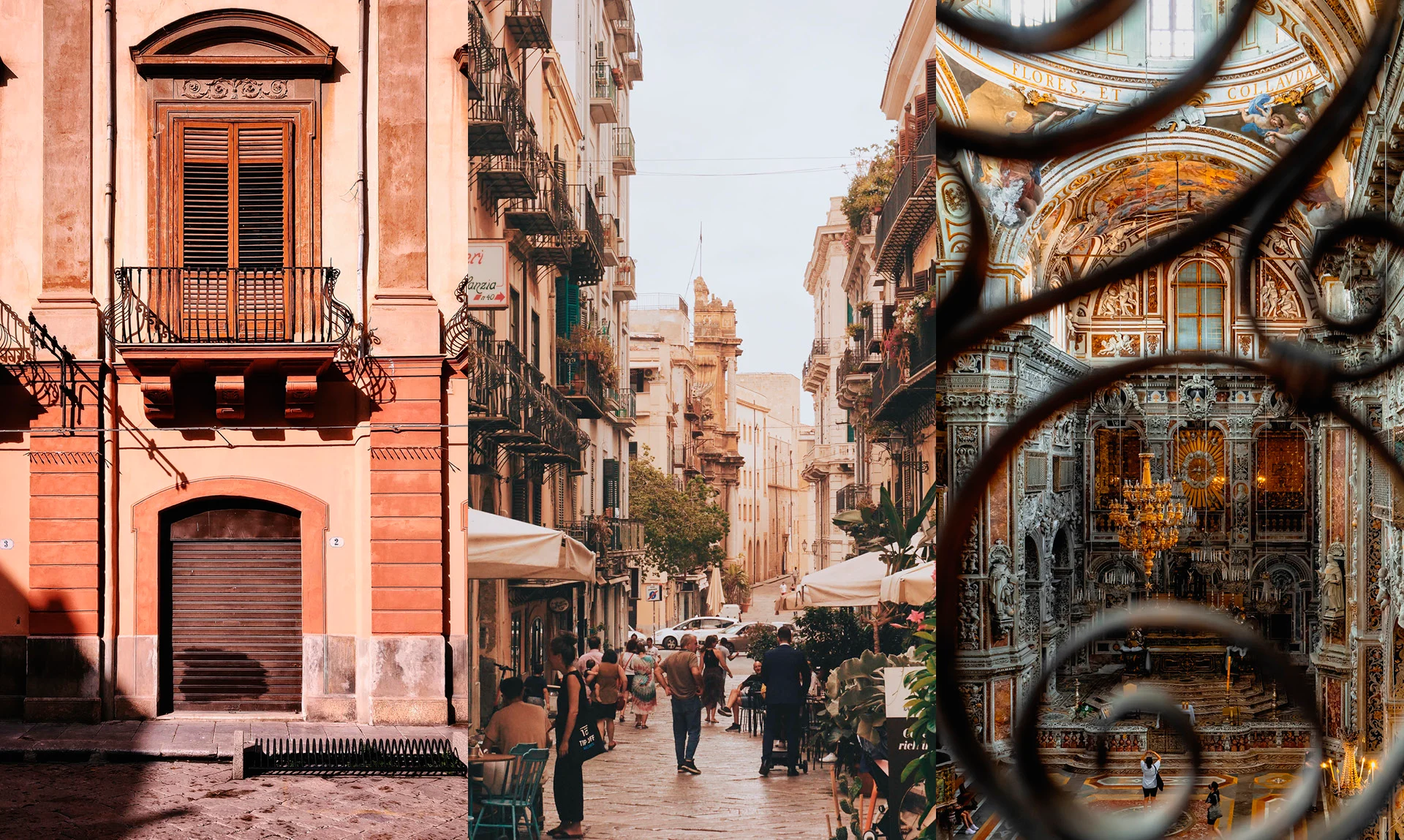
On summer evenings, as the heat starts to dissipate, families pushing babies in strollers, teenagers with electric scooters, and old couples holding hands emerge from their afternoon siestas and have a leisurely stroll around town. Sun-faded buildings and Baroque churches loom over the little bars and shops on Via Maqueda, the main artery through the centro storico.
Over the course of more than 2,000 years, Palermo has been ruled by the Byzantines, Arabs, Normans, Germans, French, and Spanish—all before joining the newly unified country of Italy in 1861. This melding of influences can be felt everywhere, not least at the Cattedrale di Palermo, which is like a microcosm of the city itself—a mishmash of Norman, Moorish, Gothic, Baroque, and Neoclassical styles that somehow coexist harmoniously.
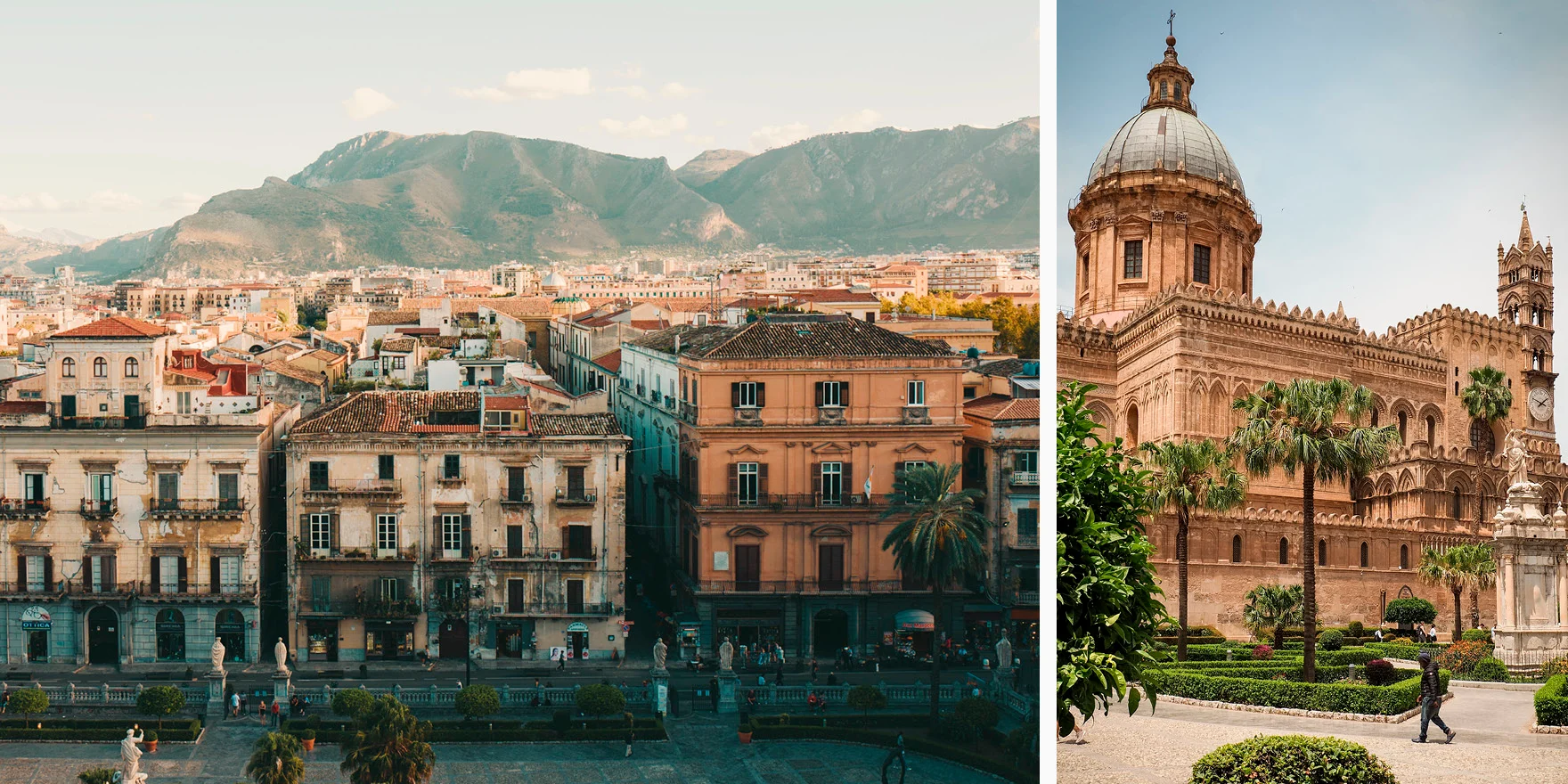
In recent decades, Palermo was unofficially run by La Cosa Nostra, the Sicilian mafia. In those dark years, Palermo’s centro storico fell into neglect, its beautiful Baroque buildings crumbled and the storied Teatro Massimo sat empty. The economic crisis and the arrest of more than 4,000 mafiosi since the mid-1990s has since played a role in Cosa Nostra’s decline, instilling a new sense of optimism and energy in the city, where shop owners display ‘Addiopizzo’ stickers in their windows, showing their solidarity with the anti-mafia campaign that started as a grassroots movement.
The efforts have paid off and the city feels reinvigorated. In 2018, Palermo was named Italy’s Capital of Culture. Also that year, it hosted Manifesta 12, one of Europe’s most important art biennials. And though the COVID-19 pandemic has put a dent in the economy, Palermo is proving itself to be a city on the cusp of greatness. Here’s where to go to immerse yourself in the city’s rich history and witness its contemporary rebirth.
What to Do
Teatro Massimo
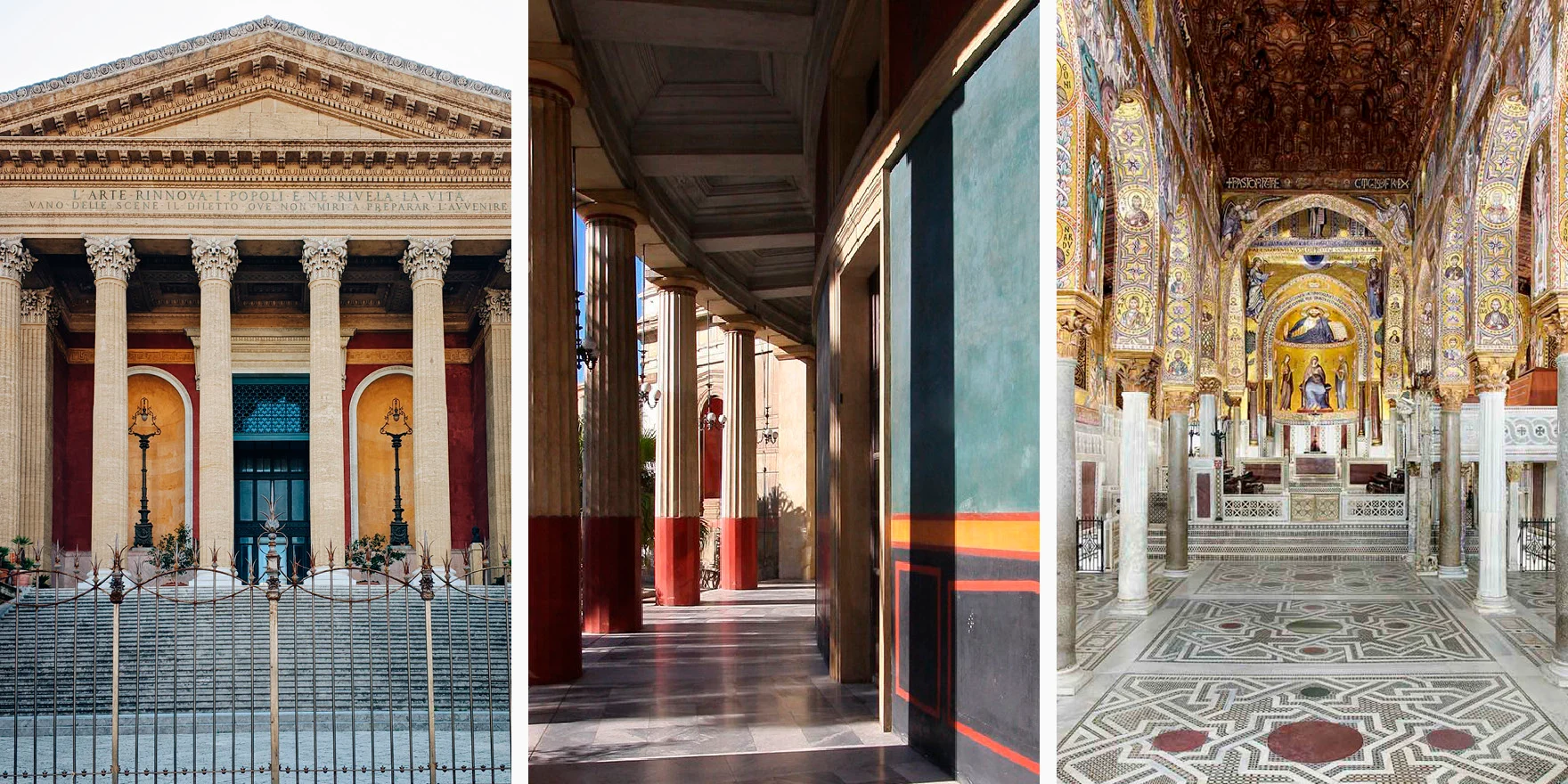
Palermo’s grand Neoclassical opera house was inaugurated in 1897 with a performance of Giuseppe Verdi’s Falstaff. It closed in 1974 for what was supposed to be a quick renovation, but remained closed for 23 years, finally reopening in 1997. A Belle Époque masterpiece, the opulent theater features velvet seats, gilding, and carved mahogany, with an auditorium that’s said to be nearly acoustically perfect. The 2022 opera season is dedicated to the memory of magistrates Giovanni Falcone and Paolo Borsellino, who were killed by the mafia 30 years ago, beginning with Roberto Devereux composed by Gaetano Donizetti. Other shows will include: Tosca, Cenere, Promoteo, il Matrimonio Segreto, and Nabucco. Book ahead to take a guided tour backstage, climb up to the rooftop terrace, or sit for a special concert, followed by a cocktail in the sumptuous Royal Box, which decked in red brocade.
Teatro Politeama Garibaldi
The home of the Orchestra Sinfonica Siciliana, this majestic Neoclassical theater, which first opened in 1874, is decorated with Pompeii-inspired frescoes on both the exterior and interiors. The 2022 season runs through the end of May, with performances of works from Beethoven, Mozart, and Stravinskij.
Palazzo dei Normanni
Nowhere is Palermo’s glorious history more readily felt than at the majestic Palazzo Reale, part of which now serves as the seat of Sicilian parliament. The crown jewel inside the palace, the Cappella Palatina, built in 1132, glitters with Byzantine mosaics and a 10th-century Arab honeycomb wooden ceiling. Here, Byzantine, Latin, and Islamic motifs meld harmoniously.
Palazzo Butera
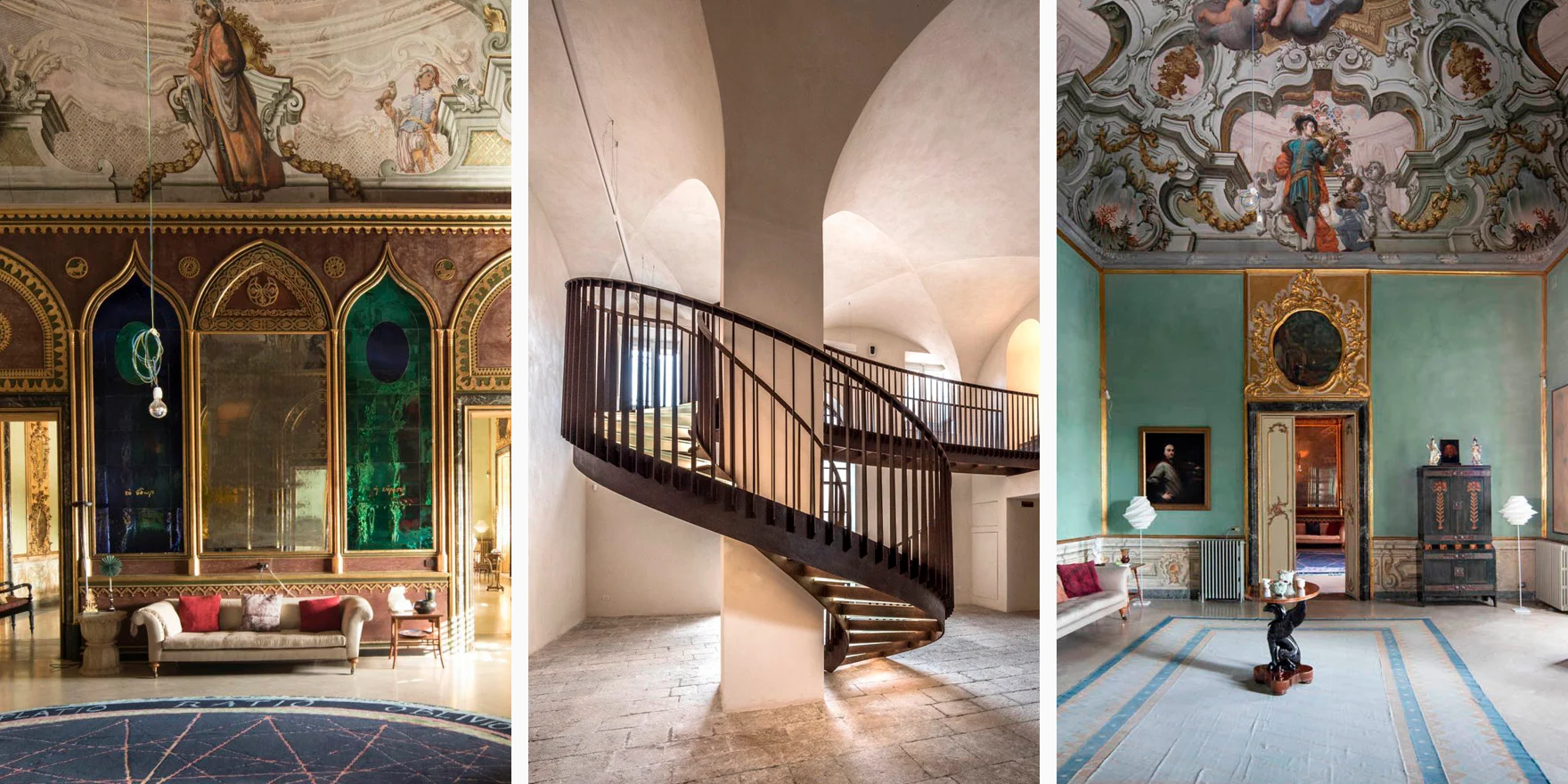
This 18th-century noble palazzo in the Kalsa district, Palermo’s ancient Arab quarter, was purchased by Massimo and Francesca Valsecchi in 2016. This art collecting couple rehabilitated the palazzo and opened it mid-renovation for Palermo’s turn as Italy’s Capital of Culture before officially opening in 2021. The second floor features murals by English artist David Tremlett, while the collection includes contemporary art, porcelain, English furniture, and other works.